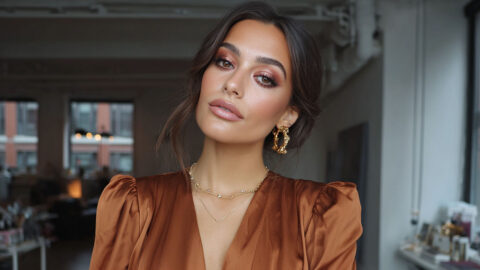
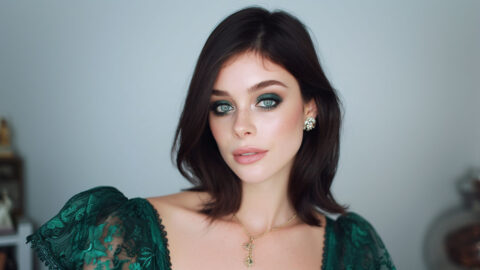
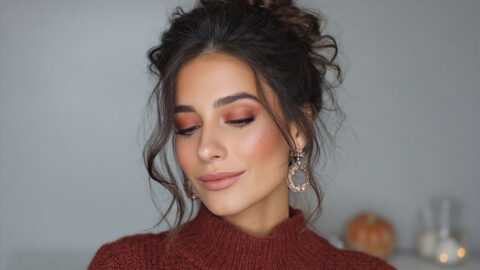
Nothing gets skipped in a full glam look. The base is layered, the face is sculpted, the eyes are defined, lashes go on and the lip is the loudest thing on the face. Soft glam keeps the same layers at lower intensity.
No single bottle gives you the coverage. As of October 2026, Make Up For Ever lists its Ultra HD foundation, designed for 4K film and TV cameras, as medium coverage, and Fenty Beauty’s Pro Filt’r Soft Matte Longwear reaches full coverage with 1 to 2 pumps.
Weddings, prom, photoshoots and evening events are where the look usually shows up. The eyes carry the style there, and the lighting sets its limits.
What Makes a Makeup Look Full Glam?
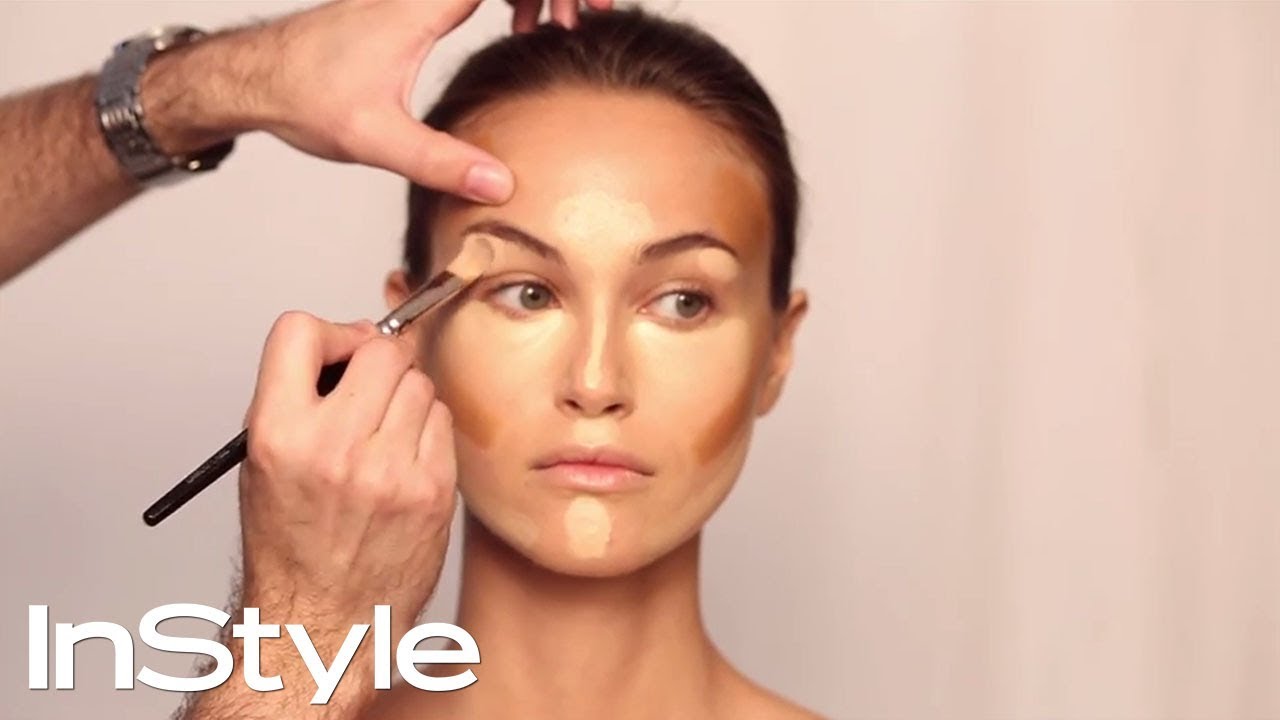
It comes down to how many layers get stacked and how loud each one is. The base covers primer, foundation, concealer and powder. After that come brows, the eyes (shadow and liner), lashes, sculpt and glow (contour, bronzer, highlighter), cheeks and lips. Soft glam and no-makeup makeup use the same structure at a lower volume.
| Element | Full glam | Soft glam |
|---|---|---|
| Base | Built-up, medium to full coverage | Sheer or light, radiant |
| Eyes | Smoky eye or cut crease, liner, lashes | Diffused neutral shadow, soft liner |
| Cheeks and sculpt | Defined contour, dramatic highlight | Rosy wash, light-reflecting cream blush |
| Lips | Bold color or defined liner | Natural, muted tone |
Trinny London’s artists treat full glam as the statement version of soft glam, and the smoky eye is its classic marker.
If that sounds like too much, softer glam looks keep the polish and drop the hard lines.
Bridal artists interviewed by Bride and Breakfast in 2024 name over-application as the usual full glam mistake. Dark shadow and bright blush get stacked because the brief said glam.
How to Do Full Glam Makeup Step by Step
The order runs from skin prep to setting spray, base first and finishing touches last.
Adore Beauty’s self-described “beauty newbie” says her own foolproof glam routine, falsies included, takes around 30 minutes. Give yourself more than that the first time you try lashes and winged liner.
- Cleanse and moisturize, then let the skin absorb.
- Apply primer to the T-zone, pores and any area that creases.
- Neutralize dark circles or redness with color corrector, only where it shows.
- Press in foundation in thin layers with a damp sponge, building toward full coverage.
- Add concealer under the eyes and over blemishes, then blend the edges.
- Set with loose powder, baking under the eyes if the finish calls for it.
- Fill and shape the brows with pomade or pencil.
- Build the eye look: primer, transition shade, depth shade, liner.
- Finish with mascara or strip lashes.
- Contour, add blush and bronzer, then highlight the high points.
- Line and fill the lips.
- Mist with setting spray.
Skin Prep and Base

Hydrated skin holds a built-up base better than dry skin.
Prepping skin before makeup takes a few extra minutes, and every later layer sits on that work.
Charlotte Tilbury’s Hollywood Flawless Filter shows how flexible the first layer can be. The brand’s usage guide lists two base routes. It can go on as a glow primer, blended in before foundation, or it can be mixed into the foundation on the back of the hand.
Baking is optional, and it has a limit. Mario Dedivanovic, who made the technique famous through Kim Kardashian’s makeup, says he did not invent it and calls whole-face baking heavy makeup meant for hot lights or stage performances (Marie Claire).
His under-eye technique with the Kardashians goes by “Kim’s conceal, bake, brighten”. Concealer goes on first, then baking powder, then a brightening powder on top (ET Online).
Brows and Eyes

Artists split on whether the eyes come before the base. L’Oreal Paris puts eyes first for smoky or dramatic looks, so fallout can be wiped away before foundation goes on.
Charlotte Tilbury’s order runs the other way. Foundation, concealer and powder come first, because foundation applied after finished brows is harder to blend around.
Smoky or dramatic eyes, loose glitter and dark, shedding shadow all argue for eyes first. Neutral, low-fallout eyes can wait until after the base, with brows and clean-up done last. Fallout is what settles it: heavy shedding means eyes first, light shedding means base first.
Applying false lashes is the step beginners rush. Ardell’s adhesive directions call for a thin line on the band and a 30-second wait until the glue turns tacky. (Yes, 30 seconds feels long when you’re holding a lash strip. Wait anyway.)
Sculpt, Blush and Glow
Foundation goes down before contour, because contour needs a smooth canvas (Charlotte Tilbury’s makeup order guide).
Dedivanovic’s contouring work is one reason sculpting became a standard glam step, according to Vogue Portugal.
Blush sits between contour and highlight, and the bridal artists’ warning applies here too, since bright pigment stacked on dark eyes tips the look into too much.
For the glow, Charlotte Tilbury places Hollywood Flawless Filter on the tops of the cheekbones, down the nose and over the Cupid’s bow once foundation is on. L’Oreal Paris treats a dramatic highlight as non-negotiable for super glam.
Lips and Setting

Line the lips first, then fill. A defined edge matters most with a bold shade such as the vivid red L’Oreal Paris pairs with a sparkly cut crease.
Dedivanovic dusts powder below the outer corner of the lips to keep a classic red lip in place (Marie Claire).
A final mist of setting spray locks the layers together.
Which Products Does a Full Glam Look Need First?

Start with the base. Foundation, concealer and setting powder decide how the look wears and photographs, and shadow palettes can wait.
Read the coverage claim on the bottle before buying. Make Up For Ever sells its Ultra HD foundation as medium coverage in 50 shades, built for 4K film and TV cameras.
Fenty Beauty’s Pro Filt’r Soft Matte Longwear sits higher, buildable from medium to full, with 1 to 2 pumps recommended for full coverage. Neither brand offers full coverage in one swipe. Fenty builds it with extra product and a press-and-roll brush technique.
NARS describes its Radiant Creamy Concealer as medium, buildable coverage in 30 shades. With that many options, choosing a concealer shade carefully matters more than adding layers.
Laura Mercier’s Translucent Loose Setting Powder goes on with a velour puff, and the founder’s rule is to add more if the area still feels tacky. For strip lashes, Ardell sells DUO and Lashgrip adhesives.
A damp sponge presses coverage in without streaks. Beautyblender’s own instructions are wet, squeeze, bounce, and the technique is covered in this walkthrough on applying makeup with a sponge.
If money is tight, the base and the lash adhesive earn it first. Palettes and brushes can be mid-range.
Which Full Glam Eye Looks Work Best?

The smoky eye, the cut crease, winged liner and a glitter or metallic lid cover most full glam eyes. Eye shape and how much the look has to survive on camera do most of the picking, and the occasion usually settles the rest.
| Look | Defining move | Best for | Common mistake |
|---|---|---|---|
| Smoky eye | Dark shade blended at lash line and crease | Classic evening glam | Fallout settling on the base |
| Cut crease | Carved crease line against a contrasting lid | Hooded eyes, bigger-looking lids | Line placed inside the natural crease |
| Winged liner | Flick extended outward | Sharp definition | Wing angled up into the crease |
| Glitter or metallic lid | Packed shimmer on the lid | Parties, New Year’s Eve | Reads as shine on camera |
L’Oreal Paris calls the smoky eye a hallmark of glam, and the blend between shades is where it succeeds or fails. A guide to building a smoky eye step by step covers the sequence.
The cut crease dates back to silent films, according to Marie Claire. Its logic is contrast, a carved line separating the lid from the brow bone, which is why it works especially well on hooded eyes.
It also needs a base that stops the shades from bleeding together, such as a primer or a cream shadow.
A winged flick gives the eye its sharpest edge. Extend it outward rather than upward, or it gets caught in the crease (Makeup.com).
Glitter splits the sources. Huda Beauty’s New Year’s Eve roundup is built on crystal and glitter eyes, while The Zoe Report’s camera guidance says shimmer reads as shine in photos.
Keep the sparkle for a party. If flash photography is involved, matte shadows are safer, or the shimmer can go in the inner corner only.
Matte, Satin or Dewy: Which Finish Suits Full Glam?
A matte or satin base suits most full glam looks, with glow added back only where light should hit. Matte formulas typically give more coverage than dewy ones, according to Los Angeles makeup artist Joyce Platon in PureWow.
Matte suits oily skin and gives the most coverage with no shine, but it can flatten or age the face in photos if it goes too matte. Satin, semi-matte with a slight glow, is the middle ground for flash. Dewy wears off fastest. It hydrates dry skin, but on oily skin or under flash it looks greasy.
Camera advice disagrees. Makeup artist Sarah Uslan told The Zoe Report to pick a matte foundation and skip dewy ones, while Beaut.ie’s 2016 flash photography test warns that foundation that is too matte flattens the face and recommends semi-matte, slightly luminous formulas.
The gap tracks the lighting. Uslan’s rule comes from TV camera work, the Beaut.ie test from flash photography.
Whichever finish wins, judge the shade after it dries down. Fenty Beauty tells shoppers to let matte foundations dry completely before choosing.
On oily skin, Platon recommends a matte base and then highlighting the high points to put shine back on purpose. Dry skin takes satin or dewy better.
Which Full Glam Look Fits Which Occasion?

The lighting sets how far a full glam look can go, and every occasion brings its own. Flash events need a test run, while dim evening rooms give contour the most freedom.
Weddings bring close-ups and flash photos, plus a bride who still needs to recognize herself. Prom is a night event with flash photos too. Photoshoots and red carpets run on flash or studio light, where base ingredients decide the result, and evening events happen in low light, where stronger sculpting works.
Wedding artists lean on the trial. Singaporebrides (2025) quotes artist Atiqah saying a trial lets the artist learn the bride’s preferences, though tastes can shift near the date and make the trial look outdated.
Timing advice splits. Glamsquad puts the trial 2 to 3 months before the wedding, while Kleinfeld Bridal, quoting Beautini founder Brittany Lo, says a bride who wants a trial before booking should go about a year ahead.
Kleinfeld ties its answer to booking order, so a bride who has already booked the artist has more flexibility on trial timing. Sorting through the range from soft to dramatic is easier with a set of wedding-day looks in hand.
Photography changes the ingredient list. L’Oreal Paris says to skip SPF-infused products before flash, because zinc oxide and titanium dioxide reflect the flash back as a white cast, and that silica in powders can do the same.
Testing complicates the rule. Lab Muffin Beauty Science says most SPF products do not flash back and points to silica powders as the main culprit, and Beautiful With Brains (2025) points out that titanium dioxide sits in nearly every foundation and only leaves a cast at SPF-level amounts.
So test instead of guessing. Take one flash photo of the finished base before the event, and fix a cast by blending with a sponge or misting a light layer of setting spray, per L’Oreal Paris.
Studio light adds a second variable, and this guide on makeup for a photoshoot goes through it.
Dim rooms are the one setting where heavier contour pays off, according to Skin Inc., provided it respects the bone structure.
How to Adapt Full Glam to Your Skin and Eyes
Most of the adapting is formulas for skin type and placement for eye shape. Undertone only comes into play once you get to shades.
Oily and Mature Skin
For oily skin, the advice is oil-free, water-based makeup (American Academy of Dermatology, 2018). Makeup artist Emily Kate Warren in WebMD adds an oil-free anti-shine primer on the T-zone.
Mature or dry skin goes the other direction. Laura Geller, via Prevention Australia, favors creamier, hydrating formulas over powdery ones. Eunice Kristen via TODAY recommends light-to-medium coverage in place of matte full coverage, and The Good Web Guide says to keep powder in the T-zone only.
Mature-skin advice runs against the grain of full glam, which leans on coverage and powder. Collagen loss makes powdery or heavy formulas settle into lines, says celebrity artist Neil Scibelli in TODAY.
Artists also split on the fix. Scibelli reaches for creams, while one artist in Parade’s roundup warns that heavy creams move, crease and sink into lines as the day goes on.
The overlap is thin layers. A sheer cream with powder reserved for the T-zone satisfies both camps.
Hooded Eyes and Eye Color
Hooded eyes need a faked crease, because the real one disappears when the eyes open.
Apply shadow with the eyes open, MasterClass advises, and keep the brow bone matte, since highlighting all of it overwhelms hooded lids. A fuller routine sits in this guide to makeup for hooded eyes.
The base is contested. Marie Claire’s artist accepts cream shadow or concealer on the lid, while L’Oreal Paris prefers a thick, tacky cream primer for hooded cut creases because hooded lids transfer shadow often.
The Good Web Guide adds that creasing on mature hooded lids calls for long-wear cream shadows and gel liners.
Eye color pairing follows the color wheel, so shades opposite the iris color make it stand out.
- Brown eyes look good in golds, warm browns, purples and blues.
- Blue eyes pick up oranges and other warm shades.
- With green eyes, go for warm oranges, reds and golds, and handle cool-toned shadows carefully.
- Hazel eyes work with purples, browns, golds and greens.
The pairings come from makeup artists Melissa Hurkman (Glamour South Africa) and Melanie Burnicle (House of Wellness).
Undertone and Skin Tone

Undertone stays fixed while skin tone shifts with sun exposure (Beautylish). It’s the color sitting beneath the surface.
A cool undertone shows a pink, red or blue cast and tends to suit silver jewelry. Warm leans yellow, golden or peach, and gold flatters it. Neutral has neither dominating, so both metals work.
Fair skin is not automatically cool and deep skin is not automatically warm, Adorn Cosmetics points out.
Matching advice splits. L’Oreal Paris says warm undertones should look for warm foundation tones, while Paula’s Choice recommends neutral shades with only a slight hint of the undertone.
Either way, swatch before buying. L’Oreal Paris suggests the chin or the apples of the cheeks, and this guide to matching makeup to skin tone walks through the check.
Contour follows its own rule. Prevention Australia describes contour shades as grey-brown tones that run cooler than bronzer, since they stand in for shadow.
How Long Does Full Glam Makeup Last, and How Do You Make It Last?
Published wear claims for setting sprays run from 12 to 24 hours, and every figure comes from brand testing. Treat them as upper limits.
Urban Decay’s All Nighter claims 16 hours, based on a 7-day study of 50 participants in which 78% said their makeup lasted that long. The claim on the reformulated All Nighter in MECCA’s listing is 24 hours, and MAC claims 12 hours for Prep + Prime Fix+.
The 78% figure is self-reported, so it measures how wear felt, not how it tested.
Listings checked in October 2026 disagree on the product itself. Macy’s still carries the 16-hour copy, while MECCA and Cult Beauty list the newer formula at up to 24 hours.
Directions changed too. The older copy calls for 2 to 4 mists in an X and T pattern, and the upgraded jumbo’s directions say at least 10.
Thin layers help foundation and lip products set properly, says makeup artist Jonet Williamson on Makeup.com. Spraying the base works as well, since Urban Decay suggests misting the sponge or brush before foundation and MAC says Fix+ works before, during or after application. Later in the day, MAC’s matte Fix+ says to reapply as needed to reset makeup.
For midday shine, blotting paper pressed and rolled over oily areas lifts oil without disturbing the base (Emily Kate Warren, WebMD).
Staying power comes from the order of layers more than from any single product, and a broader guide to making makeup last all day covers the rest.
Spray distance differs by brand. Urban Decay says 8 to 10 inches, MAC says 12. A walkthrough on applying setting spray covers the technique.
When Full Glam Goes Wrong

Cakey finishes, product settling into lines, contour that reads as stripes in daylight and reactions to lash adhesive account for most of the documented problems.
| Failure | Documented cause | Fix |
|---|---|---|
| Cakey finish | Too much product or powder | Thin layers, pat to rebind |
| Settling in lines | Powdery or heavy formulas on mature skin | Lighter creams, powder in T-zone only |
| Striped contour | Heavy application in daylight | One or two zones, check by a window |
| Lash glue reaction | Allergy or irritation from adhesive | Stop use, contact a healthcare provider |
Makeup artist Alexandria Gilleo tells mindbodygreen that too much product is the leading cause of a cakey finish. Emily Wood goes narrower in Glamour South Africa and blames powder for a cakey, separated base.
Scibelli’s fix on The Zoe Report is a patting motion that warms the product against the skin. That rebinds it without adding a layer.
Under-eye creasing is the common version of the problem, and this guide on preventing creasing under the eyes covers the fixes.
Contour was developed as a stage technique, and Beaut.ie notes that in daylight it reads as makeup rather than cheekbones. Skin Inc. warns that heavy contouring under harsh daylight or fluorescent light comes out shiny or striped.
Prevention Australia recommends a daylight test before leaving the house, and skipping heavy jaw and nose contour on mature skin.
FDA classifies false lashes, extensions and their adhesives as cosmetics, and warns that an allergic reaction or irritation near the delicate eyelid can be particularly troublesome. Its checklist says to skip eye cosmetics during an infection or with inflamed skin, retire old products, and contact a healthcare provider after a bad reaction.
CooperVision adds that some adhesives contain trace formaldehyde, which causes allergic reactions in some people. Reactive skin changes the whole routine, as explained in this guide to makeup for sensitive skin.
Soft glam is the better pick if prep time is short, if skin is dry or mature and holds powder badly, if the event is in daylight, or if the skin around the eyes is irritated.
Two or more of those and full glam is working against you. Keep the lip and drop whatever the conditions punish.
Full Glam Makeup Looks FAQ
Do you need primer for full glam?
Yes, for most skin types. Primer gives layered products something to grip, and makeup artists quoted by WebMD and Prevention Australia use it to stop makeup sliding or sinking into lines.
On oily skin, an oil-free formula on the T-zone is enough.
Are false lashes required for full glam?
No. Mascara can carry the look, and L’Oreal Paris suggests layering one to two extra coats for bolder definition.
False lashes add the most drama, but FDA advises against wearing eye cosmetics when the skin around the eye is inflamed.
Can you do full glam with drugstore products?

Yes. Makeup.com has featured a beauty vlogger who built a glam look for special occasions from drugstore products alone.
If the budget has limits, put the money into the base, because coverage and wear start there.
Which brushes does a beginner need?
A foundation brush or damp sponge and a flat eyeshadow brush for packing color will get a beginner through most of the routine. A powder or setting brush is worth adding for controlled powder placement.
Fenty Beauty, L’Oreal Paris and Sigma Beauty each recommend one of these for its matching step.
How do you remove full glam makeup without irritating skin?
Use an oil-free remover and soft wiping motions, never scrubbing. The American Academy of Dermatology says eye makeup comes off before bed too, and UPMC Dermatology recommends a dedicated eye makeup remover for waterproof liner.
Strip lashes peel off from the outer corner, per Ardell’s directions.
Rehearsing Full Glam Makeup Looks Before the Event
Do one timed rehearsal in the event’s lighting, and decide ahead of time which steps get cut if the clock runs short. The cuts should protect the base and the eyes first, then the lip.
Baking and extra powder go first, since baking adds time and the most cakey risk. Strip lashes come next, swapped for extra mascara coats, because the adhesive wait and eyelid reactions both belong to that step. Contour stays, but softened rather than removed.
The trade-off is intensity. The shortened routine lands closer to soft glam than to a fully lashed, baked finish.
The cut order reflects product claims and guidance verified in October 2026. It changes if a foundation’s published coverage level or a lash adhesive’s labeling changes.
A routine that starts at the shorter end follows the steps in this guide to building a soft glam routine.

She started writing on the site after fielding the same questions from clients and friends often enough to just write the answers down: which red won't turn orange on a warm undertone, how to keep lipstick from feathering into fine lines, why a "12-hour" formula rarely survives dinner.
Every review on the site follows the same rule she uses with paying clients: wear it first, then decide if it's worth recommending.
- How to Make Eyeliner Last Longer Without Smudging - August 31, 2026
- How to Make Eyeshadow Last Longer All Day - August 29, 2026
- How to Find Your Undertone in 5 Easy Steps - August 27, 2026