Answering what color lipstick goes with a purple dress starts with the exact shade of purple, not a single fixed rule.
Lipstick color for a purple dress is a color-pairing method that matches lip shade to a dress’s specific purple tone through complementary or tonal color theory.
The decision splits along two axes: whether the lip contrasts with the dress (coral, warm red) or blends into it (berry, mauve), and whether the wearer’s undertone runs warm or cool.
Purple ranks among the top five most popular bridesmaid dress colors, with 22% of brides building it into their wedding palette, according to The Knot’s 2025 Real Weddings Study.
What Color Lipstick Goes With a Purple Dress
Warm-toned lipsticks (coral, red-orange, warm nude) create contrast against purple, while cool-toned lipsticks (berry, mauve, plum) blend into it for a tonal look.
Both directions work. The right one depends on how saturated your particular purple is, and how much attention you want your mouth pulling.
- Contrast route: coral, peach, or a warm red that plays against the purple instead of matching it
- Tonal route: berry, wine, or mauve that sits close to the dress on the color spectrum
Neither answer is universal, which is really the whole problem with most quick-tip lists on this topic. If you want the fuller logic behind matching lip color to any garment, not just purple, the framework for how to choose lipstick color for outfit choices walks through the same contrast-vs-tonal decision from scratch.
How the Color Wheel Decides a Complementary Lipstick for Purple
Purple sits directly between red and blue on the color wheel, and its complement, the color across from it, is yellow.
That’s why yellow-based shades read as “complementary” in makeup terms: coral, peach, and warm red all carry enough yellow undertone to sit opposite purple and create genuine contrast.
Pantone made this same red-and-blue math official when it named Ultra Violet its color of the year, describing the shade as a blue-based purple built from a merge of the two hues (Pantone Color Institute, 2018). Purple isn’t a primary color. It’s a compromise between two, and that’s exactly why it pairs well with lip shades from either side of it.
- Complementary approach: pick a lipstick from purple’s opposite side of the wheel (coral, warm red) for contrast
- Analogous approach: pick a lipstick that sits near purple on the wheel (berry, mauve) for a blended, tonal effect
Color theorists have mapped this relationship for a long time. Johannes Itten’s 12-hue wheel, still taught in art and design programs, is where most modern “complementary color” charts trace back to, purple and yellow included.
How Skin Undertone Changes the Right Lipstick Shade
Undertone decides which version of “coral” or “berry” actually flatters you, not just which family of color to reach for.
Warm Undertone

Warm undertones (gold or peachy cast to the skin) pull the most life out of yellow-based shades.
- Coral and peach lipsticks
- Gold-based warm reds, not blue-based ones
- Warm nude with an orange or brown lean
These are the shades that give purple its strongest contrast, and lipstick colors for warm undertones goes deeper into which specific reds and corals stay flattering rather than chalky on warmer skin.
Cool Undertone

Cool undertone: pinkish or blue-based skin, generally pulls better from the tonal side.
Berry, mauve, and blue-based red all read cleaner on cool skin than the same shades do on warm skin, where they can flatten out. A cool-undertone berry lip against a violet or plum dress is arguably the single easiest combination to get right on the first try.
Lipstick colors for cool undertones breaks down the berry and mauve range shade by shade, which is worth a look before buying anything blind online.
Neutral undertones sit between the two and generally have room to borrow from either list without much adjustment.
Which Lipstick Shade Fits Each Purple Dress Tone
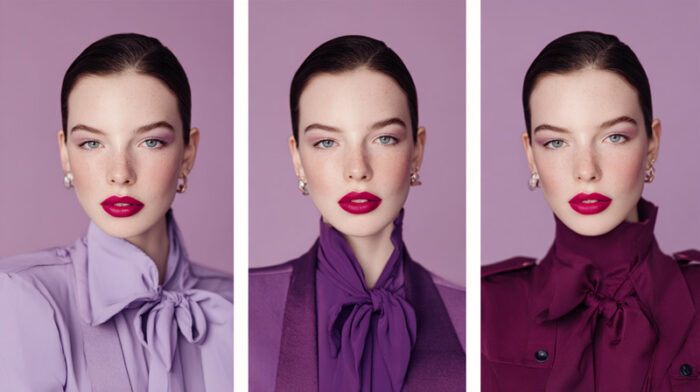
“Purple dress” isn’t one answer. A pale lavender slip dress and a near-black eggplant gown ask for almost opposite lipstick strategies.
Here’s the shade breakdown by dress tone, undertone fit, and finish.
| Dress Shade | Recommended Lipstick Family | Undertone Fit | Finish Suggestion |
|---|---|---|---|
| Lavender / Lilac | Soft coral, rose, warm nude | Warm or neutral | Satin or cream |
| Violet / Orchid | True red, berry | Cool or neutral | Matte |
| Plum / Eggplant | Deep berry, wine, or bright coral | Cool for wine, warm for coral | Matte or satin |
Lavender and Lilac Dresses
These lighter, cooler purples read almost pastel, so a heavy dark lip tends to overpower the dress rather than complement it.
Soft coral, dusty rose, or a warm nude keep the balance in the dress’s favor. What color lipstick goes with lavender dress specifically covers the lighter end of this range in more depth, including which nudes wash out and which ones don’t.
Violet and Orchid Dresses
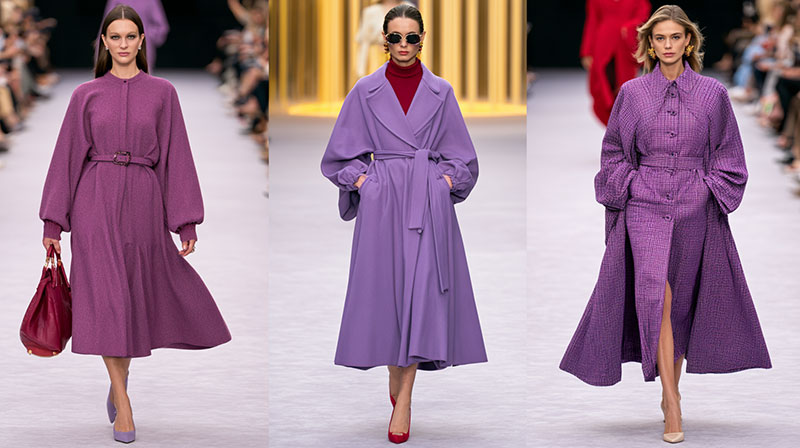
Pantone’s Very Peri, its 2022 color of the year, was officially described as a periwinkle blue with a violet red undertone (Pantone Color Institute, 2022), which is a fair description of a lot of mid-tone orchid and violet dresses on the market.
- True red with a slight blue base, not orange-based red
- Berry shades in the wine-to-magenta range
- Avoid anything too close to the dress’s own hue, which flattens the look
Plum and Eggplant Dresses
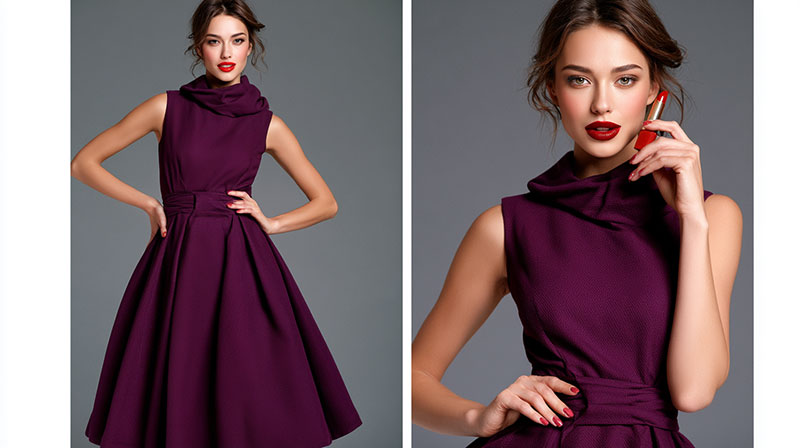
Dark, saturated purples can absorb a lot of lip color before the mouth registers as “colored” at all under normal lighting.
Deep berry and wine shades work with this instead of against it, and how to wear dark lipstick covers the application details, including how to keep a dark lip from looking harsh under flash photography. NARS Audacious in a blackened wine shade is a fairly reliable pick here, built specifically for this kind of saturated, low-light color.
- Deep wine or oxblood for a tonal, moody finish
- Bright coral for a deliberate high-contrast look
- Skip anything sheer, which tends to disappear against this much dress
Bold Lip or Nude Lip With a Purple Dress
This is less a color question than a spotlight question: does the lip lead, or does the dress?
Bold Lip
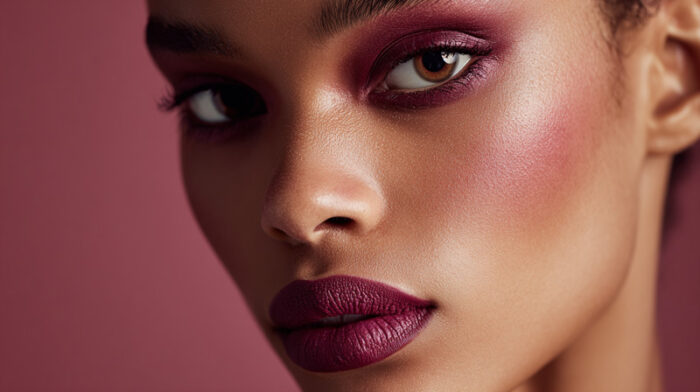
A L’Oréal Paris consumer survey found 35% of women shop for red lipstick, well behind the 64% who reach for nude, which means a genuinely bold lip on a purple dress already reads as an intentional choice rather than a default.
Pros:
- Creates a clear focal point for photos and events
- Balances a busier or more textured dress
- Works especially well with minimal eye makeup
Cons:
- Competes with statement jewelry or bold hair color
- Needs more upkeep through eating and drinking
- Can overwhelm smaller features if applied too heavily
Fenty Beauty’s Stunna Lip Paint was built around exactly this brief, a red formulated to read as “universal” across undertones, which is a big part of why it’s become a go-to for bold-lip beginners. For technique, how to wear bright lipstick covers the application and upkeep side once you’ve picked a shade.
Nude Lip
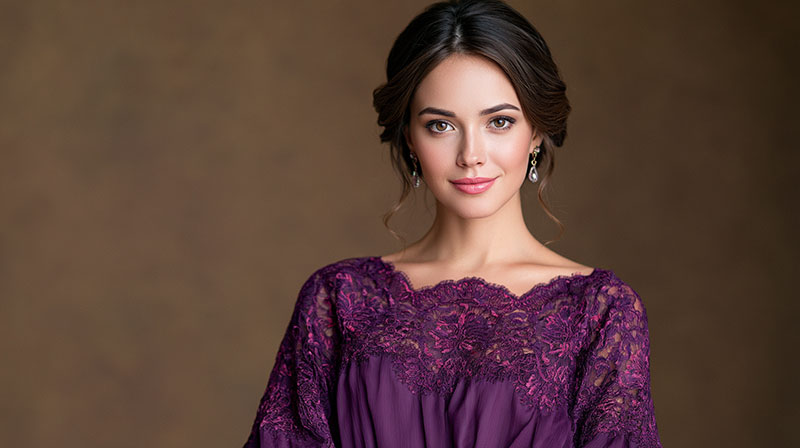
A nude lip lets the dress stay the loudest thing in the room, which matters more than people admit at formal events.
Pros:
- Keeps the outfit as the visual focal point
- Low-maintenance through a long event
- Pairs easily with a bolder eye look
Cons:
- Can wash out under harsh event or stage lighting
- Risks looking unfinished if the wrong undertone is picked
- Photographs flatter than it feels in person
How to pick a nude lipstick is worth reading before committing, since “nude” is the shade category most likely to go wrong when bought without swatching first.
Best Lipstick Finish for a Purple Dress
Shimmer lipsticks accounted for 37.2% of global lipstick revenue in 2024, but matte is the segment projected to grow fastest through 2030 (Grand View Research, 2025), which tracks with how often matte shows up in formal and photo-heavy styling advice.
Finish changes how a color reads almost as much as the shade itself does.
Matte

Matte finish: flat, no shine, high pigment payoff, and the safest bet for evening or formal purple looks.
It photographs cleanly under flash and doesn’t shift much over a long night, which is more than can be said for glossier formulas. What is matte lipstick covers the formula science behind why matte lasts longer but also dries lips out faster than other finishes. Huda Beauty’s Power Bullet Matte line built its whole reputation on staying put through hours of wear without cracking, which is the actual pain point most matte formulas fail on.
Satin and Cream
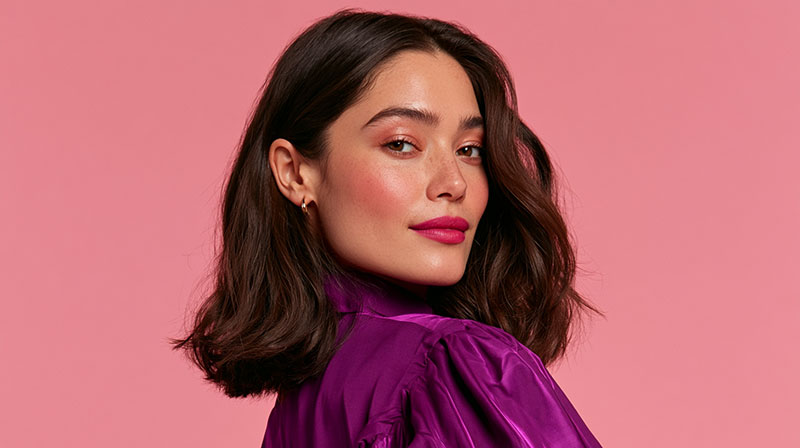
Satin and cream finishes split the difference: less flat than matte, less shiny than gloss, and generally more forgiving on dry or textured lips.
Gloss and Metallic
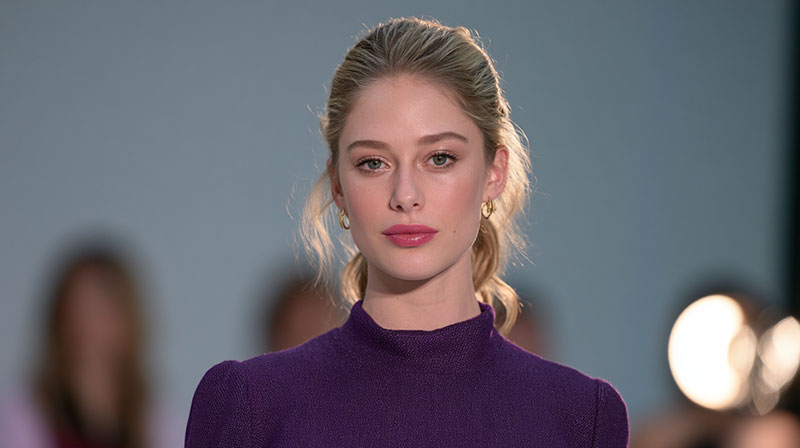
Gloss and metallic finishes lean younger and trend-driven, and they show wear fastest of the three options here.
- Best for shorter events with fewer photos
- Metallic shades can read costume-y under stage lighting
- Both need more frequent reapplication than matte or satin
What is glossy lipstick breaks down the formula differences between a true gloss and a glossy-finish lipstick, which aren’t quite the same product.
Lipstick Colors for Daytime vs Evening Purple Dress Looks
The same purple dress can take two different lipstick answers depending on whether you’re wearing it at noon or at 9pm.
Daytime
Daylight is unforgiving to heavy pigment, so lighter, sheerer shades tend to look more natural than they do under artificial light.
- Tinted nude or a sheer coral
- Soft rose for lavender and lilac dresses
- Satin finish over matte, which can look drying in direct sun
Evening and Formal
Artificial lighting flattens color, so evening looks generally need more saturation to read as intentional rather than washed out.
True red, deep berry, and wine all hold their own under low venue lighting in a way that sheer shades don’t. How to choose a red lipstick is the better starting point if you’re leaning toward red specifically for a formal purple-dress event, since undertone matters more at this saturation level than it does with a sheer daytime shade.
Best Lipstick Shades and Products to Wear With a Purple Dress
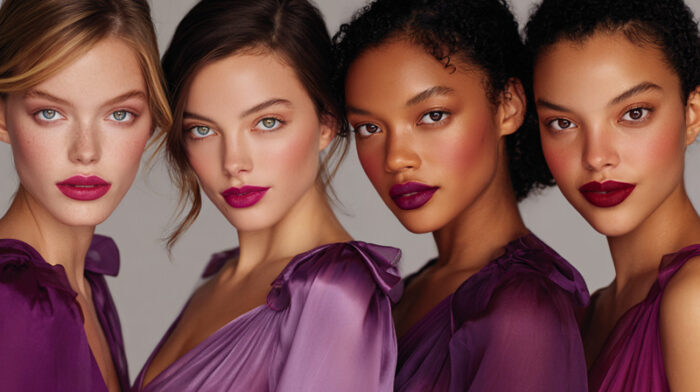
Color families only get you halfway. At some point you need an actual tube to buy, not just a category.
Seven in 10 makeup users have bought a “dupe” of a pricier shade, according to a 2024 Mintel report, so the picks below pair a prestige option with a drugstore stand-in wherever one exists.
- MAC Ruby Woo: blue-based matte red, built for violet and orchid dresses
- Maybelline SuperStay Matte Ink: drugstore matte berry-red, holds through a full evening in eggplant or plum
- Charlotte Tilbury Pillow Talk: satin nude-pink, the safe pick for lavender and lilac
- Revlon Super Lustrous: drugstore satin coral, a budget stand-in for the same lavender pairing
- Chanel Rouge Allure: satin true red with a slight blue base, for plum and eggplant dresses that want contrast without going matte
- Urban Decay Vice Lipstick: metallic and gloss finish options, for anyone treating the lip as the statement piece
Red and Berry Picks
MAC Ruby Woo has stayed a reference point for blue-based red for years, and it’s blue-based specifically that keeps it from clashing with a violet or orchid dress the way an orange-leaning red would.
Cool vs warm red lipstick is the deciding factor here more than brand loyalty. Maybelline’s SuperStay Matte Ink covers the same territory at drugstore price, and Chanel’s Rouge Allure gives the satin version of the same red for dresses in the deeper eggplant range.
Nude and Coral Picks
Lavender pairing: Charlotte Tilbury’s Pillow Talk built its reputation on being wearable across a wide range of skin tones, which is part of why it shows up so often on lavender and lilac dress guides.
Revlon Super Lustrous does a comparable coral-leaning nude for a fraction of the price, which matters if you’re buying a shade you’ll only wear once or twice a year for this exact pairing.
Bold Metallic and Gloss Picks
Urban Decay’s Vice line runs a 100-shade range that includes genuine metallic and high-gloss finishes, not just glossy versions of standard shades.
- Metallic works best on a violet or orchid dress under event lighting, where the shine actually reads
- Daylight tends to flatten metallic pigment, so save it for evening
What is metallic lipstick covers how that finish differs at the formula level from a standard glossy topcoat, which matters more than the shade name once you’re comparing options.
Coordinating Eye Makeup With the Lip and Purple Dress
The lip and the eye are competing for the same job: focal point. Only one should get it.
Bold lip: pairs with a neutral, low-contrast eye, usually a soft taupe or bronze wash with minimal liner.
Neutral makeup looks covers this pairing in more depth, and it’s the same principle Urban Decay leaned on when its Naked palette became the default “wear with anything bold” eye option.
Nude lip: pairs with a more defined eye, since the face needs a focal point somewhere and the mouth isn’t providing one.
A smokey eye, winged liner, or a deeper eyeshadow crease all work here. Smokey eye makeup looks breaks down the technique if you’re going this direction for the first time.
Purple or plum eyeshadow is the one combination worth avoiding on a purple dress specifically. Matching the eye to the dress removes the contrast that made the outfit work in the first place, and the whole look reads flat instead of intentional.
When These Lipstick Rules Don’t Apply
Everything above assumes a solid-color purple dress, standard color vision, and reasonably neutral lighting. Drop any one of those, and the advice needs adjusting.
Patterned or multi-color dresses: match the lip to the print’s dominant secondary color, not the purple base. A purple dress with a bright coral print wears a coral lip better than a berry one.
Near-black plum: once a purple gets dark enough, it stops reading as purple and starts reading as a neutral, closer to black than to violet. At that point, the usual purple-pairing logic (contrast vs. tonal) stops applying, and the dress behaves more like a black dress for lipstick purposes.
Color vision differences: about 8% of men have red-green color vision deficiency, according to the National Eye Institute, which means a “complementary” pairing built on that specific contrast won’t register the same way for a meaningful share of any room.
Lighting shifts saturation: warm venue lighting or a camera flash can shift how saturated a color appears regardless of finish, so a shade that reads perfectly in daylight can look muddier or brighter under artificial light than expected.
Personal preference: the #coloranalysis hashtag has drawn more than 1.2 billion views on TikTok (Highsnobiety, 2023), and most of that traffic is people deciding their best colors by personal season rather than by what dress they’re wearing that day.
None of this makes the earlier guidance wrong. It just means a chart built around purple, dress-shade, and undertone was never going to be the last word for every situation.
FAQ on What Color Lipstick Goes With A Purple Dress
Does the Same Lipstick Rule Apply to a Purple Bridesmaid or Wedding Guest Dress?
Bridesmaid and wedding guest dresses follow the same shade and undertone rules as any purple dress.
The one addition is coordination: check the other bridesmaids’ colors first. Wedding makeup looks covers how the rest of the face pulls together.
Can You Wear Pink Lipstick With a Purple Dress?
Pink works, provided it leans toward mauve or rose rather than baby pink.
Cool-toned pinks sit close to purple on the color wheel and read as a soft, tonal match. Overly sweet bubblegum pink tends to clash instead of complement.
What Lip Liner Should Go Under the Lipstick for a Clean Finish?
Match the liner to the lipstick family, not the dress.
A berry lipstick wants a berry liner, a coral lipstick wants a nude-coral one. How to choose lip liner breaks down full shade-matching by lip color.
How Do You Test a Lipstick Shade Against a Purple Dress Before Committing to It?
Hold the tube directly against the dress fabric in natural daylight, not store lighting, which shifts warm and cool tones.
Swatch on the inner wrist too; wrist skin tone is closer to lip pigmentation than the back of the hand.
What Should You Decide First in What Color Lipstick Goes With A Purple Dress?
Lipstick color for a purple dress comes down to one decision before any other: identify the dress’s exact undertone and saturation, then choose a contrast or tonal direction from there.
Three factors decide the order, not just the shade family:
- Dress undertone and saturation (lavender versus eggplant)
- Contrast or tonal direction, set by the wearer’s own undertone
- Finish, matched to daylight or venue lighting
Building the decision around undertone rather than a single fixed rule costs more time swatching before purchase, but it cuts the odds of a shade sitting unused in a drawer.
The complete makeup looks for a purple dress guide extends this same logic to eye color once the lip is settled.

She started writing on the site after fielding the same questions from clients and friends often enough to just write the answers down: which red won't turn orange on a warm undertone, how to keep lipstick from feathering into fine lines, why a "12-hour" formula rarely survives dinner.
Every review on the site follows the same rule she uses with paying clients: wear it first, then decide if it's worth recommending.
- How to Make Eyeliner Last Longer Without Smudging - August 31, 2026
- How to Make Eyeshadow Last Longer All Day - August 29, 2026
- How to Find Your Undertone in 5 Easy Steps - August 27, 2026