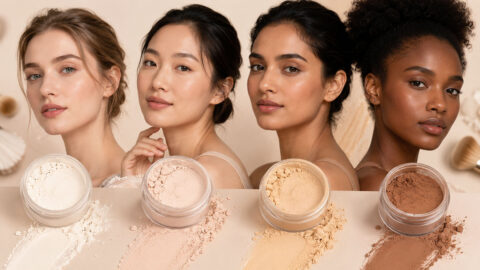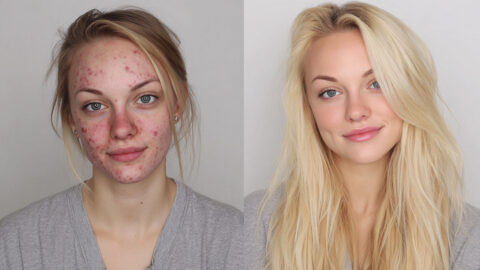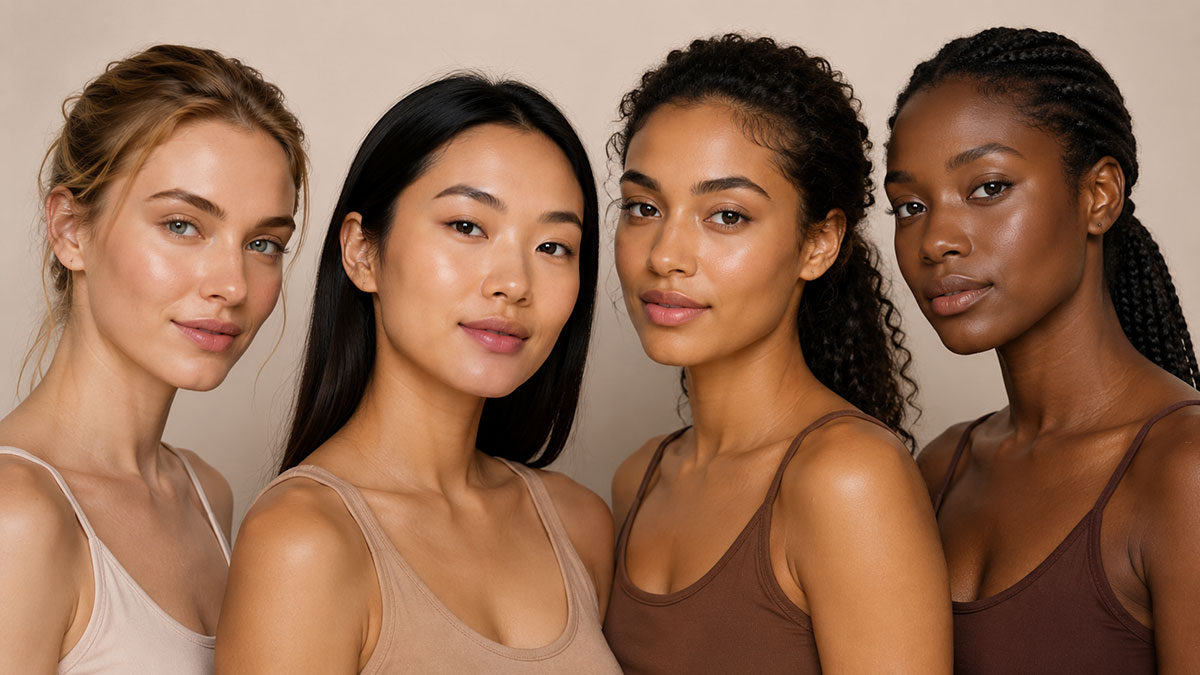
The wrong foundation does not just look off. It makes everything else you apply look worse too.
Knowing how to choose a foundation means understanding four things about your own skin: its type, its undertone, the coverage it actually needs, and the formula that holds up through a full day.
Most people skip at least one of those steps. That is usually where the orange cast, the midday separation, or the cakey finish comes from.
This guide covers shade matching, skin type compatibility, foundation formula types, finish, SPF, ingredients, and application tools, so you can make a decision that holds up past the first hour of wear.
What Is Foundation in Makeup
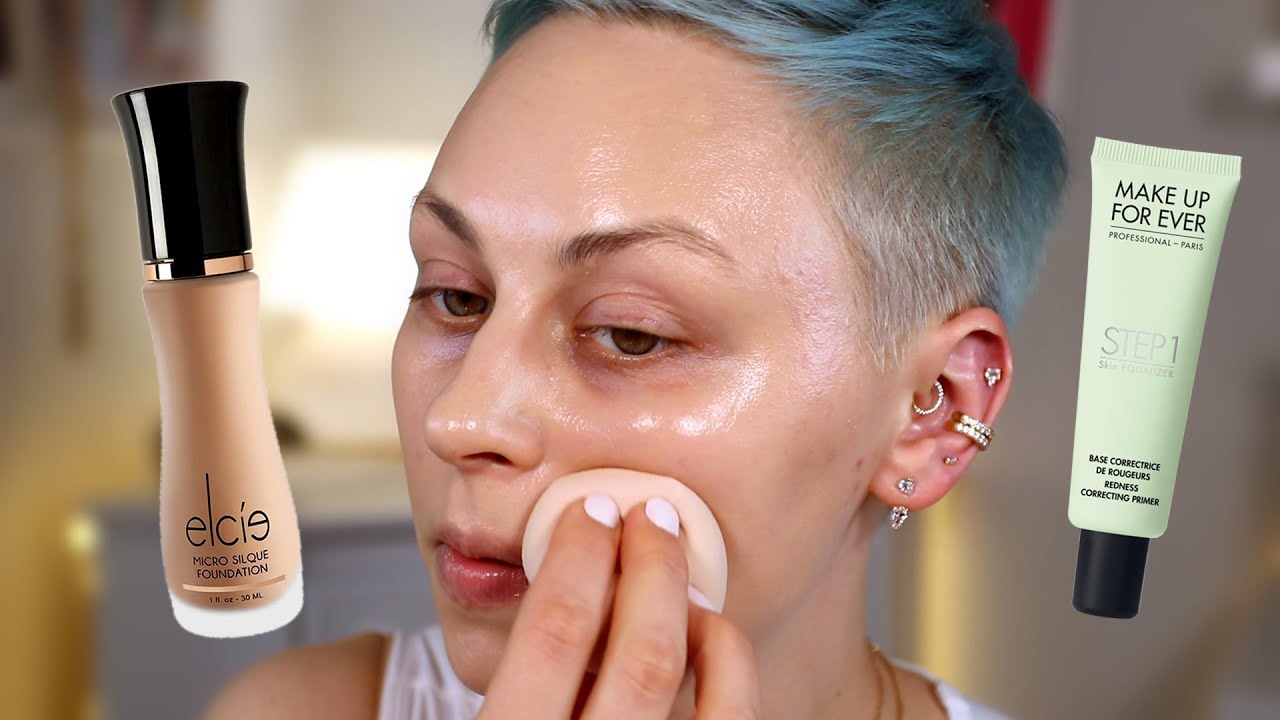
Foundation is a skin-colored cosmetic applied to the face and neck to create an even, uniform complexion. Its primary job is color correction, coverage, and skin tone unification. Everything else you apply sits on top of it.
The global makeup foundation market was valued at $12.5 billion in 2024, projected to reach $20.8 billion by 2033 (Business Research Insights). That kind of growth reflects how central foundation has become to everyday routines.
Foundation is not the same product as a concealer, tinted moisturizer, or BB cream. The differences come down to pigment load and finish intent.
| Product | Pigment Load | Primary Purpose | Coverage |
|---|---|---|---|
| Foundation | High | Even skin tone across entire face | Light to full |
| Tinted Moisturizer | Very low | Hydration with minimal color | Sheer only |
| BB Cream | Low to medium | Skincare plus light coverage | Sheer to light |
| Concealer | Very high | Targeted spot correction | Full, localized |
Foundation comes in 5 main forms: liquid, powder, stick, cushion, and serum-foundation hybrids. Each one behaves differently depending on formula, skin type, and finish goal.
Choosing the wrong formula undermines every other product in your routine. A foundation that separates, oxidizes, or sits badly on the skin makes concealer, blush, and powder work against each other instead of together.
Foundation dominated the makeup base market with the largest revenue share at 40.6% in 2024 (Grand View Research), confirming it remains the anchor product in most face routines.
What Skin Type Do You Have and Why It Changes Everything

Skin type determines which foundation formulas perform well and which ones fail. Get this wrong and no amount of setting spray saves you.
There are 5 skin types: oily, dry, combination, normal, and sensitive. Each one responds differently to foundation formulas based on sebum production, surface texture, and moisture retention.
Research shows combination skin affects roughly 60% of people, making it the most common type (World of Asaya, citing published dermatological data). That means most people cannot use a single formula across the entire face without zone-specific adjustments.
Oily and Acne-Prone Skin
Key characteristics: Excess sebum production, enlarged pores, frequent shine in the T-zone, prone to breakouts.
- Powder and matte liquid foundations control oil without adding moisture
- Full-coverage liquid formulas often separate on oily skin within 3-4 hours
- Avoid dimethicone-heavy formulas, which can trap sebum and worsen congestion
Niacinamide in the formula actively regulates sebum. It is one of the most compatible ingredients for oily and acne-prone skin in a foundation base.
Dry and Dehydrated Skin
Dry skin needs moisture-binding ingredients like hyaluronic acid and glycerin at every layer, including foundation.
Matte formulas pull moisture from dry skin as they set, causing cracking and flaking along fine lines. Satin and luminous finishes sit without pulling.
Serum foundations with hyaluronic acid, such as ILIA Skin Tint or Charlotte Tilbury Airbrush Flawless Serum Foundation, were specifically developed for this skin type.
Combination Skin
The T-zone (forehead, nose, chin) overproduces sebum while cheeks run dry or normal. A single formula rarely handles both zones equally well.
- Satin-finish liquid foundations are the most balanced option
- Zone-specific application: powder or mattifier on the T-zone, dewy or hydrating formula on cheeks
- Alternatively, apply a lightweight liquid base all over and spot-apply matte powder only where oil appears
Sensitive Skin
A 2024 Aveeno State of Skin Sensitivity Report found that 71% of global consumers report some degree of skin sensitivity, an increase of 55% over two decades. Fragrance and alcohol are the 2 most common irritants in foundation formulas.
Ingredients to avoid: synthetic fragrance, denatured alcohol (alcohol denat.), essential oils, heavy preservatives like methylisothiazolinone.
Dermatologist-tested and fragrance-free claims on packaging are a starting point, not a guarantee. Cross-check the ingredient list directly against a comedogenic or irritant database like Paula’s Choice Ingredient Checker.
How Do You Find Your Foundation Undertone?
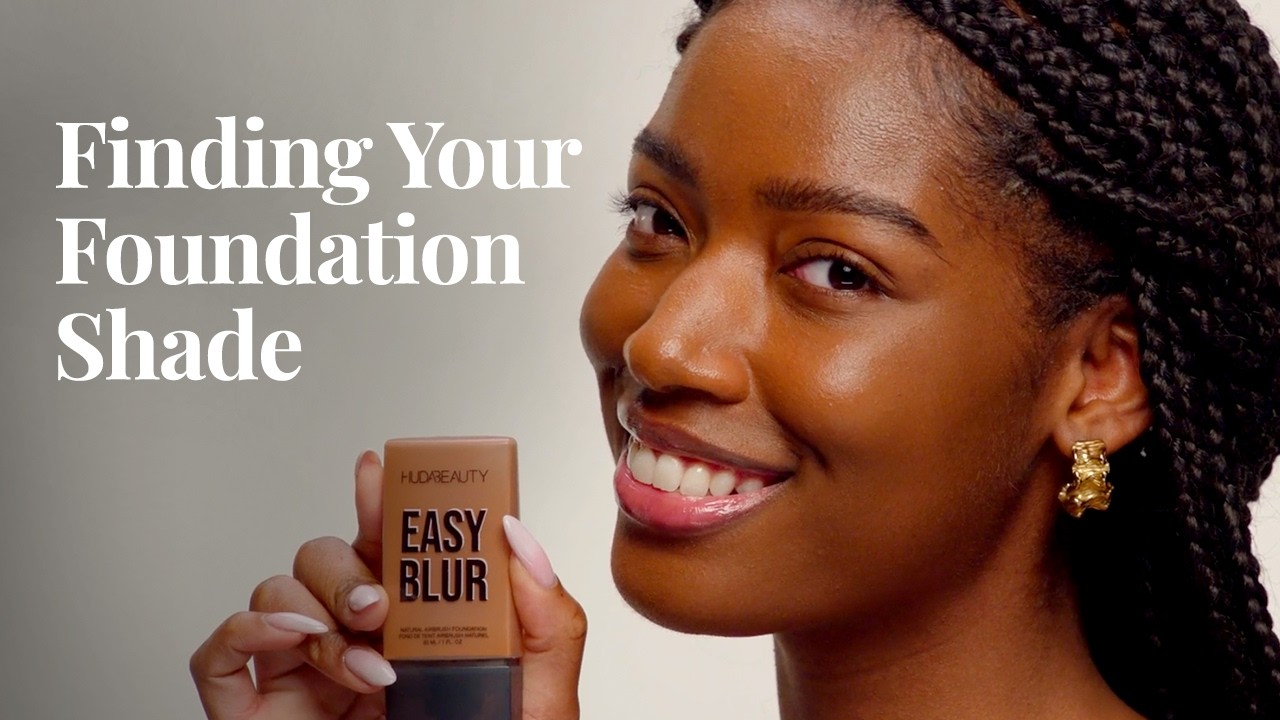
Undertone mismatch is the most common reason a foundation looks wrong, even when the shade depth is correct. A foundation that reads ashy, orange, or muddy almost always points to undertone, not shade.
There are 3 core undertone categories: warm (yellow, peachy, golden), cool (pink, red, bluish), and neutral (a mix of both). Olive undertones are a distinct fourth category, frequently misidentified as neutral or warm.
3 practical identification methods:
- Vein test: Green veins suggest warm undertones. Blue or purple veins suggest cool. A mix indicates neutral.
- Sun reaction test: Warm undertones tan easily and rarely burn. Cool undertones burn first, then tan or stay pink.
- Jewelry test: Gold flatters warm undertones. Silver flatters cool. Both work equally on neutral skin.
Understanding your undertone matters beyond foundation. It directly informs how to pick a lipstick color that actually complements your complexion rather than clashing with it.
An important distinction: surface skin tone (the depth of your skin, from fair to deep) is separate from undertone. A deep-toned person can have cool undertones. A fair-toned person can have warm ones. Depth and undertone are two different axes.
How Brand Undertone Coding Systems Work
Most major brands use letter or number codes to indicate undertone within their shade ranges.
| Brand | Coding System | What It Means |
|---|---|---|
| MAC | NW / NC | NW = cool/pink undertone. NC = warm/golden undertone. |
| Fenty Beauty | Number + W/N/C suffix | W = warm, N = neutral, C = cool. Number = depth. |
| NARS | Descriptive shade names | Shade descriptions on site indicate undertone direction. |
| L’Oréal True Match | Number + W/N/C | Same warm/neutral/cool logic, number indicates depth. |
The global foundation shade finder market was valued at $1.2 billion in 2023, growing at 6.5% CAGR through 2032 (Dataintelo). That investment directly reflects how frequently people struggle to identify their undertone without help.
How Do You Match Foundation Shade to Your Skin?
Shade matching is a 4-step process. Skip any step and the match is a guess.
A survey by Powered x Beauty Buddy found that 41% of consumers ranked shade match as the single most important factor when buying foundation, ahead of longevity (33%) and brand reputation (9%). Finding the right shade is the first problem most buyers need to solve.
The Correct Shade Testing Process
Step 1: Test on the jawline. Not the wrist, not the back of the hand. The jawline must match both your face and your neck so there is no visible line at either edge.
Step 2: Check in natural light. Store lighting is almost always warm and flattering, which makes wrong shades look acceptable. Step outside or stand near a window.
Step 3: Wait for oxidation. Foundation pigments react with skin oils (sebum) and pH levels within 20-30 minutes of application. A shade that looks correct immediately can turn noticeably orange, yellow, or ashy once it settles. The International Journal of Cosmetic Science documented that sebum can alter foundation shades by up to 20% in oily skin types.
Step 4: Wear it for 6-8 hours. Check for separation, pilling, color shift, and how the formula holds at the end of the day, not just at application.
Seasonal Shifts and Multiple Shades
Skin tone shifts with sun exposure. Most people need at least 2 foundation shades to cover summer and winter accurately. Alternatively, a shade mixer (a clear or adjusting drop added to the formula) allows mid-season transitions without buying a new bottle.
Brands like Fenty Beauty Pro Filt’r and Maybelline Fit Me both offer extensive shade ranges designed to accommodate seasonal depth changes across a wide spectrum of skin tones.
What Coverage Level Does Your Skin Need?

Coverage level is not about preference. It maps directly to what your skin concerns actually require.
The same Powered x Beauty Buddy survey found 30% of consumers prefer medium coverage and 29% prefer buildable coverage. Only a small portion of buyers actually need or want full coverage daily. Most people are over-buying coverage without realizing it.
| Coverage Level | Best For | Typical Formula Type |
|---|---|---|
| Light / Sheer | Even skin, visible freckles, minimal concerns | Tinted moisturizer, serum foundation, skin tint |
| Medium | Redness, minor discoloration, early post-acne marks | Lightweight liquid, satin finish |
| Full | Scars, hyperpigmentation, vitiligo, rosacea | High-pigment liquid or stick |
| Buildable | Variable daily needs, flexible finish | Liquid with medium base, layerable |
Why Full Coverage Fails on Dry Skin
Full-coverage formulas have high pigment concentration and often contain film-forming polymers that set firmly. On dry or flaky skin, these polymers grab onto texture and emphasize it rather than covering it.
Hydration first. A lightweight moisturizer followed by a hydrating primer changes the surface the foundation sits on. The formula performs better when skin is adequately prepped, regardless of coverage level.
MAC Studio Fix Fluid is a frequently cited example of a full-coverage formula that works across oily and normal skin but requires careful prep on dry skin to avoid settling into fine lines.
Buildable Coverage vs. Fixed Coverage
Buildable formulas start sheer and gain coverage with additional thin layers. Fixed-coverage formulas deliver their stated coverage in one application. Applying more of a fixed-coverage formula does not increase coverage. It just adds product, which leads to cakey results.
Check whether the product description says “buildable” or “full coverage.” These are different formulas with different behaviors.
What Foundation Formula Matches Your Skin Type and Goals?

Formula type determines texture, skin interaction, and wear time. Skin type narrows the options fast.
Liquid foundation remains the dominant format. It accounts for 78% of consumer preference according to Powered x Beauty Buddy survey data. That preference holds across skin types because liquid formulas offer the widest shade range and the most flexibility in finish and coverage.
Liquid Foundation
The most versatile format across all skin types. Finish ranges from matte to dewy depending on formula. Shade range is broadest in this category. Works well on dry, normal, and combination skin when matched to the right finish level.
Best for: normal, dry, combination skin. Not ideal for very oily skin unless the formula is oil-free and matte.
Powder Foundation
Controls sebum production throughout the day by absorbing excess oil. Sets immediately without a drying-down period.
- Best for oily skin as a standalone product
- Works for normal skin over a light moisturizer
- Poor performance on dry or flaky skin, where it grabs texture and flakes
- Applying a powder foundation over dry skin exaggerates the appearance of fine lines
Stick Foundation
High pigment load in a solid wax base. Portable and easy to apply. Covers well but the waxy formula tends to sit heavily on skin.
Risk: The occlusive wax base traps sebum against pore openings on acne-prone skin, increasing the likelihood of congestion and breakouts. Works better on normal and dry skin with minimal acne history.
Serum and Cushion Hybrids
Serum foundation: Skin-care-first formula with lower pigment concentration. Typically contains active ingredients like hyaluronic acid, niacinamide, or glycerin. Low to medium coverage, sheer to satin finish. ILIA Skin Tint and Giorgio Armani Luminous Silk Serum Foundation are category examples.
Cushion foundation: Sheer to medium coverage. Dewy finish. The sponge-soaked delivery system gives a lightweight, skin-like application. Suited to normal and dry skin. Works well in humid climates where heavier formulas break down faster. Less ideal for oily skin, as the dewy finish adds to existing shine.
What Finish Should a Foundation Have?

Finish is the final visual result after application. It determines how skin reads in different lighting. And it has a direct relationship with skin type.
Getting the finish wrong is one of the most common errors, even after finding the right shade and coverage. A perfect shade match in a matte formula on dry skin still looks flat and uncomfortable. A dewy finish on oily skin makes everything worse by midday.
Matte Finish
Eliminates shine. Absorbs light. Best for oily skin where excess sebum needs visual control throughout the day.
Problem on dry and mature skin: Matte formulas flatten the natural texture of skin in a way that makes it look less alive. On skin with fine lines, the flat finish settles into creases and emphasizes them. Setting with a translucent powder after applying a matte foundation amplifies this effect further on dry skin.
Matte is the right call for photography, video, and long event days where shine is the primary concern.
Dewy Finish
Reflects light. Adds luminosity. Reads well in natural light and evening settings.
- Best for dry and normal skin that lacks natural radiance
- Intensifies oiliness on oily skin, especially in the T-zone
- Performs well in drier climates where skin loses moisture faster
NARS Natural Radiant Longwear Foundation is a frequently recommended dewy-finish option that maintains luminosity without crossing into greasy territory on normal skin.
Satin and Natural Finish
The middle ground. Neither flat nor reflective. Satin finishes work across combination and normal skin types without the extremes of matte or dewy.
Most foundations marketed as “natural finish” or “skin-like” fall into this category. These are reliable for everyday wear because they do not magnify oiliness or dryness noticeably.
How Setting Products Change Finish
A setting powder applied over any foundation pushes it toward matte. A setting spray applied over any foundation maintains or adds dewiness. This means finish is partially adjustable after the fact, which gives flexibility when you are working between skin types or occasions.
Knowing how to apply makeup with a sponge also affects the final finish: a damp Beautyblender sheers out product and preserves a more skin-like, natural finish regardless of what the formula is designed to deliver.
How Does SPF in Foundation Affect Skin Protection?

Foundation with SPF adds a layer of UV defense. It does not replace sunscreen. That distinction matters more than most labels suggest.
SPF testing protocols require an application density of 2 mg/cm2. Studies published in Photodermatology, Photoimmunology and Photomedicine confirm that real-life consumers typically apply between 0.39 and 1.0 mg/cm2, which cuts the effective protection significantly below the labeled value.
Dermatology experts note that foundation also fails to cover the hairline, ears, and neck consistently, leaving gaps in UV protection where skin cancer risk is real.
Mineral vs. Chemical SPF Filters in Foundation
Mineral filters (zinc oxide, titanium dioxide) sit on top of skin and physically deflect UV rays. They are non-comedogenic and well-tolerated by sensitive and acne-prone skin. The trade-off is a slight white cast on deep skin tones.
Chemical filters (avobenzone, octinoxate) absorb UV radiation and convert it to heat. They blend invisibly into foundation formulas and suit a wider range of skin tones. On sensitive skin, they can cause stinging or redness.
bareMinerals and Clinique are two brands that have built foundation lines around mineral SPF specifically for sensitive and acne-prone skin users.
What SPF in Foundation Actually Does
SPF 15 to SPF 30 in a foundation formula adds a meaningful secondary layer of defense when worn over a dedicated SPF 30+ sunscreen. That combination is what dermatologists actually recommend.
- Foundation SPF alone: insufficient as standalone sun protection
- SPF sunscreen plus foundation SPF: adequate for most daily, low-to-moderate UV exposure
- Outdoor, extended sun exposure: requires reapplication of sunscreen every 2 hours regardless of foundation SPF
To reapply sunscreen over makeup without disturbing foundation, an SPF setting powder or mist is the most practical method for mid-day reapplication.
What Ingredients in Foundation Should You Check Before Buying?

Most people read shades and finishes on packaging. Almost nobody reads the ingredient list. That gap is where allergic reactions, breakouts, and poor wear time come from.
5 ingredients worth checking in any foundation formula:
- Hyaluronic acid and glycerin: Moisture-binding agents that draw water to skin. Suited to dry and normal skin. Both improve wear comfort throughout the day.
- Niacinamide: Regulates sebum production, reduces redness, and minimizes pore appearance. Studies show 2% niacinamide reduces sebum by up to 30% within 4 weeks (Smytten, citing published trial data). Works across all skin types.
- Dimethicone: Creates a smooth application surface. Present in most liquid foundations. On acne-prone skin, dimethicone can form an occlusive layer that traps sebum against pore openings.
- Fragrance (parfum): The primary irritant in cosmetic products. No functional benefit in foundation. Avoid on sensitive skin without exception.
- Denatured alcohol (alcohol denat.): Used as a quick-drying agent. Disrupts the skin barrier on dry and sensitive skin over repeated daily use.
Non-Comedogenic Claims and What They Mean
Non-comedogenic labeling signals that a product was formulated to avoid pore-clogging ingredients. The term is not regulated. No standard test or threshold defines it legally.
The better approach is to cross-check the full ingredient list against a comedogenic rating database. Paula’s Choice Ingredient Checker and CosDNA both flag individual ingredients by comedogenic risk level, giving a more reliable read than the label claim alone.
Brands with strong dermatologist-tested credentials, including Clinique and Bare Minerals, submit formulas to controlled irritancy and comedogenicity testing, which gives their labeling more actual weight than most drugstore claims.
Clean Beauty and Ingredient Transparency
Clean beauty demand is driving reformulation across the market. 63% of consumers say they are more inclined to buy from brands with clean or ingredient-transparent positioning (Clean Hub, cited in Arbelle AI industry report 2024).
For foundation specifically, this has produced a wave of fragrance-free, silicone-reduced, and preservative-minimal formulas across price points. Rare Beauty Positive Light Tinted Moisturizer and ILIA Skin Tint both gained traction partly because their ingredient lists are short and readable.
How Do You Test a Foundation Before Committing?

Buying foundation without testing it is a coin flip. The shade, the oxidation behavior, and the wear time all need real-world verification before spending money.
The foundation shade finder market reached $1.2 billion in 2023 (Dataintelo), built entirely around solving the problem that in-store and online testing is inadequate without a structured method.
The In-Store Testing Protocol
Apply on the jawline. Step into natural light. Wait a minimum of 20 minutes before making any judgment. Oxidation in oily and combination skin types can shift a formula up to 2 shades darker within that window.
Most makeup counters at Sephora, MAC, and department store beauty floors allow swatching and full-application testing on request. Asking is standard practice, not an imposition.
Testing for Sensitive and Acne-Prone Skin
Patch test first. Apply a small amount on the inner arm and leave for 24 hours. Any redness, itching, or congestion signals a formula incompatibility before it spreads across your face.
This is not overcaution. Aveeno’s 2024 State of Skin Sensitivity data shows 71% of global consumers report sensitive skin to some degree. Most of them will react to at least one common foundation ingredient.
Testing Online Purchases
Virtual try-on tools reduce shade guesswork. Sephora Virtual Artist and NARS Foundation Finder both analyze skin tone from uploaded photos and map it to current shade ranges.
- Use shade guarantee or free-return policies before committing to a full bottle
- Order sample sizes where available (Sephora, Cult Beauty, and several brand direct sites offer this)
- Check shade match data from Match My Makeup, whose 2023 report drew from over 2 million users to identify which shades actually get repurchased
How Does Skin Age Affect Foundation Choice?

Mature skin needs a different formula logic, not just a different product. The texture changes that come with age make most standard foundation advice wrong for skin over 40.
75% of women aged 40 and older report concerns about wrinkles and sagging skin (Journal of Clinical and Aesthetic Dermatology, cited in Market.us Skincare Statistics 2026). Foundation selection either addresses those concerns or makes them more visible.
What Changes in Skin After 40
Skin loses elasticity, surface moisture, and cell turnover speed. Dead skin cells accumulate faster than they shed, creating a rough surface texture. Cell turnover slows with age, as noted by Dr. Ashley Magovern, board-certified dermatologist and medical advisor at Dermstore.
Matte and full-coverage formulas settle into fine lines, emphasize dry texture, and flatten the natural luminosity that aging skin already lacks. These are not personal failures. They are formula mismatches.
What Actually Works on Mature Skin
Formula priorities for skin 40+:
- Lightweight, hydrating liquid or serum foundation
- Satin or dewy finish over matte
- Buildable coverage rather than fixed full coverage
- Hydrating primer instead of pore-filling silicone primer
Laura Mercier Tinted Moisturizer, ILIA Skin Tint, and Giorgio Armani Luminous Silk are the 3 most frequently cited formulas for mature skin because they deliver coverage without sitting visibly in texture.
Setting Powder on Mature Skin
Avoid heavy powder application over the entire face. Translucent setting powder on mature skin locks in every dry patch and fine line it touches.
Use powder only on the T-zone if oil control is needed. The rest of the face benefits more from a light setting spray, which locks foundation without drying the surface. Mintel’s 2023 Mature Beauty Market Report confirmed that 40% of mature beauty consumers describe their makeup skills as basic, which suggests most are still applying powder across the full face out of habit rather than skin-specific logic.
What Tools and Techniques Change How a Foundation Looks?
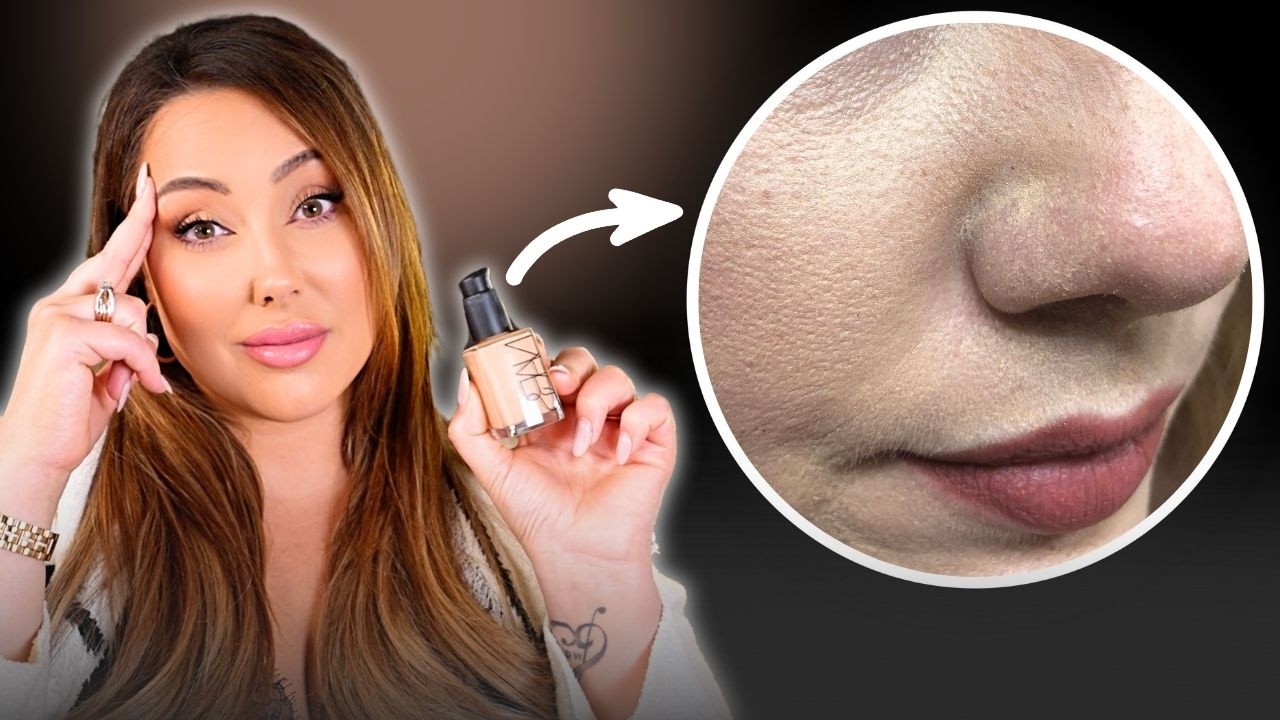
The formula you choose matters. The tool and skin prep you use can change the result by more than the formula itself. Same product, different outcome.
Skin prep sequence has a direct mechanical effect: moisturizer creates a hydrated surface, SPF sunscreen adds a protective layer, and primer fills surface texture before foundation is applied. Skipping prep steps does not save time. It transfers the coverage work to the foundation, which then overperforms in some areas and underperforms in others.
Damp Sponge Application
A damp Beautyblender sheers out liquid foundation and delivers a skin-like, natural finish. The method works best with water-based formulas.
Key compatibility rule: A wet sponge does not blend silicone-based foundations effectively. Water and silicone do not mix. Bouncing a damp sponge over a silicone foundation moves the product around without thinning it, which can pack formula into pores rather than blending it (Kevin James Bennett, professional makeup artist and cosmetic chemist). Match the sponge prep to the formula base.
Brush Application
A flat foundation brush builds more product on skin than a sponge. That is useful for full-coverage formulas but produces a denser, less skin-like result on lightweight formulas.
- Flat brush: higher coverage, visible texture on thin formulas
- Buffing brush: works product into skin, suits medium coverage liquids
- Stippling brush: sheer, airbrushed finish, good for serum foundations
Primer and Foundation Formula Matching
Primer base and foundation base must match. Silicone primer under a water-based foundation causes pilling. The formulas repel rather than bond, and the foundation rolls off the skin surface in tiny balls within minutes of application.
Check the first 5 ingredients on both primer and foundation. If the primer leads with dimethicone or cyclopentasiloxane and the foundation leads with water (aqua), they are incompatible. Swap one or skip primer entirely until a compatible pair is identified.
Learning how to use makeup primer correctly reduces pilling, improves foundation wear time, and reduces the amount of product needed. It also works alongside knowing how to apply foundation with the right tool for the specific formula type.
Getting all of this right sets the base for everything else, whether that is blush placement for your face shape, concealer layering, or choosing a dry skin makeup approach that does not flake by noon.
FAQ on How To Choose A Foundation
How do I find my foundation shade?
Test on your jawline, not your wrist. Check in natural light and wait 20-30 minutes for oxidation. A shade that looks right immediately can shift orange or ashy once it reacts with your skin’s sebum and pH.
How do I know my skin undertone?
Check your veins. Green veins suggest warm undertones, blue or purple suggest cool, and a mix indicates neutral. Olive undertones are a distinct fourth category, frequently misread as neutral or warm by most shade-matching tools.
What foundation formula is best for oily skin?
Matte or oil-free liquid foundation controls sebum without adding moisture. Look for niacinamide in the formula. It regulates oil production and minimizes pore appearance. Avoid heavy dimethicone-based formulas, which can trap sebum and worsen congestion.
What foundation works best for dry skin?
Use a hydrating liquid or serum foundation with hyaluronic acid or glycerin. Avoid matte formulas entirely. They pull moisture from dry skin as they set, causing flaking and cracking along fine lines within a few hours.
What does foundation coverage mean?
Coverage refers to how much of the skin’s surface the formula conceals. Light coverage suits even skin tones. Medium handles redness and minor discoloration. Full coverage addresses scars, hyperpigmentation, and rosacea. Buildable formulas let you adjust as needed.
What is foundation oxidation?
Oxidation is a chemical reaction between foundation pigments, skin oils, and pH levels that causes the shade to darken or shift after application. Iron oxide pigments are the main reactive ingredient. Oily skin accelerates the process noticeably.
Does foundation SPF replace sunscreen?
No. Most people apply too little foundation to reach the labeled SPF. Dermatologists confirm that foundation SPF alone provides insufficient protection. Apply a dedicated SPF 30+ sunscreen underneath. Foundation SPF adds a secondary layer, not a primary one.
What finish should I choose for my skin type?
Oily skin: matte. Dry skin: dewy or satin. Combination and normal skin: satin or natural finish. Setting powder pushes any foundation toward matte. A setting spray maintains or adds dewiness after application, giving you finish flexibility.
How do I stop my foundation from pilling?
Pilling happens when primer and foundation bases are incompatible. A silicone primer under a water-based foundation causes the formula to roll off rather than bond. Match the bases or skip primer until you identify a compatible pair.
What foundation ingredients should I avoid for sensitive skin?
Avoid synthetic fragrance, denatured alcohol, and essential oils. These are the 3 most common irritants in foundation formulas. Cross-check the full ingredient list against Paula’s Choice Ingredient Checker rather than relying on non-comedogenic label claims alone.
Conclusion
This conclusion is for an article presenting how to choose a foundation as a process built on skin knowledge, not guesswork.
Your skin type narrows the formula. Your undertone locks the shade. Coverage level, finish, and ingredient compatibility take care of the rest.
Check the ingredient list for niacinamide, hyaluronic acid, and fragrance before buying. Test on the jawline. Wait for oxidation. Wear it for a full day before committing.
Mature skin needs lighter formulas and less powder. Sensitive skin needs fragrance-free, alcohol-free labels backed by an actual ingredient check.
Get the primer and foundation base to match, prep skin properly, and the application tool does the rest.
One right decision at the formula stage saves everything that comes after it.

She started writing on the site after fielding the same questions from clients and friends often enough to just write the answers down: which red won't turn orange on a warm undertone, how to keep lipstick from feathering into fine lines, why a "12-hour" formula rarely survives dinner.
Every review on the site follows the same rule she uses with paying clients: wear it first, then decide if it's worth recommending.
- How to Make Eyeliner Last Longer Without Smudging - August 31, 2026
- How to Make Eyeshadow Last Longer All Day - August 29, 2026
- How to Find Your Undertone in 5 Easy Steps - August 27, 2026