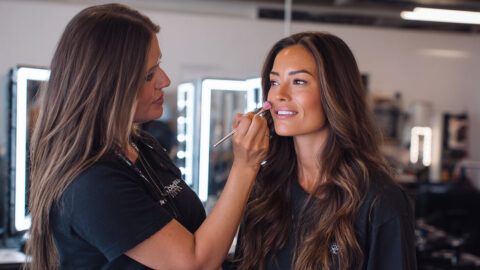
Primer goes on after moisturizer and sunscreen, in a thin layer about the size of a pea, and it needs to dry to the touch before foundation. That’s the short version.
Smoothing pores and fine lines is the main job, and it gives foundation a surface to grip. Hydrating and mattifying versions are the obvious split, pore-filling formulas sit alongside them, and each can be silicone-based or water-based. Which one suits you depends on your skin.
The layer underneath sets the pace. The American Academy of Dermatology (as of October 2026) calls for at least 1 teaspoon of sunscreen on the face. That’s a full film, and it has to dry before primer goes over it.
What is the correct order for applying makeup primer?
Primer comes after sunscreen and before foundation. Everything ahead of it is skin prep, and everything after it is makeup.
- Cleanse and pat the face dry.
- Apply moisturizer and let it absorb.
- Apply sunscreen as the last skincare step.
- Wait until the sunscreen feels dry to the touch.
- Smooth on a thin layer of primer.
- Apply foundation and concealer, then set with powder.
Board-certified dermatologist Doris Day recommends layering from thinnest to thickest, with primer after sunscreen and applied gently. The same logic runs through prepping your skin before makeup, where each layer settles before the next one goes on.
Anything after foundation follows the standard makeup layering order.
Sources disagree on one step, which is whether sunscreen goes before or after moisturizer.
Guides agree that mineral sunscreen goes over moisturizer. For chemical sunscreen, the dermatology practice behind the Dr. Rogers blog says to apply it before moisturizer so it can absorb, while Live Tinted says moisturizer first works for both types.
Primer sits after sunscreen in both versions, so the split never changes where primer goes. Honestly, this argument matters less than people make it.
Does makeup primer replace sunscreen or moisturizer?
No. A primer with SPF is a bonus layer, not a stand-in for sunscreen.
Prevent Cancer Foundation (2026) says most people spread SPF makeup far thinner than the lab test layer, so a labeled SPF can work out to an equivalent of 5 or 10 on the face.
Layered SPF values do not add up either, per the same source.
MasterClass treats an SPF primer or a moisturizer-primer hybrid as a reason to skip the separate step. For the thin-layer reason above, the SPF half of that shortcut protects less than the label says.
How long should sunscreen set before primer?
Published intervals run from a few minutes to 15, and they answer different questions.
Colorescience guidance gives 3 to 5 minutes for sunscreen to absorb before primer goes on. The American Academy of Dermatology (as of October 2026) gives 15 minutes for sunscreen to absorb and protect before sun exposure.
The AAD figure marks when protection starts, not when makeup can go on. A few minutes is enough for the film to dry, which licensed aesthetician Ashley Johnson (Sam Health) ties to keeping the layer from being moved around by makeup.
Rushing costs more than the minutes saved. Cosmetic chemist Javon Ford told Air Mail (2024) that sunscreens with film-formers, Neutrogena Hydro Boost among them, roll into balls when the skin prep underneath is poor.
How much primer do you need, and how do you apply it?
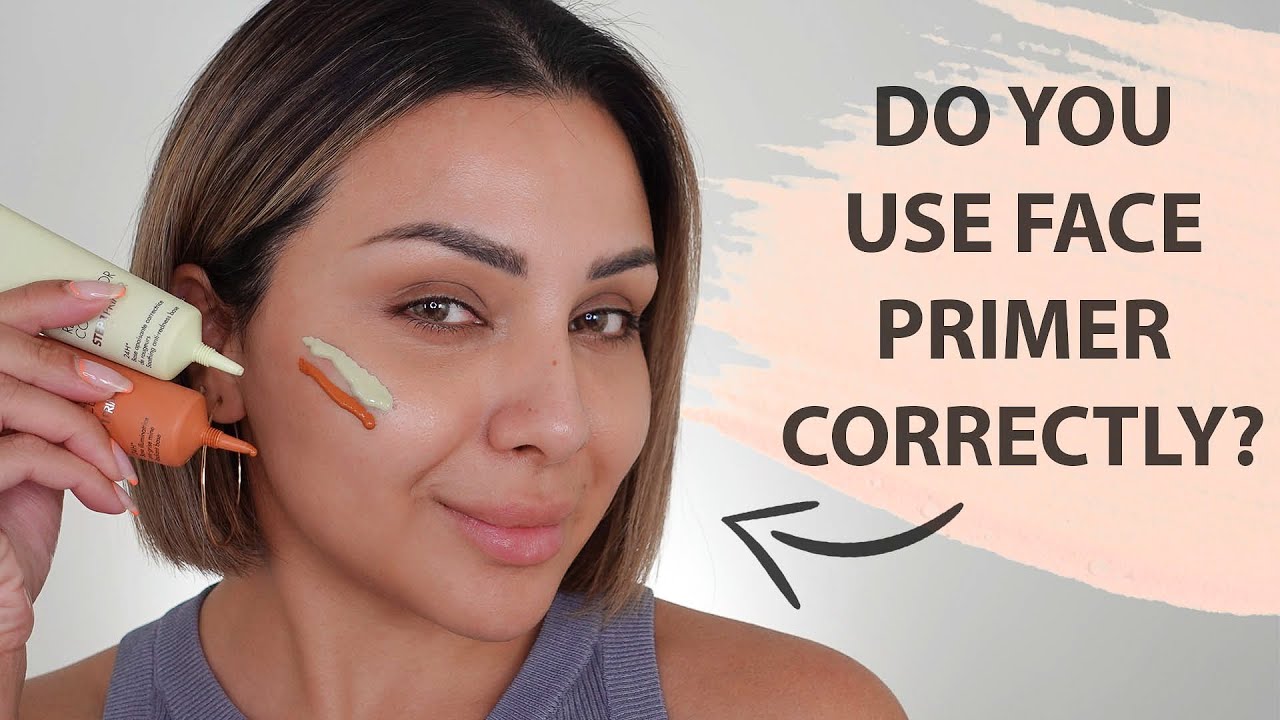
A pea-sized amount covers the whole face. Press it in thin instead of rubbing it around.
Amount and tools
Put the pea-sized amount on the back of the hand and warm it with a fingertip, which softens it for easier spreading (No7, 2026).
Fingers work if you tap from the center of the face outward (Smytten). A brush or sponge gives a more even, smoother film than fingers alone (Lakme India).
Tap, do not rub. Smytten and Doris Day both advise patting over rubbing, and WebMD (2013) adds that less is more.
Where to apply primer

All over the face is optional. A celebrity makeup artist quoted by Skincare.com (2025) applies it only where makeup wears off or pores are larger, such as the T-zone.
Mattifying or pore-filling formulas go on the T-zone, nose and chin. Dry cheeks get a hydrating one. Illuminating primer belongs on the cheekbones, brow bone and bridge of the nose.
Eyelids are the exception to the face formula. WebMD (2013) says primer on oily lids helps eye makeup stick and last, and Stylecraze limits the lids to eye primer only.
The product for that job is a dedicated eyeshadow primer.
How long should makeup primer set before foundation?
Between 30 seconds and about 3 minutes, depending on which guide you follow. Wait until the surface feels dry, then start foundation.
As of October 2026, Maybelline India says 30 to 60 seconds. Nykaa (2023) says about 3 minutes, and No7 (2026) says a couple of minutes.
None of the guides shows test data for its number. The spread likely tracks formula and layer thickness, since a thin silicone film and a water-based gel dry at different speeds.
Skipping the wait has a documented cost. Nykaa warns that primer slides off with the makeup, and Smytten says a hurried base leaves makeup shifting through the day.
No guide documents a downside to waiting longer, so the longer end is the safer pick.
Use the gap for brows or eye makeup, or for lip color, as Smytten suggests. When the surface no longer drags under a clean fingertip, it is time to start applying your foundation.
Which makeup primer type suits your skin?
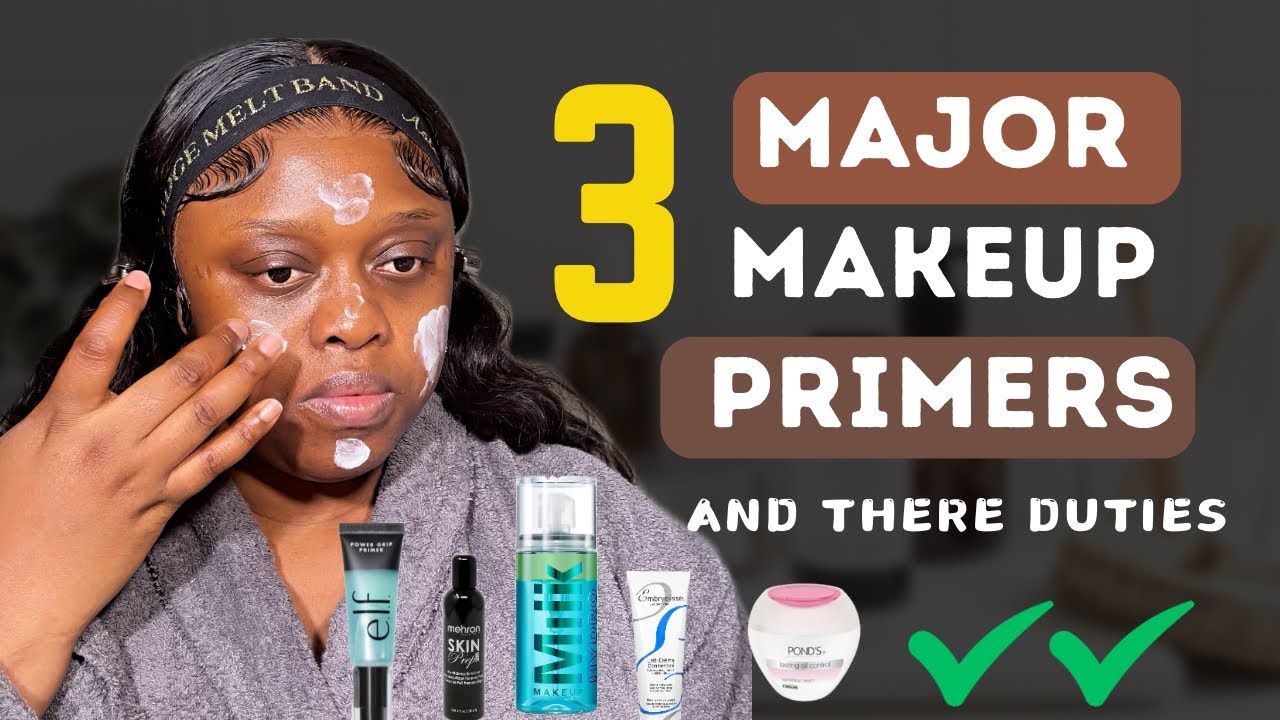
Buy for your biggest complaint. Dry skin wants hydrating, oily skin wants mattifying, and visible pores call for pore-filling. Grip formulas are for wear time and humidity, illuminating ones for dull skin.
| Primer type | Best for | Typical formula | Watch for |
|---|---|---|---|
| Hydrating | Dry skin | Water-based, hyaluronic acid, glycerin | Skip it on oil-prone zones |
| Mattifying | Oily and combination skin | Silicone, niacinamide | Skip it on dry cheeks |
| Pore-filling | Visible pores, fine lines | Silicone (dimethicone) | Pills over a mismatched base |
| Grip | Long wear, humidity | Silicone adhesive layer | Needs the full set time |
| Illuminating | Dull skin | Light-reflecting pigments | Adds shine, so high points only |
How skin type changes the choice

Combination skin takes two primers, not a compromise formula. Smytten and Forever52 both describe mattifying product on the T-zone and hydrating product on the cheeks.
Dry skin does better with a primer that feels like a lightweight moisturizer. For fine lines, WebMD (2013) says primer helps most around the eyes, where makeup settles into creases.
Sensitive and acne-prone skin is where sources split. WebMD (2013) says any skin type can wear primer because the moisture comes from silicone, not oil, while NBC Select (2025) steers sensitive and acne-prone skin toward water-based, fragrance-free, oil-free formulas.
Those positions fit together better than they first look. The Cosmetic Ingredient Review panel treats dimethicone as safe as used in cosmetics and reports it is generally not absorbed through skin, and NBC Select points to fragrance as the common irritant. So the label check matters more than the silicone question.
Fragrance-free labels also carry over into a full makeup routine for sensitive skin.
Color-correcting primer shades
Not everyone needs one. MAC global senior artist Caroline Hernandez, quoted by The Fashion Spot, says a pore-blurring primer fits better when skin color is already even.
- Green neutralizes redness from acne or rosacea
- Lilac or lavender brightens sallow tones on light to medium skin
- Peach or apricot counters dark or age spots from sun exposure
Apply tinted primer only where the color problem sits, such as green on a red chin and lilac over sallow cheeks. Hernandez describes using different shades on different zones of the same face.
Which ingredients to look for on the label
Dimethicone is the main silicone in pore-filling and grip primers, and silicones show up on labels with names ending in -cone or -siloxane. Hyaluronic acid and glycerin bind water in hydrating formulas.
Niacinamide turns up in oil-control and tone-evening primers. Clinique’s silicone-free Even Better Pore Defying Primer pairs it with hyaluronic acid, per Beauty Bay.
For a silicone-based reference point, HuffPost (2019) names Benefit’s POREfessional and Smashbox’s Photo Finish as popular examples.
Silicone-based or water-based primer: which works with your foundation?

Silicone-based primer under water-based foundation is the pairing sources warn against. The reverse, water-based primer under silicone foundation, is where they disagree.
Silicone-based primer pros and cons
Silicone fills pores and fine lines for a blurred finish. Cosmetic chemist Ni’Kita Wilson of Cosmetech Laboratories says it gives pigment an adhesive surface (O, The Oprah Magazine, 2009), and NBC Select (2025) says it suits oily skin.
The downsides come from pairing. L’Oreal Paris (2023) says silicone primer pills under water-based foundation, because silicone repels water. Cosmetic chemist Javon Ford (Air Mail, 2024) adds that it sits poorly under oil-based foundation, a common type in clean-beauty lines.
Water-based primer pros and cons
| Pros | Cons |
|---|---|
| Hydrates dry skin | Less pore blur than silicone |
| Gentler on sensitive skin when fragrance-free | Pairing with silicone foundation is disputed |
| Generally layers well under silicone foundation (Ford) | Oil-based foundation over it pills (Makeup.com, 2018) |
NBC Select (2025) credits silicone with smoothing texture and blurring pores, and water-based formulas with hydration. That split explains the table. Water-based wins on comfort, silicone on blur.
Does the match-the-base rule hold up?
Sources disagree on how strict the rule is, and a cosmetic chemist backs only the narrower version.
L’Oreal Paris (2023) says to pair like with like, and offers two of its own silicone-based products, Prime Lab Pore Minimizer and Infallible 24 Hour Fresh Wear Foundation, as a safe match. HuffPost (2019) quotes makeup artists giving the same advice.
Javon Ford told Air Mail (2024) that this is the usual school of thought, then added a correction. Most primers are now water-based and most foundations silicone-based, and silicone foundations generally layer well over water-based primers.
Makeup.com (2018) names another cause. Thick layers dry differently from thin ones, so stacked product flakes whatever the base.
Put together, the advice is short.
- With a silicone-based primer, use a silicone-based foundation
- A water-based primer works under either foundation base, once it has dried
- Oil-based foundation is the awkward one, since sources flag both silicone and oil-free primers as risky, so test the pair first
Ford’s own check is cheap. Put the skincare and the makeup on the back of the hand and see whether they blend or ball up.
Silicone-free primers
Silicone-free options exist, and NBC Select (2025) lists Huda Beauty’s Easy Blur Silicone-Free primer among its picks for acne-prone skin.
Sources disagree on how easy they are to find. Ford says most primers are now water-based, while Live That Glow calls non-silicone primers hard to find.
Why does foundation pill or slide over makeup primer?
A base mismatch is only one cause. Gummy serums, dead skin, thick layers and heavy-handed blending all make foundation pill. Eyelid creasing and midday shine come from something else.
Pilling and balling
Serums with xanthan or cellulose gum ball up when overused, according to Ford (Air Mail, 2024), and he says polymer-heavy skincare and makeup often cause problems too.
Flaky patches make foundation roll, per makeup artists Alexandre Deslauriers and Mai Quynh (HuffPost, 2019), so exfoliate first.
Stacked product does not dry the way a thin film does (Makeup.com, 2018). And dragging foundation across the face is a bad habit. Quynh stipples it on with a brush or sponge instead of sweeping.
A fuller checklist for stopping makeup from pilling covers the skincare side.
Creasing on the eyelids

Oily lids are the usual cause, and facial skin type does not predict them.
Too Faced’s Kate Watson told Beautylish that eye shape and the position of overactive glands drive lid oil, so a lid can run oily on a face that is not.
Skip concealer as a lid base. Makeup artist Emily Kate Warren (WebMD) recommends an eyelid-specific primer instead. Even a good eye primer loses on very oily lids, with frequent lid touching, or under too much product (Nykaa).
Greasy or patchy makeup
Shine by midday on oily skin is often a powder problem. The same WebMD guide warns against piling on face powder and suggests pressing blotting paper onto oily spots, then rolling it off instead of rubbing.
Patchy foundation follows the thick-layer rule above, since each extra pass dries differently. For foundation that has already gone patchy, a separate guide on how to fix patchy makeup covers the repair.
When is makeup primer not worth using?
Skip it when your foundation already lasts all day or your skin reacts to it. It also isn’t worth the bother if it only adds one more layer to an already heavy routine.
When your makeup already lasts
Several makeup artists treat primer as optional. Nyssa, quoted by Live That Glow, says proper skin prep removes the need for primer. Bustle’s makeup artists say it is not necessary if foundation already stays on all day.
Alexis Oakley goes from a good moisturizer straight to foundation, per Coveteur.
Estee Lauder’s Jocelyn Biga, also quoted by Coveteur, preps skin with half the amount of product she would use in a typical nighttime routine, and she does not treat primer as the answer to wear time. She points to a long-wear foundation, Estee Lauder Double Wear among them, for makeup that lasts all day.
Her other tool is applying setting powder only on the zones that release the most natural oil.
How strong is the evidence that primer extends wear?

Brand data exists, for what it’s worth. 85% of participants in a two-week independent consumer study said Mary Kay’s Foundation Primer SPF 15 extended the wear of their makeup, per the brand’s product page (as of October 2026).
That is a brand-reported, self-reported figure. A blogger’s half-face test at The Anna Edit points the same way: the primed side kept most of its foundation and eyeshadow, while the bare side lost foundation on the cheeks and eyeshadow faded on oily lids.
One face is not a trial. The wear evidence cited here is a brand survey and a single-person test, and neither is a controlled study.
When skin reacts to a new product
Test a new primer before wearing it daily. The American Academy of Dermatology (as of October 2026) and the FDA outline the steps.
- Apply the product to a small test spot twice a day for 7 to 10 days.
- Leave it on for as long as you would normally wear it.
- If a reaction appears, stop using the product and contact a healthcare provider.
AAD dermatologist Bruce Brod says more than 15,000 allergens can cause allergic contact dermatitis, and products labeled hypoallergenic, natural or clean can still trigger it.
The AAD also cautions that “unscented” and plant-based labels can still carry fragrance-related ingredients, so only “fragrance free” counts. The FDA’s Office of Women’s Health adds that the agency does not test cosmetics before they are sold, which is why a label alone settles nothing.
Makeup Primer FAQ
What does makeup primer actually do?
It fills pores and fine lines and gives foundation a surface to grip. The benefits are cosmetic, per O, The Oprah Magazine (2009), so the smoothing ends once it is washed off.
Can you use makeup primer without foundation?
Yes. Applied over sunscreen, primer alone gives smoother, matte or airbrushed-looking skin, and illuminating or tinted formulas add glow or a touch of color.
Nykaa, Makeup.com and Stylecraze all describe primer-only looks.
Is it okay to wear makeup primer every day?

Yes, daily wear is standard for skin that tolerates the formula. Fragrance-free formulas lower the odds of irritation, since fragrance is a common irritant (NBC Select, 2025).
How do you remove makeup primer at night?
Wash with your regular cleanser and water. WebMD (2013) says any cleanser works but stresses washing well, because primers have staying power, and suggests an electronic cleansing brush for a deeper clean.
How to Test a Makeup Primer on Your Own Skin
A primer earns its place when one half of the face outwears the other on the same day. Apply it to one side only, wear the same foundation across both, and compare at closing time.
A skin reaction can pass for poor wear, so the order matters. Do the skin test before any full-face use, then the half-face wear test on a demanding day, and change only one variable per retest.
Demanding means hot and humid or cold and dry, the weather where Physicians Formula makeup artist Joanna Schlip says primer helps most (HuffPost, 2017). A mild indoor day makes every primer look unnecessary.
It costs time, since a primer that passes the skin test still waits for a second day. Once it passes both, how long a primer lasts in the bottle sets the replacement date.

She started writing on the site after fielding the same questions from clients and friends often enough to just write the answers down: which red won't turn orange on a warm undertone, how to keep lipstick from feathering into fine lines, why a "12-hour" formula rarely survives dinner.
Every review on the site follows the same rule she uses with paying clients: wear it first, then decide if it's worth recommending.
- How to Make Eyeliner Last Longer Without Smudging - August 31, 2026
- How to Make Eyeshadow Last Longer All Day - August 29, 2026
- How to Find Your Undertone in 5 Easy Steps - August 27, 2026