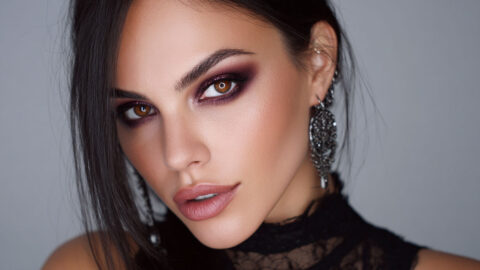
Eyelid skin gets a lot thicker as it moves toward the brow. A 2013 study in Anatomy and Cell Biology measured the upper lid at 320 micrometers near the lash margin and 1,127 micrometers just below the brow.
So the lash line gets the lightest touch, and blending pressure can go up as you work toward the brow bone.
Every shade has its own zone on the eye (lid, crease, outer corner, inner corner, brow bone), and eye shape decides how far up or out each zone reaches. The step people tend to rush is the last one. Blend every edge until no line remains and the whole look reads as finished.
How to Apply Eyeshadow Step by Step

For most people the order starts with primer and a base shade on the lid, then a transition shade in the crease and a depth shade on the outer corner. Highlight goes on the inner corner and brow bone. The lower lash line, liner and mascara come last.
Brands split on whether the lid or the crease goes first. Maybelline’s beginner guide places a matte transition shade in the crease before the lid color, while Honest Beauty covers the lid with a neutral shade first.
I’d start with the crease. It’s easier to learn, since it marks where the lid color stops.
- Prime the lid from the inner corner to the outer corner, extending slightly above the crease.
- Sweep a light matte or soft neutral base shade across the lid with a flat brush.
- Place a matte transition shade in the crease and blend it upward with a fluffy brush.
- Press a deeper shade into the outer corner and blend it toward the center of the lid.
- Add a light shimmer or champagne shade to the inner corner, then a soft highlight under the brow bone.
- Smudge a thin line of the crease or depth shade along the lower lash line with a pencil brush.
- Finish with eyeliner and mascara.
Where each shade goes

- Base or main color covers the lid, from the lash line up to the crease.
- The crease gets the transition shade, blended up and out so no edge shows.
- Deepest shade, outer corner. It adds depth.
- Inner corner, light or shimmer, to brighten the eye.
- The brow bone takes a matte or soft highlight, stopped below the brow.
- For the lower lash line, a thin line of the crease or outer-corner shade, connected at the outer corner (Beauty Bay).
A small dab of light shimmer opens up the eye, and there is a separate walkthrough on doing an inner corner highlight if you want tighter control over placement.
RMS Beauty’s guide ends the brow bone highlight just below the brow instead of blending it into the brow line.
Finishing at the lash line

The American Academy of Ophthalmology advises applying eye makeup outside the lash line, away from the eye, so product does not block the oil glands of the eyelid.
Several brand tutorials still line the waterline (L’Oreal Paris and Beauty Bay both do), so that one is a personal call. For the upper lash line, the basics of applying eyeliner hold here too. Stay close to the lashes and keep the line thin.
How many shades a beginner needs
Not many.
Boozyshop’s beginner routine gets by on a light shade and a dark shade with one medium in between, and Charlotte Tilbury’s PRIME, ENHANCE, SMOKE, POP method stretches the same idea to four steps. Add shades only after placement feels automatic.
How to Prep the Eyelid Before Eyeshadow
Prep gives pigment a smooth, oil-free surface to grip. Eyeshadow primer is the standard base and concealer works as a stand-in. A bare lid only really works with powder shadow on dry lids.
| Base | Pros | Cons |
|---|---|---|
| Eyeshadow primer | Controls oil, grips pigment | Extra product, needs drying time |
| Concealer | Evens lid tone, usually already in the bag | Not built for lid movement or oil control |
| Bare lid | Nothing extra to apply | Shadow shifts and creases on oily lids |
Eyeshadow primer

Primer evens out the lid and controls oil so color does not melt away. Make-up artist Julia Wren told SheerLuxe it also helps pigment stand out.
It comes nude or tinted, and the guide on what eyeshadow primer is covers the basics for anyone picking a first tube.
As of October 2026, Urban Decay’s own Primer Potion page lists up to 8 hours of wear, while some retailer listings still carry a 24-hour claim. Plan around the lower figure.
Urban Decay’s directions say to pat the formula from the inner corner to the outer corner and up to the brow bone, then let it dry before color goes on. A closer look at using Urban Decay’s eyeshadow primer shows that routine in detail.
Concealer as a base
Maybelline’s easy beginner look primes the lid with concealer before any shadow goes on.
It evens out lid tone and costs nothing extra, though Nykaa’s beauty editors point out that eye primers are designed specifically for lid movement and oil control, and concealer is not.
Eye cream and oily lids
Julia Wren tells people to let eye cream absorb for 15 minutes before starting (SheerLuxe). Mineralissima says oily creams should stay around the bone and off the moving lid.
Naturally oily lids need an actual primer.
More product is not the fix. Nykaa notes that a thin layer is usually enough for the whole lid.
Which Brush or Tool Works for Each Part of the Eyelid

Flat brushes pack color onto the lid and fluffy ones diffuse it in the crease. Anything small, like a pencil or smudge brush, belongs at the lash line.
| Tool | Best zone | Trade-off |
|---|---|---|
| Flat shadow brush | Lid | Packs color, blends little |
| Fluffy blending brush | Crease, shade edges | Too soft for fine detail |
| Pencil or smudge brush | Lower lash line, outer corner | Slow across a whole lid |
| Sponge-tip applicator | Quick lid color | Limited blending |
| Fingers | Cream and stick formulas | Soft edges, less precision |
Superdrug describes the all-over shadow brush as short and flat, usable for powder or cream. Maybelline applies cream with a finger or brush and swipes stick shadow on before blending with a finger.
Blending brush
According to MAC’s product description, the 217S is 100% synthetic, with soft, densely packed fibers in an oval shape for shading and blending powder or cream products. Any similar oval fluffy brush does the same job at a lower price.
Brush size and small lids
Size controls how tightly color lands.
An artist quoted by AOL warns that a large shading brush creates too diffused a placement when lid space is limited. On hooded eyes and monolids, drop to a smaller brush.
Choosing an Eyeshadow Formula and Finish
Pressed powder is the default for palettes, and cream and stick formulas apply fastest. Finish decides placement. Matte goes in the crease and shimmer goes wherever light should land.
Powder, cream, and stick

Powder is where most people start. Charlotte Tilbury says it is less prone to creasing than creamy formulas. The downside is fallout, since loose and shimmery pigments drop onto the cheek.
Cream goes on with a finger or brush in seconds, but it creases on oily lids. It also has a shelf-life problem. The American Academy of Ophthalmology says bacteria grow easily in creamy or liquid eye makeup, so replace it within 3 months.
Sticks swipe on and blend with a finger, and makeup.com credits them with precise placement on hooded lids. The base is creamy, so oily lids still need primer.
Matte, shimmer, and glitter
Matte shades are the usual pick for transition and depth in the crease. Shimmer and metallic finishes go on the center of the lid, the inner corner and the brow bone, where light should catch.
Glitter is accent only, and it gets pressed on rather than swept.
Makeup artist Kanako Takase told Coveteur that shimmer on a hooded lid picks up more highlights than other finishes. Plan placement around that.
Glitter has a real limit. The American Academy of Ophthalmology names it a common cause of corneal irritation or infection, especially for contact lens wearers, and larger pieces can scratch the eye.
People with dry eyes are told to skip metallic and glitter products altogether. For everyone else, applying glitter eyeshadow over a sticky base keeps loose pieces on the lid and away from the eye.
Wet application
RMS Beauty notes that wet application suits looks you plan to smudge. Dampen the brush rather than the pan.
How to Blend Eyeshadow Without Harsh Lines
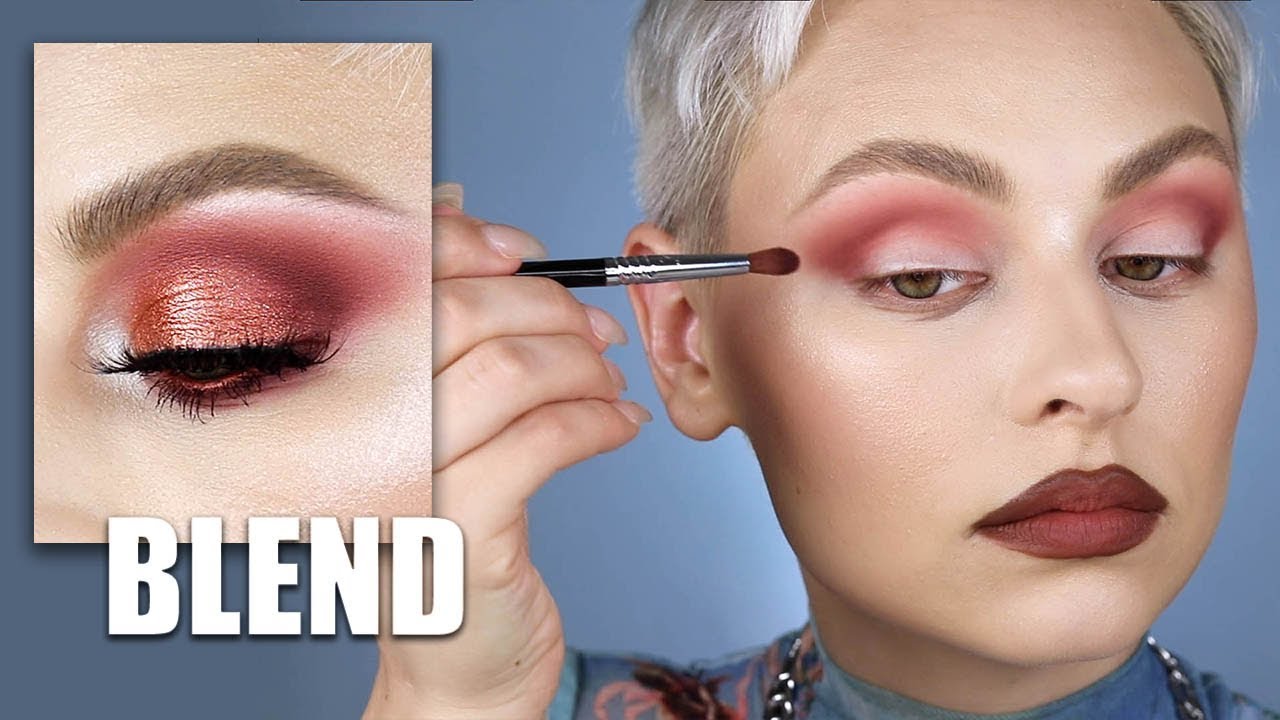
Take a clean fluffy brush and sweep it back and forth in small windshield-wiper strokes along the edge of each shade. Add color in thin layers until no visible line of demarcation remains.
makeup.com’s monolid guide uses the same quick back-and-forth motion to create the look of a crease. Where the outer-corner shade meets the lid, tight little circles soften the spot.
Build in thin layers

A heavy first pass is hard to fix.
Mineralissima suggests keeping the deepest color to the outer third of the eye and blending upward, not inward. Light layers also leave room to adjust before the look gets too intense.
Fixing a blend that came out too dark
Boozyshop suggests taking a slightly lighter shade and blending it over the overdone area.
Over-blending is the opposite failure. Keep going and the depth shade drags into the lid color and turns muddy, so stop once the edge disappears.
A smoky eye is the same method pushed further, with a deeper gradient, and the steps for smoky eye makeup show how far to take it.
How to Choose Eyeshadow Colors for Your Eye Color and Undertone
Pick accent shades that sit opposite your eye color on the color wheel, then match base and transition shades to your skin undertone. Makeup artist Dale Dorning, quoted by House of Wellness, says opposite shades create the greatest contrast.
| Eye color | Shades that flatter | Logic |
|---|---|---|
| Brown | Gold, warm brown, purple, blue | Orange-leaning irises pair with blue |
| Blue | Copper, bronze, burnt orange, warm brown | Orange sits opposite blue |
| Green | Plum, garnet, warm orange, gold | Red sits opposite green |
| Hazel | Burgundy, blue, purple | Each pulls out a different fleck |
Sources agree on gold for brown and green eyes and on warm orange or bronze for blue eyes. They split on cool tones for green. House of Wellness warns warm green eyes against cooler shades, while NaturallyCurly lists dark blue next to plum and gold.
Brown sits in the middle of the wheel, so it takes almost any shade (Dorning again). Lighter brown eyes find the boldest shades intense, and the walkthrough on eye makeup for brown eyes covers liner and mascara pairings too.
Matching shades to undertone
Warm undertones pair with gold, bronze, copper and chocolate brown. Silver, gray and blue-based purple suit cool ones, and neutral undertones can go either direction.
RMS Beauty’s vein test is the quick check. Greenish veins signal a warm undertone, blue or purple veins a cool one.
When eye color and undertone point different ways, let undertone pick the base and transition shades and let eye color pick the accent. That split keeps the blend natural while the accent does the contrasting.
A first palette
Start neutral. IBA Cosmetics recommends a neutral palette for beginners, since browns and taupes blend into most skin tones.
If you wear colored contacts, e.l.f. advises choosing shades that complement the lens color, not your natural eye color. A makeup color palette generator is a quick way to test pairings before you buy.
How to Adjust Eyeshadow Placement for Your Eye Shape

Eye shape changes where the darkest shade sits, not the order of the steps. On hooded eyes it goes above the fold, on many monolids it sits at the outer third, and on downturned eyes it goes slightly above the outer corner.
Open or closed? Maybelline’s beginner guide says to apply on closed lids so nothing gets into the eyes. Artists quoted by AOL and Coveteur place shadow with the eyes open and looking straight ahead, so they can see where it lands.
A workable split is closed lids for base color and blending, then eyes open and looking straight ahead for placing the crease shade and checking the finished look.
Hooded eyes
The fold covers the natural crease, so a crease shade placed where the crease sits vanishes when the eyes open.
- Create a faux crease slightly above the natural one (makeup.com).
- Keep shadow just above the crease and blend upward, says Laura Geller in the Irish News.
- Look straight ahead, not down, while applying (Anthony Nguyen, Coveteur).
Heavy liner crowds a hooded lid. One artist quoted by makeup.com names tightlining as her favorite trick, and a step-by-step on how to tightline your eyes shows the technique.
A broader guide to makeup for hooded eyes adds brow and liner advice.
Monolids
Two credible approaches contradict each other here.
Celebrity artist Jenna Kristina, on makeup.com, goes vertical. Darkest shade at the lash line, lighter toward the brow.
PureWow’s editor learned a horizontal gradient in a Korean makeup class instead, with the darkest shade on the outer third of the lid and lighter toward the inner corner. Dark color across the full lid made eyes look heavier.
The vertical version builds depth right at the lashes, while the horizontal one is about protecting limited lid space. Try both and keep whichever still reads clearly with the eyes open.
Round, almond, downturned and deep-set eyes
- Round eyes do better without light shimmer in the center of the lid, which emphasizes roundness (makeup.com).
- Almond eyes suit most looks, per Bobbi Brown.
- On downturned eyes, place shadow slightly above the actual outer corner so the makeup does not drag the eye down (Charlotte Tilbury).
- Deep-set eyes have a strong brow bone that hides shadow, so move placement up or thicken the liner (Bobbi Brown).
For deep-set eyes, Charlotte Tilbury adds that one light wash through the crease works as well as a multi-shade look.
Fixing Fallout, Creasing, Patchiness and Muddy Blends

Most eyeshadow faults trace back to oil, too much product, loose pigment or over-blending. The table pairs each fault with its usual cause and fix.
| Fault | Usual cause | Fix |
|---|---|---|
| Creasing | Oily lids, heavy layers, heat | Press on translucent powder, mist setting spray |
| Fallout | Loose or shimmery pigment dropping | Wipe off with remover, redo the base |
| Patchiness | Uneven base, oily spots on the lid | Press on a thin layer of the same shade, blend the edges |
| Muddy blends | Dark layers overlapping past the edge | Reapply the base shade, re-blend with a clean brush |
Creasing
Charlotte Tilbury names excess oil as the main culprit and adds that too much product raises the odds.
Tap a lightly loaded fluffy brush of translucent powder over the lid, and keep it to the crease and outer corner. The guide on applying translucent powder covers the technique.
A fine mist finishes the job, and the walkthrough on how to apply setting spray shows distance and passes.
Fallout
Do eye makeup before the base, so cleanup does not touch foundation (Beaut.ie).
Sticky patches such as AYU’s eyeshadow shields catch pigment under the eye. A little powder or a tissue works too, wiped away afterward (Mineralissima).
Some shimmer-heavy shades drop pigment however carefully they go on. If one palette keeps doing it, switch that shade to a cream.
Patchiness and muddy blends
Patchy color usually points to oil on the lid. Mineralissima notes that oil is behind patches, fallout and the urge to scrub shadow in.
Muddy blends come from stacking dark layers. Stop adding depth once the shape reads clearly.
Eye Safety and Product Hygiene for Eyeshadow
Clean hands, clean tools, no sharing and a cool storage spot cover most eye risks. The FDA also restricts which color additives can go near the eye.
On storage, the FDA says not to keep cosmetics above 85 degrees F, since heat degrades preservatives (FDA eye cosmetic safety guidance, as of October 2026).
Contamination happens even before you open anything. In a 2007 study of 290 mascara and eyeliner samples in Iran, more than 14.5% of unused mascaras were already contaminated, against about 2.7% of unused eyeliners (Research in Medicine, 2007). The study tested mascara and eyeliner, not eyeshadow, so read it as a signal about eye cosmetics in general.
Then there’s 21 CFR 70.5(a), the rule barring a color additive from the eye area unless its regulation specifically permits that use (FDA).
Hygiene habits
- Wash your hands before applying.
- Never swap eye products, even with a close friend.
- If an infection starts, discard whatever you were using at the time.
- Lip products are not eye products, since mouth bacteria transfer.
Brushes and applicators count as part of the product. Dirty ones carry old pigment and bacteria back to the lid, and a routine for washing makeup brushes keeps them in check.
Color additives and labels
An “FDA approved” claim on a cosmetic label is false labeling, according to the FDA.
If a product is properly labeled, check its declared color additives against the FDA’s approved list, then confirm each is listed for the eye area. Kohl and “permanent” lash tints are the FDA’s named examples to avoid.
Removing eyeshadow at night
The American Academy of Ophthalmology says to remove all eye makeup before sleeping and names Vaseline as an effective remover. Whatever product you use, keep it out of the eye.
The guide on how to remove eye makeup covers waterline and stubborn pigment.
Eyeshadow Application FAQ
How do you apply glitter eyeshadow?
Press it on instead of sweeping. Superdrug suggests smoothing petroleum jelly over the lid as an adhesive, then pressing loose glitter into it with an all-over shadow brush.
Can mature eyelids still wear shimmer and bold color?
Yes. Red Apple Lipstick points out that hooded lids are inherited and become more prominent with age, so the fix is placement, not toning color down.
Neutral mattes with strategic shimmer, set above the fold, stay visible when the eyes are open.
Can eyeshadow double as eyeliner?
It can, and an angled brush makes it easier than liquid liner, according to a make-up artist quoted by SheerLuxe. Press a dark shade along the lash line and smudge it.
L’Oreal Paris adds a limit. Shadow does not thicken lashes the way an actual liner does.
How do you apply cream eyeshadow?
Dot a small amount on the lid, then smooth it with a fingertip from the inner corner to the outer corner. Maybelline’s Color Tattoo directions follow the same path, and a second pass darkens the color.
What to Upgrade First in an Eyeshadow Routine
Eyeshadow application improves fastest when each upgrade targets a specific fault. If color creases or looks patchy, fix the base with a primer or concealer. If edges stay visible, a fluffy blending brush is the next buy. A fourth shade only makes sense when depth still looks flat.
That order follows cause. Creasing and patchiness trace to the lid surface, visible edges to the brush, and a new shade fixes neither.
Every product you add is another thing to keep clean and replace, and it sits right next to the eye.
Irritation overrides the whole sequence. The FDA’s eye cosmetic guidance, checked October 2026, says to stop using any product that irritates the eye.
Once the lid is settled, applying mascara is the natural finishing step.

She started writing on the site after fielding the same questions from clients and friends often enough to just write the answers down: which red won't turn orange on a warm undertone, how to keep lipstick from feathering into fine lines, why a "12-hour" formula rarely survives dinner.
Every review on the site follows the same rule she uses with paying clients: wear it first, then decide if it's worth recommending.
- How to Make Eyeliner Last Longer Without Smudging - August 31, 2026
- How to Make Eyeshadow Last Longer All Day - August 29, 2026
- How to Find Your Undertone in 5 Easy Steps - August 27, 2026