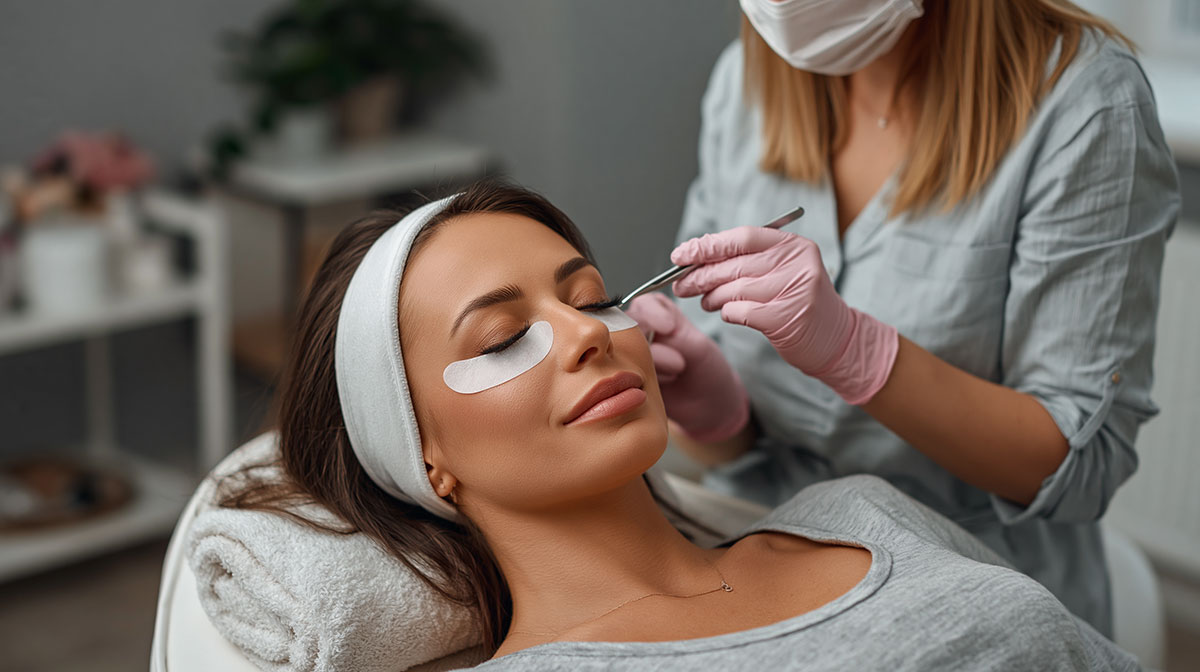
False lashes can look incredible or fall off mid-dinner. The difference is almost always the adhesive.
Understanding what lash glue is — and how it actually works — helps you make smarter choices about application, wear time, and safety.
Not all lash adhesives are the same. Strip lash glue, individual lash glue, and professional extension adhesive are three different products with different chemistries, hold strengths, and risks.
This guide covers all of it: ingredients, bonding mechanics, types, safety considerations, allergic reactions, application, removal, and storage.
What Is Lash Glue
Lash glue is an adhesive used to bond false eyelashes to the skin along the eyelid. It sits between the lash band or lash extension and the natural lash line, holding everything in place for hours or, in professional extension work, weeks at a time.
The term covers a few different product types, and they are not interchangeable.
Strip lash adhesive bonds a pre-styled lash band to the eyelid. It is designed for temporary, same-day wear and is sold in most beauty stores.
Individual lash glue attaches single or cluster lashes directly to the natural lash or skin, giving more targeted placement than a full strip.
Extension adhesive bonds synthetic lash extensions to individual natural lashes, one at a time. This is a professional-use product. It creates a semi-permanent bond that lasts until the natural lash sheds, typically 4 to 6 weeks.
The global false eyelashes market was valued at around USD 1.77 billion in 2023, growing at a compound annual growth rate of 6.6%, according to Polaris Market Research. That growth has pushed demand for reliable, safe cosmetic adhesives significantly upward.
The main job of any lash adhesive is simple: hold the lash in place without damaging the eye area. What differs between product types is the bonding strength, the chemistry, and how long the bond is meant to last.
How Lash Glue Works
Most lash adhesives are built around a compound called cyanoacrylate, which makes up roughly 80 to 95 percent of most professional extension glues, according to lash chemistry sources.
Cyanoacrylate is a monomer. When it comes into contact with moisture, including the natural humidity on skin and lashes, it goes through a process called anionic polymerization. That means the liquid molecules chain together rapidly and harden into a solid, flexible bond.
That reaction is what gives lash glue its characteristic fast-drying behavior.
The Tacky Phase
Application does not happen the moment glue touches skin. There is a short window after applying the adhesive where it goes from wet to tacky. This is the optimal placement window.
Wet phase: glue is still liquid and will slide around.
Tacky phase: the surface has started to set but is not yet rigid. This is when the lash band or extension should be pressed into position.
Cured phase: bond is fully set. Moving the lash at this point will cause it to lift or break the bond.
Strip lash adhesives typically have a tacky window of 20 to 45 seconds depending on the formula. Extension glues can cure in as little as 0.5 to 2 seconds, which is why professional training matters so much with that product category.
What Maintains the Bond
Once cured, the bond holds through movement, light moisture, and the natural oils on skin. But some things will break it down.
Oil-based skincare and makeup around the eye area dissolves the adhesive polymer over time. That is why oil-free eye products are standard advice for anyone wearing lash extensions. Humidity speeds up cure but also degrades bond strength over time. Rubbing the eye area physically breaks the seal.
A 2023 survey found that 45% of women aged 18 to 34 in the U.S. purchased false eyelashes for at-home use, up from 38% in 2020, according to Persistence Market Research. Most application failures in that group come down to skipping the tacky phase or applying glue to oily skin.
Types of Lash Glue
Not all lash glue is the same product. The type you need depends entirely on what lashes you are applying and whether you are working at home or in a professional setting.
| Type | Used For | Typical Hold | Who Uses It |
| Strip lash adhesive | Pre-styled false lash bands | 12 to 24 hours | At-home, everyday use |
| Individual lash glue | Single or cluster lashes | 1 to 7 days | At-home “DIY extensions” |
| Extension adhesive | Professional lash extensions | 4 to 8 weeks | Licensed technicians only |
| Latex-free / sensitive | Reactive skin applications | Varies by formula | Clients with sensitivities |
Strip Lash Adhesives
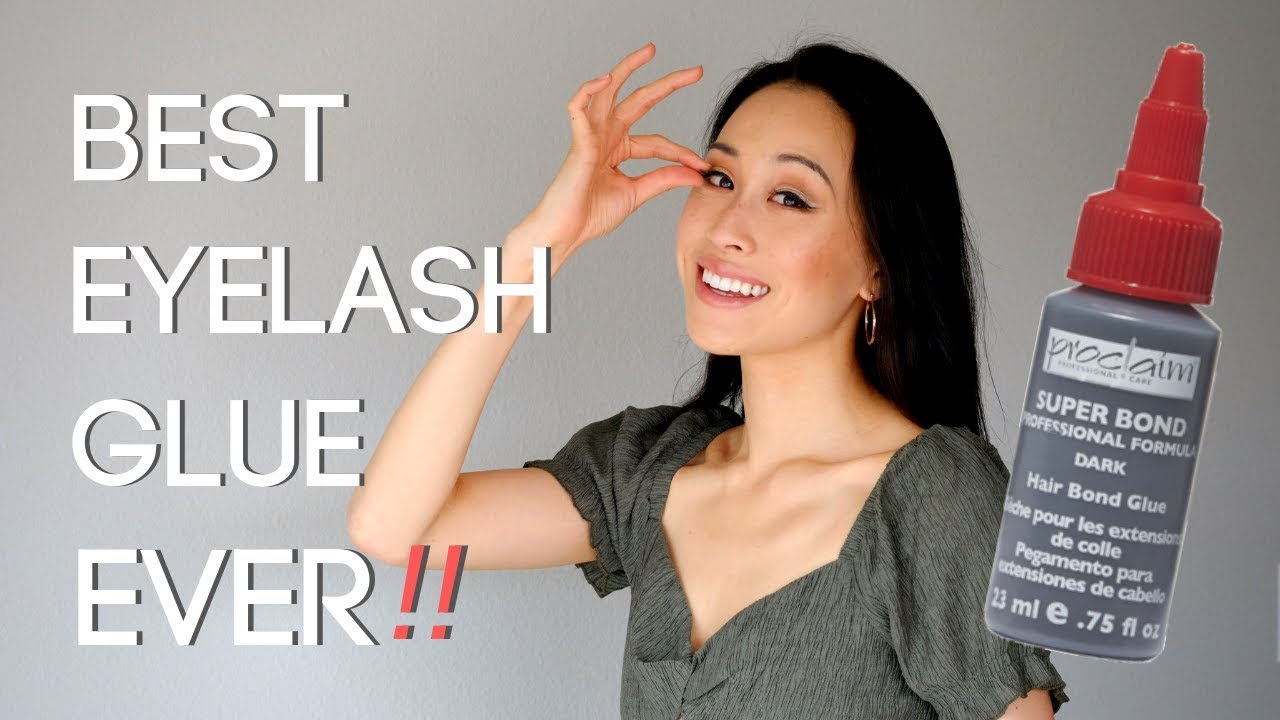
Strip lash adhesives come in clear and dark formulas. Clear dries transparent and works well for natural-looking applications. Dark or black adhesive dries close to eyeliner color, which makes the lash band less visible along the lash line.
Waterproof formulas provide longer hold and resist sweat and humidity, but are harder to remove. Non-waterproof formulas clean off more easily with micellar water or an oil-based remover.
Strip lashes accounted for over 39% of total false eyelash revenue in 2024 globally, according to Grand View Research.
Extension Adhesives
These are almost always cyanoacrylate-based at concentrations between 60 and 100 percent, and they are not designed for consumer use without training. The bond strength is significantly higher than strip glue.
Cure times in professional extension adhesives are measured in fractions of a second. That speed requires precision application. Brands like Ruthie Belle and BL Lashes formulate glues with different viscosities and humidity tolerances to match specific working environments.
High-humidity rooms require slower-cure adhesives. Low-humidity spaces need a faster formula. Getting that match wrong leads to poor lash retention regardless of application technique.
Latex-Free and Sensitive Formulas
Latex was once standard in strip lash glue. Most quality products have moved away from it entirely because latex allergies are common and reactions near the eye area can be severe.
Sensitive formulas typically use butyl cyanoacrylate or alkoxy cyanoacrylate variants instead of the more reactive ethyl cyanoacrylate. These produce fewer fumes and bond slightly slower. The trade-off is hold time. Sensitive adhesives generally do not last as long as standard formulas.
Key Ingredients in Lash Glue
Lash adhesives look simple on the label. Most have four core components.
Cyanoacrylate
Ethyl cyanoacrylate is the most commonly used type in professional extension glues. It bonds fast, holds strong, and is flexible enough to move with the natural lash. Butyl cyanoacrylate was developed for medical adhesives and is gentler on tissue, which is why it appears in sensitive formulas.
Methyl cyanoacrylate is considered too harsh for cosmetic use near the eye and is not found in reputable lash adhesives.
Australia’s Industrial Chemicals assessment from April 2024 found the highest sensitization risk from lash adhesives occurs with ethyl cyanoacrylate due to intentional prolonged contact with skin around the eye and high frequency of reapplication.
PMMA (Polymethyl Methacrylate)
PMMA is a fine plastic powder that works alongside cyanoacrylate to reinforce the cured bond. Without it, the dried adhesive would be brittle and prone to cracking with movement.
Cyanoacrylate handles the fast cure. PMMA handles the long-term flexibility and durability. Both are needed for a bond that holds through a full day of wearing, blinking, and expression.
Carbon Black and Hydroquinone
Carbon black is the pigment added to dark adhesives. Removing it gives you a clear-drying formula.
Hydroquinone is a stabilizer that prevents the adhesive from polymerizing inside the bottle before use. The European Union prohibited its use in cosmetic products in 2020, though lash adhesives in the EU are now classified as chemical products rather than cosmetics, which changes how that rule applies.
Some lower-quality manufacturers still add extra hydroquinone in the blending stage. Reputable brands do not, according to Ruthie Belle’s technical documentation on adhesive chemistry.
Formaldehyde
Formaldehyde is not listed as an ingredient in most lash glues. But it can appear as a trace byproduct when cyanoacrylate degrades or cures.
A 2022 study published in the journal Dermatitis evaluated 37 lash glues, 17 consumer and 20 professional. Most professional glues released formaldehyde when tested using the chromotropic acid method, despite none of them listing it as an ingredient. The study concluded that both consumer and professional glues can be sources of trace formaldehyde exposure. Concentrations in high-quality adhesives are generally below measurable thresholds, but the exposure is not zero.
Lash Glue Safety and Allergic Reactions

The eye area is one of the most sensitive on the body. Applying an adhesive there comes with real risks, and knowing the difference between irritation and a true allergic reaction matters.
Irritation vs. Allergic Reaction
These are not the same thing and should not be treated the same way.
Irritation is a chemical response. Fumes from cyanoacrylate can cause watering eyes, redness, and a mild burning sensation during application. This typically clears within a few hours once exposure ends. It does not mean the person has developed a sensitivity.
Allergic contact dermatitis is an immune response. The body recognizes cyanoacrylate as an allergen and reacts with swelling, itching, vesicles, and redness, typically presenting 12 to 24 hours after application. According to a study published via ResearchGate, 18% of participants in a false eyelash study reported experiencing an allergic reaction or itching, and 15% experienced eye inflammation including conjunctivitis or blepharitis after lash application.
Once someone develops a true cyanoacrylate allergy, it is not reversible. Switching to a “sensitive” formula does not resolve it. All professional extension adhesives contain cyanoacrylate.
Common Allergens in Lash Glue
Cyanoacrylate: the primary allergen in most reactions to extension glue.
Latex: present in older or low-cost strip lash formulas. Latex allergies are well-established and can cause contact dermatitis on the eyelid.
Formaldehyde: trace amounts from cyanoacrylate degradation can cause keratoconjunctivitis in sensitive individuals, as noted in a 2012 study examining formaldehyde in professional extension glues.
Carbon black: the pigment in dark adhesives that some clients react to, making a clear formula the better choice for those with dye sensitivities.
Patch Testing
Patch testing for strip lash adhesive involves applying a small amount to the inner wrist or behind the ear and monitoring for 24 to 48 hours.
For extension adhesive, patch testing is more involved. Because the allergy develops with repeated exposure, a proper test involves applying 10 to 15 extensions per eye and checking for a reaction 48 to 72 hours later. A single inconclusive test does not rule out future sensitivity.
Health Canada’s 2023-2024 compliance verification project on cyanoacrylate-based adhesives found that many non-compliant products failed specifically due to improper ingredient disclosure. Knowing exactly what is in a lash glue before using it near a client’s eye is not optional.
The American Academy of Ophthalmology flags infection, trauma, and allergic reactions as the three primary medical concerns for people wearing lash extensions.
How to Apply Lash Glue Correctly

Application technique has a bigger impact on how long lashes stay on than the glue brand does. Most early lift-off comes down to skipping a step, not buying a better product.
Learning proper technique is part of the broader process of applying false eyelashes well, and the adhesive step is where most beginners lose hold time.
Strip Lash Application
Apply a thin, even layer of adhesive along the entire lash band. Thin is better. A thick bead of glue does not bond faster. It takes longer to reach the tacky phase and is more likely to squeeze out past the lash line once pressed down.
Wait. This is the step most people skip.
30 to 45 seconds of air time is usually enough to bring strip lash adhesive to its tacky phase. The surface should feel slightly sticky when touched lightly with a fingertip but should not transfer wet glue onto the skin.
Press the lash band as close to the natural lash line as possible. Start from the center, then press down the inner and outer corners. Hold for 10 to 15 seconds with light pressure.
Common Application Mistakes
Applying to oily skin without any primer or base. Oil prevents adhesive from bonding to the eyelid surface. Cleaning the eye area with a gentle, oil-free cleanser before application helps significantly.
Skipping the tacky phase and pressing wet glue directly to the skin. This causes the lash to slide and not seat properly along the lash line.
Using too much glue on the inner and outer corners. The corners lift first because they take the most mechanical stress during blinking. A second pass of adhesive specifically on the corners, let to tack, helps hold them down.
Brand Ardell, one of the most widely sold strip lash labels in the U.S., recommends reapplying a small dot of glue to the corner of the lash band if lifting occurs within the first hour. This is a common fix that works better than starting over with a fresh strip.
How to Remove Lash Glue Without Damage
Pulling lashes off dry is the fastest way to lose natural lashes. Strip lash glue cures into a flexible polymer that grips the eyelid. Without softening it first, the mechanical force required to break that bond pulls natural lashes along with it.
The right removal process depends on what type of adhesive was used.
| Adhesive Type | Best Remover | Soak Time |
| Strip lash glue | Oil-based cleanser or micellar water | 30–60 seconds |
| Individual lash glue | Dual-phase remover or “Bond Breaker” | 1–2 minutes |
| Extension adhesive | Professional gel or cream remover | 5–10 minutes |
Removing Strip Lash Adhesive
Oil dissolves cyanoacrylate-based and latex-based adhesives. Coconut oil, baby oil, olive oil, and cosmetic-grade castor oil all work on strip lash adhesive. So does any oil-based makeup remover or micellar oil formula.
Saturate a cotton pad and press it gently against the closed lash line for 30 to 60 seconds. Do not rub. The goal is to let the oil penetrate and soften the bond before any mechanical pressure is applied.
Once the adhesive starts to release, slide the strip off from the outer corner inward. Wipe residual adhesive from the lash band with a clean swab before storing the strip.
Key rule: never pull from the inner corner. The skin there is thinner and more reactive to traction.
Removing Professional Extension Adhesive
Extension adhesive is significantly stronger than strip glue. Oil alone rarely breaks it down fully at home, which is why professional removal is always the safer choice.
Professional gel or cream removers work by dissolving the cyanoacrylate polymer from within the bond. Apply with a micro brush along the lash base, avoiding skin contact. Wait 3 to 5 minutes. Extensions should slide off without force.
Brands like Lashify offer dedicated bond-breaking formulas, such as their Melt Away Remover, which uses a dual-phase formula with papaya extract and orange extract alongside the dissolving agent. These nourish the natural lash while removing the adhesive bond.
Do not use acetone, rubbing alcohol, or nail polish remover near the eye area. These strip the natural lash’s moisture content and can cause severe irritation to the mucous membrane.
Cleaning Residual Adhesive
Leftover lash glue on the eyelid can trap bacteria. It can also interfere with adhesion the next time lashes are applied, causing the new bond to fail faster.
After removing the lashes, run a clean swab soaked in oil-based cleanser along the lash line to lift any remaining adhesive. Follow with a gentle, oil-free eye cleanser to remove the oil itself. The eye area should be fully clean before any next application.
For reusable false lashes, clean glue residue from the lash band by rolling it off carefully with fingers or using a clean cotton swab soaked in remover. Ardell recommends this step specifically to preserve the band’s shape and extend the life of the strip.
How Long Lash Glue Lasts
Hold time varies significantly by product type, and most people overestimate how long their specific adhesive is meant to perform.
Strip Lash Hold Time
12 to 24 hours is the standard wear range for strip lash adhesives under normal conditions. Waterproof formulas push toward the higher end. Non-waterproof formulas may begin to lift at the corners after 10 to 12 hours, particularly in humid conditions or on oily skin.
The lash glue wear time drops sharply when oil-based products are used around the eye, when the client rubs or touches the lash line, or when there is significant sweating or exposure to steam. These conditions dissolve the adhesive bond faster regardless of formula strength.
Extension Adhesive Retention
Extension adhesive is designed for semi-permanent lash bond strength lasting 4 to 6 weeks. That said, most professionals report that clients lose 50 to 60 percent of their extensions within three weeks due to the natural lash shedding cycle, according to Lilac St.
This is not adhesive failure. Each extension is bonded to a single natural lash. When that natural lash sheds (which happens at a rate of 1 to 5 lashes per eye per day), the extension goes with it. Fill appointments every 2 to 3 weeks are standard for maintaining a full look.
The natural lash growth cycle runs 60 to 90 days total, per BL Lashes. That cycle speed, combined with aftercare compliance, is what actually determines how long a client’s set holds.
What Shortens Hold Time
Retention research from professional lash community sources consistently identifies the same culprits.
- Oil-based skincare or eye makeup applied near the lash line
- Room humidity above 60% during the application, causing shock polymerization
- Expired or improperly stored adhesive with degraded bond strength
- Sleeping face-down on cotton pillowcases, which creates friction on the lash line
- Rubbing or picking at the lash line throughout the day
Most retention problems blamed on glue quality are actually environmental or aftercare issues, according to TDANCE’s professional lash documentation.
Storing and Maintaining Lash Glue
Lash adhesive is one of the more sensitive products in any kit. The same chemical reactivity that makes it bond fast to lashes also makes it react to everything in the storage environment.
Opened vs. Unopened Shelf Life
Unopened professional extension adhesive lasts 6 to 12 months when stored correctly in a cool, dark location, per Lashly Beauty’s technical documentation. That window shortens dramatically once the seal is broken.
After opening, most professional adhesives have a usable life of 4 to 6 weeks. London Lash recommends changing the bottle every 4 weeks for reliable retention. Stacy Lash’s industry documentation puts the window at 1 to 2 months with proper sealing between uses.
Strip lash adhesive has a longer post-open life (typically 3 to 6 months) because the bonding demands are lower and the formula is not as reactive to micro-exposures of air.
Temperature and Humidity Control
Ideal storage temperature: 18 to 24 degrees Celsius (64 to 75 degrees Fahrenheit).
Ideal working humidity: 40 to 60 percent relative humidity for most professional adhesives, per Charm Lash and BL Lashes’ technical documentation.
Above 60 percent humidity, cyanoacrylate cures faster than intended. At 70 percent and above, bond quality degrades significantly. In the ideal humidity range of 45 to 60 percent, a dispensed glue drop stays workable for 20 to 30 minutes, according to BL Lashes.
Below the ideal range, the cure slows down. Some brands like iLevel Lab offer specific low-humidity adhesive formulas designed for dry climates and cold-weather environments where ambient moisture is insufficient to trigger normal polymerization speed.
Signs the Glue Has Gone Bad
Expired lash adhesive is not just less effective. It can be actively problematic. As the chemical composition breaks down, it may increase the risk of allergic reactions, according to Stacy Lash’s industry documentation.
Check for these before every use:
- Thickened or stringy consistency instead of a smooth, fluid drop
- Color change (watery or pale in a formula that was previously deep black)
- Visible clumps or separation in the bottle
- Unusual or stronger-than-normal smell
- Extensions not adhering or holding for a significantly shorter time than usual
If any of these appear, discard the bottle. No amount of shaking or warming restores degraded adhesive.
Storage Best Practices
Store upright. Lying a glue bottle on its side exposes the nozzle to the adhesive, causes uneven viscosity, and can lead to air entering through the cap seal.
Use silica gel packs inside an airtight storage container. Silica absorbs ambient moisture from the storage environment, slowing the pace at which the adhesive degrades between uses. Some lash artists refrigerate unopened adhesive to extend shelf life before opening, though refrigerated bottles must be left out for 1 to 2 hours before use to prevent condensation entering the nozzle.
Wipe the bottle nozzle clean after every use before resealing. Residual glue around the cap is the most common cause of stuck lids and contaminated drops during the next application session.
FAQ on What Is Lash Glue
What is lash glue made of?
Most lash adhesives contain cyanoacrylate as the primary bonding agent, alongside PMMA for flexibility, carbon black for pigment in dark formulas, and hydroquinone as a stabilizer. Latex appears in some older strip lash formulas but most quality products are now latex-free.
Is lash glue safe for sensitive eyes?
It depends on the formula. Sensitive adhesives use butyl or alkoxy cyanoacrylate variants that produce fewer fumes. Always do a patch test first. Anyone with a known latex or acrylate allergy should consult a professional before use.
Can lash glue damage your natural lashes?
Improper removal is the main cause of lash damage, not the adhesive itself. Pulling lashes off dry tears natural lashes out. Using an oil-based remover to dissolve the bond first prevents this entirely.
How long does lash glue hold?
Strip lash adhesive holds for 12 to 24 hours under normal conditions. Professional extension adhesive creates a semi-permanent bond lasting 4 to 6 weeks, though most clients need a lash fill every 2 to 3 weeks due to natural lash shedding.
What is the difference between strip lash glue and extension glue?
Strip lash adhesive bonds a full lash band to the eyelid temporarily. Extension adhesive bonds individual synthetic lashes to single natural lashes using high-concentration cyanoacrylate. Extension glue is significantly stronger and is for professional use only.
Can you be allergic to lash glue?
Yes. The technical term is contact dermatitis. Cyanoacrylate is the most common allergen in lash adhesives. Symptoms include swelling, redness, and itching appearing 12 to 24 hours after application. A true cyanoacrylate allergy does not go away with repeated exposure.
How do you remove lash glue safely?
Apply an oil-based cleanser or dedicated lash glue remover to a cotton pad and press gently against the lash line for 30 to 60 seconds. The adhesive softens and releases without pulling. Never dry-remove strip lashes or extensions.
Does lash glue contain formaldehyde?
Formaldehyde is not listed as an ingredient but can appear as a trace byproduct when cyanoacrylate degrades. A 2022 study in the journal Dermatitis found formaldehyde present in most professional extension glues tested, despite none declaring it on the label.
How should lash glue be stored?
Store upright in a cool, dry location between 18 and 24 degrees Celsius. Use an airtight container with silica gel packs to control moisture exposure. Opened professional adhesive stays effective for 4 to 6 weeks before bond strength begins to degrade.
What happens if lash glue gets in your eye?
Rinse immediately with cool water for several minutes. Cyanoacrylate fumes can cause redness, watering, and a burning sensation. If irritation persists or the adhesive contacts the eye directly, seek medical attention. Do not attempt to remove bonded glue by rubbing.
Conclusion
This conclusion is for an article presenting what lash glue is, how it bonds, and why the formula, application, and aftercare all matter more than most people realize.
Cyanoacrylate adhesive is at the core of almost every professional and consumer product in this category. Knowing which variant you are working with changes how you apply, remove, and store it.
Allergic contact dermatitis is real. Patch testing before full application is not optional for anyone with reactive skin or a history of acrylate sensitivity.
Proper lash glue removal protects your natural lashes. So does using fresh adhesive stored at the right temperature and humidity.
Get those basics right, and the lash bond strength takes care of itself.

She started writing on the site after fielding the same questions from clients and friends often enough to just write the answers down: which red won't turn orange on a warm undertone, how to keep lipstick from feathering into fine lines, why a "12-hour" formula rarely survives dinner.
Every review on the site follows the same rule she uses with paying clients: wear it first, then decide if it's worth recommending.
- How to Make Eyeliner Last Longer Without Smudging - August 31, 2026
- How to Make Eyeshadow Last Longer All Day - August 29, 2026
- How to Find Your Undertone in 5 Easy Steps - August 27, 2026