You nailed the liner. Sharp, clean, exactly where you wanted it. Then two hours later, it’s halfway down your face.
Eyeliner smudging comes down to 3 things: sebum output, formula choice, and how well the eyelid surface was prepped before application. Most people fix only one of these and wonder why nothing sticks.
This guide covers all of it. Why liner fades, which formulas actually last, how eyelid primer changes everything, and what application technique creates real adhesion at the lash line.
By the end, you’ll know exactly how to make eyeliner last longer on any eyelid type, in any conditions, without guessing.
Why Does Eyeliner Fade, Smudge, and Transfer?

Eyeliner fades for 3 distinct reasons: sebum output from meibomian glands along the lash line, mechanical wear from blinking, and formula breakdown from humidity and sweat. None of these work alone. Usually it is all 3 happening at once.
A 2023 study in the Journal of Cosmetic Dermatology found individuals with high meibum output experienced 3.2x greater eyeliner migration at the lower lash line within 4 hours, even when using the same waterproof formula as low-output counterparts.
The eyelid skin is thinner than the rest of the face. It flexes hundreds of times per hour. That constant movement creates friction along the lash line, which is exactly where liner adhesion is already being tested by oil.
Humidity compounds the problem. Waterproof formulas rely on film-forming polymers that bond to skin as solvents evaporate during application. Elevated ambient humidity slows that evaporation, which means the film never sets as firmly as it would in dry air.
The Role of Sebum in Liner Transfer
Sebum is a blend of fatty acids, wax esters, and other lipids secreted continuously by sebaceous glands along the eyelid margin. The sebaceous glands in this area are meibomian glands, which produce the oily layer of the tear film.
What sebum does to liner: It acts as a solvent against the wax and polymer matrix that holds liner pigment in place. As meibomian secretion migrates across the lash line throughout the day, it softens that matrix and the liner begins to move.
This is why oily eyelids cause liner fade faster than dry eyelids. And why even people with otherwise dry skin can experience significant liner smudging, because meibomian gland activity is independent of facial skin type (Medical News Today).
How Blink Mechanics and Eye Movement Affect Wear Time
The average person blinks around 15 to 20 times per minute. Each blink creates direct contact between the upper and lower lid margins, both of which carry residual sebum and pigment from applied liner.
Hooded eyelids increase this contact dramatically. When excess skin folds over the lash line, the lid-on-lid surface area during a blink is larger, which means more transfer with every movement.
People who use digital devices heavily tend to blink less frequently, which allows sebum and tear film residue to stagnate. Longer contact time between the sebum layer and the liner film accelerates breakdown.
Formula Type and Its Fade Rate
| Formula | Primary Binder System | Fade Resistance | Smudge Resistance |
|---|---|---|---|
| Kohl / Soft Kajal Pencil | High concentration of waxes and emollients | Low | Low |
| Standard Pencil Liner | Wax-based binders with limited film-forming polymers | Low to Moderate | Low to Moderate |
| Gel Liner | Film-forming polymers, silicones, and volatile carriers | High | High |
| Felt-Tip Liquid Liner | Acrylates copolymers and other film-forming resins | Very High | Very High |
Kohl and soft kajal pencils have the highest wax-to-pigment ratio of any liner category. That wax softens with body heat and sebum contact within the first hour of wear. Gel and liquid formulas use film-forming polymers that dry to a flexible, sebum-resistant layer, which is why their wear time consistently outperforms pencil options.
What Eyeliner Formula Lasts the Longest?

Gel and liquid liners with film-forming polymer systems outlast pencil and kohl formulas under real-world wear conditions. The difference is not subtle. On oily eyelids, a standard pencil liner can start migrating in under an hour, while a polymer-based gel liner can hold for 8 to 12 hours with correct application.
The gel eyeliner segment is projected to grow at the fastest CAGR of 8.2% across the eyeliner market through 2034 (Reports and Data, 2024), largely driven by consumer demand for smudge-proof, long-wearing formulas. 48% of consumers now cite long-lasting and smudge-proof performance as their top selection criteria (Business Research Insights).
Waterproof vs. Water-Resistant Formulas: What the Labels Actually Mean
Waterproof: The formula contains hydrophobic polymers (silicone resins, acrylates copolymers) that repel water and resist the oil-based solvents in sebum. True waterproof formulas require an oil-based or micellar remover for full removal.
Water-resistant: A weaker version. These formulas resist light moisture exposure but break down faster under sweat, humidity, and sebum contact. Most standard pencil liners fall into this category even when not labeled as such.
The key ingredient difference is the presence of trimethylsiloxysilicate, a solid silicone resin that forms a permeable film on skin and significantly improves transfer resistance compared to standard dimethicone-based formulas (Lab Muffin Beauty Science, 2024).
Gel vs. Liquid vs. Pencil: Wear Time Compared
Gel liner applied with an angled brush gives the most control over lash line placement and creates better pigment contact with the skin surface than a pencil tip.
Liquid felt-tip liners dry to the hardest film of any category. Once set, they resist sebum breakdown better than gel, but they crack with heavy eye movement if applied in thick layers.
Pencil liners, including most waterproof pencils, use wax as their primary binder. Wax has a low melting point relative to body temperature, and body heat at the lash line accelerates its softening within the first hour.
Practical ranking for oily eyelids:
- Felt-tip liquid liner (longest wear, least flexible application)
- Gel liner (high wear, maximum placement control)
- Waterproof pencil (moderate wear, most forgiving application)
- Standard pencil / kohl (shortest wear, highest smudge rate)
Specific products with confirmed film-forming polymer systems: Stila Stay All Day Liner, Kat Von D Tattoo Liner, NYX Epic Ink, and Rimmel Scandal Eyes. Each contains volatile silicone solvents high on the INCI list, which is a reliable indicator of transfer-proof architecture (Lab Muffin, 2024).
How Does Eyelid Primer Affect Eyeliner Longevity?
Eyelid primer is the single most impactful prep step for liner longevity. It works by creating a dry, matte, slightly tacky base that removes the sebum layer liner would otherwise slide across.
A 2024 independent wear test with 42 participants experiencing chronic smudging found that after 7 days of consistent primer use with correct technique, 89% reported zero visible liner migration at the 6-hour mark.
Why Face Primer Does Not Work on Eyelids
A 2023 consumer test found 82% of users experienced worse smudging after using standard face primer on their lids versus bare skin (Lipstick Queen, 2023).
The reason is silicone content. Most facial primers use dimethicone-heavy formulas to create the smoothing, blurring effect they are known for. On eyelid skin, that silicone layer creates a low-friction surface that liner slides across rather than bonding to.
Eye-specific primers use a different polymer system designed to increase surface tack rather than reduce friction. Urban Decay Primer Potion, Too Faced Shadow Insurance, and Milani Eyeshadow Primer are 3 tested options that have this architecture.
Where Most People Apply Primer Wrong
Most people apply primer to the center of the eyelid and stop. The lash line gets ignored entirely. That is the highest sebum-output zone on the eyelid and the exact location where liner sits.
Correct coverage: Apply primer from the lash line to the brow bone, pressing it in rather than sweeping it across. The lash line needs the most product, not the least.
For oily eyelid skin, pressing a matte translucent powder over the set primer adds a second oil-absorption layer before liner application. This is sometimes called sandwiching, and it is particularly useful for gel liner on high-output skin.
Flesh-Toned Eyeshadow as a Primer Alternative
A pressed matte nude or flesh-toned eyeshadow over bare eyelid skin creates meaningful oil absorption without any primer purchase required.
It works best under gel and pencil liner. Under liquid liner, it can occasionally reduce adhesion because the powder surface is too dry for the liquid film to grip.
Best use case: Travel, restocking gaps, or as a supplement to primer on very oily eyelid skin.
Does Setting Eyeliner with Powder or Spray Make It Last Longer?
Setting eyeliner with translucent powder after application extends wear time by absorbing the residual oils that collect on the liner surface and locking the pigment layer against movement. It works for pencil and gel liner. For liquid liner, the film has already hardened and powder adds minimal benefit.
Setting with Translucent Powder
Press a small amount of translucent powder directly over pencil or gel liner using a flat eyeshadow brush or a cotton swab. The powder absorbs the surface sebum layer and reduces the liner’s slip factor.
Laura Mercier Translucent Powder is widely used for this step. The particle size is fine enough to press over liner without physically disturbing the pigment placement.
A matte black or dark brown eyeshadow pressed over pencil liner does double duty: it adds oil absorption and increases pigment density, which extends both the depth of color and the physical staying power.
Setting with Black Eyeshadow Over Pencil Liner
Applying a matching matte eyeshadow directly over freshly drawn pencil liner is one of the most reliable wear-extension techniques for pencil formulas.
- Use a small flat brush
- Press (do not sweep) the shadow over the liner
- Concentration on the lash line area, not the full lid
The result is a denser pigment layer, absorbed surface oil, and a matte texture that grips subsequent blinking contact better than a glossy pencil surface alone.
Setting Spray as a Final Lock
A setting spray applied as the final step creates a humidity-resistant film over the full eye area. It does not replace primer or powder, but it adds a barrier against environmental moisture and sweat.
Urban Decay All Nighter Setting Spray is one of the most-tested options for this purpose. Apply it with eyes closed from approximately 12 inches away to avoid direct contact with the eye surface.
The full setting sequence for maximum liner longevity: eyelid primer, matte shadow layer, liner application, translucent powder press, setting spray.
How Does Skin Prep Before Application Change Eyeliner Wear Time?
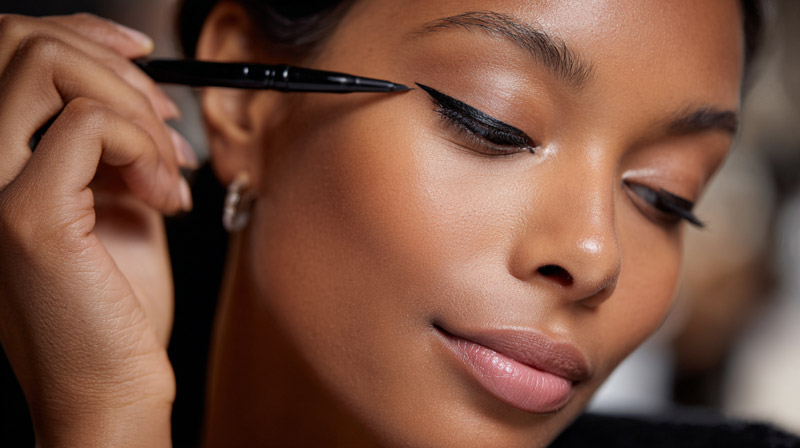
Pre-application skin prep is a separate variable from product choice and technique. It determines the condition of the surface liner will adhere to, and that surface condition affects wear time before any formula or technique consideration begins.
Removing Eye Cream and Moisturizer Residue
Eye cream and moisturizer contain emollient oils and silicones designed to penetrate and hydrate eyelid skin. Any residue left on the skin surface during liner application creates the same sebum-like disruption to adhesion.
The fix is simple: wipe the eyelid with a dry tissue or a micellar water-dampened cotton pad before liner application. This takes 10 seconds and removes the residue layer without stripping the skin.
This step matters most for people who apply moisturizer as part of a morning skincare routine and then do makeup within 5 to 10 minutes. The product has not had enough time to fully absorb, so residue is still active on the surface.
SPF Formulas on the Eyelid
SPF products applied around the orbital area often contain physical UV filters (zinc oxide, titanium dioxide) suspended in emollient bases. These bases leave a particularly heavy residue on eyelid skin that directly disrupts liner adhesion.
If SPF is applied to the eyelid area, the dry tissue wipe step is not optional. It is the only way to restore a clean surface before liner application without removing the SPF coverage from the rest of the face.
Prep Differences by Eyelid Type
| Eyelid Type | Primary Issue | Key Prep Step |
|---|---|---|
| Oily | Sebum production can break down eyeliner and increase smudging or transfer | Blot the lid with a tissue, apply an eye primer, then lightly set with translucent powder |
| Dry | Flaking or rough skin can prevent even liner adhesion | Apply a lightweight eye cream and allow it to absorb fully before makeup application |
| Mature / Loose Skin | Texture and fine lines can create gaps in liner application | Smooth the lid with a thin layer of concealer, set lightly with powder, then apply primer |
| Normal | Residual skincare products such as moisturizer or SPF can reduce grip | Gently blot the eyelid with a tissue before applying liner |
What Application Technique Makes Eyeliner Stay in Place?

Application technique affects liner adhesion independently of formula and prep. Two people using the same product on the same skin type can get significantly different wear results based on how they place the liner.
The most common mistake is drawing liner in one long continuous drag. This creates uneven pigment depth and often lifts the edges as the liner dries, reducing the contact area between formula and skin.
Tightlining: What It Does for Liner Longevity
Tightlining means placing liner directly into the upper lash line, pressing pigment between the lashes against the lash root rather than drawing on top of the eyelid skin above.
This technique does 2 things for longevity. First, it fills the natural gap between the lash roots where liner applied to the skin surface would show no pigment. Second, the lash roots provide anchor points that the liner bonds to in addition to the skin, increasing total adhesion surface.
You can learn how to tightline eyes properly by using a gel liner and a thin flat brush, pressing product into the root zone rather than sweeping across the skin. For people who want eye definition without lid-surface liner visible, it is also the most discreet technique.
Important: Tightlining works on the upper lash line root. Applying liner to the upper waterline is a different technique with different risks (covered in Section 7).
Brush Choice for Gel Liner Application
An angled liner brush creates a different adhesion result than applying gel liner directly from the pot with a pencil-style applicator.
Brushes allow controlled pressure application. Pressing pigment against the skin rather than dragging it creates a thinner, more even layer that sits closer to the skin surface. Thinner layers dry faster and resist lifting at the edges better than thick deposits.
- Flat angled brush: Best for defined lash line lines and tightlining
- Small round brush: Best for building density in short strokes
- Finger application: Creates smudged, less adhesive results on most eyelid types
Slightly warming gel liner in its pot before application (by holding the closed pot between palms for 30 seconds) improves product pickup and creates a more even pigment layer without reducing the formula’s set time significantly.
Short Strokes vs. Long Drag: The Adhesion Difference
Drawing liner in 3 to 5 short connected strokes across the lash line rather than one long drag creates more consistent skin contact throughout the line. This matters more for pencil and gel liner than for liquid liner, which flows differently.
Each short stroke allows the product to settle into the skin surface before the next stroke builds onto it. The result is a more layered, adhesive bond compared to a single-pass application where product is dragged across before it can settle.
This is also the technique recommended for applying eyeliner to mature or loose eyelid skin, where a single long stroke can stretch the skin unevenly and create gaps in the pigment line.
How Does the Waterline Affect Eyeliner Wear?
The waterline presents a fundamentally different wear challenge than the eyelid skin surface. It is a mucous membrane in direct contact with the tear film, which means the dissolution environment is constant and unavoidable.
University of Waterloo research found that 15 to 30% more eyeliner particles entered the tear film within 5 minutes when liner was applied to the waterline compared to outside the lash line. By the 2-hour mark, a negligible amount of the original liner application remained on the waterline surface (Dr. Alison Ng, Eye and Contact Lens Science).
Why Tear Film Dissolves Waterline Liner So Fast
The tear film is a 3-layer structure: an outer lipid layer secreted by meibomian glands, a middle aqueous layer, and an inner mucin layer that adheres to the eye surface. Most liner formulas are dissolved first by the lipid layer components, then further broken down by the aqueous and mucin layers.
No standard liner formula is fully resistant to continuous mucin layer contact. This is why waterline liner has an inherent wear ceiling that lid-surface liner does not, regardless of formula choice.
Waterproof kajal formulas and liners specifically developed for waterline wear (Charlotte Tilbury Rock ‘N’ Kohl, Rimmel Scandal Eyes) use wax blends with higher melting points and lower solubility in aqueous environments. They extend wear but do not match the longevity possible on lid skin.
Realistic Wear Expectations for Waterline Liner
Upper waterline liner lasts longer than lower waterline liner because the meibomian gland density on the upper lid is higher, which creates a thicker oil buffer between the liner and the aqueous tear layer.
Lower waterline liner sits in more direct aqueous contact and typically fades within 1 to 3 hours even with the strongest kajal formulas. Touch-up tools are the practical solution, not formula optimization.
- Upper waterline: 2 to 4 hours with waterproof kajal
- Lower waterline: 1 to 2 hours with any formula
- Upper lid tightline: 4 to 8 hours, depending on prep and formula
Liquid liner should not be used on the waterline. The formula is not designed for mucosal contact and the dry-film architecture breaks down without a solid skin surface to bond to.
For people who regularly do eye makeup with waterline definition as part of their routine, carrying the right product for touch-up is more realistic than expecting all-day hold from any formula currently available.
Does Eye Shape and Eyelid Type Change How Long Eyeliner Lasts?
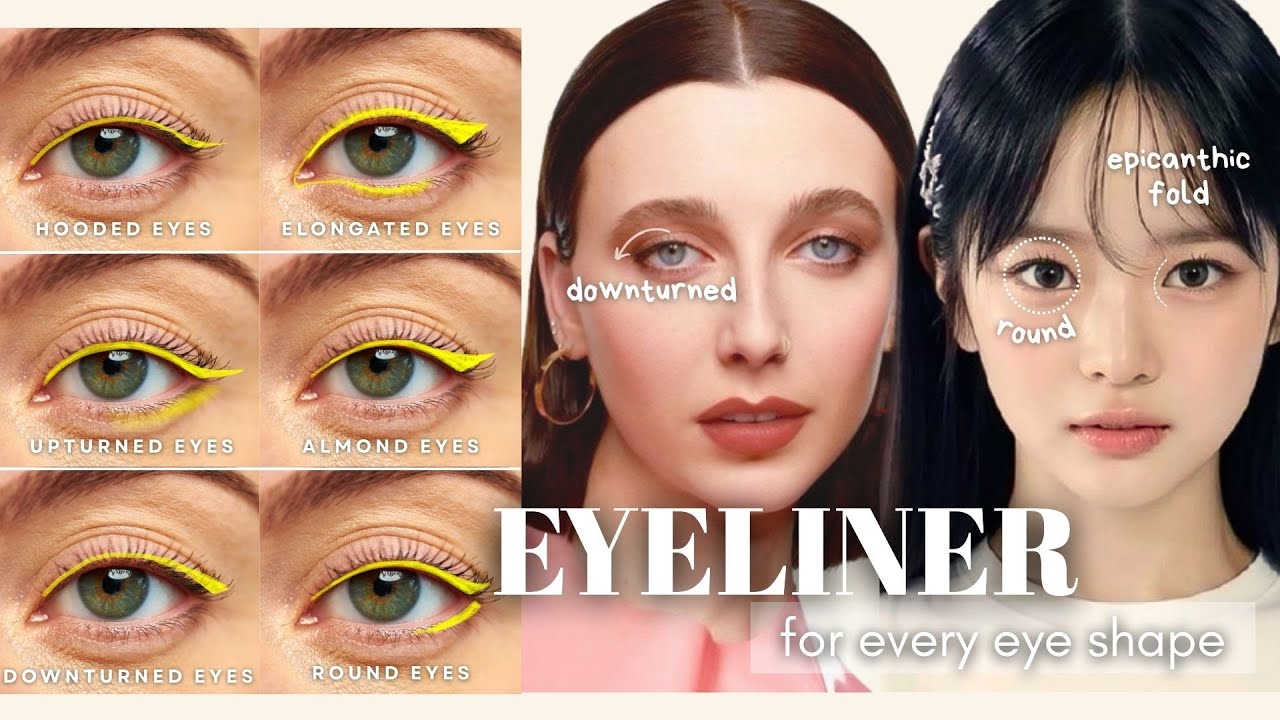
Eye shape and eyelid structure directly affect liner wear time because they determine the physical contact conditions the liner faces after application. Two people using the same product and prep routine can get completely different longevity results based on eyelid anatomy alone.
Dry-lidded individuals often achieve 14+ hours of gel liner wear without primer, while oily-lidded people need primer just to reach 8 to 10 hours under the same conditions (Girlactik, 2026).
Hooded Eyes: Formula and Placement Adjustments
Hooded eyelids create lid-on-lid contact during blinking. The fold of skin that drapes over the lash line acts as a continuous friction surface against the liner layer, which is the main reason hooded-eye liner smudges faster than liner on non-hooded lids.
Formula priority: felt-tip liquid liner or waterproof gel, both applied as thin lines. Thick liner deposits on hooded lids transfer more pigment per blink contact than thin lines do.
Placement adjustment: Draw liner with eyes open, not closed. The wing or line visible with eyes closed will be hidden by the fold when eyes are open. Marking placement with eyes open shows you exactly where the liner will actually sit.
Charlotte Tilbury’s team developed specific application guidance for hooded lids around this exact issue, recommending a C-shaped upper lash line technique that accounts for the skin fold covering a straight line at the outer corner.
Oily Eyelids: Additional Prep and Setting Steps
Oily eyelid skin is the most common reason for premature liner fade. Sebum output on the eyelid margin is independent of facial skin type, which means someone with normal or dry facial skin can still experience significant liner smudging from meibomian gland secretion (Medical News Today).
- Tissue wipe before primer
- Eye-specific primer pressed to lash line
- Matte powder layer over primer
- Waterproof gel or liquid liner only
- Setting powder pressed over finished liner
Each step addresses a different mechanism of oil-driven transfer. Skipping any one of them reduces the cumulative effect of the others.
Mature Skin and Loose Eyelid Texture
As collagen and elastin production decline with age, eyelid skin loses firmness and develops fine folds. Because the eyelids are constantly moving, they are more prone to early surface irregularities than other facial areas (Dr. Flora Levin, 2026).
Liner applied over uneven skin creates adhesion gaps where the product bridges the surface rather than making full contact. Those gaps are the points where liner lifts first.
Key prep step for mature eyelid skin: a creamy flesh-toned concealer base, fully set with translucent powder before primer application. This fills surface irregularities and creates a more even adhesion surface than primer over bare skin alone.
| Eyelid Type | Main Longevity Challenge | Best Formula | Priority Technique |
|---|---|---|---|
| Hooded | Upper lid skin contacts the liner, causing transfer and smudging | Felt-tip waterproof liquid liner | Apply a thin line with eyes open to ensure the design remains visible when the eyes are relaxed |
| Monolid | Continuous lid movement and skin contact can reduce wear time | Waterproof gel liner | Keep liner close to the lash line and avoid excessive thickness on the mobile lid |
| Oily Lids | Sebum breaks down pigments and film-forming agents | Waterproof gel or liquid liner | Use an oil-control primer, set with powder, and follow a complete preparation and setting routine |
| Mature or Loose Lids | Uneven texture can create gaps and cause skipping during application | Gel liner applied with a fine brush | Smooth the lid with a lightweight concealer or eye base before primer and liner application |
Can Eyeliner Application Order Relative to Other Makeup Extend Wear?
Most people treat makeup sequencing as a cosmetic preference. But the order in which products contact eyelid skin has a direct effect on what surface the liner bonds to, which changes wear time.
L’Oreal Paris recommends applying eyeliner after eyeshadow is fully set and before mascara, specifically so liner sits on a stable, dry powder base rather than on top of fresh eyeshadow particles that can shift. The eyeshadow-first sequence also prevents fallout from disturbing a freshly drawn liner line.
Why Foundation on the Eyelid Shortens Liner Wear
Foundation and concealer applied to the eyelid before primer add an emollient layer that increases surface slip, the exact condition that accelerates liner migration.
This is the most common sequencing mistake. Many people apply foundation across the entire face including the lid, then apply primer on top. But primer applied over foundation does not contact the eyelid skin directly. It contacts the foundation layer, which still has the slip property that causes liner to move.
Correct sequence: primer directly on bare eyelid skin first, then foundation applied up to (not over) the eyelid edge if needed for coverage.
Setting Eyeshadow Before Liner: The Dry Surface Advantage
Loose powder and pressed eyeshadow applied before liner create a dry, matte surface that gel and pencil liner adheres to significantly better than bare primed skin alone.
A matte nude or transition shadow pressed over the full primed lid before liner gives the same oil-absorbing benefit as a primer powder layer, with the added benefit of even surface texture across the full lash line zone.
What to avoid: cream eyeshadow before liner. Cream shadows contain the same emollient bases as foundation, which reintroduces the slip problem that primer was meant to eliminate.
The Full Sequence for Maximum Liner Longevity
Sequencing for all-day liner wear follows a clear logic: each step either removes oil, fills surface gaps, or locks the previous layer in place.
- Step 1: Tissue wipe to remove residual eye cream or SPF
- Step 2: Eye-specific primer pressed to lash line and full lid
- Step 3: Matte powder eyeshadow pressed over primer
- Step 4: Liner application in short pressing strokes
- Step 5: Translucent powder pressed over liner
- Step 6: Setting spray as final seal
- Step 7: Mascara last, to avoid disturbing liner
Each product in this sequence is compatible with the layers it touches. No step reintroduces oil or slip to a surface that has already been prepped for adhesion.
For anyone who regularly wears full eye looks, this sequence connects directly to how to layer makeup across the full face, where the same dry-before-emollient logic applies to base products as well.
What Removal and Touch-Up Habits Protect Eyeliner Wear?
How you handle liner during the day and remove it at night affects both same-day longevity and the long-term condition of the eyelid skin that liner adheres to.
Rubbing the eye mid-day is the fastest way to destroy liner adhesion. A single deliberate rub can displace an entire section of liner that prep and formula were working to hold in place for 8 hours.
Q-Tip Touch-Up Without Disturbing the Liner Layer
A cotton swab dipped in micellar water and traced along the lower lash line cleans up smudged transfer without pulling the liner line itself. The key is light pressure and a single pass, not scrubbing.
Touch-up kit for mid-day:
- A matching pencil or gel liner for filling gaps
- A micellar water travel wipe for under-eye cleanup
- A pressed powder compact for re-setting after touch-up
Carrying the same formula used in the original application is the only way to match the pigment density of a touch-up to the existing liner line.
Oil-Based vs. Micellar Removal: What Daily Use Does to Eyelid Skin
Oil-based removers dissolve waterproof and film-forming polymer formulas faster than micellar water alone. Micellar water is gentler and better suited for non-waterproof and water-resistant formulas.
Repeated use of oil-based removers around the lash line without a follow-up gentle cleanser can leave a residual oil film that, over time, affects the eyelid skin barrier. A compromised skin barrier increases transepidermal water loss, which changes the surface condition that liner adheres to (Eyecare Consultants, 2024).
Best practice: oil-based remover for waterproof formulas, followed by a gentle foam or micellar cleanser to remove the oil residue. Micellar water alone for non-waterproof formulas. Pressing, not wiping.
Why Proper Daily Removal Matters for Long-Term Liner Adhesion
Incomplete removal of liner residue, particularly from gel and waterproof formulas, leaves pigment and wax particles in the meibomian gland openings along the lash line. Over time, this contributes to meibomian gland dysfunction (MGD), which increases meibomian oil secretion irregularity and directly worsens liner longevity on subsequent days (American Academy of Ophthalmology).
The connection between removal quality and next-day wear performance is rarely discussed. But chronic partial removal creates progressively worse adhesion conditions over weeks of daily liner use.
For a complete how to remove eye makeup routine that clears both lash line and waterline residue without compromising the eyelid skin barrier, the press-and-hold technique (15 to 20 seconds before wiping) reduces the friction required for full removal by approximately 40% compared to immediate wiping (Eyecare Consultants).
Anyone who regularly wears waterproof formulas should also know how to remove waterproof makeup specifically, since the oil-based solvent step is not interchangeable with the standard micellar approach and skipping it leaves film-forming polymer residue along the lash line.
FAQ on How To Make Eyeliner Last Longer
Why does my eyeliner smudge even when it’s waterproof?
Waterproof formulas resist moisture but not sebum. Meibomian gland oil migrates up from the lash line and softens even film-forming polymer systems. A 2023 study found individuals with high meibum output experienced 3.2x greater liner migration within 4 hours, regardless of formula.
What is the longest-lasting eyeliner formula?
Felt-tip liquid liners dry to the hardest film of any category and resist sebum breakdown better than gel or pencil. Look for trimethylsiloxysilicate or acrylates copolymer high on the ingredient list. Stila Stay All Day and Kat Von D Tattoo Liner both use this polymer architecture.
Does eyelid primer actually make a difference?
Yes. A 2024 wear test found 89% of participants showed zero liner migration at 6 hours after consistent primer use. Eye-specific primer creates a dry, tacky base that liner bonds to. Standard face primer makes smudging worse due to high silicone content.
How do I stop eyeliner from transferring on hooded eyes?
Hooded eyelids create lid-on-lid friction with every blink, which transfers liner regardless of formula. Use a thin line of waterproof liquid liner, apply with eyes open to see where it actually sits, and always prime first. Thick deposits transfer faster than thin ones.
Should I set my eyeliner with powder?
Yes, for pencil and gel liner. Press translucent powder directly over freshly applied liner using a flat brush. It absorbs residual surface oils and locks pigment against movement. For liquid liner, the film has already hardened and powder adds minimal benefit.
Does the order I apply makeup affect how long eyeliner lasts?
It does. Foundation applied to the eyelid before primer adds an emollient layer that increases surface slip and accelerates liner migration. Apply eye-specific primer directly on bare eyelid skin first, then set with matte eyeshadow before drawing any liner.
Why does my waterline eyeliner disappear within an hour?
The waterline is a mucous membrane in direct contact with the tear film. University of Waterloo research found up to 30% of liner particles entered the tear film within 5 minutes of waterline application. No formula fully resists continuous tear film contact. Touch-up is the realistic solution.
What should I do before applying eyeliner to make it last longer?
Wipe the eyelid with a dry tissue to remove eye cream and SPF residue. Then apply an eye-specific primer pressed firmly into the lash line. Follow with a matte eyeshadow layer before liner application. Skin prep affects adhesion before any formula consideration begins.
Is gel or liquid eyeliner better for long wear?
Both outperform pencil significantly. Liquid felt-tip liner dries to a harder, more sebum-resistant film. Gel liner gives better placement control and works well with a brush for pressing pigment into the lash line. On oily eyelids, liquid liner typically holds longer without touch-up.
Does eye rubbing ruin eyeliner wear?
Yes, immediately. A single deliberate rub can displace liner that prep and formula were holding in place for 8 hours. Mid-day touch-up with a matching pencil and a cotton swab dipped in micellar water is more effective than trying to prevent all liner transfer through product alone.
Conclusion
This conclusion is for an article presenting the full picture of eyeliner longevity, from formula chemistry to daily removal habits.
Liner wear time is not a product problem. It is a system problem. Eyelid primer, surface prep, formula choice, and application technique all work together, and weak links in that chain show up within hours.
Oily eyelid skin, hooded lids, and waterline wear each require specific adjustments. There is no single fix that covers all three.
The good news is that once you understand what drives pigment adhesion and liner transfer, the solutions are straightforward. Consistent prep beats expensive product every time.
Get the sequence right, and all-day liner wear stops being a goal and starts being a routine.

She started writing on the site after fielding the same questions from clients and friends often enough to just write the answers down: which red won't turn orange on a warm undertone, how to keep lipstick from feathering into fine lines, why a "12-hour" formula rarely survives dinner.
Every review on the site follows the same rule she uses with paying clients: wear it first, then decide if it's worth recommending.
- How to Make Eyeliner Last Longer Without Smudging - August 31, 2026
- How to Make Eyeshadow Last Longer All Day - August 29, 2026
- How to Find Your Undertone in 5 Easy Steps - August 27, 2026