The wrong contour shade doesn’t just look bad. It looks like a mistake.
Knowing how to pick a contour shade comes down to 3 things: undertone, skin depth, and finish. Most people get at least one of them wrong, which is why contour ends up looking muddy, orange, or too harsh to blend out.
This guide covers shade selection by skin tone and undertone, the difference between cream and powder formulas, how lighting conditions affect what you see during application, and what tools change how a shade actually reads on skin.
By the end, you’ll know exactly which contour shade works for your complexion and why.
What Is a Contour Shade?
A contour shade is a cool-toned or neutral matte color applied to the face to mimic natural shadow cast by bone structure. It is not a bronzer. It is not a blush.
Bronzers add warmth and simulate sun exposure. Blush adds a flush of color to the cheeks. A contour shade does neither. Its only job is to make a specific area of the face recede by looking like a shadow.
Shadow on skin reads cool or neutral. It never reads warm, shimmery, or orange. That distinction is what separates a contour shade from every other face product in your kit.
The contouring product market was valued at $5.19 billion in 2024 and is projected to reach $9.27 billion by 2035 (MRFR, 2024). That growth reflects how central contour has become in everyday makeup routines, not just professional ones.
| Product | Finish | Effect | Undertone |
|---|---|---|---|
| Contour shade | Matte | Shadow, recession | Cool or neutral |
| Bronzer | Satin or shimmer | Warmth, sun-kissed | Warm |
| Blush | Matte or shimmer | Flush, color | Pink, peach, coral |
Understanding this difference upfront saves you from buying the wrong product entirely. Most contour mistakes start here.
What Is the Correct Undertone for a Contour Shade?

Undertone is where most contour shade selection goes wrong. Natural facial shadows read as cool-gray, cool-taupe, or neutral-brown. They never read orange, red, or golden.
A warm-toned contour shade sits on skin as added color rather than shadow. The result looks muddy or bronzed, not sculpted. L’Oreal Paris recommends ashy beige or taupe for fair skin, cool greige for medium skin, and cool dark brown or espresso for deep skin tones when contouring.
Why Warm Contour Shades Look Muddy
Warm pigments reflect light outward. Shadow, by definition, absorbs light. When you place a warm-toned product in a hollow or along a jawline, the warm undertone fights the shadow illusion and the product reads as a stripe of color instead.
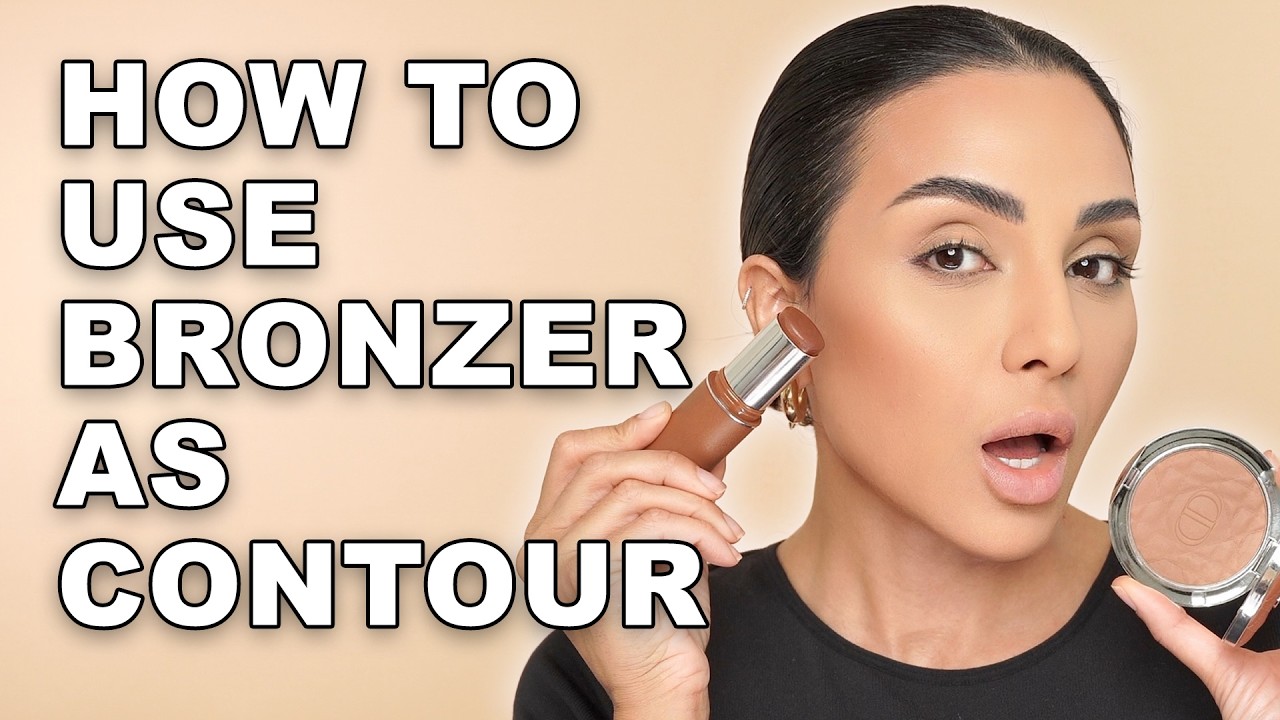
This is why bronzer and contour are not interchangeable. Bronzer is formulated to add warmth. Contour is formulated to add depth. The formulation goals are opposite.
Fenty Beauty’s Snap Shadows and the Anastasia Beverly Hills Contour Kit are both built around cool and neutral tones precisely because warm shades fail the shadow test on the majority of skin tones.
Cool vs. Neutral Undertone: Which to Choose
Cool undertone skin takes cool-toned contour shades cleanly. The cool pigment in the product matches the cool cast already in the skin.
Warm undertone skin tends to pull ashy with a fully cool-gray contour. Neutral-brown shades work better here. They read as shadow without turning gray on skin that has yellow or peachy tones underneath.
Neutral undertone skin is the most flexible. Both cool and neutral contour shades blend naturally. This is the skin type that has the widest range of workable contour products.
Olive skin requires the most care. Gray-heavy shades interact with the green pigment already present in olive skin and can read greenish or ashy rather than shadow-like. Neutral-brown shades with no gray pull are the safest option.
How Does Skin Depth Affect Contour Shade Selection?

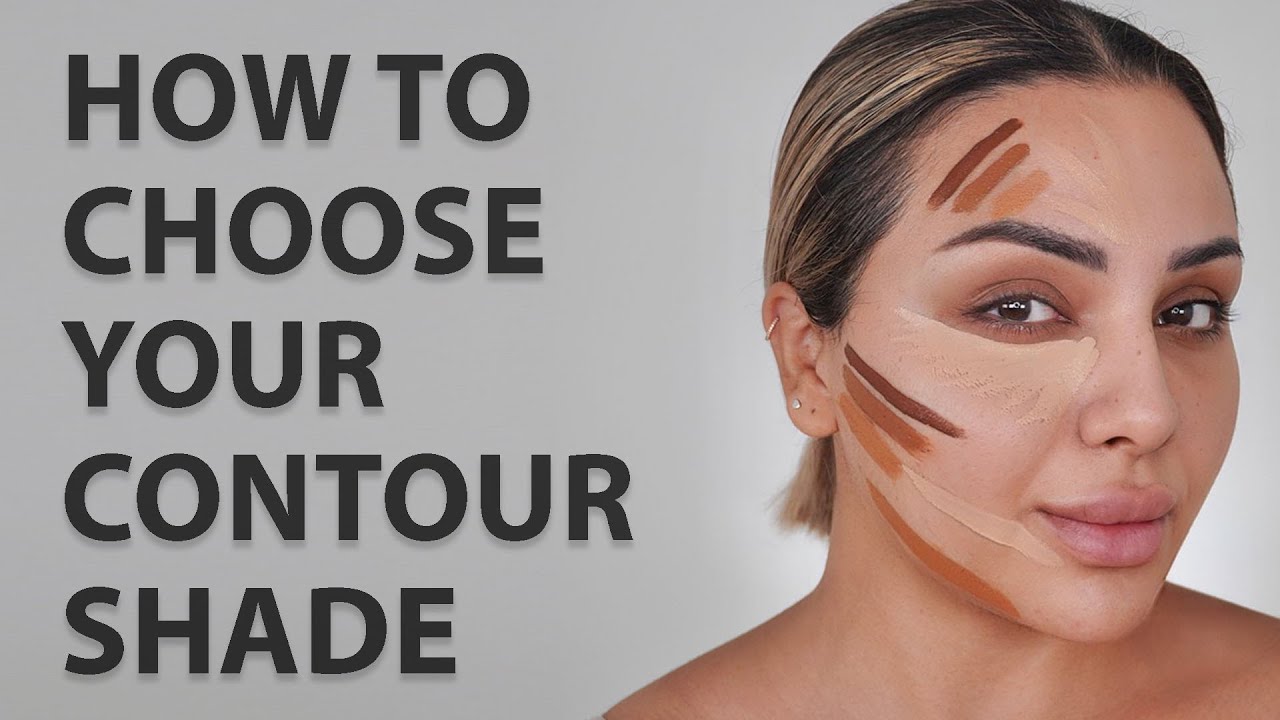
Skin depth and shade intensity must match for a contour to look natural. The standard rule: a contour shade sits 2 to 3 shades deeper than your foundation match.
Going too close to your skin tone produces no visible shadow. Going too far creates a harsh, unblended stripe that reads as a mistake rather than structure.
Shade Depth by Skin Tone
| Skin Depth | Shade Type | Avoid |
|---|---|---|
| Fair | Light taupe, cool sand, soft ash brown | Anything with orange or red |
| Medium | Cool medium brown, neutral-taupe | Red-brown, bronzed shades |
| Tan | Saddle brown, warm-neutral (slight olive undertone) | Gray-heavy shades (wash out) |
| Deep | Espresso, cool dark brown, deep neutral | Ash-gray (reads as gray cast) |
Charlotte Tilbury’s guidance on tan skin is worth noting: shades leaning too gray wash out a tan complexion entirely, making the contour disappear rather than sculpt.
How to Test Depth Against Your Skin
Swatch the contour shade along your jawline or temple in natural daylight. Blend it out fully before judging. An unblended swatch will always read darker than the finished result.
The test is simple: after blending, does it look like a shadow? Or does it look like a stripe of product? If it reads as shadow, the depth is right. If it reads as color, go lighter or adjust the undertone.
Back-of-hand swatching tells you nothing useful. Hand skin has a different texture, undertone, and tone compared to facial skin.
How Do You Test a Contour Shade Before Buying?
Testing method matters as much as shade selection. A shade that looks wrong during testing is often the wrong technique, not the wrong shade.
There are 4 consistent mistakes people make during shade testing: swatching on the hand, judging before blending, testing under store lighting, and checking the swatch as a flat stripe rather than a blended shadow.
At-Counter Testing
Jawline or temple placement only. Apply with a brush, blend out fully, and step outside or near a window. Store lighting, especially warm-toned retail lighting, flattens contrast and makes almost any contour shade look acceptable.
In natural daylight, a shade that is too warm will show its orange pull immediately. A shade that is too gray will look flat and chalky.
At-Home Testing
Apply with a fluffy angled brush to the hollow of the cheekbones. Check in a mirror facing a natural light source, not overhead lighting or a vanity with warm bulbs.
Ask one question: does this look like a shadow my face already has, or does it look added? If it looks like something your bone structure would naturally cast, the shade is correct. If it looks deposited, the shade or the application depth is off.
Pressing less product on the brush before testing is also useful. Shade payoff builds; you can always add more. Removing excess product mid-test skews the result.
What Finish Does a Contour Shade Need?

Matte is the only finish that reads as real shadow on skin. Full stop.
Shimmer and satin finishes reflect light outward. That is the opposite of what shadow does. Placing a satin or shimmery product in the hollows of the face highlights those areas rather than recessing them. The entire point of contour fails.
Why Shimmer Fails as Contour
Light-reflecting particles in shimmer formulas bounce light away from the skin surface. Shadow absorbs light. These two behaviors are physically incompatible in the same product application.
This matters most on product labels that market as “contour and bronzer” combined. Those hybrid products are typically warm and satin-finished. They work as bronzers. They do not work as contour shades.
What to Look For in Matte Formulas
- Pressed powder matte: best for oily and combination skin, easy to build and blend
- Cream matte: most natural result, requires faster blending before it sets
- Matte stick: precise application, needs a brush to diffuse after placement
Check the ingredient list if unsure. Titanium dioxide in high concentration contributes to a flat, fully matte finish. Mica as a prominent ingredient signals shimmer or satin.
Powder contour holds the largest market share at over 34% of total contour revenue in 2024, favored for blendability and compatibility with oily skin (MarketIntelo, 2024). Cream formats are gaining ground, particularly for dry and mature skin types.
Does Skin Undertone Change Which Contour Shade Works?
Undertone affects more than just shade color. It changes whether a contour shade looks seamless or sits on top of the skin as a foreign object. Undertone compatibility is what separates a shade that blends from one that sits.
Identifying Your Undertone
3 reliable tests:
- Vein test: blue or purple veins signal cool undertone; green veins signal warm; a mix signals neutral
- Jewelry test: silver flatters cool undertones; gold flatters warm; both work on neutral
- Foundation history: if foundations in the NC range (MAC) always look right, you lean warm; NW shades working better signals cool
Undertone-Specific Shade Guidance
Cool undertone skin: cool-toned taupe and gray-brown contour shades blend without any mismatch. The undertones align and the product disappears into skin correctly.
Warm undertone skin: neutral-brown contour shades work better than purely cool shades. A gray-heavy contour on warm skin can turn slightly ashy at the edges after blending.
Neutral undertone skin: both cool and neutral options work. This is the widest compatibility window of any undertone type.
Olive Skin and Contour Shade Pitfalls
Olive undertone sits in a tricky position. The green-yellow pigment in olive skin interacts badly with gray-based shades. The gray mixes with the yellow-green and reads as an unnatural cast.
Warm-neutral brown shades with no gray pull work most reliably on olive skin. Charlotte Tilbury’s tan-shade guidance addresses this: saddle brown with slight olive-friendly undertones reads as shadow on tan and olive complexions where a straight taupe would go ashy.
Inclusive beauty brands that address undertone accuracy across all skin depths grew 1.5 times faster than less inclusive competitors in 2024 (Arbelle AI, 2024). The shade-matching gap for undertone-specific products remains one of the biggest unmet needs in the contour category.
How Does Skin Type Affect Contour Shade Performance?

The same contour shade can perform completely differently on oily skin versus dry skin. Skin type changes which formula works, how the shade applies, and how the finished contour looks after a few hours.
Oily Skin
Powder contour holds best on oily skin. Excess sebum breaks down cream formulas faster, causing the contour to fade or shift into fine lines and pores.
Shade tip for oily skin: go slightly lighter in shade than you think you need. Oil can darken powder over time as it absorbs into the formula. A shade that looks correct at application may read one shade deeper by midday.
Dry Skin
Cream and stick contour formats blend more naturally on dry skin. Powder can cling to dry patches and texture, making the contour look uneven or emphasizing flakiness.
Cream formulas move with the skin rather than sitting on top of it. The Rare Beauty Bronzer Stick and similar cream-texture formats are built for this. They deposit color smoothly on skin that would otherwise grab onto powder.
Combination and Mature Skin
Combination skin: powder on the T-zone, cream on drier cheek areas. Using one formula across the whole face creates inconsistency in how the shadow reads.
Mature skin: lighter shade intensity, softer application pressure. Contour product settling into fine lines looks like makeup failure when it is usually an over-application problem. A lighter shade blended with a fluffy brush and less product avoids this entirely.
Cream-based contouring products are gaining ground for dry and mature skin types specifically because of their hydrating properties and skin-like finish (Dataintelo, 2024).
What Is the Right Contour Shade for Deeper Skin Tones?

Most products labeled “contour” in mass-market retail are formulated for fair to medium skin. Deep skin tones are consistently underserved in the contour category.
Traditional pigment formulations historically prioritized mid-range and lighter skin tones, leaving deeper complexions with mismatch, ashy casts, and tonal imbalance (Future Market Insights, 2025). The gap is well-documented and still closing.
Why Standard Contour Shades Fail on Deep Skin
The core problem: most mainstream contour palettes max out at a medium-deep shade that reads as a light blush on deeper skin rather than a visible shadow.
A shade needs to sit 2 to 3 shades deeper than the foundation match to create visible depth. On deep skin, that means the contour shade must be genuinely rich, not just “dark” by packaging standards.
Gray-heavy shades make the problem worse. On deeply pigmented skin, a gray-based contour interacts with the natural melanin and reads as an unnatural cast rather than shadow.
Shades That Work for Deep Skin
Rich cool brown, espresso, and deep neutral-brown are the 3 shade categories that read correctly as shadow on deep skin tones.
- Fenty Beauty Snap Shadows in deep shades: built for this specific gap
- UOMA Beauty contour range: formulated with deep skin undertones as the starting point
- Dark matte eyeshadow as a substitute: a legitimate workaround when dedicated products run too light
Inclusive beauty brands grew 1.5 times faster than less inclusive competitors in 2024 (Arbelle AI, 2024). The market signal is clear. Brands that formulate for deep skin first are outperforming those that treat it as an afterthought.
What to Avoid
Straight gray-brown or ash-heavy shades. These turn into a gray cast on deep skin rather than receding into a natural shadow.
Anything labeled “universal contour” that does not specify shade range. Universal usually means medium.
How Does Face Shape Change the Contour Shade You Need?

Face shape changes placement. It does not change shade selection. One contour shade works for a full face regardless of face shape.
This is one of the most repeated misconceptions in contour tutorials. The shade that reads as shadow under your cheekbone reads as shadow at your temple and along your jaw too. The color does not change. Only the placement zones shift.
Placement vs. Shade: What Actually Changes
| Face Shape | Primary Placement Zone | Shade Adjustment |
|---|---|---|
| Oval | Cheekbone hollows, light temple | None needed |
| Round | Temples, jawline, cheekbone hollows | None needed |
| Square | Corners of jaw, temples | None needed |
| Long | Hairline, tip of chin | None needed |
The same shade, applied with different brush pressure across zones, creates depth variation. Heavier pressure under the cheekbone, lighter pressure at the temple.
Where Beginners Overcomplicate This
Buying 2 or 3 contour shades for “different areas” of the face is unnecessary. It also makes it harder to blend everything seamlessly because the shades rarely match perfectly at the edges.
Professional makeup artists typically work with a single contour shade per face. Intensity variation comes from brush loading and application pressure, not from switching products.
What Tools Affect How a Contour Shade Reads on Skin?

The same shade can read completely differently depending on the brush used to apply it. Tool choice changes the apparent depth of a contour shade by at least 1 full shade.
A dense flat brush deposits significantly more pigment than a fluffy angled brush, making an identical shade look noticeably darker on skin. Getting the tool right removes a major variable from shade selection.
Brush Types and Their Effect on Shade Payoff
Fluffy angled brush: diffuses color, reduces risk of harsh lines, makes a shade read softer. Best for powder contour and beginners.
Dense angled brush: deposits more pigment, builds depth quickly, creates sharp definition. Best for cream contour and advanced application. Patrick Ta’s dual-ended sculpting brush uses this principle: a dense end for cream, a fluffy end for powder blending.
Stippling or damp sponge: presses cream contour into skin for a blurred, skin-like result. Avoids the drag marks that can appear when cream is swept with a brush.
Application Surface Matters Too
A contour shade reads darker on dry, unprepared skin. The same shade applied over a moisturized or primed base will look lighter and blend more cleanly.
This matters when testing shades. A shade tested on bare, dry skin will read roughly one shade deeper than it will over a full base.
Buffer brushes are worth keeping nearby regardless of formula. They correct harsh edges without removing product, which is faster and cleaner than blending in more foundation to fix a line.
How Do Lighting Conditions Affect Contour Shade Accuracy?

Lighting during application directly determines whether a contour shade looks right in real-world conditions. Apply in the wrong light and the correct shade will still look incorrect.
Warm indoor lighting makes contour appear lighter than it reads in daylight. The result: over-application. You step outside and the contour reads two shades darker than intended.
Why Natural Light Is the Standard
Natural light provides the most accurate color and contrast representation of any light source (PacLights, 2025). It shows undertone pull, depth accuracy, and blend quality simultaneously.
No artificial source fully replaces it. LED vanity lights rated at a high color rendering index (CRI of 90 or above) come closest, but even these differ enough to cause misjudgments in shade depth.
Ring Light and Overhead Lighting Distortions
Ring lights create even, shadow-free illumination. That is useful for filming. It is a problem for contour application because it eliminates the very shadows you are trying to create.
Applying contour under a ring light makes it look correct under that light. Remove the ring light, and the contour reads harsher than intended because the shadow was already present in the lighting.
Overhead lighting creates the same issue in reverse: it creates false depth in the hollows, making contour look correct when applied but too heavy in even or natural light.
Flashback in Photos
Powder contour shades containing titanium dioxide or zinc oxide can create a white cast in flash photography. These ingredients reflect flash light outward, appearing lighter than they read in person (Lab Muffin Beauty Science).
Check the ingredient list before using a powder contour for photographed events. A shade that looks perfectly matched in natural light can still cause flashback in flash photography if the formula contains these reflective minerals.
Which Contour Shade Format Works Best for Beginners?
Powder is the most beginner-friendly contour format. It builds gradually, blends easily, and mistakes are fixable before the product sets.
Cream gives a more natural, skin-like result but requires faster blending. Stick deposits heavily and needs a brush to diffuse. Both are harder to correct than powder once applied.
Format Comparison
| Format | Best For | Main Risk | Skill Level |
|---|---|---|---|
| Powder | Oily, combination, beginners | Can look dry on dry skin | Beginner |
| Cream | Dry, mature skin | Sets before blending if slow | Intermediate |
| Stick | Portable, precise placement | Heavy deposit without diffusing | Intermediate |
Powder contour holds the largest share of the contour market at over 34% of total revenue in 2024, favored for blendability and ease of use across both professional and everyday consumers (MarketIntelo, 2024).
Beginner Shade Approach
Start one shade lighter than you think you need. You can build depth with a second pass. Removing a shade that is too dark mid-application always disrupts the base underneath.
Specific starting products worth knowing:
- e.l.f. Cosmetics Halo Glow Contour Beauty Wand: soft cream formula, low pigment payoff, very forgiving
- NYX Professional Makeup Highlight and Contour Pro Palette: matte powder options across multiple shade ranges
- Anastasia Beverly Hills Contour Kit: pressed powder, cool-toned shades, 6 shade options covering fair through deep
Learning how to use cream contour becomes a natural next step once you understand your shade. The application process is different enough from powder that it is worth treating as a separate skill.
If you are also working out your full base, it helps to find your undertone first. Every contour shade decision flows from that single piece of information.
One Shade Is Enough
You do not need a contour kit with 6 shades to start. One shade, the right undertone, the right depth.
That is the entire decision. Everything else is application technique, which improves with practice regardless of which product you use.
FAQ on How To Pick A Contour Shade
How many shades darker should a contour shade be?
A contour shade should sit 2 to 3 shades deeper than your foundation match. One shade creates no visible shadow. More than 3 shades reads as a stripe. The right depth mimics natural shadow without visible contrast at the edges.
Should a contour shade be warm or cool-toned?
Cool or neutral. Natural facial shadows never read warm. A warm-toned contour shade pulls orange or muddy on most skin tones because warm undertones read as added color, not shadow. Bronzer and contour are not the same product.
What is the difference between contour and bronzer?
Contour is matte and cool or neutral-toned. It mimics shadow. Bronzer is warm-toned and often satin-finished. It mimics sun exposure. Using bronzer as a contour shade is the most common mistake beginners make.
How do I find my contour shade if I have fair skin?
Look for light taupe, cool sand, or soft ash brown. Avoid anything with orange or red undertones. On fair skin, warm shades stand out immediately. A shade labeled “soft taupe” or “cool beige” is usually the right starting point.
What contour shade works for deep skin tones?
Rich cool brown, espresso, or deep neutral-brown. Most mainstream contour products are too light for deep skin tones. Fenty Beauty Snap Shadows and UOMA Beauty both formulate specifically for deeper complexions. A dark matte eyeshadow works as a substitute when needed.
Does skin undertone affect which contour shade I should use?
Yes. Cool undertone skin takes cool-toned shades cleanly. Warm undertone skin does better with neutral-brown shades to avoid ashiness. Olive skin needs warm-neutral shades with no gray pull, since gray interacts with olive’s green pigment and reads as an unnatural cast.
Does contour shade change based on face shape?
No. Face shape changes placement zones, not shade selection. One contour shade works across the entire face regardless of face shape. The same shade applied with different brush pressure creates depth variation where needed.
What finish should a contour shade have?
Always matte. Shimmer and satin finishes reflect light outward, which is the opposite of how shadow behaves. Matte finish absorbs light and creates the illusion of depth. Any contour product with shimmer works as a bronzer, not a contour.
Is powder or cream contour better for beginners?
Powder. It builds gradually, blends easily, and mistakes are fixable before the product sets. Cream contour gives a more natural finish but sets faster and requires more blending skill. Start with powder, then learn cream once the shade is confirmed.
How does lighting affect contour shade selection?
Warm indoor light makes any contour shade appear lighter than it reads in daylight, leading to over-application. Always check your contour shade in natural light before committing. A shade that looks correct near a window is the right shade.
Conclusion
This conclusion is for an article on how to pick a contour shade, and the answer is simpler than most tutorials make it seem.
Get the undertone right first. Cool or neutral, never warm. From there, match the shade depth to your skin tone, 2 to 3 shades deeper than your foundation.
Matte finish only. The right brush changes how much product lands on skin, so test before judging the shade itself.
Deep skin tones need genuinely rich, cool-brown pigment, not whatever a palette labels as “dark.” Olive skin avoids gray-heavy shades. Dry skin reaches for cream contour formulas.
One shade, correctly chosen, is all you need to create natural shadow depth across every placement zone on your face.

She started writing on the site after fielding the same questions from clients and friends often enough to just write the answers down: which red won't turn orange on a warm undertone, how to keep lipstick from feathering into fine lines, why a "12-hour" formula rarely survives dinner.
Every review on the site follows the same rule she uses with paying clients: wear it first, then decide if it's worth recommending.
- How to Make Eyeliner Last Longer Without Smudging - August 31, 2026
- How to Make Eyeshadow Last Longer All Day - August 29, 2026
- How to Find Your Undertone in 5 Easy Steps - August 27, 2026