Bad lash adhesive ruins a full set in hours. And most of the time, the glue was the problem before the first extension was even placed.
Knowing how long lash glue lasts, whether unopened, freshly cracked, or three months old, directly affects bond strength, lash retention, and client safety.
This guide covers on-eye wear time by adhesive type, post-opening shelf life, the role of cyanoacrylate and humidity in bond performance, and the exact signs that tell you a formula has gone past its usable window.
By the end, you will know how to store adhesive correctly, when to replace it, and what actually extends lash glue longevity beyond the basics.
What Is Lash Glue?

Lash glue is a cosmetic adhesive formulated to bond false lashes or lash extensions to natural lashes or eyelid skin. The primary active ingredient in most professional-grade formulas is cyanoacrylate, a fast-reacting monomer that polymerizes on contact with moisture.
There are 2 distinct product categories, and they behave very differently in terms of bond strength, wear time, and shelf life.
| Category | Primary Use | Bond Type | Typical Wear |
|---|---|---|---|
| Strip lash adhesive | False strip lashes, daily use | Skin-to-band | 8–24 hours |
| Lash extension adhesive | Semi-permanent individual extensions | Natural lash-to-extension | 4–6 weeks |
| Cluster/tab adhesive | DIY clusters bonded under lashes | Natural lash-to-cluster base | 3–7 days |
| Latex/acrylic blend | Sensitive skin formulas | Skin-to-band or lash | 1–3 days |
The bond mechanism works the same across all cyanoacrylate-based formulas. When the adhesive contacts moisture on the skin or lash surface, the acid stabilizer is neutralized and anionic polymerization begins, forming rigid polymer chains that harden into the bond. Strip lash adhesives use slower-reacting formulas. Professional extension glues react in 1 to 2 seconds.
Latex and acrylic alternatives skip the cyanoacrylate molecule entirely. They carry lower sensitization risk but also significantly weaker bond strength, which is why they are used in strip or cluster applications rather than for individual extensions.
How Long Does Lash Glue Last on the Eye?
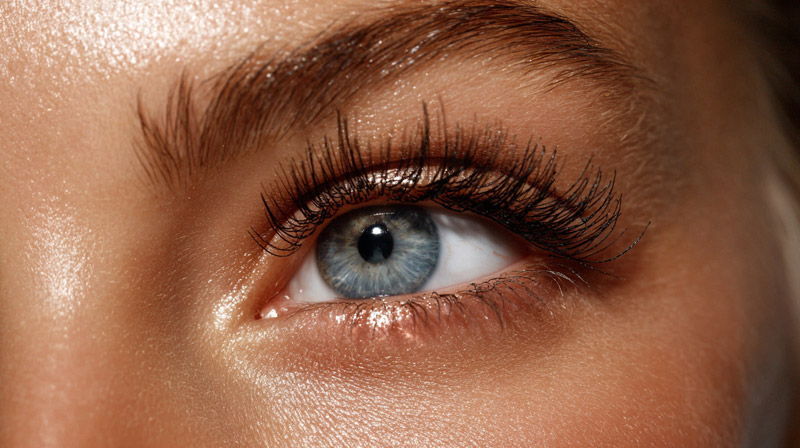
Strip lash adhesive holds for 8 to 24 hours per wear. Extension adhesive bonds last 4 to 6 weeks before natural lash shedding causes fallout. Cluster and tab glues fall in the middle at 3 to 7 days, with bond-and-seal systems extending that to 5 to 14 days (Beautibeam, 2025).
On-eye duration is the number most people actually care about. But it changes significantly depending on glue type, application technique, and skin behavior.
Strip Lash Adhesive Wear Time
Strip lash glue bonds the lash band directly to eyelid skin. Skin produces sebum and sheds cells continuously, which is why no strip adhesive maintains a rigid grip much past 24 hours.
Best-case wear time: up to 24 hours. Most wearers notice corner lifting between 8 and 12 hours, especially in warm or humid conditions.
- Latex-free adhesives tend to lift earlier than cyanoacrylate-based strip glues
- Oily skin breaks down the bond faster, often within 4 to 8 hours
- Applying a thin layer and waiting for the glue to become tacky (about 30 seconds) before pressing the band down significantly extends hold
Strip lashes bonded to skin, not over the natural lash root, will fail faster. Lash bands placed on skin rather than the lash line lose grip within a few hours as skin oils saturate the bond layer.
Lash Extension Adhesive Wear Time
Lash extension adhesive delivers the longest on-eye bond life of any lash glue category. Most clients retain 60 to 80% of extensions at the 2-week mark with proper aftercare and professional application (Lash Affair, 2024).
The bond itself stays intact for 4 to 6 weeks. What diminishes the look earlier is not adhesive failure but the natural lash shedding cycle. Humans lose 1 to 5 natural lashes per eye per day, meaning 15 to 35% of extensions shed in the first 2 weeks regardless of bond quality (Lash Affair, 2024).
This is why lash infill appointments are scheduled every 2 to 3 weeks, not because the glue breaks down, but because the natural lash cycle removes extensions that are bonded correctly.
Cluster and Tab Lash Glue Wear Time
Standard cluster adhesive: 1 to 3 days. Bond-and-seal systems: 5 to 14 days.
Salon-applied clusters with professional-grade adhesive can hold up to 2 weeks (Fadlash, 2024). The single biggest variable is not technique but whether a sealer is applied over the cured bond to protect it from water, sweat, and oil.
Clusters placed on skin instead of bonded to the underside of natural lashes lose grip within 12 hours. Skin surface renewal and oil production dissolve the bond layer much faster than the natural lash surface does.
How Long Does Lash Glue Last Unopened?
Unopened cyanoacrylate lash extension adhesive lasts 6 to 12 months from the manufacture date when stored in correct conditions (Charmlash, 2024). Unopened strip lash adhesive with a latex or acrylic base has a longer shelf life of 12 to 24 months (Lash Jungle, 2024).
The difference comes down to reactivity. Cyanoacrylate is a highly reactive monomer. Even sealed, small amounts of moisture and heat can trigger partial polymerization inside the bottle, thickening the formula and degrading its performance over time.
Manufacture Date vs. Expiry Date
Most lash adhesive packaging uses a Period After Opening (PAO) symbol rather than a hard expiry date. This is a small jar icon with a number inside (e.g., “6M” means use within 6 months of opening).
The PAO clock does not start until the seal is broken. An unopened bottle purchased 3 months ago should still have its full post-opening window ahead of it, provided storage conditions were correct.
Buying lash extension glue in bulk to save money is a common mistake. A bottle sitting unused for 6+ months before opening is already degraded before the PAO window even starts.
How Storage Affects Unopened Shelf Life
Heat and humidity accelerate curing even through sealed packaging. A bottle stored in a bathroom cabinet near a shower can lose performance months before a bottle stored in a cool, dry drawer.
- Ideal storage: 60 to 77 degrees Fahrenheit (15 to 25 degrees Celsius), away from direct light
- Avoid refrigerating cyanoacrylate-based extension glue: condensation on removal from the fridge triggers premature surface polymerization
- Strip lash adhesive tolerates room temperature storage far better than extension glue
ScienceDirect notes that the shelf life of uncured cyanoacrylate adhesive in sealed containers is approximately one year, and that refrigeration extends it while humidity and UV exposure shorten it significantly.
How Long Does Lash Glue Last After Opening?
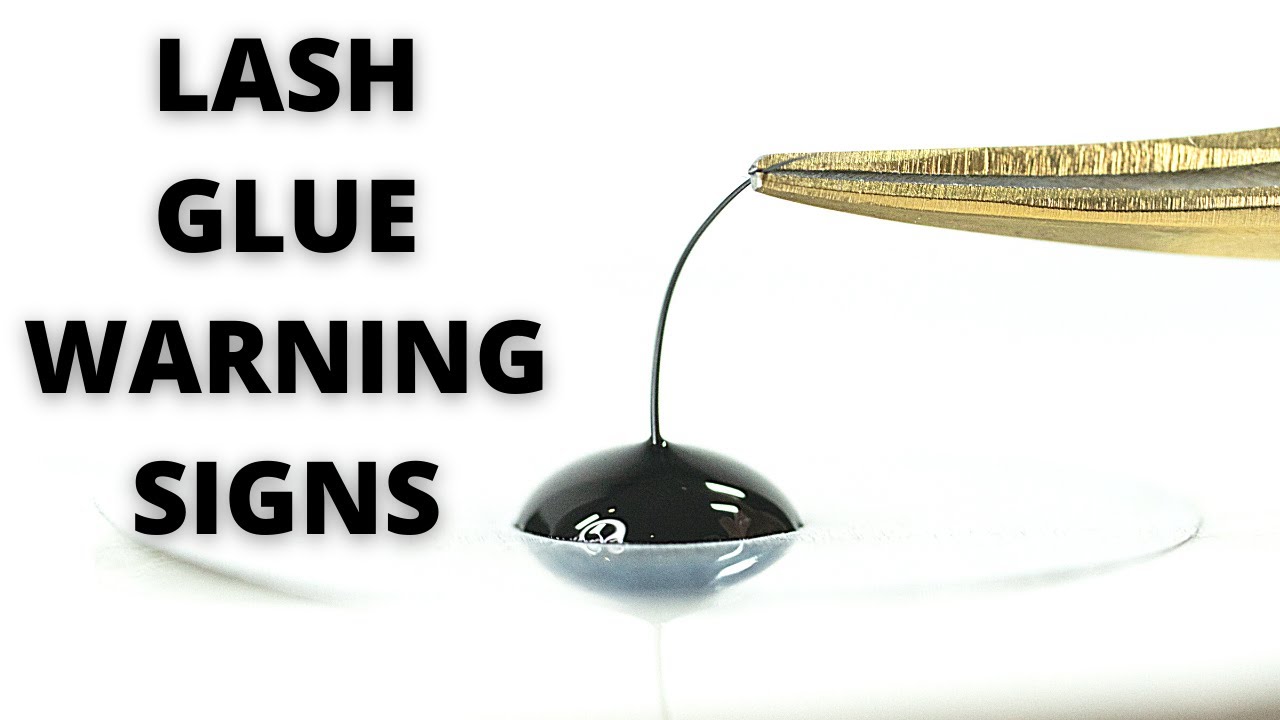
Once the seal breaks, the clock runs fast. Opened lash extension glue: 4 to 8 weeks at peak performance (Lyon Lash; Cartel Lash). Opened strip lash adhesive: 1 to 3 months. The difference is reactivity. Professional cyanoacrylate formulas are more chemically active, which is why they bond in 1 to 2 seconds but also why they degrade faster after opening (Dappered Chic, 2024).
Every time the bottle is opened, air and moisture enter. Polymerization begins incrementally from that point forward, thickening the formula and shortening cure time until the glue becomes unpredictable.
Lash Extension Glue After Opening
Most professional lash adhesive manufacturers set a 4-week post-opening window as the standard recommendation. Some formulations push to 6 to 8 weeks at lower use frequency.
Flawless Lashes by Loreta reports that opened adhesive used on 4 to 6 clients per day lasts approximately 4 weeks, while a bottle opened infrequently can perform for up to 12 weeks under strict storage conditions.
Humidity in the studio matters here too. Artists working in climates above 65% relative humidity report effective use windows as short as 3 to 4 weeks. Studios with controlled environments get 6 to 8 weeks of consistent performance from the same formulas.
Strip Lash Adhesive After Opening
Strip lash adhesives use slower-reacting formulas with latex or acrylic polymer bases. These are less sensitive to air exposure than cyanoacrylate extension glues.
Post-opening window: 1 to 3 months with correct storage. Signs of degradation appear as thickening, extended dry time, or a stringy texture when you pull the applicator away from the tube.
- Store upright with the cap cleaned and fully sealed after each use
- Avoid storing near a bathroom sink, humidity accelerates degradation even in latex formulas
- If the glue leaves a white residue on the lash band, the formula has already partially polymerized
What Factors Affect How Long Lash Glue Lasts?
5 variables determine on-eye bond duration and product shelf life: humidity, skin oil production, surface preparation, glue volume, and aftercare habits. Getting one of these wrong reduces lash retention even with a high-quality adhesive.
Humidity and Temperature
Humidity is the most significant environmental variable for lash adhesive performance. Most professional extension adhesives are formulated to cure optimally between 45% and 65% relative humidity (Sense Lashes, 2024; Posh Deluxe, 2024).
| Humidity Level | Effect on Cure | Bond Result |
|---|---|---|
| Below 30% RH | Cure time extends to 5–10 seconds | Weak, brittle bond |
| 40%–65% RH | Cure time 1–3 seconds | Strong, flexible bond |
| Above 70% RH | Shock polymerization under 1 second | Blooming, surface cured but weak internally |
Ideal temperature range is 68 to 72 degrees Fahrenheit (20 to 22 degrees Celsius) (Forabeli, 2022). Outside this window, both cure time and bond integrity are affected. Professional lash artists use a hygrometer in the studio to monitor conditions in real time.
Skin Oil and Surface Preparation
Sebum from oily eyelids is the leading cause of premature bond breakdown on the eye. Oil saturates the adhesive polymer layer, softening it and causing extension rotation and premature shedding.
Using a lash primer or eyelid degreaser before application removes surface oil and residue, creating a cleaner bonding surface. This step alone significantly extends on-eye retention, particularly for clients with oily skin types.
Glue Volume and Aftercare
Too much glue weakens, not strengthens, the bond. A bead of 1 to 2 mm on the extension base is the correct application volume. Excess adhesive takes longer to cure, creates a heavier bond that stresses the natural lash, and is more vulnerable to breakdown from water and oil exposure.
Aftercare behaviors that break down the bond fastest: water exposure in the first 24 to 48 hours, oil-based makeup removers near the lash line, rubbing the eyes, steam rooms or saunas, and sleeping face-down on a cotton pillowcase. Applying false eyelashes correctly the first time, with proper surface prep and the right glue volume, prevents most premature failures.
How Does Humidity Affect Lash Glue Curing and Bond Life?
Humidity is the catalyst for cyanoacrylate polymerization. Without moisture, lash extension adhesive does not cure. Too much moisture overwhelms the reaction, producing a condition called blooming that creates a surface-cured but internally weak bond.
Above 70% relative humidity, the adhesive cures so fast that polymer chains cannot form properly throughout the full bond layer. The result is white residue on the lash line and a bond that looks set but loses retention up to 50% faster than bonds formed in controlled conditions (Charmlash, 2024).
Low Humidity Problems
Below 30% RH: cure time extends, bond becomes brittle. The moisture-initiated chain reaction slows significantly in dry environments, giving the lash artist more working time but producing a stiffer, more breakage-prone polymer structure.
Artists in dry climates or over air-conditioned studios frequently deal with adhesive that takes 5 to 10 seconds per bond instead of 1 to 2 seconds. This is a sign to either adjust the environment or switch to a formula engineered for low-humidity use.
High Humidity Problems
High humidity causes 2 distinct problems: shock polymerization during application and accelerated degradation of the opened bottle over time.
Shock polymerization occurs when the bond surface cures instantly while the interior remains uncured. The polymer layer looks bonded but carries almost no internal structural strength.
- Visible sign: white, cloudy residue along the lash attachment point
- Common cause: applying extension glue when ambient humidity exceeds 70% RH
- A nano-mister used above 65% RH makes this worse, not better. The additional moisture triggers further shock polymerization
LashBase technical data shows adhesives formulated for 40 to 70% optimal humidity will drop to 4 to 5 second cure times below 15% RH and risk shock polymerization above 85% RH. Professional lash artists use tools like the Inkbird IBS-TH2 hygrometer to monitor studio conditions throughout the day.
How Should Lash Glue Be Stored to Maximize Shelf Life?

Opened extension glue: store upright, in an airtight container with silica gel packets, at 60 to 77 degrees Fahrenheit, away from direct light. Strip lash adhesive tolerates basic room-temperature storage in a cool dry drawer.
Storage is where most lash artists lose weeks of usable life from a bottle without realizing it. Heat, humidity, and repeated exposure to air are the 3 factors that cut post-opening windows short.
Extension Glue Storage Rules
Silica gel packets inside the storage container: eliminates residual moisture trapped inside, slowing incremental polymerization between uses.
- Never refrigerate cyanoacrylate extension glue. Condensation forms on the cold bottle when removed, and that surface moisture immediately triggers polymerization at the nozzle and inside the cap
- Store bottles upright to prevent adhesive from pooling at the nozzle and partially curing the tip
- Wipe the nozzle clean with a dry microfiber cloth after every use before replacing the cap
- Squeeze a small amount of air out of the bottle before resealing to reduce the internal oxygen and moisture volume
Stacy Lash recommends labeling opened bottles with the date of first use. This single habit prevents artists from unknowingly using degraded adhesive past its effective window.
Strip Lash Adhesive Storage
Strip lash glue requires far less controlled storage than extension adhesive. A cool, dry drawer away from the bathroom is sufficient for most latex and acrylic polymer formulas.
The common mistake is storing strip glue in a makeup bag left in a hot car, near a window, or in a humid bathroom cabinet. All 3 environments accelerate the thickening that signals formula breakdown.
If the glue has become stringy when applied to the lash band, or leaves a white film on the band, the formula is past its effective life and should be replaced. Applying false lashes with degraded adhesive produces bonds that lift within hours and increases the risk of skin irritation from partial polymerization byproducts. A good daily care routine that includes checking your tools and products for freshness, not just your skincare, applies directly to how long your lash adhesive stays viable.
How Do You Know When Lash Glue Has Gone Bad?
Lash glue does not signal its own expiration clearly. Retention drops first, and the cause is often traced back to degraded adhesive only after the problem already showed up on a client.
4 observable changes indicate a formula past its usable life (Stacy Lash; ETG Manufacturer, 2024).
Texture and Consistency Changes
Stringy or gloopy texture when the extension is pulled from the glue dot is the clearest sign of degradation. Fresh cyanoacrylate adhesive flows smoothly and breaks cleanly. Degraded adhesive stretches into threads.
London Lash Pro notes that stringy adhesive is harder to control during application, leading to excess glue on the bond point, a condition called stickies, where lashes fuse together and cause natural lash damage.
Replace the bottle immediately. Using stringy glue one more day is not worth the risk to natural lash health or client safety.
Performance and Color Indicators
Stacy Lash identifies 4 signs beyond texture that confirm a formula has gone bad:
- Watery or pale appearance: fresh cyanoacrylate extension glue is black or clear with consistent opacity
- Extended dry time: a bond that took 1-2 seconds now takes 5+ seconds
- Weak or no bond: lashes lifting within hours of application despite correct technique
- Unusual smell: sharper or more chemical-heavy odor signals degraded preservatives
Skin reactions from degraded adhesive are also possible, even in clients with no prior sensitivity history. Partial polymerization byproducts in expired formulas are more likely to trigger irritation than fresh adhesive (Neicha, 2024).
Does Lash Glue Type Affect How Long the Bond Lasts?
Yes. Bond duration varies significantly across the 4 main lash adhesive formulation types. The cyanoacrylate concentration, molecular weight, and additive profile all determine how long the adhesive holds on the lash and how long it stays usable after opening.
A quality adhesive reaches 70 to 80% retention at the 2-week mark. Anything below 60% at 2 weeks signals an inferior product or degraded formula (Lash Affair, 2024).
| Formula Type | Bond Duration | Post-Opening Life | Best For |
|---|---|---|---|
| Ethyl cyanoacrylate | 4–6 weeks | 4–8 weeks | Professional extensions |
| Butyl/alkoxy cyanoacrylate | 3–5 weeks | 4–6 weeks | Sensitive formulas |
| Latex-based | 1–3 days | 1–3 months | Strip lash adhesive |
| Acrylic polymer | 12–18 hours | 1–3 months | Drugstore strip glue |
Cyanoacrylate-Based Glues
Ethyl cyanoacrylate is the standard for professional extension adhesives. Cyanoacrylate concentration directly correlates with retention and drying speed, but also with fume production and sensitization risk (Divine Lashes, 2024).
Professional adhesives typically have a working window of 1 to 3 seconds and reach full cure in 24 to 48 hours (Lash Affair, 2026). Most formulas in this category achieve 70 to 80% retention at 2 weeks when applied correctly in controlled humidity.
Latex and Acrylic Alternatives
Latex and acrylic polymer strip adhesives trade bond strength for flexibility and lower sensitization rates. These formulas cure by evaporation rather than moisture-triggered polymerization, which is why they have a much longer post-opening life than cyanoacrylate extension glue.
Practical trade-off: better shelf life, weaker bond, shorter on-eye wear time.
Perfect for daily strip lash users. A poor choice for anyone wanting extensions to hold through a full lash shedding cycle.
Sensitive Formula Trade-offs
Sensitive formulas use butyl cyanoacrylate, alkoxy-cyanoacrylate variants, or diluted ethyl cyanoacrylate. Sense Lashes notes these formulas produce 65% fewer fumes than standard ethyl cyanoacrylate adhesives, which reduces eye irritation during and after application.
The cost is a slightly reduced retention window. Sensitive-formula extension bonds typically hold 3 to 5 weeks rather than 4 to 6 weeks.
Lash Affair’s guide on applying false eyelashes notes that formula selection should account for both client skin sensitivity and the studio’s humidity environment, since sensitive formulas also tend to have narrower optimal humidity ranges.
How Long Does Lash Glue Take to Dry?
Drying and curing are not the same thing. The adhesive feels set within seconds, but full polymerization takes 24 to 48 hours (Lii Lash, 2024; Adhesive Guru, 2024).
Confusing the two is one of the most common causes of poor lash retention, because clients leave appointments thinking the bond is complete when it has only reached surface set.
Working Time vs. Full Cure
Ethyl cyanoacrylate achieves 90% cure in approximately 2 minutes, but the final 10% of polymerization continues for up to 24 hours (UBLash, 2025).
Working window by formula speed:
- Fast professional adhesives: 0.3 to 1 second tack time
- Standard professional adhesives: 1 to 3 seconds
- Beginner-friendly formulas: 2 to 5 seconds
- Strip lash adhesives: 15 to 45 seconds to become tacky
The transition from glossy to matte on the glue dot signals completed surface polymerization. It does not signal full cure (UBLash, 2025).
The Nano-Mister and Bonder Role
A nano-mister applies a fine water mist post-application to accelerate surface polymerization and reduce fume release. Used correctly, at humidity below 50%, it cuts client discomfort and seals the surface bond faster.
Used incorrectly, above 65% relative humidity, it triggers shock polymerization and blooming. The result is a surface-sealed but internally fragile bond that sheds early.
Lash bonders such as the Stacy Lash Bonder or London Lash Superbonder work differently. They initiate curing from the inside out rather than the surface in, which claims up to 30% greater retention between fills and eliminates the 24-hour water avoidance window (Flawless Lashes by Loreta, 2024).
Can Lash Glue Be Made to Last Longer?
Bond life can be extended by addressing the 3 points where adhesive performance is lost most often: surface preparation before application, bond protection immediately after, and client aftercare behavior at home.
Pre-Application Techniques
Lash primer and eyelid degreaser are the highest-impact pre-application tools. Both remove oil, residue, and makeup traces from the natural lash surface, creating a cleaner bonding substrate.
A contaminated lash surface is the leading cause of premature shedding outside of glue degradation. Oil from skin, leftover mascara, and moisturizer residue all prevent cyanoacrylate from forming a complete bond at the attachment point.
- Apply primer to natural lashes and allow to dry before beginning extension placement
- Use an oil-free lash cleanser at the consultation if the client arrived with residue on the lash line
Post-Application Bond Protection
Applying a bonder or sealant immediately after completing the lash set extends retention by sealing the adhesive layer against water, oil, and mechanical stress.
Bonder: cures adhesive from the inside out, adds flexibility to the bond point, and reduces early breakage caused by natural lash movement.
Sealant: coats the outer surface of the cured adhesive, forming a water-resistant barrier. Used after bonder for maximum protection.
The London Lash Superbonder (updated April 2024 formula) achieves immediate waterproof status, meaning clients can shower directly after the appointment without compromising the bond.
Client Aftercare Impact
Even a perfect application with fresh adhesive and correct humidity fails if aftercare is ignored. Lash Affair (2026) notes that the 5 behaviors that most reduce extension lifespan are:
- Getting lashes wet within 24 hours of application (before full cure)
- Using oil-based makeup removers or cleansers near the lash line
- Sleeping face-down on a cotton pillowcase
- Rubbing eyes, pulling at extensions, or picking at the lash line
- Skipping daily lash brushing, which allows tangles that stress the bond point
Clients who follow all 5 consistently are the ones who stretch fill appointments to 4 weeks. Those who skip aftercare often return within 10 days. Knowing how to make mascara last longer applies similar logic: product longevity is always a combination of formula quality and daily habits working together.
When Should Lash Glue Be Removed and Replaced?
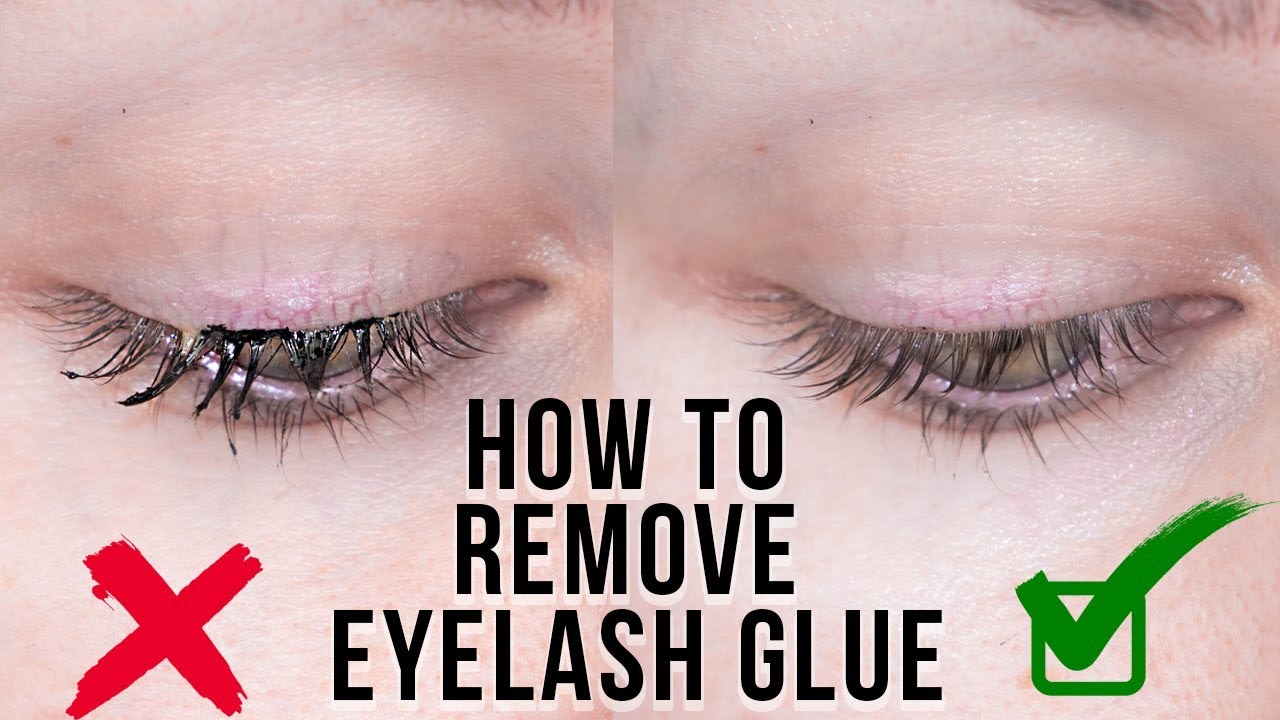
Extension sets should be filled every 2 to 3 weeks. Full set replacement is recommended every 6 to 8 weeks to allow assessment of natural lash health and full adhesive removal (Lashbrow Beauty, 2024).
Strip lash adhesive residue should be removed the same day. Sleeping in strip lashes with dried glue on the band increases mechanical stress on natural lashes and raises the risk of follicle damage over time.
Extension Removal and Infill Timing
Most clients lose 15 to 35% of extensions in the first 2 weeks through natural lash shedding, regardless of application quality (Lash Affair, 2024).
Infill at 2 weeks: replaces shed extensions, maintains density, and allows the lash artist to check bond integrity on remaining lashes.
Full set removal at 6 to 8 weeks: clears adhesive buildup, gives the natural lash cycle a clean assessment point, and prevents the matting and tangling that occurs when shed natural lashes with attached extensions twist around healthy ones.
Salon Gold advises that self-removal by pulling extensions off individually can cause premature natural lash loss, with regrowth taking 9 to 12 weeks per affected follicle. Professional gel or cream remover, which dissolves cyanoacrylate bonds without friction, is the correct method.
Strip Lash Glue Residue and Band Care
Strip lash adhesive is not designed for multi-day wear. The lash band adhesive residue left on the eyelid after each wear should be cleaned off with oil-free micellar water before the next application.
Cleaned lash bands are reusable 5 to 20 times depending on material quality. Synthetic bands with heavy glue buildup typically last 5 wears. Silk or faux mink bands cleaned carefully after each use can reach 15 to 20 wears.
Skipping the eye makeup removal step before reapplying strip lashes is one of the most overlooked causes of short bond life. Oil and residue from the previous day’s wear on the lid surface breaks down the fresh adhesive layer before it even sets.
Signs That Removal Is Overdue
4 signs that extensions need immediate removal rather than a fill:
- Visible rotation: extensions have twisted so the curl faces inward or sideways
- Discomfort or pulling sensation when blinking, indicating a grown-out bond pressing on the follicle
- Visible gaps covering more than 40 to 50% of the lash line
- Flaking adhesive residue visible along the lash line, which signals the bond layer has degraded to the point of physical separation
Continuing to fill over a set showing these signs creates adhesive buildup that requires more aggressive removal later, which increases natural lash damage risk.
FAQ on How Long Does Lash Glue Last
How long does lash glue last on the eye?
Strip lash adhesive holds for 8 to 24 hours. Lash extension adhesive bonds last 4 to 6 weeks, tied to the natural lash shedding cycle. Cluster glues fall in the middle at 3 to 7 days with standard formulas.
How long does lash glue last once opened?
Opened cyanoacrylate extension glue performs for 4 to 8 weeks before degradation reduces bond strength. Strip lash adhesive lasts 1 to 3 months after opening. Every time the bottle is uncapped, air and moisture enter and accelerate polymerization.
How long does unopened lash glue last?
Unopened extension adhesive lasts 6 to 12 months from the manufacture date. Shelf life starts from production, not purchase. Latex-based strip adhesives stay viable for up to 24 months unopened in cool, dry storage conditions.
Does lash glue expire?
Yes. Cyanoacrylate degrades over time even in sealed bottles. Expired adhesive loses bond strength, changes texture, and can trigger skin reactions. Most bottles display a Period After Opening symbol rather than a fixed expiry date.
How do I know if my lash glue has gone bad?
Four signs confirm degradation: stringy or gloopy texture, extended dry time, weak bond life, and color change. Stringy adhesive during application is the clearest indicator. Replace the bottle immediately rather than finishing what remains.
Does humidity affect how long lash glue lasts?
Yes, significantly. The optimal range for most professional adhesives is 45 to 65% relative humidity. Above 70%, shock polymerization causes blooming and weak bonds. Below 30%, cure time slows and the resulting bond becomes brittle.
How should lash glue be stored to last longer?
Store opened extension glue upright in an airtight container with silica gel packets at 60 to 77 degrees Fahrenheit. Never refrigerate cyanoacrylate formulas. Condensation on removal triggers premature polymerization at the nozzle and inside the cap.
Can lash glue be made to last longer on the eye?
Yes. Use a lash primer to remove oil before application. Apply a bonder post-set to cure adhesive from the inside out. A sealant adds a water-resistant outer layer. Clients should avoid water, steam, and oil-based products for 24 hours.
How long does lash glue take to fully cure?
Surface tack sets in 1 to 3 seconds for professional formulas. Full polymerization takes 24 to 48 hours. The bond feels dry immediately but reaches maximum strength only after complete curing, which is why water exposure in the first 24 hours weakens retention.
When should lash glue be removed and replaced?
Extension sets need a fill every 2 to 3 weeks as natural lashes shed. Full set removal is recommended every 6 to 8 weeks. Strip lash adhesive residue should be cleaned from the lash band after every single wear.
Conclusion
This conclusion is for an article presenting how long does lash glue last, and the answer depends on more variables than most people account for.
Adhesive type, post-opening window, humidity range, and aftercare all determine whether a bond holds for hours or weeks.
Opened extension glue degrades in 4 to 8 weeks. Strip adhesive gives you 1 to 3 months. Knowing the difference stops you from using a compromised formula without realizing it.
Viscosity changes, extended cure time, and weak retention are not technique problems. They are product freshness problems.
Store correctly, replace on schedule, prep the surface, and apply a lash bonder post-set. That combination does more for bond longevity than any single product switch.

She started writing on the site after fielding the same questions from clients and friends often enough to just write the answers down: which red won't turn orange on a warm undertone, how to keep lipstick from feathering into fine lines, why a "12-hour" formula rarely survives dinner.
Every review on the site follows the same rule she uses with paying clients: wear it first, then decide if it's worth recommending.
- How to Make Eyeliner Last Longer Without Smudging - August 31, 2026
- How to Make Eyeshadow Last Longer All Day - August 29, 2026
- How to Find Your Undertone in 5 Easy Steps - August 27, 2026