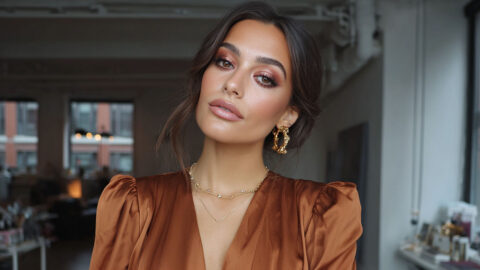
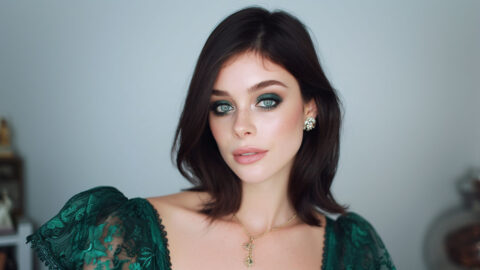
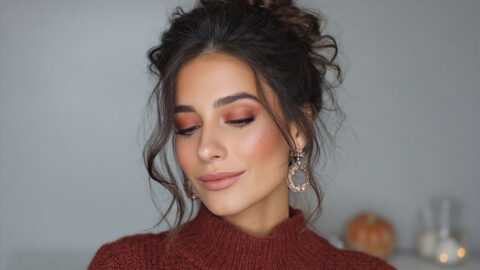
Elegant makeup mostly comes down to holding back. The eyes or the lips get a single featured area, and the rest of the face stays soft.
Lips are getting most of the attention right now. Lip was the fastest-growing makeup segment in US mass retail in 2025, and lip liner ranked among the top-gaining prestige segments, according to Circana.
What changes from one event to the next is how much definition a look needs. Undertone, more than anything else, decides which shades actually sit well on the skin.
What Makes a Makeup Look Elegant?

Elegance in makeup means restraint. Either the eyes or the lips lead, and everything else stays soft enough that nothing competes with them.
Every other choice follows from that one focal point. Guerlain builds its lip-led looks around it, putting the lips in the spotlight and backing them with a radiant complexion and softly defined eyes.
Skin does the rest of the work. Charlotte Tilbury’s soft glam guide starts from radiant skin and natural-looking brows, adds a rosy cheek, and then contrasts all that with full glam, which stacks sculpted contour and smoky eyes with statement lips on top.
A defined eye with a nude or rose lip passes the test. So does a classic red lip with quiet eyes and a light cheek, or one shade family run across the lids, cheeks and lips.
The failures are easier to spot.
- Glitter lids with a dark lip
- Heavy contour, a smoky eye and a bold mouth all at once
- Foundation a step off from the neck
- Shimmer on every area of the face
Classic choices also age better on camera. Clarins points out that guests look back at wedding photos for decades, so a timeless look is a safer bet than a trend.
Which Elegant Makeup Looks Are Worth Learning?
The looks below are ranked by how many occasions they work for and how well they last, with ease for a beginner counted in too. Soft glam goes first because it fits almost anywhere. The soft smoky eye goes last because it punishes weak blending.
The ranking is editorial judgment, not survey data.
| Look | Focal point | Best for | Difficulty |
|---|---|---|---|
| Soft glam | Diffused eyes | Weddings, dinners, daytime events | Easy |
| Skin-first glow | Skin | Office, daytime, outdoor events | Easiest |
| Monochromatic rose or terracotta | Color harmony | Evening, photographs | Easy |
| Champagne and taupe eye | Shimmer lid | Cocktail events, weddings | Moderate |
| Classic red lip | Lips | Formal events, evening | Moderate |
| Soft smoky eye | Eyes | Evening, black-tie | Hard |
Soft glam

Charlotte Tilbury’s soft glam guide builds the look from radiant skin, natural-looking brows, diffused eyeshadow, a rosy cheek and neutral lips. Nothing on the face has a hard edge, which makes it the most forgiving option on this list.
- A light to medium base with a glow
- Brown or taupe shadow, blended until the edges disappear
- Rose cream or powder blush
- A nude-toned lip
Blending holds the whole thing together. One harsh line at the crease or the cheek and it looks unfinished. A step-by-step soft glam routine shows where each edge should soften.
Skin-first glow look

Bare skin shows everything, which is the catch. Prep and concealer placement matter more here than in any other look on this list.
The routine is short. Light base, mascara, a rosy cheek and a tinted or satin lip.
It suits the office and daytime ceremonies, and a long lunch works too. It is the wrong choice for black-tie, where the face reads as unfinished next to the dress.
Monochromatic rose or terracotta look

One color family runs across the lids, cheeks and lips, so no single area competes with another. Charlotte Tilbury sells its Pillow Talk shade as a matched set (eyeshadow palette, blush, lip liner and lipstick) in one nude-pink range.
On the eyes, a matte dusky rose or terracotta wash across the lid does the job. Cream blush from the same family goes on high on the cheek, and the lips go satin or soft matte, one shade deeper than the cheek.
The weak point is that a single color flattens a face with little contrast. Mascara and a defined brow keep the eyes from disappearing.
Champagne and taupe shimmer eye with a satin lip
Champagne on the lid and taupe in the crease give light without glitter. Charlotte Tilbury’s Eyes to Mesmerise in Champagne shows the range, with fingertip application for a soft day wash and a blender brush for a smokier evening version.
Shimmer settles into creases on textured lids, so a cream base or primer goes down first.
- Shimmer on the lid only, never across the whole eye area
- A satin rose or nude lip to match the taupe
Classic red lip with minimal eyes

Highest impact on the list, and the least forgiving of a wrong shade.
MAC lists Ruby Woo as a vivid blue-red in its Retro Matte formula, a long-running benchmark for the classic version. Faviana’s 2018 styling guide recommends a blue-based red as the truest color and a matte or liquid formula, since matte red reads more classic than glossy.
The wrong red is the usual failure, so how to choose the right red comes before any application detail.
Retro matte formulas can feel dry. Prep the lips first, and keep the eyes bare enough to avoid a second focal point.
Soft smoky eye with a nude lip

The idea is a smoked eye with a quiet mouth.
Charlotte Tilbury separates full glam (smoky eyes with statement lips) from soft glam (diffused shadow with neutral lips). The soft smoky eye borrows from both. It uses brown or taupe instead of black and keeps the depth at the lash line, with the lips left nude.
It breaks at the edges. A visible edge turns a soft smoke into a heavy one, and fixing it takes more blending, not more product.
How Do You Match an Elegant Makeup Look to the Occasion?
The focal point rule stays fixed from one event to the next. What shifts is definition, and the more formal or photographed the occasion, the more of it the look needs, along with more staying power.
Weddings
At a wedding the venue and the time of day do most of the deciding, with the dress code layered on top. Clarins advises tailoring product choices to an indoor or outdoor venue and a daytime or evening start.
For an outdoor summer wedding, velvety matte skin holds up better in heat (Makeup.com, 2023).
An evening reception can take a little more definition around the eyes or lips, kept elegant (Blushington). Check the dress code first, since a cocktail-hour look for a winter night does not suit a summer brunch (Jones Road Beauty, 2024).
Guests doing their own makeup for a wedding can start from soft glam or the monochromatic look and adjust one area for the setting.
Formal dinners and black-tie
Formal events add definition, and the sources disagree on how much.
RMS Beauty’s position is that formal events call for defined eyes and a bolder lip. That sits awkwardly with the focal point rule, which allows one lead area only, since two loud ones read as costume.
Both hold when the definition stays tonal. Define the eye in a rich shade of the same family and keep the lip berry or soft rose, or reverse the pair.
Formal events run long and get photographed, which is why guides on makeup for a formal event spend as much time on skin prep and wear as on color. Glamsquad calls skin prep and product choice critical for exactly that reason.
Office and daytime
Keep the finish soft and the lip in a nude or rose range. A defined brow and mascara are enough eye work for a workday.
Skip shimmer and deep colors, which read as evening. The skin-first glow look fits here best.
Evening events

Charlotte Tilbury’s evening guide describes evening makeup as a dialed-up daytime look, with more products, bolder shades and more technique. Clarins adds that a few extras in the bag move a look from day to night.
Going from day to evening is mostly a matter of small swaps.
- Deepen the crease with taupe or brown
- Line the upper lash line
- Add a second coat of mascara
- Swap a tinted lip for a satin berry or red
Pick two of those four, not all of them. The focal point stays where it was.
Which Shades Suit Your Undertone?

Shades follow undertone, not skin depth. Cool undertones lean pink or blue, which makes blue-based reds and rosy pinks the natural match. Warm skin leans golden or peach and does better in coral and brick. Neutral undertones can wear both.
How can you tell your undertone?
Maybelline’s undertone guide has a few quick checks that give a first read.
Look at the veins on the forearm first. Bluish ones point to cool and greenish ones to warm. Jewelry works as a second opinion, since gold flatters warm skin and silver flatters cool. Against a white cloth, warm skin looks yellowish and cool skin looks pink or blue.
Neutral skin shows a mix of both, and both metals work.
Undertone says nothing about how light or dark skin is. Maybelline notes that every depth, from deep to light, includes all three undertones.
Which eye, cheek and lip shades work for each undertone?
| Undertone | Eye shades | Blush | Lip shades |
|---|---|---|---|
| Cool | Taupe, soft grey-brown, mauve | Rosy pink | Blue-red, cherry, raspberry |
| Warm | Bronze, gold, warm brown | Peach, coral | Coral, brick, orange-red |
| Neutral | Champagne, soft brown, taupe | Soft rose | Berry, true red, nude |
Red lips are where undertone matters most, and the sources split on the rule. Faviana (2018) recommends a blue-based red for everyone, while Juvia’s Place points warm skin to orange-based reds and cool skin to blue-reds.
The difference between cool-toned and warm-toned reds is easy to see side by side. Makeup artist Lisa Valencia tells John Lewis that a red that feels right is generally right, so treat undertone as a starting point.
Neutral undertones have the widest range. Maybelline’s guide says cool or warm products both work, and lip colors that suit neutral undertones run from soft rose to true red.
Why the Fitzpatrick scale does not pick shades
The Fitzpatrick scale sorts skin by how it burns and tans, not by undertone. Thomas Fitzpatrick developed it in 1975 to estimate UV response, as EyeWiki describes it.
A 2024 review in the Journal of the American Academy of Dermatology counted 17 skin classification systems in use and found Fitzpatrick the most widely used, with limits that include its conflation with race, ethnicity and skin color (Harvey et al., 2024).
For makeup, a Type III and a Type IV can each be warm, cool or neutral. Choose shades by undertone and test them on the skin.
How Light Should the Base Be, and Which Finish Looks Best?
Light to medium, built only where the skin needs it, in a satin finish by default. Soft matte and luminous finishes are adjustments for skin type and setting, not separate looks.
How much coverage does an elegant base need?
Armani Beauty sorts its foundations into light, medium and full coverage on its own comparison chart, and lists Luminous Silk as medium and buildable. Buildable is the useful word, because coverage goes on in thin layers instead of one thick coat.
Light coverage means a skin tint or sheer foundation, which suits office and daytime looks. Medium is the starting point for soft glam and most evening looks. Concealer only where needed beats full-coverage foundation spread across the whole face.
For the lightest version, makeup artist Dani Fischer suggests swapping foundation for a skin tint, which also comes in satin formulas. Red Apple Lipstick’s application guide adds that concealer on trouble spots, instead of extra foundation layers, keeps the base from turning cakey.
Which finish suits which skin?

Satin is the default. Fischer says it gives the longevity of a matte with a healthier, more natural look, and Beauty Bay’s finish guide says it suits oily, dry, blemish-prone and mature skin.
Soft matte is the pick for oily skin. Honest Beauty’s guide describes semi-matte as the long wear of a matte with a hint of glow, so it does not read flat.
Luminous needs the most care. Armani’s Luminous Silk is the reference point, a radiant, airbrushed finish at medium coverage, and Honest Beauty notes that dewy finishes do not suit oily or acne-prone skin well.
How should skin prep match the finish?
Prep decides the finish before any foundation goes on.
Fischer says dry skin takes a hydrating moisturizer or primer under satin foundation, while oilier skin takes a mattifying primer plus powder for oil control. Armani Beauty’s own routine follows the same logic, with hydrating primer first, then foundation, then concealer.
Where does the finish change across the face?
- T-zone, temples and sides of the nose stay matte, with setting powder only where shine shows (Oriflame)
- Cheeks can take a cream blush or a touch of glow, which reads as skin instead of shimmer
- Under the eyes gets a light dusting at most, since heavy powder settles into lines
The lip follows the same logic. The choice between matte and satin changes comfort more than color, and a breakdown of how matte and satin lipsticks differ makes the trade-off clear.
How to Apply an Elegant Makeup Look Step by Step

The order runs from the products that need the longest to settle to the one that wears off first. Skin prep sits at the start, and lips and setting spray close it out.
- Cleanse, moisturize and give the skin a few minutes to absorb
- Prime with a hydrating formula for dry skin or a mattifying one for oily skin
- Apply a thin layer of foundation or skin tint, starting at the center of the face and working outward
- Conceal under the eyes and on spots only, after the base
- Set the T-zone with powder, nowhere else
- Fill brows with light strokes in the direction of hair growth
- Build the eyes: shadow first, then liner, then mascara
- Place blush high on the cheek and blend until no edge shows
- Line the lips if needed and finish with lipstick
- Mist setting spray over the whole face
Skin prep is the step most people skip, and a short routine for prepping skin before makeup decides how the base sits for the rest of the day.
Sources split on where the eyes go.
Oriflame puts eyes and brows first, so shadow fallout never lands on finished skin and skincare has time to absorb. Ruby’s Organics places them after powder and before blush, so fallout gets cleaned up before color goes on.
For a shimmer lid, eyes first is the safer sequence. With matte shadows, the order above works as written.
Beautyblender says to wet the sponge and squeeze it out, then bounce it onto the skin. Sweeping it across only moves product around, and the brand recommends replacing the sponge every 3 to 6 months.
Armani Beauty pairs a foundation brush with an airbrushed finish and a damp sponge with a dewier one. A walkthrough of applying makeup with a sponge covers the bounce motion area by area.
Step back before the final spray. If the eyes and the lips both look strong, tone one down by blotting the lip with a tissue or running a clean brush over the shadow.
Setting spray goes on at the very end, and L’Oreal Paris notes that because it adds moisture back into the makeup, it leaves a fresher finish than powder alone.
Why Does Elegant Makeup Break Down, and How Do You Stop It?
Flash photography, heat and humidity, long events and distance from the viewer are what take an elegant look apart. A restrained look has less to hide behind when it fails, and each condition has its own fix.
| Condition | What goes wrong | Fix |
|---|---|---|
| Flash photography | White cast, cakey powder | Hydrating primer, matched concealer, test shot |
| Heat and humidity | Base slides, powder streaks | Primer, damp sponge, cream products |
| Long events | Lip fades, shine returns | Spot touch-ups, setting spray |
| Large venues | Face flattens | More definition at the focal point |
Flash photography
Flash is the harshest test an elegant look faces, and the sources disagree on the cause.
L’Oreal Paris blames SPF ingredients such as zinc oxide and titanium dioxide in concealer or foundation, and says a concealer shade that is too light makes it worse. Lab Muffin Beauty Science ran its own flash tests and found that most SPF products produced little flashback.
Both can be true for different products, so the reliable rule is Lab Muffin’s, which is to take a flash photo before the event.
L’Oreal Paris suggests a damp sponge to blend out a white cast and a light layer of setting spray to diffuse excess product. Concealer that creases under the eyes also shows in flash, which makes preventing creasing under the eyes worth sorting out before photos.
RMS Beauty adds that a hydrating primer prevents the mid-event dryness that makes powder look cakey under flash.
Heat and humidity
Clinique developed its Stay-Matte Oil-Free Makeup in a test room held at 88 degrees Fahrenheit and 80% humidity, built as a deliberate meltdown trial.
Makeup artist Lisa Potter-Dixon says to prep and prime first. MAC senior artist Rachel O’Donnell recommends water-resistant, sweat-proof, humidity-proof products and a damp sponge for the base (Gulf Today, 2021).
Powder blush and eyeshadow are better swapped for cream or gel versions, since sweat makes powders streak.
Long events
The lip is the first product to go, which is why it goes on last. A guide on making makeup last all day covers the layering that slows the rest of the fade.
A small touch-up kit handles the remaining two failures, shine and a faded lip. It needs only blotting paper, the lip color from the look and a small pressed powder.
When restraint is the wrong call
A soft look stops working when distance or lighting flattens the face, which happens at a large venue, on a stage or behind a long camera lens.
As a rule, if the audience sits more than a few meters away, add definition at the focal point only. Deepen the crease for an eye-led look, or go one shade deeper on the lip for a lip-led one, and leave everything else soft.
Elegant Makeup Looks FAQ
How closely should the makeup match the outfit?
Coordinate it, but do not match it exactly. Pick one shade that echoes the dress, usually on the lip or lid, and keep skin and finish neutral.
A guide on choosing a lipstick color for an outfit covers the pairings.
Can glitter or rhinestones still look elegant?
Yes, in one place and against quiet skin. Makeup.com’s 2023 wedding guest edit pairs rhinestone makeup with winged eyeliner and soft matte skin, so the sparkle stays the only focal point.
Which lip color works at almost every dress code?
A berry or soft rose. RMS Beauty’s wedding guest guide says that shade moves well from formal to casual settings.
Wear it sheer in daylight and build a second coat for evening.
When is a makeup artist worth hiring over doing it yourself?
For black-tie events and long, photographed days. Glamsquad notes that many black-tie guests book a professional for peace of mind.
Soft glam and the skin-first glow look are manageable at home, because neither relies on sharp lines.
Do drugstore products work for an elegant look?
Yes. Makeup.com’s 2018 drugstore wedding look used Maybelline, NYX and L’Oreal products, and Circana reported in 2025 that only 14% of US beauty buyers believe higher prices mean better quality.
Shade match and finish matter more than price tier.
Do you need sunscreen under makeup for a daytime event?
Yes. Clarins reminds daytime wedding guests to apply SPF, and it goes on after moisturizer so it can absorb before primer and foundation.
Wet sunscreen under foundation causes pilling.
Which Look to Practice Before the Event
Among elegant makeup looks, soft glam is the one to practice first, because its soft edges forgive errors and the same base carries over to weddings, dinners and daytime events.
Repeat it until the edges blend cleanly. Then change one thing for the event, such as a deeper crease or a berry lip, and take a test photo under the venue’s lighting.
Soft glam teaches the base and blending that every later look reuses. Changing a single element at a time then shows which choice caused a problem.
It does give up some impact, since it asks for little commitment. Anyone who wants to lead the room will get a stronger statement from a defined red lip.
Edge control decides how soft glam reads, and a guide to applying eyeshadow covers the blending technique.

She started writing on the site after fielding the same questions from clients and friends often enough to just write the answers down: which red won't turn orange on a warm undertone, how to keep lipstick from feathering into fine lines, why a "12-hour" formula rarely survives dinner.
Every review on the site follows the same rule she uses with paying clients: wear it first, then decide if it's worth recommending.
- How to Make Eyeliner Last Longer Without Smudging - August 31, 2026
- How to Make Eyeshadow Last Longer All Day - August 29, 2026
- How to Find Your Undertone in 5 Easy Steps - August 27, 2026