Your eyeliner fades by noon, smudges under your eyes, or sits untouched in a drawer for two years. How long does eyeliner last depends on which of those problems you’re actually dealing with.
Wear time, shelf life, and the Period After Opening are three separate timelines. Most people treat them as one, which leads to wasted product and, in some cases, real eye health risks.
This article covers all three. You’ll find specific numbers by formula type, what cuts wear time short, and how to know when a product is past safe use.
What Does “How Long Eyeliner Lasts” Actually Mean?
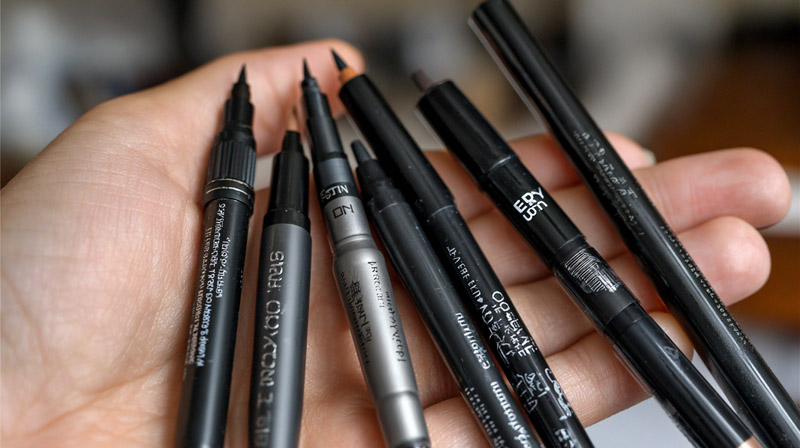
Eyeliner longevity refers to 3 separate things, and most people are asking about all of them at once without realizing it.
Wear time is how long eyeliner stays on the eye before it fades, transfers, or smudges. Shelf life is how long an unopened product stays usable before its formula starts to break down. Period After Opening (PAO) is the regulated window during which an opened product remains safe to use.
Mixing these up is a real problem. Using an eyeliner past its PAO doesn’t just mean poor pigment performance. Expired eye products are the category most associated with adverse reactions, according to a 2013 study cited in Risk Analysis (Wang et al., 2025).
The formula type drives which of the 3 timelines matters most. Liquid eyeliner has the shortest PAO. Pencil eyeliner has the longest shelf life. Both can deliver solid wear time when applied correctly.
| Term | What It Measures | Most Relevant For |
|---|---|---|
| Wear time | Duration a product remains intact on the eye before fading, smudging, or transferring | All eyeliner and eye makeup formulas |
| Shelf life | Stability period of an unopened product before chemical or preservative degradation begins | Pencils, gel liners, and sealed liquid products |
| PAO (Period After Opening) | Safe-use window after first opening before microbial or performance risk increases | Liquid liners, felt-tip pens, gel pots |
The PAO symbol, the small open-jar icon on packaging, is a legally required disclosure under EU Cosmetics Regulation No. 1223/2009 for any product with a safe-use window under 30 months. It’s not optional guidance. It’s a scientifically set deadline, as L’Oreal Paris brand chemist Balanda Atis describes it.
How Long Does Eyeliner Last on the Eye by Formula Type?
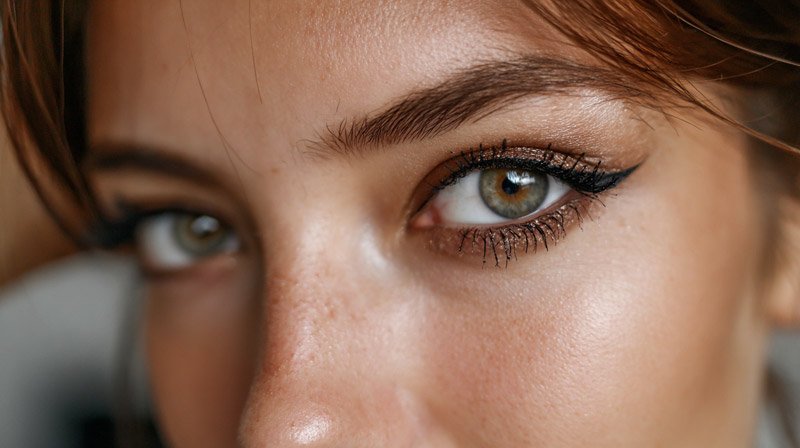
Wear time ranges from under 2 hours to over 12, entirely depending on the formula.
The long-lasting eyeliner market was valued at USD 18.1 billion in 2023 and is projected to reach USD 28.61 billion by 2031 (Verified Market Reports), which reflects real consumer frustration with products that don’t stay put.
Pencil Eyeliner Wear Time
Pencil eyeliner averages 4 to 6 hours of wear on normal skin. On oily lids, that drops to 2 to 3 hours.
Pencil formulas rely on wax binders that set against the skin surface. Sebum softens those binders faster than any other environmental factor. The result is smudging along the lash line, not full disappearance.
- Wax-heavy formulas set faster and resist early migration
- Kohl pencils sit at the lower end: 2 to 4 hours
- Sharpening before each use removes bacteria-laden tip and refreshes adherence
Liquid Eyeliner Wear Time
Film-forming polymers are what separate liquid liner from pencil. Formulas built on acrylates copolymer or trimethylsiloxysilicate create a flexible film that bonds to skin rather than sitting on top of it.
Standard liquid liner lasts 8 to 12 hours. Waterproof versions extend that to 14 to 16 hours on most skin types.
The felt-tip format delivers the same formula as traditional liquid liner. Wear time is identical. The difference is precision, not performance.
Gel Eyeliner Wear Time
Quality gel liner typically lasts 12 to 16 hours when properly applied (Girlactik, 2026).
Gel formulas have high wax content and a low oil ratio, which helps them set quickly and resist sebum breakdown. That’s why they outperform pencil on oily lids specifically.
- Pot gel: more air exposure, but highest pigment density
- Pencil gel: more hygienic, slightly lower wear ceiling
- Dry-lidded skin: often achieves 14+ hours without primer
- Oily-lidded skin: typically needs primer to reach 8 to 10 hours
| Formula | Average Wear (Normal Skin) | Average Wear (Oily Skin) |
|---|---|---|
| Kohl Pencil | 2–4 hours | 1–2 hours |
| Standard Pencil | 4–6 hours | 2–3 hours |
| Gel (Pot or Pencil) | 12–16 hours | 8–10 hours (with primer) |
| Liquid / Felt-Tip | 8–12 hours | 6–8 hours (with primer) |
| Waterproof Liquid | 14–16 hours | 10–12 hours (with primer) |
What Factors Reduce Eyeliner Wear Time?
Formula aside, 5 variables cut eyeliner wear time regardless of what product you use.
The global eye makeup market hit USD 18.2 billion in 2023 (Grand View Research), much of it driven by demand for longer-wearing formulas, which tells you how common premature wear failure actually is.
Oily eyelids: Sebum breaks down wax-based and oil-based binders faster than any other variable. Eyelid skin runs at a pH of roughly 4.8 to 5.2. Most waterproof formulas sit at pH 6.5 to 7.2, creating instability at the formula-skin interface from the first application (Lipstick Queen, 2026).
Humidity and sweat: Water-soluble, non-waterproof formulas dissolve within 2 to 3 hours in high humidity. Film-forming polymers in waterproof products resist water, but not sebum.
Contact lens use: Eyeliner waxes and oils adhere to contact lenses and build up with daily use. The University of Waterloo (Dr. Alison Ng) found that even short-term lens wear with eyeliner accumulates enough deposits to blur vision over time.
No primer underneath: Bare eyelid skin gives film-forming formulas nothing to grip. An eye primer creates a porous, tacky layer that anchors pigment. Without it, even strong liquid formulas can migrate within 3 to 4 hours on combination skin.
Oil-based cleanser residue: Leaving micellar water or cleansing oil on the lid before application lowers surface tension enough to allow liner to migrate faster. A thorough rinse after cleansing is part of liner longevity, not optional prep.
How Long Does Unopened Eyeliner Last Before It Expires?
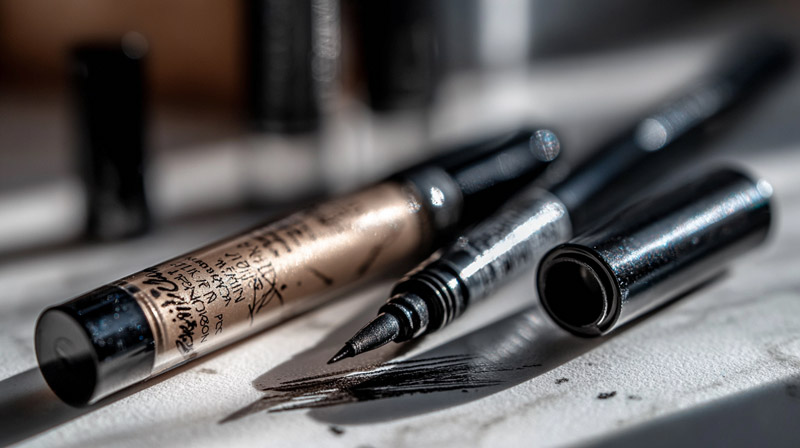
Unopened eyeliner shelf life ranges from 2 to 3 years, depending on formula and storage conditions.
Heat degrades preservative efficacy. Products stored above 30 degrees Celsius show measurable preservative breakdown, according to the International Journal of Cosmetic Science (2019). A bathroom cabinet in summer is a real problem for gel and liquid formulas.
Shelf Life by Formula (Unopened)
Pencil eyeliner: 2 to 3 years under standard storage (below 25 degrees Celsius, away from direct light). Wax-based formulas are the most stable. Oxidation is slow when the cap stays on.
Liquid and felt-tip eyeliner: 2 years unopened. The solvent base is more volatile than wax, so formula degradation tracks faster if the cap isn’t airtight.
Gel eyeliner (pot): 2 years. The open-pot format has a larger air-exposure surface area. Oxidation accelerates slightly even before first use if the seal is broken during shipping or retail handling.
To check production dates without an expiration date printed on the label, batch code decoders like CheckFresh and CosmeticCalc read the manufacturing date from the alphanumeric code stamped on the base of most products.
How Long Does Opened Eyeliner Last?
Nearly 89% of women keep old beauty products past their recommended use-by date, according to a 2015 American study cited by SOSKIN. Eye products carry the highest contamination risk in that habit.
The FDA recommends replacing liquid eyeliner 3 months after opening. Gel and pencil formulas have longer windows but are not indefinite.
Liquid Eyeliner PAO
3 to 6 months after opening. This is the shortest PAO of any eyeliner format.
Every time the applicator brush re-enters the tube, it introduces microorganisms directly into the formula. There’s no effective way to prevent this. The 3-month window exists precisely because that contamination accumulates to unsafe levels quickly.
Pencil Eyeliner PAO
Pencil eyeliner has the longest opened PAO: 12 to 24 months.
Sharpening removes the contaminated outer layer of the tip before each use, which is why pencil formats outlast liquid so significantly after opening. The wax matrix also resists microbial growth more effectively than water-based liquid formulas. Twist-up pencils should have a small amount cut from the tip before each application to achieve the same benefit.
Gel Eyeliner PAO
6 to 12 months after opening. Oxidation and microbial growth both accelerate in open-pot formats due to repeated air exposure.
Closing the lid immediately after each use is the single most effective way to extend gel liner’s PAO. Leaving the pot open on a vanity for 10 minutes per day adds up fast.
| Formula | Typical PAO (Period After Opening) | Primary Risk After Expiry |
|---|---|---|
| Liquid / Felt-Tip Eyeliner | 3–6 months | Increased risk of microbial contamination due to repeated contact between the applicator and the eye area |
| Gel Eyeliner (Pot) | 6–12 months | Formula drying, oxidation, and potential microbial growth from repeated brush contact |
| Kohl Pencil | Around 6 months | Preservative degradation and gradual accumulation of microorganisms on the product surface |
| Standard Pencil Eyeliner | 12–24 months | Generally low risk when sharpened regularly; performance degradation is more common than contamination |
How Does Waterproof Formula Change How Long Eyeliner Lasts?

Waterproof eyeliner outperforms standard formulas on wear time, but it does not change the PAO clock. Those are two separate things.
Standard liquid liner lasts 8 to 12 hours. The waterproof version of the same product extends that to 14 to 16 hours. The formula difference comes down to film-forming polymers: trimethylsiloxysilicate and cyclopentasiloxane replace water-soluble binders, creating a flexible coat that resists both water and sweat. Estee Lauder’s Double Wear line is one of the most cited examples of a formula built around this skin-chemistry principle.
Waterproofing affects moisture resistance, not microbial preservative efficacy. A liquid waterproof liner still carries a 3 to 6 month PAO after opening.
- Removal requires oil-based or micellar cleanser (not water alone)
- Incomplete removal leaves polymer residue that blocks meibomian gland openings
- That residue contributes to oily-lid conditions over time, undoing the wear benefit
Key waterproof ingredients to look for on the label: trimethylsiloxysilicate, cyclopentasiloxane, and acrylates/octylacrylamide copolymer. Products listing these have a genuine waterproof mechanism, not just a marketing claim. Removing waterproof makeup properly at the end of each day is part of maintaining long-term wear performance, not just hygiene.
How Does Eyelid Type Affect How Long Eyeliner Lasts?

Skin type and lid anatomy affect wear time as much as formula does. Around 74% of US women wear eye makeup regularly (BG Falcon Media, 2023), and a significant share deal with oily lids, hooded eyes, or mature skin that all shorten liner wear in different ways.
Oily lids: Sebum output is the single biggest enemy of liner longevity. The meibum produced by eyelid glands softens wax-based polymer films over time, regardless of formula strength. Pencil liner fails first; gel holds longest.
Hooded eyes: The upper lid fold creates friction against the liner application during blinking and eye movement. Without primer creating a grip layer, product transfers from the lash line to the fold within 1 to 2 hours. Makeup techniques for hooded eyes generally involve tightlining and thin-layer gel to minimize this contact zone.
Mature skin: Thinner epidermis allows liner to migrate into fine lines, reducing the apparent crispness of the line even when pigment is still present. Hydrating primer outperforms silicone-based primer on mature skin because it maintains elasticity at the lid surface.
Monolids: Less crease friction than hooded eyes, but more surface area exposure to air and environmental humidity. Liquid liner holds better than pencil because the film-forming formula isn’t disrupted by the larger exposed surface.
The common fix for oily and hooded lids is silicone-based primer with dimethicone as the lead ingredient. For mature and dry lids, a hydrating base layer prevents the dry-skin cracking that breaks up liner application within the first few hours.
How Does Eye Primer Extend How Long Eyeliner Lasts?
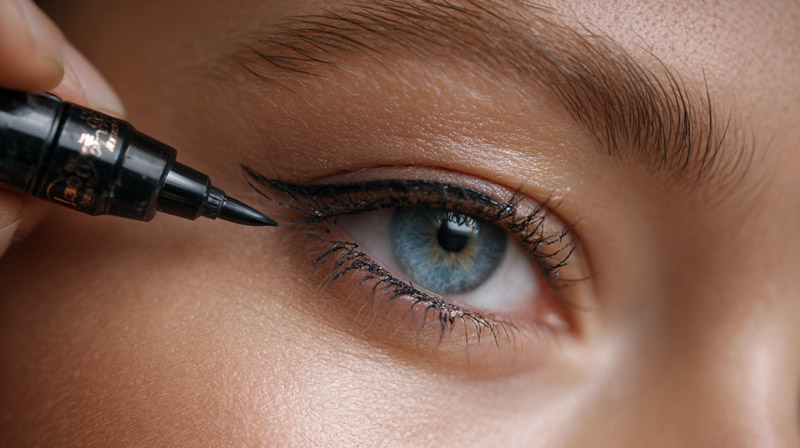
Eye primer is not optional for oily lids. It’s the mechanical fix for why eyeliner fails in the first place.
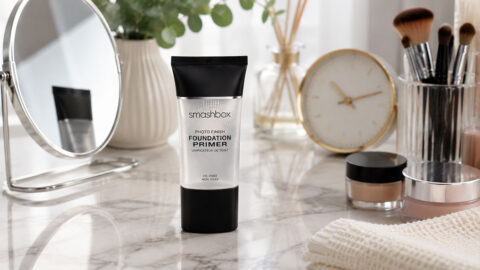
Without a primer, most liquid and gel formulas are bonding directly to skin that is producing sebum every hour. A silicone-based primer creates an oil-absorbing, pore-filling layer that the liner’s film-forming polymers can grip properly.
Urban Decay’s Eyeshadow Primer Potion is one of the most cited examples of this category working as intended. Makeup artists at MAC and Laura Mercier consistently list a dedicated eye primer as the first step before any liner application that needs to last beyond 6 hours.
How Primer Changes Wear by Lid Type
Silicone-based primers (with dimethicone or cyclopentasiloxane as lead ingredients) work best on oily and combination lids. They absorb sebum and extend gel liner wear from 8 to 10 hours up to 14+ hours.
Hydrating primers work better on mature or dry lids. Silicone formulas can cling to fine lines on thinner skin, so a lightweight hydrating base keeps the lid surface smooth and prevents liner from fragmenting.
Eye primers also affect wear for pencil liner, not just gel and liquid. Wikipedia’s entry on cosmetics primers confirms that primer reduces oiliness of lids and improves both color intensity and time of wear for liner and eyeshadow applied over it.
Setting Powder Over Liner
A fine translucent setting powder pressed over gel liner after application is a separate step from primer but extends wear through a different mechanism.
The powder absorbs residual surface moisture and seals the top of the liner film. It reduces the sebum contact that would otherwise slowly soften the wax-based binder throughout the day.
- Use a small, flat brush to press (not sweep) powder directly over the liner
- Works best with gel and pencil; less effective over liquid film-forming formulas
- Correct setting powder application technique matters as much as the product itself
How to Tell If Eyeliner Has Expired

Expired eyeliner gives 5 specific signals. None of them require a lab.
Eye makeup carries the highest adverse reaction rate of any cosmetic category, according to dermatologists at Cleveland Clinic (2024). Reactions from expired eye products include irritation, redness, stinging, and in serious cases, bacterial eye infections.
Physical Signs in the Product
Smell change: A rancid, sour, or sharp chemical odor signals oxidation or preservative breakdown. This is the most reliable early indicator across all formula types.
Texture change: Pencil eyeliner that crumbles or drags is showing binder degradation. Gel liner that has dried, cracked, or developed a film on the surface in the pot has lost moisture balance and begun to oxidize.
Color shift: Liquid eyeliner turning gray or brown means pigment oxidation. The film-forming polymers may still function, but the formula is compromised.
Performance and Skin Signs
Two signs show up during or after application rather than during inspection.
- Skipping, pilling, or refusing to adhere cleanly to skin during application
- Stinging, redness, or swelling that wasn’t present with the same product previously
Stinging on a product that never caused it before is a contamination signal, not a sensitivity change. Discard immediately.
Ohio State University dermatologist Dr. Susan Massick notes that even products not yet at their PAO date should be discarded if texture, color, or smell has changed significantly. The PAO is a ceiling, not a guarantee.
Does the Application Method Change How Long Eyeliner Lasts?
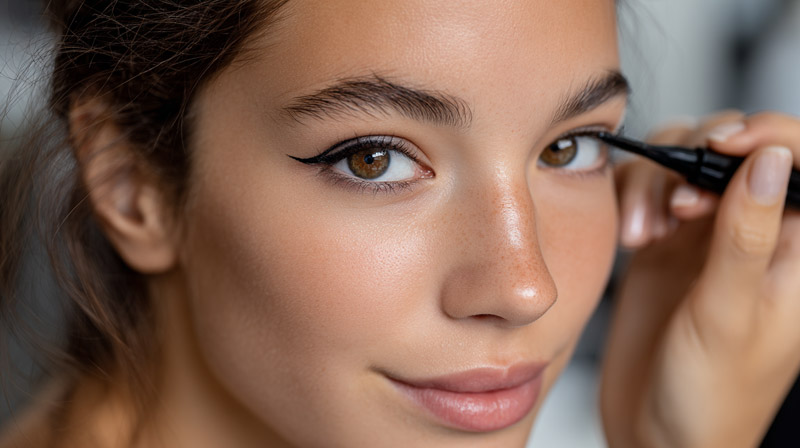
Technique affects eyeliner longevity as much as the formula does. A good product applied incorrectly will fail faster than a basic product applied well.
| Technique Variable | Effect on Wear Time |
|---|---|
| Thin layers vs. one thick coat | Multiple thin layers generally last 2–3 hours longer and are less likely to crack, flake, or transfer. |
| Pressing vs. sweeping motion | Pressing deposits and anchors pigment more effectively, while sweeping leaves more product on the surface where it is easier to smudge. |
| Drying lids before application | Removes residual moisture, oil, and skincare residue that can interfere with film formation and adhesion. |
| Setting gel liner with powder | Creates a protective barrier that reduces direct sebum contact and helps minimize fading and transfer. |
Layering vs. Single Application
2 thin coats consistently outperform 1 thick coat. Thick gel or pencil application is more prone to cracking and transferring to the upper lid fold, particularly on hooded eyes.
Smashbox Global Lead Pro Artist Lori Taylor Davis recommends building liner in thin layers for exactly this reason. Thin passes let each layer set before the next is applied, which creates a stronger bond than a single heavy deposit.
How Tightlining Affects Wear
Tightlining places product directly on the mucous membrane behind the lash line. The constant tear film contact at that location dissolves most formulas faster than any other placement.
On the waterline, even waterproof pencil formulas degrade faster than the same product placed along the outer lash line. Tightlining technique matters for both the look and how long it survives contact with the tear film throughout the day.
How Long Does Eyeliner Last on the Waterline?

The waterline is a mucous membrane. Constant tear film contact dissolves most formulas within 30 to 60 minutes.
University of Waterloo research (Dr. Alison Ng) found that eyeliner applied to the inner lid margin produced 15 to 30% more particle migration into the tear film compared to outer lash line application, and it happened faster. That migration shortens product life and increases contamination risk simultaneously.
Which Formulas Last Longest on the Waterline
Wax-heavy pencils and kohl are the only formats that hold on the waterline with any consistency. Liquid and gel don’t survive the tear film contact for more than a few minutes.
- Standard waterproof pencil: 2 to 4 hours on the waterline
- Kohl and kajal: similar range, blends faster but resists moisture well
- Liquid and felt-tip: not suitable for waterline, dissolves rapidly
Ophthalmologist Dr. Carver-Schemper has stated publicly that almost all patients who apply eyeliner to the waterline show some degree of meibomian gland damage over time. The meibomian glands produce the oil layer that protects the tear film, and waterline application can block them.
Kajal vs. Kohl vs. Standard Pencil for the Waterline
Kohl: Traditional formula, softer texture, no broad-spectrum preservatives in many versions. Short PAO of 6 months. High blendability, lower safety profile than modern pencils.
Kajal: South Asian formulation tradition, high carbon content, designed specifically for inner-eye application. Wears similarly to kohl but check for ophthalmologist-tested labeling.
Waterproof pencil: Best option for waterline longevity and safety. Trimethylsiloxysilicate-based formulas hold the longest and are more likely to carry ophthalmologist-tested certification.
How Should Eyeliner Be Stored to Maximize Shelf Life?
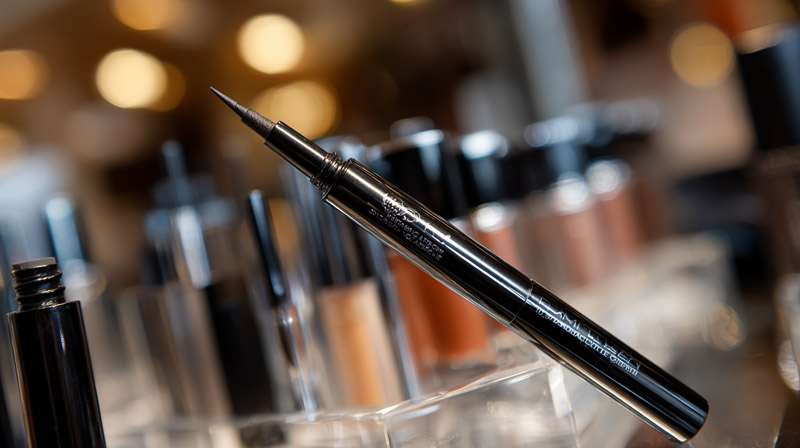
Most people store their eyeliner in the bathroom. That’s the worst possible location for it.
Bathroom humidity and temperature fluctuations from showers accelerate both preservative breakdown and bacterial growth in all formula types. Cosmetics stored between 68 to 72 degrees Fahrenheit in a cool, dry space retain their shelf life; anything above 80 degrees Fahrenheit starts causing formula degradation (IBA Cosmetics, 2025).
Best Storage Conditions by Format
Liquid and felt-tip eyeliner: Most sensitive to heat and air exposure. Store horizontally if the manufacturer recommends it. Keep out of direct sunlight, cap on tightly after every use.
Gel eyeliner (pot): Close the lid immediately after each use. Even 10 minutes of open-air exposure per day adds up significantly over a 6 to 12 month PAO window. Store upright to minimize surface-area oxidation.
Pencil eyeliner: Most tolerant of storage variation, but still affected by extreme heat. Pencils stored in cars or direct summer sunlight show wax-binder softening that permanently changes application texture.
Where to Actually Store Eyeliner
A bedroom vanity, dresser drawer, or closed makeup case in a climate-controlled room is the right location. Not the bathroom counter, not a car glove compartment.
- Avoid anywhere near a heating vent or sunny window
- Cool, dark, and dry beats any dedicated makeup storage unit placed in a steamy bathroom
Writing the opening date on the product base with a permanent marker is the most practical habit for tracking PAO. It takes 5 seconds and removes all guesswork about whether a product is still within its safe-use window.
For travel, keeping eyeliner in a sealed makeup bag inside carry-on luggage protects it from checked baggage temperature extremes. Packing makeup for travel correctly prevents formula damage from heat and pressure changes that can shorten product life before you’ve even opened it.
FAQ on How Long Does Eyeliner Last
How long does eyeliner last on the eye?
It depends on the formula. Pencil eyeliner lasts 4 to 6 hours. Gel lasts 12 to 16 hours. Liquid eyeliner sits between 8 and 12 hours. Oily lids, no primer, and humidity all cut those numbers down significantly.
How long does liquid eyeliner last after opening?
Liquid eyeliner has a PAO of 3 to 6 months after opening. The brush reintroduces bacteria into the tube with every use. This is the shortest opened shelf life of any eyeliner format. Replace it promptly.
How long does pencil eyeliner last after opening?
Pencil eyeliner lasts 12 to 24 months after opening. Regular sharpening removes the contaminated tip layer, which is why the PAO is so much longer than liquid or gel. Twist-up versions should have a small amount cut off before each use.
How long does gel eyeliner last?
Gel eyeliner lasts 6 to 12 months after opening and delivers 12 to 16 hours of wear per application on dry skin. Oily lids reduce that to 8 to 10 hours without primer. Close the pot lid immediately after each use to slow oxidation.
How long does unopened eyeliner last?
Unopened eyeliner lasts 2 to 3 years when stored below 25 degrees Celsius, away from direct light and heat. Liquid formulas degrade slightly faster than wax-based pencils due to solvent evaporation. Use CheckFresh or CosmeticCalc to decode batch codes and confirm production dates.
How long does eyeliner last on the waterline?
Most formulas last 30 to 60 minutes on the waterline. Waterproof pencil and kohl extend that to 2 to 4 hours. The waterline is a mucous membrane with constant tear film contact, which dissolves standard and liquid formulas almost immediately.
How long does waterproof eyeliner last?
Waterproof liquid eyeliner lasts 14 to 16 hours on most skin types. The film-forming polymers trimethylsiloxysilicate and cyclopentasiloxane resist water and sweat. Note that waterproofing does not change the PAO. A waterproof liquid liner still expires 3 to 6 months after opening.
How do you know when eyeliner has expired?
Check for a rancid or sharp smell, texture changes like crumbling pencil or dried gel, and color shifts in liquid formulas. Eye irritation on a product you previously tolerated is a contamination signal. Discard it without waiting for the PAO date to confirm.
Does eyeliner expire if unopened?
Yes. Unopened eyeliner still degrades over time, especially above 25 degrees Celsius. Preservative efficacy drops with heat exposure even before first use. The International Journal of Cosmetic Science confirms measurable degradation in products stored above 30 degrees Celsius.
How can you make eyeliner last longer?
Apply a silicone-based eye primer before liner, use thin layers rather than one thick coat, and press a fine translucent setting powder over gel liner after application. Starting with clean, dry lids removes the sebum and residual cleanser that break down liner adhesion fastest.
Conclusion
This conclusion is for an article presenting the full picture of eyeliner longevity, from daily wear time to Period After Opening timelines that directly affect eye health.
Formula type is the biggest variable. Gel holds longest on oily lids. Liquid expires fastest after opening. Pencil is the most forgiving on both counts.
Storage conditions, primer use, and application technique each add or subtract hours from your results. Kohl and waterproof pencil are the only realistic options for waterline wear.
Check the PAO symbol. Write the opening date on the base. Discard anything with a smell change, texture shift, or color oxidation, regardless of where it sits on the eyeliner expiration timeline.

She started writing on the site after fielding the same questions from clients and friends often enough to just write the answers down: which red won't turn orange on a warm undertone, how to keep lipstick from feathering into fine lines, why a "12-hour" formula rarely survives dinner.
Every review on the site follows the same rule she uses with paying clients: wear it first, then decide if it's worth recommending.
- How to Make Eyeliner Last Longer Without Smudging - August 31, 2026
- How to Make Eyeshadow Last Longer All Day - August 29, 2026
- How to Find Your Undertone in 5 Easy Steps - August 27, 2026