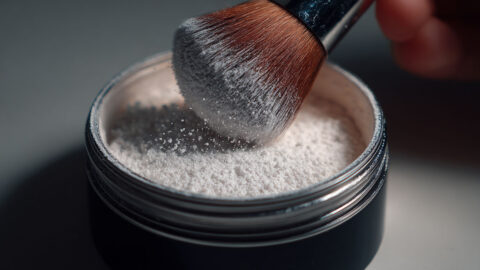
Timing matters most when you apply setting powder. Press a thin layer onto foundation and concealer while they’re still tacky, then sweep off the excess with a clean, fluffy brush.
Loose or pressed, the powder’s job is to soak up surface oil, which means less shine, creasing and transfer on liquid and cream bases.
The amount on the skin drives flashback more than the ingredient list does. In Michelle Wong’s flash-photo tests for Lab Muffin (2016, updated 2023), the only powder with severe flashback was an HD powder made of over 90% silica.
The other powders she tested, including one with silica listed first, produced little or no flashback.
How to apply setting powder step by step

Do it while the base is still tacky. That’s most of the method. Beautyblender and Mented both tell readers to work fast, before foundation and concealer dry down.
The order itself is simple.
- Moisturize, then add primer if your routine includes one.
- Apply foundation and concealer, and blend both until the surface is smooth.
- Dip the puff, brush or sponge in the powder and tap the excess off on the back of your hand.
- Set the center of the face first (forehead, nose, under the eyes, chin), then work outward.
- Sweep a clean, fluffy brush over the face to lift loose powder.
- Finish the rest of the look, or mist with a setting spray.
Laura Mercier’s instructions for its Velour Puff follow the same logic. Load the puff and tap off the excess, then press it in with a rolling motion. The stated goal is that you shouldn’t see powder on the skin as you apply it.
Liquid and cream bases grip powder best, and BeautyCrew calls liquid foundation key to baking for that reason. A smooth base also decides how the powder lies, so applying foundation evenly comes first.
Where powder goes relative to blush and setting spray
Blush is where published guides split.
Morphe sets the base first, then does the rest of the makeup. Faces Canada waits until after blush and bronzer. MasterClass finishes eye makeup and lipstick before it brushes on translucent powder.
Laura Mercier gives the one firm rule, which is that powder goes on after creamy formulas, cream blush included. Cream applied over powder grabs and streaks, so the logic holds up.
I’d default to liquids and creams, then powder, then any powder blush and highlighter.
Setting spray can go in more than one place. Mathias Alan, quoted by Premium Beauty News, sprays over foundation and concealer before baking.
The other option is a final mist over the powder, which makes applying setting spray the last step of the routine.
How to choose between loose and pressed setting powder
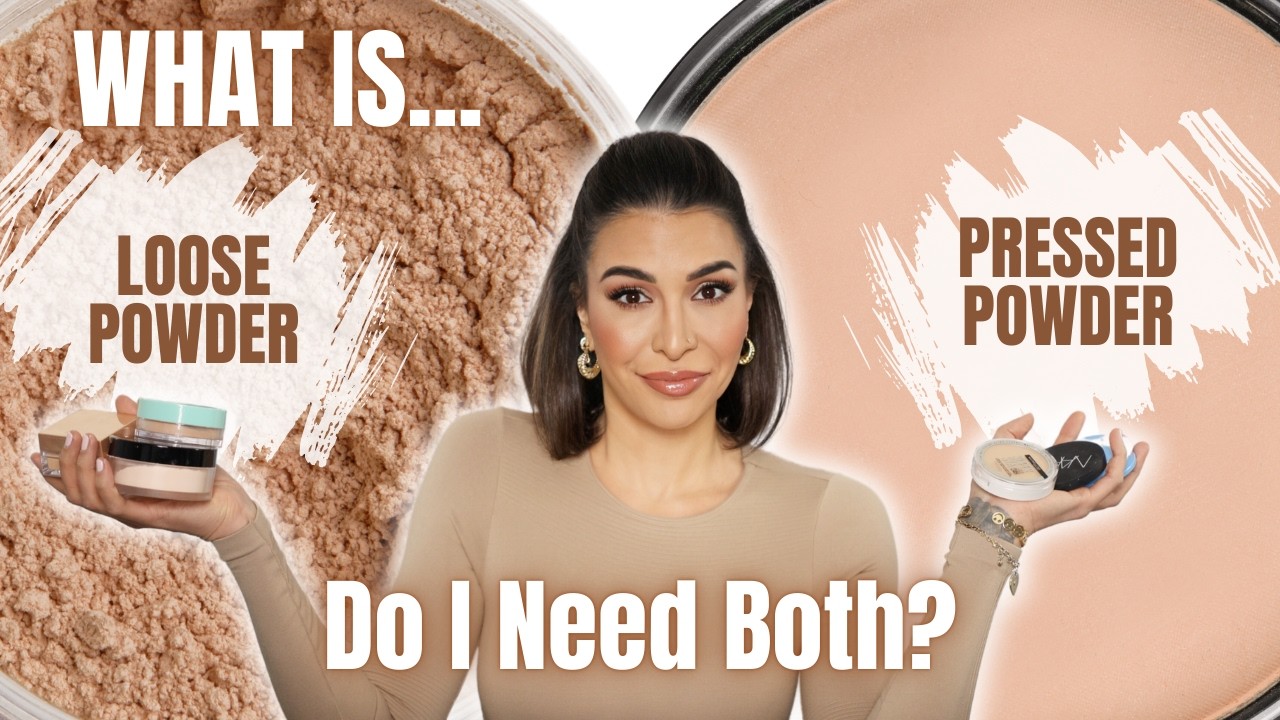
Oily or combination skin and full-glam looks tend to do better with loose powder. Normal to dry skin, or anyone who mostly wants quick touch-ups, is usually fine with pressed. That split comes from Makeup.com’s 2026 guide, which draws on Dermablend’s head of education and NYX Professional Makeup’s pro artist lead.
Skin type is only the first filter. Finish and shade narrow it further, and a separate guide covers choosing a setting powder from start to finish.
Loose and pressed formulas
Loose powder is finely milled and sold in a jar. L’Oreal Paris says it sets with a veil-like finish and adds little to no coverage. It also absorbs oil over the day and extends wear (Makeup.com), which is why it suits baking.
Pressed powder is compacted into a pan, so it travels better. Charlotte Tilbury notes slightly more coverage than loose, and often more hydrating ingredients. Many loose powders are translucent only, so pressed formulas also tend to come in a wider shade range (Makeup.com).
Laura Mercier’s Translucent Loose Setting Powder, a long-running loose option, lists talc and corn starch among its ingredients.
If you do your makeup at a dressing table and want the most diffused finish, go loose. A compact that lives in your bag is a pressed powder job.
Finish and shade
Finish comes from the ingredients. Silica contributes the soft-focus blur, according to MasterClass, and pearl pigments such as the micro pearl particles in Hourglass Ambient Lighting Powder diffuse light for a glow.
NYX Can’t Stop Won’t Stop Mattifying Powder comes in 12 shades and uses rice powder to mattify and blur (Makeup.com, 2026).
Fenty Beauty’s loose Pro Filt’r Instant Retouch Setting Powder covers 8 shades, and the brand points to four of them (Lavender, Banana, Honey, Nutmeg) for a soft brightening effect.
| Shade type | What it does | Works best on |
|---|---|---|
| Translucent | Mattifies without shifting foundation color | Oily or shiny skin, most tones |
| Banana | Subtle yellow tint cancels redness, brightens without a white cast | Medium to deep tones, olive, golden or yellow undertones |
| Tinted | Blends into the base in a chosen shade | Anyone who wants shade control |
Tint strength varies by brand. Makeup.com calls NYX’s pressed HD Finishing Powder in banana light enough for fair skin, and lists Maybelline’s Lasting Fix and Huda Beauty Easy Bake Loose Powder among its other banana picks.
Translucent is the low-risk default for most people, and applying translucent powder follows the same base-then-powder sequence as the steps above.
Which tool applies setting powder best: puff, brush or sponge?

A velvet puff presses powder into the skin, while a fluffy brush only dusts a thin veil. Damp sponges pack powder onto small zones like the under eyes.
| Tool | Motion | Best for |
|---|---|---|
| Velvet puff | Press and roll | Under eyes, T-zone, extra hold |
| Fluffy brush | Swirl, tap, sweep | All-over light veil |
| Dense or kabuki brush | Buff or press | Loose powder on larger areas |
| Damp sponge | Press, no swirling | Under eyes, spot setting |
Fenty Beauty’s instruction for a brush is to swirl it over the powder, tap off the excess, then dust over foundation, concealer and contour. For smaller zones it sells a sponge with a velvety end made for precision setting.
Beauty Bay’s pro tutorial uses a dense but firm brush for loose banana powder under the eyes. Makeup.com’s artists prefer a large firm or kabuki brush for loose powder, and a soft large brush for pressed.
The puff deposits more and presses powder into the base, so it earns its place if under-eye creasing is the problem. The brush is the better pick when the base is already matte and only needs a veil.
Velour puffs wash with mild soap or go in the machine inside a lingerie bag, per Laura Mercier, so keeping a puff clean takes minutes.
Sponges need more care. The Beautyblender team says sponges work best with liquids and creams but handle powder too, if you dip a slightly damp sponge into loose translucent powder (SheerLuxe).
The brand’s own blog says to replace a sponge every 3 to 6 months, though its Selfridges retail listing gives a 3-month life span and adds a wash after every use. Skipping cleaning makeup sponges turns the damp, powder-loaded surface into a hygiene problem.
Overloaded tools are a common cause of a cakey finish. L’Oreal Paris warns that piling on powder can leave makeup looking caked.
Where to apply setting powder and how much to use

Start at the center of the face and work outward (Mented). Concentrate on the T-zone, under the eyes, the sides of the nose and the chin.
Which areas get powder
Huda Beauty’s baking directions name under the eyes, the T-zone, laugh lines, the outer corners of the mouth and the chin.
Beauty Bay drags powder from under the eyes down the sides of the nose and up toward the temples. Premium Beauty News adds the hollows of the cheekbones and the bridge of the nose, where baked powder doubles as contour setting.
Cheeks and dry patches get a lighter pass, or none. Faces Canada notes that dry skin should not be powdered the way oily skin is.
How much powder is enough
Amount follows the goal.
Laura Mercier’s stated target for an everyday set is that no powder is visible when you apply it. BeautyCrew says the opposite for baking, where you want to see the layer.
More powder gives a more matte finish, per Mented, which suggests going liberal in the T-zone for a refined matte look. Faces Canada presses extra powder in with a sponge on oily skin.
The rule I’d follow is to set lightly everywhere, then double up only on the zones that shine. Laura Mercier’s pro tip for those zones is firmer pressure with the puff, rather than more powder across the whole face.
What is baking, and how long should setting powder sit?

Huda Beauty’s own baking guide traces the technique to the drag community. It means leaving a thick, visible layer of loose powder on foundation and concealer for a few minutes before brushing the excess away.
Sources disagree on the timer, and the spread is wide.
Bobbi Brown artist Amy Conway says makeup needs only about 30 seconds to sink in (BeautyCrew). Huda Beauty goes longer, at 3 to 5 minutes, with 3 for a lighter bake and up to 5 for dawn-to-dusk wear.
L’Oreal Paris says 5 to 10 minutes and settles on about 10 so body heat can melt the products together. Maybelline India starts at 5 and puts the ceiling at 10 minutes, never longer.
The pattern is that the shortest times come from pressing powder in with a puff, and the longest from leaving a thick layer to sit. None of the sources tests either claim, so the range is brand guidance, not a measured result.
I’d start at 3 minutes, go to 5 when the makeup has to survive a full day, and stop at 10. Baking is the heaviest route to keeping makeup in place all day, and the lighter routes sit in their own guide.
Skip it on dry under-eyes. Ulta’s concealer guide recommends targeted setting on crease points only, because heavy powder over a dry under-eye makes the lines more noticeable.
How to adjust setting powder for oily, dry and mature skin
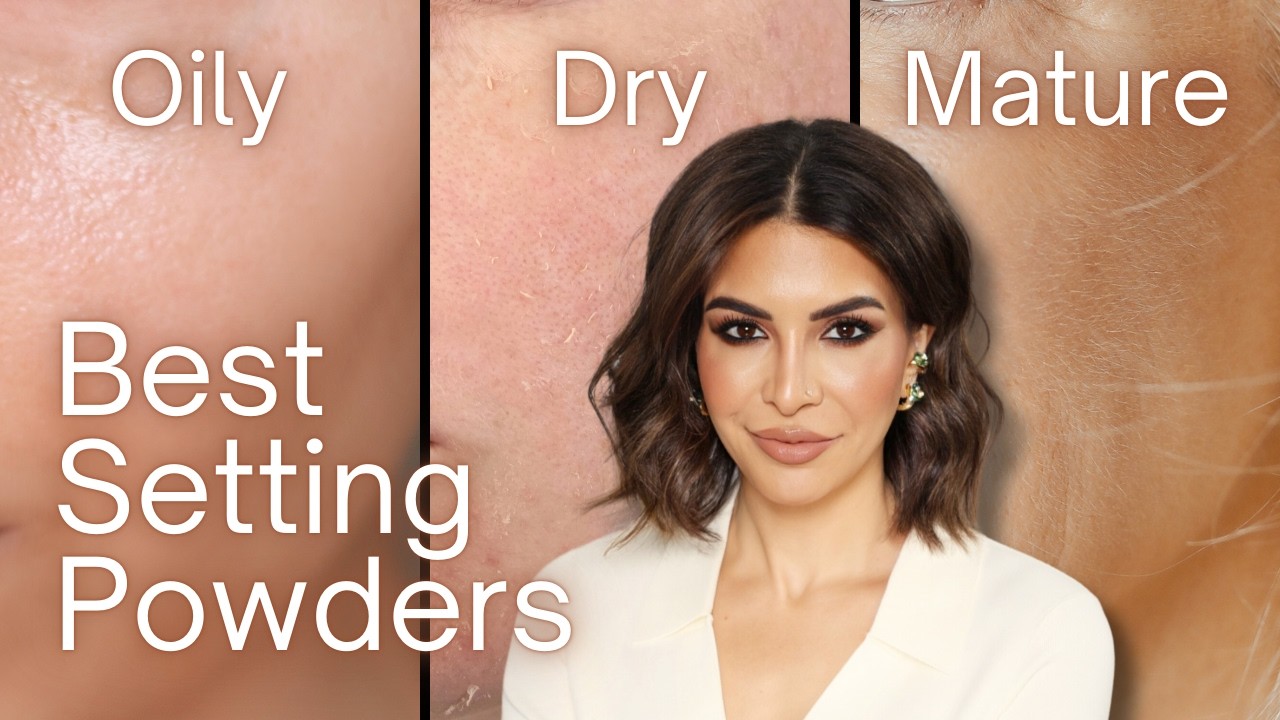
Skin type changes the approach more than any product choice does. Oily skin only needs powder where oil breaks through. Dry skin wants thin layers and a mist afterward, and mature skin gets the lightest hand, ideally with a finely milled formula.
Oily skin
Oily skin does not need powder everywhere. Bluemercury’s guide to mattifying powders points out that an oily T-zone with drier cheeks suits selective application better than an all-over matte.
Powder can also move under the base on oily skin, which reverses the order given earlier. Lab Muffin backs this up, saying silica used for oil absorption works under liquid makeup, where it stops reflecting light.
Marie Claire UK lists Inika Mineral Setting Powder as a non-comedogenic option that goes under foundation to absorb excess oil.
Dry skin
L’Oreal Paris warns that on dry skin, powder clings to dry patches and emphasizes texture.
So hydrate first. Maybelline India says to moisturize well before baking on dry skin, and a separate guide covers prepping skin before makeup in full.
Keep to one thin layer, built up only where needed (MasterClass). A setting spray mist afterward helps too, and L’Oreal Paris says it melts the powder into the skin so it looks less powdery.
The base counts as much as the powder. MasterClass recommends liquid foundation for dry skin because liquids hydrate more than powders, and applying makeup on dry skin has its own walkthrough.
Mature skin
Marie Claire calls the idea that powder must go once fine lines appear a myth, citing makeup artist Erica Taylor. Where the sources split is on formula.
Adore Beauty leans matte. It recommends a loose, translucent, matte-finish mineral powder on a light hand, and says shimmer and luminous pigments emphasize fine lines.
Marie Claire goes the other way, quoting artist Ventre against heavy matte powders, which accentuate dryness and settle into fine lines. New Beauty quotes artist Victoria Lyn recommending formulas labeled hydrating or blurring.
Everyone agrees on amount, though. Jenny Patinkin tells New Beauty to use powder very sparingly and only where needed.
Marie Claire’s pick for fine lines is Kosas Cloud Set, a finely milled, ultra-lightweight powder swept across the T-zone with a fluffy brush. If powder still emphasizes lines, Adore Beauty’s fallback is a setting spray in place of powder.
Why setting powder looks cakey, creases or flashes back, and how to fix it

Most failures trace back to how much powder went on or how the skin was prepped, and flashback adds an ingredient problem on top.
| Problem | Cause | Fix |
|---|---|---|
| Cakey finish | Too much powder, or unhydrated skin | Thin layers, brush off the excess |
| Under-eye creasing | Powder sets a crease already in the concealer | Smooth the crease first, set only crease points |
| Flashback | Heavy silica load scattering the flash | Use less, test with a flash photo |
Cakey and creasing
MasterClass ties cakey makeup to dry skin or too much product, and its fix is a thin layer built up as needed.
Creasing has a different cause. Powder locks down whatever sits beneath it, so a crease already in the concealer gets sharper, per Ulta’s concealer guide. The usual culprits behind that crease are dry or dehydrated under-eyes, skincare oils mixing with the concealer, a formula that creases, and too much concealer (Lancome, Charlotte Tilbury).
Baking guides promise crease-proof results (Huda Beauty). Ulta advises skipping heavy baking on dry under-eyes. The variable that reconciles them is dryness, since baking suits a smooth, hydrated under-eye and backfires on a dry one.
Ulta and Lancome land on the same fix. Smooth the crease, then press a small amount of powder with a small fluffy brush. The full routine is covered in a guide to preventing creasing under the eyes.
Flashback in photos
The HD powder in Michelle Wong’s Lab Muffin tests (2016, updated 2023) was primarily silica, above 90%, and she notes that most HD powders are mostly silica too.
Wong’s tests show the amount on the skin drives flashback, so ingredient order alone does not predict it. Innisfree No Sebum Powder lists silica first yet showed no obvious flashback, and her likely explanation is corn starch, listed second, lowering the silica share.
Sources split on sunscreen minerals.
Lab Muffin says titanium dioxide and zinc oxide can cause a whitish glow, but not always, and even a high zinc oxide and titanium dioxide CC cream showed little flashback in her flash tests. Adore Beauty is more cautious, telling readers to skip SPF before photos and to avoid setting powders and sprays containing titanium dioxide or zinc oxide.
Adore Beauty’s flashback-safe pick, RCMA No Colour Powder, lists only talc and silica. That fits Wong’s point that the share of silica matters more than its presence.
In practice that means using less silica powder and applying it with a fluffy brush. If oil absorption is the goal, move it under liquid makeup. Spray won’t rescue you, since setting spray left flashback unchanged and water hid it only until it evaporated.
Wong calls a flash test before the event the most foolproof method. The wider routine for photoshoot makeup has its own guide.
Setting Powder FAQ
Is setting powder the same as finishing powder?
No. Setting powder holds foundation and concealer in place, while a finishing or mattifying powder targets surface shine, and some formulas do both (Bluemercury).
Lab Muffin adds that silica-heavy blurring powder is meant for use after the makeup is already set.
Can setting powder replace foundation?
Yes, for a lighter daytime look. MasterClass says setting powder can stand in for foundation if you moisturize first, ideally with an SPF moisturizer.
Coverage stays minimal, though. Most loose powders add little to no coverage on bare skin, according to L’Oreal Paris.
How do you touch up setting powder during the day?
Press a small amount of pressed powder onto the shiny zones only, starting with the T-zone. Makeup.com describes pressed powder as the on-the-go option for targeted touch-ups.
Keep each pass thin. MasterClass builds powder in light layers rather than one heavy coat, which is what keeps a midday refresh from turning cakey.
Are there talc-free setting powders?
Yes. Rice starch works as a base, as do arrowroot flour and kaolin, and New Beauty’s makeup artist picks for mature skin are all talc-free.
In Lab Muffin’s flash tests, Crop Mineral Loose Powder (rice starch) and Williamspro Zero Powder (arrowroot flour, kaolin, mica) did not show the severe flashback of the silica-heavy HD powder.
Can setting powder go on before eyeshadow or eyeliner?
Yes. Faces Canada suggests a generous layer under each eye before eye makeup, so shadow fallout lands on the powder and brushes away.
Mented dusts powder along the lash line before eyeliner, then adds a touch afterward for smudge-proof wear.
What to Change First When Setting Powder Fails
Adjust the amount of setting powder first when makeup breaks down by midday, then wait time, tool and formula, in that order.
Cost sets the sequence. Amount and wait time are free to change, a tool swap costs a puff or brush, and a new formula costs a full jar.
MasterClass links cakiness to too much product, and Lab Muffin links flashback to the amount of silica applied. Two independent sources point the same way, which is why amount outranks formula.
Thinner layers trade hold for a natural finish, so shine returns sooner and touch-ups should stay on the T-zone.
The wait-time ranges rest on brand and artist guidance as of October 2026, so a controlled baking-time test would reorder the second step. The next step is layering makeup in the right sequence, because powder timing depends on what sits underneath.

She started writing on the site after fielding the same questions from clients and friends often enough to just write the answers down: which red won't turn orange on a warm undertone, how to keep lipstick from feathering into fine lines, why a "12-hour" formula rarely survives dinner.
Every review on the site follows the same rule she uses with paying clients: wear it first, then decide if it's worth recommending.
- How to Make Eyeliner Last Longer Without Smudging - August 31, 2026
- How to Make Eyeshadow Last Longer All Day - August 29, 2026
- How to Find Your Undertone in 5 Easy Steps - August 27, 2026