Your makeup looks perfect at 8 AM. By noon, it’s a different story.
Setting spray is the finishing product that keeps foundation, concealer, and eyeshadow in place for hours, preventing fading, creasing, and transfer. It’s the last step most people skip and the first thing they miss when they don’t have it.
The global setting spray market hit over USD 1 billion in 2024. This isn’t a niche product anymore.
In this article, you’ll learn exactly what setting spray does, how it works, which type fits your skin, and how to pick one that actually performs.
What Is Setting Spray

Setting spray is a liquid cosmetic product misted over finished makeup to hold it in place and extend wear throughout the day.
It comes in a fine-mist bottle and is applied as the last step in a makeup routine, though some people also use it between layers. The global setting spray market was valued at USD 1.02 billion in 2024, growing at a CAGR of 6.7% (GM Insights, 2024). That’s not a niche product category anymore.
It sits in a different product category than setting powder. Powder is a dry, finely milled product applied with a brush or puff. Setting spray is liquid, clear, and settles into the skin rather than sitting on top of it.
The finish varies depending on the formula: matte, dewy, natural, or somewhere in between. Some sprays also pull double duty by adding skincare ingredients like glycerin, niacinamide, or SPF.
Setting Spray vs. Fixing Spray

Setting spray and fixing spray are often used as interchangeable terms, but they’re not quite the same thing.
| Product | Primary Function | Best For |
| Setting Spray | Melds makeup layers together, adds finish | Everyday wear, skincare benefits, finish control |
| Fixing Spray | Hard-locks makeup in place | Professional shoots, weddings, long events |
Fixing sprays tend to have higher polymer concentrations, giving a stiffer hold. Setting sprays are lighter and more flexible, which is why most people reach for one on a regular morning.
For everyday use, a setting spray is the right call. Fixing sprays are more of a professional tool, something makeup artists pull out for a full-day shoot or a 10-hour wedding.
How Setting Spray Works
The mechanism is straightforward. When you mist setting spray onto finished makeup, the liquid carrier (usually water or a mix of water and alcohol) evaporates quickly. What stays behind is a thin polymer film sitting over the makeup.
That film does two things at once.
- It physically holds the makeup layers together, reducing smudging and transfer
- The solvent briefly dissolves the surface of the makeup slightly, then re-dries it in a more blended, cohesive layer
Lab Muffin Beauty Science explains this clearly: the solvent evaporates and the polymer droplets merge to form a film that holds makeup in place while also providing some waterproofing. This is why setting spray makes heavy powder applications look less dry and more skin-like.
The most common film-forming agents in setting spray formulas are PVP (polyvinylpyrrolidone) and AMP-acrylates copolymer. PVP has been used in cosmetics since the 1950s. It adheres to skin, forms a smooth film, and is water-soluble, making it easy to wash off.
One thing to watch: if you spray too much, or hold the bottle too close, the solvent can over-dissolve the makeup surface and cause it to run. Distance and a fine mist nozzle matter more than people realize.
The Role of Alcohol in the Formula
Alcohol (denatured) is listed near the top of many setting spray ingredient lists. It speeds up evaporation, which is why the spray dries so fast and feels lightweight on the skin.
Alcohol-free formulas exist and tend to be slower-drying. They usually lean on more glycerin and humectant ingredients to create a dewy, hydrating finish. Better for dry or sensitive skin types.
If a setting spray lists PVP or acrylates copolymer in the first four ingredients, it’s a film-forming, hold-focused formula. If those polymers are absent and glycerin or botanical extracts lead the list, it’s more of a hydrating mist. Both work, but they do different things.
Types of Setting Spray

Matte setting sprays held 63.2% of the setting spray market in 2024 (Market.us, 2024). That dominance makes sense. Oil control is one of the top reasons people reach for a setting spray in the first place.
But matte is just one category. Here’s how the main types break down:
| Type | Finish | Best Skin Type | Key Benefit |
| Matte | Shine-free, flat | Oily, combination | Oil control, reduces touch-ups |
| Dewy / Radiant | Glowing, wet-look | Dry, normal | Adds glow, prevents dry-looking powder |
| Hydrating | Natural, soft | Dry, sensitive | Moisture boost, glycerin-rich |
| Waterproof / Long-wear | Varies | All types | Sweat and humidity resistance |
| Skincare-infused | Natural to dewy | All types | Niacinamide, SPF, hyaluronic acid benefits |
Dewy setting sprays are growing fast. Grand View Research projects the radiant/dewy segment will grow at a CAGR of 10% from 2024 to 2030, the fastest of any category. The shift toward glowy, skin-like finishes in makeup is driving that.
Matte Setting Spray
Controls oil, reduces shine, and keeps foundation from sliding on warmer days.
These formulas typically contain higher alcohol content for fast drying and more mattifying agents like silica. Urban Decay All Nighter is probably the most recognized example. It advertises up to 24-hour wear. Anastasia Beverly Hills launched its own matte setting spray in early 2025 paired with a matte foundation, showing the category is still getting serious product investment.
Dewy Setting Spray
Gives a hydrated, luminous finish. MAC Fix+ is the classic here. It doesn’t contain film-forming polymers in the traditional sense and functions more as a hydrating face mist than a hard-setting spray.
- Good for dry skin that looks patchy or dull after powder
- Works well for “no-makeup makeup” looks
- Can also be used mid-routine to refresh skin between steps
Skincare-Infused Setting Spray
Niacinamide, hyaluronic acid, and SPF are showing up more and more in setting spray formulas. Huda Beauty’s Easy Bake Setting Spray, launched in 2025, combines rice starch, mineral clay, and five types of hyaluronic acid for 16-hour wear and pore-blurring effects.
e.l.f. Cosmetics debuted its Power Grip Dewy Setting Spray in 2024. Fenty Beauty’s Pro Filt’r Setting Spray became a brand staple largely due to its lightweight formula that works across a wide range of skin tones.
These formulas are blurring the line between makeup and skincare, which is exactly where the market is heading.
What Setting Spray Does to Your Makeup

The most obvious effect: makeup lasts longer. But there’s more to it than just wear time.
Crease prevention is one of the most practical benefits. Concealer under the eyes and cream eyeshadow on the lids both have a tendency to settle into fine lines within a few hours. A setting spray locks those layers before they get the chance.
It also removes the powdery, flat look that comes from layering too much setting powder. A light mist blends everything together and gives the skin a more natural, skin-like texture. This is especially noticeable in photos.
- Reduces transfer onto clothing or phone screens
- Keeps color intensity from fading over the course of a day
- Softens harsh lines between blush, bronzer, or eyeshadow
- Helps cream and powder products sit together more cohesively
Wear time claims vary widely by brand. Urban Decay All Nighter claims 24 hours. Charlotte Tilbury’s Airbrush Flawless Setting Spray promises 16 hours. L’Oreal Infallible 3-Second Setting Mist markets up to 36-hour wear. Realistically, skin type and environment affect those numbers significantly.
If you have very oily skin, even the best spray won’t hold for 16 hours without a powder underneath. That’s just the reality. The spray extends wear, but it works best as part of a layered routine.
How to Apply Setting Spray Correctly
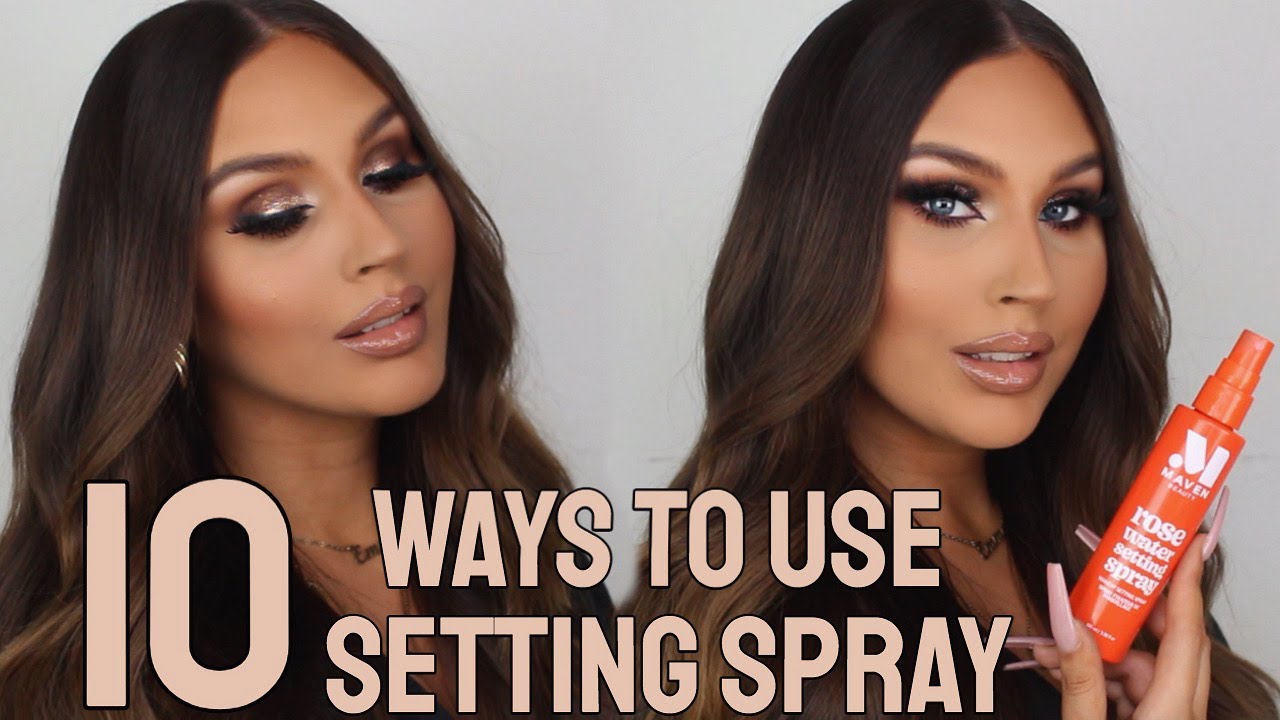
Distance is the thing most people get wrong first. Hold the bottle about 20-30 cm (8-12 inches) from your face. Any closer and you get uneven wet patches instead of a fine mist.
The classic technique among makeup artists is the “X and T” motion: spray an X across the face, then a horizontal line across the forehead and a vertical line down the nose. This covers the whole face evenly without concentrating too much product in one spot.
Standard application steps:
- Shake the bottle well before use
- Hold 20-30 cm away from face
- Mist in an X-and-T pattern, or slow S-shaped passes
- Let it air dry completely, no touching
- Apply a second layer if needed for longer events
Let it dry naturally. Patting or wiping the face while the spray is wet will disrupt the film before it sets. This is the step people rush and then wonder why their makeup looks patchy.
Some people also mist setting spray between makeup steps rather than only at the end. Celebrity makeup artist Katherine Dorn recommends spritzing between layers to keep skin hydrated while building up product. It works especially well between foundation and concealer when using cream formulas.
One real tradeoff: if you spray your brush or sponge with setting spray and then pick up powder, you can end up with an uneven, splotchy finish. Unless you’re working with all-cream formulas, it’s better to spray directly on the face.
How to Apply Setting Spray for Different Makeup Looks
The approach shifts depending on the finish and occasion.
Everyday makeup: One light pass at the end of your routine is enough. Let it dry. Done.
Heavy coverage or layered looks: Mist between steps and once at the end. This prevents a cakey, built-up look and keeps everything blended. If you’re [layering multiple makeup products], setting spray between steps makes a noticeable difference.
For events or photography: Two layers work better. Apply the first, let it dry fully, then apply a second. Milani Make It Last ran a 2024 campaign with Olympic athletes highlighting its 24-hour waterproof and sweat-proof formula, which is exactly the kind of hold needed for a full-day event under hot lights.
When to Use Setting Spray
Not every situation calls for setting spray, but there are some clear cases where skipping it costs you.
Hot or humid weather is the obvious one. Sweat breaks down foundation faster than almost anything else. A waterproof or long-wear setting spray gives that extra layer of resistance. The setting spray market’s fastest growth is in regions with warm, humid climates, and that’s not a coincidence.
Long events are the other clear use case. Weddings, concerts, formal events, anything running 6+ hours. The professional use segment of the setting spray market held a 67% share in 2023 (Grand View Research, 2023), driven by makeup artists who depend on setting sprays for exactly these situations.
When oily skin is the concern, reach for a matte formula specifically. It absorbs surface oil and reduces how often you need to powder throughout the day. Worth noting: LendingTree data shows 75% of Americans consider beauty products important and spend an average of $1,754 per year on them, which tells you people are invested in making their routines actually work.
That said, setting spray is worth skipping on very short outings or when wearing minimal makeup. A quick grocery run doesn’t need 24-hour hold. Treat it like a tool, not a daily ritual you follow out of habit.
Setting Spray for Photography and Professional Use
High-definition cameras and strong lighting pick up texture, shine, and inconsistency in ways natural light doesn’t. Setting spray helps flatten and unify the surface of makeup for a more consistent finish on camera.
- Reduces the reflective quality of powder products under flash
- Prevents makeup from looking dry or cracked under hot studio lights
- Keeps multiple layers of product from separating during a long shoot
Makeup artists on set typically use a setting spray after every major step, not just at the end. It keeps the look manageable across hours and multiple lighting setups without needing a full touch-up. If you’re thinking about doing makeup for a photoshoot, a good setting spray is non-negotiable.
Setting Spray for Different Skin Types
Not every setting spray works for every person. The formula matters more than the brand name.
Choosing by skin type prevents the two most common complaints: dryness from the wrong alcohol-heavy formula, or a greasy finish from using a hydrating spray over already-oily skin.
| Skin Type | Formula to Look For | Key Ingredients |
| Oily | Matte, oil-control | Silica, kaolin clay, light alcohol |
| Dry | Hydrating, dewy | Glycerin, hyaluronic acid, squalane |
| Sensitive | Alcohol-free, fragrance-free | Aloe vera, chamomile, thermal water |
| Combination | Balancing, light-hold | Glycerin + light film formers |
Oily Skin
Mattifying formulas with silica or clay absorb excess sebum and slow down the midday shine cycle.
Catrice Oil-Control Matt Fixing Spray is a good example: fragrance-free, alcohol-free, and priced accessibly. Celebrity makeup artist Emily Gray recommends it specifically for its skin-blurring effect without stripping moisture.
Avoid heavy humectant-rich formulas here. Glycerin in high concentrations can feel tacky and attract oil rather than control it.
Dry Skin
Hyaluronic acid attracts up to 1,000 times its weight in water (Kiehl’s). That’s why it’s the dominant active in hydrating setting sprays designed for dry or dehydrated complexions.
- Look for glycerin, squalane, aloe vera, or panthenol in the first five ingredients
- Avoid high-alcohol formulas, which speed evaporation and pull moisture from the surface
- Milani Setting Spray + Primer combines niacinamide and glycerin for up to 16-hour wear without creasing
Sensitive Skin
Alcohol-free, fragrance-free. Those two filters knock out the majority of irritation risks.
Denatured alcohol and synthetic fragrances are the top two ingredients linked to redness and contact reactions in cosmetics (100% Pure, 2024). MAC’s Fix+ Stay Over is alcohol-free and uses microscopic film formers to lock makeup without the drying effect.
Always patch test a new formula on the inner arm for 7-10 days before applying it to the face.
Combination Skin
Combination skin needs a formula that works across both zones without overcorrecting either one. Dermatologist Dr. Spearman recommends formulas where film formers and humectants are balanced together.
A practical approach: apply a matte spray on the T-zone and a hydrating spray on the rest of the face. Or use a single balancing formula and let the skin regulate naturally.
Key Ingredients to Look For (and Avoid)
Reading the ingredient list takes 30 seconds. It saves you from wasting money on a formula that won’t work for your skin.
Here’s a breakdown by function:
| Ingredient | Function | Skin Benefit |
| PVP (Polyvinylpyrrolidone) | Film former | Hold, wear extension |
| Acrylates Copolymer | Film former + adhesive | Long wear, waterproofing |
| Glycerin | Humectant | Hydration, prevents cakey look |
| Hyaluronic Acid | Humectant | Deep moisture, plumping |
| Silica / Kaolin | Mattifier | Oil absorption, matte finish |
Ingredients Worth Looking For
Film-forming agents are the most important ingredients in a true hold spray. PVP and acrylates copolymer are the most common. If neither appears in the first four ingredients, the spray is likely a hydrating mist rather than a long-wear formula.
Niacinamide is showing up frequently in newer launches. Huda Beauty’s Easy Bake Setting Spray uses five types of hyaluronic acid alongside rice starch and mineral clay. It’s a good example of the skincare-infused direction most brands are moving toward in 2025.
Ingredients to Watch or Avoid
Denatured alcohol dries quickly and aids in polymer distribution, but it’s a consistent irritant for dry and sensitive skin types, according to Curology’s licensed dermatology providers (2024).
- Alcohol Denat. / SD Alcohol: fast-drying but drying for sensitive or dry skin
- Synthetic fragrance: common cause of allergic reactions, especially in rosacea-prone skin
- Parabens: linked to potential hormonal disruption in some research
- PEG compounds: sometimes contaminated with trace impurities; worth avoiding on compromised skin
Preservatives are necessary. Every water-based formula needs them to prevent microbial growth. Phenoxyethanol is one of the gentler options and appears in many cleaner formulas.
Setting Spray vs. Primer

These two products are often confused, but they operate at opposite ends of the routine. Primer is the first step. Setting spray is the last.
Primer prepares the skin before foundation: it fills pores, smooths texture, and creates something for the makeup to grip. Setting spray seals the finished look and reduces fading, smudging, and transfer throughout the day.
A Laura Mercier consumer test found that 100% of testers agreed a setting spray gave a natural-looking finish and did not feel sticky. That’s exactly the role it plays at the end of a routine: preserving the look without adding visible weight.
Can You Use One Without the Other?
Yes, but each has limitations alone.
Primer only: Makeup adheres better and skin texture looks smoother, but without a sealant, wear time still depends on skin type and environment. On oily skin, foundation can still slide by midday.
Setting spray only: Great for locking in a finished look, but if the skin surface is uneven, the foundation can still settle into pores and lines without a primer underneath.
For everyday use, many people skip primer and rely on setting spray. For longer events, weddings, or heavy coverage looks, both together deliver the most consistent wear. If you’re figuring out how to use a makeup primer alongside setting spray, the principle is simple: primer anchors the base, setting spray locks the finish.
Which to Buy First If You Can Only Choose One?
Setting spray. It works on any skin type without skin-specific formulation, it’s easier to apply correctly, and it delivers a visible difference in wear time without requiring the same level of product matching that primer does.
Primer matters more when skin texture is a concern. Pores, fine lines, and uneven surface call for primer first. But for pure longevity, setting spray gives more return on a first purchase.
How to Choose the Right Setting Spray
The setting spray category has expanded significantly. North America alone held 37.5% of the global setting spray market in 2024, valued at USD 0.41 billion (Market.us, 2024). More brands means more options, which makes choosing harder, not easier.
Start with two questions: What is my skin type? What finish do I want? Everything else follows from there.
Budget vs. Professional-Grade
Price doesn’t always predict performance. e.l.f. Stay All Night Micro-Fine Setting Mist at around $11 competes directly with options three to four times the cost.
Budget picks worth knowing:
- NYX Professional Makeup Marshmellow Setting Spray ($11): good everyday hold
- e.l.f. Power Grip Dewy Setting Spray ($11): dewy finish, glycerin-forward
- L’Oreal Infallible 3-Second Setting Mist ($11): up to 36-hour wear claim, aerosol for even application
Premium options that earn their price:
- Urban Decay All Nighter: 24-hour waterproof formula, strong professional following
- Charlotte Tilbury Airbrush Flawless Setting Spray: 16-hour wear, clean, airbrushed finish
- Fenty Beauty Pro Filt’r Instant Retouch Setting Spray: weightless and inclusive across skin tones
How to Read the Label Before Buying
Marketing claims on packaging are not regulated the same way drug claims are. Treat wear-time numbers as ideal conditions, not guarantees.
What to check on the label:
- Does it list a film former (PVP, acrylates copolymer) in the first four ingredients?
- Is it fragrance-free? (Relevant for sensitive skin)
- Does it say “non-comedogenic”? (Relevant for acne-prone skin)
- What finish does it claim: matte, dewy, or natural?
When trying a new formula, patch-test on the inner arm for a few days before using it over a full face of makeup. Some people react to fragrance or preservatives without knowing until they’ve already committed to a full-face test.
Applying Setting Spray Correctly to Protect Your Look
If you’re doing makeup for an event and want everything to stay put, setting spray is one part of a bigger system. Making makeup last all day involves primer, product selection, and application order, but setting spray is usually what tips the result from decent to genuinely long-wearing.
Beyond foundation and concealer, don’t forget lips. Making lipstick last longer uses a slightly different approach, but a light mist of setting spray over a finished lip can extend wear before you add a sealant layer. And if you’re working with lip liner under your lipstick, making lip liner last is easier when the surrounding skin is already set and dry.
One area people often miss: concealer under the eyes. Preventing creasing under the eyes involves both product choice and setting technique. A light mist of setting spray over set concealer can help stop that fold from forming mid-afternoon.
Setting spray is also useful when you’re stopping foundation from breaking down. If you’ve ever noticed your base change color or oxidize within a few hours, the fix involves more than just setting spray, but it’s part of the solution. Stopping foundation from oxidizing comes down to formula choice, skin prep, and sealing the surface properly at the end.
FAQ on What Is Setting Spray
What does setting spray do to your makeup?
It creates a thin polymer film over finished makeup that prevents smudging, fading, and transfer. It also blends powder and cream products together for a more natural, skin-like finish that holds through heat, humidity, and long wear.
Is setting spray the same as setting powder?
No. Setting powder is a dry, finely milled product applied with a brush. Setting spray is a liquid mist applied at the end of the routine. Powder controls shine. Setting spray seals everything together and extends overall makeup longevity.
When do you apply setting spray in your routine?
As the final step, after all makeup is complete. Some people also mist between layers to keep skin hydrated while building coverage. Either way, let it air dry fully before touching your face.
How long does setting spray last on the face?
Brand claims range from 16 to 36 hours, but real wear depends on skin type and environment. Oily skin breaks down hold faster. Humid weather shortens wear time. Realistically, expect 8 to 12 solid hours with the right formula.
Does setting spray work for oily skin?
Yes, but formula matters. Choose a matte setting spray with oil-absorbing ingredients like silica or kaolin clay. These reduce midday shine and extend foundation wear without adding hydration that oily skin doesn’t need.
Can you use setting spray on dry skin?
Yes. Look for hydrating formulas with glycerin, hyaluronic acid, or squalane. Avoid alcohol-heavy sprays. A dewy or hydrating setting spray prevents makeup from looking dry or patchy and adds a healthy glow to the finish.
What is the difference between setting spray and primer?
Primer goes on before makeup to prep and smooth the skin. Setting spray goes on last to seal and protect the finished look. They serve opposite functions. Using both together gives the best long-term wear.
What ingredients should I look for in a setting spray?
For hold, check for PVP or acrylates copolymer in the first four ingredients. For hydration, look for glycerin or hyaluronic acid. For sensitive skin, prioritize alcohol-free and fragrance-free formulas to avoid irritation.
Can setting spray replace setting powder?
Not exactly. Powder absorbs oil and fills fine lines more directly. Setting spray unifies and seals. For oily skin especially, powder under setting spray gives better control. Using both is the most reliable approach for all-day wear.
How do you apply setting spray correctly?
Hold the bottle 20 to 30 cm from your face. Mist in an X-and-T or S-shaped pattern for even coverage. Let it air dry completely. Avoid patting or wiping the face while it’s still wet or the film won’t set properly.
Conclusion
This conclusion is for an article presenting what is setting spray and why it earns a permanent spot in any makeup routine.
At its core, setting spray is a film-forming mist that locks makeup in place, controls finish, and extends wear time across all skin types.
The formula you choose matters. Matte setting sprays with silica suit oily skin. Glycerin-rich, alcohol-free options work better for dry or sensitive complexions.
Check ingredient lists. PVP and acrylates copolymer signal real hold. Fragrance and denatured alcohol can cause irritation if your skin is reactive.
Pair it with the right makeup primer for maximum longevity. Used together, they cover both ends of your routine.
One spray. Real difference.

She started writing on the site after fielding the same questions from clients and friends often enough to just write the answers down: which red won't turn orange on a warm undertone, how to keep lipstick from feathering into fine lines, why a "12-hour" formula rarely survives dinner.
Every review on the site follows the same rule she uses with paying clients: wear it first, then decide if it's worth recommending.
- How to Make Eyeliner Last Longer Without Smudging - August 31, 2026
- How to Make Eyeshadow Last Longer All Day - August 29, 2026
- How to Find Your Undertone in 5 Easy Steps - August 27, 2026