Most people reach for foundation without knowing what it actually does to their skin.
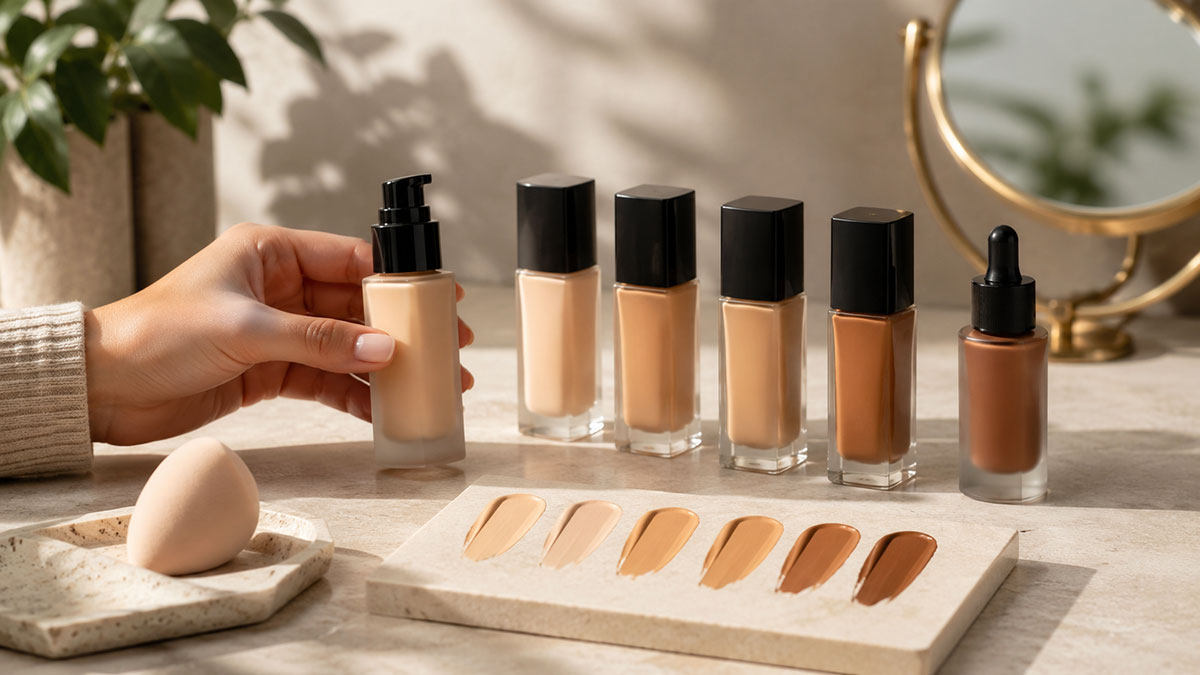
Foundation is the base product that evens out skin tone, reduces visible discoloration, and creates a consistent surface for the rest of your makeup. It comes in liquid, powder, stick, cushion, and serum formats. Each one behaves differently depending on your skin type, coverage need, and finish preference.
This article covers what foundation is, how it works, the main formula types, how to find your shade, and how long it actually lasts on skin.
What Is Foundation
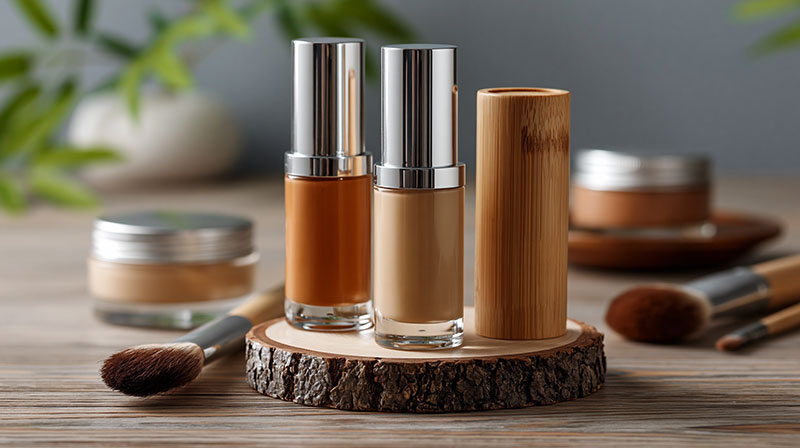
Foundation is a face makeup product applied to create an even, uniform base across the skin. It unifies skin tone, covers blemishes, and gives other makeup products something consistent to sit on top of.
It comes in liquid, powder, stick, cushion, serum, and mousse formats. Each one behaves differently on skin and serves a different purpose, but the core job stays the same: even out the complexion before anything else goes on.
Foundation is not the same as tinted moisturizer, BB cream, or CC cream. Those are lighter, skincare-leaning products. Foundation has a higher pigment concentration and a more structured formula, meaning the coverage is more controlled and buildable.
The global makeup foundation market was valued at USD 12.5 billion in 2023 and is projected to reach USD 20.8 billion by 2032, growing at a CAGR of 5.9% (Business Research Insights). Foundation alone holds the largest market share among all face makeup categories, accounting for 40.6% of the global makeup base market in 2024 (Grand View Research).
Foundation is step one of most full-coverage makeup routines, placed after skincare and primer, and before concealer, blush, and contour.
How Foundation Works on Skin
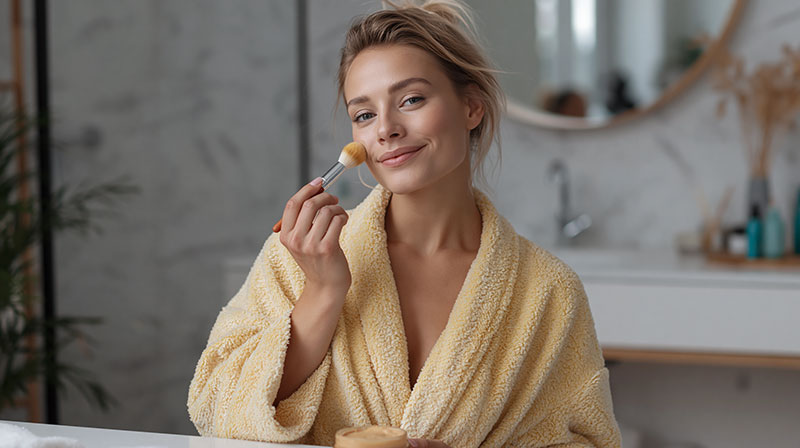
Foundation creates coverage through pigment particles suspended in a liquid, powder, or emulsion base. When applied, those pigments spread across the skin surface and physically block or reduce the visibility of discoloration underneath.
Coverage level depends mostly on the concentration of titanium dioxide in the formulation, according to cosmetic chemist research published by Prospector (UL). More titanium dioxide means more opacity. Iron oxides are used to create the actual color, with combinations of red, yellow, and black iron oxide producing the full spectrum of foundation shades.
How It Sits on Different Skin Types
Oily skin breaks foundation down faster because sebum interacts with the pigment particles. A 2021 study in the International Journal of Cosmetic Science found that sebum can alter foundation shades by up to 20% in oily skin types, which is where the term “oxidation” comes from in everyday use.
The interaction between sebum and iron oxide pigments, especially iron oxide black, can cause the formula to shift darker or warmer after application. This isn’t the formula reacting to air. It’s skin oils physically mixing with the pigment base.
Water-based vs. silicone-based: Silicone-based foundations sit on top of skin rather than absorbing into it. This gives a smoother finish and more consistent wear, but can feel heavier. Water-based formulas absorb faster and feel more breathable, making them better for sensitive or acne-prone skin.
A 2023 study in the Journal of Dermatological Science found that well-hydrated skin reduces sebum-related oxidation by 15%. Properly moisturized skin before applying a liquid foundation makes a measurable difference in how long the color stays true.
The Role of Primer
Primer creates a barrier between skin and foundation. Silicone primers fill in pores and texture, giving the formula a smoother surface to adhere to. Hydrating primers add moisture under the formula for dry skin types.
Without primer, especially on oily skin, foundation interacts more directly with sebum from the start, which speeds up both wear breakdown and color shift. It is not required, but it makes a visible difference for anyone wearing foundation for more than four hours.
Foundation Types

Liquid foundation dominated the global market with a 45% share in 2023, while cushion foundation was the fastest-growing sub-segment, expected to grow at a CAGR of 8% through 2028 (Verified Market Reports). The difference between formats is not just texture. Each one has a different relationship with skin, tools, and finish.
| Format | Finish Range | Best For | Typical Coverage |
| Liquid | Matte to dewy | Most skin types | Sheer to full |
| Powder | Matte to natural | Oily skin, touch-ups | Light to medium |
| Stick | Satin to matte | Dry skin, on-the-go | Medium to full |
| Cushion | Dewy to natural | Combination, normal | Light to medium |
| Serum | Natural to dewy | Dry, mature, sensitive | Sheer to light |
Liquid Foundation
The most used format globally. Liquid foundation works across the widest range of skin types and delivers the most consistent, blendable coverage.
Key characteristic: The formula can be water-based or silicone-based, which changes how it interacts with skin, how long it lasts, and whether it works well under a setting powder.
In August 2023, MAC Cosmetics launched a serum-powered liquid foundation combining skincare actives with broad shade coverage. That move reflects where most liquid foundation development is heading: toward hybrid formulas with skincare ingredients built in.
Powder Foundation
Powder foundation accounted for 30% of the market in 2023, with its fastest growth in hot and humid climates where lighter formulas are preferred (Verified Market Reports).
It skips the emulsion base entirely. Instead of pigment suspended in liquid, the pigment is compressed or loose in a dry powder form. It applies drier, sits more matte, and is easier to layer without looking heavy.
Powder foundation works well over oily skin or as a second-step coverage over a lighter liquid base. On dry or mature skin, it can settle into fine lines.
Stick and Cushion Foundation
Stick foundation is essentially a compressed, solid emulsion. Higher pigment load in a small format makes it strong for spot coverage and easy travel.
Cushion foundation is liquid formula soaked into a sponge inside a compact, applied with a puff. Very popular in South Korea and the broader Asia-Pacific market, which is the fastest-growing regional segment for cushion formats, projected at a CAGR of 8% through 2028.
Fenty Beauty expanded its foundation range with 12 new undertone-specific shades in 2023, reporting a 19% boost in global sales as a direct result.
Foundation Coverage Levels

Coverage is how much of the skin’s natural texture and discoloration the foundation visually reduces. It has four main levels, and most formulas fall clearly into one.
Sheer and Light Coverage
Sheer coverage: Evens out minor redness and adds a slight tint. Skin texture, pores, and most blemishes remain visible. Closest to skin tint territory.
Light coverage: Reduces visible redness and small discoloration without fully concealing it. Natural-looking finish with skin still showing through.
Both work well as everyday, no-makeup-makeup options. Pairing either with a full-coverage concealer on problem areas is a common approach for a finish that looks natural but is still edited.
Medium Coverage
Covers most discoloration, redness, and mild acne scarring without blocking skin texture entirely. This is the most common coverage preference.
Buildable formulas: Many medium-coverage foundations are buildable, meaning a second layer in concentrated areas can push them toward fuller coverage without the formula looking heavy overall.
Most people who think they want full coverage actually do well with a buildable medium-coverage formula applied strategically. Full coverage everywhere tends to look flat and can feel heavy by the end of the day.
Full Coverage
Fully conceals hyperpigmentation, acne scarring, vitiligo, and significant redness. Skin texture may still show slightly unless paired with a blurring primer.
Higher pigment concentration means the formula is denser and requires more blending time. A damp sponge works better than a brush here because stippling moves pigment around without dragging it.
| Coverage Level | What It Covers | Best Application Tool |
| Sheer | Minor redness, evening skin tone | Fingers or light brush |
| Light | Small discoloration, mild texture | Sponge or brush |
| Medium | Blemishes, moderate redness | Sponge or stippling brush |
| Full | Scarring, hyperpigmentation, vitiligo | Damp sponge |
Foundation Ingredients and Formulation
Foundation is one of the more complex products in makeup. The formula has to balance coverage, skin feel, wear time, and safety, often across dozens of shades that each behave slightly differently.
Pigments: What Creates Color and Coverage
Every foundation shade is built from four base pigments: red iron oxide, yellow iron oxide, black iron oxide, and white (typically titanium dioxide). Cosmetic chemist Charlene Valledor, president of SOS Beauty, notes that each pigment has its own physical characteristics. The texture and dry-down of a formula changes based on the pigment ratio, which is why developing a full shade range is technically demanding.
Titanium dioxide controls opacity. The more of it in a formula, the more coverage it delivers.
Iron oxides control color. They come in 16 known varieties of earth tones and are classified as low-risk by EWG’s Skin Deep Cosmetics Database. Zinc oxide, used in some mineral foundations, also adds mild UV protection and can soothe skin irritations linked to rosacea and acne.
Film-Formers and Emollients
Film-forming polymers and silicones are what help foundation stay on skin over time. Dimethicone (a common silicone) creates a smooth surface layer, helps even out texture, and reduces how much the formula migrates into fine lines.
46% of brands expanded their foundation shade ranges between 2023 and 2024, while 36% of new launches are now categorized as clean beauty foundations (Global Growth Insights, 2024). That shift toward cleaner formulas means more brands are replacing traditional silicones and petroleum-derived emollients with plant-based alternatives.
Active Ingredients Now Common in Foundation
Skincare actives in foundation have moved from marketing language to actual formulation practice. Maybelline’s early 2024 foundation contains 2% niacinamide and reduced visible redness by 22% within two weeks of use in internal trials. Hyaluronic acid in liquid foundations adds surface hydration and helps the formula feel less dry on the skin.
SPF is increasingly standard. Most water-in-oil silicone foundations now aim for SPF 15 to 30, with SPF 30 becoming the more common target, according to cosmetic formulation data from UL Prospector.
Ingredients to check for sensitive skin:
- Fragrance (common sensitizer)
- Alcohol (drying, can irritate)
- Certain preservatives like parabens
- Airborne titanium dioxide in loose powder formats (potential respiratory irritant)
How to Find the Right Foundation Shade

Over one-third of beauty consumers still struggle to find a foundation shade that truly matches their skin tone. For Black consumers, that number rises to more than half (Arbelle / BeautyMatter, 2024). Finding the right shade is the step most people get wrong, and the most common reason foundation looks off.
Undertone First, Then Depth
Shade matching has two parts: depth (how light or dark) and undertone (the color bias beneath the skin’s surface).
Warm undertone: Yellow, peachy, or golden. Foundation with a yellow or peach bias works best.
Cool undertone: Pink, red, or bluish. Foundation with a pink or neutral-cool base sits more naturally.
Neutral undertone: Mix of both. Can work with a broader range of formulas.
Getting the undertone wrong is the real reason foundation looks ashy or orange, even when the depth is correct. This is a mistake I’ve seen happen constantly, both on clients and in store swatches.
Where and How to Test
Test shade on the jawline, not the wrist or back of the hand. The goal is a shade that disappears into the neck and face without a visible line. A match on the inner wrist means nothing for how it reads on the face.
Check the swatch in natural daylight, not store lighting. Most retail environments use warm, flattering light that makes shades look more neutral than they are.
Factor in oxidation. Foundations with higher iron oxide content can shift darker by up to 20% once skin oils interact with the formula. Letting a swatch sit for 15-20 minutes before deciding gives a more accurate reading of the final color.
According to Mintel, 50% of beauty consumers prioritize inclusivity when purchasing. And 31% of U.S. shoppers actively avoid brands that lack diversity commitments. Fenty Beauty’s 2017 launch of 40 shades, later expanded to 59, set a market-wide standard. Brands like MAC, with 63 shades in Studio Fix Fluid, and Anastasia Beverly Hills followed with comparable depth of range.
When a brand’s shade range skews heavily to mid-tones, finding a match at either end of the spectrum requires more testing across more brands. The range on offer matters as much as the individual shade.
For more detail on the full application process once you have the right shade, see this guide on applying foundation correctly from start to finish.
How to Apply Foundation
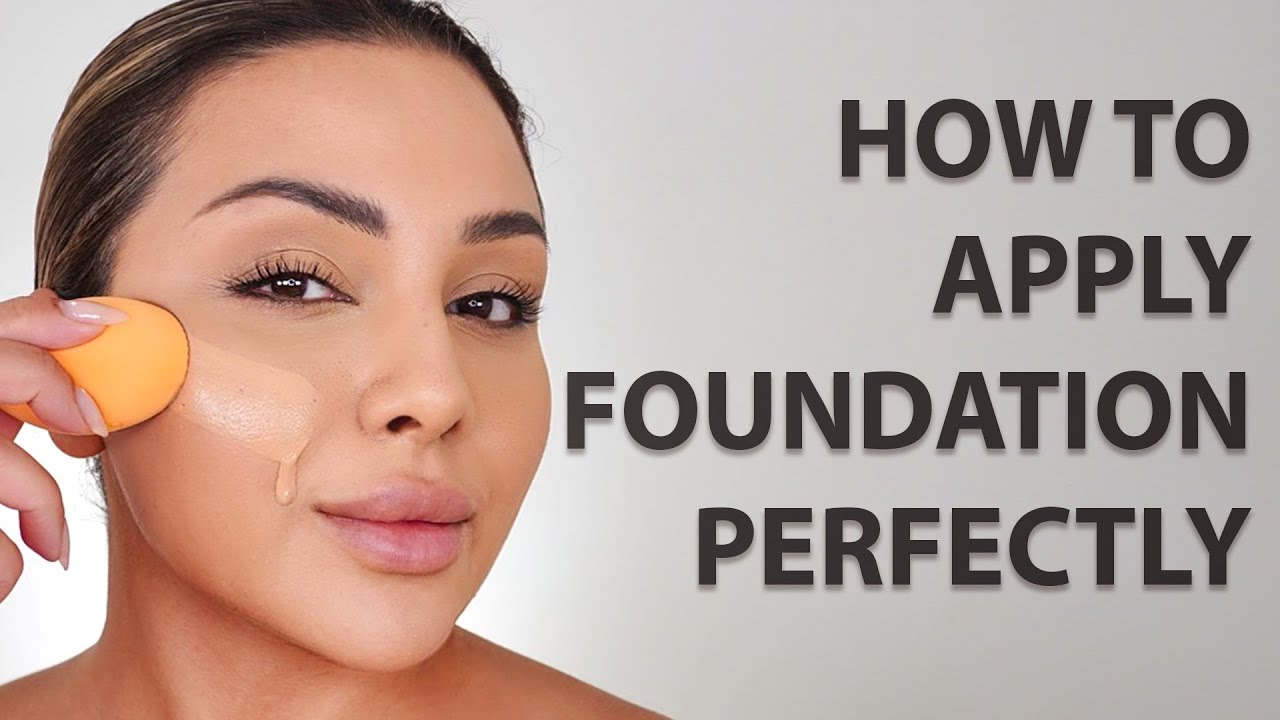
Skin prep determines roughly 50% of foundation longevity, according to cosmetic science reviewers at Hello Beauty Blog. No formula holds well on dehydrated, flaky, or excessively oily skin. Fix the surface first.
The standard order: cleanser, moisturizer, primer, foundation, concealer, then powder or setting spray. Letting skincare absorb for five minutes before applying primer prevents mixing, which breaks down the base faster.
Application Tools Compared
Brush: Best for full, even coverage. Dense bristles distribute product efficiently across large areas. Finish can look slightly streaky. Following with a damp sponge smooths it out.
Damp sponge: Gives the most natural, skin-like finish. The water in the sponge sheers out the formula slightly, which means some coverage is lost. Best for medium-coverage liquid formulas.
Fingers: Body heat warms the formula and helps it blend into skin naturally. Good for light coverage and quick application. The tradeoff is bacteria transfer, which is higher under warm or humid conditions.
| Tool | Best Result | Coverage Impact |
| Dense brush | Full, even coverage | Maintains formula coverage |
| Damp sponge | Natural, skin-like finish | Slightly sheers out |
| Fingers | Lightweight, fast blend | Sheer to light only |
Technique and Setting
Apply foundation in thin layers, starting at the center of the face and blending outward. Foundation applied in thin, layered coats lasts 45% longer than heavy single-coat application, according to Makeup Science Review data.
Setting options depend on skin type. Translucent powder controls oil and extends wear. A setting spray locks the formula in place without adding a powdery finish, which matters for dry or mature skin. High-quality setting sprays can extend foundation wear up to 16 hours, compared to 8-10 hours for budget options (StansOut Beauty). Hold the bottle 8-10 inches away and mist in an X and T motion.
Blotting through the day removes up to 80% of surface oil without disturbing the formula underneath, per cosmetic research cited by Albon Cosmetics. Reapplying powder instead of blotting builds up product and causes the cakey appearance most people are trying to avoid.
For a detailed walkthrough of the full process, including tools and layering, see this guide on applying makeup with a sponge and this one on applying makeup with a brush.
Foundation for Different Skin Types
The right formula for one skin type can be completely wrong for another. People with oily skin lose makeup coverage 40% faster than those with dry or normal skin, according to the Journal of Cosmetic Dermatology. The formula has to work with the skin’s natural behavior, not against it.
Oily and Combination Skin
Matte, oil-controlling formulas with silica or kaolin clay work best. These absorb sebum and slow down the breakdown of the base.
- Look for “long-wear” or “transfer-resistant” on the label
- Silicone primers before application reduce oil interaction significantly
- Set T-zone with translucent powder immediately after application
- Avoid dewy or luminous formulas (they slide faster on oily skin)
Fenty Beauty’s Pro Filt’r Soft Matte Longwear Foundation uses climate-adaptive technology to stay matte through sweat and humidity, making it one of the most recommended options for high-sebum skin types.
Dry and Mature Skin
Hydrating, serum-based formulas with glycerin or hyaluronic acid are the most practical choices here. Powder foundation on dry skin settles into fine lines within a few hours. Avoid it unless layered over something hydrating.
Key rule for mature skin: skip heavy setting powder entirely. Use a setting spray to lock the formula without adding a dry, emphasizing layer on top. For more targeted advice on applying makeup on dry skin, technique matters as much as product choice.
Sensitive and Acne-Prone Skin
In 2024, nearly 52% of new foundation launches in the U.S. included skin-nourishing actives, and 36% were labeled suitable for sensitive or post-procedure skin (Global Growth Insights). The market has responded clearly to this need.
For sensitive or acne-prone skin:
- Fragrance-free, alcohol-free formulas reduce irritation risk
- Mineral-based options with zinc oxide soothe inflammation
- Non-comedogenic labeling matters, but formula type matters more
Estee Lauder reformulated its Double Wear Foundation in late 2023 to reduce fragrance content by 44%, specifically addressing the 28% of consumers reporting allergic reactions to traditional formulas.
For a full breakdown of doing makeup for sensitive skin, including prep and layering order, there’s more detail available there.
Foundation vs. Similar Products
These products overlap in purpose but differ significantly in coverage concentration, formula structure, and how they interact with skin throughout the day.
| Product | Coverage | Skincare-to-Makeup Ratio | Best For |
| Foundation | Sheer to full | Makeup-heavy | All coverage needs |
| BB cream | Sheer to medium | Balanced | Everyday, quick routine |
| CC cream | Light to medium | Color-correcting focus | Redness, uneven tone |
| Tinted moisturizer | Sheer | Skincare-heavy | No-makeup days |
| Concealer | Medium to full | Makeup-heavy | Targeted coverage areas |
Foundation vs. Concealer

Foundation covers the full face. Concealer covers specific spots at a higher pigment concentration. Using concealer alone on the full face uses far too much product and creates a cakey result.
The correct pairing: apply foundation first to even out the base, then use concealer on top of it for areas that need extra coverage. Applying in the opposite order means the foundation wipes off the concealer underneath.
Foundation vs. BB Cream
BB cream (beauty balm) was originally developed in Germany by dermatologists for post-procedure skin coverage. It combines coverage, moisturizer, and often SPF into a single formula. Coverage is lighter and less customizable than foundation.
A detailed breakdown is available in this BB cream vs. foundation comparison, but the short version: choose BB cream for quick daily wear, foundation for any occasion where you need consistent, specific coverage.
Foundation vs. Tinted Moisturizer
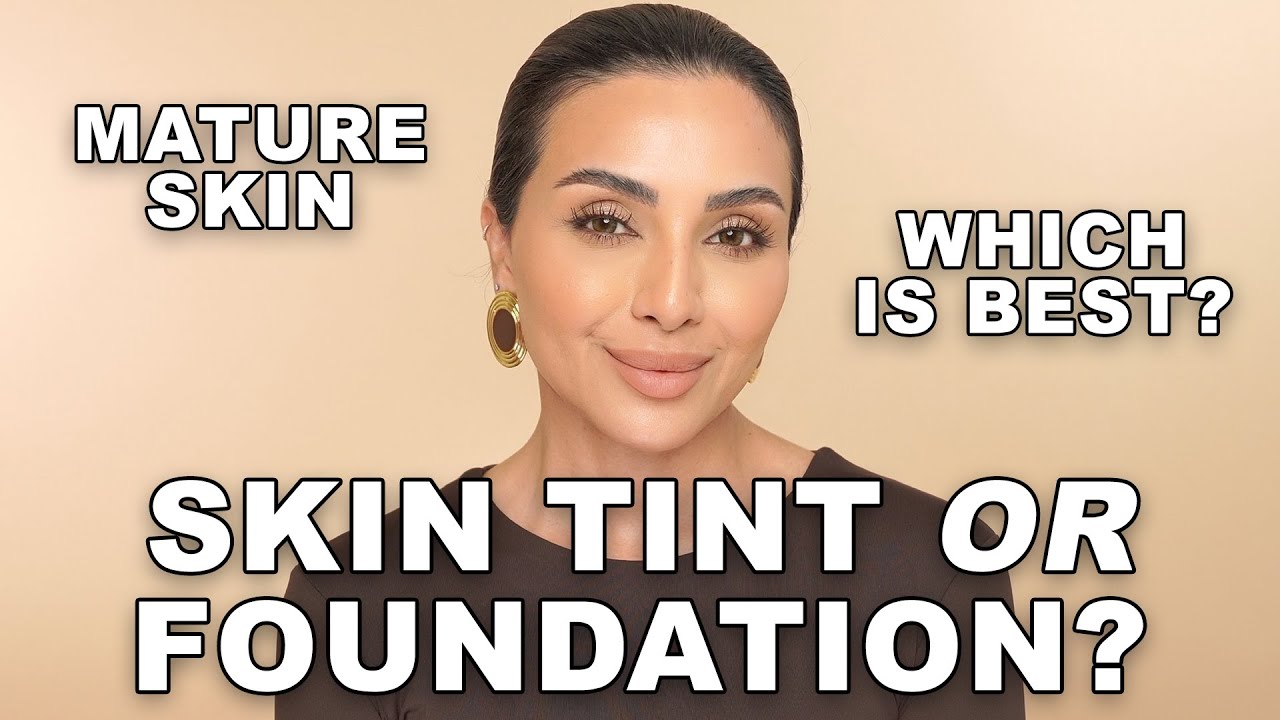
Tinted moisturizer is essentially a moisturizer with pigment added. Makeup artist Kayla Calloway notes it typically contains more moisture-binding agents like hyaluronic acid or glycerin than even BB cream. Coverage is sheer to none.
It works for no-makeup-makeup days and skin that needs hydration over coverage. For a clear look at where these two products actually differ in practice, the tinted moisturizer vs. foundation comparison covers the specifics.
A related option worth knowing: skin tints sit even lighter than tinted moisturizer and function more like a serum with pigment. They last around 8 hours and are the most natural-looking option available for base coverage.
How Long Foundation Lasts

Foundation wear time and shelf life are separate things. Both matter, but people tend to think about the former and ignore the latter until something goes wrong.
Wear Time on Skin
Skin tints and tinted moisturizers last around 8 hours under normal conditions. Foundations labeled “long-wear” commonly claim 12, 16, or 24 hours of wear (Live Tinted, 2024). Real-world wear time depends on skin type, humidity, application technique, and whether a primer and setting spray were used.
Realistic wear ranges by formula:
- Standard liquid foundation: 4-8 hours without setting products
- Long-wear liquid with primer and setting spray: 10-14 hours
- Powder foundation alone: 4-6 hours, shorter on oily skin
- Cushion foundation: 6-8 hours before touch-ups needed
Dewy and long-wearing are hard to get in the same formula. Luminous foundations slide faster. Matte foundations last longer but look flat. Your mileage varies a lot here depending on skin type and climate.
Shelf Life After Opening
Liquid foundations last 6-12 months after opening. Most foundations last 2-3 years unopened if stored correctly. Natural and organic formulas have shorter shelf lives, typically 12-24 months unopened, because they contain fewer synthetic preservatives (cosmetic guidance current through May 2024).
Signs a foundation has expired: changed smell, texture separation that doesn’t blend back together, color shift in the bottle, or skin irritation that wasn’t there before.
Key rule: check the PAO symbol (Period After Opening) on the packaging. It appears as an open jar icon with a number. A “12M” means 12 months after opening. Most people ignore this, then wonder why their skin reacts or why the formula looks different than when they bought it.
For help with issues like stopping foundation from oxidizing or fixing patchy makeup mid-wear, those are formula and technique issues worth addressing separately from shelf life.
Keeping foundation in a cool, dry location away from sunlight and humidity extends both formula stability and color accuracy. Storing it in a bathroom where temperature fluctuates constantly is one of the fastest ways to shorten its usable life.
What is foundation in makeup?
Foundation is a face product that evens out skin tone and creates a uniform base for the rest of your makeup. It comes in liquid, powder, stick, cushion, and serum formats, with coverage ranging from sheer to full.
What does foundation do for your skin?
It covers discoloration, redness, blemishes, and uneven texture. Some formulas also contain skincare actives like niacinamide or hyaluronic acid, which means you get coverage and mild skin benefits at the same time.
What is the difference between foundation and concealer?
Foundation covers the full face at a moderate pigment level. Concealer targets specific spots at a higher concentration. Apply foundation first, then concealer on top for areas that still need coverage.
What is the difference between foundation and BB cream?
BB cream combines light coverage with moisturizer and often SPF. Foundation focuses on coverage and comes in more formats, finishes, and shade ranges. BB cream is lighter. Foundation is more controlled and buildable.
How do I find my foundation shade?
Test on your jawline, not your wrist. Check the match in natural daylight and wait 15-20 minutes for oxidation before deciding. Getting the undertone right (warm, cool, or neutral) matters as much as the depth.
What foundation is best for oily skin?
Matte, long-wear liquid formulas with oil-controlling ingredients like silica or kaolin clay. Set with translucent powder on the T-zone. Avoid dewy or luminous finishes, since they break down faster on high-sebum skin.
What foundation is best for dry skin?
Serum-based or hydrating liquid formulas with glycerin or hyaluronic acid work best. Skip powder foundation entirely. Set with a setting spray instead of powder to lock the formula without emphasizing dry patches or fine lines.
How long does foundation last on skin?
Standard liquid foundation lasts 4-8 hours without setting products. Long-wear formulas with primer and setting spray can hold up to 10-14 hours. Oily skin breaks down coverage faster than dry or normal skin.
How long does foundation last before it expires?
Liquid foundation lasts 6-12 months after opening. Check the PAO (Period After Opening) symbol on the packaging. Signs of expiration include changed smell, texture separation, or skin irritation that wasn’t present before.
Can I use foundation without primer?
Yes, but primer extends wear time and reduces oxidation, especially on oily skin. Without primer, foundation interacts more directly with sebum from the start, which speeds up color shift and breakdown throughout the day.
Conclusion
This conclusion is for an article presenting what is foundation for makeup, and the answer is more layered than most people expect.
Choosing the right formula comes down to three things: your skin type, your coverage need, and how long you need it to hold.
Liquid and serum formulas work across the widest range of skin types. Powder suits oily skin and quick touch-ups. Stick and cushion formats fill specific gaps in routine and portability.
Shade matching at the jawline, accounting for undertone and oxidation, makes the difference between a base that disappears and one that sits visibly wrong.
Set with powder or setting spray depending on your skin. Check the PAO symbol. Replace it when the formula separates or smells different.
Get those basics right, and foundation stops being a guessing game.

She started writing on the site after fielding the same questions from clients and friends often enough to just write the answers down: which red won't turn orange on a warm undertone, how to keep lipstick from feathering into fine lines, why a "12-hour" formula rarely survives dinner.
Every review on the site follows the same rule she uses with paying clients: wear it first, then decide if it's worth recommending.
- How to Make Eyeliner Last Longer Without Smudging - August 31, 2026
- How to Make Eyeshadow Last Longer All Day - August 29, 2026
- How to Find Your Undertone in 5 Easy Steps - August 27, 2026