Your moisturizer, SPF, primer, and foundation just became one product.
BB cream, short for blemish balm or beauty balm, is the skincare-makeup hybrid that simplified daily routines for millions of people worldwide. It started in a German dermatologist’s clinic. It blew up in South Korea. Then it took over global beauty counters.
But not all BB creams are the same, and most people are choosing the wrong one for their skin type.
This guide covers everything: what BB cream actually is, what it contains, how it compares to foundation and CC cream, and how to pick the right formula for your skin.
What is BB Cream

BB cream is a tinted skincare-makeup hybrid product that delivers coverage, hydration, and sun protection in a single formula.
The name stands for blemish balm or beauty balm, depending on the brand and market. Both terms refer to the same product category.
Unlike a standard foundation, which prioritizes coverage above everything else, BB cream combines cosmetic pigments with active skincare ingredients. You get color payoff and actual skin treatment at the same time.
The formula typically sits between a tinted moisturizer and a light foundation on the coverage spectrum. It is not full coverage. It was never designed to be.
What BB cream actually does in one application:
- Evens out skin tone with light-to-medium buildable coverage
- Hydrates through humectants like glycerin or hyaluronic acid
- Provides broad-spectrum sun protection (SPF varies by formula)
- Delivers skin-treating actives like niacinamide, peptides, or antioxidants
- Acts as a primer base for additional makeup
Tinted moisturizers and BB creams are often grouped together, but they are not the same thing. BB creams carry a higher concentration of pigment and more targeted skincare actives. Tinted moisturizers lean heavier on the hydration side with minimal treatment function.
According to NPD-Circana, 53% of cosmetics consumers were actively looking for hybrid makeup and skincare products in 2023, up 6% from the year before. BB cream is, at its core, the product that started that entire category.
The global BB cream market was valued at approximately $4.2 billion in 2023 and is projected to reach $9.6 billion by 2033 at a CAGR of 8.6% (Market.us, 2025). That kind of sustained growth does not happen with a passing trend.
The Origin of BB Cream
Most people assume BB cream is a Korean invention. It is not. The formula traces back to Germany in the 1960s.
Dr. Christine Schrammek, a German dermatologist practicing in Melle, created the original blemish balm as a post-procedure recovery product for patients undergoing laser treatments and chemical peels. The goal was strictly clinical: soothe irritated skin, provide light coverage to reduce redness, and support the skin barrier during healing.
The formula contained healing ingredients like panthenol and allantoin. It was not sold as a cosmetic. It was used inside her clinic.
How South Korea Transformed It
The product concept reached South Korea in 1985 through connections between German dermatologists and local estheticians, initially for professional use in skin recovery settings (Grokipedia, 2024).
Korean cosmetics companies quickly saw the commercial potential. They reformulated it entirely, adding higher SPF levels, brightening agents, ceramides, and lightweight tints designed for a broader range of skin tones. By the time the reformulated version hit Korean beauty counters, it bore little resemblance to Schrammek’s original balm.
BB cream captured up to 13% of the South Korean cosmetics market at its peak (Skinstation). Brands like Missha, Dr. Jart+, Skin79, and Skinfood built significant followings around it.
How It Went Global
The Hallyu wave, South Korea’s cultural export phenomenon, carried BB cream into Western markets around 2011. That same year, L’Oreal, Maybelline, and Garnier launched localized Western versions almost simultaneously.
Western formulas differed from the Korean originals. Korean BB creams focused on brightening, anti-aging, and soothing. Western brands shifted the emphasis toward color correction and wider shade ranges. The two versions became distinct products sharing the same name.
By 2012, South Korea had recorded its first cosmetic trade surplus of over KRW 100 billion (approximately USD 87.9 million), driven in large part by the global BB cream boom (Eye on Asia research).
Schrammek’s family-run company, now in its third generation, still produces the original German blemish balm formula today.
What BB Cream Contains
The ingredient list in a BB cream is longer than most people expect. It functions as a formula that has to do several jobs at once, which means multiple ingredient categories working in parallel.
Coverage and Pigment Agents
Titanium dioxide serves a dual role: it is a white pigment that creates the tinted base and a physical UV filter that blocks UVB and UVA II rays. Iron oxides, a blend of red, yellow, and black pigments, are mixed in precise ratios to produce natural-looking skin tones. Without iron oxides, there is no BB cream, just a moisturizer.
Most formulas also contain silica or talc to control oil and improve the skin-feel on application.
SPF Filters
This is where BB cream formulation gets complicated. SPF filters fall into two categories:
- Physical (mineral) filters: Zinc oxide and titanium dioxide sit on the skin surface and reflect UV radiation
- Chemical filters: Ingredients like octinoxate, octisalate, and avobenzone absorb UV and convert it to heat
Many BB creams use both. In the US, any formula with SPF is classified as an over-the-counter drug and must meet FDA testing requirements. In the EU, SPF products are regulated as cosmetics. This affects labeling, claims, and what filters brands can use in each market.
According to Mordor Intelligence, BB creams with SPF 15-30 held 50.55% of the market in 2024, while above-SPF-30 variants are forecast to grow at 7.85% CAGR through 2030, driven by increasing sun-awareness among consumers.
Skincare Actives
This is what separates BB cream from plain foundation. The table below shows the most common active ingredients found across modern BB cream formulas and what each one does:
| Ingredient | Function | Skin Benefit |
| Hyaluronic acid / Sodium hyaluronate | Humectant | Draws moisture into the skin, plumps fine lines |
| Glycerin | Humectant | Hydrates, supports skin barrier function |
| Niacinamide | Active vitamin | Reduces redness, improves skin texture, tightens pores |
| Ceramides | Barrier repair | Strengthens the skin barrier, reduces water loss |
| Peptides | Anti-aging active | Supports collagen production, firms skin over time |
| Antioxidants (Vitamin E, green tea) | Protective | Neutralizes free radicals from UV and pollution |
Not every BB cream contains all of these. Budget formulas often use filler ingredients in place of actives. Reading the ingredient list tells you more than the label does.
What BB Cream Does for Skin

BB cream delivers results in two distinct categories: cosmetic and functional. They happen simultaneously, but they serve different purposes.
Cosmetic results (visible on application):
- Light-to-medium coverage that evens skin tone without masking texture
- Reduction in visible redness and minor blemishes
- A natural or satin finish depending on the formula
- A primed base that helps other makeup products sit better
Functional results (skin health over time):
- Daily UV protection that limits cumulative sun damage
- Sustained hydration from humectant ingredients
- Gradual improvement in skin tone from actives like niacinamide
- Barrier support from ceramides or peptide-based formulas
BB cream is not a substitute for targeted skin treatments. If someone has active acne, deep pigmentation, or significant redness, BB cream manages the appearance of those issues without treating the cause.
According to Euromonitor’s 2024 Voice of the Consumer Beauty Survey, 40% of consumers now adopt a holistic beauty approach that integrates self-care with their cosmetic routine. BB cream aligns directly with that shift: it fits into both a skincare and a makeup context without requiring two separate product steps.
Dr. Jart+, one of the original Korean BB cream brands, built its entire brand identity around this principle. Their Premium BB Beauty Balm SPF 40 combines octinoxate, zinc oxide, titanium dioxide, niacinamide, glycerin, and adenosine in a single formula. It remains one of the most studied examples of what a well-formulated BB cream can do.
BB Cream vs. CC Cream vs. Foundation

These three products are often placed on the same shelf. They are not the same product, and the differences matter depending on what someone needs from their base.
| Product | Primary Function | Coverage Level | Skin Focus |
| BB Cream | Coverage + skincare hybrid | Light to medium | Hydration, SPF, actives |
| CC Cream | Color correction + coverage | Light to sheer | Even tone, color cancel |
| Foundation | Full complexion coverage | Medium to full | Minimal skincare function |
BB cream vs. CC cream is a common comparison. CC cream stands for color correcting and is designed specifically to cancel unwanted tones in the skin. It typically has a sheerer finish than BB cream and focuses more on color balancing than on hydration or SPF depth.
Foundation prioritizes coverage, period. Most foundations contain minimal skincare actives and are formulated to provide opacity and long wear. The finish range is much wider, from satin to full matte.
Key difference: BB cream is designed to improve the skin it sits on. Foundation is designed to cover what is beneath it.
A useful comparison: BB cream vs. foundation comes down to intent. If the goal is a quick, skin-improving, everyday base with some protection, BB cream wins. If the goal is full-coverage, long-wear performance for photos or events, foundation is the right choice.
There is also the tinted moisturizer vs. foundation comparison, where BB cream sits clearly in the middle. More pigment than a tinted moisturizer. Less coverage than a foundation.
Skin Types and BB Cream Compatibility
BB cream works for most skin types. The key is picking the right formula for the right skin.
Not all BB creams are built the same. A formula designed for dry skin will perform terribly on oily skin, and vice versa. The product type is correct for almost everyone. The formula choice is what needs to match the skin.
Dry Skin
Look for BB creams built on a moisturizing base with hyaluronic acid, glycerin, ceramides, or squalane.
Avoid formulas with high silica content, they absorb oil and will make dry skin look patchy within a few hours. A satin or dewy finish formula works best for this skin type.
Oily and Combination Skin
Silica and clay are useful here. They absorb excess sebum without stripping the skin barrier.
Matte-finish BB creams with oil-control agents tend to hold up better through the day. Applying a light setting powder on top adds longevity. Tube or pump packaging helps with hygiene and dose control for oily skin users who tend to apply less product per use.
Mordor Intelligence data shows cushion BB cream formats growing at 7.54% CAGR through 2030, driven partly by oily skin consumers who prefer the controlled, light application cushions offer.
Sensitive and Acne-Prone Skin
Sensitive skin: Mineral-only SPF formulas (zinc oxide and titanium dioxide with no chemical filters) are a safer starting point. Fragrance-free is a non-negotiable. Chemical UV filters like octinoxate have raised concerns in some dermatological research, particularly for use during pregnancy, though overall regulatory status remains as safe as used.
Acne-prone skin: Non-comedogenic labeling matters, but reading ingredients matters more. Some BB creams include salicylic acid, which actively works against breakouts while providing coverage. Avon launched a 12-hour wear, non-comedogenic BB cream formula in 2024 specifically marketed toward oily and acne-prone users.
Shade Range and Inclusive Formulation
Early BB creams, especially Korean formulas, were built for fair to light skin tones. Western reformulations expanded shade options somewhat, but the category still lags behind foundation in terms of deep shade availability.
L’Oreal launched a BB cream specifically designed for darker skin tones in early 2024, reporting a 25% increase in sales within the first quarter after launch. Mordor Intelligence notes that only 1.7% of facial sunscreens currently contain iron oxides for more effective protection on deeper skin tones, which represents a significant gap that BB cream brands are slowly beginning to address.
How to Apply BB Cream

BB cream goes on after skincare. Always after.
The order matters: cleanser, toner, serum, moisturizer, then BB cream. If SPF is not already in the BB cream formula, or if outdoor exposure is planned, a dedicated sunscreen goes under the BB cream, not on top.
According to Johns Hopkins Medicine, most people apply only 25 to 50 percent of the recommended sunscreen amount, which means the SPF on a BB cream label rarely translates to real-life protection at normal application volumes. A separate SPF layer is the safer approach for anyone spending extended time outdoors.
Fingers
The fastest method. Also the most forgiving.
Fingertip warmth softens the formula and helps it blend into skin naturally, almost like a second moisturizer. Dot a small amount across the forehead, nose, chin, and cheeks, then press and blend outward. No dragging.
Best for: dry or mature skin, minimal coverage days, quick everyday routines.
Damp Sponge
A damp beauty blender expands and becomes more porous, which reduces how much product gets absorbed into the tool. More BB cream ends up on the face, less is wasted in the sponge.
Bounce the sponge lightly across the skin rather than wiping. Wiping lifts product and creates uneven patches. A dry sponge absorbs 30 to 50 percent of the BB cream before it ever reaches the skin, so dampening it first is not optional (BuyCosmetics research).
Best for: oily, combination, or sensitive skin. Also the preferred method for buildable coverage without the cakey look.
Brush
Use a soft, synthetic bristle foundation brush. Natural hair brushes absorb too much product.
Stippling or circular buffing motions work better than strokes. Strokes leave brush marks.
Best for: precise application, full-coverage BB cream formulas, anyone who prefers minimizing hand contact with the face (oily or acne-prone skin).
Layering and Setting
BB cream is buildable. The first layer should always be sheer. Go back over areas needing more coverage only after the first layer is set.
For oily skin, a light dusting of translucent or setting powder over the T-zone extends wear without making the rest of the face look flat. A setting spray over the finished look keeps everything in place and adds a natural finish, particularly useful in warm or humid conditions.
If additional coverage is needed on specific spots like blemishes or discoloration, apply a small amount of concealer on top after the BB cream base is blended, not underneath it.
How to Choose a BB Cream
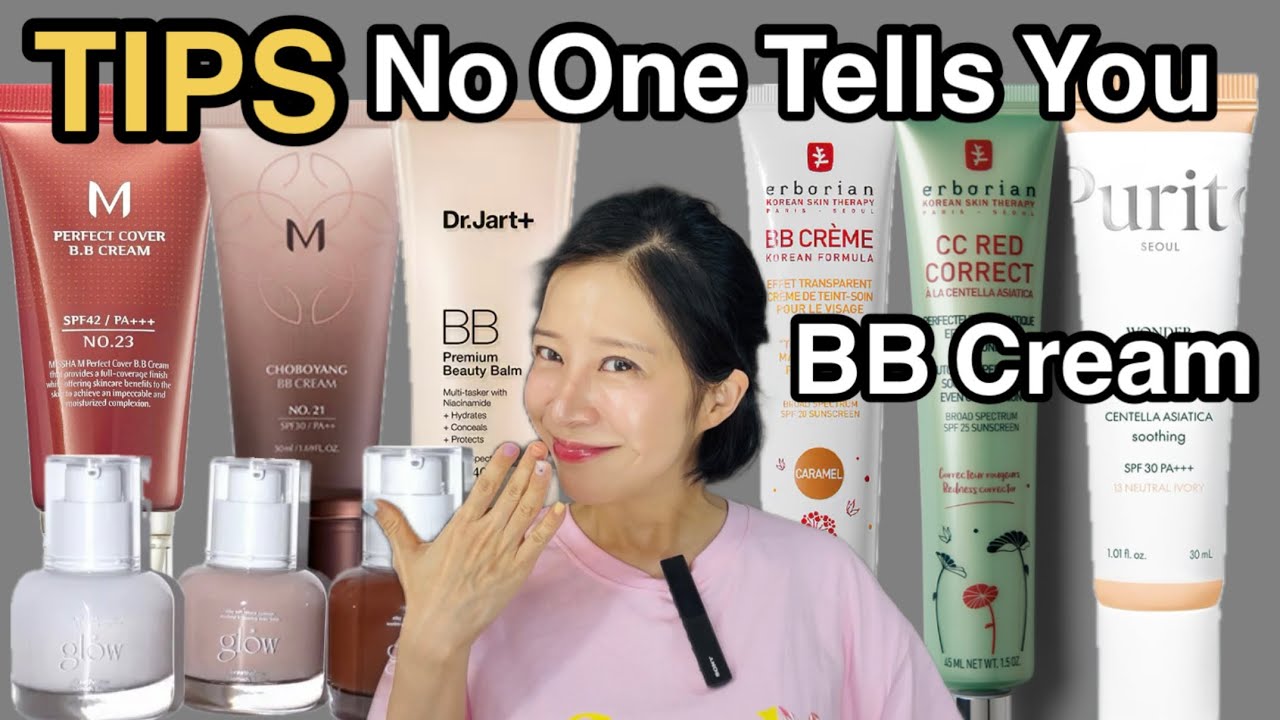
Price is the worst selection criterion. A $12 drugstore BB cream and a $52 department store version can have nearly identical active ingredient profiles. Read the list, not the marketing copy.
The makeup brush and tools market was valued at $7 billion in 2024 and is growing at 6.3% CAGR (Perbelle Cosmetics research), which reflects how seriously consumers now treat the application side of their routine. But none of that matters if the product itself does not match the skin.
Check the SPF Type First
Mineral vs. chemical SPF filters are not interchangeable for all skin types.
Mineral (zinc oxide, titanium dioxide): sits on the skin surface, less likely to irritate. Better for sensitive, acne-prone, or reactive skin. Also the recommended choice during pregnancy, according to dermatologists at Johns Hopkins Medicine.
Chemical filters (octinoxate, avobenzone, octisalate): absorb into skin and convert UV to heat. Lighter texture, less white cast. Fine for most skin but can trigger irritation in reactive types.
The American Academy of Dermatology recommends a minimum of SPF 30 and broad-spectrum coverage for daily use. Most BB creams with SPF 15 fall short of that threshold for any meaningful outdoor exposure.
Match Shade at the Jawline
Testing on the wrist or hand is the most common mistake in BB cream shade selection. The skin on your hands is often a completely different tone from your face.
Apply a small amount to the jawline in natural light. Blend it outward. If the shade disappears into the skin without a visible line at the jaw or neck, it is the right match. Artificial lighting makes shades look different. Never rely on store lighting alone.
Undertone matters as much as depth. Warm undertones need yellow or golden-based formulas. Cool undertones need pink or rose-based ones. Neutral undertones can usually wear either. Getting the undertone wrong is why BB creams sometimes look ashy, orange, or grey on the skin even when the depth seems correct.
Korean vs. Western Formulas
They are not the same product. This matters when choosing.
| Feature | Korean BB Cream | Western BB Cream |
| Coverage level | Light, skin-like | Light to medium, more opaque |
| Finish | Dewy, glowing | Satin to matte options |
| Skincare actives | Brightening, anti-aging focus | Hydration, color correction focus |
| Shade range | Limited (3 to 5 shades) | Wider range (varies by brand) |
| SPF philosophy | Higher SPF, often physical | Varies widely by brand |
Erborian, the French-Korean hybrid brand, reformulated their BB Cream in 2023 to include White Ginseng complex, glycerin, and UV filters, making it one of the cleaner examples of where Korean skincare philosophy and Western accessibility meet in a single formula.
Read Ingredients Over Marketing Claims
Labels like “hydrating,” “brightening,” and “skin-perfecting” are not regulated terms. They mean whatever the brand decides they mean.
Look for active ingredients by name. Hyaluronic acid or sodium hyaluronate for hydration. Niacinamide for redness and texture. Ceramides for barrier support. Zinc oxide or titanium dioxide for physical SPF. Peptides for anti-aging.
If the ingredient list shows mostly silicones and fillers with no recognizable actives in the first half of the list, the skincare marketing is not backed by the formula. A foundation with a lower price point may simply perform better.
Kosas launched BB Burst in early 2024 with copper peptides, saccharide isomerate, sodium PCA, and zinc oxide across 24 shades. That level of ingredient transparency at launch is exactly what to look for when evaluating whether a formula delivers on its promises.
FAQ on What Is BB Cream
What does BB cream stand for?
BB cream stands for blemish balm or beauty balm. In some markets, it is also called beblesh balm. All three names refer to the same product category: a tinted, multifunctional formula combining skincare and makeup in one step.
Is BB cream the same as foundation?
No. Foundation prioritizes coverage. BB cream prioritizes skin health first, coverage second. It contains active skincare ingredients like niacinamide, hyaluronic acid, and SPF filters. Foundation rarely does. Coverage level is also lighter with BB cream.
Can BB cream replace moisturizer?
It depends on the formula. Some BB creams contain enough glycerin and hyaluronic acid to work as a standalone hydrator for normal skin. Dry skin types usually still need a separate moisturizer underneath for all-day comfort.
Does BB cream have SPF?
Most do, typically between SPF 15 and SPF 50. But the American Academy of Dermatology recommends SPF 30 minimum for daily protection. Applying enough BB cream to reach the labeled SPF is unlikely, so a separate sunscreen layer is safer for outdoor use.
What is the difference between BB cream and CC cream?
CC cream stands for color correcting cream. It is sheerer than BB cream and focuses on canceling unwanted skin tones rather than treating the skin. BB cream offers slightly more coverage and a stronger skincare ingredient profile in most formulas.
Who invented BB cream?
German dermatologist Dr. Christine Schrammek created the original formula in the 1960s as a post-procedure recovery product. South Korean cosmetics companies later reformulated it into a daily beauty staple, adding SPF, brightening agents, and lightweight coverage for everyday wear.
Is BB cream good for acne-prone skin?
Yes, if the formula is non-comedogenic. Look for BB creams with salicylic acid or zinc oxide, which actively work against breakouts while providing coverage. Avoid heavy silicone-based formulas, as these can trap sebum and worsen congestion over time.
How do you apply BB cream?
Fingers, a damp sponge, or a synthetic brush all work. Fingers give the most natural finish. A damp beauty blender gives a more polished, buildable result. Apply after moisturizer and SPF, starting with a thin layer and building only where needed.
Is BB cream suitable for mature skin?
Yes. Look for formulas with peptides, hyaluronic acid, and a satin or dewy finish. Matte BB creams can settle into fine lines and look dry on mature skin. A luminous finish formula gives a more natural, hydrated appearance throughout the day.
What skin types can use BB cream?
All skin types can use BB cream. The formula choice matters more than the product category itself. Dry skin needs hydrating bases. Oily skin needs mattifying agents like silica or clay. Sensitive skin needs mineral SPF and fragrance-free formulations.
Conclusion
This conclusion is for an article presenting what is BB cream in full: its German dermatology origins, its South Korean reformulation, its ingredient science, and how to use it correctly for your skin type.
BB cream is not a trend product. It is a genuinely functional formula that delivers daily SPF coverage, skin hydration, and buildable coverage without the weight of traditional foundation.
The key is choosing the right formula. Check SPF type, read the active ingredients, and match the shade at the jawline.
Whether you have dry skin, oily skin, or acne-prone skin, there is a beauty balm formula built for your needs. The skincare-makeup hybrid category exists because of this product.

She started writing on the site after fielding the same questions from clients and friends often enough to just write the answers down: which red won't turn orange on a warm undertone, how to keep lipstick from feathering into fine lines, why a "12-hour" formula rarely survives dinner.
Every review on the site follows the same rule she uses with paying clients: wear it first, then decide if it's worth recommending.
- How to Make Eyeliner Last Longer Without Smudging - August 31, 2026
- How to Make Eyeshadow Last Longer All Day - August 29, 2026
- How to Find Your Undertone in 5 Easy Steps - August 27, 2026