You did everything right. Moisturizer, primer, concealer, powder. And by noon, it looked like your under-eye makeup had folded itself into every fine line you were trying to hide.
Knowing how to prevent creasing under eyes is not just about picking the right concealer formula. It comes down to skin prep, product layering, application technique, and understanding why the periorbital area behaves differently from the rest of your face.
This guide covers all of it: what actually causes under-eye concealer to crease, which skincare ingredients reduce the problem before makeup even starts, and how to adjust your routine based on your skin type.
What Causes Creasing Under Eyes

Under-eye creasing is not one problem. It is two completely separate ones that look almost identical but have different fixes.
The first is skin-based creasing, driven by the biology of the periorbital area itself. The second is makeup-based creasing, caused by product layering, formula mismatch, or application technique. Mix up which one you have and you will keep solving the wrong problem.
Why Under-Eye Skin Creases More Than Anywhere Else
The eyelid is the thinnest skin on the entire body. According to Medical News Today (updated 2024), eyelid skin measures just 0.5 mm thick, compared to up to several millimeters on other facial areas.
OneSkin research found that under-eye wrinkles are the most visible signs of aging in women in their 20s. That is not a typo. The periorbital zone ages faster than any other part of the face because its cellular repair pathways are weaker.
Less collagen and elastin means the skin has less structural support. Less support means fine lines form earlier and expressions, like squinting, leave a more lasting mark.
Why Makeup Creases in This Area Specifically
The under-eye sits at the base of a natural concave curve. Every time you smile or blink, the skin folds slightly. Product sitting on that area gets pushed into those folds.
The main culprits:
- Too much product applied in one layer
- Rich moisturizers creating a slick surface before concealer
- Formula mismatch between primer, concealer, and setting product
- Concealer not fully set before powder is applied on top
Creasing from movement is normal. Preventing creasing under eyes is about reducing that movement’s effect, not eliminating it entirely. Anyone who tells you there is a zero-crease concealer for everyone is overselling.
Skincare Prep That Reduces Creasing

What goes under your makeup matters more than the makeup itself. Get this step wrong and nothing else works properly.
A 2024 clinical trial published in Skin Research and Technology found that a multi-component eye cream produced 28.12% improvement in skin hydration and an 18.81% improvement in elasticity after 12 weeks of use. Hydrated skin simply does not crease as aggressively as dehydrated skin.
The Hydration vs. Over-Moisturizing Problem
This is where most people go wrong. More moisture does not automatically mean less creasing.
Heavy, oil-rich eye creams create a slick film on the skin surface. Concealer applied on top has nothing to grip and migrates almost immediately into fine lines. Hydration is the goal, but the texture of what delivers it matters.
What to look for in an eye cream before makeup:
- Hyaluronic acid: pulls water into the skin without creating surface slip
- Peptides: support collagen and elastin over time, reducing fine line depth
- Niacinamide: improves skin barrier function and reduces puffiness that makes creasing worse
- Ceramides: restore moisture without leaving a greasy residue
A 2024 review in the International Journal of Women’s Dermatology confirmed that peptides and hyaluronic acid support collagen production and hydration in periorbital skin specifically. These are not generic skincare ingredients. They have documented evidence for this exact zone.
Timing and Application Order
Apply eye cream, then wait. At least 5 to 10 minutes. Most people skip this and apply concealer while the product is still wet.
Wet product means wet skin means concealer moves. The absorption window is short but non-negotiable. Pat a tiny amount of eye cream using your ring finger, the one with the least natural pressure, and let it fully sink in before touching anything else.
Clinique’s All About Eyes is a good example of a lighter-textured option that absorbs faster than thicker creams, making it better suited for use before makeup without the slip problem.
Primers That Actually Work for the Under-Eye Area

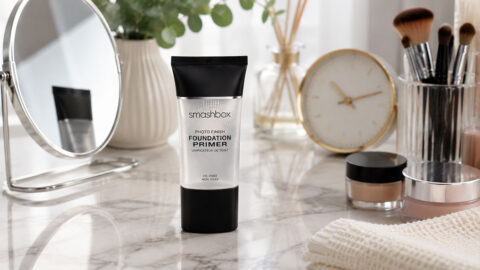
Most people either skip primer entirely or use their face primer on the under-eye. Both are tricky choices.
Face primers are designed for pores and larger surface areas. Under-eye primers deal with a concave, constantly moving zone with near-zero fat padding underneath. The skin responds differently. Products that work well on cheeks can pill or slide under the eye.
Eye-Specific Primers vs. Face Primers
A dedicated eye primer, like Too Faced Hangover Primer or NYX Bare With Me, gives the under-eye skin something to grip. Without it, concealer sits on top of moisturizer and moves.
The difference in wear time is real. According to makeup artists and testing data from Yahoo Shopping (2025), silicone-blend eye primers create a grippy, waterproof base that measurably outperforms using concealer alone on the under-eye, particularly for mature or oily lids.
Silicone-Based vs. Water-Based for the Under-Eye
| Primer Type | Best For | Under-Eye Benefit | Watch Out For |
|---|---|---|---|
| Silicone-based | Oily skin, long wear | Grips makeup, fills fine lines | Can emphasize texture if over-applied |
| Water-based | Dry or sensitive skin | Hydrating base, lightweight | Less grip than silicone versions |
| Hybrid | Combination skin | Balances hydration and hold | Results vary by brand formula |
The formula compatibility rule matters here. Silicone-based primers under water-based concealers will separate throughout the day. e.l.f. Cosmetics and L’Oreal Paris both confirm that mismatching bases causes makeup to repel each other and migrate faster. Match like with like whenever possible.
How to Apply Primer Under the Eye
Use your ring finger. Dot a tiny amount along the orbital bone and blend inward with a light tapping motion, not rubbing.
Never drag the skin. The periorbital area has almost no subcutaneous fat to cushion traction, and repeated pulling accelerates the very fine lines you are trying to hide. Less product, lighter touch, more patience with absorption time.
Concealer Formula and How It Affects Creasing

Not all concealers crease for the same reason. Formula consistency is the biggest factor, and most people choose their concealer based on coverage or color, not formula behavior under the eye.
That is a mistake that causes daily frustration.
How Formula Type Determines Crease Risk
Full-coverage concealers crease more. They are denser, sit thicker on the skin, and have more product to physically migrate into fine lines. Light-to-medium coverage formulas with a fluid consistency stay more flexible with skin movement.
Tarte Shape Tape is the classic example of a high-coverage concealer with a devoted following that also creases aggressively on a lot of people. The formula is rich. It looks incredible for the first hour and then folds into every fine line. That is not a flaw in the product, it is a formula characteristic.
NARS Radiant Creamy Concealer and Maybelline Fit Me Concealer both have lighter, more fluid consistencies that are more forgiving under the eye for most skin types.
Cream vs. Liquid vs. Stick: What to Know
| Formula | Crease Risk | Best Used For |
|---|---|---|
| Liquid | Low to medium | Daily under-eye use, most skin types |
| Cream | Medium to high | Spot concealing, not ideal for under-eye alone |
| Stick | High | On-the-go touch-ups, not primary under-eye |
Testing a concealer’s crease resistance before committing to it is worth the effort. Apply a small amount under one eye, set it with powder, and check it after two to three hours of normal activity. No amount of positive reviews replaces your own skin’s response.
Application Techniques That Prevent Creasing

Technique accounts for at least half of whether concealer creases. You could have the perfect formula and still get creasing from poor application.
The core principle: less product, more precision.
The Less-Is-More Rule
One thin layer of concealer will always perform better than one thick one. Always.
If coverage is insufficient after the first layer, wait for it to partially set, then add a second thin layer only where needed. Building in thin passes gives the formula time to grip the skin between applications, which reduces the total product volume sitting in one place.
Tools and Direction
A damp beauty sponge, like a BeautyBlender, is the most forgiving tool for under-eye concealer. It distributes product without dragging and sheers out thick edges that would otherwise crease.
Technique breakdown:
- Dot concealer along the inner corner, center, and outer corner of the under-eye
- Pat (never swipe) from the inner corner outward
- Blend the edges upward toward the cheekbone, not downward
- Stop short of the crease line by about 2 to 3 mm
Fingers work too, body heat helps blend, but the pressure is harder to control. If you are using a brush, a small flat synthetic brush gives more precision than a fluffy one, which tends to over-blend and thin out coverage unevenly.
The Baking Method: Does It Help or Hurt?
Baking, which involves pressing loose powder onto wet concealer and leaving it for several minutes before brushing away, is genuinely useful for dry skin and for photography. For everyday wear on fine lines, it can go the other way.
Excess powder under the eye accentuates texture. It can look cakey on camera and in person when any natural light hits the face from the side. The safer option for most people is a light dusting of translucent powder rather than a heavy bake.
When applying makeup with a sponge, the light stippling motion distributes setting powder more evenly than a brush, which tends to push powder into fine lines and pack it there.
Setting Products and How to Use Them Without Making It Worse

Setting products can either lock in the work you did or undo all of it. The difference usually comes down to how much you use and which product you reach for.
Loose Powder vs. Setting Spray Under the Eye
These serve different purposes and work better for different skin types.
Loose translucent powder physically sets concealer by absorbing surface moisture and reducing movement. Laura Mercier Translucent Powder is the most widely referenced option in this category, known for its fine milling that reduces the cakey effect.
Setting spray works by forming a flexible film over makeup rather than packing powder on top. Urban Decay All Nighter Setting Spray is a reliable option here. For dry or mature skin that already has visible texture, setting spray is often the better choice because it does not emphasize fine lines the way powder can.
According to guidelines on applying setting spray correctly, holding the bottle at arm’s length and misting in an X and T pattern produces more even coverage than a direct close-range spray, which can displace product.
How Much Powder Is Too Much
More powder does not mean more crease prevention. Past a certain point, it makes creasing worse by giving the concealer more material to fold with.
A light press with a small powder puff or fluffy brush is enough. If the under-eye area looks chalky or visibly powdery in daylight, that is too much. Dust away any excess immediately rather than leaving it to settle.
For dry or mature skin, consider skipping powder under the eye entirely and using only setting spray. Many makeup artists working on applying makeup to look younger avoid powder under the eye altogether for this reason.
Banana Powder vs. Translucent: Which Is Actually Better
Banana powder is a yellow-toned loose powder originally used by makeup artists for color correction under the eye. It neutralizes purple or blue tones from dark circles.
Translucent powder is color-neutral and works on all skin tones without shifting the color of the concealer underneath. For crease prevention specifically, translucent powder is more reliable because it does not add warmth that can change how the final result looks in different lighting conditions.
Banana powder is excellent when dark circles are the main concern. Translucent powder is the safer default for crease prevention alone.
Tools That Make a Difference
The tool you use changes how concealer sits in fine lines. Same product, different results.
According to skincare specialist Christina Korouchtsidi (cited by Korean Cosmetics, 2024), the tool should match both your skin type and the concealer formula. A damp sponge on a hydrating liquid concealer produces a crease-resistant finish under the eye. A firm brush on that same formula can drag product into lines.
Damp Sponge vs. Flat Brush vs. Fingers
Damp BeautyBlender: best crease-resistance for liquid formulas, gentle on thin skin, pointed tip reaches inner corners.
Small flat synthetic brush: more precision, less product absorption than a sponge, ideal when you need accurate placement without disturbing the skin around it.
Ring finger: body heat softens the formula, works well for very thin layers, but harder to control pressure precisely.
According to Who What Wear (2025), a brush gives better coverage under the eye, while a sponge gives a lighter, airbrushed result. Neither is wrong. The choice depends on whether you need coverage or blend-ability more on a given day.
Why Dirty Tools Cause Creasing
Product buildup on a brush or sponge changes how it distributes concealer. Old residue adds unwanted slip and uneven texture that pushes product into fine lines rather than blending it out.
StyleCraze (2026) recommends cleaning concealer brushes once a week to keep application consistent and prevent bacteria transfer to thin periorbital skin. A damp sponge should be cleaned after every two to three uses at minimum.
Silicone Applicators: Skip Them Under the Eye
Silicone applicators feel smooth but do not grip the skin the way a sponge or brush does. They push product around rather than blend it, which increases migration into fine lines.
Good for foundation on larger areas. Not ideal for the under-eye zone where precision and controlled pressure matter more than surface coverage speed.
Touch-Up Methods for Creasing Throughout the Day

Creasing mid-day is not a failure. It is skin moving, which is unavoidable. The goal is a fast reset, not starting over.
A 2024 study published in the Journal of Cosmetic Dermatology found that foundation altered sebum levels in participants within just 20 minutes of activity, confirming that oil production actively breaks down makeup during wear. Under-eye concealer faces the same pressure.
How to Remove Creased Concealer Without Disturbing Other Makeup
Do not add more product over a crease. That amplifies it.
Dampen a cotton swab and gently press (not rub) along the crease line to lift the folded product. Let the area dry for 30 seconds. Then re-apply a very thin layer of concealer only where needed, using your ring finger to pat it in rather than blend it out wide.
IPSY makeup artists recommend applying concealer last in the routine when doing touch-ups, not first, because it reduces the total amount needed and minimizes the chance of disturbing foundation underneath.
Mid-Day Reset Options
| Method | Best For | What to Avoid |
|---|---|---|
| Damp cotton swab + thin re-apply | Any skin type, full reset | Rubbing aggressively |
| Blotting paper press | Oily skin, excess product control | Using on dry skin (can over-dry) |
| Setting spray mist | Dry or mature skin, softens powder buildup | Spraying too close to the face |
| Light translucent powder re-dust | Oily skin, oil absorption | Over-applying (adds bulk) |
L’Oreal Paris confirms that setting spray applied in an X and T motion at arm’s length refreshes makeup without layering on extra product, which is the main cause of a cakey mid-day look.
What Not to Do During a Touch-Up
Adding a second full layer of concealer is the most common mid-day mistake. It builds product volume in the crease zone and makes the result look thicker and more textured, not fresher.
Skip these:
- Pressing powder directly over a dry crease without lifting it first
- Using a sponge to re-blend without removing the folded product
- Applying full-coverage concealer over an area that only needs a light refresh
How Skin Type Changes the Approach

The steps that work for oily skin will make dry skin worse. And vice versa. There is no single under-eye routine that works for everyone.
Celebrity makeup artist David Deibis (Perricone MD, cited by Hello Magazine, 2025) puts it clearly: “If we apply makeup to an undernourished canvas, it’s a recipe for quickly-fading coverage and a less-than-flawless finish.” The canvas is different for every skin type, so the prep is different too.
Oily Skin: Control First, Then Build
The problem: excess sebum breaks down concealer and causes it to slip into fine lines within hours.
Use a water-based or gel eye cream, not a rich cream. Let it absorb fully. Apply a silicone or water-based primer before concealer to create a barrier between oil production and the formula. Set with translucent powder and follow with setting spray for dual protection.
Klever Beauty Box (2024) confirms that oil-free primers and a light powder layer are the two most reliable tools for oily skin to stop makeup from creasing throughout the day.
Dry Skin: Hydration Without Slip
Dry skin creases because it lacks flexibility. Concealer on dehydrated skin clings to dry patches and snaps into lines with every expression.
Key adjustments:
- Use a hydrating, fluid concealer (not full-coverage cream or stick)
- Skip powder under the eye entirely, use setting spray only
- Apply eye cream 10 minutes before makeup, not immediately before
Charlotte Tilbury’s makeup artists note that baking actually worsens creasing on dry skin because translucent powder absorbs the moisture from the concealer, making the under-eye area drier and more prone to folding.
Mature Skin: Light Layers, Less Powder
Mature skin has deeper expression lines, thinner texture, and less elasticity. The under-eye area on older skin needs the most careful layering approach of any skin type.
Avoid full-coverage concealers. Use a light-reflecting or fluid formula in thin passes. Powder sparingly or skip it. Setting spray is the better finishing step because it keeps the under-eye looking dewy rather than settling into a powdery, aged appearance.
When doing eye makeup for older women, most professional makeup artists reduce product volume across the board, including concealer, because thinner layers move less and look more natural on skin with visible fine lines.
Combination Skin: Zone-Based Treatment
Treat the under-eye differently from the rest of the face. Full stop.
The under-eye zone on combination skin is often drier than the T-zone but still gets affected by oil migrating from nearby areas. Use a slightly richer eye cream than you would on oily skin, but still apply a primer to create a controlled barrier. Set only the outer corners of the under-eye where creasing is most likely, and leave the inner corner powder-free.
When applying makeup for oily skin, the zone-based approach prevents over-drying the under-eye while still managing oil migration from the surrounding areas, which is a tricky balance most generic routines ignore.
Consider also how prepping skin before makeup differs by skin type. The same primer that works for the forehead can be completely wrong for the periorbital zone, and recognizing that difference is what separates a routine that lasts from one that creases by noon.
FAQ on How To Prevent Creasing Under Eyes
Why does my concealer crease under my eyes so fast?
The under-eye skin is only about 0.5 mm thick, making it the thinnest on the face. It moves constantly with expression. Too much product, the wrong formula, or skipping primer all speed up concealer migration into fine lines.
Does eye cream cause concealer to crease?
It can, yes. Rich, oil-heavy eye creams create surface slip that prevents concealer from gripping the skin. Wait at least 5 to 10 minutes after applying eye cream before any makeup touches the area.
What type of concealer is least likely to crease?
Lightweight liquid formulas with medium coverage crease less than thick cream or stick concealers. NARS Radiant Creamy Concealer and Maybelline Fit Me are commonly cited examples. Avoid dense, full-coverage formulas directly under the eye.
Does setting powder prevent under-eye creasing?
A light dusting does help. But over-powdering makes creasing worse by giving the concealer more material to fold with. For dry or mature skin, setting spray often works better than powder under the eye.
Should I use a primer under my eyes?
Yes. A dedicated eye primer gives concealer something to grip. Without it, concealer sits on moisturizer and migrates. Match the primer base, silicone or water-based, to your concealer formula for the best hold.
Is baking good for preventing under-eye creasing?
For oily skin, a light bake can help. For dry or mature skin, baking absorbs moisture from concealer and actually makes creasing worse. A fine mist of setting spray is safer for most skin types.
How do I fix creased under-eye concealer mid-day?
Do not add more product over the crease. Dampen a cotton swab and gently press along the crease to lift the folded product. Wait 30 seconds, then pat a thin layer of concealer only where needed.
What ingredients in eye cream help reduce creasing?
Hyaluronic acid hydrates without creating slip. Peptides support skin elasticity over time. Niacinamide strengthens the skin barrier. Ceramides restore moisture without leaving a greasy residue that causes concealer to move.
Does skin type affect how concealer creases?
Significantly. Oily skin causes concealer to slip and migrate. Dry skin causes it to crack into fine lines. Each skin type needs a different prep routine, formula choice, and setting method to prevent under-eye makeup creasing.
What application tool is best for preventing under-eye creasing?
A damp beauty sponge is the most forgiving for crease prevention. It distributes product without dragging thin skin. A small flat synthetic brush works well for precision. Fingers are fine for very thin layers when controlled carefully.
Conclusion
This conclusion is for an article presenting how to prevent creasing under eyes, and the short answer is that no single product fixes it alone.
Skin hydration, concealer formula, primer choice, and application technique all work together. Get one wrong and the others compensate less than you think.
Ingredients like peptides, ceramides, and niacinamide build a stronger base over time. The right setting product, whether translucent powder or setting spray, depends entirely on your skin type.
Adjust your routine seasonally. What works in summer humidity often fails in dry winter air.
Less product, lighter layers, and the right tools will always outperform heavy coverage applied without prep. That is what actually makes under-eye makeup last.

She started writing on the site after fielding the same questions from clients and friends often enough to just write the answers down: which red won't turn orange on a warm undertone, how to keep lipstick from feathering into fine lines, why a "12-hour" formula rarely survives dinner.
Every review on the site follows the same rule she uses with paying clients: wear it first, then decide if it's worth recommending.
- How to Make Eyeliner Last Longer Without Smudging - August 31, 2026
- How to Make Eyeshadow Last Longer All Day - August 29, 2026
- How to Find Your Undertone in 5 Easy Steps - August 27, 2026