You did everything right this morning. Foundation, primer, setting powder. By noon, half of it was gone.
Knowing how to make makeup last all day isn’t just about buying better products. It comes down to skin prep, layering order, and a few techniques most people skip entirely.
This guide covers what actually drives all-day wear: from primer selection and foundation application to setting spray, touch-up strategies, and how weather conditions change everything.
Whether you have oily skin, dry skin, or deal with humidity and heat, you’ll find specific, workable steps here that hold up past hour four.
What Skin Prep Does for Makeup Longevity

Makeup doesn’t fail on its own. It fails because the skin underneath wasn’t ready for it.
How long your foundation and concealer actually hold comes down to what’s happening at the skin level before any product goes on. Oil, dehydration, and unabsorbed skincare all work against wear time from the start.
Liquid foundations, especially long-wear formulas, typically last 8 to 12 hours on well-prepped skin. On unprepped or oily skin, that number drops significantly (Makeup School Sydney).
Moisturizer and Oil Control at the Base
Skin type determines everything here. Moisturized skin gives foundation something to grip. Dehydrated skin pulls moisture from the foundation itself, which causes patching and fading by midday.
- Oily skin: lightweight, gel-based moisturizer with niacinamide or kaolin clay to manage sebum
- Dry skin: cream-based formula with hyaluronic acid and glycerin to prevent foundation from clinging to dry patches
- Combination skin: gel-cream hybrids or zone-specific application
Kiehl’s Ultra Facial Oil-Free Moisturizer, for example, claims to keep skin shine-free for up to 24 hours while still providing hydration. That base-level oil control before primer even goes on is what starts the longevity chain.
pH Balance and Skincare Absorption Timing
Skincare that hasn’t fully absorbed is one of the most common reasons makeup pills or separates early.
Wait time matters. After moisturizer, waiting at least 1 to 2 minutes before applying primer lets the formula settle into skin rather than mix with what goes on top. Rushing this step is where most people quietly sabotage their own routine without realizing it.
Skin pH also plays a role. A balanced pH (around 4.5 to 5.5) helps primer and foundation adhere more evenly. Harsh cleansers that strip the skin’s acid mantle can disrupt this, making products slide or oxidize faster.
Prepping Lips and Eye Area
These two zones are almost always skipped in skin prep. Then people wonder why their concealer creases by 11am.
The skin under the eyes is thinner and produces less oil than the rest of the face. Without targeted moisture, concealer settles into fine lines fast. An eye cream applied and allowed to absorb fully gives concealer a smooth, plump surface to sit on.
For lips, light exfoliation followed by a hydrating balm before applying lipstick keeps the color from feathering or flaking within the first hour.
How Primer Affects How Long Makeup Stays

Primer is the one step people either swear by or skip entirely. The ones who skip it usually can’t figure out why their foundation looks fine at 9am and questionable by noon.
Its job is mechanical: it creates a surface that gives foundation something to grip. Without it, foundation sits directly on skin, where sebum, sweat, and movement all work to break it down.
Milk Makeup’s Hydro Grip Primer promises to delay touch-ups for up to 12 hours and is especially designed for large pores and oily skin (Rank & Style, 2024).
Silicone-Based vs. Water-Based Primers
| Primer Type | Key Ingredient | Best For | Foundation Match |
|---|---|---|---|
| Silicone-based | Dimethicone | Pore-filling, smooth texture | Silicone or oil-based foundations |
| Water-based | Hyaluronic acid, glycerin | Hydration, sensitive skin | Water-based foundations |
| Mattifying | Silica, kaolin clay | Oil control, T-zone | Matte or satin foundations |
| Hydrating | Glycerin, ceramides | Dry or combination skin | Dewy or luminous foundations |
Mismatching primer and foundation base is one of the most common causes of pilling. A silicone primer under a water-based foundation creates a barrier the foundation can’t bind to properly.
Where Most People Go Wrong With Primer
Too much product is the usual problem. A pea-sized amount is enough for the entire face. More than that adds unnecessary texture and can actually prevent foundation from setting correctly.
The second issue: not waiting. Primer needs at least 30 seconds to a minute to stop feeling tacky before foundation goes on. L’Oreal Paris recommends waiting until it’s “no longer tacky” before layering. Skip that wait and the two products mix instead of layer.
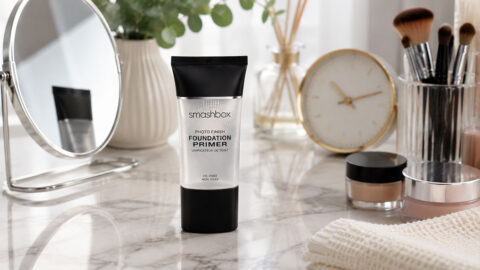
Smashbox Photo Finish Primer and e.l.f. Poreless Putty Primer are both widely used for their grip and pore-minimizing properties. Neither performs well when applied too thickly or rushed.
Color-Correcting Primers and Targeted Use
These have a specific purpose and are frequently misused.
Green cancels redness. Peach or orange corrects dark circles and hyperpigmentation on medium to deep skin tones. Lavender brightens sallow, yellow-toned skin. They go under foundation in targeted areas only, not all over the face.
Layering tip: apply color-correcting primer only where needed, then go over the whole face with your regular primer before foundation. This keeps the base even without building up unnecessary product weight.
Foundation Application Techniques That Make It Last

Foundation wear time is influenced less by the product than by how it’s applied. The same formula can last 6 hours or 12 depending on technique.
Thin, pressed layers always outlast one thick application. A single heavy coat sits on top of the skin and breaks down faster. Multiple light layers bond more closely to the primer and skin surface underneath.
Sponge vs. Brush vs. Fingers
Each tool creates a different result for coverage and longevity.
Brushes work well for oily skin. The densely packed bristles press product into skin more firmly, creating better adhesion. A fluffy brush in circular or stippling motions gives the most control without over-blending.
Damp sponges are good for a natural, skin-like finish but can dilute water-based formulas slightly. For oil-based foundations, a sponge risks disrupting the formula. Makeup artist Sotomayor (Today, 2024) notes that adding water to a foundation “potentially changes the formula that a chemist spent a lot of time figuring out.”
Fingers work best for light-coverage, dewy formulas where skin warmth helps the product melt in.
Application Motion and Coverage Building
Pressing or patting beats wiping. Every time.
Wiping motions drag foundation across the skin without pressing it in, which leads to uneven coverage and faster breakdown. Stippling or bouncing the product into the skin with a brush or sponge gives it something to hold onto.
- Start at the center of the face and blend outward
- Build in thin layers rather than adding more product in one pass
- Focus extra coverage on the T-zone without going heavy all over
For oily skin specifically, a densely packed brush applied with circular buffing motions creates the best grip, according to professional guidance from Lancome’s resident artist Costales.
Matching Foundation Formula to Skin Type
Formula choice directly affects how long foundation holds between touch-ups.
Matte foundations are built for oily skin. They contain oil-absorbing ingredients like silica and mattifying powders that work with sebum rather than against it. Satin or luminous formulas on oily skin tend to look greasy within a few hours.
Dry skin needs satin or dewy formulas. Matte foundations cling to dry patches and emphasize texture.
Key rule: the formula’s base (water vs. oil vs. silicone) needs to match the primer underneath. A mismatch causes separation that no setting powder can fix.
Setting Powder and When to Use It

Setting powder is, as makeup artist Delina Medhin told Allure, “one of the most important steps of your makeup routine. When you set the makeup, it has longevity, because who wants to carry a touch-up kit everywhere?”
It absorbs excess sebum from the skin surface before it can break down the liquid products underneath. Without it, even good primer and foundation start to slide on oily skin within a few hours.
Loose vs. Pressed vs. Baked Powder
| Format | Finish | Best For | Travel Friendly |
|---|---|---|---|
| Loose | Soft, blurring | Full setting, baking, all skin types | No (messy) |
| Pressed | Matte to satin | Touch-ups, controlled application | Yes |
| Baked | Lit-from-within glow | Full coverage, dramatic looks, oily skin | Yes |
Loose powders give the smoothest finish due to their ultra-fine consistency. Celebrity makeup artist Tayaba Jafri, global beauty director for Laura Mercier, describes them as giving “a soft and a lit-from-within glow without the heaviness.”
The Baking Technique
Baking involves pressing a generous amount of loose powder into freshly applied concealer and foundation, then leaving it to sit for 5 to 10 minutes before dusting off the excess.
The mechanism: body heat activates the setting process while the powder absorbs excess oil and moisture from cream products. The result is a tighter, crease-resistant finish that holds longer through heat and sweat.
It works best for oily skin and full-coverage, high-drama looks. For dry or mature skin, it can look cakey and emphasize texture. Not a universal technique. Use it selectively.
Where to Powder and Where to Skip
Setting powder does not belong everywhere on the face. That’s where people create problems.
Focus powder on oil-prone zones: the T-zone (forehead, nose, chin), under the eyes, and around the mouth. Skip dry areas, the outer cheeks, and anywhere that already has a nice texture you don’t want to flatten.
Makeup artist Miyake (CNN Underscored, 2023) recommends applying with a puff and pressing into skin on oily areas rather than dusting. Pressing gives more control and better oil absorption than sweeping motions, which just move product around without setting it.
Setting Spray and How It Locks Makeup In Place

The global setting spray market was valued at USD 943.55 million in 2024 and is expected to reach USD 1.73 billion by 2033, driven largely by demand for long-lasting wear (Straits Research, 2025).
That kind of growth tells you something: people are realizing that primer, foundation, and powder alone aren’t enough for a full day. Setting spray is the last step that fuses everything together.
How Film-Forming Agents Work
Most setting sprays contain film-forming polymers. These create a flexible, breathable layer over finished makeup that prevents smudging, fading, and transfer throughout the day.
Polymer-based sprays offer the strongest hold, particularly in heat and humidity.
Hydrating sprays (hyaluronic acid, glycerin, niacinamide) add skincare benefits while locking makeup in. Laura Mercier’s Translucent Hydrating Setting Spray Ultra-Blur, for example, uses 98.5% skincare ingredients and claims 24-hour wear with 97% of testers agreeing makeup didn’t melt.
Key difference: a setting spray binds layers together. A finishing spray just adds a surface effect (glow, blur) without the same hold. Not the same product.
Application Technique and Distance
Hold the bottle 8 to 10 inches from the face. Any closer and the spray lands too heavy, which can move product rather than set it.
Spray in an “X and T” motion: two diagonal passes forming an X, then a horizontal and vertical pass forming a T. This covers the full face evenly without saturating any one area.
Let it air-dry completely. Touching the face immediately after application is one of the most common mistakes. The film-forming polymers need a few seconds to start bonding.
Choosing the Right Spray for Skin Type
Matte setting sprays dominate the market, holding a 63.2% share in 2024, driven by their popularity with oily and combination skin (Market.us, 2025).
But matte isn’t the right choice for everyone.
- Oily skin: NYX Matte Finish Setting Spray or Urban Decay All Nighter for oil control and transfer resistance
- Dry skin: MAC Prep + Prime Fix+ or hydrating formulas with glycerin for a dewy, skin-like finish
- All-day hold in heat: Charlotte Tilbury Airbrush Flawless Setting Spray, which uses Japanese green tea and film-former polymers for up to 16 hours of wear
Serena Williams cited the Charlotte Tilbury spray in her Vogue Secrets video, and over 2,000 Sephora reviewers back it up. Sometimes the hype is real.
Layering Order and Product Compatibility

Wrong layering order is responsible for more makeup failures than people realize. You can use great products and still end up with separation, pilling, and fading by mid-morning if they’re applied in the wrong sequence or mixed incorrectly.
The rule that overrides everything else: water-based products go before oil-based products. Oil repels water. Applying a water-based product over an oil-based one means it won’t absorb properly.
The Correct Full Layering Order
Skincare first, then makeup:
- Cleanser
- Toner or essence
- Serum (lightest to heaviest)
- Moisturizer (let fully absorb)
- SPF (if separate from moisturizer)
- Primer (after skincare is fully absorbed)
- Color corrector (if needed, in targeted areas)
- Foundation
- Concealer
- Setting powder
- Color products (blush, bronzer, eyeshadow)
- Setting spray
The reason concealer goes after foundation: applying it first and then covering with foundation removes coverage you just placed. Foundation first, then concealer on top where needed gives better payoff with less product.
How to Check Product Compatibility
Base mismatch between primer and foundation is the most common layering mistake that causes pilling and early breakdown.
Check the ingredients list rather than guessing by texture. If the first few ingredients include dimethicone or cyclopentasiloxane, it’s silicone-based. If water (aqua) is first, it’s water-based. Match primer base to foundation base.
When layering makeup products, think about how each formula interacts with the one below it before adding anything new to the routine.
Cream Products Before Powder
Cream blush, cream bronzer, and cream highlighter all go before setting powder. Always. This is non-negotiable.
Setting powder over cream products locks them in. Trying to apply cream products over powder disrupts the powder layer, creates texture, and causes both products to sit on the skin surface rather than bond to it.
One exception: if you want a more natural, skin-like finish, apply cream color products (blush, highlighter) after setting powder and skip the powder layer over them. The look is softer but slightly less long-wearing in those areas. Worth it sometimes.
Fenty Beauty’s Pro Filt’r Foundation and Charlotte Tilbury Airbrush Flawless Foundation are both built to work under powder layers cleanly. If your foundation is fighting your setting powder, the formula compatibility is often the issue, not the products themselves.
Touch-Up Strategies for Throughout the Day

A 2024 study published in the Journal of Cosmetic Dermatology found that foundation alters skin moisture and sebum levels within just 20 minutes of activity. Oil and sweat are the two main reasons makeup breaks down unevenly throughout the day (Typsy Beauty, citing the Journal of Cosmetic Dermatology, 2024).
The fix isn’t always more product. Adding powder on top of oil creates a muddy, cakey layer that looks worse than the original fade.
Blotting Papers vs. Powder Touch-Ups
Blotting first, powder second. Always in that order.
Blotting papers use capillary action to lift sebum from the skin surface without disturbing foundation. Press, hold for two to three seconds, then lift straight up. No swiping. Swiping spreads oil rather than removing it.
After blotting, if coverage still looks patchy, a light press of translucent pressed powder is fine. Wait about 30 seconds after blotting before applying anything else, which lets the skin surface stabilize before adding product.
Skip the powder if the base still looks even after blotting. Less product mid-day almost always looks better than more.
Reapplying Concealer Without Caking
Concealer touch-ups go wrong fast if you apply them directly on top of existing product that has already oxidized or settled into creases.
Blot the area first. Then use your ring finger (lightest pressure) to tap a very small amount of concealer onto the spot, patting inward rather than outward. A damp sponge tip can help blend edges without lifting what’s underneath.
Setting with a quick press of translucent powder seals it. One thin layer, not a full re-bake.
What to Actually Keep in a Makeup Bag
Compact is the goal. A full kit mid-day is overkill and most of it won’t get used.
- Blotting papers (the non-negotiable)
- Mini setting spray for refreshing dry or cakey areas
- Pressed translucent powder for targeted oil zones
- A neutral lip product for quick fixes
MAC Prep + Prime Fix+ in travel size works as both a concealer setting mist and a mid-day refresh for dry-skin types. Keeps foundation from looking tight or cracked by the afternoon.
How Weather and Skin Type Change What Works

The global waterproof makeup market was valued at USD 15.85 billion in 2023, growing at a 6.2% CAGR through 2030, largely driven by demand in humid and high-heat regions (Grand View Research, 2023).
Climate is not a minor variable. The same foundation that lasts 10 hours in cool, dry weather can slide off in two hours in high humidity. Routine adjustments aren’t optional in extreme conditions.
Heat and Humidity: What to Change
Humid environments increase oil production and sweat, which chemically breaks down emulsion-based foundations faster than anything else. Research from PMC confirms that humid climates drive demand for oil-controlling, lightweight cosmetics that resist sweat (PMC, 2024).
Key product shifts for heat and humidity:
- Switch to matte or water-resistant foundations
- Use powder blush and bronzer instead of cream formulas
- Prioritize waterproof mascara and gel liner over pencil
- Use baking technique on high-problem zones (T-zone, under eyes)
- Finish with a polymer-based setting spray rather than a hydrating one
In 2023, Fenty Beauty launched the Soft’Lit Naturally Luminous Longwear Foundation specifically designed to resist heat, humidity, and transfer, acknowledging that standard formulas weren’t cutting it in tropical and warm-climate markets.
Cold and Dry Climates: The Opposite Problem
Cold air strips moisture from the skin surface. Foundation applied on dehydrated skin looks powdery, clings to dry patches, and emphasizes texture.
In cold and dry conditions:
Use more: hydrating primers, cream-based blush and bronzer, dewy or satin foundation formulas, and a hydrating setting spray as a finish.
Use less: setting powder (skip it on dry areas entirely), matte foundation, and heavy baking techniques.
MAC Prep + Prime Fix+ as a final setting mist adds back surface moisture without disturbing foundation. Useful for anyone whose skin feels tight or whose makeup starts cracking by mid-afternoon in low-humidity environments.
Oily vs. Dry Skin: Zone-Based Application
Combination skin is the trickiest to manage because half the face behaves like oily skin and the other half like dry.
| Zone | Skin Behavior | Best Approach |
|---|---|---|
| T-zone (forehead, nose, chin) | Oily, prone to shine | Mattifying primer, light powder, matte formula |
| Cheeks and jaw | Dry or normal | Hydrating primer, skip powder or use lightly |
| Under eyes | Thin, prone to creasing | Eye cream base, light concealer, minimal powder |
| Lip area | Dry, prone to feathering | Balm base, lip liner to prevent color migration |
Zone-based application isn’t complicated. It just means treating the T-zone like oily skin and the outer face like dry skin, even if you’re applying the same foundation shade across the whole face.
Waterproof and Long-Wear Product Formulas Worth Knowing

“Long-wear” on a label is not a regulated claim. Brands can print it on anything, which makes it close to meaningless without reading further.
The actual indicators of longevity are in the formula: film-forming polymers, trimethylsiloxysilicate, cyclopentasiloxane, and isododecane are the ingredients that create water and oil resistance in eyeliners, foundations, and mascara.
What “Long-Wear” Actually Means by Product Category
Wear time ranges by product type according to cosmetic and beauty testing data (Makeup School Sydney):
- Liquid foundation (long-wear formula): 8 to 12 hours on balanced skin
- Concealer: 6 to 8 hours, shorter under eyes without primer
- Waterproof mascara: up to 12 hours; non-waterproof smudges faster
- Bullet lipstick: 4 to 6 hours before needing touch-up
- Liquid lipstick (matte): up to 8 hours due to its drying, film-forming formula
These ranges assume proper skin prep and primer. Without that base, expect each number to drop by 30 to 50 percent.
Transfer-Proof Foundations vs. Standard Long-Wear
Transfer-proof formulas set into a dry, flexible film that resists physical contact. They don’t smudge onto clothing or other surfaces after they dry down.
Standard long-wear just resists environmental breakdown (oil, humidity) without necessarily being transfer-resistant. Good for daily wear. Not ideal for events where physical contact matters.
Transfer-proof dries faster and holds tighter but can feel less comfortable over 10+ hours. L’Oreal Infallible Foundation and Maybelline SuperStay are two widely accessible transfer-resistant options that hold up in real-world wear testing.
Waterproof Eye and Lip Products
The waterproof mascara segment alone held a 28% share of the waterproof makeup market in 2023, driven primarily by demand in humid climates and among active consumers (Grand View Research, 2023).
For eyeliner, formula choice significantly affects how long it stays.
| Eyeliner Type | Staying Power | Best Use Case |
|---|---|---|
| Gel (pot) | High (sets to film) | Full-day wear, smudge resistance |
| Liquid (pen tip) | High (precision, waterproof) | Graphic liner, winged looks |
| Pencil (soft/creamy) | Lower (needs primer underneath) | Smudged, smoky looks |
For lips, the matte liquid lipstick format offers the best all-day staying power because its film-forming agents dry to a non-transfer finish. For anyone wanting more comfort, lip stains give lightweight, long-wear color that soaks into the lip rather than sitting on top, which makes them resistant to eating and drinking in a way that bullet lipstick isn’t.
Eye Makeup That Stays Without Creasing or Fading

The eye area fails faster than the rest of the face for a specific reason: eyelids have fewer oil glands than the rest of the face but tend to collect moisture from blinking and environmental exposure. That combination breaks down eyeshadow and liner faster than sebum alone would.
Eye primer fixes this at the source. Without it, no amount of setting spray or powder will prevent creasing on oily or hooded lids.
Eye Primer vs. Concealer as a Base
Concealer under eyeshadow is a common workaround. It works in a pinch but isn’t a true substitute, as professional makeup artist Disco told Marie Claire (2025): eye primers are “easier” and “get you the look you want much faster” than improvising with concealer.
Eye primers contain specific binding agents that grip powder pigment and prevent it from migrating into the crease. Concealer does not have the same adhesion chemistry for powder products.
Urban Decay Eyeshadow Primer Potion has a well-documented track record among makeup artists and everyday wearers. MAC Prep + Prime 24-Hour Extend Eye Base is another professional staple, particularly for mature or oily lids where crease prevention is the main concern.
Eyeshadow Application for Staying Power
Pat, don’t sweep. Every time.
Sweeping motions push pigment off the lid and reduce color payoff. Patting presses the eyeshadow into the primer and creates a denser, more adhesive layer that lasts longer and holds color better.
Build in thin layers rather than loading the brush. A single heavy application of loose powder shadow lifts and falls by midday. Multiple thin, patted layers create a more stable surface that holds through heat and sweat.
Dusting a thin veil of translucent powder over the finished eye look locks pigment and prevents migration. Light-handed. Too much and it muddies blended shadows.
Making Lip Color Last Through the Day
The global lipstick market reached USD 17.52 billion in 2024 and is growing at a 4.81% CAGR through 2033, with matte formulas driving the fastest growth due to their long-lasting, non-transfer properties (Market Data Forecast, 2024).
The layering technique makes a real difference for any lip formula.
Apply one layer, blot with a tissue, dust translucent powder through the tissue onto the lips, then apply a second coat. This builds a transfer-resistant base that outlasts a single application by several hours. Well worth the extra 30 seconds.
Applying lip liner before and over the entire lip, not just the border, gives color something to grip and acts as a transfer-resistant base layer. Making lipstick last longer consistently comes down to this combination: liner as a base, two thin coats of color with a powder layer in between, and a setting spray as the final step. For anyone who wants to skip lipstick entirely on long days, using a lip stain is the most low-maintenance route to all-day color that doesn’t require touch-ups.
FAQ on How To Make Makeup Last All Day
Does primer actually make makeup last longer?
Yes. Primer creates a grippy surface between your skin and foundation, preventing oil and sweat from breaking down the base. Silicone-based primers work best for oily skin. Water-based formulas suit dry or sensitive skin better.
What setting spray works best for all-day wear?
Urban Decay All Nighter and Charlotte Tilbury Airbrush Flawless Setting Spray both claim up to 16 hours of wear. For oily skin, NYX Matte Finish is a reliable, budget-friendly option with strong oil control.
How do I stop foundation from fading on oily skin?
Use a mattifying primer, apply foundation in thin layers, set with translucent powder on the T-zone, and finish with a polymer-based setting spray. Blotting papers mid-day remove oil without disturbing the base.
Does setting powder or setting spray last longer?
They serve different purposes. Setting powder absorbs oil and locks cream products in place. Setting spray fuses all layers together and resists humidity. Using both gives the best all-day wear, especially in heat.
How do I keep concealer from creasing under my eyes?
Apply eye cream first and let it fully absorb. Use a thin layer of concealer, pat gently with a ring finger, and set lightly with translucent loose powder. Avoid applying too much product in one pass.
What is the correct order to apply makeup for it to last?
Skincare, then primer, then foundation, concealer, setting powder, color products, and setting spray last. Cream products always go before powder. Getting foundation application right at this step has the biggest impact on wear time.
How do I make lipstick stay on all day?
Apply one coat, blot with a tissue, dust translucent powder through the tissue, then apply a second coat. Making lip liner last by applying it across the entire lip also acts as a transfer-resistant base.
Does makeup last longer on moisturized skin?
Yes. Dehydrated skin pulls moisture from foundation, causing patchiness and early fading. A lightweight, fully absorbed moisturizer creates a smoother surface for primer and foundation to grip, directly improving all-day wear time.
How do I make eye makeup last without creasing?
Always use an eye primer before eyeshadow. Pat shadows onto the lid rather than sweeping. Finish with a light dust of translucent powder over the eye area. Urban Decay Eyeshadow Primer Potion is a proven option.
How do I touch up makeup mid-day without it looking cakey?
Blot oil first with blotting papers, wait 30 seconds, then apply pressed powder only where needed. Avoid layering powder directly over oil. A light mist of setting spray after touch-ups blends everything back together cleanly.
Conclusion
This conclusion is for an article presenting how to make makeup last all day, and the core message is simple: longevity starts before foundation ever touches your face.
Skin prep, primer compatibility, and layering order do more for all-day wear than any single product can.
Setting powder handles oil control. Setting spray locks every layer together. Touch-up strategy keeps everything intact through heat, humidity, and whatever else the day throws at it.
Adjust your routine for your skin type and your climate. What works in dry, cool conditions won’t survive a humid summer afternoon without modifications.
Pair the right setting spray application with a solid base, and transfer-proof, all-day wear is genuinely achievable.

She started writing on the site after fielding the same questions from clients and friends often enough to just write the answers down: which red won't turn orange on a warm undertone, how to keep lipstick from feathering into fine lines, why a "12-hour" formula rarely survives dinner.
Every review on the site follows the same rule she uses with paying clients: wear it first, then decide if it's worth recommending.
- How to Make Eyeliner Last Longer Without Smudging - August 31, 2026
- How to Make Eyeshadow Last Longer All Day - August 29, 2026
- How to Find Your Undertone in 5 Easy Steps - August 27, 2026