That tube sitting in your makeup bag right now might already be past its safe use date.
Knowing how long mascara lasts is not just a product performance question. It is a hygiene question. Mascara has the shortest shelf life of any eye makeup, and using it past expiry puts you at direct risk of bacterial contamination, eye infection, and corneal damage.
This article covers opened and unopened mascara shelf life, the PAO symbol explained, what expired mascara actually does to your eyes, storage mistakes that shorten the timeline, and how long mascara realistically lasts on lashes.
By the end, you will know exactly when to toss it.
How Long Does Mascara Last?
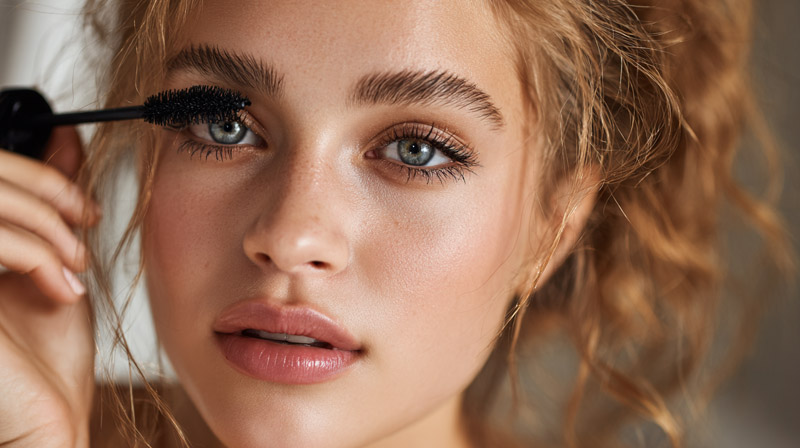
Opened mascara lasts 3 months after first use. Unopened mascara lasts 2 to 3 years when stored correctly. The 3-month cutoff is not a brand suggestion. It reflects the point at which preservative systems fail and bacterial contamination becomes a genuine health risk.
Research published in PubMed found that over 35% of mascara tubes tested positive for microbial growth after just 3 months of single-user daily use. That number rises sharply with shared use or poor storage habits.
Opened vs. Unopened Mascara Shelf Life
| Status | Shelf Life | Key Factor |
|---|---|---|
| Unopened, sealed | 2–3 years | Packaging integrity and storage temperature |
| Opened, daily use | 3 months | Preservative degradation and wand contamination |
| Opened, occasional use | 3 months | Air exposure accelerates formula breakdown regardless of use frequency |
| Waterproof formula, opened | Up to 6 months | Stronger film-forming polymers slow drying; safety rule still applies at 3 months |
Opening the tube starts the contamination cycle immediately. The sealed packaging that preserved the product for 2+ years is no longer a factor once the wand enters the tube for the first time.
What the PAO Symbol on Mascara Packaging Means
PAO stands for Period After Opening. It appears as a small open jar icon followed by a number and the letter “M” (for months). A label reading “3M” means the product is safe to use for 3 months after opening.
The PAO is required under EU Cosmetics Regulation for products with a shelf life over 30 months. It tells you when the preservative system is no longer reliably protecting the formula from microbial contamination.
Most mascaras carry a 3M PAO. Some tube mascaras and waterproof formulas carry a 6M PAO, reflecting differences in water activity and preservative load.
Why Does Mascara Expire?
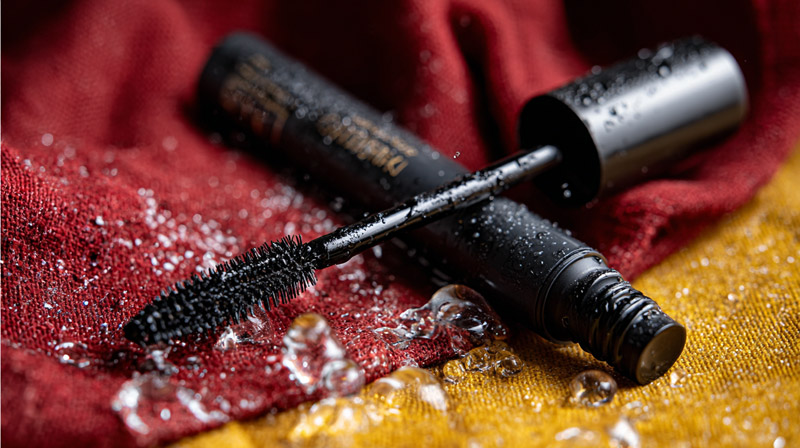
Mascara degrades through 2 distinct but related processes: microbial contamination and chemical breakdown. Both happen simultaneously, and both make the product unsafe before it looks or smells noticeably wrong.
The FDA confirms that preservatives in cosmetic products break down over time, and that mascara wand applicators are exposed to bacteria and fungi with every single use (FDA, 2024).
How the Mascara Wand Introduces Bacteria
Every use deposits microorganisms from the lash line directly onto the wand, which then gets pulled back into the tube. This happens 100% of the time, no matter how clean your hands are or how careful your application technique.
A PubMed study examining 40 mascara samples found Staphylococcus aureus present in 79% of used mascaras and Pseudomonas aeruginosa in 13% (Giacomel et al.). S. aureus is a common cause of styes and blepharitis. P. aeruginosa causes severe corneal infections that can threaten vision.
Microbes from facial skin and fingers also transfer into the tube with each application. Pumping the wand pushes air in, speeding up both contamination and formula oxidation at the same time.
How Preservative Degradation Works
Preservative systems like phenoxyethanol and parabens are formulated to suppress microbial growth inside the tube. They work well at first. But their efficacy drops with every exposure cycle.
Heat, humidity, and repeated air introduction all accelerate this decline. The FDA notes that temperature changes and moisture exposure speed up chemical degradation in cosmetics.
Once the preservative system can no longer control microbial growth, bacterial populations multiply. That point typically arrives around the 3-month mark for opened mascara, regardless of how much product remains in the tube.
Oxidation and Pigment Degradation
Air oxidizes the pigments and wax components inside mascara, changing both color and texture. This is separate from contamination. A mascara can show formula separation or clumping purely from oxidation, even without significant bacterial presence.
Emulsions (oil-and-water mixtures) also separate as the formula ages. Once separation starts, the product cannot be shaken back to stability. This is a sign the mascara formula is past its usable period.
What Happens If You Use Expired Mascara?
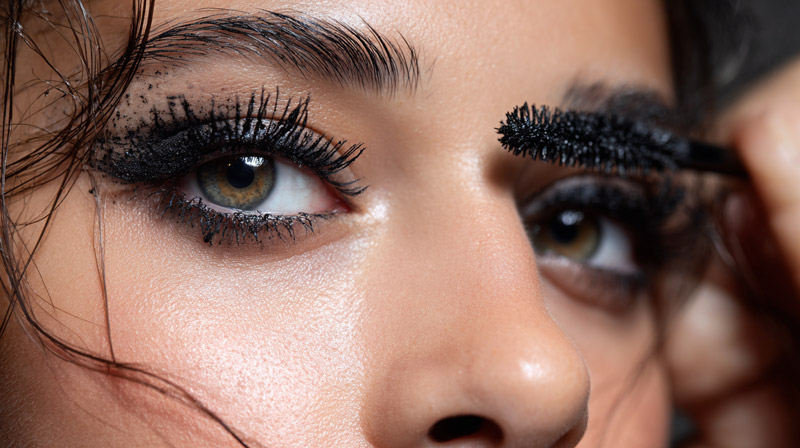
Using expired mascara puts bacteria directly against the mucous membranes of the eye. The consequences range from mild irritation to infections that require antibiotic treatment or, in rare cases, cause permanent vision damage.
The FDA reports that in rare cases, women have been temporarily or permanently blinded by contaminated eye cosmetics (FDA, Nationwide Children’s).
Eye Infections Linked to Mascara Contamination
3 infections are most commonly associated with contaminated mascara use:
- Conjunctivitis (pink eye): Bacterial or viral inflammation of the eye lining. Sharing mascara is one of the fastest transmission routes for viral conjunctivitis.
- Stye (hordeolum): Painful eyelid bump caused by Staphylococcus epidermidis or S. aureus infecting a lash follicle or oil gland.
- Keratitis: Corneal inflammation caused by Pseudomonas aeruginosa. Can cause corneal ulcers and, if untreated, permanent vision loss.
Studies show up to 30% of young adults have shared mascara with close friends, a practice the American Academy of Ophthalmology identifies as one of the highest-risk behaviors for ocular infection (Lens.com research, 2025).
Why Contact Lens Wearers Face Higher Risk
Contaminated mascara particles transfer directly to the lens surface. Bacteria become trapped between the lens and the eye, where they multiply in a warm, moist environment with no preservative protection.
This creates conditions for microbial keratitis, a corneal infection that progresses faster in contact lens wearers than in non-wearers. Ophthalmologists consistently recommend that lens wearers follow the 3-month mascara replacement rule without exception, and always insert lenses before applying eye makeup.
How Do You Know When Mascara Has Gone Bad?
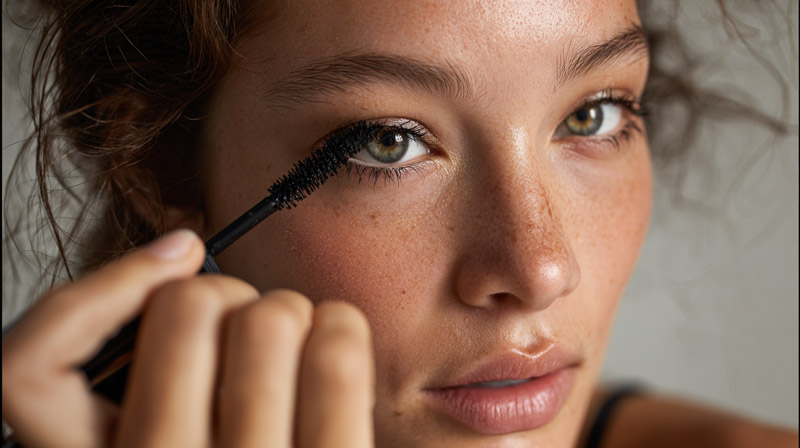
The signs of expired mascara are physical and sensory. You do not need a lab to detect them. But here is the problem: mascara can be dangerously contaminated long before any visible or odor change appears. Date-tracking matters more than visual inspection.
A 2024 Mintel beauty report noted that consumers rank odor change as the top sign of cosmetic spoilage in eye products, ahead of texture change (Mintel, 2024).
Physical Signs to Watch For
Smell: A sour, chemical, or “off” odor. Fresh mascara has a faint, neutral scent. Any sharp or fermented smell signals bacterial activity.
Texture: Dry, stringy, or clumpy application where the product previously applied smoothly. Separation inside the tube is another clear sign. Once the emulsion breaks, the formula is no longer stable.
Color shift: Fading from deep black toward gray or brown indicates pigment oxidation. This is a formula-level change, not just a performance issue.
Flaking: Film-forming polymers that have degraded produce excessive flaking on the lash during and after application. If your mascara suddenly flakes more than usual, the polymer structure has broken down.
The Limits of Visual Inspection
Bacterial contamination is invisible to the naked eye. A mascara that looks, smells, and applies perfectly can still harbor dangerous levels of S. aureus or P. aeruginosa.
This is why the 3-month rule is not optional, even when the product seems fine. Physical signs confirm the mascara is past its limit. Their absence does not confirm it is safe.
Does Mascara Type Affect How Long It Lasts?
Formula and packaging both influence mascara shelf life. The 3-month safety guideline applies to all opened liquid eye mascara formulas, but some types degrade noticeably faster than others in terms of performance and formula stability.
Does Waterproof Mascara Last Longer Than Regular Mascara?

Waterproof mascara uses stronger film-forming polymers and waxes instead of water-based carriers. This makes the formula less hospitable to bacterial growth in the short term and gives it a slightly longer usable performance window.
Waterproof lash mascara often carries a 6-month PAO compared to 3 months for standard formulas, based on stronger film formers and lower water activity inside the tube (Topfeelbeauty, 2024).
The safety cutoff still applies at 3 months. The longer PAO refers to formula performance stability, not confirmed safety from contamination.
Do Natural and Clean Mascaras Expire Faster?
Yes, significantly. Natural and preservative-free mascaras skip the synthetic antimicrobial ingredients that slow bacterial growth.
Without preservatives, contamination can begin within weeks rather than months. Some natural mascaras carry a 1-month or 2-month PAO. PubMed research on mascara without preservatives found that these products “supported reproducing populations of microorganisms, including potential eye pathogens” within the study period.
If you use a clean or natural formula, check the PAO label carefully. Do not assume the 3-month standard applies.
Tube Mascara vs. Traditional Wand Mascara
Tube mascara (tubing formula) coats each lash in a tiny polymer tube rather than depositing film-forming pigment. The formula is different, but the contamination risk from wand use is identical.
Performance-wise, tube mascara resists humidity and wear better than traditional formulas. Shelf life rules remain the same. Both types require replacement at 3 months after opening.
How Does Storage Affect Mascara Shelf Life?
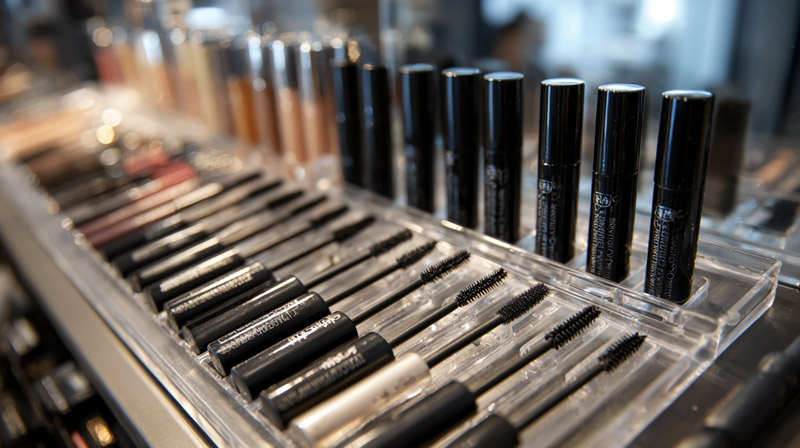
Storage conditions directly influence how fast the preservative system degrades and how quickly microbial contamination spreads inside the tube. The worst habits are predictable and common.
| Storage Location | Risk Level | Why |
|---|---|---|
| Cool, dry bedroom vanity | Low | Stable temperature and low humidity preserve preservative efficacy |
| Bathroom shelf or cabinet | High | Steam from showers raises humidity; temperature swings accelerate breakdown |
| Car glove compartment (summer) | Very high | Temperatures can exceed 50°C, breaking down emulsions and preservatives within days |
| Freezer | Damaging | Freezing breaks emulsions; thawing creates separation that cannot be reversed |
The FDA recommends storing cosmetics away from moisture and temperature extremes. Heat and humidity together are the fastest way to shorten mascara shelf life well below the 3-month standard.
Why Bathroom Storage Is Particularly Problematic
Most people keep their mascara in the bathroom. It is convenient and habit-forming. But the combination of steam, temperature changes, and ambient moisture makes the bathroom one of the worst places to store any liquid eye product.
Ideal storage temperature for mascara is between 68 and 72 degrees Fahrenheit (room temperature in a dry space). A bedroom vanity or dresser drawer is far better than a bathroom shelf or cabinet near the shower.
The Cap and the Wand
Leaving the cap loose or half-sealed is one of the most common habits that accelerates mascara degradation. Air entering the tube drives oxidation of the formula and dries out the product, creating the clumping and flaking that most people associate with “old” mascara.
Seal the cap fully after every single use. It takes an extra second and meaningfully extends both formula performance and the safety of the product inside.
Does Pumping the Mascara Wand Make It Expire Faster?

Yes. Pumping the wand is probably the single most common mistake in mascara use, and almost nobody talks about it. The habit makes sense on the surface (you want more product on the wand) but it actively damages the formula inside.
Every pump pushes a fresh burst of air into the tube. That air carries oxygen and ambient bacteria, accelerating both oxidation and microbial contamination simultaneously. Davis Vision Center confirms that pumping introduces air and bacteria into the tube and recommends swirling the wand instead (Davis Vision Center, 2025).
The Right Technique
Swirl the wand inside the tube in a slow circular motion instead of pumping. This coats the wand with product without forcing air in. You get the same result without cutting weeks off the life of your mascara.
The difference between pumping and swirling is not trivial. Consistent pumping can reduce a mascara’s usable lifespan by shortening the window before the formula dries out and separates, which also happens to be the same window during which bacterial populations are growing unchecked.
Other Habits That Shorten Mascara Life
- Adding water or saliva to thin the formula. The FDA specifically warns against this. Adding liquid waters down preservatives and introduces oral bacteria directly into the tube.
- Wiping the wand on the tube opening. This removes product unevenly and scrapes dried formula back into the tube.
- Leaving it open while doing the rest of your makeup. Every minute the tube sits open increases air and moisture exposure.
How Long Does Mascara Last on Lashes?

Most mascaras are built to last 6 to 12 hours on lashes under normal conditions. Waterproof formulas hold closer to the 12-hour mark. Standard formulas often start breaking down between the 6 and 8-hour point, especially in heat or humidity (TheBeautyFoodie, 2024).
This is a completely separate question from shelf life. A mascara can be fresh and within its 3-month window while still smudging by noon because of oily eyelids or high humidity.
What Makes Mascara Last Longer on Lashes?
The 3 biggest factors that shorten wear time:
- Excess oil from the eyelids breaking down the film-forming polymer coat
- Humidity softening the mascara film before it fully sets
- Rubbing or touching the eye area during the day
Applying an eyeshadow primer to the lids before mascara creates a barrier against skin oils, even if you are not wearing eyeshadow. Makeup.com, citing a professional makeup artist, confirms that eyelid primer reduces oil-driven smudging directly at the lash base (Makeup.com, 2025).
Does Mascara Primer Extend Wear Time?
A mascara primer coats lashes before the mascara goes on, giving the formula more surface to grip. The result is noticeably less flaking and longer wear, particularly on people with straight or fine lashes that struggle to hold product.
Tubing mascara takes this a step further. Instead of painting a film over lashes, it wraps each lash in a polymer tube. Oil does not dissolve it the way it breaks down standard formulas. The waterproof makeup market was valued at USD 15.5 billion in 2023, driven largely by demand for smudge-proof formulas that hold up against sweat and humidity (Axiology Beauty, 2025).
Setting spray applied over finished eye makeup also extends wear. It seals the mascara coat and reduces the rate at which oils from the lid break through.
How Long Does Unopened Mascara Last?

Unopened mascara lasts 2 to 3 years from the date of manufacture when stored correctly. The sealed packaging protects the preservative system from air, moisture, and contamination, keeping the formula stable well beyond the 3-month window that applies once the tube is opened.
The FDA notes there are no U.S. laws requiring cosmetics to carry expiration dates. What you find on most mascara packaging is either a PAO symbol (for after opening) or a batch code that encodes the production date (FDA, 2024).
How to Read Batch Codes on Mascara
Batch codes are printed on the crimped edge of mascara tubes or on the outer box. They encode the production date in a brand-specific format that is not standardized across manufacturers.
2 free tools decode these codes:
- CheckFresh.com: Enter the batch code and brand to calculate the manufacture date and estimated shelf life
- CheckCosmetic.net: Similar function, covers a wide range of international cosmetic brands
These tools are most useful when buying from third-party sellers, discount retailers, or online marketplaces where stock may have been sitting for extended periods before sale.
The Risk of Buying Mascara in Bulk
Buying multiple tubes at once seems practical but creates a real risk. A 3-tube purchase that takes 9 months to use up means the third tube is already 6 months past the safe-use window by the time it gets opened.
Unopened shelf life does not reset the 3-month clock. Opening a mascara that has sat sealed for 2 years starts the contamination cycle the same way opening a fresh tube does. The preservative system activates decay from the first insertion of the wand, not from the manufacture date.
When Should You Throw Away Mascara?
Three months after opening. Full stop.
That is the baseline. But several situations call for throwing it away immediately, regardless of how recently it was opened.
| Situation | Action | Reason |
|---|---|---|
| 3 months after opening | Discard | Preservative system no longer reliable |
| After any eye infection | Discard immediately | Mascara tube is contaminated; reusing it may reinfect the eye |
| After sharing with another person | Discard immediately | Cross-contamination risk, including viral conjunctivitis |
| Any physical signs of spoilage | Discard immediately | Odor change, separation, or clumping indicates active degradation |
| After extended heat exposure | Discard | High temperatures can break down preservatives and emulsions |
The FDA specifically states that if you develop an eye infection, stop using all eye-area cosmetics and discard those you were using when the infection started (FDA, 2024).
The Simplest Tracking Method
Write the date you opened the mascara on the tube with a fine-tipped permanent marker. Set a reminder 3 months out on your phone.
That is the entire system. No app required. No guessing based on how the formula looks or smells. Most people underestimate how fast 3 months passes when a tube is used daily.
How Long Does Mascara Last Compared to Other Eye Makeup?
Mascara has the shortest PAO of any eye makeup category. Liquid formula, direct contact with the mucous membrane, and a wand applicator that reintroduces contamination with every use make it uniquely high-risk compared to powder products in the same application zone.
GoodRx notes that mascara’s water-based formula allows bacteria to thrive in a way that powder products do not, which is why it carries a 3-month recommendation while powder eyeshadow can last 2 years (GoodRx, 2024).
Eye Makeup Shelf Life at a Glance
| Product | PAO (Opened) | Key Risk Factor |
|---|---|---|
| Mascara | 3 months | Wand contamination, water-based formula, direct eye contact |
| Liquid eyeliner | 3–6 months | Repeated dipping, liquid formula near the eye |
| Gel eyeliner | 6–12 months | Brush contamination if tools are not cleaned |
| Pencil eyeliner | 12–24 months | Sharpening removes surface bacteria, extending safe use |
| Powder eyeshadow | 12–24 months | Low water activity limits bacterial growth |
| Cream eyeshadow | 6–12 months | Water and oil content creates contamination risk faster than powder |
Data aligned across Lancome, Revlon, Red Apple Lipstick, and Modelrock (all 2024 to 2025 published guidelines).
Why Mascara Expires Faster Than Liquid Eyeliner
Both are liquid. Both are used at the eye. But mascara wands make direct contact with lashes and the lash line on every single use, while eyeliner applicators are typically drawn across the lid margin with less biological exchange.
Mascara also sits in a sealed tube with no way to clean or sanitize the wand between uses. Pencil eyeliners like those from NARS or Charlotte Tilbury can be sharpened to remove surface contamination, which is why they carry a 12 to 24-month PAO. Mascara has no equivalent hygiene reset. You can learn how to apply mascara correctly to reduce contamination from poor technique, but the wand itself remains the unavoidable variable.
The Bacterial Contamination Risk Gap
A study examining used mascaras found 79% tested positive for S. aureus after regular use, compared to significantly lower contamination rates in powder products used in the same period (Giacomel et al., PubMed).
Powder eyeshadow typically shows minimal bacterial growth because the low water activity does not support microbial reproduction. An eyeshadow palette kept clean and stored properly at room temperature can last up to 2 years without meaningful safety risk. Mascara simply cannot make that claim.
If you want to understand how to fix clumpy mascara before discarding a tube, clumping is usually a sign the formula is already past its peak performance window. That is your cue, not a fix.
FAQ on How Long Does Mascara Last
How long does mascara last after opening?
3 months. That is the PAO standard for opened mascara. The preservative system degrades with each use, and bacterial contamination from the wand builds up fast. Toss it at 3 months regardless of how much product remains.
How long does unopened mascara last?
Unopened mascara lasts 2 to 3 years from the manufacture date when stored in a cool, dry place. Sealed packaging protects the preservative system from air and moisture. Check the batch code with CheckFresh or CheckCosmetic to confirm the production date.
How long does waterproof mascara last?
Waterproof mascara carries a 6-month PAO in some formulas due to stronger film-forming polymers and lower water activity. The safety recommendation still holds at 3 months. Longer PAO reflects formula stability, not confirmed freedom from bacterial contamination.
How long does mascara last on lashes?
Standard formulas last 6 to 12 hours under normal conditions. Waterproof versions hold closer to 12 hours. Oily eyelids, humidity, and eye rubbing all accelerate breakdown. Most users notice smudging or flaking starting around the 6 to 8-hour mark.
How do you know when mascara has expired?
Look for a sour or chemical odor, dry or clumpy texture, formula separation, and excessive flaking on the lash. Physical signs confirm expiry but do not rule it out. Bacterial contamination is invisible, so date-tracking matters more than visual checks.
Does natural or preservative-free mascara expire faster?
Yes. Natural mascaras without synthetic preservatives can become contaminated within weeks of opening. Some carry a 1 to 2-month PAO. PubMed research confirmed that mascara without preservatives actively supported microbial growth, including potential eye pathogens, during the study period.
Does pumping the mascara wand make it expire faster?
It does. Every pump forces air into the tube, accelerating oxidation and bacterial contamination simultaneously. Swirl the wand inside the tube instead. This coats it with product without introducing air and meaningfully extends the usable life of the formula.
Can you use mascara past 3 months if it looks fine?
No. Bacterial contamination is not visible to the naked eye. A mascara can look, smell, and apply normally while harboring Staphylococcus aureus or Pseudomonas aeruginosa at levels capable of causing conjunctivitis, styes, or corneal infection. Date-tracking is the only reliable measure.
When should you throw away mascara immediately?
Discard mascara right away after any eye infection, after sharing it with another person, or after it has been stored in excessive heat. Reusing contaminated mascara reinfects the eye. The FDA specifically recommends discarding all eye cosmetics used during an active infection.
Does mascara type affect how long it lasts on lashes?
Yes. Tubing mascara wraps each lash in a polymer tube that oil cannot break down, making it more resistant to smudging than film-forming formulas. Waterproof mascara also outperforms regular formulas in humidity. Both last longer on lashes but follow the same 3-month safety rule.
Conclusion
This conclusion is for an article presenting the facts around mascara shelf life, expiry signs, and eye cosmetic safety.
The answer is simple. 3 months after opening, every tube goes in the bin, regardless of how much product is left or how good it still looks.
Preservative degradation, wand contamination, and microbial growth from Staphylococcus epidermidis and Pseudomonas aeruginosa do not wait for visible signs to appear.
Write the opening date on the tube. Store it away from bathroom humidity and heat. Never pump the wand. Check the PAO symbol on any natural or preservative-free formula before assuming the standard timeline applies.
Your eyes are worth more than a half-used tube.

She started writing on the site after fielding the same questions from clients and friends often enough to just write the answers down: which red won't turn orange on a warm undertone, how to keep lipstick from feathering into fine lines, why a "12-hour" formula rarely survives dinner.
Every review on the site follows the same rule she uses with paying clients: wear it first, then decide if it's worth recommending.
- How to Make Eyeliner Last Longer Without Smudging - August 31, 2026
- How to Make Eyeshadow Last Longer All Day - August 29, 2026
- How to Find Your Undertone in 5 Easy Steps - August 27, 2026