Curl first. Then set the wand at the roots, wiggle it side to side, and sweep up to the tips. That order covers most of how to apply mascara, and a second thin coat in the same sitting adds volume without the clumps.
The tube is the part people ignore. A 2008 trial in the journal Optometry found microbial growth in 36.4% of mascara tubes after three months of daily use, and the American Academy of Ophthalmology sets the same three-month ceiling for eye makeup.
How to Apply Mascara Step by Step
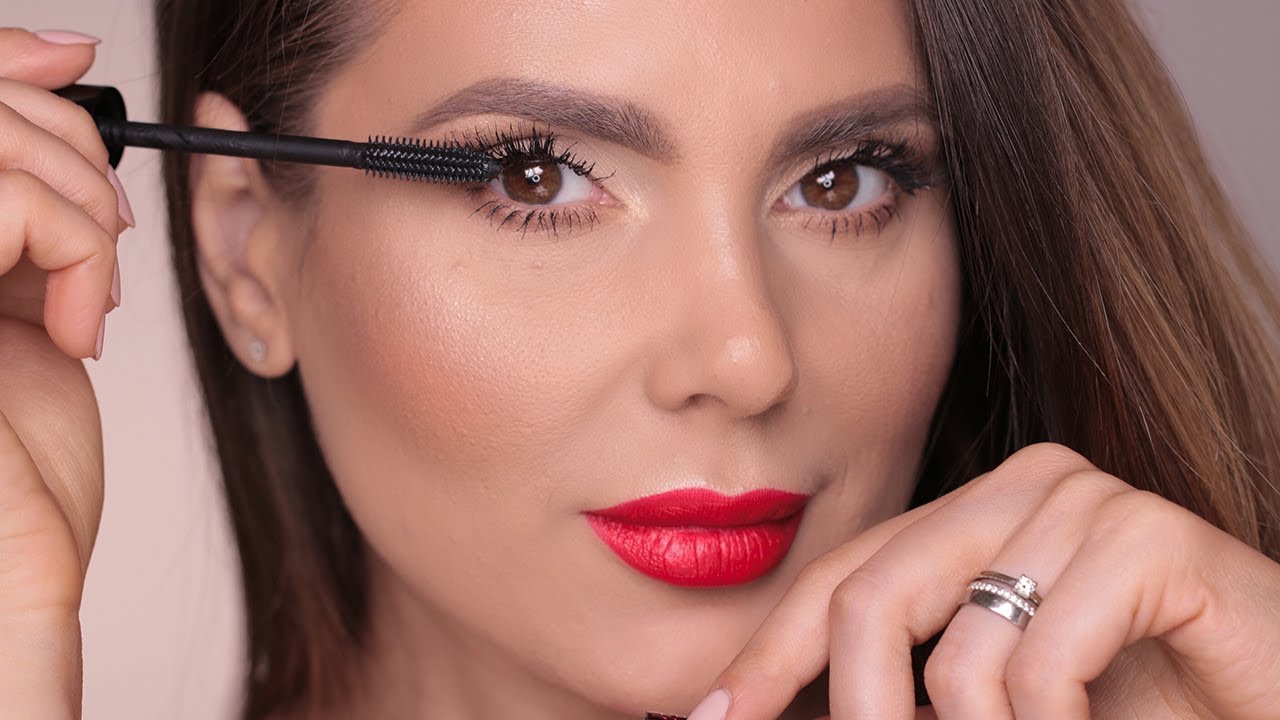
Curl clean, dry lashes first. Wipe the extra formula off the wand before it touches a single lash, wiggle at the roots, then sweep up. Corners and lower lashes get done last.
- Start with clean, dry lashes.
- Curl at the base, before any product goes on.
- Brush on lash primer from root to tip if you use one.
- Wipe excess formula off the wand on the tube rim or a tissue.
- Set the wand at the roots of the upper lashes and wiggle side to side.
- Sweep up and through to the tips.
- Turn the wand vertical and use its tip on the corners and lower lashes.
- Comb through with a clean spoolie while the formula is still wet.
The wiggle puts pigment where the lash grows, and the sweep pulls the rest toward the tips for length. IT Cosmetics describes the same motion: brush at the base, wiggle, then up and through.
Never pump the wand in and out of the tube. It pushes air in and dries the formula faster, which ends in flakes and clumps. IT Cosmetics and Thin Lizzy both warn about this, and so does Glossybox.
Twirl it instead. Glossybox also says to tilt your head back and look slightly down into the mirror.
Comb through before the coat sets, and keep the spoolie clean so it separates lashes instead of dragging old product across them.
Which Mascara Wand and Formula Suit Your Lashes?

Wand shape decides most of the result. Tapered and curved brushes add length and curl, dense hourglass brushes add volume, and a small domed tip gets at the tiny lashes. Formula matters for how long the look has to last.
| Wand or formula | What it does | Best for |
|---|---|---|
| Tapered brush | Reaches every lash, builds length | Short and fine lashes |
| Curved brush | Lifts from the root, helps hold a curl | Straight lashes |
| Hourglass brush | Dense bristles coat and thicken | Sparse lashes |
| Tubing formula | Sets as a polymer sleeve, resists smudges, rinses off with warm water | Smudge-prone lids |
| Waterproof formula | Holds through humidity and tears, dries lashes | Occasions, not daily wear |
Maybelline’s Sky High is the usual tapered-brush example. Woman & Home credits its brush for catching all the lashes and building length.
Benefit says its They’re Real splits the job across one wand. Staggered bristles grab near the root when the wand is horizontal, and the domed tip curls and separates tiny lashes when it is vertical. Woman & Home’s review found that the stiff plastic comb can scratch.
Short lashes do best with a small or tapered wand, after a curler. Makeup artist Adeola Gboyega told Liberty London that curled short lashes pick up most of the mascara. Straight lashes want a curved wand and a curling formula, and sparse ones want a volumizing formula, ideally on a dense hourglass wand (that’s Huda Beauty’s pairing).
Waterproof formulas dry out lashes, which is why Thin Lizzy says to save them for when they are really needed. Dermascope reports that occasional use causes no significant damage, while daily use does.
Regular or tubing formulas are the better daily choice. Waterproof earns its place on humid days and long events.
What to Do to Your Lashes Before Mascara

Curling comes before mascara, because curling over product can make lashes stick together and break (Nude by Nature, Maybelline). Prime after that if you use primer, and decide where mascara sits in the rest of your eye makeup.
Place the curler as close to the lash line as it goes without pinching the lid. Start higher up and you get a kink, according to Beauty Bay.
Gboyega suggests working from the base to the tips with gentle presses, then applying mascara right away to lock the curl in.
FDA guidance says anything you put near the eye should be clean, which includes the curler, so sanitizing the curler belongs in the routine.
Short and straight lashes gain the most from a curler, per Superdrug. If you don’t own one, you can still lift lashes without a curler.
Heated curlers break the order. Grande Cosmetics tells users to apply mascara first and then mold the lashes with the warm wand, and PureWow found that sequence gave a more dramatic, longer-lasting curl.
Primer goes on clean, dry lashes from root to tip. Too Faced says its Foreplay primer dries in up to 10 seconds, and Clinique credits primer with extra length, volume and staying power.
Where mascara falls among the rest of your eye makeup is where sources split. IT Cosmetics finishes concealer, eyeshadow and eyeliner before mascara. Clinique recommends mascara before foundation or concealer for people who smudge during application.
If your hand is steady, mascara can go last. If you tend to dot the lid, put it on first and sweep the dots away with a clean spoolie once they dry (Beauty Bay).
How to Apply Mascara to Lower, Inner and Outer Corner Lashes

Use only the tip of a vertical wand, with a light touch. The main sweep skips these lashes, so they need their own pass.
Lower lashes
Cleveland Clinic counts about 100 to 150 lashes on the upper lid and 50 to 75 on the lower lid. Fewer, finer lashes take less product.
Hold the wand vertical and use just the tip. Work with what is left on the brush instead of re-dipping (Woman & Home), and rest a small piece of card under the lashes to keep product off the skin (Thin Lizzy).
Order is disputed. IT Cosmetics does the top lashes first and the bottom second, while Too Faced says to start with the lower lashes so wet mascara does not transfer to the top lid.
Pick whichever order avoids the transfer you actually get.
Inner and outer corners
Corner lashes need the wand turned, not swept.
For the inner corners, angle the wand and work up and in, toward the nose (UKLASH). At the outer corners, stand the wand vertical to coat each small lash and lift the outer edge for a cat-eye effect, per Nude by Nature.
Benefit’s own directions end with the same move: wand vertical, stroke upward to curl and separate.
How Many Coats of Mascara Should You Use?

Two coats is the default that holds up across sources, and a third works only with thin layers and a comb between them. The sources disagree on count and on waiting time.
Thin Lizzy says two coats for regular and waterproof formulas and one for acrylic polymer formulas, never more than two. Maybelline Australia goes to three, and says anything past that looks chunky. Project Vanity skips a third coat because it looks goopy, while Charlotte Tilbury says more coats build more volume.
On timing, Thin Lizzy says not to wait for the first coat to dry. Thrive Causemetics adds tubing coats while lashes are still wet so the tubes form around each lash, and lets other formulas set between coats. IT Cosmetics lets lashes dry, but warns against layering hours later, because the earlier coat flakes.
Read together, the sources split between wet-on-wet and a short set time. None recommend waiting hours, so finish every coat in one sitting.
Clumping tracks coat thickness more than coat count, which is why the wand gets wiped before each pass. Glamour South Africa also suggests combing through with a brow brush between coats.
Two thin coats with a comb between them is a fair default. Add a third only if the lashes stay separated.
When Mascara Goes Wrong

These problems look alike in the mirror but have different causes, so the fix for one rarely helps the others.
Clumps
Clumps form when lashes get more product than the wand can spread. Usually it’s excess formula left on the wand, or coats stacked faster than you can comb them. A tube that has started to dry out does it too.
UKLASH ties clumping to over-applying product. The fix is to comb through while the formula is wet, using a clean spoolie or lash comb.
Lashes that have already dried together need a different approach, and there is a full walkthrough on repairing clumpy mascara.
AAO adds a hard limit: never use anything sharp to separate stuck lashes, because it is easy to poke or scratch the eye.
Smudges
Glossybox says to brush a finger lightly over the lash tips about 20 seconds after applying. Clinique recommends keeping a mascara eraser nearby for stray marks.
Marks under the eyes by midday are their own problem, and there is a dedicated guide on stopping mascara from smudging under the eyes.
Flakes
Flakes are a safety issue as much as a cosmetic one. AAO warns that mascara can form particles that dislodge from the lashes and scratch the eye.
Dried-up mascara is the usual source. FDA says to discard it rather than moisten it, because saliva adds mouth bacteria and water dilutes the preservative that protects against microbial growth.
If the tube is dry, buy a new one.
How to Remove Mascara by Formula
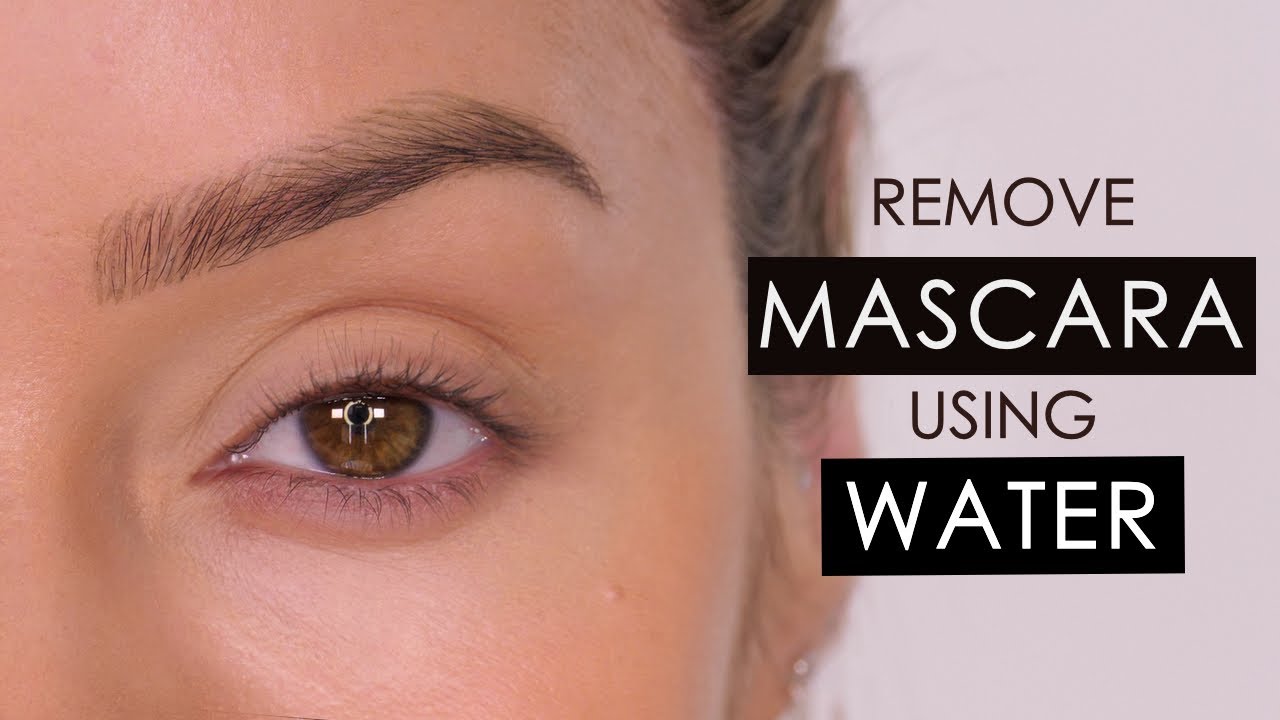
Match the remover to the formula. Regular mascara needs a gentle remover, waterproof needs an oil-based one, and tubing comes off with warm water. Whatever you wear, take it off every night.
| Formula | Remover | Method |
|---|---|---|
| Regular | Gentle eye remover, Vaseline or tear-free baby shampoo | Wipe gently, rinse the lids, swab the lash base |
| Waterproof | Oil-based remover or cleansing oil | Press on the closed lid, then wipe downward |
| Tubing | Warm water | Soften, then slide the tubes off |
Clarins explains why oil works on waterproof formulas: it breaks down the waxes and film-formers that make them cling. Dermatologist Mona Gohara, MD, adds that harsh rubbing is the thing to avoid.
Mirenesse says tubing formulas release with warm water and gentle pressure from fingers, a soft cloth or a cotton pad.
AAO’s nightly routine is short. Remove all eye makeup before sleeping, brush a clean cotton swab along the base of the lashes for leftovers, and rinse the remover off the lids. The same habit of removing eye makeup thoroughly covers liner and shadow too.
One AAO case shows what skipping removal costs. A 50-year-old woman who slept in mascara for more than 25 years developed black lumps under her eyelids and follicular conjunctivitis.
A few habits are worth dropping:
- Alcohol-based removers, which dry delicate skin (Clarins)
- Sleeping in mascara, which builds up residue and friction overnight
- Gritty exfoliating scrubs near the eyes, which AAO says can scratch and irritate
- Scrubbing hard at the lashes with a cloth, since harsh rubbing is what Gohara warns against
When Should You Replace Mascara?
Every three months, and sooner if it dries out, smells different or you develop an eye infection. The American Academy of Ophthalmology (2022) sets three months as the discard point for eye makeup.
The numbers behind that, from several sources:
- AAO’s discard point for eye makeup is 3 months (2022).
- FDA’s Eye Cosmetic Safety page (content current June 2022) says manufacturers usually recommend 2 to 4 months after purchase.
- In the Optometry study (2008), 36.4% of mascara tubes had microbial growth after 3 months of daily use.
- Baylor Scott & White Health dermatology (2022) lists a mascara shelf life of 4 to 6 months.
- FDA puts the storage ceiling for cosmetics at 85 degrees F.
The Optometry study was a small pilot trial. Participants used one of two nonwaterproof brands daily, and the authors recommended a three-month maximum while noting that more frequent replacement may be warranted.
The sources do not agree on the clock. FDA’s own pages differ (three months after purchase in its cosmetics Q&A, two to four months on the eye cosmetic safety page), and the dermatologist guidance runs longer.
Daily wearers should follow three months, since the in-use trial found contamination in more than a third of tubes at that mark. No source here sets a longer safe window for occasional wearers, so three months stays the safe default.
A separate guide breaks down how long a tube of mascara lasts in more detail.
Some situations mean replacing it early, whatever the date on the calendar:
- The color or smell has changed (FDA)
- You used it during an eye infection (FDA, AAO)
- Someone else has used it, even family (AAO)
- It sat in a hot car, because heat degrades the preservative (FDA)
When You Should Not Wear Mascara
Skip mascara during an eye infection, when the skin around the eye is inflamed, after any irritation, and after eye surgery until your ophthalmologist clears it. FDA and AAO guidance covers each case.
With an infection or inflamed lids, FDA says to wait until the area heals and to discard the cosmetics you were using when it started.
If you get irritation or an allergic reaction, stop the product at once. AAO advises introducing new eye products one at a time so the cause is traceable. For dry eye, AAO notes that makeup that flakes into the tear film can increase irritation.
Don’t put it on in a moving vehicle either. A bump with a wand can scratch the cornea, and FDA warns that even a slight scratch can lead to a serious infection.
Surgery timing is where sources differ. AAO says to wear no eye makeup until your ophthalmologist says it is safe, while an ophthalmologist quoted by Good Morning America advises skipping it for a few days beforehand and resuming about two weeks after.
Heat sets a second limit. Brand instructions favor a warm wand after mascara, but AAO spokesperson Natasha Herz, MD, warns that heated curlers can damage lashes, eyelid skin or the eye itself.
AAO’s advice is to check the temperature of each setting, start at the lowest, and avoid the tool altogether if your eyes are sensitive.
FDA notes that in rare cases, women have been temporarily or permanently blinded by an infection from an eye cosmetic.
Mascara Application FAQ
Can you wear mascara with contact lenses?
Yes, with a few changes. WebMD’s contact lens guidance says to put soft lenses in before makeup and gas-permeable lenses in after it, to take lenses out before removing makeup, and to avoid lash-lengthening and waterproof mascara.
Is mascara safe for sensitive eyes?
Yes, most eye cosmetics are safe when used properly, according to FDA. A label will not settle it, though. FDA does not define “hypoallergenic”, so read the ingredient list and stop any product that irritates.
Does mascara damage lashes?
Not by itself. L’Oreal Paris states that even waterproof mascara does not cause lash fall, but improper removal can, so let the remover loosen the product and skip the rubbing.
Can you touch up mascara during the day?
Not well. A second pass over set mascara is the weak option. Glossybox suggests either removing it and starting fresh, or re-curling the lashes and leaving the mascara alone.
What is the difference between mascara and lash primer?
Primer goes on first as a base layer, and the pigmented mascara goes over it. Clinique credits primer with extra length, volume and staying power, which makes it optional rather than required.
What is mascara cocktailing?
Two different mascaras layered on the same lashes, that’s all the term means. Huda Beauty’s example pairs a thickening formula with a mascara that has a lengthening wand, and Clinique lists the method as a TikTok trend.
Which Mascara Habit to Fix First
Start with the tube. Mascara application improves fastest when the tube is fixed first, because no technique makes up for a formula past its discard date. After that, load the wand lightly and curl before any product goes on.
Safety leads because it is the only fix with a medical downside. The other changes only affect how the lashes look.
The cost is waste. Cleveland Clinic dermatologist Shilpi Khetarpal notes that large tubes rarely get finished before they should be tossed, so a smaller size wastes less.
This ranking holds as of October 2026, checked against AAO guidance from 2022 and FDA’s eye cosmetic safety page. A revised discard window from either body would reorder it.
The next step is fitting the lashes into a full look, which a guide to doing eye makeup from start to finish covers.

She started writing on the site after fielding the same questions from clients and friends often enough to just write the answers down: which red won't turn orange on a warm undertone, how to keep lipstick from feathering into fine lines, why a "12-hour" formula rarely survives dinner.
Every review on the site follows the same rule she uses with paying clients: wear it first, then decide if it's worth recommending.
- How to Make Eyeliner Last Longer Without Smudging - August 31, 2026
- How to Make Eyeshadow Last Longer All Day - August 29, 2026
- How to Find Your Undertone in 5 Easy Steps - August 27, 2026