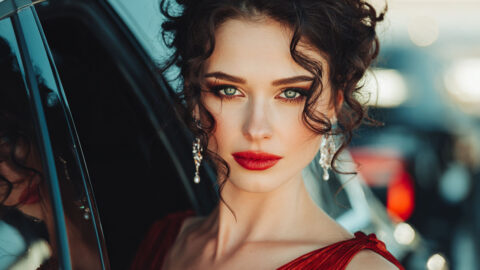
Most eyeshadow advice treats eye color like one big category: find the “right” palette and you’re set. Brown eyes don’t really work that way. Brown covers an enormous range on its own, from a pale amber that borders on hazel to a shade so deep it reads almost black under normal light, and what flatters one end of that range can look flat and muddy on the other.
Undertone complicates things further. Warm gold flecking near the pupil calls for different shades than a cooler, grayer rim around the iris, and a shadow that’s technically “good for brown eyes” can still do nothing for a specific pair of them.
This isn’t a once-a-year, special-occasion problem either. The Benchmarking Company found in 2023 that 90 percent of women wear eye makeup three or more times a week, and that kind of frequency is part of why shade precision ends up mattering so much here. Brown iris pigmentation absorbs and reflects color differently than blue or green does, so a shade that looks great in a palette swatch photo doesn’t always translate once it’s actually on.
What Counts as Brown Eyes for Makeup Matching?
Brown covers more ground than any other eye color category, from a light honey or amber tone that can pass for hazel in certain light, down to a near-black shade some people call chocolate brown. The American Academy of Ophthalmology puts brown eyes at more than 50 percent of the world’s population, which is a big enough group that treating every shade decision the same way doesn’t really hold up.
Geography plays into which end of that range shows up most. Dark brown is the dominant shade across Africa, East Asia, and Southeast Asia. Lighter, amber-leaning brown is more common across Europe, West Asia, and the Americas. The regional split looks roughly like this:
- More than 50 percent of the world’s population has brown eyes (American Academy of Ophthalmology)
- Dark brown is the dominant shade across Africa, East Asia, and Southeast Asia
- Light brown and amber-brown are more common across Europe, West Asia, and the Americas
- Hazel counts as a brown-green blend and generally follows the same shade logic as light brown
Dark Brown vs Light Brown Eyes
Dark brown eyes can take high-contrast shades like gold, copper, or a deep green and still read clearly, since there’s enough underlying pigment that these colors don’t wash out.
Light brown is different. Sometimes called amber brown, it already carries warmth and gold flecking in the iris itself, so a soft metallic shadow tends to melt into the eye instead of standing apart from it. That changes the approach: dark brown eyes can wear a jewel tone at full strength, while light brown eyes usually look better when the same shimmer gets concentrated right at the center of the lid instead of swept edge to edge.
Hazel-Brown and Mixed Tones
Hazel is technically a brown-green blend under most classification systems, and where it lands can shift depending on the light and even what colors sit nearby. Both versions take the same purple and plum shades that work on straight brown eyes, so the shade advice doesn’t really change even though the classification does.
- Warm hazel leans brown and gold under daylight
- Cool hazel leans green under fluorescent light
What Makes an Eyeshadow Color Complementary to Brown Eyes?

Color theory does most of the explaining here. Brown itself is a low-saturation mix of red, orange, and yellow, so whatever sits opposite that combination on the wheel, mainly blue, violet, and green, ends up creating the most contrast and making the iris look brighter instead of just blending into the lid.
People with warm undertones usually show amber, gold, or olive flecks near the pupil, and bronze, copper, and orange-brown shadow tend to work well there. A gray or blue-tinted rim around the iris signals a cooler undertone instead, and that pairs better with plum, lavender, and a cool-toned taupe.
Finish matters almost as much as hue. Matte shades sink into the crease and add depth, while shimmer and metallic finishes bounce light back out of the iris and make brown look lighter.
Best Eyeshadow Colors for Brown Eyes

Purple is usually the first shade people reach for when they’re picking eyeshadow for brown eyes, and color theory backs that instinct up. Gold, green, and navy each work through a slightly different mechanism, but they end up in the same rotation for a reason.
| Shade family | Effect on brown eyes | Best undertone match | Finish |
|---|---|---|---|
| Purple and plum | Adds depth without flattening the iris | Cool undertone | Matte or satin |
| Gold and copper | Brightens and warms the whole eye area | Warm undertone | Shimmer or metallic |
| Green | Creates the strongest contrast against brown | Warm undertone | Matte or shimmer |
| Navy and charcoal | Softer alternative to black, less harsh at close range | Cool undertone | Matte |
Urban Decay’s Naked Palette built much of its reputation on this exact range, pairing warm bronze shades with a cool taupe so both undertones are covered in one product.
Dark brown eyes can wear every shade in that table at full strength without it looking costume-y. Light brown is more sensitive to overdoing it, so the same shadow diluted or blended out usually reads better than packing it on solid.
Full looks built around these shade families are worth a scroll before committing to a palette, since seeing the combinations applied to real brown eye makeup looks makes shade selection easier than reading swatch names off a box.
How to Apply Eyeshadow for Brown Eyes Step by Step

The order matters more than people think. Skipping straight to color without a base underneath is the most common reason a look reads flat by midday, and it’s an easy step to skip when you’re rushing.
Urban Decay’s own product listing states its Eyeshadow Primer Potion keeps eyeshadow crease-free for up to 24 hours, which says a lot about how much of the finished look depends on what eyeshadow primer actually does before any color goes on.
- Prime the lid. Smooth on a thin layer and let it set for a few seconds before adding color.
- Lay down a transition shade. A soft matte brown or taupe swept through the crease builds depth before anything brighter goes on.
- Pack on the main color. Press purple, gold, or green onto the lid with a flat brush, then blend the edge out with a clean, fluffy brush.
- Highlight the inner corner. A light shimmer at the inner corner and brow bone opens the whole eye up.
- Define the lower lash line. Run a small brush with the same crease shade underneath the eye to tie the look together.
Cream eyeshadow skips steps two and three since it’s applied and blended in one motion. It sets faster than powder and forgives fewer mistakes once it’s down.
Best Eyeliner Colors for Brown Eyes

Black isn’t the only option for eyeliner on brown eyes, and honestly it’s not always the best one. Navy, green, and plum all push against brown’s warm base instead of just outlining it, which is why each can make the eye look more awake than a plain black line does.
Black still works. It just reads as a neutral frame rather than an active color choice.
Navy works as a softer black alternative, and it tends to make the whites of the eyes look brighter, especially when it’s run along the lower waterline.
Green sits almost directly opposite brown on the color wheel, so out of the three it creates the sharpest contrast.
Plum is the easiest of the three to wear during the day. It still reads warmer and more flattering against brown than a flat black line would.
NYX Professional Makeup sells navy, green, and plum eyeliner at drugstore prices, which makes it easy to test a color before committing to a premium version.
Color choice matters less when the eyeliner application itself is shaky, since an uneven line undercuts even the best shade pick.
- Round eyes generally look sharper with a liner that thins out toward the outer corner
- Downturned eyes benefit from a small upward flick instead of a straight line
Makeup Technique by Eye Shape for Brown Eyes
Eye shape decides where eyeshadow color should sit more than eye color does, since shape controls how much lid space stays visible once the eyes are open.
Brown eyeshadow and liner choices stay the same across every shape below. Only the placement changes.
Hooded Eyes
About 11.5 percent of the population has hooded eyelids, according to Welia Health, and the fold of skin over the crease hides most blended color once the eye opens.
- Place color slightly higher than the natural crease so it still shows with the eye open
- Skip heavy crease work, which disappears under the hood within a few blinks
- Use a thin liner line close to the lash line rather than a thick wing that folds over on itself
A full routine built specifically for hooded eyelids covers this placement in more depth than a shape-by-shape summary can.
Almond Eyes
Almond eyes get the most room to work with of any shape, since the crease stays visible whether the eyes are open or closed. A full smokey eye, a sharp cut crease, a halo eye built around a bright center shade, pretty much everything else in this guide works here without adjustment.
Monolid Eyes
Monolid eyes have little to no visible crease, so color placed in a traditional crease line disappears the moment the eye opens.
The prevalence of a double eyelid crease among Asians is close to 50 percent, per a 2020 study in the International Journal of Environmental Research and Public Health, which means roughly half of Asian eyes are naturally monolid.
- Build a soft gradient instead of a hard crease line, darkest at the lash line and fading upward
- Tightline the upper lash line to add definition without a heavy liner stroke
Downturned Eyes
Downturned eyes need one adjustment more than any other shape: lift the outer corner of both liner and shadow slightly upward instead of following the eye’s natural downward slope.
A liner shape built for round eyes usually points straight back toward the ear. Downturned eyes need that extra upward angle, or the whole eye ends up looking like it’s dragging down.
Smokey Eye, Cut Crease, and Halo Eye Techniques for Brown Eyes
Smokey, cut crease, and halo cover most of what people actually reach for on brown eyes, and each trades time for a different amount of drama.
Smokey Eye

A bronze smokey eye look works especially well on brown eyes, since warm copper tones blend into the iris instead of fighting it. Huda Beauty built much of its early catalog around smokey eye palettes designed for exactly this kind of buildable, warm look.
It’s forgiving, too. Soft edges hide uneven blending in a way sharper techniques don’t, and it works across every eye shape covered above. The trade-off is time: building up that much color takes longer than a single wash, and it’s easy to end up muddy if too many shades get stacked without a clean transition between them.
A full walkthrough for building a smokey eye covers blending order in more detail than the summary above.
Cut Crease

Cut crease is the sharpest, most graphic look of the bunch.
It works best on almond and monolid eyes, where the line reads clearly once color gets packed on both sides of it. Hooded eyes are the exception. The crease line disappears almost as soon as the eye opens, since the fold of skin covers it right away.
Halo Eye
- Bright shimmer or matte shade centered on the lid
- Darker shade blended only at the inner and outer corners
Halo eye is the most wearable of the bunch for daytime, and it takes the least blending skill since there’s no hard line to perfect.
Eyebrow Shape and Color for Brown Eyes
Eyebrows shape how the rest of the look reads. Get the color or the arch wrong and it pulls focus away from whatever eyeshadow or liner work happened underneath, no matter how well that part turned out.
More than 80 million women in the U.S. used an eyebrow pencil in 2020, according to Statista’s consumer survey data, which says something about how central brow shaping has become to a finished eye look.
A brow shade one to two shades lighter than natural hair color usually gives the softest frame, one that doesn’t compete with whatever’s happening on the lid, warm or cool.
Where the arch sits matters too. Position it above the outer edge of the iris rather than further out toward the temple, and the eye opens up instead of pulling focus sideways.
Pencil and powder do different jobs here. Pencil lays down crisp, hair-like strokes, which suits sparse brows, while powder gives a softer, more diffused fill that works better on brows that just need shape correction rather than more density.
Anastasia Beverly Hills built much of its catalog around brow shaping tools, and understanding what brow pencil actually is versus powder makes it easier to pick the right one for sparse or already-full brows.
A brow color that runs too dark or too warm against the eyeshadow palette pulls the eye upward and away from the color work below it, which undoes the point of matching shades to brown eyes in the first place.
Mascara and Lash Choices for Brown Eyes

Almost nobody skips mascara, brown eyes or otherwise. A 2022 Cureus study put its prevalence at 98.6 percent among eye-makeup users, which is about as close to universal as a beauty product gets.
Brown-black mascara works as a softer alternative to true black. It adds definition without the slightly harsh line that jet black can create against warm brown irises.
- Volumizing formula suits naturally sparse lashes that need more visual density
- Lengthening formula suits already-dense lashes that just need extra reach
Maybelline’s lash formulas split cleanly along this line, with separate volumizing and lengthening options built for these two different starting points.
Curl the lashes before mascara goes on, not after. Curling over already-dried mascara tends to crack and shed the coating instead of shaping the lash underneath it.
Getting the mechanics of applying mascara right, wiggling at the root before pulling through the tips, matters more for brown eyes than the shade choice itself.
Lashes made for a smokey eye usually run fuller through the center, built for drama. The halo-eye version is the opposite instinct: wispier, more natural, especially toward the outer corner.
Ardell remains one of the most recognized names in strip lashes, and putting on false eyelashes correctly comes down to trimming the band to the eye’s actual width before any glue goes on.
Products and Tools for Brown Eye Makeup

The eyeshadow shade gets most of the attention, but what actually decides whether a brown eye look survives past noon is more boring than that: primer, the right brush shape, and whatever setting spray gets used at the end.
Primer works by creating a barrier between the skin’s natural oil and the pigment sitting on top of it. That barrier is the real mechanism behind crease prevention, not the wear-time number printed on the label.
| Tool | Best for | Trade-off |
|---|---|---|
| Cream eyeshadow | Hooded or oily lids, fast application | Sets quickly, less room to blend once down |
| Powder eyeshadow | Soft gradients on monolid or almond eyes | Fades by midday without primer underneath |
| Dense flat brush | Packing color onto the lid | Too stiff for soft crease blending |
| Fluffy blending brush | Softening the crease transition | Picks up less pigment than a flat brush |
Milk Makeup’s Hydro Grip Setting Spray states it locks in makeup for up to 12 hours, according to the brand’s own product listing. That’s a shorter claim than most eyeshadow primers, but it covers the whole face rather than just the lid.
Applying setting spray correctly means holding the bottle at arm’s length and misting in a loose X or T motion, not spraying directly at close range.
Blending brushes lose their softness and pigment pickup once product builds up in the bristles.
Washing makeup brushes regularly keeps color transitions accurate instead of muddy, especially with the darker shade families brown eyes tend to reach for.
When Brown Eye Makeup Advice Does Not Apply
This advice doesn’t hold up everywhere. Irises dark enough to read as almost black behave differently, so do colored contacts, aging eyelid skin, and a handful of application mistakes that show up often enough to be worth naming.
When an iris sits close to black, even a high-contrast shade like green or navy barely registers against it. In that case the eyeshadow is doing almost all of the visual work; the eye color itself isn’t contributing much contrast at all.
Contacts change the math too. A lens that shifts brown to gray or hazel means the color-matching logic in this guide should follow the lens color, not the natural iris underneath it.
Aging eyelid skin is its own case, and a fairly common one. Moderate to severe dermatochalasis (excess skin folding over the lid) affected 17.8 percent of participants in the Rotterdam Study, a Dutch cohort with an average age of 67, according to research published in JAMA Dermatology in 2014. Cut crease depends entirely on a line staying put, and that line creases and blurs on lax eyelid skin within hours, regardless of how carefully it went on.
A dedicated set of eye makeup approaches built for older women covers technique adjustments for this specific skin condition in more depth than a general guide can.
- Skipping primer entirely, then blaming the eyeshadow formula for creasing
- Picking a transition shade that’s too dark, which muddies the crease instead of softening it
- Applying liner too thick for the eye shape, which overwhelms hooded or downturned eyes especially
FAQ on How To Do Makeup For Brown Eyes
Is bridal or glam makeup for brown eyes different from everyday makeup?
Bridal and glam looks get more layers than everyday makeup does: deeper crease work, more product overall, and lashes built to read from a distance or through a camera lens. Day-to-day, brown eye makeup usually stays much lighter than that. One wash of color, a thin liner, mascara. It has to hold up under close, casual light instead of stage lighting or a flash.
Can you wear colorful eyeshadow for brown eyes at work or daytime?
Yes, in small doses. A thin line of green or plum liner, or a soft wash of color on the lid instead of a full pigmented look, reads as polished rather than costume-like for daytime and office settings.
What is tightlining and how do you do it for brown eyes?
Pressing liner into the upper waterline and the tiny gaps between lashes, rather than onto visible lid skin, is what tightlining means. It thickens the lash line invisibly, which suits monolid and hooded brown eyes where a drawn line disappears once the eye opens.
Where can you find brown eye makeup tutorials for inspiration?
Beauty creators on YouTube and Instagram post full brown eye tutorials broken down by eye shape and undertone. Browsing general eye makeup looks for shade pairings and blending order works well before committing to a specific palette.
What Should You Fix First in How To Do Makeup For Brown Eyes?
Everything above narrows down to a short list, and the order matters:
- Prime the lid
- Match shade to undertone
- Adjust technique to eye shape
Skip primer and even a perfectly matched shade starts breaking down by afternoon. Skip the undertone step and technique adjustments won’t save a shade that was wrong from the start.
Following that order adds prep time before color goes on, a trade brown-eyed makeup wearers accept once the shade stops reading muddy against the iris by midafternoon.
Matching foundation and complexion products to skin tone is the next fit to get right once shade and technique are locked at the eye. A mismatch there undercuts even a well-blended brown eye look.

She started writing on the site after fielding the same questions from clients and friends often enough to just write the answers down: which red won't turn orange on a warm undertone, how to keep lipstick from feathering into fine lines, why a "12-hour" formula rarely survives dinner.
Every review on the site follows the same rule she uses with paying clients: wear it first, then decide if it's worth recommending.
- How to Make Eyeliner Last Longer Without Smudging - August 31, 2026
- How to Make Eyeshadow Last Longer All Day - August 29, 2026
- How to Find Your Undertone in 5 Easy Steps - August 27, 2026