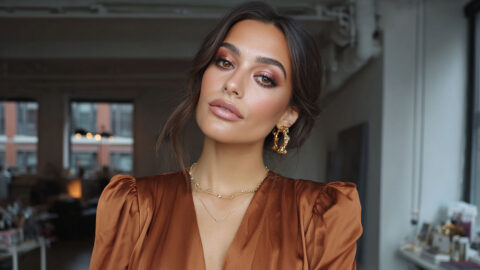
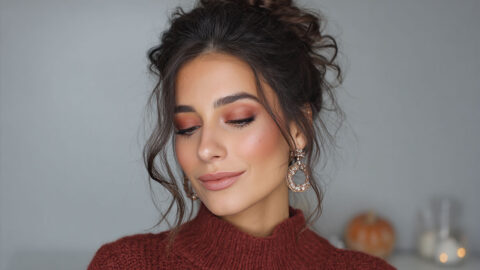
Most smokey eye makeup looks rely on a single idea. The darkest shade sits at the lash line, lighter shades sit toward the brow bone, and the blending between them hides every edge.
Black or charcoal gives the classic version, though brown, bronze, navy, plum and green follow the same gradient. Any eye shape or eye color works with small placement changes.
Color choice also has one rule that gets skipped a lot. The FDA states that some color additives approved for cosmetics in general are not approved for use in the area of the eye, so a colored shadow needs its declared pigments checked against the agency’s eye-area list before it touches the lid.
What Are Smokey Eye Makeup Looks?

Dark at the lash line, lighter toward the brow bone, and blended so the color fades out with no visible edge. That soft gradient adds depth and definition to the eyes.
The gradient stacks up in layers, roughly in this order.
- Primer or a thin concealer layer as the base
- A soft neutral through the crease for the transition
- A medium to dark color packed onto the lid
- The deepest shade at the outer corner (the outer V), blended up and out
- A thin smudge on the lower lash line to frame the eye from below
Blending is the dividing line between this and the wider range of eye makeup styles. Graphic liner and color-block looks need a crisp edge. A smokey eye hides every line it can.
It doesn’t have to be black, either. Makeup artist Katie Livingston calls that a myth and says the same steps work in purple and warm red-brown, or in nothing but browns (Fox 13, 2016).
How to Do a Smokey Eye Step by Step
The order runs light to dark. Prime the lid, sweep a transition shade through the crease, pack a lid shade, deepen the outer V, line the lashes, then finish with highlight and mascara. Blend after each layer so the edges stay soft.
- Prime the lid and set it with a thin dusting of translucent powder.
- Sweep a light brown or taupe transition shade through the crease with a fluffy brush, leaving space below the brow bone.
- Pat a darker lid shade onto the lid with a denser brush.
- Deepen the outer V with the darkest shade and blend it up and out.
- Smudge the darkest shade along the upper lash line with a pencil brush, then blend it into the lid color.
- Add a medium shade along the lower lash line and soften it.
- Dab a light shimmer on the inner corner and just under the brow bone.
- Apply mascara, plus false lashes if the look is for the evening.
- Wipe away fallout with a cotton swab or a drop of makeup remover.
How long the whole look survives depends mostly on the eyeshadow primer underneath it.
Brand claims disagree on how long that is. Urban Decay’s own page for Eyeshadow Primer Potion lists up to 8 hours of wear, while retailers such as Sephora Middle East and Mecca still print 24 hours (as of October 2026).
To tightline your eyes, press the liner into the gaps between the upper lash roots. Keep it off the wet inner rim.
In a small pilot study by Cardiff and Waterloo researchers, 15 to 30 percent more glitter-liner particles reached the tear film within five minutes when pencil went inside the lash line instead of outside it (University of Waterloo, 2015). By the 2-hour mark only a negligible amount remained (Eye & Contact Lens, 2015).
That’s why the American Academy of Ophthalmology advises applying eyeliner outside the lash line. Brands don’t line up on this. Urban Decay sells a waterline version of its 24/7 pencil, and Bobbi Brown’s own customer answers say its gel liner isn’t meant for the waterline.
Bobbi Brown artist Nikki DeRoest builds the look in layers and keeps the darkest point right at the lash line for a modern finish. Easy habit to copy.
Which Tools and Formulas Work Best for Smokey Eyes?
Brushes first. A fluffy one handles the transition and a denser one packs the lid, while a pencil or smudger brush takes care of the lash line. The formula depends on your lids. Powder gives you the most control and cream hangs on longer. Gel or pencil only makes sense for liner.
| Formula | Example | Best for | Main risk |
|---|---|---|---|
| Powder | Urban Decay Naked Smoky | Transition and lid shades | Fallout, creasing on dry lids |
| Cream | Maybelline Color Tattoo | Quick base color on the lid | Dries fast, little blending time |
| Gel | Bobbi Brown Long-Wear Gel Eyeliner | Precise, long-wearing lash line | Dries quickly, so smudge at once |
| Pencil | Urban Decay 24/7 Glide-On | Smudged lash and lower lash line | Moves onto the lid if left unset |
Sigma’s E40 and E35 both work as fluffy, tapered transition brushes. Sigma describes the E25 as patting shadow onto the lid, with its fluffy tip blending it out. Any pencil or smudger brush will cover both lash lines.
Bobbi Brown lists up to 8 hours of wear for its gel liner. Maybelline’s Color Tattoo goes on with fingertips, starting at the inner corner and working outward.
Urban Decay built its Naked Smoky palette around this look, with 12 shades running from matte bone to shimmery black. A double-ended brush adds a tapered crease end and a smudger end.
For a first attempt, I’d go with a powder palette because it stays workable longer. Creasing lids change that. Makeup artist Caroline Barnes recommends cream textures for hooded, mature lids, since those lids crease more (SheerLuxe).
Traditional kohl eyeliner needs a warning. The FDA treats kohl, kajal and surma as unapproved color additives, and the nonprofit Pure Earth found 29 of 56 samples sold under those names above the FDA’s 10 ppm lead limit (December 2025).
Some brands use “kohl” only as a shade name, so check the ingredient list, as the FDA advises.
Which Smokey Eye Looks Can You Try?

Classic black, soft brown, cut crease, halo, colored and glitter versions cover most requests, and every one of them uses the same gradient. Shade, placement and intensity are what change.
Classic and Soft Versions

The classic version uses black or charcoal on the lid and lash line, blended up into a taupe or grey transition. It’s the most dramatic option and the least forgiving of patchy blending.
Soft brown sticks to brown and bronze shades, with the darkest point kept close to the lash line. It reads natural enough for daytime, especially if you skip the pencil on the lower lash line (Urban Company).
Cut Crease and Halo

These two change where the shade sits, not what it’s made of.
A cut crease puts a defined line in the crease and a lighter or contrasting shade on the lid. Smoking out the outer corner keeps that line from looking harsh. A halo goes the other direction, with a dark shade in the inner and outer corners and a lighter shimmer in the center of the lid.
Colored and Glitter Versions

Color swaps follow the same steps as the classic. Celebrity makeup artists Jamie Dorman and Neil Scibelli suggest deep tones for a colorful version, namely deep green, plum, copper and burgundy (Bustle).
A glitter smokey eye is the same gradient with sparkle on top. Blend the gradient first, then apply glitter eyeshadow over the lid only, away from the lash line.
Nykaa’s tutorial, for example, turns a gold smokey eye into a glitter one with a glitter paste.
Glitter has a downside, though. The American Academy of Ophthalmology names glitter eye makeup as a common cause of corneal irritation or infection, especially for contact lens wearers, because larger pieces can scratch the eye.
How to Match a Smokey Eye to Your Eye Shape and Eye Color

A smokey eye adapts to every eye shape and eye color. What changes is where the darkest shade sits and which hue goes on the lid.
L’Oreal Paris makes the same point in its eye shape guide. The look flatters anyone once the style is adjusted for the shape and size of the eye.
Placement by Eye Shape

- On hooded eyes, put the shade at or slightly above the fold so it shows with the eyes open, and keep the liner thin.
- Monolids have no crease to follow, so build the gradient above the lash line.
- Round eyes want weight on the upper lash line and outer corners, with a subtle lower lash line.
- Almond is the easiest shape and takes grey liner on both lash lines.
- Downturned eyes get a deeper shade at the outermost corner and no lower lash line.
- For small eyes, use a darker brown on the lower lash line, kept light so it opens the eye instead of closing it.
Those placements come from makeup artists Jamie Dorman and Ruby Hammer (hooded), Huda Beauty (round) and L’Oreal Paris (almond, downturned, small).
Sources split on where hooded eyes should start. A MasterClass guide on eye shapes favors the lid over the crease, while Hammer puts the deeper tone slightly above the natural crease. Both aim for the same result, which is color that stays visible when the eyes are open.
Monolids get their own disagreement. PureWow beauty editor Jenny Jin argues for a horizontal gradient, with the darkest shade on the outer thirds of the lid. L’Oreal Paris keeps the vertical version, with dark shadow close to the lash line.
Mature lids add one more variable. Makeup artist Caroline Barnes advises pushing back the skin before applying and Florrie recommends a handheld mirror, while Barnes also suggests waterproof or tubing mascara because hooded eyes transfer more (SheerLuxe).
Hooded lids also change how liner and lashes behave, which a dedicated routine for hooded eyes covers in more detail.
Shade Pairing by Eye Color

Contrast comes from the opposite side of the color wheel. According to celebrity makeup artist Beau Nelson, complementary shades enhance the eye color and contrasting shades make it stand out (The Zoe Report).
| Eye color | Shades that contrast | Use with care |
|---|---|---|
| Blue | Copper, bronze, coral, warm brown | Cool blues can wash it out |
| Green | Burgundy, plum, rusty red, rose gold | Green shadow can cancel the color |
| Brown | Gold, bronze, plum, navy, teal | Very dark brown loses contrast |
| Hazel | Copper, gold, purple, warm green | Flat neutrals look muddy |
The “use with care” column follows RMS Beauty’s guide. The contrast shades match what artists told Rose Inc., SheerLuxe, The Zoe Report and e.l.f., who agree on warm tones for blue eyes and red-based tones for green eyes.
There’s one real disagreement. Rose Inc. artist Jason Hoffman likes blue shadow on blue eyes even though it does not make the color stand out, while RMS Beauty warns that cool blues can wash blue eyes out. The choice depends on whether the goal is to match or to pop.
Brown eyes carry nearly any shade, so the blending matters more than the hue. Complete makeup looks for brown eyes go further into combinations.
Why Does a Smokey Eye Go Wrong, and How Do You Fix It?
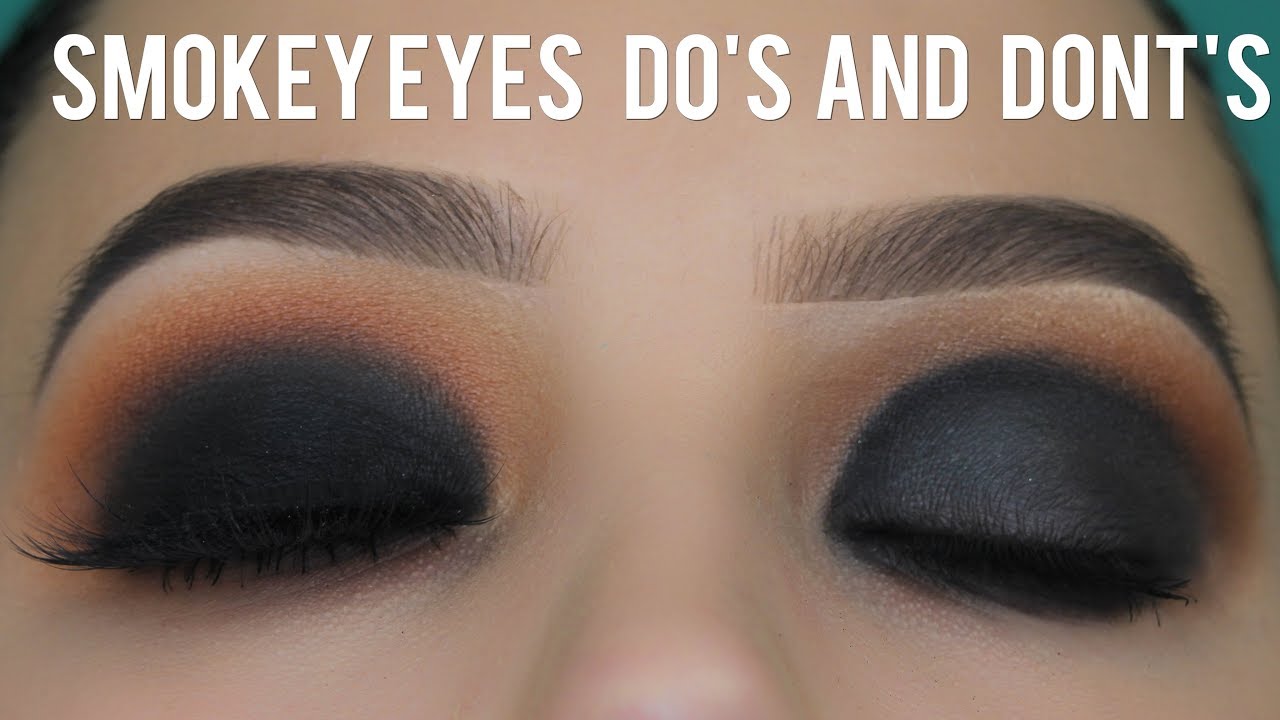
Fallout, muddy blending, harsh edges and creasing cause most smokey eye disasters. Each one has a main culprit and a direct fix.
| Problem | Main cause | Fix |
|---|---|---|
| Fallout | Loaded brush, loose pigment, glitter | Eyes first, tap off the brush, lift specks with tape |
| Muddy blending | Dark layers stacked with no clean transition | Reset with the transition shade on a clean fluffy brush |
| Harsh edges | Dense brush or a skipped transition shade | Buff the edge with light strokes from a fluffy brush |
| Creasing | Oily lids, thick primer or cream | Thin primer layer, set with powder |
Fallout is the one worth preventing, because repair tends to smear. Huda Beauty’s guide starts with the eyes before any face makeup and taps the brush out before it touches the lid.
Some shadows, including certain NARS and Anastasia Beverly Hills formulas, can go on with a damp brush, which limits fallout (Huda Beauty). Glitter and larger specks lift cleanly with scotch tape, according to Beautylish.
Creasing is mostly an oil problem. Lashify’s guide points out that lids collect oil in the outer creases, which is why primer goes all the way down the eye and not just the center.
Too Faced tells users to apply a pea-size amount of Shadow Insurance on the eyelid, blend it up to the brow bone, then dab a little on the lower lash line to cut smudging.
Liner that runs is a different problem from shadow that creases. Priming the lower lash line is the first move when it comes to stopping eyeliner from running.
Cream and gel formulas carry a time limit. The American Academy of Ophthalmology says to throw away eye makeup after three months, because bacteria grow easily in creamy or liquid products.
Sleeping in a smokey eye irritates the eye and wrecks the blend, so remove eye makeup every night, as the same body advises.
How to Adjust a Smokey Eye for Day, Evening and Events

Most of the difference between day and night is intensity. Shade depth, lower lash line, finish and lashes decide whether the same gradient reads as brunch or as a night out.
For daytime, celebrity makeup artist Mally Roncal picks 3 shades from one color family (one for the brow bone, one for the lid and one for the liner) and suggests brown or nude, with mauve as another option (Skindinavia). Model Rock Lashes adds that blending does most of the work and a heavy lower lash line overpowers the look (2023).
For evening, go deeper and add some light. Lancome builds a silver smokey eye by sweeping silver shimmer over the whole lid.
For photos, bridal site Bridebook recommends checking a trial look in a few different lighting settings before the day.
A wedding adds a time limit. Makeup artist Tara Dowburd-Luftman primed with a virtually waterproof eyeshadow base and layered pencil and gel liner for a bridal smokey eye (Junebug Weddings, 2010).
The same logic applies to a guest planning makeup for a wedding. Long-wear formulas and a crease-proof primer matter, and so does a trial run. Hairstylist and makeup artist Claudia Seyler also recommends waterproof mascara for wedding days (Philadelphia Magazine, 2009).
A wing can go on top of the gradient, either smoked or sharp. If winged liner is new to you, practice the basic winged eyeliner flick first, because the sharp version leaves no room to hide mistakes.
A smoked wing starts with a flick drawn in kohl or pencil, and precision is optional. Blend the edge with a smudger brush (Charlotte Tilbury), or buff vertically with a flat brush to blur the line without extending it (Justine Sweetman, L’Oreal Paris).
The sharp wing takes more care. Charlotte Tilbury’s beginner tip is to mark a dot where the wing should end, then join it to the lash line. Only the shadow and lower lash line get smudged.
Smoked wings forgive uneven hands. The sharp version rewards practice, and honestly looks cleaner against a heavy gradient.
Common Questions About Smokey Eye Makeup Looks
Can you do a smokey eye with only eyeliner?
Yes. Press a soft pencil or kohl-style liner along the upper and lower lash lines, keep it off the inner rim, and smudge it up and out with a smudger brush before it sets.
Charlotte Tilbury’s smokey winged liner method uses the same blend-out step.
How do you take off a smokey eye without smearing it?
Hold a cotton pad soaked in eye makeup remover on the closed lid until the pigment loosens, then wipe once downward instead of scrubbing. The American Academy of Ophthalmology says to remove all eye makeup every night and keep remover out of the eyes.
Waterproof formulas take longer, and a guide to removing waterproof makeup covers that case.
Which lip color goes best with a smokey eye?
A nude or soft sheer lip keeps the attention on the eyes. Lancome styles its silver smokey eye with a neutral nude brown lipstick, while Interview magazine paired the dramatic cat-eye version with deep red for a night out.
For a brown smokey eye, the lipstick shades that go with brown eyeshadow narrow the choice further.
Is a smokey eye too hard for beginners?

No, not if the first attempt is a soft brown version. A powder palette stays workable longer than cream.
Blending, not the number of products, is the skill that takes practice, as Lakme’s guide also notes.
Where does the smokey eye come from?
The look traces back to Egyptian kohl, the first recorded eyeliner-like substance, dated to around 3100 BC.
It became a standard look in the 1920s, shaped by Tut-mania and film stars such as Clara Bow (Vice).
Is it spelled smokey or smoky?
Both spellings are in use. Urban Decay names its palette Naked Smoky, while Maybelline and Bobbi Brown write smokey eye.
This article uses smokey throughout.
Which Smokey Eye to Practice First
Start with a soft brown smokey eye in a powder palette. Low contrast hides uneven blending, and powder stays workable longer than cream.
Begin with the soft brown gradient and a fluffy brush, move on to smudged upper and lower lash lines, then try a cut crease, color or glitter. That order goes from blending to liner control, then to edge and pigment control. Each stage fails in a different way, so stacking all 3 at once makes errors harder to trace.
A soft brown version does read quieter than classic black. That’s the price of a forgiving first attempt.
Blending is finished when no line shows between the transition shade and the lid with the eyes open. The sequence was verified in October 2026, and a change to the FDA’s eye-area color additive list or to brand wear-time claims would change the colored-shade and primer advice.

She started writing on the site after fielding the same questions from clients and friends often enough to just write the answers down: which red won't turn orange on a warm undertone, how to keep lipstick from feathering into fine lines, why a "12-hour" formula rarely survives dinner.
Every review on the site follows the same rule she uses with paying clients: wear it first, then decide if it's worth recommending.
- How to Make Eyeliner Last Longer Without Smudging - August 31, 2026
- How to Make Eyeshadow Last Longer All Day - August 29, 2026
- How to Find Your Undertone in 5 Easy Steps - August 27, 2026