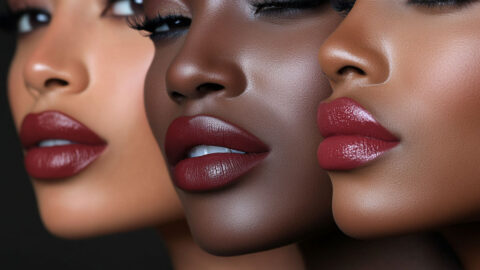
Matte lipstick for fair skin puts more pressure on a formula than any other combination of finish and tone. Zero shine means zero room to hide a shade that clashes with the undertone underneath.
Matte already commands the largest share of the lipstick market, and that segment is projected to keep growing at roughly 4.1% a year through 2033. That’s a slightly slower pace than the lipstick category’s overall projected growth of 5.1% (Allied Market Research). Much of that continued dominance comes down to getting undertone and depth right, not just picking a favorite red.
Pale skin shows every miscalculation first. A shade that reads polished on medium skin can look chalky, orange, or flat the moment it lands on a fair complexion.
What Is Matte Lipstick

No shine, heavy pigment, almost no light-reflecting oil. That’s the entire formula behind matte lipstick, and it’s why the color dries down completely flat instead of catching any light.
The chalky old-school mattes from a decade ago gave the whole category a dry, cracked reputation it still hasn’t fully shaken.
| Finish | Reflectivity | Wear Feel | Best For |
|---|---|---|---|
| Matte | None, flat color | Driest, most precise | Bold, long day wear |
| Satin | Low sheen | Softer, more forgiving | Everyday, beginners |
| Cream | Slight glow | Most hydrating | Dry or thin lips |
| Gloss | High shine | Slickest, shortest wear | Low-commitment color |
The full range of lipstick finishes goes deeper into how each one is built, but matte sits at the driest, most pigmented end of that spectrum.
Liquid, cream, stick, and pencil versions all carry the matte label, and they don’t all perform the same way once they’re actually on the lips.
Liquid matte holds close to 40% of the global matte lipstick market, the largest share of any format. It’s prized for transfer resistance and heavy pigment (WiseGuy Reports, 2025).
Cream matte is catching up fast, with a projected 9.5% annual growth rate through 2032 as brands chase a softer, less drying texture (WiseGuy Reports, 2025).
The reason old mattes felt so harsh comes down to the lips themselves.
Lip skin runs only 3 to 5 cell layers deep, compared with roughly 15 to 20 layers on the rest of the face, and it carries far fewer pigment-producing cells (ScienceABC).
Thin, dry skin plus a wax-heavy matte formula is a rough combination. That’s exactly why lipstick ingredient lists now lean on things like mango butter, hyaluronic acid, and silicone slip agents instead of pure wax.
The old formulas leaned on heavy wax with almost no oil, which is why they dried flat and could crack by midday. Newer formulas coat the pigment in moisture and add silicone slip agents instead. They still dry flat, but they flex with the lip rather than fighting it.
MAC’s reformulated Powder Kiss Hazy Matte line boosted lip moisture by 54% immediately after application in clinical testing on 33 panelists, a fair snapshot of how far hydrating mattes have come (MAC Cosmetics).
Matte still differs from every other finish in one clear way.
Reflectivity is the whole story in a matte vs satin comparison. Satin keeps a whisper of sheen, and that sheen is what softens the edges matte leaves crisp.
Cream lipstick moves even further away from matte, giving up pigment intensity for slip and shine.
Liquid and bullet mattes aren’t quite the same animal either. Liquid lipstick applies wetter and dries down harder than a bullet version, and once shade and skin tone come into the picture, that difference actually matters.
How Do Skin Undertones Affect Which Matte Lipstick Shades Suit Fair Skin
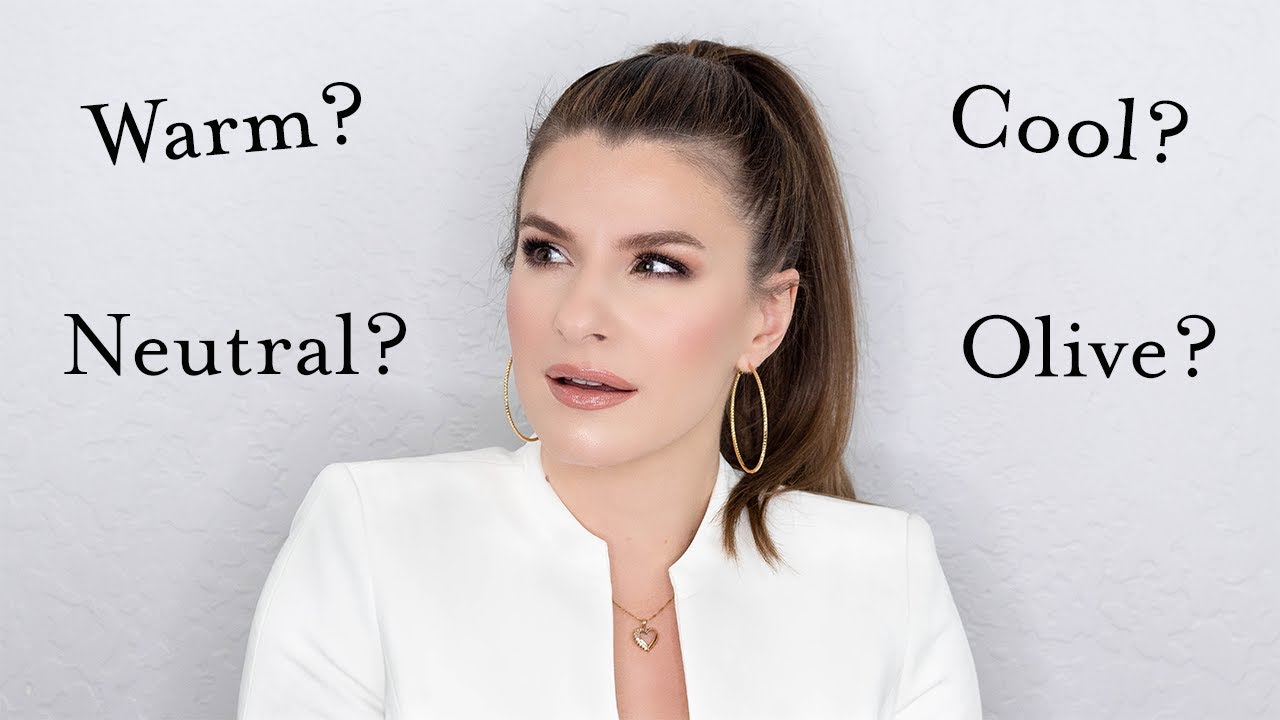
Undertone decides whether a matte shade blends into fair skin or fights it, no matter how pale or light the surface tone happens to be.
Cool undertones carry pink, red, or blue beneath the surface. Pink and blue-based mattes blend right in; anything orange-heavy tends to clash and look a bit muddy.
Yellow or golden hints mean warm undertones, and that’s the whole reason peach and coral mattes look so natural on that skin while a blue-based berry can come across harsh.
Neutral sits in the middle and gets away with more than either extreme. Pink bases read fine, peach bases read fine, nothing much clashes.
Undertone is not the same thing as depth.
Two people can share the exact same fair surface tone and still need opposite shade families, one leaning toward cool undertone shades and the other toward warm undertone shades.
Anyone who reads as a genuine mix of both, where gold and silver jewelry look equally good, usually falls into the neutral undertone category and has the most freedom to work with.
How to Identify Undertone at Home
Maybelline lists a few simple ways to check undertone without setting foot in a store.
The vein test is probably the easiest one. Greenish veins on the wrist point to warm undertones, bluish veins point to cool. Jewelry works on similar logic, gold tends to flatter warm undertones while silver flatters cool ones. Holding a plain white cloth up to the face is another option, skin that reads yellowish under white leans warm, pinkish or blueish leans cool. There’s a variation on that same idea using fabric shade instead of pure white. Cream or off-white tends to flatter warm undertones, while true white flatters cool.
Running two of these instead of relying on just one avoids the most common mix-up, guessing neutral simply because a single test gave a fuzzy answer.
Does Fair Skin Vary Enough in Depth to Change Matte Lipstick Shade Selection

Fair skin covers a real range of depth, and that range changes how bold or how soft the exact same matte shade ends up looking.
Dermatology has tracked this since 1975, when Harvard dermatologist Thomas B. Fitzpatrick built a four-type scale to classify skin by how it reacts to sun exposure. Two more types were added in 1988, bringing the scale to the six categories still used today.
Fitzpatrick Types I through III cover what most people call fair skin, running from very pale skin that always burns and never tans down to a light complexion that tans gradually after a mild burn (DermSkincare).
The gap between the palest and the least pale end of that range is bigger than most people assume.
A deep berry matte on Type I porcelain skin reads dramatic, high-contrast, almost editorial. Put the exact same tube on Type III light-medium skin and it settles down considerably, more wearable, less stark.
Contrast, not pigment, is doing the work here.
Foundation lines already build around this same range. Fenty Beauty’s 40-shade launch was built specifically to cover the full spread from the palest complexions upward, fair skin included.
Porcelain vs Ivory vs Light-Medium Fair Skin
| Depth | Contrast Level | Shade Approach |
|---|---|---|
| Porcelain (Type I) | Highest | Bold mattes read dramatic, soft mattes look natural |
| Ivory (Type II) | Moderate to high | Wide range works, extremes still stand out |
| Light-Medium (Type III) | Lower | Deeper, warmer mattes blend more easily |
Same undertone, but three noticeably different comfort levels with the exact same red.
What Are the Best Matte Lipstick Shades for Fair Skin

The shades that work best on fair skin follow undertone first and depth second, not the other way around.
Lipstick colors built for fair skin generally split by undertone rather than by depth. Cool undertones usually reach for pink and rose. Warm undertones tend to look better in peach and coral. Neutral sits in the middle, and mauve is usually the shade that covers that gap.
Best Shades for Cool and Pink Undertones
- Soft rose and blush pink for daytime
- Cool-leaning mauve for a bit more depth
- Blue-based red for the boldest cool option
Charlotte Tilbury’s Pillow Talk built its whole reputation on this exact cool-neutral pink zone, which is a big part of why it became the brand’s best-selling shade.
Best Shades for Warm and Peach Undertones
Warm undertones have a few solid lanes to pick from. A peach-nude sits closest to a natural lip and still adds polish, worth a look at these nude matte shades. Warm coral goes brighter without losing the yellow base, so it reads healthy instead of harsh. Brick red is basically the warm answer to a bold red, leaning into brown-toned matte shades rather than blue.
Best Shades for Neutral Undertones
Neutral undertone skin can wear almost anything on this list. That’s the entire advantage of sitting between warm and cool.
NARS Dolce Vita, a dusty rose that leans neither distinctly pink nor distinctly peach, is a reliable example of a shade built for exactly this middle ground.
The real split between a blue-based red and a brick red comes down to which side of the color wheel the red leans toward, and neutral undertone skin can usually pull off either one.
Which Matte Lipstick Shades Overwhelm or Wash Out Fair Skin

Blackened plums, orange-heavy warm reds, overly light nudes, and chalky pale nudes are the shade categories that consistently cause trouble on fair skin.
Skip blackened plum or vampy shades unless a lip liner is doing the heavy lifting. Without one, the color has nowhere to fade into and just looks harsh against high-contrast pale skin.
Orange-heavy warm reds cause the worst clashes on cool undertone fair skin. They fight the pink and blue already sitting under the surface instead of working with it.
Overly light nudes are a trap too, especially the ones closer to the natural lip color than the actual skin tone. That combination flattens the whole face and erases definition.
And chalky, paler-than-skin nudes? They read ashy in a matte finish specifically, because there’s no sheen left to soften a flat, gray-toned color.
This connects back to the same low-pigment biology mentioned earlier. Less natural color in the skin means less room to absorb a shade that fights the undertone, and matte’s total lack of shine leaves nowhere to hide the mismatch.
Which Matte Lipstick Shades Work Best for Everyday Wear vs Bold Occasions on Fair Skin

The gap between an everyday matte and a bold one on fair skin comes down to contrast, and contrast is easy to control once shade families are sorted by undertone.
For low-key days, a rosy nude or soft mauve built up in a thin layer gives color without making the lips the focal point of the whole face.
Office wear can handle more. A mid-tone berry or dusty pink reads polished and intentional without tipping into evening territory.
Evening or event wear is where the full-pigment reds and deep berries belong. Pair one with a matching liner so the edge stays defined against the extra contrast.
Full-pigment reds sit at the top of that scale, and wearing red lipstick well is as much about the rest of the makeup as it is about the shade itself.
One rule holds across every occasion. The bigger the gap between lip color and skin tone, the bolder the whole look reads, and that matters for photos and stage lighting just as much as it does in person.
What Are the Best Matte Lipstick Products for Fair Skin

Formula matters as much as shade once undertone and depth are sorted. A matte that feathers or dries chalky undoes a perfect color match fast.
A few things are worth checking before buying. Pigment payoff on light skin specifically matters, since some mattes read sheer on fair lips even when they swatch bold on the back of the hand. A non-feathering formula counts for more here too, because any bleeding shows up starkly against pale skin. And hydration level matters plenty, since dry mattes emphasize texture more visibly on thin, low-pigment lip skin.
Liquid formulas dry down harder and resist transfer longer. Bullet mattes glide on with more slip and are easier to blend at the edges for a softer look.
Whatever the format, the same core traits that decide what makes a matte lipstick genuinely good apply here, just filtered through fair skin’s higher contrast.
Drugstore Matte Lipsticks for Fair Skin
Maybelline SuperStay Matte Ink is a reliable pick, wearing up to 16 hours across 36 saturated shades, with an arrow tip built for precise lining on smaller or thinner lips (Maybelline). L’Oreal Rouge Signature trades some of that staying power for a lighter, near weightless feel, delivering more pigment with less product actually sitting on the lips (L’Oreal Paris).
Both come in under $15, which makes testing two or three shades in the same undertone family a low-risk way to find the right one.
High-End Matte Lipsticks for Fair Skin
| Product | Wear Claim | Notable Detail |
|---|---|---|
| Fenty Beauty Stunna Lip Paint | Long, transfer-resistant | Uncensored shade marketed as a universal red |
| MAC Powder Kiss Hazy Matte | 10 hours | Moisture boosted 54% instantly in clinical testing |
| Charlotte Tilbury Matte Revolution | 10 hours | Vegan, Leaping Bunny certified, Pillow Talk bestseller |
| NARS Powermatte | 10 hours | Dolce Vita dusty rose fits neutral undertones |
Price climbs fast in this tier, but the trade-off is usually a genuinely hydrating formula. That matters more on fair skin’s thinner, more visible lip texture than the marketing usually lets on.
How Does Matte Lipstick Compare to Other Finishes for Fair Skin

Matte outperforms satin, cream, and gloss on color payoff and precision, though it costs the most in comfort and forgiveness.
Matte, satin, cream, and gloss are the finishes that matter here, and fair skin makes the differences between them more obvious than they’d be on deeper tones.
| Finish | Color Payoff | Wear Time | Best Use Case on Fair Skin |
|---|---|---|---|
| Matte | Strongest, opaque in one layer | 8 to 16 hours, formula dependent | Bold color, long days, sharp definition |
| Satin | Strong, softened by sheen | Shorter, more touch-ups | Everyday wear, easing into bold color |
| Cream | Buildable, sheerer per swipe | Shortest of the pigmented finishes | Dry or thin lips needing comfort first |
| Gloss | Weakest, mostly shine | Needs frequent reapplication | Low-commitment color, no contrast control |
Precision is the real advantage matte holds over the other three, and it matters more on fair skin than anywhere else.
A crisp matte edge reads as intentional against pale skin. That same edge in a slippery cream formula tends to blur within an hour and loses the definition that gave the color its impact.
Liquid matte formulas generally deliver the longest wear of the four finishes, with some rated for as long as 16 hours before a touch-up is needed, though actual wear time varies by brand and formula.
Wear claims across matte brands generally land between 8 and 16 hours, a range that mostly comes down to whether the base is liquid or bullet.
A satin finish is the easiest entry point for anyone still building confidence with bold color on fair skin, since the added sheen forgives small mistakes matte won’t.
Lip gloss sits at the opposite end entirely, offering almost no color control and the shortest wear of the four.
How to Apply Matte Lipstick for a Clean Finish on Fair, Thin Lips

Getting a clean matte finish on fair, thin lips is mostly about prep and where the color gets built up, not really about the shade itself.
Texture shows up faster on fair skin than on deeper tones, since there’s less natural pigment around to distract the eye from dry patches or uneven color.
- Exfoliate and moisturize first. A dry or flaky lip surface telegraphs through matte color almost immediately, so exfoliating lips the night before or the morning of gives the formula a smooth base to grip.
- Line with a shade-matched liner. Applying lip liner first controls bleed and adds shape, both more visible against fair skin’s higher contrast.
- Work from the center outward. Apply the first layer from the center of each lip toward the corners, blot once with tissue, then add a thin second layer only where color looks patchy.
- Go light at the cupid’s bow. Product tends to pool in that dip, and any unevenness there is the first thing that reads as sloppy on high-contrast fair skin.
The full technique for applying lipstick on thin lips covers a few more tricks for adding the illusion of fullness while lining, worth a look if lip shape is part of the challenge.
How to Stop Matte Lipstick From Drying Out or Settling Into Lines on Fair Skin

Transepidermal water loss on the lip runs about three times higher than on the cheek, which is the core reason matte formulas feel so drying so fast (Skin Inc).
Lips also carry a lower concentration of ceramides than the rest of the face, the lipids that normally hold moisture in place (Skin Inc).
Add a wax-heavy, low-oil matte on top of that, and dryness shows up within hours instead of settling in gradually.
A simple priming routine handles most of this. Start with a rich lip balm before anything else in the makeup routine, giving it time to actually absorb. Blot away the excess with tissue so the matte formula can still grip properly. Anyone who settles into fine lines within an hour should layer a dedicated lip primer on top of that.
Anastasia Beverly Hills sells a lip primer built specifically for this step, aimed at smoothing texture before color goes on rather than fixing problems after they show up.
The full routine for keeping lips moisturized under matte lipstick breaks this down further, including which ingredients to look for on the label.
For general dry lip care, the same principles apply whether or not lipstick is involved.
When reapplication is needed, blot the old layer first instead of stacking fresh product on top. That’s the fastest way to learn how to make lipstick last longer without it turning cakey.
How Does Camera Flash and Lighting Change Matte Lipstick Color on Fair Skin
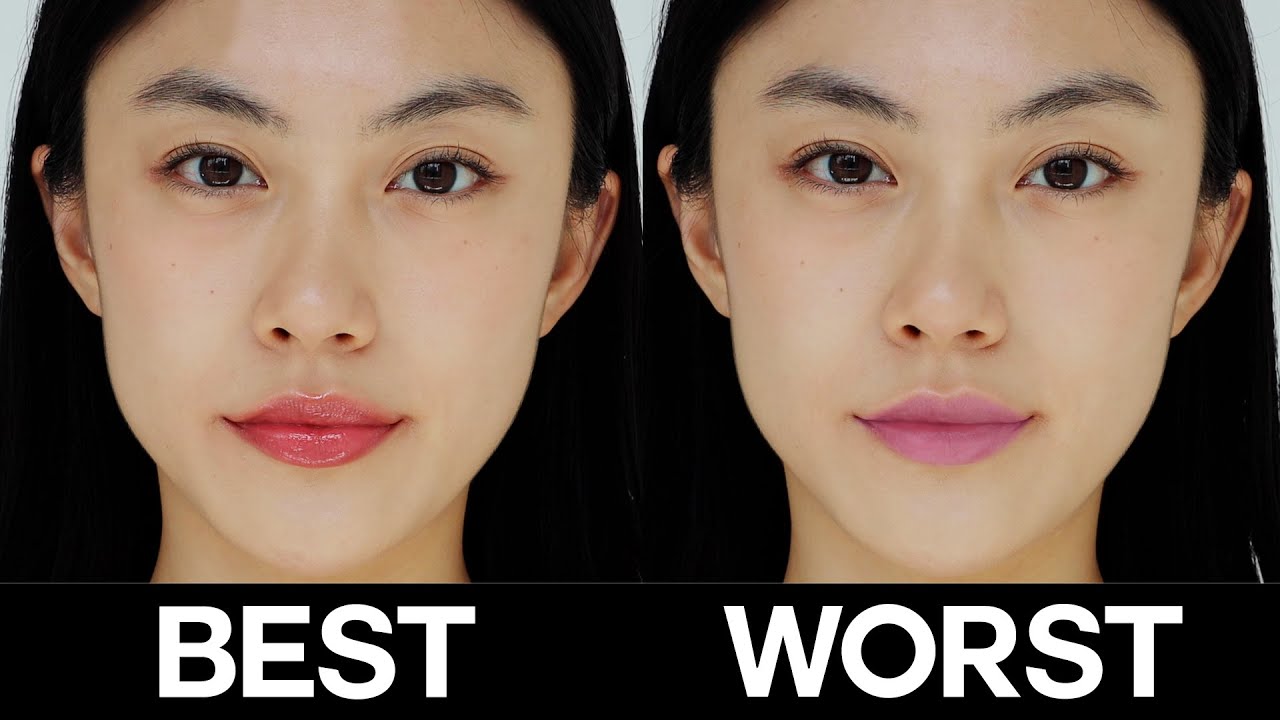
Fair skin reflects more ambient light than deeper skin tones, and that extra reflection changes how a matte shade reads once a flash or a screen enters the picture.
Color temperature is the mechanism behind most of the shift.
Tungsten indoor bulbs sit around 3200K, while daylight and most camera flash sit closer to 5500K. That gap is enough to push a cool-toned matte warmer indoors and a warm-toned matte cooler under flash or daylight.
Studio lighting exists specifically to remove this variable, giving photographers full control over color temperature rather than leaving it to whatever bulbs happen to be in the room (Kandid Clicks, 2025).
Flashback is a separate problem from color shift.
Camera flash reflects directly off silica and titanium dioxide, two ingredients common in setting powder and some lip formulas. That creates a pale cast that shows up worse against fair skin’s already light base (Faces Canada).
Matte has an advantage here that satin and gloss don’t.
With no shine left to bounce light back, a true matte finish is less likely to flashback, though it can still look flatter or slightly darker in photos than it does in person since there’s no reflected light to lift it.
The practical fix is simple. Swatch the shade in daylight and under a phone flash before committing to it for an event, since makeup built for photography accounts for exactly this kind of shift.
FAQ on Matte Lipstick For Fair Skin
Can fair skin pull off a dark matte lipstick like black cherry or deep plum?
Yes, but only if a liner controls the edge.
Dark matte shades create the highest contrast fair skin can produce, and that contrast reads as dramatic rather than washed out, as long as the line stays crisp. Skip the liner and the same shade just looks sloppy.
Do you need lip liner every time you wear matte lipstick on fair skin?
Not always, though it helps more here than on deeper skin tones.
Liner sharpens the edge where matte’s flat color meets bare skin, and blur shows up faster against fair skin’s higher contrast. Soft nudes can usually get away without it.
Is there one matte shade that works on every fair skin tone?
No, not really. Cool, warm, and neutral fair skin pull in different directions, so nothing works universally. A dusty rose or soft mauve comes closest, but actual undertone matching still beats any one-shade-fits-all claim.
What is the real difference between fair and pale skin when shopping for lipstick?
Pale usually just describes low depth. Fair folds undertone into that too, which is why two people with the exact same surface tone can still end up needing opposite shade families once cool, warm, or neutral gets factored in.
Does matte lipstick need SPF if skin burns easily?
Matte lipstick itself rarely has SPF built in. Fair skin is a known risk factor for lip cancer, which becomes more likely after age 40 and is most often diagnosed in people in their 50s and 60s (Cleveland Clinic), so a separate SPF lip balm underneath is worth the extra step before matte color goes on top.
Should fair skin ever choose a frosted or shimmer finish over matte?
Rarely, at least for definition. Shimmer scatters light and softens the crisp edge matte gives fair skin, and frost tends to sit unevenly on dry patches too, drawing attention to texture that matte would otherwise flatten out.
Does a fair skin tan change which matte shades still work?
A small tan shifts depth, not undertone. A shade that read stark in the middle of winter often blends more easily by late summer, but the undertone rules themselves don’t change, only the contrast softens a bit.
Why does matte lipstick sometimes look darker on the lips than it does in the tube?
The tube shows a thick, curved swatch of pure pigment, basically the most concentrated version of the color possible. A thin layer on the lips lets less light bounce back, and matte’s total lack of shine makes that gap more noticeable than it would be with any other finish.
Does a matte finish make thin lips look smaller on fair skin?
It can. A flat edge flattens the lip’s natural shadow a little, and that sometimes reads as smaller. Building the shade out slightly past the natural line with liner tends to fix it better than switching finish entirely.
Can matte lipstick be paired with a bold smoky eye without overwhelming fair skin?
Yes, as long as one feature leads. Pair a soft nude or mauve matte with a heavy smoky eye, or save the full-pigment red for a simpler eye look. Fair skin’s contrast makes two loud features compete rather than balance each other out.
Conclusion
Undertone first, everything else second. That’s really the one decision that has to happen before any shade gets picked for fair skin.
A $12 drugstore matte in the right undertone family outperforms a $34 tube in the wrong one every time. Price fixes formula, not undertone.
No amount of hydrating formula or liner precision rescues a shade fighting the skin underneath it. That’s the one limit worth expecting going in.
Start with one shade family, wear it a full day in daylight and under artificial light, then build the rest of the collection from what actually held up.
Save the boldest reds and darkest berries for days with time for a liner and a midday mirror-check, not for a rushed morning.

She started writing on the site after fielding the same questions from clients and friends often enough to just write the answers down: which red won't turn orange on a warm undertone, how to keep lipstick from feathering into fine lines, why a "12-hour" formula rarely survives dinner.
Every review on the site follows the same rule she uses with paying clients: wear it first, then decide if it's worth recommending.
- How to Make Eyeliner Last Longer Without Smudging - August 31, 2026
- How to Make Eyeshadow Last Longer All Day - August 29, 2026
- How to Find Your Undertone in 5 Easy Steps - August 27, 2026