Matte lipstick has stuck around because it looks finished the moment it goes on. No shine to blot, no mirror check an hour later, at least in theory. Most people typing “what is the best matte lipstick” into Google already own three or four mattes that let them down somehow.
Wear time alone shows how wide that gap is. Brands claim anywhere from 8 hours to 16 hours, and that is before real life gets involved.
A good matte does a few things without complaint. It goes on opaque in one pass. It survives coffee and lunch without leaving a ring on the cup or the inside of a mask. And it still looks intact past hour six instead of cracking along the lip line. Most formulas manage one or two of those. The ones that hit all three are the actual short list worth knowing about.
What Is Matte Lipstick
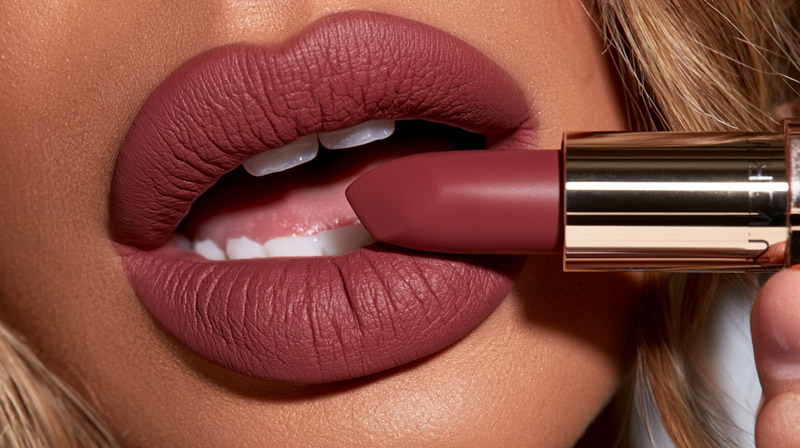
Skip the shine and you get matte. That is really the short version. The formula drops most of the reflective oils and waxes that make satin or gloss lipsticks catch light, so what is left dries down flat instead of glossy.
That flatness is not just about how much pigment gets packed in. Matte formulas lean on a higher wax-to-oil ratio than glossier lipsticks, and silicone film-formers do a lot of the actual work, gripping the lip surface as everything sets.
A handful of ingredients show up in nearly every matte base. Concentrated pigment does the heavy lifting for opacity in one or two swipes. Silicone film-formers, mostly dimethicone and trimethicone, lock the color in place once it sets. Volatile solvents like isododecane evaporate fast and leave pigment behind on the lip. Synthetic wax blends stand in for the oils you would find in a cream or satin formula instead.
Ulta’s ingredient listing for Maybelline’s Super Stay Matte Ink backs this up. Dimethicone, trimethylsiloxysilicate, and isododecane sit near the top of the deck. NARS Powermatte Lip Pigment uses nearly the same base, led by isododecane, dimethicone, and trimethylsiloxysilicate. Both brands are following the same logic laid out in this breakdown of what actually goes into a tube of lipstick.
Matte sits at one end of a spectrum that also includes satin, cream, and sheer formulas, each reflecting a different amount of light off the lip. A full rundown of every lipstick finish and how they differ covers where matte lands against its glossier cousins.
Mordor Intelligence’s latest market data actually puts satin and cream finishes ahead for now, holding 44.34 percent of lipstick market share in 2025, while matte formulations are forecast to grow fastest of any finish category, at a 7.59 percent CAGR through 2031.
What Makes a Matte Lipstick the Best Option

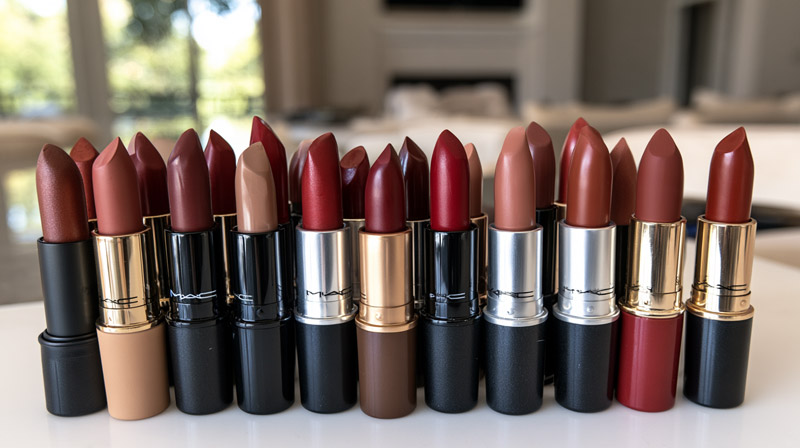
No single lipstick wins on every front. There are basically four things brands are chasing when they build a matte formula, and rarely all four at once. Pigment payoff means full opacity in one swipe instead of three thin layers of buildup. Transfer resistance is the one people notice fastest, since nobody wants a ring left on a coffee cup, a wine glass, or the inside of a mask. Wear time is just the hours of intact color before a touch-up becomes unavoidable. And comfort, or flex, decides whether the formula moves with the lip or sits on top of it like a crust starting to peel.
Published wear claims show how differently brands chase that last marker. Maybelline rates Super Stay Matte Ink at up to 16 hours. MAC rates its M.A.Cximal Silky Matte Lipstick at 12 hours, with 98 percent of testers calling it comfortable throughout wear. NARS rates Powermatte Lipstick at 10 hours.
Independent testing does not always match the label. Beauty reviewer Temptalia clocked NARS Powermatte closer to five or six hours of real-world wear, with transfer resistance fading noticeably after a meal. Lab claims and lived-in wear get measured under very different conditions.
None of this makes a marketed wear time meaningless. It just means the number on the box is a ceiling under close to ideal conditions, not a guarantee across every mouth and every lunch.
Best Long-Wearing Matte Lipsticks

Stila Stay All Day Liquid Lipstick is usually the first one mentioned in longevity threads. Stila backs a 12-hour wear claim for it, built on a fast-set formula with vitamin E and avocado oil mixed in.
Maybelline’s Super Stay Matte Ink pushes further, claiming up to 16 hours across 36 shades. It runs on the same dimethicone-and-isododecane base found in most transfer-resistant liquid mattes, so the extra hours come more from formulation tweaks than any secret ingredient.
MAC’s Retro Matte Liquid Lipcolour claims a more modest 8 hours, per MAC’s own product description, trading some of that staying power for the brand’s signature velvety texture, which feels less like a second skin and more like an actual lipstick.
| Lipstick | Wear Claim | Format |
|---|---|---|
| Stila Stay All Day | Up to 12 hours | Liquid |
| Maybelline Super Stay Matte Ink | Up to 16 hours | Liquid |
| MAC Retro Matte | 8 hours | Liquid |
All three lean on the same liquid lipstick format rather than a traditional bullet, which is part of why they outlast most cream mattes. A closer look at how long liquid lipstick actually holds up breaks down what shortens that wear time in real conditions.
Longer wear time usually comes at a cost. Formulas pushing past 12 hours tend to feel tighter on the lips by hour six, and that tradeoff is worth weighing against the number printed on the box.
Best Matte Lipsticks for Dry Lips
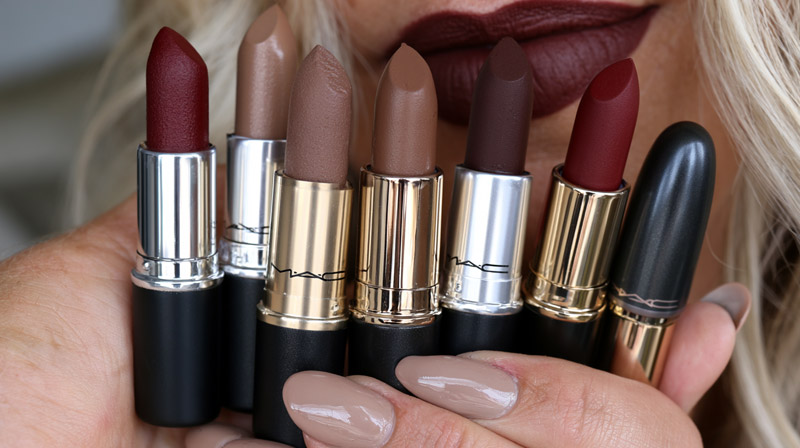
Lips do not have their own oil glands, which is a big reason the skin there dries out faster than the rest of the face (Cleveland Clinic, 2025). A drying matte formula sits right on top of that problem, so the pick matters more here than in almost any other category.
Charlotte Tilbury’s Matte Revolution avoids the worst of it. The brand lists a 10-hour wear time and builds the formula around vitamin E and a proprietary Lipstick Tree extract meant to soften lips as the color sets.
Fenty Beauty’s Stunna Lip Paint takes a softer approach entirely. It is marketed as soft-matte rather than true matte, with a 12-hour hold claim and a weightless finish that flexes with the lip instead of cracking along fine lines.
NARS Powermatte Lipstick sits closer to the drying end of the category. NARS markets a 10-hour wear time for the formula, but both the brand and independent reviewers recommend exfoliating lips beforehand, since the finish is unforgiving on flaky or textured skin.
Peer-reviewed research backs the logic behind hydrating additives. A 2021 study in the International Journal of Cosmetic Science found that synthetic pseudo-ceramide measurably improved dry, rough lip texture (Tamura et al., 2021), the same ingredient category several matte formulas now add to offset the drying effect of silicone-heavy bases.
A dedicated breakdown of keeping lips comfortable under a matte formula covers the daily habits that end up mattering more than the lipstick itself.
Best Matte Lipsticks by Budget

Price does not track cleanly with performance in matte lipstick. Some of the longest wear times on the market come out of ten-dollar tubes, while certain luxury formulas prioritize texture and packaging over raw staying power.
| Tier | Typical Price | What You’re Paying For |
|---|---|---|
| Drugstore | $7 to $16 | Wear time, pigment, shade range |
| Mid-range | $18 to $28 | Application tools, formula polish |
| Luxury | $34 to $58 | Ingredient sourcing, packaging, brand formulation |
Best Drugstore Matte Lipsticks
NYX Soft Matte Lip Cream runs $7.00 on Ulta, and reviewers keep coming back to how creamy the mousse texture feels without turning patchy, which is rare at that price.
- NYX Soft Matte Lip Cream ($7.00): mousse texture, high pigment, no patchiness
- Maybelline Super Stay Matte Ink: the 16-hour claim, arrow-tip applicator, still drugstore priced
- L’Oreal Infallible Matte Resistance: up to 16-hour wear claim, $15.99 list price on Ulta
None of these need a department store trip, and two of the three already match or beat the wear times of the luxury picks below.
Best Luxury Matte Lipsticks
Pat McGrath Labs prices MatteTrance Lipstick at $39 directly on its own site, built on an oil-infused powder formula meant for comfort more than raw wear time.
Dior’s Rouge Dior Forever Liquid carries a 12-hour wear claim from an instrumental test on 22 subjects, according to Dior, and typically runs $45 to $58 depending on retailer and shade.
Charlotte Tilbury’s Matte Revolution, already covered above for its hydrating formula, sits in that same premium tier too.
Best Matte Lipstick Shades for Every Skin Tone
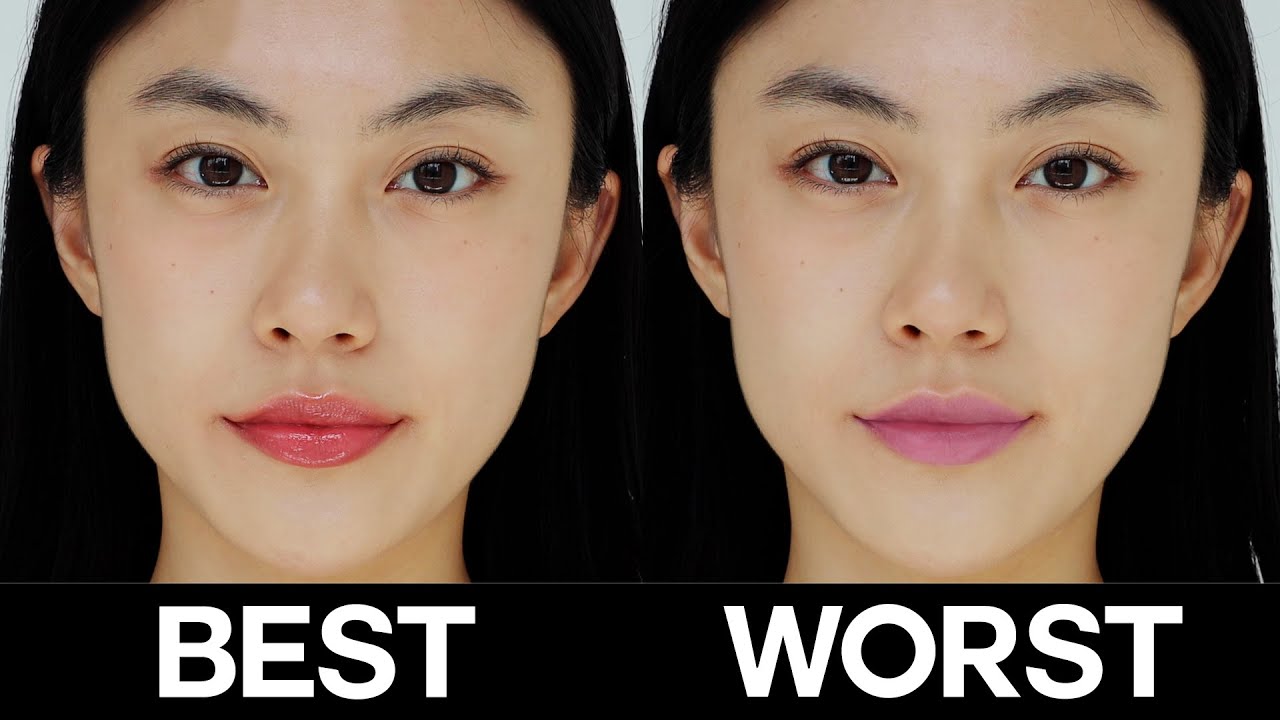
Undertone matters more than skin depth when it comes to picking a matte shade. The same brick red can read sophisticated against a warm undertone and slightly muddy against a cool one.
| Undertone | Best Shade Family | Tends to Clash |
|---|---|---|
| Warm | Terracotta, brick red, warm nude | Blue-based berry tones |
| Cool | Blue-red, mauve, berry | Orange-leaning nudes |
| Neutral | Rosewood, muted red | Extremes in either direction |
A full shade guide covering every matte lipstick shade family breaks these groupings down further, including two categories worth their own closer look: nude mattes and brown mattes.
Deep skin tones need enough raw pigment concentration to avoid the chalky, ashy payoff that under-pigmented mattes tend to leave behind. A guide focused specifically on matte lipstick for dark skin covers which formulas actually deliver full opacity in one swipe.
Fair skin tones run the opposite risk, with formulas that oxidize orange on contact or reds that pull darker than they swatch. A separate breakdown of matte lipstick for fair skin goes through which shades hold their intended color.
How to Apply Matte Lipstick for a Clean Finish

How the lipstick goes on changes the outcome more than which tube got bought. Prep counts. Liner placement counts almost as much. And the actual application, layer by layer, decides whether the finish reads polished or patchy by lunchtime.
A thin layer of balm, applied and blotted off before any color goes on, keeps matte formulas from grabbing onto dry patches and highlighting them. Lining the lips first, using the technique in this lip liner application guide, stops feathering before it starts and stretches how long the color actually holds.
Liquid Matte Application
Liquid mattes dry fast and do not forgive hesitation.
- Apply from the center of the upper lip outward, following the natural lip line
- Work in thin layers rather than one thick pass, since these formulas build opacity fast
- Blot once with a single tissue between layers for extra staying power
- Let each layer set for a few seconds before adding the next, since most are flammable until fully dry
Maybelline’s own application steps for Super Stay Matte Ink follow this exact sequence: center, glide, dry.
Bullet Matte Application
Bullet formulas forgive more than liquids do, but a heavy hand still leaves them looking cakey by the end of the day.
Straight from the bullet works fine for anything casual, and it is faster than digging out a brush every morning.
A brush earns its keep on sharper edges, especially with darker or more saturated shades, where one wrong slip shows up immediately. MAC’s own guidance for its matte lipsticks follows a similar order: prep with a lip primer, apply from the bullet or a brush, then blot before building a second layer.
A full walkthrough, including fixes for the most common application mistakes, lives in this matte lipstick application guide.
How to Keep Matte Lipstick from Cracking or Fading
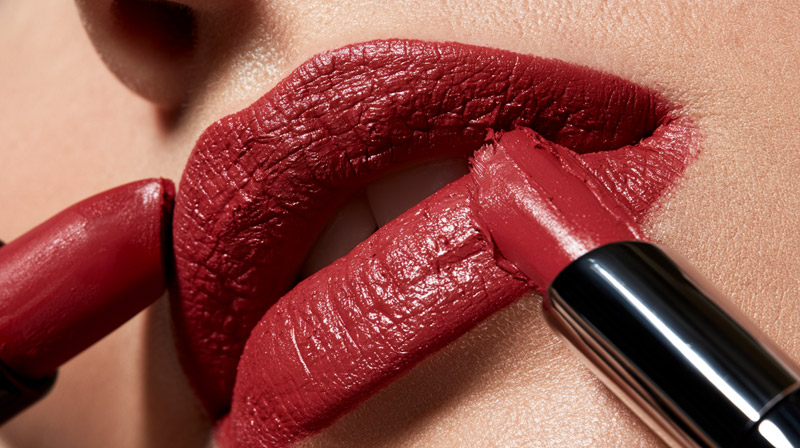
LANEIGE ran its own clinical testing on the Lip Sleeping Mask and found 12 hours of measured hydration after a single use, plus 94 percent less flaky lips after two weeks of regular use, based on instrumental results from 33 subjects.
That kind of overnight repair matters because matte formulas pull moisture out of the lip over the course of a day. A broader lip care routine built around dry lips, not a single product, is what actually keeps that effect from creeping back by the next afternoon.
Pressing translucent powder over a cracking matte to fix it does the opposite of what people expect. It strips the flexible film-forming polymers already holding the color in place, so the cracking gets worse, not better.
A midday touch up works best when it only targets the center of the lip instead of a full reapplication over what is already there. This guide to making lipstick last longer walks through exactly where to add color and where to just leave the base layer alone.
Both habits protect the same thin, already-set layer of pigment. Disturbing it over and over is usually what causes the fading people end up blaming on the lipstick itself.
Matte Lipstick vs Other Lipstick Finishes
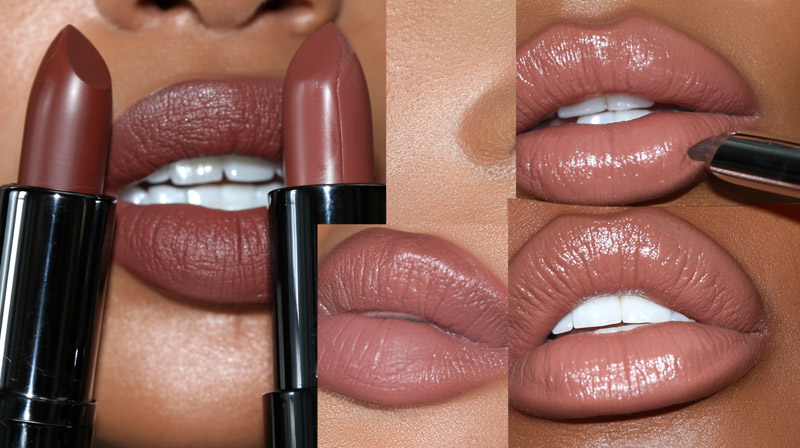
Every finish comes down to the same basic tradeoff: how much oil stays in versus how much wax and silica take its place.
| Finish | Shine Level | Wear Data | Hydration |
|---|---|---|---|
| Matte | None | 8 hours (Dior) | Low |
| Satin | Low to medium | 12 hours (Dior) | Medium |
| Cream | Medium | No standardized claim | Medium to high |
| Gloss | High | 8 hrs hydration (NARS) | High |
Dior’s own testing on the standard Rouge Dior line puts real numbers behind that spread. The brand’s velvet, near-matte finish holds for 8 hours of visible plumping and smoothing, while the satin finish in the same collection holds for 12 hours, both measured in an instrumental test on at least 31 subjects.
That runs against the usual assumption that matte always wins on longevity. A closer matte versus satin comparison goes through why the softer finish sometimes outlasts the more dramatic one.
Cream sits in the middle, and a full breakdown of what cream lipstick actually is covers it in more depth. It splits the difference between shine and pigment without leaning hard into either one.
Gloss gives up wear time almost entirely for hydration. NARS markets its cushiony gloss formula at up to 8 hours of hydration, which is a different kind of claim than a wear-time number, since the product was never built to resist transfer in the first place. A direct lip gloss versus lipstick comparison covers that distinction.
Metallic and frost finishes sit outside this table entirely, since mica and pearl particles define them more than any oil-to-wax ratio. A separate look at what metallic lipstick is made of covers that formulation on its own terms.
Matte wins on staying power and pigment. Gloss wins on comfort. Satin and cream sit in between, which is basically why most makeup bags end up with all four anyway.
Common Mistakes That Ruin a Matte Lipstick Finish
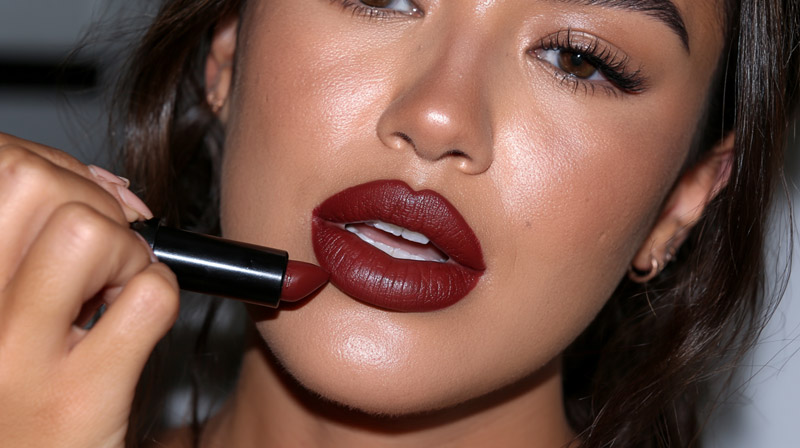
Skipping the liner and going straight from bare lips to a bold liquid matte removes the one barrier that stops color from migrating past the natural lip line. Keeping lipstick from bleeding starts with that single step, before anything else.
Layering too fast is another one. Building three or four coats of liquid matte in one sitting is one of the fastest ways to crack the finish, since each layer needs to flash off completely before the next one goes on.
Shade shopping by packaging skips the step that actually matters. Picking a color straight off the bullet or a product photo, instead of testing it against real lip skin, is asking for a surprise.
A 2024 study from LVMH Research and Christian Dior measured lip color across 410 women spanning multiple ethnic groups and found significant variation in lightness and hue within every group. That is exactly why a shade that looks flattering in a product photo can read completely wrong on an actual mouth.
Going bare before color, skipping balm entirely and applying pigment straight onto unprepped lips, is probably the single most common reason a matte formula grabs onto every dry patch instead of sitting flat.
None of these mistakes have much to do with the lipstick formula itself. They come down to the five minutes of prep most people skip before ever opening the tube.
When Matte Lipstick Is Not the Best Choice
A cross-sectional study published in Cosmoderma found that among lipstick wearers who reported skin reactions, 24.44 percent were wearing only matte formulas at the time, a higher share than liquid, cream, or gloss wearers individually (Cosmoderma, 2023).
That does not mean matte causes more reactions on its own. It means lips already dealing with irritation, chronic dryness, or active peeling are a poor match for a finish built to sit flat and resist movement.
Severely dry or chapped lips are better off switching finishes entirely rather than hunting for a gentler matte. A cream or satin formula moves with the lip instead of settling into every crack in it.
Fine lines around the mouth are the other clear signal to skip matte. A 2025 review in the Journal of Cosmetic Dermatology documents measurable thinning of the vermilion border with age, alongside declining hyaluronic acid levels in that tissue (Sun et al., 2025). That is exactly the kind of terrain a rigid matte formula tends to settle into and highlight rather than smooth over.
Long events without touch-up access, weddings, flights, a full shift of talking, favor a formula that can be blotted and refreshed without looking patchy. A matte that has already set is hard to top up cleanly once it’s cracked.
In each case the fix is not a better matte. It is a different finish, chosen for how the lips are actually behaving that day rather than out of habit.
FAQ: What Is the Best Matte Lipstick
Is Matte Lipstick Bad for Your Lips
Not inherently. Older formulas leaned hard on wax with almost no emollient content, which is where the dryness reputation came from. Newer mattes add hydrating polymers or plant oils to counter that, so a well-formulated matte does not have to feel harsh.
Can You Make a Matte Lipstick Glossy
A dab of clear balm or gloss over a fully set matte restores shine without shifting the shade underneath. This only works once the color has completely dried down. See turning a matte finish glossy for the full method.
How Do You Remove Matte Lipstick Without Staining Your Lips
Micellar water or an oil-based remover breaks down the silicone film formers better than soap and water ever will. Swipe instead of scrub, since scrubbing works pigment deeper into lip texture. A full method for removing matte lipstick cleanly covers stain-prone shades specifically.
What Is Sheer Lipstick and How Is It Different From Matte
Sheer lipstick skips most of the pigment matte relies on, so natural lip color shows through instead of getting covered up. It also skips the silicone film-formers that give matte its flat, saturated finish. A closer look at what sheer lipstick is covers where the two actually diverge.
Is Matte Lipstick the Same as a Lip Tint
No. A lip tint stains the surface layer of the lip and tends to fade gradually rather than wipe off clean, while matte lipstick sits on top as an opaque film. This lipstick versus lip tint comparison breaks down the difference in wear pattern.
How Much Lipstick Does the Average Person Actually Swallow Over a Lifetime
Estimates on lipstick ingestion circulate widely, and the number tends to be higher than most wearers expect, mostly because of how often hands touch the lips throughout an ordinary day. A detailed look at how much lipstick gets swallowed over a lifetime walks through that estimate.
How Can You Tell When a Matte Lipstick Has Gone Bad
A sour or waxy smell replacing the original scent is the clearest sign, along with a grainy or separated texture. Visible mold shows up as small white or colored specks. A guide to spotting moldy lipstick covers what those specks actually mean.
Can You Wear Matte Lipstick Every Day Without Damaging Your Lips
Yes, as long as the routine includes prep and recovery, not just application. Balm before color and a hydrating step at night offset most of the drying tendency mattes carry. Building that into a full lip care routine matters more than any single lipstick choice.
Is Liquid Matte Lipstick Better Than a Bullet Matte Lipstick
Neither wins outright. Liquid formulas generally carry higher pigment concentration and longer wear. Bullet formulas apply faster and feel less rigid on the lips. Which one is better really depends on whether the priority that day is maximum longevity or everyday comfort.
What Ingredients Should Sensitive or Reactive Lips Avoid in a Matte Lipstick
Fragrance, certain red dyes, and high concentrations of drying alcohols are the most common triggers for lip reactions. Formulas built around fewer, simpler ingredients tend to cause fewer problems than heavily fragranced or dye-saturated ones.
What Actually Decides This For You
Finding the best matte lipstick for your own mouth starts with lip condition, not the wear-time number printed on the box.
A formula that holds twelve hours on hydrated lips can crack within three on dry ones. Daily prep ends up mattering more than the marketing claim ever does.
Test any new shade against the actual lip, not the wrist, and give it ten minutes before judging the undertone. Oxidation shifts color more than a fresh swatch ever suggests.
Buy the smallest size before committing to a full tube. Comfort only becomes obvious after a full day of wear, well past the point where most counter testers give up and move on.
That five-minute habit, more than any shade guide, is what actually keeps a bad purchase from happening.

She started writing on the site after fielding the same questions from clients and friends often enough to just write the answers down: which red won't turn orange on a warm undertone, how to keep lipstick from feathering into fine lines, why a "12-hour" formula rarely survives dinner.
Every review on the site follows the same rule she uses with paying clients: wear it first, then decide if it's worth recommending.
- How to Make Eyeliner Last Longer Without Smudging - August 31, 2026
- How to Make Eyeshadow Last Longer All Day - August 29, 2026
- How to Find Your Undertone in 5 Easy Steps - August 27, 2026