You bought the shade, not the finish. Working out how to make matte lipstick glossy is a layering problem: you need a reflective topcoat sitting over a pigment film that has already set, put on in a way that leaves the color underneath alone.
Matte formulas fight this. Silica, kaolin and silicone film formers are in there specifically to absorb light, so any shine has to come from whatever you put on top.
Wear time is the part nobody mentions. Some of these hold for two hours. Some are done in forty-five minutes.
What Is a Matte-to-Gloss Lipstick Conversion
Two layers, doing two different jobs. The pigment base sits underneath and holds the color, and the reflective topcoat supplies all of the shine. Light bounces off the topcoat instead of scattering, so the shade payoff you picked out stays true.
Nothing about the matte formula itself changes. It stays matte under there, permanently, which is exactly why any of this works.
How thick the topcoat is decides where you land. A heavy, high-viscosity gloss gives the wet-look vinyl thing, a mirror across the whole lip. Standard clear gloss reads as full shine with a slight tack to it. Balm or oil buffers the surface instead of coating it, so you get a soft sheen, about as close to a satin lipstick finish as you can get without buying one.
Demand for this look is not niche. Circana reported lip as the top-performing prestige makeup segment of 2024, growing 19% while prestige makeup overall grew 5%. The driver was hybrid products, specifically lip oils and tinted balms, rather than traditional color.
The finish split is less lopsided than the trend coverage suggests. Business Research Insights puts matte at roughly 40% of the global lipstick market in 2024, against about 20% for gloss, 15% shimmer, 12% stain, and 10% sheer. So matte remains the single largest finish segment even as glossy hybrids post the fastest growth. Plenty of people own the wrong finish and want the other one.
Why Matte Lipstick Has No Shine
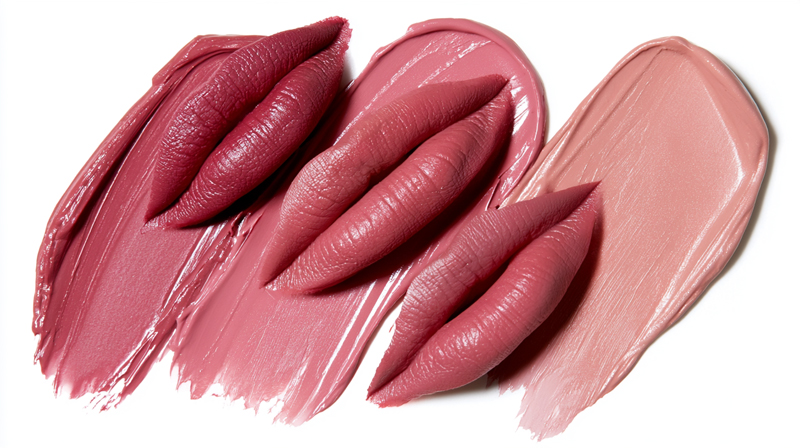
Shine needs a smooth surface with a high refractive index. Matte formulas are engineered to stop one from forming. Silica, kaolin and a heavy pigment load scatter light instead of reflecting it, and the volatile solvents flash off within minutes to leave a dry, low-refraction film behind.
The mattifying work gets split across a few ingredients:
- Isododecane, the volatile carrier solvent, often one of the largest single components of a liquid matte base by weight. It evaporates within minutes of application.
- Trimethylsiloxysilicate, the silicone resin film former that does the actual transfer-proofing. Too much of it and the dried film turns brittle and cracks.
- Silica and kaolin, mattifying and opacifying powders that scatter incoming light rather than reflecting it.
- Nylon powders and dimethicone for texture and slip, no gloss.
Read the ingredient list on a transfer-proof formula and the pattern shows up immediately. Maybelline SuperStay Matte Ink opens with dimethicone, trimethylsiloxysilicate, and isododecane, then runs through nylon-611/dimethicone copolymer, dimethicone crosspolymer, and C30-45 alkyldimethylsilyl polypropylsilsesquioxane before reaching silica silylate in ninth position.
Gloss in any lip product comes from oils, esters and silicones raising the refractive index of the film. Matte formulas keep those emollients low on purpose.
Dermatologists tend to describe mattes as waxier products carrying fewer oils, which buys richer color and costs comfort. That tradeoff is the whole formula in one sentence.
Which Matte Lipstick Types Accept a Gloss Topcoat
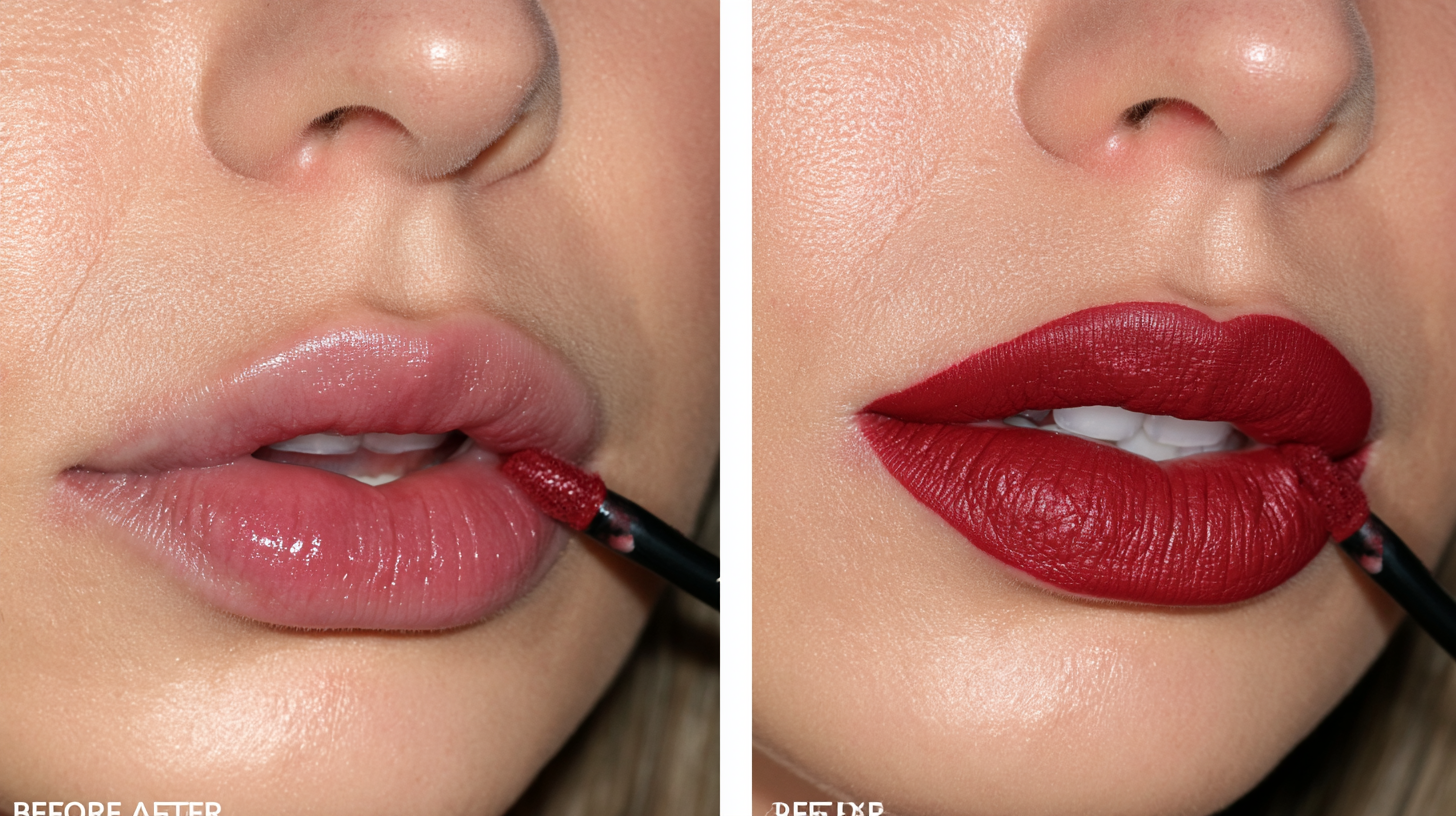
Liquid mattes take a topcoat best, because the silicone film seals completely before you ever touch it. Bullets shift under pressure. Blurring and powder-effect formulas drink the topcoat and go patchy inside a minute, which makes them the worst candidates by a wide margin.
| Formula type | Set time | Topcoat result |
|---|---|---|
| Liquid matte | 3 to 5 minutes | Clean, even shine |
| Bullet or crayon matte | Immediate | Smears with pressure |
| Blurring / powder matte | 2 minutes | Absorbs gloss, patchy |
Liquid Matte Formulas
Maybelline’s own directions for SuperStay Matte Ink are to apply from the center of the upper lip outward, glide across the bottom lip, and let the product dry completely with the lips held apart. In practice that dry-down runs about three to five minutes.
That sealed film is what protects the pigment. Applying a thin, even liquid layer matters more here than shade choice, because thick spots stay tacky and lift under the wand.
Fenty Stunna Lip Paint and Maybelline SuperStay Matte Ink both convert well.
Bullet and Crayon Matte Formulas
Wax-based bullets never form a true film, so pigment stays mobile all day. That is the limitation you are working around.
Gloss can go on right away, no waiting. What you pay for it is smearing at the lip line, worse with deep shades. NARS Powermatte and MAC Retro Matte bullets both move under a doe-foot.
Blot once with tissue before the topcoat and the smearing drops noticeably. Not eliminated. Reduced.
Blurring and Powder Matte Formulas
These are the ones I’d skip. Silica microspheres and starches sit on the surface specifically to absorb oil, and gloss is oil.
The topcoat sinks in, the blur effect dies, and you get shiny patches next to flat ones. Adding more gloss makes it worse.
Which Methods Make Matte Lipstick Glossy
Clear gloss topcoat, lip oil, clear balm, petroleum jelly, mixing medium, gloss placed only in the center, a hydrating base applied under the matte, and premixing on the back of the hand. All of them work. Shine level and wear time are what separate them.
| Shine tier | Methods | Wear before touch-up |
|---|---|---|
| Vinyl / wet-look | Thick clear gloss, mixing medium | 2 to 3 hours |
| Full shine | Standard gloss, petroleum jelly | 1 to 2 hours |
| Soft sheen | Lip oil, clear balm, center-only gloss | 45 to 90 minutes |
Clear Gloss Topcoat
The default, and the one that keeps the shade truest. Clear gloss carries no pigment, so nothing dilutes underneath.
Polybutene and hydrogenated polyisobutene are the shine engines in most of these formulas. Both are hydrocarbon polymers with a high refractive index and enough viscosity to fill fine lip lines, which is what produces a continuous mirror-like surface rather than a scattered one.
Fenty Gloss Bomb Universal Lip Luminizer sits at the thick end. NYX Butter Gloss in Clear runs thinner and cheaper.
Lip Oil Layering
Circana data from the first half of 2024 showed prestige lip balms and oils leading double-digit growth, and in the mass-market aisle lip gloss and liner were the top sales gainers. The layering use case is a big part of why.
Oils buy you a soft sheen with zero tack, and they are genuinely comfortable on dry lips. The shine fades faster than gloss, though, and the ester-heavy ones soften silicone film while they sit there.
Dior Lip Glow Oil and Clarins Lip Comfort Oil both work. The gap between oil and gloss texture shows up most on the second hour.
Clear Balm Buffer
Balm gives the least shine of any of these and the most comfort. Waxes plus emollients, no high-refraction polymers.
Press it on with a fingertip, never a stick, or you will drag pigment. Burt’s Bees and Aquaphor Lip Repair are the usual picks.
Best method for anyone who wants to stop matte formulas from drying out their lips while still getting sheen.
Petroleum Jelly and Occlusive Balms
Petrolatum is the most effective occlusive available. Research summarized in the Indian Journal of Dermatology and widely cited since found it reduces transepidermal water loss by roughly 98% to 99%, compared with only 20% to 30% for mineral oil, lanolin, and dimethicone.
That matters because lip skin is structurally leakier than facial skin. The vermilion has far fewer cell layers than cheek skin, no sebaceous or sweat glands, and a lower ceramide content, and measured transepidermal water loss at the lip runs about three times higher than at the cheek. Vaseline Lip Therapy delivers heavy shine and real barrier protection at once.
It also slides. Reapplication comes fast.
Mixing Medium
A dedicated shine medium sits somewhere between gloss and topcoat. MAC Mixing Medium Shine is the reference product.
What separates one of these from a plain gloss is the use of high-refractive-index silicone gloss resins, phenyl-substituted silsesquioxanes among them, dosed at low single-digit to low double-digit percentages. They add optical shine without the oil load that would swell a matte film.
Highest shine of anything here. Also the fussiest.
Gloss Applied Only to the Center of the Lip
Center-only placement keeps the lip line matte and crisp.
Shine lands where light naturally hits, so the lip reads fuller without the whole surface going wet. The outer edges hold pigment in place, which cuts feathering.
Personally my favorite for anything above a mid-tone. Deep berry mattes look strange fully glossed.
Hydrating Base Applied Before the Matte
Balm first, blot, then matte, then a thin gloss. Order is the whole trick.
The base does not create shine. What it does is stop the matte film from gripping dry patches, which is what makes gloss look uneven an hour later.
Laneige Lip Sleeping Mask overnight, plain balm in the morning. Ten to fifteen minutes of absorption time, then blot the excess or the matte will not adhere.
Mixing Gloss and Matte on the Back of the Hand
Premixing gives you one product with a built-in satin finish instead of two stacked layers.
Start at three parts matte to one part clear gloss. Any more gloss than that and the pigment goes sheer on you.
Wear time drops hard, roughly half of the matte alone. Fine for dinner. Not for a workday.
How to Apply Gloss Over Matte Lipstick Without Streaking
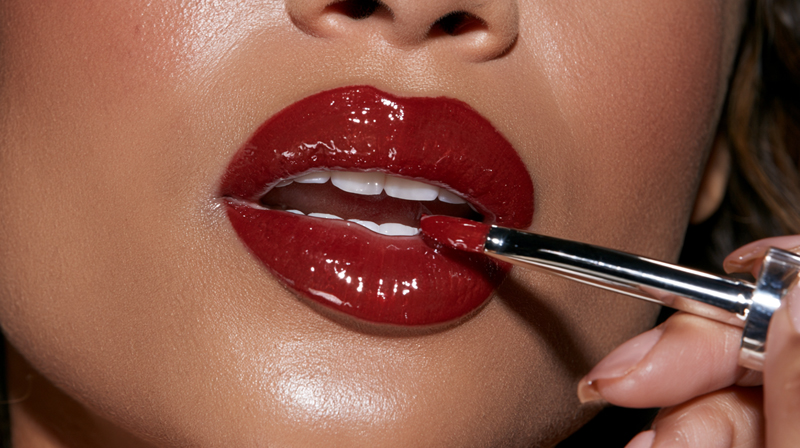
Gloss streaks when the film underneath has not fully set, or when the applicator drags across it. Wait out the set time, then tap the product on in short presses starting at the center of the lower lip. Sweeping the wand side to side is what causes most of the damage.
- Let the matte set completely, 3 to 5 minutes for liquids
- Load a small amount on a clean flat lip brush or a fingertip
- Press at the center of the lower lip, then the upper
- Work outward, stopping short of the lip line
- Leave it alone; a second pass is where most streaking starts
The doe-foot that comes in the gloss tube is built for bare lips, not layering. It holds too much product and drags in one direction.
Streaking looks like pale drag lines where pigment lifted. Fix it by pressing a clean fingertip over the spot to redistribute, not by adding more gloss.
The same press-and-tap logic applies whenever you are putting gloss over any lipstick, though matte films are the least forgiving.
Which Clear Glosses and Oils Work Best Over Matte Formulas
Thick, polybutene-heavy glosses give the most shine without dissolving the pigment film. Thin lip oils give softer sheen and break down silicone films faster. Plumping glosses with menthol or capsicum degrade matte lipstick quickest, and there is no version of this where they are worth trying.
| Product | Texture | Finish over matte |
|---|---|---|
| Fenty Gloss Bomb | Thick, slight tack | Vinyl |
| Dior Addict Lip Maximizer | Thick, plumping | Vinyl, higher breakdown risk |
| Clarins Lip Comfort Oil | Thin, non-tacky | Soft sheen |
| NYX Butter Gloss Clear | Medium | Full shine |
Budget picks hold up fine here. e.l.f. Glossy Lip Stain and plain Vaseline both do the job, and I have never seen a shine difference worth 30 dollars.
Gel formats are where the category is heading. Dataintelo puts gel at 27.4% of global lip gloss revenue in 2025, the fastest-growing application format at roughly 6.4% projected CAGR, though liquid still leads on size at 38.7%. The glass lips and jelly lips looks are doing most of the pulling.
Skip anything with menthol or capsicum. Plumpers work by irritating the lip and thinning the surface, which is the opposite of what a set matte film needs. Worth knowing the different gloss categories before you grab whichever tube is closest.
How Lip Prep Changes the Glossy Result
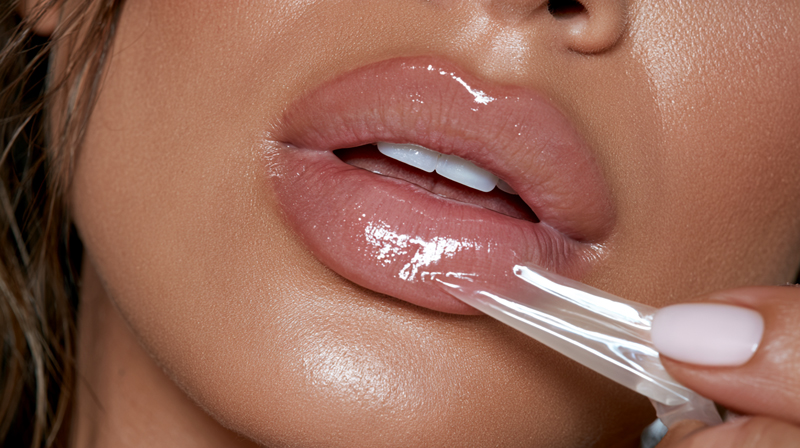
Prep is what decides whether the gloss reads smooth or patchy. Dry flakes lift the matte film, and gloss magnifies every single one of them, because shine amplifies surface texture. Exfoliate 10 to 15 minutes before application, then blot excess balm so the matte can grip.
Timing does more work than product choice:
- Exfoliate 10 to 15 minutes ahead, not immediately before
- Balm needs the same window to absorb
- Blot with tissue right before the matte goes on
Skipping the blot is the most common mistake by a mile. Residual balm sits between the lip and the pigment, and the matte never bonds to anything.
A corneometer feasibility study run through the Rutgers Center for Dermal Research and TRI Princeton measured 18 participants aged 24 to 68 two hours after lipstick application. Every product tested, including a Vaseline control, raised arm skin hydration somewhere between 16% and 67%. On the lips the spread ran from minus 13% to plus 57%, meaning formula choice can move lip hydration in either direction. Prep is not optional with these formulas.
A cross-sectional study published in CosmoDerma (2023), surveying 226 people across 21 countries, found that 43.48% of female participants reported some skin reaction to lipstick, and among those affected, 24.44% wore matte exclusively, against 7.78% who wore only glossy. Worth reading carefully: matte is also the largest finish segment overall, so this is a usage pattern rather than proof that matte causes reactions, and the authors noted reactions turned up across all lipstick types. Still, barrier condition matters, and gentle natural exfoliation beats a scrub the morning of.
Line the lips before the matte, not after. Adding liner over a set film pushes pigment around, and gloss will find those seams. If your lips are chronically dry, sort out the underlying dryness first. No topcoat fixes flaking.
What Ingredients Break Down Matte Lipstick
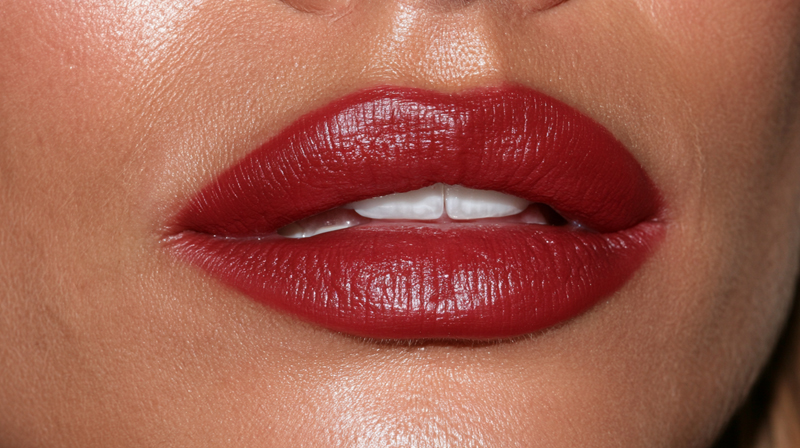
Mineral oil, castor oil and heavy esters swell the silicone film until it separates from the lip. Menthol and capsicum speed that up. Alcohol strips the set layer outright and takes pigment with it.
The mechanism has been documented in cosmetic formulation literature for decades. Oil sitting in the same phase as a silicone resin causes swelling and discontinuity of the film, at which point pigment detaches and color runs.
That is the entire risk of this technique in one sentence.
| Ingredient | Effect on the matte film | Verdict |
|---|---|---|
| Polybutene, hydrogenated polyisobutene | Sits on top, minimal penetration | Safe |
| Castor oil, mineral oil | Slow swelling over 1 to 2 hours | Use thin |
| Menthol, capsicum, cinnamon | Irritation plus rapid film breakdown | Avoid |
| Denatured alcohol | Dissolves the set layer immediately | Avoid |
Read the first five ingredients. If mineral oil or castor oil sits in the top three, that gloss will move pigment on a silicone-based liquid matte.
Silicone-compatible glosses are the safer layer. Dimethicone and phenyl trimethicone coexist with trimethylsiloxysilicate instead of dissolving it.
Plumping formulas deserve their own warning. A single-site open-label trial published in the Journal of Drugs in Dermatology (2018) tested a plumper containing capsaicin, cinnamon, and menthol on 18 completers. Investigators recorded improved lip fullness in 100% of subjects at 15 minutes, dropping to 67% at one hour, with tingling and heat reported as expected effects. So the swelling is real, fast, and short-lived.
Swelling stretches the lip. A film formed on a smaller surface cracks when that surface expands, which is how plumping products create their effect and why Dior Lip Maximizer over a set matte fails within the hour.
How Long a Glossed Matte Lipstick Lasts
Shine holds anywhere from 45 minutes to 3 hours depending on what you used. The pigment layer underneath is still running its normal course the whole time, so a touch-up means refreshing shine rather than reapplying color.
| Method | Shine holds | Transfer |
|---|---|---|
| Thick gloss or mixing medium | 2 to 3 hours | Moderate |
| Petroleum jelly | 1 to 2 hours | Heavy |
| Lip oil or balm | 45 to 90 minutes | Light |
Baseline matters for context. Most liquid mattes run 6 to 8 hours with minimal touch-ups, while bullet formulas sit closer to 3 to 6 hours before fading. Maybelline markets SuperStay Matte Ink at up to 16 hours, which is a claim measured without a topcoat over it.
Adding gloss kills the transfer-proof claim. That is the trade, and nobody markets it honestly.
For reapplication:
- Blot the lip first, then add gloss only
- Never reapply matte over an oily surface; it will not bond
- Full reapplication once the pigment itself starts patching, usually hour 6
Blotting with a clean tissue immediately after a meal, pressing rather than rubbing, buys back a meaningful amount of wear. The same principle applies to getting through a meal with color intact when a topcoat is involved.
Greasy food is the worst case. Oil from the plate does exactly what castor oil does, just faster, which is why the usual longevity tactics matter more once you have glossed.
How to Convert Matte Lipstick for Dry, Chapped, or Mature Lips
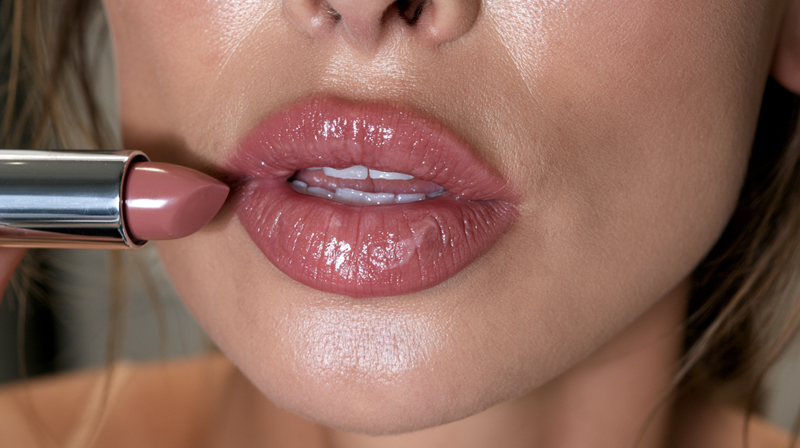
Chapped and mature lips need the occlusive layering to happen before the matte goes on, not only after. Petrolatum or lanolin overnight, balm and blot in the morning, then a thin matte with gloss in the center only. Full-lip vinyl shine magnifies vertical lines instead of hiding them.
The reason is straightforward. Shine reflects along the surface contour, so every ridge catches light differently. Matte alone flattens the reflection and hides more.
MRI research by Ramaut, Tonnard and colleagues, published in Plastic and Reconstructive Surgery in 2019, compared 200 adults split between the 20-to-30 and 65-to-80 age brackets. In the older group the upper lip was 19.24% longer in women and 18.24% longer in men, soft-tissue thickness was down as much as 40.55% in women, and cross-sectional volume fell 20.89%.
Thinner vermilion plus deeper vertical rhytides equals more surface for gloss to pool into.
Overnight and Morning Prep
Lanolin or ceramide balm overnight. Laneige Lip Sleeping Mask and Lanolips 101 Ointment both qualify.
Petrolatum cuts water loss by roughly 98% to 99%, against 20% to 30% for lanolin, mineral oil, and dimethicone. Use the strongest occlusive at night, the lightest in the morning.
Ten minutes of absorption, then blot. Applying matte to a slick lip is how dry lips end up patchy anyway.
Which Methods Work on Compromised Lips
Clear balm buffer, lip oil and center-only gloss all hold up on a rough surface.
Leave the mixing medium alone, since it needs a near-perfect base to look right. Plumping gloss stings badly on a broken barrier. Full-lip vinyl just shows you every line you were trying not to look at.
In the CosmoDerma survey, 24.44% of respondents reporting lip reactions wore matte exclusively, and reactions clustered in people with pre-existing allergies. Barrier condition is the variable, not brand.
Shade and Placement Adjustments
Deep mattes read drier on textured lips. Pigment load is higher, and the contrast against flaking is sharper.
Mid-tone shades hide more. Line the outer edge first, keep gloss inside that boundary, and pigment stops migrating into perioral lines.
Anyone dealing with color creeping past the lip line should treat gloss as the accelerant it is.
How to Remove Glossed Matte Lipstick
Removal takes two passes. An oil-based balm dissolves the gloss, then you break the silicone film underneath. Water fails on both layers. Dry cotton pads drag pigment sideways and strip lip skin rather than lifting color.
| Remover | Best on | Contact time |
|---|---|---|
| Cleansing balm | Both layers at once | 30 to 60 seconds |
| Jojoba or coconut oil | Silicone film | 30 seconds |
| Micellar water | Residue and staining | Final pass only |
Saturate, wait, wipe in downward strokes, repeat once if it needs it.
Waiting is the part everyone skips. Oil needs 30 to 60 seconds of contact to dissolve film-forming polymers, and rubbing before that just spreads pigment around.
Clinique Take The Day Off Balm handles both layers. Bioderma Sensibio H2O is the cleanup pass, not the main event. Plain jojoba oil works fine and costs less than either.
SuperStay Matte Ink is the stress test for this, since its trimethylsiloxysilicate and C30-45 alkyldimethylsilyl polypropylsilsesquioxane system is built to survive a marketed 16 hours. Fenty Stunna and other high-pigment reds leave a stain that needs a second oil pass.
The same two-step logic covers liquid formulas generally and matte bullets, though bullets surrender much faster.
Follow with barrier repair, not another cleanser. Stripping the film usually takes some surface lipid with it, and skipping this step is why lips flake the next morning even when nothing went wrong during wear.
Twice-weekly exfoliation is the ceiling. Any more and you are working against the barrier you just spent a night rebuilding, which is where a consistent daily lip care routine earns its place over any single product.
FAQ on How To Make Matte Lipstick Glossy
Can you put lip gloss over matte lipstick?
Yes. Clear gloss layers over a fully set matte film without changing the shade. Wait 3 to 5 minutes for liquid mattes, then press the gloss on rather than sweeping it across the lip.
How long should matte lipstick dry before adding gloss?
Liquid matte needs 3 to 5 minutes for a complete dry-down, and Maybelline’s own instructions say to hold the lips apart until the product is fully dry. Bullet mattes never fully set, so gloss can go on immediately, though pigment will shift under pressure at the lip line.
Does gloss ruin matte lipstick?
Only when the gloss carries mineral oil, castor oil or menthol. Those swell the silicone film until it loses continuity and pigment detaches. Polybutene-based glosses sit on top and leave the film intact.
What is the best clear gloss for layering over matte?
Thick, polybutene-heavy formulas perform best. Fenty Gloss Bomb delivers vinyl shine, NYX Butter Gloss Clear gives standard shine cheaply, and e.l.f. Glossy Lip Stain holds up as a budget pick.
Can lip balm make matte lipstick glossy?
Clear balm produces the softest sheen of any method, closer to satin than to full gloss. Press it on with a fingertip. A balm stick drags pigment and creates pale streaks.
Does Vaseline work over matte lipstick?
Petroleum jelly gives heavy shine and cuts transepidermal water loss by roughly 98% to 99%, far more than lanolin, mineral oil, or dimethicone at 20% to 30%. That helps dry lips considerably. It also slides constantly, so expect touch-ups every hour or so.
Why does my gloss look streaky over matte lipstick?
Streaking comes from an unset film or a dragging applicator. Skip the doe-foot wand entirely. Tap product on with a flat lip brush, starting at the center of the lower lip and working outward.
Can you mix matte lipstick and gloss together?
Mix three parts matte to one part clear gloss on the back of your hand. The result is a built-in satin finish. Wear time drops to roughly half of the matte alone.
Does adding gloss make matte lipstick fade faster?
Shine fades in 45 minutes to 3 hours depending on the topcoat. The pigment layer still runs 6 to 8 hours for most liquid mattes. Refresh the gloss only; reapplying matte over an oily surface will not bond.
How do you remove matte lipstick with gloss on top?
Two passes. An oil-based cleansing balm dissolves both layers with 30 to 60 seconds of contact, then micellar water clears residue. Dry cotton pads just spread pigment and strip lip skin.
Conclusion
All of how to make matte lipstick glossy comes down to waiting for the film to set and picking a topcoat that will not dissolve it.
Get those right and the shade payoff stays exactly as bought.
Start with the cheapest test. Clear balm on a fingertip, pressed into the center of the lip, tells you within a minute whether your particular formula tolerates layering.
Then scale up to gloss or mixing medium if the film holds.
Worth noting: if you find yourself converting every matte you own, the honest fix is buying a glossy lipstick outright. Conversion is a workaround, and workarounds always cost wear time.

She started writing on the site after fielding the same questions from clients and friends often enough to just write the answers down: which red won't turn orange on a warm undertone, how to keep lipstick from feathering into fine lines, why a "12-hour" formula rarely survives dinner.
Every review on the site follows the same rule she uses with paying clients: wear it first, then decide if it's worth recommending.
- How to Make Eyeliner Last Longer Without Smudging - August 31, 2026
- How to Make Eyeshadow Last Longer All Day - August 29, 2026
- How to Find Your Undertone in 5 Easy Steps - August 27, 2026