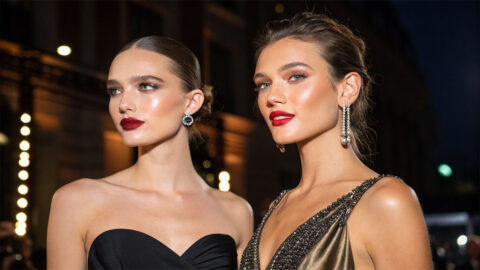
Most lipsticks sitting in a makeup bag right now aren’t fully matte and aren’t fully glossy either. They land somewhere in between, and that in-between finish has a name: satin.
It’s not a niche category. Satin now claims 43.41% of the global lipstick market, more than any other finish on its own (Mordor Intelligence, 2025).
The appeal is easy enough to spot in person. Soft sheen, photographs well, doesn’t crack by lunch the way a heavier matte formula sometimes does.
What makes it behave that way is the formula underneath. Satin leans on a particular balance of wax, oil, and fine mica particles, and most other finishes don’t share that exact mix.
Get that balance wrong and a satin lipstick just sits on top of dry or mature lips instead of blending into them. Get it right and it’s one of the more forgiving finishes out there.
What Is Satin Lipstick

MAC Cosmetics is where the name comes from. Satin sits on MAC’s official list of finish categories alongside Matte, Frost, Cremesheen, and Lustre, and over time the term spread across the whole industry as shorthand for this particular middle-ground sheen: soft, light-catching, sitting between the flat surface of matte and the wet shine of gloss.
Texture matters here as much as shine does. Satin carries a creamy, semi-hydrating feel that neither matte nor gloss really matches on its own.
Finish is one of the main ways lipstick gets sorted on a shelf, right alongside form and pigment level. For the fuller sorting logic, we cover the different types of lipstick elsewhere.
By the numbers, satin isn’t a small slice of anything. It holds 43.41% of the global lipstick market as of 2024, the largest share of any single finish category (Mordor Intelligence, 2025).
That’s inside a market worth $16.20 billion in 2025, projected to reach $22.10 billion by 2030 (Mordor Intelligence, 2025). We go deeper on finish share, color trends, and channel data in our lipstick statistics roundup.
One more distinction worth making: the sheen itself comes from fine pearl particles suspended in the base, not from extra oil. That’s the detail keeping satin from drifting into matte or cream territory.
What Ingredients Make Up a Satin Lipstick Formula

Every satin bullet draws from the same short list of raw material categories that show up across most lipstick ingredients in general: waxes, oils and emollients, pigments, and, increasingly, silicones.
What pushes a formula toward satin instead of matte or cream isn’t which of those categories shows up. It’s the ratio between them.
| Component | Typical Share | Role in the Formula |
|---|---|---|
| Waxes | 10-20% | Structure, hardness, melting point |
| Oils and emollients | 50-65% | Glide, softness, sheen |
| Pigments and fillers | 5-20% | Color, opacity, texture |
| Silicones | Small, variable | Slip, smooth lay-down |
Formula Chemistry publishes typical ranges for a standard lipstick base: wax from 10% to 20%, oils and emollients from 50% to 65%, pigments and fillers from 5% to 20% (Formula Chemistry, 2026). Satin formulas tend to sit toward the higher end of that oil range, without tipping all the way into full cream territory.
Waxes and Emollients That Create the Base Texture
Candelilla wax melts between roughly 68.5 and 72.5 degrees Celsius. Carnauba wax, one of the hardest natural waxes used in cosmetics, melts between roughly 80 and 86 degrees Celsius (industry wax-melting-point references).
Most satin formulas blend the two: a softer wax like candelilla for glide, plus a small amount of a harder wax for structure. What you end up with is a bullet firm enough to hold its shape, soft enough to actually glide on.
Dimethicone shows up a lot here too. It’s a silicone ingredient that cuts the draggy feel wax-heavy bases can have, and it helps pigment lay down evenly instead of streaking. Revlon’s Super Lustrous line, one of the more recognized satin-adjacent formulas sold at drugstores, leans on roughly this same wax-oil balance to keep color moving rather than dragging.
Pigments and Pearl Particles That Create the Sheen
Mica particles roughly under 20 microns in diameter tend to produce a satiny, low-luster effect, while progressively larger particles create more visible luster, sparkle, or glitter instead, up to around 150 microns (cosmetic-grade mica industry specifications).
- Satin formulas stick to the smaller particle range for a soft glow rather than shimmer
- Pigment load runs moderate, heavier than a sheer lustre finish, lighter than a retro matte
Put those two together and you get a lip color that reads rich without sliding into the flat, poster-paint look a fully matte pigment load tends to have.
How Does Satin Finish Differ From Matte, Glossy, and Cream Lipstick

Matte, satin, glossy, and cream lipstick all start from the same basic wax-oil-pigment base. What separates them is the ratio, and that ratio is what ends up changing shine, hydration, and how long the color actually lasts.
| Finish | Shine Level | Feel on Lips | Typical Wear |
|---|---|---|---|
| Matte | None | Dry, flat, full pigment | 6-8 hours |
| Satin | Soft, low | Creamy, comfortable | 3-5 hours |
| Glossy | High, wet-look | Slippery, hydrating | 2-4 hours |
| Cream | Moderate | Rich, buttery | 3-4 hours |
Matte wins on longevity, and the reason is pretty mechanical: low oil content lets pigment bond straight to lip tissue, which is why it often lasts six to eight hours before a touch-up is needed (Girlactik, 2026).
Glossy lipstick sits at the opposite end of that spectrum. The same oils responsible for the shine also create slip, so most glossy formulas need reapplying every two to four hours (Girlactik, 2026).
Cream lipstick lands close to satin on hydration, but it skips the light-diffusing mica entirely, so the payoff is a flatter, richer color rather than an actual sheen.
Satin ends up in the middle of all three. More shine than matte, more structure than gloss, and less oil than a full cream formula. The closer side-by-side on shine, hydration, and staying power lives on our matte vs satin lipstick comparison.
How Long Does Satin Lipstick Last on the Lips
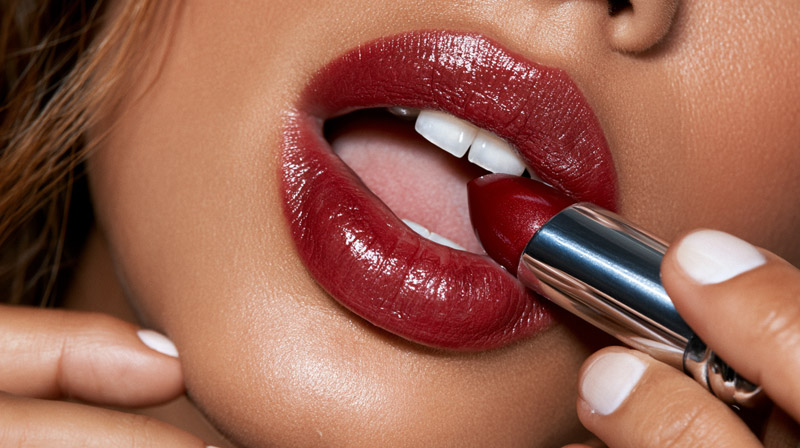
Figure on three to five hours before satin starts showing noticeable fading. Shorter than matte, longer than most glossy formulas.
The same oils and emollients that make satin comfortable are exactly why it fades faster than matte. More slip means the pigment layer thins out every time you talk, eat, or drink.
Liquid formulas push wear time well past anything a bullet finish can manage. L’Oreal Paris markets a hybrid matte-gloss liquid lipstick rated at up to 16 hours of wear, and Revlon’s ColorStay Ultimate liquid line claims up to 24 hours, food-proof and transfer-proof.
For a full breakdown of how those numbers hold up outside marketing copy, see how long liquid lipstick actually lasts.
Climate changes the math too. Heat softens the wax structure and speeds up transfer, while lip prep (exfoliation plus a hydrating balm before application) slows fading by giving the pigment a smoother surface to actually grip.
Which Lip Types and Skin Tones Suit Satin Lipstick

Best Suited for Dry or Mature Lips
Most Americans report dry or chapped lips at some point, and one in four say chapped, flaky lips look less attractive (PracticalDermatology survey, 2015).
That’s part of why satin gets recommended so often to anyone managing dry lips as part of a daily routine. The added oil sits better on flaking skin than a high-pigment matte does.
There’s an aging component too. Collagen production drops by roughly 1% every year after age 20, thinning the lips and making vertical lines more visible over time (Healthline, 2019).
Satin doesn’t flatten light the way matte does, so it tends to read smoother on lips that already have visible texture or fine lines. Charlotte Tilbury, Bobbi Brown, and Clinique come up constantly in recommendations for exactly this reason.
How Satin Reads Across Different Skin Tones
Mica reflects light instead of adding pigment, which is why the same satin shade can look noticeably different from one person to the next depending on how much natural pigment the lips already carry.
On deeper skin tones, that sheen tends to read as a soft glow sitting over a fuller base color, and it avoids the flattening effect a heavy matte pigment load can have.
Fairer skin shows it differently. There, the same sheen often shows up as a visible highlight running through the center of the lip rather than an overall glow.
None of that beats undertone, though. Warm, cool, or neutral still decides which satin shades actually flatter a complexion more than the finish does.
How to Apply Satin Lipstick for a Smooth Finish

Getting satin to apply smoothly comes down to two things: prep beforehand, and a light hand at the end. The finish shows unevenness more readily than a heavier cream formula would, so both steps matter more than they might elsewhere.
- Exfoliate. Buff away flaking skin with a soft toothbrush or lip scrub so the sheen sits on an even surface.
- Prime if needed. A thin layer of balm, absorbed and blotted, keeps wax from catching on dry patches.
- Line the lips. A liner close to the lipstick shade holds the edge and slows feathering.
- Apply from the center outward. Use the bullet directly, or a lipstick brush for sharper edges.
- Blot once, lightly. A single tissue press is enough. A heavier blot strips the sheen and pushes the finish toward matte.
- Layer a second coat only if more opacity is needed.
Knowing what lip liner actually does (hold the edge, slow the bleed, add a base layer of color) explains why it matters more here than it would with a wetter finish.
Matching liner to lipstick shade, instead of just grabbing whatever pencil is closest, keeps that transition invisible once the center of the lip starts wearing down first.
MAC’s Satin line is still one of the most recognized examples of the finish, prized for the same reason most satin fans reach for it in the first place: full color in one swipe, without the dry-down of a true matte.
What Are the Pros and Cons of Satin Lipstick
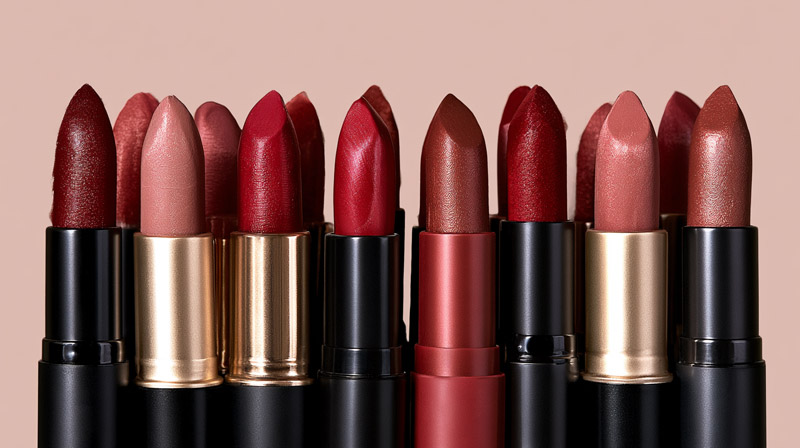
Satin lipstick trades some staying power for comfort. Where that trade lands depends on what the day actually requires.
A few things it does well:
- Comfortable, moderate hydration that does not require heavy lip prep
- Softens the look of fine lines and dry patches better than matte
- Full color payoff in one or two swipes
- Photographs well thanks to the light-diffusing mica
And a few places it falls short:
- Shorter wear time than matte, typically three to five hours
- More transfer onto cups, masks, and collars than a true matte finish
- Less precise edges, since the formula carries more slip than a drier finish
Revlon’s ColorStay Ultimate liquid line pushes past most of that trade-off. Marketed with a satin finish and a 24-hour, food-proof claim, it shows how far formulators have taken the category beyond the original bullet-lipstick wear time.
Matte works for events that demand precision without touch-ups. Satin works for the days in between.
What Mistakes Ruin a Satin Lipstick Application
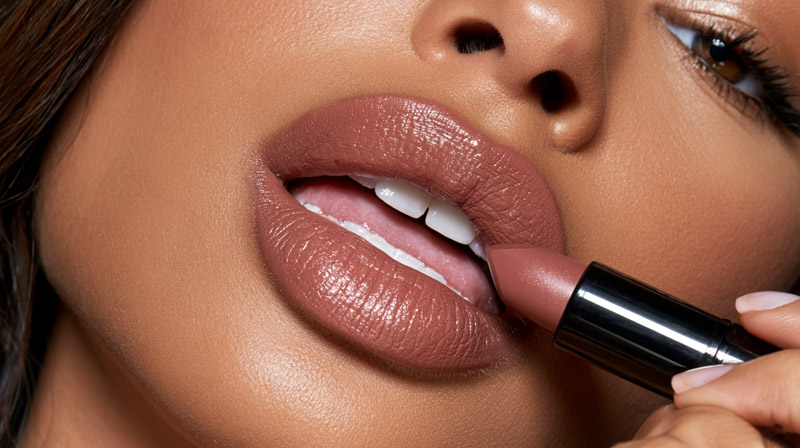
Satin lipstick problems are rarely about the formula itself. Almost every complaint traces back to one of a handful of habits.
Skipping lip prep is the big one. Satin catches on dry, flaking skin instead of smoothing over it, and the color ends up looking patchy rather than even. Over-blotting causes a different kind of damage: a heavy blot strips away the pearl particles that create the sheen in the first place, pushing the finish toward flat and matte-looking whether that was the goal or not.
Liner matters too. A matte liner underneath wears at a different rate than the satin center, so once the middle fades first, there’s a visible ring left behind. And piling on too heavy a layer of product settles into any fine lines around the mouth, causing the kind of feathering a single thin coat would have avoided.
Fix one of those four habits and the finish usually corrects itself. Switching lipstick rarely does.
Which Brands Make Notable Satin Lipsticks
MAC named the category, but plenty of other brands build entire lines around the same finish.
| Brand | Product | Notable Trait |
|---|---|---|
| MAC | Satin (S) lipstick line | Original finish naming, long-running shades |
| NARS | Satin Lip Pencil | Jumbo pencil format, doubles as liner and color |
| Maybelline | Color Sensational Made For All | Satin formula tested across 50 skin tones |
MAC’s Satin range includes long-running shades like Twig, Verve, and Myth, all longtime favorites that have stuck around in the permanent lineup since they launched.
NARS built its Satin Lip Pencil as a jumbo, vitamin-enriched pencil that doubles as both liner and full lip color. The brand itself goes back to 1994, when founder Francois Nars launched it with a collection of 12 bullet lipsticks. The Satin Lip Pencil came later and was never part of that original lineup.
Maybelline took a different approach with its Color Sensational Made For All satin formula, testing it on 50 diverse skin tones before launch in an effort to cover a wider undertone range than a typical single-shade release usually does (Maybelline).
Naming isn’t consistent across brands, worth flagging. Some attach “satin” to liquid long-wear formulas that behave nothing like a classic bullet satin, which makes the texture description more reliable than the finish name alone when comparing products.
How Should Satin Lipstick Be Stored to Maintain Its Finish
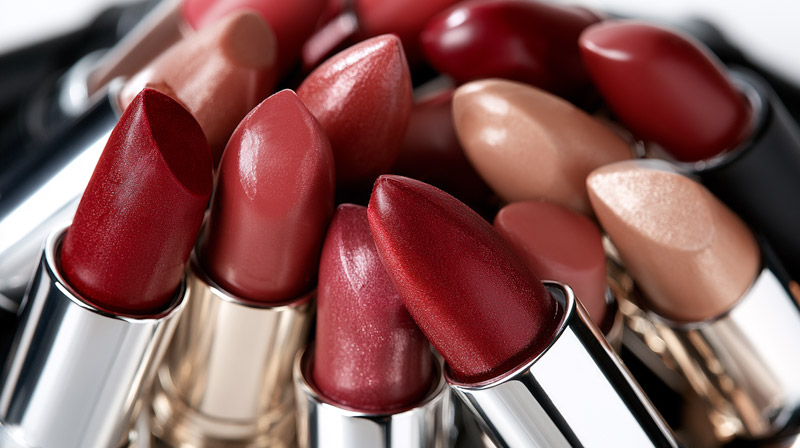
Cool, dry storage away from direct heat is the single biggest factor in how long a satin lipstick keeps its texture.
Regulation (EC) No 1223/2009 requires an EU Period After Opening symbol, the small open-jar icon with a number of months, on any cosmetic with a shelf life longer than 30 months.
Most bullet lipsticks carry a PAO of 12 to 24 months, though that number assumes room-temperature storage and a tightly capped tube between uses (GlamGeek, 2026).
Satin’s higher oil content (covered earlier in the ingredient breakdown) makes it more prone to visible separation than a drier matte formula, especially once it’s stored somewhere warm.
| Sign | What It Means |
|---|---|
| Surface looks wet or gritty | Wax and oil have started to separate |
| Scent turns sour or changes | Oils have begun oxidizing |
| Color applies patchy or streaky | Pigment dispersion has broken down |
A capped tube kept out of direct sun, away from a hot car or a bathroom windowsill, will reliably reach its full PAO window. A tube left somewhere warm all summer often will not.
When Does a Satin Finish Not Work Well
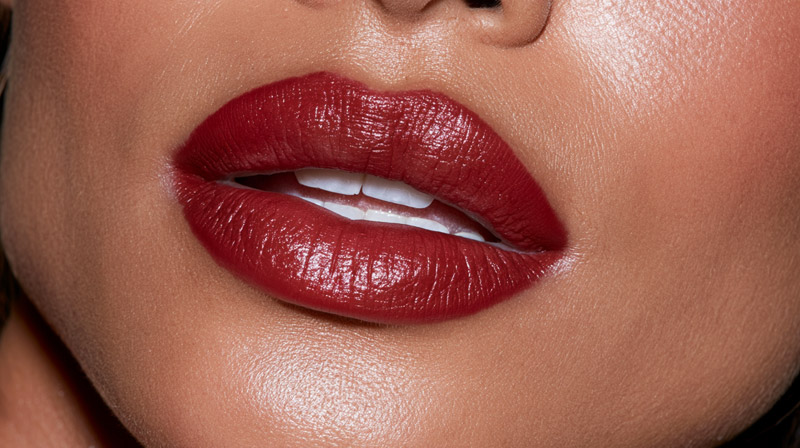
Comfort is satin’s whole selling point, and formulas built around comfort aren’t built for every occasion.
| Situation | Better Fit |
|---|---|
| All-day event, no touch-ups | Matte or long-wear liquid |
| Oily lips or oily skin | Matte |
| Mask or transfer-heavy day | Transfer-resistant liquid matte |
| Bold, fully saturated color | Matte |
Weddings, galas, and long workdays outlast satin’s typical window pretty easily. Those occasions call for a formula built to skip reapplication entirely, not one you’ll be checking on every few hours.
Oily lips are another mismatch. The same oil content that makes satin comfortable gives it less grip on skin that’s already producing its own oil, and a lower-oil matte formula tends to adhere more reliably there.
Mask-proof or transfer-heavy settings are the third case. Industry testing on transfer-proof lipstick measures exactly this kind of thing, the marks left on masks and cups, and satin’s added slip works against it (Cosmetics and Toiletries).
Huda Beauty’s Liquid Matte line markets an eight-hour wear claim built for exactly these longer, higher-contact occasions, the kind of day satin was never formulated to survive.
Bold, fully saturated looks also favor matte. The dense, low-oil pigment load reads as one flat, uniform color rather than the softer, light-diffused version satin gives the same shade.
FAQ on What Is Satin Lipstick
Is satin lipstick the same as semi-matte lipstick?
Not officially, though many brands use the terms as if they are.
Semi-matte usually means slightly less shine than true satin, with less mica and a firmer, drier feel closer to matte.
Does satin lipstick dry out your lips?
No, not the way matte does.
Satin’s higher oil and emollient content keeps lips comfortable, though very dry lips still benefit from a balm underneath before application.
Can you wear satin lipstick without lip liner?
Yes. Satin holds its edge better than gloss, so liner is optional rather than required.
Skipping it just means less precision at the lip line and a softer overall shape, which some people prefer for a natural look.
How do you remove satin lipstick?
An oil-based makeup remover or cleansing balm breaks down the wax and pigment fastest.
Warm water and a washcloth also work, since satin’s oil content makes it looser than a fully set matte formula.
Is satin lipstick vegan or cruelty-free?
It depends on the wax blend, not the finish itself.
Candelilla and carnauba wax are plant-derived, but beeswax is not, so checking the ingredient list is the only reliable way to confirm.
Does satin lipstick transfer onto teeth?
Satin transfers onto teeth more easily than matte because of its added slip and oil content.
A single light blot after application, the same step used to smooth the finish, cuts most of that transfer down.
Is satin lipstick more expensive than matte lipstick?
Finish alone rarely sets the price.
MAC, for instance, prices its Satin line the same as its Matte line, since packaging, brand tier, and shade range drive cost more than the finish does.
Does satin lipstick need a top coat or setting powder?
No, and doing either works against the finish.
A gloss top coat pushes satin toward a wetter shine, while setting powder flattens the sheen toward matte, undoing the balance the formula is built around.
Can sensitive lips react to satin lipstick ingredients?
Fragrance, certain dyes, and some silicones are the most common irritants across any lipstick finish, satin included.
Patch-testing a new shade on the inner wrist first is the simplest way to catch a reaction before it reaches the lips.
Can you turn a matte lipstick into a satin finish?
Not permanently, but you can fake it.
A thin layer of clear lip balm or a light dab of gloss over matte lipstick adds back sheen, though it will not fully replicate satin’s built-in shine.
Conclusion
Knowing what satin lipstick actually is answers the definition question, not the shopping one. The real test happens at the ingredient list, not on the label.
Brands disagree on what counts as satin, semi-matte, or satin-finish, so the word on the tube tells you less than the wax-to-oil ratio inside it.
Check that list before the shade. A formula leaning toward oil and emollients behaves differently on the lips than one leaning toward wax, regardless of what the packaging calls it.
Start with a neutral shade in a brand’s satin line. Wear it through one full day of talking, eating, and drinking, then judge comfort and fade before building a full shade rotation and lip liner pairing around it.

She started writing on the site after fielding the same questions from clients and friends often enough to just write the answers down: which red won't turn orange on a warm undertone, how to keep lipstick from feathering into fine lines, why a "12-hour" formula rarely survives dinner.
Every review on the site follows the same rule she uses with paying clients: wear it first, then decide if it's worth recommending.
- How to Make Eyeliner Last Longer Without Smudging - August 31, 2026
- How to Make Eyeshadow Last Longer All Day - August 29, 2026
- How to Find Your Undertone in 5 Easy Steps - August 27, 2026