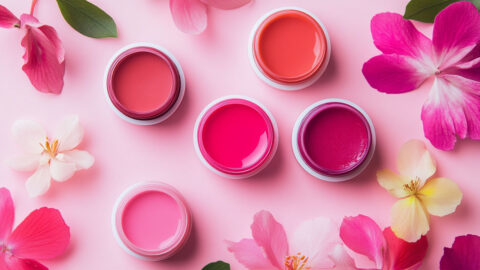
Most people draw a line around their mouth and hope for the best.
Where the pigment sits relative to the vermilion border is what decides the result. After that it comes down to how you handle the cupid’s bow, and whether you fill the lip in or leave it as an outline. Everything else is product marketing.
Sales are climbing faster than technique is. Circana data reported by Glossy in May 2025 put lip liner sales up 60% between 2022 and 2024, so plenty of pencils are getting bought and misused.
What Is Lip Liner
Drawn along the vermilion border, a wax-based pigment pencil sets where the mouth ends. It also slows feathering into the fine lines around the lips. And the dry film it leaves behind gives lipstick something to hold onto, which is the part most people don’t realize they’re paying for.
The formula difference explains everything about how a liner behaves. Lipstick carries a heavy oil load for slip and shine, while lip liner runs on a much higher wax-to-oil ratio.
In-cosmetics formulation guidance for lipstick puts typical wax concentrations between 8% and 18%, and notes that pushing waxes too high causes tackiness and graininess. Sit at the top of that range, drop the oils, and you get a pencil that holds an edge instead of sliding.
That waxy film is also why liner works as a barrier at all. Feathering happens when oils from lipstick travel outward into the creases around the mouth, and a waxed border physically slows that migration. If you want the deeper chemistry side, the components that go into lip color formulas break down where the waxes, esters, and iron oxide pigments come from.
Three anatomical landmarks matter every single time you pick up a pencil:
- The vermilion border is the raised ridge where lip tissue stops and facial skin starts
- The cupid’s bow is the double peak at the center of the upper lip
- The oral commissure is the corner where upper and lower lips meet
Every technique below is a decision about where pigment sits relative to those points.
Worth noting: “lip liner,” “lip pencil,” and “lip crayon” get used interchangeably in product listings, and they are not the same thing. A lip crayon is a chunky color stick meant to fill the whole lip. A liner has a fine core built for edge work. For the fuller definition and product-category breakdown, this explainer on what lip liner is covers the category in detail.
The category is not niche anymore. Circana figures cited by Glossy show lip liner sales climbing 60% between 2022 and 2024, from $138.9 million to $223 million, with another 25% jump in the opening months of 2025. Momentum held: in Circana’s full-year 2025 report, lip liner was named a top-gaining segment in both prestige and mass makeup, and lip was the fastest-growing makeup segment in the mass market.
What Are the Types of Lip Liner Formulas
Wood-cased, retractable, gel, and the newer liquid stains. Each one changes how you hold the pencil, and honestly the format matters more than the shade range does.
| Format | Edge Quality | Best For |
|---|---|---|
| Wood-cased pencil | Sharpest, fully controllable | Precision work, overlining |
| Retractable twist-up | Angled flat tip, no sharpener | Speed, travel, daily wear |
| Gel | Soft, glides, slightly diffused | Blurred lip, comfort |
| Liquid or peel-off stain | Wet edge, sets into stain | Long-wear, minimal touch-ups |
NYX Slim Lip Pencil (roughly $5) and MAC Lip Pencil anchor the wood-cased category, and MAC now lists Lip Pencil in 35 shades. Charlotte Tilbury’s Lip Cheat belongs here too, despite the sleek casing that makes people assume otherwise. Charlotte Tilbury’s own help pages confirm the Lip Cheat has no twist mechanism and must be sharpened. The brand rates it for up to 6 hours of wear.
Rare Beauty’s Kind Words Matte Lip Liner is a genuine retractable, as is Rhode’s Peptide Lip Shape.
Peel-off stains are the newest entrant. Sacheu Beauty’s $12 Lip Liner Stay-N went viral on the strength of the peel reveal, and parent company Gloss Ventures raised $15 million in Series A funding from Peterson Partners in January 2025 after Sacheu posted more than $40 million in 2024 revenue. The brand has kept climbing since, reaching roughly $85 million in 2025.
Formula choice drives wear time more than technique does, and the liner formulas that hold up longest tend to be the ones with the least oil in them.
What Tools Are Needed to Apply Lip Liner
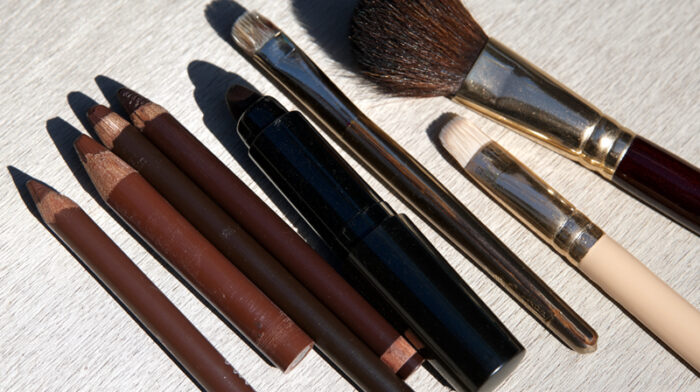
The pencil and a sharpener that actually fits it. A small flat synthetic brush. Lip balm, concealer on a flat brush for cleanup, and a pointed cotton swab with micellar water for when the line wanders.
Most people own two of those and wonder why their line looks thick.
The sharpener matters more than the pencil does. A barrel that doesn’t match the pencil diameter shreds the core instead of shaving it, and a warm pencil crumbles under the blade. Ten minutes in the fridge fixes crumbling almost every time.
Retractable liners never get sharpened. You angle the flat edge instead, using the narrow side for the border and the broad side for filling. Technique for wood-cased pencils is different enough that the correct way to sharpen a lip liner is worth a read before you ruin a $25-plus pencil the way I did.
A flat synthetic brush handles the part nobody talks about, which is the inner edge. A liner drawn and left alone reads as a hard ring the second the lipstick starts to wear. The brush pushes that pigment inward so there’s no visible transition.
Concealer is a cleanup tool, not a corrector for bad lines. Applied on a flat brush just outside the border, it sharpens the edge and hides where the natural lip line sits. Working with concealer on a flat brush takes practice, and the payoff shows up most on overlined shapes.
How to Prep Lips Before Applying Lip Liner
Exfoliate, hydrate, wait, blot. Skipping the wait is the single most common reason liner skips and drags across the lip surface.
Exfoliation comes first. A damp washcloth in circles or a sugar scrub lifts the flaking that catches a pencil tip and pulls it off course.
Then balm goes on and sits for 5 to 10 minutes before you blot it off with a tissue. Applying liner onto a wet balm layer is how you get patchy pigment that migrates within the hour.
Heavy petrolatum balms like Aquaphor and Vaseline are too occlusive for this. Both sit on top of the lip rather than sinking in, and liner drawn over petrolatum slides. Save the heavy stuff for overnight, and build a proper daily routine for lip condition instead of trying to fix dry lips in the 60 seconds before you line them.
A thin veil of foundation or concealer over the lip neutralizes natural pigment. That step becomes necessary when the liner shade sits more than two steps lighter than your natural lip color, since a light liner over deep natural pigment reads muddy.
Prep also does the thing everyone actually wants, which is stopping color from traveling. Dry, flaky lips with product sitting in the cracks bleed faster, and preventing lipstick from bleeding past the border starts with the surface, not the product.
Gentle beats aggressive here. Natural methods for exfoliating lips avoid the micro-tears a stiff scrub leaves behind, and irritated lip tissue holds pigment unevenly for days afterward.
How to Apply Lip Liner Step by Step
The order isn’t flexible. Sharpen, prep, mark the cupid’s bow, mark the center of the bottom lip, connect the outer corners inward, refine the commissures, then blend the inner edge with a brush.
Start at the cupid’s bow. Always.
The X method is the fastest way to lock the top lip in place: two short strokes forming the peaks, meeting at the dip. Those peaks set the proportion for everything else, so if they land wrong you find out before you’ve committed to a full outline.
Next, place a single mark at the center of the bottom lip. Now you have fixed reference points and the rest is connection work.
Use short dashed strokes rather than one continuous drag. Dashes give control, let you correct halfway through, and put far less pressure on the lip surface. A single sweeping stroke looks fast in a tutorial and produces a wobbly line in a bathroom mirror.
Work from the outer corner toward the center on the bottom lip. Overshooting happens when you push outward, almost never when you pull inward.
Then fill or feather the inner edge with the flat brush.
Setup details people ignore:
- Mirror at arm’s length, not 4 inches from your face
- Front-facing light, since side lighting hides asymmetry
- Lips relaxed and slightly parted
- No smiling, no stretching, no pressing the lips flat
Charlotte Tilbury’s own Lip Cheat instructions start from the corner of the top lip and draw slightly over the edge of the natural line, then fill with a matching lipstick for intensity. The brand says one Lip Cheat sells every 7 seconds, based on global sales across 2023, which makes that particular sequence one of the most widely followed lip liner methods on the market.
How to Keep Both Sides of the Lip Symmetrical
Check symmetry at intervals, not at the end. Looking straight into the mirror after every two or three strokes catches drift while it’s still fixable.
Use the philtrum columns as your vertical guide. Those two ridges running from nose to lip land directly above the cupid’s bow peaks, so the peaks belong where the columns end.
Nobody’s mouth is symmetrical anyway. Matching within a millimeter reads as even to every human who looks at you.
How to Choose the Right Lip Liner Shade
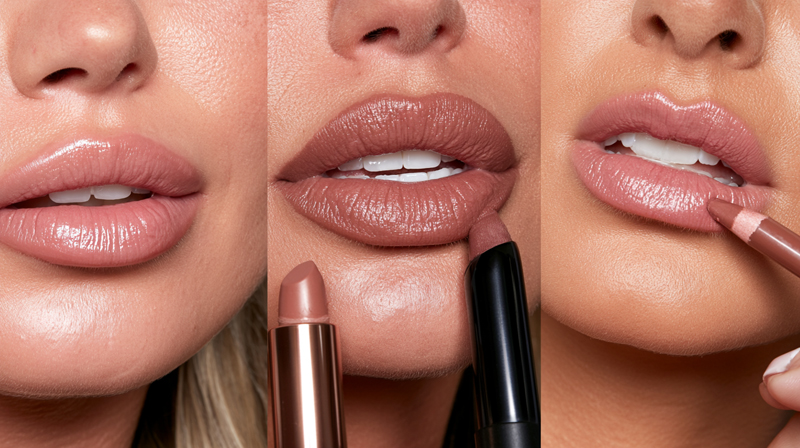
You can match the liner to the lipstick exactly, go one shade deeper than your natural lip, or fall back on a universal neutral like Charlotte Tilbury Pillow Talk, MAC Whirl, or MAC Spice. Most people end up using all three approaches depending on the day.
| Strategy | Result | Use When |
|---|---|---|
| Exact lipstick match | Invisible transition | Bold or bright lip color |
| One step deeper than natural lip | Subtle definition | Bare lip or gloss only |
| Universal neutral | Works under most nudes | Daily wear, uncertainty |
Undertone rules the match. Cool blue-based liner under cool lipstick, warm brick-based under warm. A cool liner under a warm coral lipstick creates a gray shadow at the border that no amount of blending fixes.
The 2-shade rule is the one to memorize. A liner more than 2 shades darker than the lipstick leaves a visible ring as the lipstick wears off the center of the lip, which is exactly the 1990s effect people either want deliberately or hate accidentally.
Nude liner selection depends on natural lip pigment depth, not skin tone alone. Two people with the same complexion and different lip pigment need different liners, which is why picking the right liner shade starts with looking at your bare lips in daylight.
Red is its own problem. Blue-reds, orange-reds, and true reds each demand a different liner base, and matching liner to a red lipstick is where most shade mistakes become obvious in photos.
NYX Professional Makeup dominates the affordable end. The brand claims the top spot in US lip liner sales based on NIQ Scantrack data for the 52 weeks ending April 4, 2026, and Spate found NYX among the brands leading the lip combo trend on TikTok alongside Sacheu Beauty, L’Oréal Paris, and e.l.f. Cosmetics. Cheap pencils dominate the shade-matching conversation because people buy three of them instead of one.
How to Line Lips Based on Lip Shape
Lip shape determines where the line sits relative to the natural border. Thin lips get the line on the outer edge, full lips get it directly on the border, and uneven lips get the smaller side drawn first.
| Lip Shape | Line Placement | Focus Point |
|---|---|---|
| Thin | Outer edge of natural border | Center of both lips |
| Full | On or slightly inside border | No extension needed |
| Asymmetrical | Smaller side first, match to it | Corner-to-corner balance |
| Downturned corners | Stop 2mm before commissure | Slight outer lift |
On thin lips, volume goes at the center third of both lips and never at the corners. Extending toward the commissures widens the mouth horizontally, which reads as a bigger mouth rather than a fuller one. Practical shade and finish choices for lipstick on thinner lips pair directly with this placement.
If your cupid’s bow is flat or barely there, build the peaks with short vertical strokes instead of drawing a V outline. A drawn V looks drawn. Stacked vertical marks read as shape.
Thin upper lip with a full lower lip is a common combination, and the fix is to extend only the top. Lining both throws the proportion further off. What you want is balance, not size.
Downturned corners need restraint. Stopping the line about 2mm short of the commissure and lifting the outer point slightly changes the whole read of the mouth, and it takes maybe four seconds.
How to Overline Lips Without It Looking Obvious
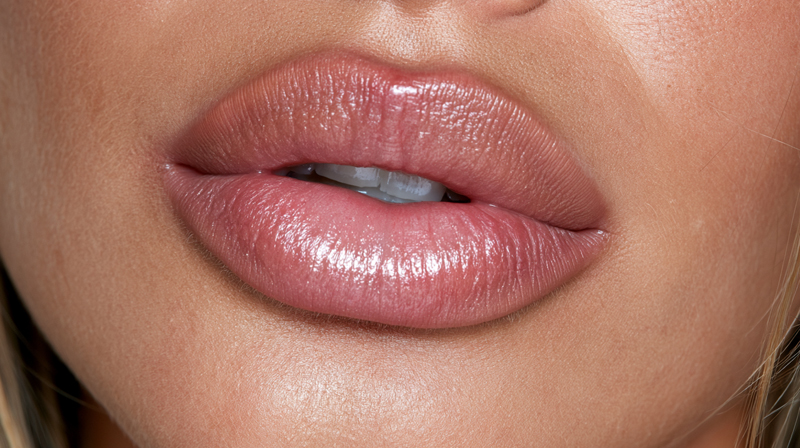
Overlining works within 1 to 2mm past the natural border, at the center third only. Past 2mm the line stops reading as lip and starts reading as drawing. Taper back to the natural border before you reach the corners.
That center third rule is the whole trick. Fullness lives at the middle of the mouth, so extending there adds volume while the corners stay anchored where they belong.
Blend in two directions:
- Outer edge blended outward, so the new line softens into skin
- Inner edge blended inward, so there is no visible ring when color wears
Concealer on the outside of the new line does the finishing. It sharpens the extension and covers the original border in one pass, which is the difference between a fuller mouth and an obvious one.
Finish matters more than technique here. Matte lipstick holds an overlined shape. Gloss migrates past the drawn line within an hour and undoes the work entirely, so applying matte lipstick over the shape is the safer pairing for anything longer than a coffee.
The trend data backs how mainstream this has become. Pinterest reported searches for “’90s lip” up 760% in its Summer 2024 trend report, alongside “’90s makeup look” up 270%. Spate found searches for “lip combo” across Google and TikTok up roughly 97.5% year over year through March 2025, with TikTok accounting for 99.9% of the popularity share.
Overlining is a large part of why. Circana named lip liner one of the fastest-growing areas of the prestige lip segment in the first half of 2025, and again in its full-year 2025 report.
How to Apply Lip Liner With Lipstick, Gloss, or on Its Own
What goes on top changes the application. Under lipstick you line and fill, under gloss you fill the entire lip, and worn alone you fill, blot, and reapply.
Filling is the variable. Almost every complaint about liner comes from someone who only drew the outline.
| Topper | Liner Coverage | Why |
|---|---|---|
| Lipstick | Full fill, then lipstick over everything | Even wear, no ring |
| Gloss | Full fill, edge to edge | Gloss has zero grip |
| Nothing | Fill, blot, reapply, balm at center | Builds a stain-like base |
Under lipstick, the liner acts as a primer rather than a frame. Putting lipstick on over a lined base works best straight from the bullet at the center, then pressed outward toward the border you already drew.
Under gloss it’s full coverage or nothing. Gloss slides off bare lip and clings to lined lip, so a partial fill leaves you with a patchy shape in 30 minutes. Layering gloss over a lined lip gives you the shine without losing the border.
Worn alone, liner behaves close to a lip stain once you blot and reapply. That two-pass method is why the peel-off category took off, and it explains why the way a lip stain works shares so much with a filled-in pencil.
For a blurred lip, fill the outer edge and push pigment inward with a fingertip or brush before the wax sets. Wait 40 seconds and it won’t move.
Ombre is darker liner on the outer third, lighter lipstick at the center, blended where they meet. The junction is the entire technique, and building a proper ombre lip lives or dies on how softly those two shades merge. Blending two lip colors together takes a flat brush and about six light taps, not smearing.
The category data tracks this behavior shift. In a September 2025 analysis, Circana’s Natallia Bambiza described lip liners as among the fastest-growing subsegments and top gaining contributors to both prestige and mass makeup sales, up 28% and 36% respectively so far that year, driven by people wearing lip products in layers rather than solo.
Rhode launched its $24 Peptide Lip Shape on January 30, 2025 in 11 shades, marketed as a lip contour rather than a strict liner, with a built-in smudger at the opposite end. Liner as a standalone product, not a lipstick accessory.
How to Make Lip Liner Last Longer
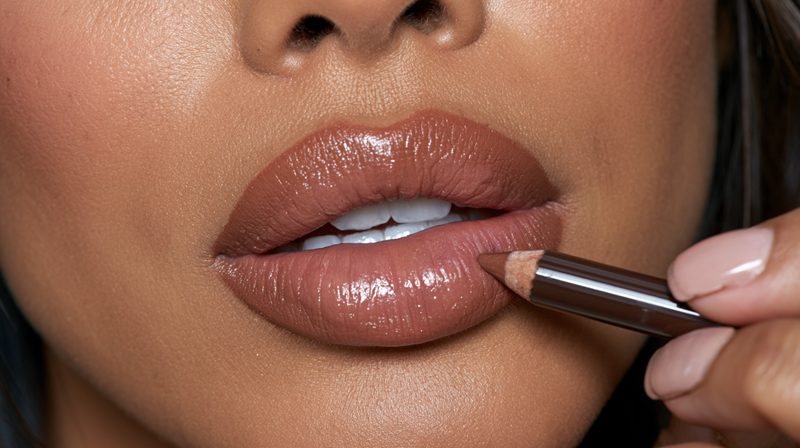
Fill the whole lip instead of outlining it. Blot with tissue, dust translucent powder through a single ply of that tissue, then go back over the liner a second time.
The blot-powder-reapply cycle does most of the work.
The tissue ply is the part people skip, and it’s the reason powdered lips go chalky. Applied directly, powder lands heavy. Pressed through a single layer of tissue, only a fine veil gets through, which sets the wax without killing the color. Setting lip color with powder works the same way whether liner or lipstick sits underneath.
Formula sets the ceiling, though. Matte and waterproof pencils typically hold 6 to 8 hours, film-forming and transfer-resistant formulas claim longer, and creamy pencils trade wear time for comfort. Charlotte Tilbury rates Lip Cheat at up to 6 hours, which is honest for a creamy waterproof pencil.
What breaks the line first:
- Oily food (the single fastest way to lose a lip)
- Coffee cup rims and straws
- Lip licking, which nobody admits to
- Hands resting on the mouth
Eating without wrecking your lip color comes down to angle and food choice more than product quality.
For touch-ups, blot the center first and reline only the border. Skip layering fresh product over broken pigment. Stacking on top of a worn line is how you end up with a thick, muddy edge by 4pm.
Make Up For Ever’s Artist Color Pencil franchise posted triple-digit sales growth year over year in 2024, along with double-digit growth in social mentions, per Spate, on the strength of its long-wear positioning.
Wear expectations vary widely by formula, and the realistic wear window for lip liner is worth checking before you blame technique. Once you know the ceiling, stretching liner wear further becomes a prep and layering problem.
What Are the Most Common Lip Liner Mistakes and How to Fix Them
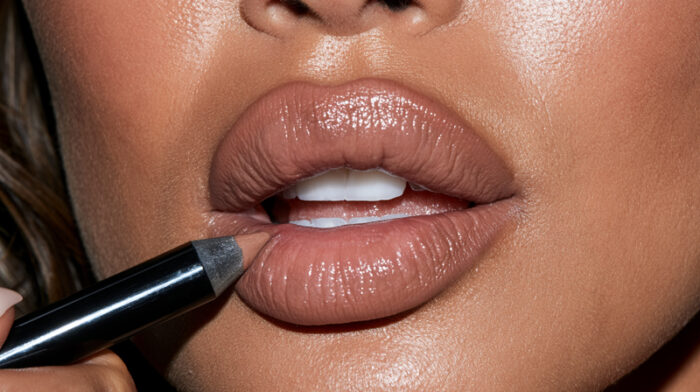
Nearly every bad result traces back to a blunt tip, stretched lips, dark liner with no fill, overlining that runs into the corners, or lining before any prep at all.
| Mistake | What It Looks Like | Fix |
|---|---|---|
| Blunt tip | Thick, uneven border | Sharpen cold, or angle a retractable |
| Stretched lips | Line shifts when mouth relaxes | Relax, part slightly, redraw |
| Dark liner, no fill | Visible ring as color wears | Fill the entire lip |
| Overlining at corners | Wider mouth, not fuller | Center third only |
The blunt tip problem is bigger than people think. A dull core can’t produce a crisp border no matter how steady your hand is, and most people put off sharpening because it wastes product.
NYX’s $5-ish Slim Lip Pencil is wood-cased and needs a standard cosmetic sharpener. Cheap enough to replace, which is exactly why so many get used dull. Sharpening a NYX lip liner properly takes ten seconds and fixes half of what people call a technique problem.
Correction tools, ranked by how much damage they do:
- A pointed cotton swab with micellar water, for a line that wandered a millimeter or less
- Concealer on a flat brush, for cleaning and resharpening the outer edge
- Full removal with balm and tissue when the shape is off by more than that, and you start over
Trying to fix a badly placed line with more product never works. It builds thickness at exactly the spot you wanted crisp.
Deliberately dark liner isn’t a mistake, incidentally. Trendalytics tracked dark lip liner as one of the product trends rising alongside the mob wife aesthetic on TikTok in 2024, so the ’90s ring effect is a choice plenty of people are making on purpose now.
Transfer happens regardless of skill. Pigment on a collar or a shirt cuff needs treating fast, and lifting lip liner out of fabric gets much harder once the wax sets into the weave.
How to Remove Lip Liner Completely
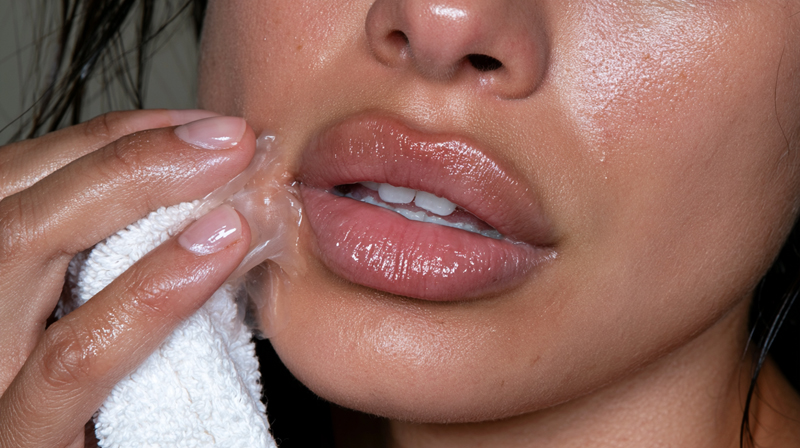
Oil-based or biphase removers do this properly. Water-based cleanser lifts surface pigment and can leave stain sitting in the vermilion border, which is why the line seems to reappear the next morning.
Long-wear and waterproof formulas are built to resist water. Removing them with water is a losing argument with chemistry.
The balm-and-sit approach:
- Apply a thick layer of cleansing balm or oil
- Wait 60 seconds without touching it
- Wipe with a damp cloth in one direction
That wait is the whole method. The oil needs time to break the wax film, and wiping early just moves pigment around the mouth.
Cleansing liquids and micellar water held 35.13% of the makeup remover market in 2025, per Mordor Intelligence, while cleansing oils and balms are forecast to grow at a 7.18% CAGR through 2031. Mordor sizes the overall category at $2.71 billion in 2025, heading toward $3.87 billion by 2031. The shift toward oils and balms tracks with how much long-wear lip product people are actually wearing.
Clinique Take The Day Off Cleansing Balm turns up repeatedly in makeup artist recommendation lists for exactly this job.
Don’t scrub. The vermilion border is thin tissue with no oil glands, and scrubbing a stubborn stain leaves irritation that lasts days and holds pigment unevenly the next time you line. Treating dry, damaged lips takes far longer than the 30 seconds you saved by rubbing hard.
Residual stain along the outer edge comes off with a cotton swab, not a cloth over the whole lip. Target the border and leave the rest alone.
Long-wear lipstick worn over the liner adds a second removal problem, and taking off matte lipstick uses the same oil-first sequence before you get anywhere near the liner underneath.
FAQ on How To Apply Lip Liner
Do you apply lip liner before or after lipstick?
Before. Lip liner sets the shape and creates the grip layer, then lipstick goes over the whole lip. Applying liner afterward leaves a visible border sitting on top of the color.
Should you fill in your lips with liner or just outline them?
Fill the entire lip. Outlining alone leaves a dark ring once the lipstick wears off the center. A full fill keeps wear even and extends color noticeably.
How far past your natural lip line can you overline?
1 to 2mm maximum, and only across the center third. Past 2mm the line stops reading as lip tissue. Taper back to the natural border before reaching the oral commissures.
What lip liner shade works with any lipstick?
A neutral rose-nude. Charlotte Tilbury Pillow Talk, MAC Whirl, and MAC Spice cover most situations. Keep the liner within 2 shades of your lipstick to avoid an obvious contrast line.
Why does my lip liner keep skipping and dragging?
Wet balm underneath, or a blunt tip. Blot the balm off after 5 to 10 minutes, then sharpen the pencil cold so the core shaves cleanly instead of crumbling.
How do you line thin lips without it looking obvious?
Place the line on the outer edge of the natural border and concentrate the extension at the center of both lips. Never extend toward the corners, which widens the mouth instead.
Can you wear lip liner alone without lipstick?
Yes. Fill the whole lip, blot with tissue, reapply a second layer, then add balm at the center only. The result wears like a soft stain for hours.
How do you fix a lip liner mistake?
A pointed cotton swab dipped in micellar water handles anything under 1mm. Concealer on a flat brush cleans the outer edge. For bigger shape errors, remove everything and restart.
What lip liner works best under gloss?
Any liner, provided you fill the lip edge to edge. Gloss has no grip and slides off bare patches, so partial coverage leaves an uneven shape within the hour.
How do you match both sides of your lips evenly?
Use the philtrum columns as vertical guides for the cupid’s bow peaks. Check your reflection straight-on every 2 or 3 strokes, and line the smaller side first on asymmetrical lips.
Conclusion
Knowing how to apply lip liner comes down to repetition, not talent. The dashed-stroke method feels awkward for about a week, then your hand stops needing the mirror as much.
Pick one pencil and learn it before buying four more. A $5 wood-cased liner teaches edge control better than a retractable does, because you feel every bit of pressure.
Watch what your liner does at hour four. That tells you whether the problem is the formula, the prep, or the blot step you skipped.
Undertone mistakes show up in photos long before they show up in the bathroom mirror.
Practice on a day nobody sees you. Feathering, uneven corners, patchy fill: all of it gets fixable with reps.

She started writing on the site after fielding the same questions from clients and friends often enough to just write the answers down: which red won't turn orange on a warm undertone, how to keep lipstick from feathering into fine lines, why a "12-hour" formula rarely survives dinner.
Every review on the site follows the same rule she uses with paying clients: wear it first, then decide if it's worth recommending.
- How to Make Eyeliner Last Longer Without Smudging - August 31, 2026
- How to Make Eyeshadow Last Longer All Day - August 29, 2026
- How to Find Your Undertone in 5 Easy Steps - August 27, 2026