The lip pencil spent about fifteen years as the thing you owned but never reached for. That changed. Sales grew 60% between 2022 and 2024, which is not a number a sleepy category posts by accident.
It is a wax-based pigment pencil. You draw it along the edge of the lip to hold the shape, keep lipstick from creeping into the fine lines around your mouth, and give color something to grip.
Most people use one wrong. Wrong shade, wrong placement, visible ring by lunch.
What Is Lip Liner
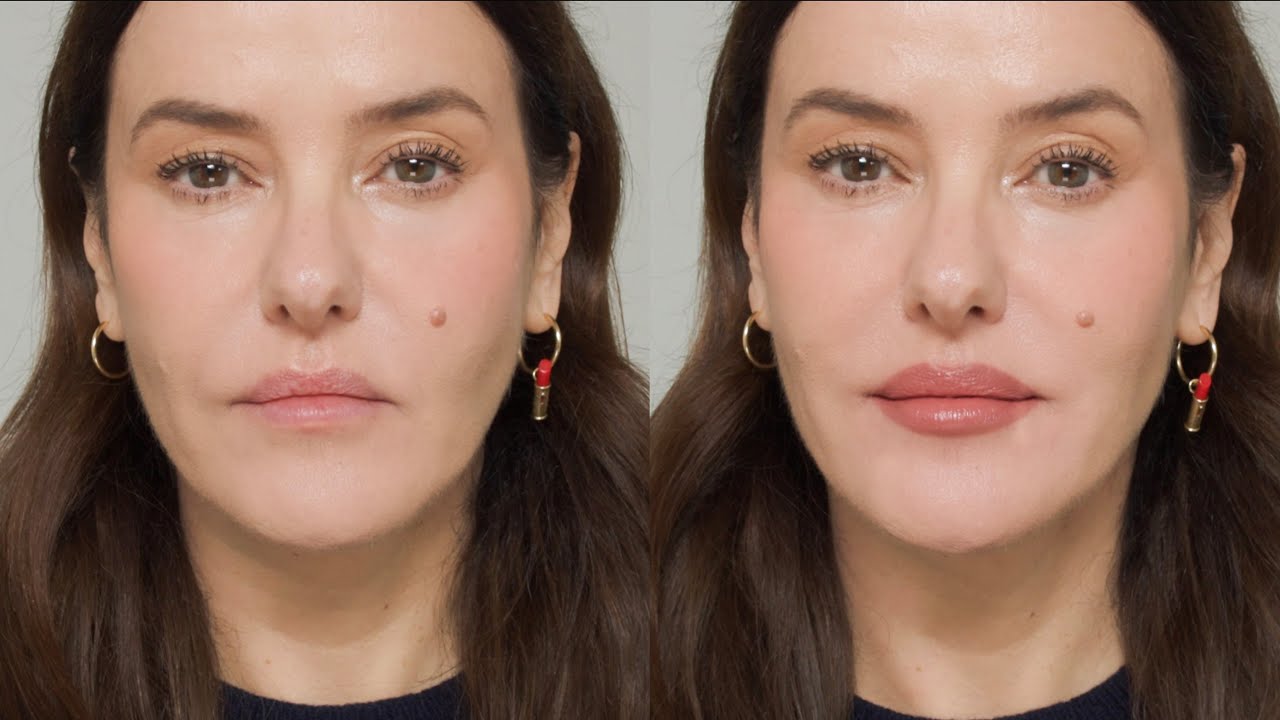
The lead is dense. That density is the whole point, since a hard wax edge deposits a thin line instead of a soft smear.
What you are tracing is the vermilion border, the ridge where lip tissue meets the skin of your face. The pencil holds that shape and blocks migration past it. Fill the lip in and it also leaves pigment behind that survives longer than whatever sits on top. Formats run from wood-cased pencils to retractable twist-up barrels, gel crayons, and felt-tip liquids. Balm goes on first, then liner, then lipstick.
The growth numbers are worth putting in context. Circana data reported by Glossy shows lip liner sales climbed 60% between 2022 and 2024, moving from $138.9 million to $223 million in the US. The category added another 25% in the opening months of 2025.
Momentum kept going. In Circana’s US year-end report on 2025, released in February 2026, lip liner was named among the top-gaining prestige makeup segments alongside makeup sets and other lip products such as oils and balms. The same pattern held in mass retail, where lip was the fastest-growing makeup segment and lip liner was one of the products driving it.
Global market estimates vary a lot by research firm. Intel Market Research puts the category at $1.05 billion in 2025, projecting $1.85 billion by 2034 at a 6.7% CAGR. Other firms model the same category anywhere from $1.6 billion to $2.5 billion, so treat any single global figure as an estimate rather than a count.
The pencil format itself predates the current boom by decades. Anyone curious about the origins of the lip pencil will find it tangled up with early lipstick manufacturing rather than invented on its own.
Within the lip category, liner sits next to lipstick, gloss, balm, and stain. It is the only one of those five built primarily as a border tool rather than a color payoff tool.
Worth knowing before you go further: the finish differences across lipstick formulas change how much barrier work a liner has to do underneath.
What Is Lip Liner Made Of
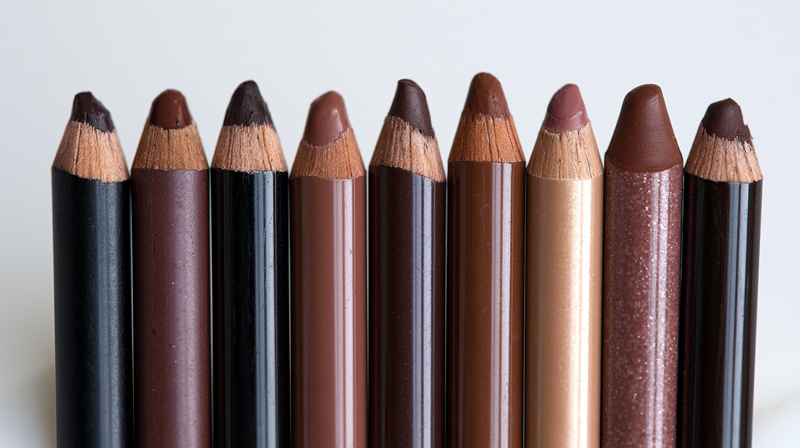
Wax gives the lead its structure. Oils and esters let it move across skin without dragging, and pigment does the color. All of it gets pressed into a thin, hard core.
Wax content in a colour pellet runs roughly 10% to 40% by weight. Silicones and film formers show up in the long-wear and waterproof versions, which is most of what has launched recently.
The wax backbone
Carnauba melts at roughly 82 to 86 degrees C and typically sits at 2% to 8% of the formula. It is the reason a pencil left in a warm bag sometimes survives the afternoon.
Candelilla melts lower, around 68 to 73 degrees C, gets used at 3% to 10%, and is vegan. It is harder and more brittle than beeswax, which you notice at the sharpener rather than on your lips.
Beeswax and ceresin add body. Ceresin does something extra, building a waterproof barrier, and Charlotte Tilbury lists it in Lip Cheat specifically for preventing feathering and transfer.
Oils, esters, and pigments
Read a real INCI list and the pattern shows up fast. NYX Professional Makeup’s Slim Lip Pencil is built around emollient esters plus jojoba oil, shea butter, and coconut oil, with candelilla, beeswax, and carnauba giving the lead its structure.
Colour comes from iron oxides (CI 77491, 77492, 77499), titanium dioxide (CI 77891), and D&C lakes such as Red 7 Lake and Red 28 Lake.
Bobbi Brown’s Lip Liner Pencil adds ceramide NP and palmitoyl tripeptide-1 to a candelilla and carnauba base, an early example of the skincare-hybrid positioning that has since spread across the whole category.
Carmine (CI 75470) shows up in some reds and pinks, including MAC’s Spice. Not vegan, and a known contact allergen for a small group of people.
Why liner is drier than lipstick
A lipstick bullet needs to twist without bending and deposit under light pressure. A liner lead has one job the bullet does not, which is holding a point.
So the ratios shift. More wax, less oil, heavier pigment load. That trade produces the matte, slightly draggy feel most people notice the first time they use one.
The full breakdown of what goes into a bullet versus a pencil is covered in more depth under what lipstick is actually made from.
What Does Lip Liner Do
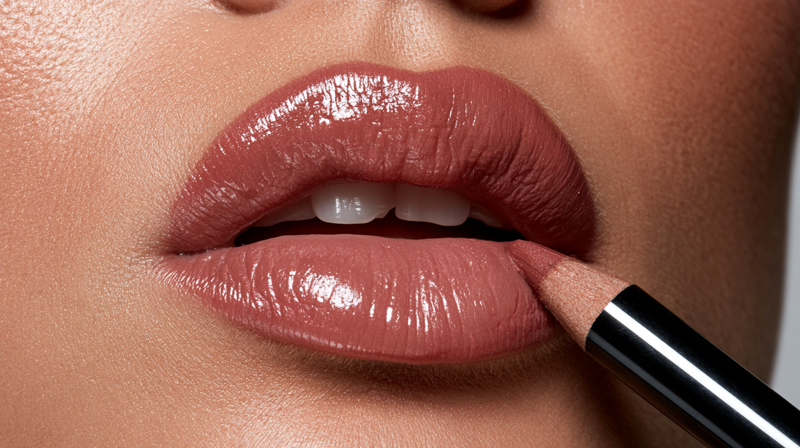
The wax edge builds a wall that lipstick oils cannot cross. Used across the whole lip rather than just the outline, it also works as a base layer that keeps color present after the top coat gives up. Beyond that, it corrects asymmetry between the upper and lower lip, and shifting the drawn border out by 1 to 2 mm changes how large the mouth reads.
How Lip Liner Stops Feathering and Bleeding
Feathering happens when oils in a lipstick wick outward into the vertical lines around the mouth.
The liner’s wax edge is hydrophobic and higher-melting than lipstick oils, so the color hits a wall at the border and stops.
Waterproof and film-forming formulas do this best, which is why brands like Charlotte Tilbury and Rare Beauty lead their liner marketing with the waterproof claim rather than the shade.
Related reading on why color migrates past the lip line and how to shut bleeding down for good.
How Lip Liner Extends Lipstick Wear Time
Filling in the entire lip with liner (not just tracing the outline) leaves a pigmented base underneath the lipstick.
When the top layer wears off after coffee or lunch, color remains. No ring, no bare patch in the center.
Drew Barrymore has described doing exactly this in the 90s with MAC Spice: draw the pencil over the whole lip, then press it down with a powder puff to build a homemade matte.
More on stacking layers for endurance in this guide to stretching lip color through a full day.
How Lip Liner Reshapes Lip Proportion
MAC national artist Carly Utting recommends a shade slightly darker than natural lip color, then starting with a freshly sharpened pencil and gently pushing the line just outside the natural border.
The usual technique limit is 1 to 2 mm past the border, concentrated at the center of the top lip rather than the corners.
The 90s revival has also pushed liner into territory that used to belong to injectables, with beauty press through 2025 covering cool-toned liner as a fake-fullness alternative to filler.
Thin lips get their own set of placement rules, covered in this walkthrough for smaller lip shapes.
Types of Lip Liner
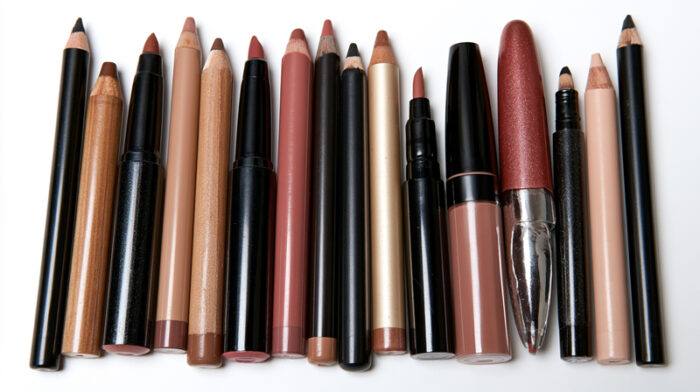
Wood-cased pencils sharpen to the finest point of anything on the shelf. Retractables trade that for never needing a sharpener. Gel and creamy leads blur on purpose, liquid and felt-tip versions set fast and hard, and clear liners skip pigment altogether. What separates them, practically speaking, is tip precision, wear time, and how much a shaky hand gets punished.
| Type | Tip control | Best for |
|---|---|---|
| Wood pencil | Sharpest, fully adjustable | Precise borders, overlining |
| Retractable | Fixed width, no sharpener | Travel, quick daily use |
| Gel or creamy | Soft, blurs fast | Smudged, lived-in looks |
| Liquid or felt-tip | Highest precision, sets fast | Sharp graphic edges |
| Clear | Colorless wax barrier | Any lipstick shade |
Wood Pencil vs Retractable Lip Liner
Wood needs a sharpener. In exchange you get a genuinely fine point and the ability to reset a crumbling tip instead of throwing the pencil out.
Retractables solve the sharpener problem by removing it, at the cost of a fixed tip diameter that only gets rounder with use. Some now build a small sharpener into the cap. Rare Beauty’s Kind Words liner does this, which splits the difference reasonably well.
I prefer wood for anything involving overlining. The point matters more than the convenience does.
Sharpening technique varies by formula hardness, which is why sharpening a lip pencil properly is not the same job as sharpening a graphite one. Softer gel leads in particular (see the NYX pencils specifically) snap if the blade is dull.
Clear Lip Liner and When It Replaces a Shade Match
Clear liner is a colorless wax pencil. It builds the barrier without adding pigment.
Use it when you own 15 lipsticks and no matching liners. Use it under bright coral or true red where a mismatched nude line would show.
Downside: it does nothing for shape correction, since there is no visible line to redraw.
Gel, creamy, and hybrid formulas
Maybelline’s Lifter Liner runs on hyaluronic acid and jojoba oil. Kosas Hotliner is a hyaluronic acid contouring liner. Peel-off stain formats are the newest arrival, and Spate recorded interest in peel-off lip stains rising 117.1% year over year in 2025.
Spate data covering 2025 named NYX Professional Makeup, Sacheu Beauty, L’Oreal Paris, and e.l.f. Cosmetics as the brands driving liner conversation on TikTok, with searches for the “lip combo” up 97.5% year over year and searches for dark lip liner up 27.3%.
Creamy formulas glide better on dry lips. They also blur faster, so wear time drops.
Lip Liner vs Lipstick vs Lip Gloss

Liner carries the highest wax-to-oil ratio and the hardest texture of the three. Lipstick sits in the middle, balancing wax and oil for payoff and comfort. Gloss is oil-dominant with almost no structure at all, which is why it moves. Precision runs highest to lowest in that same order, and so does wear time.
| Lip liner | Lipstick | Lip gloss | |
|---|---|---|---|
| Texture | Hard wax lead | Molded bullet | Viscous liquid |
| Applicator | Point or felt tip | Angled bullet edge | Doe-foot or wand |
| Primary job | Border and barrier | Color payoff | Shine and volume |
| Bare-lip wear | Longest | Moderate | Shortest |
Only one of the three functions as a boundary. Gloss actively works against boundaries, which is why gloss over an unlined lip migrates fastest.
Worn alone across the whole lip, liner reads flat and matte. Not everyone’s thing, though it is exactly the effect that made matte lip formulas a category in the first place.
A liner can substitute for lipstick. It cannot substitute for gloss, and it will never substitute for a stain, since stains bind to the skin rather than sitting on top of it.
For the finish and staying-power comparison between the two color products, there is a fuller breakdown of how gloss and lipstick differ in practice, plus the basics on what gloss actually is.
How to Choose a Lip Liner Shade

You are matching to one of a few things. Your natural lip color, if you want definition nobody can spot. Your lipstick, if you want the two to read as one product. Or one shade darker than either, if you want depth at the edge. Undertone alignment matters more than depth in all of those cases, because a cool lipstick under a warm liner reads muddy no matter how close the depth is.
| Goal | Shade strategy | Example |
|---|---|---|
| Invisible definition | Match natural lip tone | Charlotte Tilbury Pillow Talk |
| Full coordination | Match the lipstick exactly | Any brand’s paired liner |
| Added depth | One shade darker | MAC Spice under a nude |
Pillow Talk Lip Cheat launched in 2013 as Charlotte Tilbury’s very first Pillow Talk product, and the rest of the collection was built around it. The brand claims two Lip Cheats sell every 2 minutes globally, and markets it as the number one lip liner in the UK prestige makeup market.
MAC Spice runs the other direction historically. In 2020 MAC reported its lip pencils selling at a rate of 1,000 per day, with Spice moving eight units an hour.
NYX sits at the volume end. The brand cites NIQ retail data through April 2026 to call itself America’s number one lip liner brand.
Undertone matching
Warm skin and warm lips take terracotta, cinnamon, and brick-brown liners.
Cool undertones sit better under berry, rose, and blue-based plum. That same logic drives cool-toned lipstick selection, so the two decisions can be made together.
Pigmented and deeper lip tones
Naturally pigmented lips already have depth. A liner one shade darker than a mid-tone nude often disappears entirely.
Match to the deepest part of the lip instead, which is usually the outer edge rather than the center.
The high-contrast liner look has a real lineage rather than being a mistake, with Chola culture and the 90s supermodel era both cited by makeup artists as the traditions that made it a signature.
Matching liner to a specific lipstick
Red is the hardest match in the category. Orange-reds and blue-reds need different liners, and getting it wrong is visible from across a room.
The pairing rules are laid out in detail under liner shades that work with red lipstick.
Broader shade-selection logic, including how to build a two or three liner starter set, is covered in this guide to picking the right pencil.
How to Apply Lip Liner
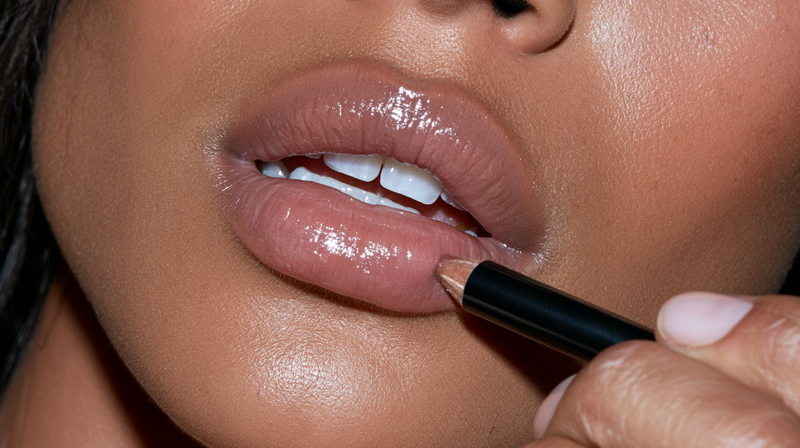
Exfoliate, apply balm, blot it down. Then start at the Cupid’s bow, connect outward to each corner with short strokes, and fill in the whole lip before blurring the inner edge. Blotting the balm is the part people skip, and it is what keeps the wax from skidding across a slick surface.
Prep
Dead skin ruins a line. There is no technique that fixes lining over a flaking lip.
Gentle exfoliation first, then balm, then blot until the surface is matte to the touch. Options for the first step live in this rundown of natural lip exfoliation.
MAC’s artists recommend hydrating and exfoliating before lining specifically to create a plump, smooth surface for the pencil.
The stroke sequence
- Start at the peak of the Cupid’s bow, one side at a time
- Draw the outer corners next
- Connect corner to bow with short 3 to 5 mm strokes, never one continuous drag
- Repeat on the lower lip, working outward from center
Short strokes fix themselves. A single long line either lands or it does not.
Lining Before vs After Lipstick
Lining first is the standard order. The border gets set, lipstick fills the shape it made, and the barrier does its job for the rest of the day.
Going back over the top afterward is useful for cleanup, mostly for sharpening an edge that softened while you were filling in. MAC and Bobbi Brown both list the after-lipstick option in their own product instructions, so it is a sanctioned technique rather than a workaround.
Neither is wrong. I line first about 90% of the time, then go back with the same pencil at the end if the corners softened.
Overlining Without an Obvious Line
The visible ring is the failure everyone recognizes. It happens because the outline was drawn and the interior was left bare.
Fill the whole lip. Then blur the inner edge with a fingertip or a small brush so there is no hard transition when the lipstick wears down.
Gradient techniques take this further. The blurred center-to-edge effect is the base for an ombre lip.
Making it hold
Setting the liner with a light dusting of translucent powder before lipstick adds hours. Old trick, still works.
Formula choice matters as much as technique, which is why the longest-wearing liner formulas tend to be silicone-heavy and waterproof.
Full technique detail sits in the step-by-step application guide, and the endurance-specific tactics in this guide to keeping a lined edge intact.
Tip hygiene
Sharpen every few uses. A fresh cut removes the oxidized top layer along with whatever bacteria came off your lips.
Check the small open-jar symbol on the packaging for the period-after-opening window, which on conventional pencils is usually printed as 12M or 24M.
Common Lip Liner Mistakes
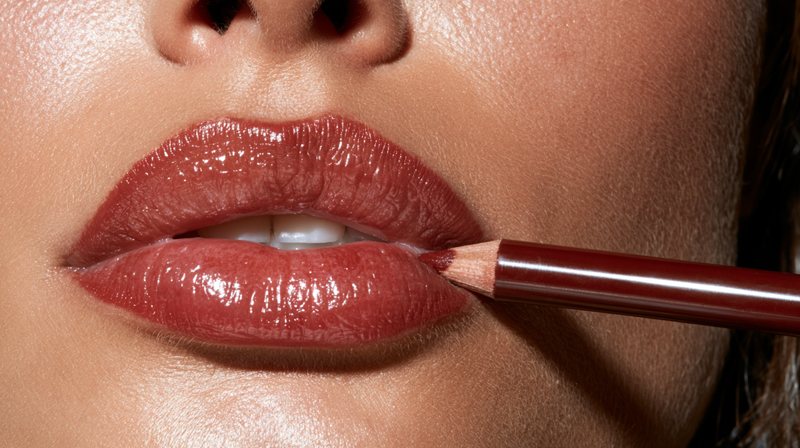
Almost all of them come down to the same handful of habits. A dark ring left behind after the lipstick fades. Lining more than 2 mm past the natural border. Dragging a dull tip across dry skin, mismatching the shade against the lipstick, lining over flakes, and drawing each side of the Cupid’s bow without checking it against the other.
Every one of these is a placement or prep failure. None of them are formula failures.
The visible ring
Outline drawn, interior left bare, lipstick wears off by 2pm. The ring is what survives.
Fill the whole lip with liner and then soften the inner boundary, so there is no hard line waiting underneath when the color goes.
Blending technique carries over directly from standard lipstick blending, since the motion is the same.
Overlining past the honest limit
The working ceiling most makeup artists give is 1 to 2 mm outside the natural line, concentrated where fullness is actually wanted.
Corners are the trap. Extending the corners widens the mouth instead of plumping it, and it is what tips an overline into looking drawn on.
Working with a dull tip
- A rounded lead deposits a fat, imprecise line
- Dull tips drag and pull at the skin
- Soft gel leads crumble when forced against resistance
Sharpen before use, not after. Brand-specific technique differs, and the softer luxury formulas (see sharpening a Lip Cheat pencil) need a cold pencil and a fresh blade.
Lining over dry, flaking skin
Wax cannot bind to loose skin. The line breaks up and looks patchy within an hour.
Balm first, blot, then line. There is a longer version of this for badly dehydrated lips in this guide to lip color on dry lips.
Uneven Cupid’s bow
It happens because the left peak gets drawn, then the right peak, with nobody comparing the two until both are done.
Mark both peaks first as two small dots. Then connect. Boring, but it works every time.
And if a pencil ends up smeared down a shirt during any of this, removing liner from fabric is easier than removing lipstick, since there is less oil to spread.
How Long Lip Liner Lasts
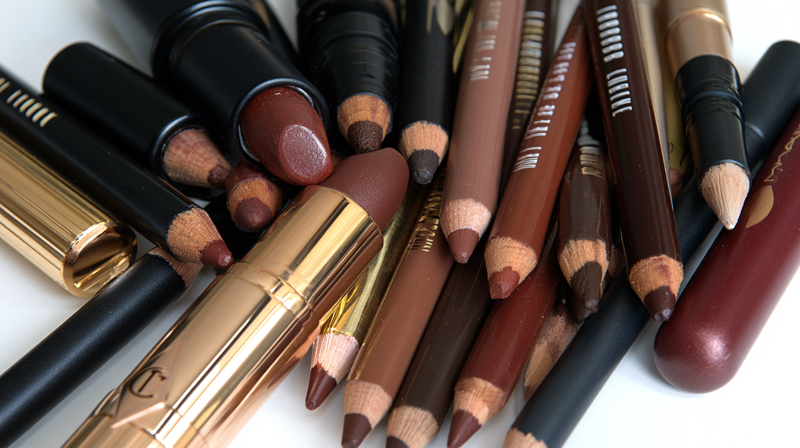
Wear claims vary by formula and by brand. Charlotte Tilbury rates Lip Cheat at up to 6 hours, Bobbi Brown rates its Lip Liner Pencil at up to 8 hours without feathering, and MAC markets its reformulated Lip Pencil at 12-hour comfortable wear. In practice, standard pencils tend to hold 4 to 6 hours, gel and long-wear versions 8 to 12, and liquid or peel-off stain formats longest of all. Opened pencils stay usable for 12 to 24 months in most cases.
| Question | Answer |
|---|---|
| Wear on lips (standard pencil) | 4 to 6 hours |
| Wear on lips (long-wear, liquid, stain) | 8 to 16 hours |
| Opened shelf life | Whatever the PAO symbol says, typically 12M or 24M |
| Unopened shelf life | Typically 2 to 3 years |
Wear time on the lips
Charlotte Tilbury rates Lip Cheat at up to 6 hours of wear, which is honest for a creamy waterproof pencil.
Eating shortens that faster than drinking does. Friction from a mug rim takes the center; a fork takes the whole lower lip.
Wax-based pencils hold better than cream or gel because moisture content is lower.
Shelf life and the PAO symbol
Look for a small open jar icon on the packaging, followed by a number and the letter M.
Clean-beauty and Korean-manufactured pencils often print 6M or 12M. Conventional ones usually say 24M. Rare Beauty’s Kind Words liner, for instance, is marked 6M.
Liners tend to get longer windows than a liquid product because the format is anhydrous. No water phase means nothing for microbes to grow in, and sharpening removes the exposed lead anyway.
The PAO number is the one that matters once you have opened the pencil. The unopened shelf life printed or quoted by a brand is a separate, longer figure.
Signs a liner has gone off
Rancid oils smell like crayons or stale nuts. That is the clearest tell.
- Dry, crumbling tip that snaps under normal pressure
- White cast or bloom along the lead
- Color payoff drops noticeably
Never wet a dried-out pencil with water or saliva to revive it, which introduces bacteria straight into the lead.
The consequences of pushing past that point are covered in what expired lip products do to skin, and the worst-case scenario in this look at mold in lip products.
Storage
Heat is the enemy. Wax softens, the lead bends, and the pencil never sharpens cleanly again.
Cool, dry, out of direct sun. Standard advice in every makeup storage guide for a reason.
Wear-duration comparisons across formulas sit in this breakdown of liner longevity.
Lip Liner for Different Lip Shapes and Concerns
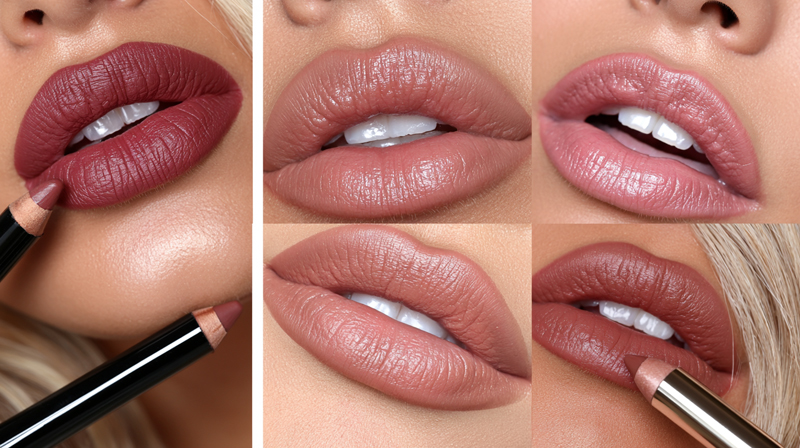
Technique shifts depending on what you are working with. Thin lips want the line at the center of the top lip. Uneven lips want the smaller of the two built up rather than both. Downturned corners need the line lifted at the outer edge, mature lips need a waterproof formula sitting exactly on the border, and pigmented lips need the shade matched to the outer edge instead of the middle.
| Concern | Where the line goes | Formula pick |
|---|---|---|
| Thin lips | Center of top lip, 1 mm out | Matte, medium depth |
| Uneven lips | Smaller lip only | Matches natural tone |
| Downturned corners | Lifted outer corner | Firm pencil, fine point |
| Mature lips | On the border, no overline | Waterproof, film-forming |
Thin lips
Fullness reads at the center. Extending the corners just makes the mouth look wider, not fuller.
Cool-toned liners help here because cool tones recede and warm tones advance, which is the same optical trick behind the liner-instead-of-filler coverage that ran through 2025.
Shade and finish pairings for smaller lips are collected in this set of thin-lip color ideas.
Uneven top and bottom lip
Build up only the lip that is smaller. Lining both keeps the imbalance intact at a larger size, which is the part people miss.
Most people have a fuller lower lip. Adding 1 mm to the upper lip at the bow usually squares the ratio.
Mature lips and vertical lines
Vertical lines around the mouth are the exact channel that lipstick oils wick into.
A waterproof, film-forming liner drawn precisely on the border stops the migration. Skip the overline here, since a soft line placed outside the border settles into the lines instead of hiding them.
Warm mid-tone browns like MAC’s Spice get recommended for this, because warm undertones keep lips looking fresher than the hard-edged dark outline of the original 90s version.
Pigmented and two-toned lips
Naturally deeper lips already carry contrast. A mid-tone nude liner disappears against them.
Match the liner to the darkest zone, which is almost always the outer border rather than the center.
Uneven natural pigmentation has its own fix, laid out in this guide to two-toned lips and in color application on deeper lip tones.
Chronically dry lips
No liner performs on a compromised surface. Prep is the variable, not the pencil.
Build the barrier first with a routine aimed at dryness, then layer color once the surface holds. A full lip care routine makes more difference than upgrading from a $6 pencil to a $26 one.
Is Lip Liner Safe
Under current US and EU regulation, yes, for general use. FDA draft guidance recommends a maximum of 10 ppm lead as an impurity in cosmetic lip products and externally applied cosmetics. Of 685 products FDA analyzed across four surveys, more than 99% fell at or below that level. Carmine and fragrance are the main sensitivity triggers, and they affect a small number of people rather than a broad group.
Lead and heavy metals
FDA’s surveys found lead in cosmetic lip products averaging around 1 ppm, with the great majority well under the recommended ceiling. A small number of samples did exceed 10 ppm, which is part of why the guidance exists.
Worth knowing: this guidance is still a draft, first issued in December 2016, and it is a non-binding recommendation rather than an enforceable limit. FDA has said it will act against products containing lead at levels that could harm consumers.
Lead is never added on purpose. It shows up as a trace contaminant in mineral-derived raw materials, the same way it appears in soil and water.
The 10 ppm figure aligns with limits recommended by Canada, the EU, and other members of the International Cooperation on Cosmetics Regulation.
How the two regulatory systems differ
Europe works from a long banned list. Regulation (EC) No 1223/2009 covers more than 1,700 prohibited substances in Annex II, a figure that has passed 1,703 and keeps climbing with each Omnibus amendment. The most recent, Regulation (EU) 2025/877, added a further batch of CMR substances from September 2025. Colorants get approved separately through a positive list in Annex IV.
The US number is roughly 11 substances banned at federal level. MoCRA has expanded FDA authority since 2023 to cover facility registration, product listing, adverse-event reporting, and mandatory recalls, so the gap is narrower than the raw counts suggest.
Color additives are the exception to the US hands-off approach. They require pre-market approval regardless.
Carmine, fragrance, and sensitivity
Carmine (CI 75470, E120 in Europe) comes from cochineal insects. Not vegan, not vegetarian, and not automatically kosher or halal.
FDA finalized a rule in January 2009, effective January 5, 2011, requiring carmine and cochineal extract to be named on the labels of all foods and cosmetics rather than hidden under “color added.” The trigger was documented severe reactions including anaphylaxis, plus a citizen petition from the Center for Science in the Public Interest.
Fragrance and certain D&C lakes account for most of the rest of the irritation reports. Anyone with reactive skin should patch test, using the same caution described in this guide to makeup on sensitive skin.
Ingestion
Incidental ingestion is the main exposure route FDA modeled for lip products, which is why it used the same approach it applies to lead in food.
People eat a measurable amount of what they put on their lips over a lifetime, a number examined in this breakdown of lifetime lipstick consumption.
Sharing and hygiene
Do not share a lip pencil. Herpes simplex, staph, and general bacterial transfer all travel on a lead that has touched someone’s mouth.
Sharpening between users is a partial reset, not a full one. Details on viral survival times sit in this look at how long the virus lives on lip products, and disinfection methods in this guide to sanitizing lip color.
Lip Liner Cost and Where It Sits in Price Tiers
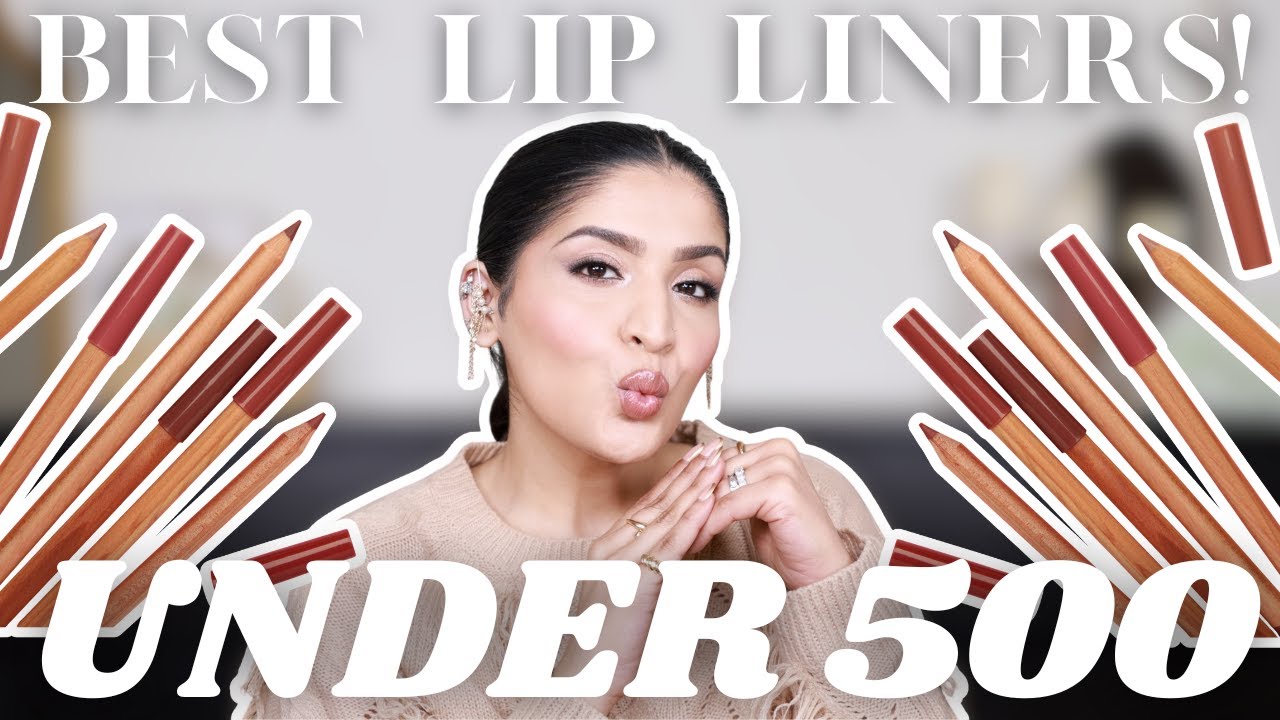
The whole category runs roughly $3 to $35. Drugstore pencils sit at $3 to $10, mid-tier prestige at $16 to $26, and luxury starts around $30. What the extra money buys is pigment load, shade range, and formula technology. It is not a fundamentally different product.
| Tier | Price band | Examples |
|---|---|---|
| Drugstore | $3 to $10 | L.A. Girl Lipliner ($3), NYX Slim Lip Pencil ($6), ColourPop Lippie Pencil ($7), Revlon ColorStay |
| Mid prestige | $16 to $26 | Rare Beauty, Kylie ($18), Rhode Peptide Lip Shape ($24), MAC ($25), Urban Decay ($25), NARS ($26), Charlotte Tilbury Lip Cheat ($26) |
| Luxury | $30 and up | Dior, Chanel, Lancome |
What the drugstore tier delivers
NYX Professional Makeup’s Slim Lip Pencil sells at $6.00 at Ulta across 30 shades, holding a 4.3 star average across more than 4,700 reviews. NYX lists 31 shades on its own site.
Same brand, higher up the range: Line Loud Longwear at $8.00 across 24 shades, and Suede Matte at $6.00 across 26.
NYX also dominates demand data. Spate found it drawing more than twice the Google search volume of the number-two brand alongside “lip liner,” and NIQ retail data through April 2026 backs the brand’s claim to be America’s number one lip liner brand.
What mid-tier and luxury add
More pigment per stroke, mainly. You build the line in fewer passes, which matters more than it sounds like it should when you are doing this on a train.
Shade architecture is the other difference. Charlotte Tilbury built Lip Cheat around undertone variants of a single hue (Pillow Talk Original, Medium, Intense, Fair) instead of just piling on more colors.
Then there is the formula tech. Rare Beauty’s Kind Words liner is waterproof, retractable with a built-in sharpener, and now runs to 16 shades. NARS and Urban Decay pencils sit in similar territory, with sharpening requirements that differ by lead hardness (see the NARS pencils and the Rare Beauty liner).
Cost per use
A liner pencil holds a small amount of product. Charlotte Tilbury lists Lip Cheat at 1.2 g fill, MAC’s Lip Pencil at 0.05 oz, and Rare Beauty’s Kind Words at 0.4 g.
Sounds like nothing. It is not, since a single line uses a fraction of a millimeter of lead and daily wearers still hit the PAO window before running out.
Which flips the value calculation. The pencil almost always expires before it empties, so buying three at $6 beats buying one at $26 if shade variety is what you actually want.
Lip liner was among the top-gaining prestige makeup segments in Circana’s report on 2025, and the same pattern held in mass retail. Broader spending context sits in these cosmetic industry figures.
FAQ on What Is Lip Liner
What is lip liner used for?
Defining the vermilion border, blocking lipstick from bleeding into fine lines, and extending wear time when used as a base under color. It also corrects asymmetry and adjusts perceived lip size within 1 to 2 mm.
Do you put lip liner on before or after lipstick?
Before, in almost every case. The liner sets the border and creates the wax barrier that lipstick fills against. Applying it after is a legitimate second step for cleanup and for sharpening a soft edge, and both MAC and Bobbi Brown list it in their own instructions.
Should lip liner match your lipstick or your lips?
Both work. Match your natural lip tone for invisible everyday definition, or match the lipstick for full coordination. One shade darker adds depth. Undertone alignment matters more than depth in every one of those cases.
Can you wear lip liner alone?
Yes. Fill in the entire lip and the pencil functions as a matte lipstick, which is exactly how the 90s supermodel look was built with MAC Spice. Add balm on top to soften the finish.
What is clear lip liner for?
Building the anti-feathering barrier without adding pigment. Use it under bright coral, true red, or any shade you own no matching liner for. It does nothing for reshaping.
How do you stop lip liner from leaving a dark ring?
Fill the whole lip with liner instead of tracing the outline only. Then blur the inner edge with a fingertip. The ring appears when lipstick fades off a bare center, exposing the untouched border.
What is the difference between lip liner and lipstick?
Liner carries a higher wax-to-oil ratio and heavier pigment load, so it holds a point and stays put. Lipstick balances wax and oil for comfort and payoff. Liner is a boundary tool first.
How long does lip liner last on the lips?
Brand claims range from 6 hours for Charlotte Tilbury’s Lip Cheat to 8 for Bobbi Brown’s Lip Liner Pencil and 12 for MAC’s current Lip Pencil. Real-world wear on a standard pencil usually lands at 4 to 6 hours, with waterproof, long-wear, and stain formats going longer.
Is lip liner safe?
Yes under current regulation. FDA draft guidance recommends a 10 ppm ceiling for lead as an impurity in lip products, and more than 99% of the 685 cosmetics it tested came in at or below that.
How often should you sharpen a lip pencil?
Every few uses. A fresh cut restores the point and removes the oxidized surface layer along with bacteria picked up from your lips. Wood-cased pencils allow this, and some retractables now include a built-in sharpener.
Conclusion
A border is the least interesting thing a lip pencil does. Shape correction, wear extension, and a pigmented base that survives coffee, lunch, and a full workday are the reasons it earned its comeback.
The formula does the heavy lifting. Carnauba and candelilla wax hold the point, jojoba oil keeps the glide comfortable, and iron oxides supply the color.
Technique decides the rest. Short strokes, a filled-in lip, and a blurred inner edge separate a clean result from an obvious outline.
Shade choice is where most people get stuck, so start with your natural lip tone before buying anything ambitious.
Sharpen often. Replace the pencil at the PAO window printed on the packaging, and skip the drawer archaeology.
One $6 pencil, applied properly, beats a $30 one applied in a hurry.

She started writing on the site after fielding the same questions from clients and friends often enough to just write the answers down: which red won't turn orange on a warm undertone, how to keep lipstick from feathering into fine lines, why a "12-hour" formula rarely survives dinner.
Every review on the site follows the same rule she uses with paying clients: wear it first, then decide if it's worth recommending.
- How to Make Eyeliner Last Longer Without Smudging - August 31, 2026
- How to Make Eyeshadow Last Longer All Day - August 29, 2026
- How to Find Your Undertone in 5 Easy Steps - August 27, 2026