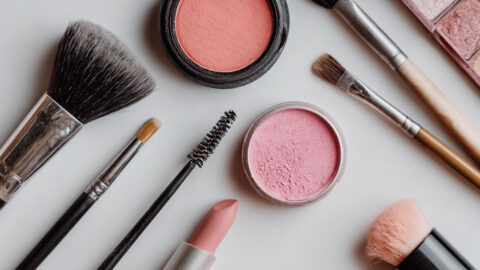
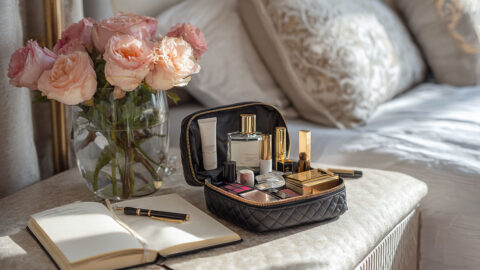
Most people keep their makeup in the bathroom, and that’s the one room it shouldn’t live in. A bedroom drawer or a closet shelf works better. Both stay cooler and drier, and a closed drawer is dark as well.
Caps stay shut. Brushes and sponges stay dry, and each product gets an opening date written on it.
Placement decides how long mascara, foundation or lipstick stays safe to use. Heat and humidity wear down preservatives, and light breaks down pigments.
FDA confirms that no U.S. law requires cosmetics to carry a shelf life or expiration date (page content current as of February 2022), so the date written on a tube is often the only guide a product has.
Where is the best place to store makeup at home?

Bedroom drawers and closet shelves win, mostly because they stay stable and out of the steam.
The bathroom is the usual mistake. FDA’s shelf-life guidance (content current as of February 2022) names bathroom moisture as something that makes bacterial and fungal growth easier.
| Location | Climate | Verdict | Main risk |
|---|---|---|---|
| Bedroom drawer | Stable, dark, low humidity | Best | Heaters, sunny walls |
| Closet or dresser shelf | Stable, dark | Best | Dust if left uncovered |
| Lower bathroom cabinet | Buffered from steam, not immune | Fallback | Humidity spikes after showers |
| Bathroom counter or medicine cabinet | Steam, swings, vanity lights | Avoid | Heat, moisture and light at once |
| Windowsill, radiator or parked car | Direct sun and heat | Never | Preservative breakdown, melting |
Dermatologist Dr Anjali Mahto gives another reason to keep the bag out of the bathroom. Steam and heat help microbes thrive there, and she flagged a cross-contamination risk from faecal bacteria (as reported by Refinery29).
Sometimes the bathroom really is the only option. In that case a lower cabinet beats the counter, as Etta + Billie founder Alana Rivera suggests, and products should sit in a closed bag or box away from the shower and any heat source. Former cosmetics formulator Jenny Frankel goes further and recommends moving the vanity setup to a bedroom, nook or foyer if you can.
Natural and organic formulas without conventional preservatives are the one group Frankel says should never sit in a bathroom.
Windows are the other trap. Singapore dermatologist Dr Uma Alagappan advises keeping makeup away from them as well.
What heat, humidity and light do to makeup
Heat breaks down preservatives. Humidity gives microbes more to work with. Light and air oxidize pigments and active ingredients, which is why a spot that fixes one problem and ignores the others still shortens a product’s life.
Heat
Cosmetics Europe’s stability testing guidelines say manufacturers often run accelerated tests at 37, 40 or 45 degrees Celsius for a month or longer.
Those are lab stress tests built to predict shelf life, not a safe range for your drawer. FDA’s shelf-life guidance gives no number, only the instruction to keep cosmetics away from heat such as a hot car, though its eye cosmetic safety checklist does set one, which is not to store cosmetics at temperatures above 85 degrees F (about 29 degrees C). ISO/TR 18811:2018 leaves test conditions to each manufacturer.
The mechanism is straightforward. Heat degrades preservatives, so bacteria and fungi grow faster (FDA), and University of Miami Health dermatologist Alyx Rosen Aigen notes that bacteria multiply quicker in warm, humid conditions.
The physical damage is easier to spot. Emulsions (water and oil mixes) separate and wax-based products soften. Other formulas dry out and harden until they crack.
A steady temperature matters more than a cold one. A drawer at constant room temperature does more than a spot that swings between hot and cool.
Humidity
Humidity hurts as a spike, not as a baseline.
Aizawa and colleagues (Waseda University, 2006) found that humidity in a bathroom reaches 100% right after a shower, whatever the ventilation or season. Zelazny (Acta Scientiarum Polonorum Architectura, 2011) measured a smaller change, with a shower raising relative humidity by up to 26 points and peaking at 63.3%, which stayed under the 70% level that favors mold.
The two studies used different rooms and measurement setups, so a gap is expected. Both show the same pattern. Humidity jumps during a shower, then falls, and anything stored in that room goes through that swing every day.
FDA adds that fungi, including mold and yeast, grow more easily in damp conditions. Lipstick that has gone moldy is what that growth looks like once you can see it.
Light and air
Oxidation shifts foundation color, so a beige can drift toward orange (Mayo Clinic Health System). Vitamin C is touchy too, since ascorbic acid oxidizes readily in air and light, according to a 2006 Journal of Cosmetic Science paper. Frankel says bright vanity lights, heat and humidity together wear down retinol and vitamin C.
A closed drawer takes care of light and cuts down air exposure, and tight caps cover whatever is left.
How to store each type of makeup

Liquids and eye products go in the coolest, steadiest spot, with the cap shut. Wax products need distance from heat, and powders just need to stay dry.
Shelf-life figures vary by source, so the table gives ranges based on Mayo Clinic Health System and Baylor Scott & White guidance, widened to include FDA’s mascara figure.
| Product | Where it lives | Months after opening | Early warning sign |
|---|---|---|---|
| Mascara and liquid eyeliner | Cool drawer, cap shut | 2 to 6 | Clumping, dryness |
| Liquid foundation and concealer | Steadiest spot, pump bottle | 6 to 18 | Separation, color shift |
| Cream blush and cream shadow | Drawer, clean spatula | 6 to 12 | Texture or smell change |
| Lipstick | Drawer, away from heat | 12 to 24 | Crayon-like smell, dragging |
| Lip gloss | Drawer, cap shut | 6 to 12 | Odor, texture change |
| Pressed and loose powder | Dry drawer or airtight box | 12 to 18 | Crumbling, hard rim |
Liquid and eye products
Mascara is where the sources disagree most. FDA says manufacturers usually recommend discarding it 2 to 4 months after purchase, while Cleveland Clinic advises 6 months after opening.
Part of that gap is the starting date, purchase versus opening. Working out how long a mascara tube lasts starts with a date you can prove, so write the opening date on it.
Never pump the wand in and out of the tube. Adding water or saliva to dry mascara is worse, and FDA says to throw it away instead. For foundation, Cleveland Clinic prefers pump bottles over open-neck ones, and fingers should stay out of liquids altogether since they add microorganisms (FDA).
Lipstick and lip products
Lipstick tolerates more than liquids do, but it fails the same way in heat.
Wax bases soften first. Dermatologist Dr Dennis Gross treats wax-based products as fridge candidates for that reason, a call examined in the fridge section below. Old lip products give themselves away too, with a crayon-like smell and a drag on the lips, per a Fox News beauty guide.
Gloss has a shorter lifespan than lipstick, so how long lip gloss stays good deserves its own date on the tube.
Powders and palettes
Loose powder takes a hit every time a brush goes in, since each dip adds bacteria to the whole jar, according to Rosen Aigen. Pressed compacts grow fewer bacteria because they tend to be applied with brushes.
Keep powders in a dry spot with the lid fully closed, and use an airtight box in a humid climate. Palettes of similar size can be stacked together so their edges stay protected.
Powders have the longest shelf life of any makeup, unless the formula contains botanicals. Those add water and shorten it, Dermascope notes.
Cream and botanical products
Anything with water or plants in it counts as perishable, and so does a product with no preservative.
FDA’s shelf-life Q&A singles out “all natural” products with plant-derived ingredients, and anything using unconventional or no preservatives, as likely to have an unusually short life.
Scoop cream with a clean spatula instead of a finger. FDA lists finger dipping as a direct route for bacteria and fungi.
Should makeup be stored in the fridge?
Only some of it. Natural formulas without preservatives and wax products in hot weather benefit, while powders and most oil-based products do not.
The sources split. Dr Dennis Gross says lipstick and other wax-based products benefit, and Danby, which sells compact fridges, markets them for skincare, makeup and SPF.
FASHION magazine’s guide to beauty fridges says makeup should stay out altogether, though it allows a melted lipstick to re-set there. FDA’s shelf-life guidance does not mention refrigeration at all.
Even the pro-fridge voices disagree on oils. One expert quoted by FASHION says oil and butter products should be chilled, while Gross warns that oil-based products can turn solid and hard to apply.
On the plus side, chilling slows spoilage in preservative-free and natural formulas. It also stops wax products from melting in summer and keeps temperature constant, away from shower steam.
The downsides are real. Oils and butters can harden. Emulsions can separate when temperature swings, so products must go straight back after use (Gross). And a shared food fridge risks cross-contamination, so keep products in closed containers or use a separate mini fridge.
Preservative-free and natural formulas belong in the fridge, along with anything labeled to be kept cold. A melted lipstick can go in there to re-set. Powders stay out, since they already have the longest shelf life, and so does anything you can’t return to the fridge right after each use.
If you do chill products, check them every couple of months for mold or bacterial growth, as the FASHION guide advises.
The simpler call is a cool bedroom drawer. It covers most collections, and the fridge works best as a targeted tool.
Which organizers and containers suit each type of makeup?

Most collections do fine with clear acrylic organizers and drawer dividers. Magnetic cases suit palettes better, and brushes need a dry holder they can stand up in. Pick based on how you use each product, and worry about looks second.
| Container | Best for | Watch out for |
|---|---|---|
| Clear acrylic organizer | Seeing everything at a glance | Open tops collect dust, sunny counters add heat |
| Drawer dividers or inserts | Grouping by product type | Fixed slots may not fit tall tubes |
| Train case | A full portable kit | Heat builds up if left in a car |
| Magnetic palette case | Depotted pans and loose shadows | Setup takes time |
| Airtight box | Powders in humid climates | The lid has to actually seal |
Grouping by product type works best, so blushes sit with blushes and lip products get their own spot, with creams and powders kept apart. Makeup artist Lisa Potter-Dixon (ELLE UK) also labels each box.
Moving lesser-used items to the front of the drawer keeps good products from expiring unused, per Stasher’s guidance. Without a vanity or much space, build upward with stacked or hanging storage instead of spreading across the counter.
Cheap stand-ins work too. According to Khaleej Times, office desk-file organizers and kitchen dish dividers do the job as inserts, and so do clear tiffin boxes.
Brushes stand upright in a dry holder, bristles up, kept out of the shower zone. The full routine for storing brushes properly goes further.
Depotting means moving pans out of their original packaging into a custom case. It saves space, but every depotted product still needs its own opening date.
How to store brushes and sponges, and keep products clean
Tools need to be completely dry before they go back into storage. Sponges get cleaned after every use, caps stay closed and container surfaces get wiped down. Contamination in a makeup kit follows how tools are used and cleaned as well as where they sit.
The numbers are not flattering. Aston University researchers (Journal of Applied Microbiology, 2019) found that 79 to 90% of used lipsticks, lip glosses, eyeliners, mascaras and beauty blenders were contaminated with bacteria, and 93% of the beauty blenders in that study had never been cleaned. AAD dermatologist Dr Dara Spearman cites a brush cleaning interval of 7 to 10 days (guidance last updated May 2024), while AAD dermatologist Dr Cynthia Bailey says sponges should be cleaned after every use.
Brushes
Wet brushes grow mold.
The Shelving Store’s storage guide warns that anything exposed to moisture risks mold and mildew, so a damp brush closed inside a case is the worst combination.
Dermatologist Dr Hadley King told NBC News that dirty brushes become breeding grounds for bacteria, which can mean breakouts or irritation once they touch the face again. They also apply product unevenly, with streaks.
The wash itself is a short job, and a step-by-step guide to washing makeup brushes covers the technique.
Sponges
Dr Bailey (AAD) recommends washing in warm water with a few drops of liquid cleanser, rinsing until the water runs clear, and then letting the sponge air dry on a clean paper towel.
Drying fully matters because the Aston team found these applicators especially prone to contamination, since they are often left damp after use. A sealed pouch traps the moisture a damp sponge still holds, so store them open to air. Keeping spares helps too, because rotating several sponges gives each one time to dry between uses.
Fitting this into a morning routine gets easier with a quick walkthrough on cleaning makeup sponges.
Product containers and closures
Caps and lids are the cheapest protection a kit has. AAD’s list of habits for getting full use out of makeup includes washing hands and face before application and replacing every cap and lid securely after each use.
- Wash sponges after each use and brushes on a fixed schedule, then dry both completely
- Wipe caps, hinges and outer surfaces with isopropyl alcohol, a disinfecting habit makeup artists describe to NBC News
- Let the alcohol evaporate fully before the container goes back in the drawer
- Close every cap and lid until it clicks or seals
Alcohol belongs on tools and the outside of containers. Keep it away from the eye area.
How to store makeup for travel and hot weather
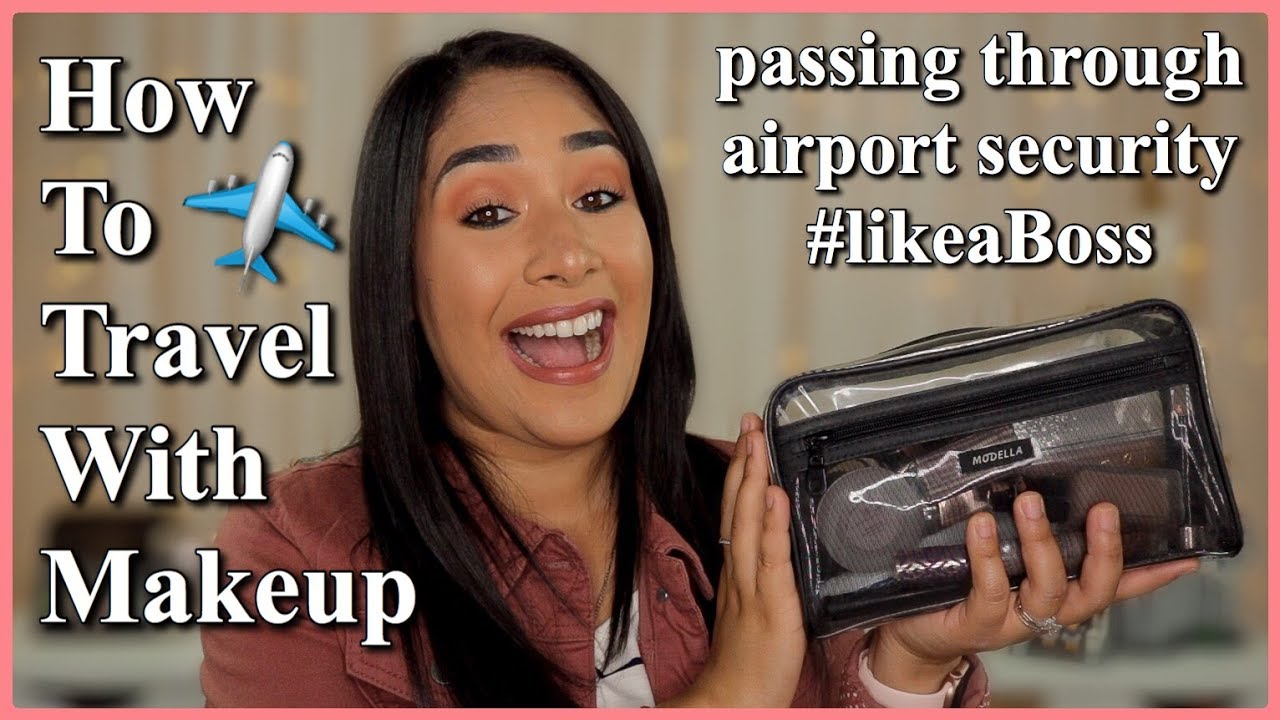
Liquids go in sealed, leak-proof containers and pressed powders in a padded or rigid case. The kit never stays in a parked car. Carry-on rules also put a size limit on anything that pours or spreads.
A parked car heats faster than most people assume. A Pediatrics study (McLaren, Null and Quinn, 2005) measured an average interior rise of 40 degrees F within an hour on sunny days, and cracked windows did not change the final temperature.
A soft pouch lined with a zip bag suits tubes and bottles, since a leak stays contained. Pressed powders and palettes crack when knocked, so they get a hard or padded case. At hot destinations, the kit belongs in a cool shaded room or hotel drawer, never on a bathroom counter.
TSA’s 3-1-1 FAQ allows liquids, gels and aerosols in carry-on containers of 3.4 ounces (100 milliliters) or less, all inside a single quart-size bag per passenger.
TSA’s permitted-items guidance has long placed liquid lip glosses and lip gels inside that limit and solid cosmetics such as lipstick outside it. The guidance also settles whether lip gloss counts as a liquid at security. It does, so gloss goes in the bag and solid lipstick stays out.
Liquid foundation, mascara and cream blush follow the same size cap as other creams and gels.
A full packing sequence is laid out in this guide to packing makeup for travel.
How to tell when stored makeup has gone bad

Look at the date printed on the product, then the opening date you wrote down, then how it smells, looks and feels. Failing any of these puts the product in the bin.
Reading the PAO symbol and opening dates
Look for an open jar icon with a number and the letter M on it. That’s the Period After Opening (PAO) symbol, and AAD explains that the number gives the months of use after opening.
EU Regulation (EC) No 1223/2009 splits the rule by shelf stability. Products with a durability of more than 30 months need a PAO instead of a minimum-durability date, unless the idea of durability after opening does not apply.
The EU date is defined for a product stored under appropriate conditions. That wording ties the label to your storage, because a date calculated for good storage means little on a tube that sat in a hot car.
The US works differently. FDA says no U.S. law requires cosmetics to carry a specific shelf life or expiration date (page content current as of February 2022), and Dr Bailey adds that PAO information is not required there either.
L’Oréal Paris’s own consumer guide calls mascara the earliest-expiring item in a makeup kit, so that is the product to date first.
- Look for a PAO symbol or a printed date on the box or base
- If neither exists, write the opening date on masking tape or a small label (Baylor Scott & White suggests keeping tape near the makeup drawer)
- Match each product to its window in the shelf-life table
- Run a quarterly check by smell, texture and color
- Bin anything that fails, whatever the date says
Spoilage signs and what to do about each
Dr Spearman (AAD) says to toss a product that clumps, changes consistency, crumbles, smells bad, looks dry, flaky or runny, changes color, or feels different on the skin.
| Sign | Likely cause | Action |
|---|---|---|
| Bad smell | Bacterial growth | Discard |
| Separation or runny texture | Emulsion breaking down | Discard |
| Color shift | Oxidation | Discard |
| Clumping, dryness, crumbling | Dried-out or contaminated formula | Discard, never add water |
| Visible mold | Fungal growth in damp storage | Discard, move the stash |
AAD warns that bacteria and mold in old makeup can cause eye infections and skin infections such as impetigo and folliculitis. Staphylococcus aureus, one of the leading causes of skin and soft-tissue infections, is among the bacteria dermatologists worry about.
The effects on lips and skin specifically are covered in a guide to the side effects of expired lipstick.
When proper storage is not enough
A cool drawer slows spoilage. It does not rescue a product that was contaminated, handled badly before you bought it, or already past its window.
FDA treats expiration dates as rules of thumb, and says improper storage, such as exposure to high temperatures or sunlight, can end a product’s safe life well before the printed date. AAD and Baylor Scott & White tell consumers to replace products on schedule, even half-used ones, and to go by the opening date.
The two positions answer different questions. FDA describes what storage can do to a date, and the dermatologists’ point is that contamination from use is invisible, so betting on the date is a bad idea.
In practice, a printed date is the longest a product could last. Poor storage can shorten that, but good storage cannot extend it.
Contamination from use is the first limit. The Aston authors attributed the contamination they found to consumers’ use of the products, and a drawer cannot touch that.
Unknown history is another. FDA warns that products sold at flea markets or resold online may be past shelf life, already used, diluted or tampered with. With an eye infection, FDA says to stop all eye-area cosmetics and discard those in use when the infection started, whatever the storage record.
Heat damage can also be silent. AAD notes sunscreen can spoil before its expiration date after direct sun or a hot enclosed space, and Cleveland Clinic advises treating SPF foundation like sunscreen.
Move the kit to a better spot, then judge each product on its own record.
Makeup Storage FAQ
Does it matter whether lipstick is stored upright or flat?
Not much. Heat and a closed cap matter more than angle, and FDA and AAD guidance sets no orientation rule for lipstick.
Twist the bullet down and seal the cap. Liquid products with wands or pumps, such as gloss and mascara, leak less when they stand upright.
Is it safe to store makeup in a garage, attic or basement?

No. Makeup artist and Centenary University instructor Stephen Davis told The Independent that extreme temperature changes in basements, attics and garages make makeup expire faster.
A bedroom drawer or closet shelf avoids those swings.
Can makeup share a drawer with skincare?

Yes, if the drawer is cool and dry and stays dark. Track sunscreen separately, because AAD notes it has an expiration date and most makeup does not.
Is it safe to share makeup?
No. AAD advises never sharing makeup that goes directly on skin or eyelashes, or that is applied with a brush or sponge, and FDA warns that sharing can pass on an infection.
Are store testers safe to use?
Not really. FDA says testers are even more likely to become contaminated than the same products at home.
If you must try a shade, apply it with a new, unused applicator such as a fresh cotton swab.
What to Do First With an Existing Makeup Collection

Throw out the failed products before moving anything, because a cooler drawer cannot repair a product that already carries bacteria. Makeup storage protects products that are still sound.
Start by discarding anything that fails the smell, texture or color check. The survivors go to a bedroom drawer or closet shelf. Labeling each one with its opening date comes last, only because it needs the survivors, and a written opening date gives every product a record that U.S. labeling rules do not supply.
The cost is real, since tossing half-used products wastes money, and AAD advises it anyway.
Verified in October 2026 against FDA and AAD guidance, this order changes if the U.S. begins requiring PAO labeling.
Cleaning the products that pass the check comes next, and a guide to sanitizing makeup covers the method.

She started writing on the site after fielding the same questions from clients and friends often enough to just write the answers down: which red won't turn orange on a warm undertone, how to keep lipstick from feathering into fine lines, why a "12-hour" formula rarely survives dinner.
Every review on the site follows the same rule she uses with paying clients: wear it first, then decide if it's worth recommending.
- How to Make Eyeliner Last Longer Without Smudging - August 31, 2026
- How to Make Eyeshadow Last Longer All Day - August 29, 2026
- How to Find Your Undertone in 5 Easy Steps - August 27, 2026