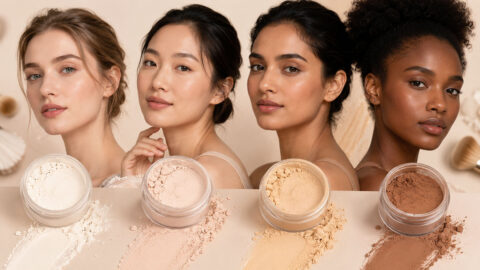
Dry skin and makeup have a complicated relationship. Foundation clings to flaky patches, powder emphasizes texture, and a full face that looked fine at 9am can look chalky and uneven by noon.
Knowing how to apply makeup on dry skin changes that entirely.
This guide covers everything from skincare prep and primer selection to foundation application, cream blush, eye makeup, and how to set it all without drying your skin out further.
The goal is a hydrated, skin-first makeup routine that actually lasts.
What Is Dry Skin in a Makeup Context

Dry skin in makeup isn’t just about feeling tight after washing your face. It’s a skin type where sebum production is consistently low, the moisture barrier is compromised, and the skin struggles to hold onto water.
That distinction matters because it changes everything about how makeup sits, blends, and wears throughout the day.
Dry skin vs. dehydrated skin is a difference a lot of people miss. Dry skin is a skin type (genetic, structural), while dehydrated skin is a temporary condition (lack of water, not oil). You can have oily skin and still be dehydrated. Getting this wrong leads to choosing the wrong products, which makes applying makeup a lot more frustrating.
According to the International Journal of Cosmetic Science, dry skin affects around 50% of the global population, with prevalence rising sharply after age 50.
Dry skin reacts to makeup in specific, predictable ways. Foundation clings to flaky patches. Powder products settle into fine lines and emphasize texture. Any formula that pulls moisture from the skin (matte finishes, high-coverage formulas, powder-heavy products) will look worse by midday.
| Skin Type | Key Characteristic | Makeup Challenge |
|---|---|---|
| Dry | Low sebum, compromised barrier | Flaking, patchiness, fast fading |
| Dehydrated | Lacks water, any skin type | Crepey texture, sinking foundation |
| Eczema-prone | Inflamed, reactive barrier | Sensitivity to fragrance and heavy coverage |
| Mature dry | Thinning skin + low sebum | Fine lines amplified by powder |
Skin conditions that overlap with dryness include eczema-prone skin and sensitized skin. Both share the same core problem: a weakened barrier that reacts badly to occlusive or fragranced formulas.
Understanding which category you’re in directly shapes every product decision below.
Skincare Prep Before Applying Makeup on Dry Skin

This is the part most people skip or rush. And it’s the part that determines whether your foundation looks good at 9am and again at 3pm.
A 2023 six-month clinical study presented at the World Congress of Dermatology by Estee Lauder researchers found that regular moisturizer use not only improved skin dryness but also strengthened skin barrier cohesion and reduced the appearance of facial lines. Incidental use produced significantly weaker results.
Prepping skin before makeup isn’t just about applying a moisturizer and calling it done. On dry skin, prep is a multi-step process with a specific order.
Exfoliation for Dry Skin Before Makeup
Skip the physical scrubs. On dry skin, grainy scrubs create microtears and worsen barrier damage.
Chemical exfoliation is the better option:
- AHAs (lactic acid, glycolic acid) dissolve the bonds between dead skin cells without abrasion
- Lactic acid is specifically noted for its hydrating properties, making it the preferred AHA for dry skin types (PMC, 2024)
- Use it 1-2 times per week, at night only (AHAs increase UV sensitivity)
- Skip exfoliation the morning you’re doing a full face of makeup if your skin feels raw
Exfoliation before makeup ensures foundation doesn’t catch on dead skin patches. Tatcha’s research confirms that removing dead cells also helps serums and moisturizers penetrate more effectively afterward.
Moisturizer and Facial Oil Application
Hyaluronic acid-based moisturizers lead the dry skin category. Hyaluronic-based formulas hold a 62.6% share of the moisturizer market (Future Market Insights, 2025), largely because of their ability to draw water into the skin without heaviness.
For dry skin before makeup, the layering order matters:
- Hydrating toner or essence first (adds water layer)
- Serum second (hyaluronic acid, glycerin, or ceramide-based)
- Emollient moisturizer third (locks everything in)
- Facial oil last, if needed (seals the moisture layer)
Wait at least 5 minutes after your moisturizer before applying primer. Applying makeup over a still-wet moisturizer causes pilling and uneven foundation coverage.
Facial oils are optional but useful on very dry skin. Press a few drops into the skin after moisturizer. The Charlotte Tilbury Magic Cream works well as a prep moisturizer because it contains a blend of occlusive and emollient ingredients that create a smooth base without greasy residue.
Primers for Dry Skin
Primer choice on dry skin is where most people go wrong. Mattifying primers are the main offender. They’re formulated to absorb oil, which is exactly what dry skin doesn’t have. Using one makes skin look even drier within a few hours.
The global hybrid makeup market hit USD 19.61 billion in 2023, driven largely by products that combine skincare with makeup function (Grand View Research, 2023). Primers are at the center of that shift.
| Primer Type | Best For | Avoid On Dry Skin? |
|---|---|---|
| Hydrating/glycerin | Dry, normal | No, use freely |
| Silicone-based | Filling texture | Use sparingly |
| Mattifying | Oily skin | Yes, avoid |
| Serum/water-based | Sensitive, dry | No, good option |
Silicone-based primers are tricky on dry skin. They fill in texture and smooth the surface, which sounds helpful, but they can actually prevent moisture from moving through the skin properly if used in thick layers. Use a light amount or skip them entirely if your skin is very reactive.
Water-based and serum primers are the safer picks. The Charlotte Tilbury Hollywood Flawless Filter doubles as a primer and a glow-boosting layer that works well under foundation on dry skin.
How to apply primer on dry skin:
- Use fingertips, not a brush
- Press gently rather than rubbing
- Apply only where needed (avoid over-dry areas where pressure might lift skin)
- Let it set for 30 seconds before foundation
Laura Mercier Hydrating Primer remains a reliable option because it contains glycerin and doesn’t disrupt the moisture layer you spent time building during skincare prep.
Foundation Application on Dry Skin
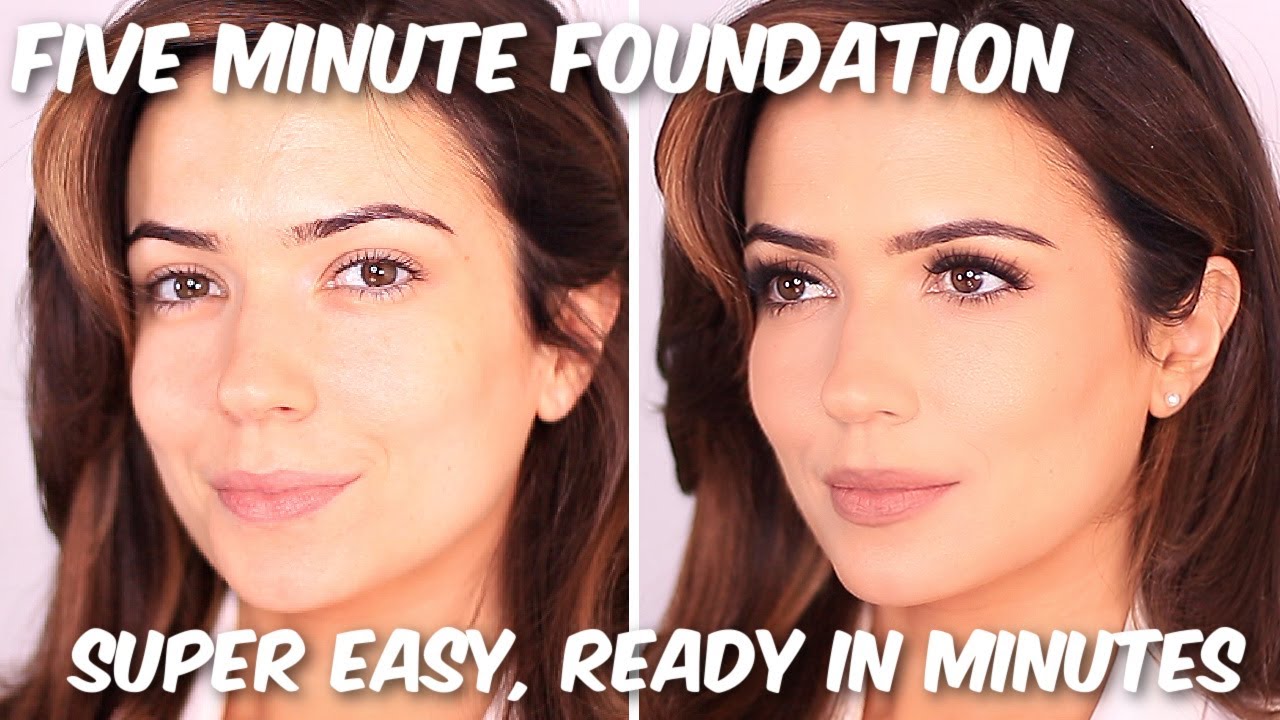
Foundation on dry skin has one non-negotiable rule: avoid anything labeled “matte,” “long-wearing,” or “oil-control” unless you’ve personally tested it and it works for your specific skin.
The global liquid foundation market was valued at USD 12 billion in 2023 and is growing at a CAGR of 6.5% (Dataintelo, 2024), with a significant portion of that growth driven by demand for hydrating, skin-nourishing formulas.
Best Foundation Formulas for Dry Skin
Satin finish: Reflects light softly without looking oily. Good for everyday use.
Dewy finish: Gives skin a healthy, luminous look. Best on skin that isn’t extremely flaky (dew amplifies texture).
Serum foundation: Lightweight, skin-first formulas with active ingredients. Fenty Beauty Pro Filt’r Hydrating Foundation sits in this category.
Skin tint: Sheer, buildable coverage that feels like almost nothing on the skin. Works well for dry skin that reacts to heavy formulas.
Avoid: Full-coverage matte foundations, powder foundations, and anything with a “24-hour” marketing claim that relies on occlusive film-forming technology.
How to Apply Foundation Without Emphasizing Dry Patches
Tool choice changes the result significantly:
- Damp Beautyblender or damp sponge: Best option. The moisture in the sponge prevents the tool from pulling product away from dry patches.
- Foundation brush: Works but requires a pressing motion, not dragging
- Fingers: Surprisingly good on dry skin. Body heat warms the formula and helps it meld into the skin naturally.
Apply foundation with a pressing and bouncing motion rather than streaking it across the skin. Start at the center of the face and work outward.
On dry patches specifically, apply less product, not more. Piling on coverage over dry, flaky skin doesn’t cover the flakes. It makes them more visible. Prep (exfoliation and hydration) is the only real fix for dry patches.
According to the applying foundation process, the key is building coverage in thin, press-on layers rather than one thick application.
Concealer on Dry Skin

Concealer on dry skin sits differently than on oily or normal skin. Under the eyes especially, creamy formulas creep into fine lines and settle into the crease within an hour if you don’t handle them right.
The formula matters more here than anywhere else on the face.
NARS Creamy Concealer is a widely used reference point for dry skin because it has a soft, blendable texture that doesn’t cling to dryness. Tarte Shape Tape, while popular, is a high-coverage formula that can look cakey on dry skin unless the under-eye area is very well prepped.
Formula comparison for dry skin:
| Concealer Type | Dry Skin Result | Best Use |
|---|---|---|
| Creamy, emollient | Blends smoothly | Under-eye, general |
| Full-coverage dry formula | Emphasizes lines | Avoid |
| Color corrector first | Reduces product load | Dark circles, redness |
| Serum concealer | Lightweight, hydrating | Sensitive dry skin |
Using a color corrector before concealer on dry skin is smart. It corrects discoloration with a thin layer, which means you need less concealer on top. Fewer layers means less settling and less chance of creasing.
Application technique for under-eye concealer:
- Use ring finger or damp sponge
- Pat, never drag
- Apply less than you think you need (1/4 teaspoon is usually enough for both eyes)
- Set only with the lightest dusting of powder if needed, not a full bake
Setting concealer on dry skin requires either a glycerin-based setting spray or skipping powder entirely in that area. The applying setting spray method works better here than powder for keeping the under-eye area looking fresh and un-creased.
Setting Powder on Dry Skin
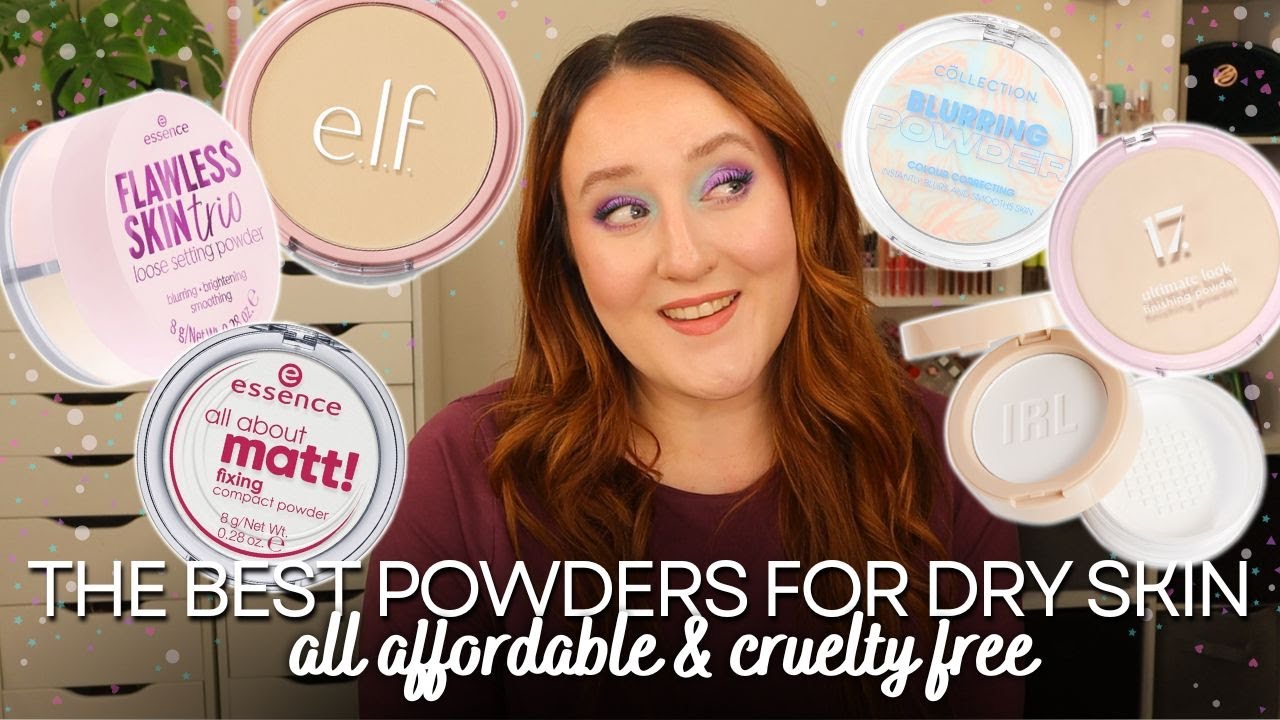
Here’s an honest take: most dry skin types don’t actually need setting powder across the full face. You probably need it in one or two places, not everywhere.
The biggest mistake with powder on dry skin is baking. Baking (leaving a thick layer of powder on the skin for 5-10 minutes) was designed for oily skin types. On dry skin, it pulls moisture and creates a chalky, aged-looking finish.
What dry skin actually needs from powder:
- A finely milled translucent powder applied with a small brush
- Targeted placement: under-eye area, any areas prone to creasing, possibly the T-zone
- Light hand, never packed on
Avoid talc-heavy powders. Talc is a strong absorbent and will strip the little moisture dry skin has. Look for formulas with silica, which diffuses light without absorbing oil aggressively.
Powder alternatives that work better:
- Setting spray pressed into the skin with a sponge (seals makeup without dryness)
- Blotting papers if touch-ups are needed later
- Nothing at all, if your skin isn’t prone to creasing
The applying setting powder method for dry skin should be quick and targeted. Set only the areas that actually need it.
MAC Fix+ is a glycerin-based setting spray that works well as a powder alternative on dry skin. It gives a dewy finish that also refreshes makeup mid-application if something looks too dry.
According to applying translucent powder guidance, the goal is finishing, not mattifying. On dry skin, less is almost always more.
Blush, Bronzer, and Highlighter on Dry Skin

Cream and liquid formulas are not just trending right now. For dry skin, they’re the better technical choice. Trendalytics data from 2024 shows liquid blush adoption grew +36% year over year, with cream blush up +12%, largely driven by consumers with dry and mature skin seeking a dewy, natural flush.
Powder blush settles into dry texture. Cream blends into it.
| Product | Best Formula for Dry Skin | Avoid |
|---|---|---|
| Blush | Cream, liquid, balm | Powder over dry patches |
| Bronzer | Cream stick, liquid | Talc-heavy matte powder |
| Highlighter | Liquid, cream, skin tint hybrid | Chunky glitter, pressed powder |
Rare Beauty’s Soft Pinch Liquid Blush became the reference point for this category precisely because its sheer-buildable formula works on dry and sensitized skin without pulling.
Cream Blush Application
Apply before setting powder, not after. This is the order mistake most people make.
Press cream blush onto the cheeks with fingertips or a damp sponge. Blend upward toward the temples.
Use body heat to your advantage. Fingers warm the product, helping it meld into skin rather than sitting on top.
Bronzer and Highlighter Placement
Cream bronzer, pressed lightly with a fluffy brush, gives a natural sun-kissed look without accentuating texture.
For dry skin specifically:
- Skip powder bronzer across the full face
- Apply cream bronzer to the temples, hairline, and along the sides of the nose only
- Use a liquid highlighter (not pressed) on the tops of cheekbones and brow bone
Applying cream blush with a light pressing motion gives better results than sweeping motions, which pull at dry patches.
Eye Makeup Application on Dry Skin
Dry skin doesn’t just affect the face. The eyelid skin is thin and can become crepe-textured, tight, or flaky, especially in winter or with heavy product use. This changes how powder eyeshadow performs and how quickly eyeliner fades.
Eyeshadow primer is non-negotiable here. On dry lids, powder eyeshadow without a base crumbles into the crease within two hours. A good primer creates a slightly tacky surface that grips pigment and keeps it from migrating.
The Urban Decay Eyeshadow Primer Potion remains a reliable baseline. For sensitive or very dry lids, a thin swipe of creamy concealer pressed onto the lid works as an alternative primer.
Eyeshadow on Dry Lids
Powder eyeshadow on unprimed, dry lids emphasizes texture.
What works better:
- Cream eyeshadow base applied first, powder shadow pressed on top
- Single-pan shimmer shadows (they reflect light and visually smooth texture)
- Wet-application of powder shadows using a damp brush (intensifies color, reduces fallout)
Applying eyeshadow on dry skin is about layering smart, not layering more.
Eyeliner and Mascara on Dry Skin
Pencil eyeliner drags on dry skin around the eye. Felt-tip or gel liners apply more smoothly.
Liner comparison:
- Felt-tip: Smooth, clean application, no pulling
- Gel pot: Good for tight-lining, needs a small brush
- Pencil: Can pull at dry undereye skin, use lightly
- Liquid: Works well on dry lids, skip the lower waterline on very dry skin
Applying mascara on dry skin is mostly standard, but avoid waterproof formulas as a daily choice. They require more aggressive removal, which stresses the already thin skin around the eye.
Doing eye makeup for older women follows the same principle: cream base first, then powder, light hand throughout.
Setting and Finishing Makeup on Dry Skin
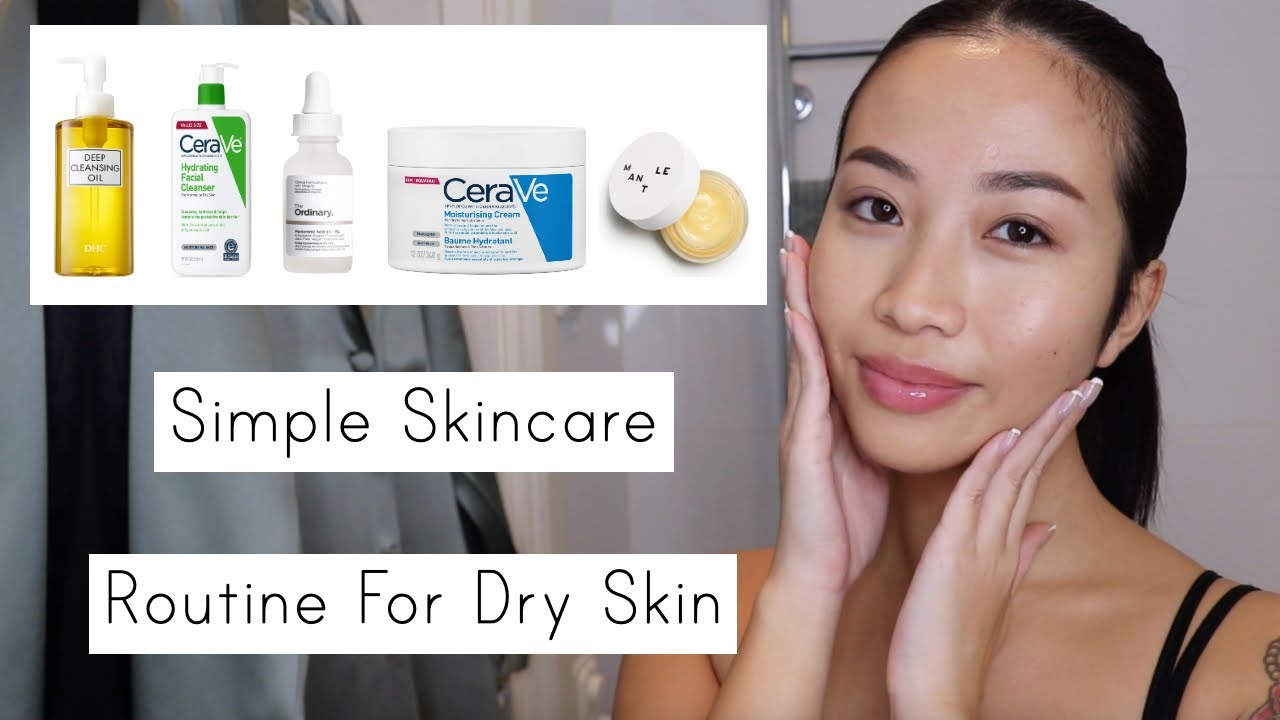
The global setting spray market was valued at USD 983 million in 2023 and is growing at a CAGR of 6.8% through 2030 (Maximize Market Research). Dewy finish sprays specifically are gaining share, driven by demand from dry skin users who want makeup longevity without a powdered finish.
Setting spray is the finishing step that actually works on dry skin. Powder is not.
The technique matters as much as the product:
- Hold the bottle 8-10 inches from the face
- Spray in an X then T pattern across the face
- Let it dry naturally, or press it in with a clean damp sponge for a more skin-like result
MAC Fix+ is a glycerin and panthenol formula. It removes chalkiness and gives a soft-focus dewy finish without adding grease.
Urban Decay All Nighter Hydra (launched 2023) combines the brand’s longwear formula with hyaluronic acid, addressing dry skin longevity directly.
Touch-Up Strategy for Dry Skin
Midday touch-ups on dry skin should never start with powder. That’s how you get a gray, layered finish by 4pm.
Touch-up order that works:
- Blot any areas that have shifted with a dry sponge
- Press (not swipe) a tiny amount of foundation over areas that have faded
- Finish with one spritz of setting spray
Blotting papers are fine for controlling any unexpected shine, but use them sparingly. Dry skin doesn’t produce much oil, so excess shine is usually just a product layering issue, not sebum.
Making makeup last all day on dry skin comes down to hydrated prep at the start and a setting spray finish, not heavy powder throughout.
Makeup Mistakes That Worsen Dry Skin

Most dry skin makeup problems trace back to the same handful of errors. None of them are complicated, but they compound fast.
Skipping skincare prep is the biggest one. Dead skin cells stay on the surface, foundation catches on them, and the result looks flaky by noon regardless of how good the products are.
The most common dry skin makeup mistakes:
- Skipping exfoliation: Dead cell buildup is why foundation looks patchy, not the foundation itself
- Using matte or powder-heavy formulas: These pull moisture and emphasize texture within hours
- Over-layering product: More coverage over dry patches doesn’t hide them, it amplifies them
- Applying powder across the whole face: Powder is for targeted use on dry skin, not a finishing step for every zone
- Not waiting between skincare and makeup: Makeup applied over a still-wet moisturizer pills and shifts
Fixing patchy makeup mid-routine is possible, but preventing it is simpler. The fix is almost always back at the prep stage.
One pattern worth mentioning: preventing creasing under eyes is often treated as a concealer problem, but it’s usually a hydration problem. If the under-eye area isn’t prepped with a hydrating eye cream, concealer will crease regardless of what formula you use.
The short version:
- Prep thoroughly
- Use cream and liquid formulas
- Apply less product, not more
- Set with spray, not powder
- Touch up without adding more layers
Applying makeup with a sponge rather than a brush also reduces the chance of lifting dry patches during blending. A damp sponge presses product in rather than dragging it across the surface.
The dry skin makeup routine that works long-term is a skin-first approach: treat the skin well before any product touches it, and the makeup application becomes significantly easier.
FAQ on How To Apply Makeup On Dry Skin
How do I stop my foundation from flaking on dry skin?
Moisturize first, then wait 60 seconds before applying primer.
Use a damp sponge and press foundation into the skin instead of rubbing. A hydrating foundation formula helps too. Avoid powder foundation entirely.
What primer works best for dry skin?
A water-based or oil-based hydrating primer. Skip anything labeled mattifying or oil-control.
The Milk Makeup Hydro Grip Primer and Charlotte Tilbury Hollywood Flawless Filter are both strong choices. Silicone-heavy primers can catch on dry patches if skin isn’t well-moisturized underneath.
Should I use powder on dry skin?
Yes, but sparingly and only where needed.
Apply a finely milled translucent powder only to the T-zone or under the eyes. Setting spray works better than powder for locking in makeup across the rest of the face.
Why does my concealer settle into fine lines?
The formula is probably too thick or too dry for your skin.
Switch to a lightweight, skin-like concealer. Apply a tiny amount of moisturizer to the area first, then pat concealer on gently. Avoid dragging. Preventing creasing under the eyes comes down to formula choice and technique.
What foundation finish is best for dry skin?
Dewy or satin. Both reflect light in a way that makes dry skin look healthy rather than flat.
Matte foundations emphasize rough texture and dry patches. Serum and cream foundations are the best formula types because they contain more moisturizing ingredients than standard liquids.
Can I use cream blush on dry skin?
Yes, and it’s actually the better choice over powder blush.
Cream formulas absorb into the skin and add dewiness. Apply with fingers using a light pressing motion. Powder blush can cling to dry patches and create an uneven, patchy finish.
How do I prep dry skin before makeup?
Cleanse, apply hydrating toner, hyaluronic acid serum, then moisturizer with ceramides or squalane.
Wait at least 60 seconds before applying primer. Layering your products in the right order prevents pilling and keeps everything sitting smoothly.
Why does my makeup look cakey by midday?
Usually too much powder, the wrong foundation formula, or skipping moisturizer.
Swap powder touch-ups for a hydrating face mist. Check that your foundation has a dewy or satin finish. Applying too many layers of product also creates a buildup that looks heavy on dry skin.
Do I need an eye primer if I have dry eyelids?
Yes. Dry eyelids have less natural grip, so eyeshadow creases faster without a base.
Use a creamy, hydrating eye primer rather than a chalky or drying formula. Cream eyeshadow over a hydrating primer is the most forgiving combination for dry, textured lids.
What ingredients should dry skin avoid in makeup?
Denatured alcohol, kaolin clay, talc in large amounts, and heavy silica-based mattifying ingredients.
Also avoid fragrance, which can irritate an already-compromised skin barrier. Check setting sprays and primers especially, since these categories most commonly contain alcohol-based drying agents.
Conclusion
Knowing how to apply makeup on dry skin comes down to a few consistent choices: the right formulas, a solid skincare base, and lighter hands with powder.
Cream and serum foundations, hydrating primers, and ceramide-rich moisturizers make a bigger difference than any single product swap.
Cream blush, targeted setting powder, and a dewy-finish setting spray keep the skin barrier intact while maintaining makeup longevity throughout the day.
Skip the mattifying formulas. Avoid denatured alcohol, kaolin clay, and heavy talc-based products that strip what little surface moisture dry skin holds.
Prep, press, and mist. That is the dry skin makeup routine in three steps.
Get those right, and flaky patches, cakey foundation, and concealer settling into fine lines stop being a daily problem.

She started writing on the site after fielding the same questions from clients and friends often enough to just write the answers down: which red won't turn orange on a warm undertone, how to keep lipstick from feathering into fine lines, why a "12-hour" formula rarely survives dinner.
Every review on the site follows the same rule she uses with paying clients: wear it first, then decide if it's worth recommending.
- How to Make Eyeliner Last Longer Without Smudging - August 31, 2026
- How to Make Eyeshadow Last Longer All Day - August 29, 2026
- How to Find Your Undertone in 5 Easy Steps - August 27, 2026