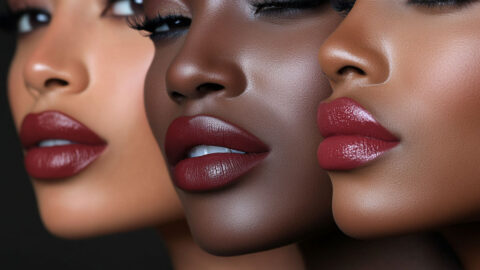
Matte lipstick shows every flake, every dry patch, every vertical lip line you have.
That is the trade for wear times that stretch past 8 hours with no transfer. Learning how to apply matte lipstick is less about the swipe and more about what happens before it: exfoliation, balm timing, and the blot most people skip.
High pigment load and film-forming polymers behave nothing like a cream formula. Same motion, completely different result.
What Is Matte Lipstick

The flat, non-reflective finish comes from what the formula leaves out. Light-reflecting emollients get swapped for film-forming polymers, absorbent powders, and volatile solvents, and pigment loads run high. That swap is where the transfer resistance comes from, along with the tight grip on the lip surface that people either love or complain about by lunchtime.
Satin still held 43.41% of the 2024 lipstick market by finish, while matte is forecast to grow fastest at a 7.81% CAGR between 2025 and 2030 (Mordor Intelligence).
| Finish | Surface behavior | Slip on the lip |
|---|---|---|
| Matte | Flat, no light bounce | None once dry |
| Satin | Soft low sheen | Moderate |
| Cream | Reflective, oil-heavy | High |
| Sheer | Translucent wash of color | High |
Satin sits closest to matte on the shelf, and the gap between those two finishes comes down to oil content and pigment load. Anyone comparing the full range of lipstick formats will notice matte is the only one that behaves like a coating rather than a film of color sitting on oil.
Liquid Matte vs Bullet Matte vs Matte Powder Formulas
Liquid matte carries the highest pigment of the three. It goes on with a doe-foot and sets into a dry film in 30 to 60 seconds, which is the liquid lipstick format most people mean when they say long-wear.
Bullet matte is waxier. It forgives mistakes, blots well, and you can rework it mid-day without the whole thing falling apart.
Then there is matte powder, a velvet texture that buffs into the lip. Lowest transfer of anything on this list. Also the shortest color life, so nobody wears it to a wedding.
Stick products commanded 58.95% of the 2024 lipstick market by form, though liquid formats are the faster grower at an 8.34% CAGR for 2025 to 2030 (Mordor Intelligence).
Ingredients That Make a Lipstick Matte
Isododecane does most of the work. It carries pigment onto the lip, evaporates fast, and leaves the color behind with nothing greasy attached.
- Trimethylsiloxysilicate is the silicone resin that forms the flexible, transfer-resistant film
- Disteardimonium hectorite works as a clay thickener, suspending pigment evenly
- Silica and kaolin are the absorbent powders that kill shine
- Dimethicone cuts the tack and helps the product glide before it sets
TKB Trading puts the color portion of a lip product recipe at roughly 15% of the total formula, which explains why one dip covers a whole mouth. Reading the ingredient list on a lipstick tube tells you the finish before you ever swatch it.
What Lips Need Before Matte Lipstick Goes On
Prep decides the outcome. Matte pigment clings to dead skin harder than it clings to healthy lip tissue, so anything flaking gets highlighted instead of covered.
Lip skin runs only 3 to 5 cell layers thick against 15 to 16 elsewhere on the body, has no sebaceous or sweat glands, and loses water faster than most skin, which is why lips dry out before your cheeks do (TRI Princeton).
The same TRI Princeton feasibility study, run by Dr. Xuzi Kang across 18 participants aged 24 to 68, found the lower lip runs 29% less hydrated than the upper lip. That imbalance is why patchiness usually shows on the bottom first.
Exfoliating Chapped Lips Without Causing Peeling
A damp washcloth buffed in small circles removes more than most sugar scrubs and irritates less.
Timing is the part people get wrong. Exfoliate the night before, not five minutes before, because freshly scrubbed lips are inflamed and take pigment unevenly.
Chapping showed up in 74.3% of chronic cheilitis cases in a 109-patient study published in Scientific Reports, where affected lips also measured higher transepidermal water loss and lower capacitance than matched controls.
Gentler options include enzyme lip treatments and a soft toothbrush. Several at-home methods for buffing lips work without any product at all.
Hydrating Without Creating a Slippery Base
Balm goes on, then it gets blotted. Skipping the blot is the single most common reason matte lipstick slides and breaks apart by hour two.
Give balm 5 to 10 minutes to absorb, then press once with a single-ply tissue to lift whatever is still sitting on the surface.
65% of Americans respond to irritated lips by reapplying balm throughout the day, according to a survey reported by Practical Dermatology. That habit helps overnight and hurts right before a matte application.
Laneige Lip Sleeping Mask and plain petrolatum both work as overnight occlusives. A steady routine for dry, cracked lips matters more than any single product you apply on the day.
Which Tools Improve Matte Lipstick Application
Applicator choice controls edge precision more than hand steadiness does.
| Tool | What it does | Best for |
|---|---|---|
| Flat synthetic lip brush | Thin, controlled deposits | Bullet matte, dark shades |
| Doe-foot applicator | Loads and spreads liquid formula | Liquid matte |
| Angled concealer brush | Cleans the outer border | Fixing overdraw |
| Cotton swab | Lifts wet product | Corner corrections |
Load a doe-foot by wiping one side flat against the neck of the tube and keeping the other side loaded. One flat edge lines, one loaded edge fills.
Maybelline built the SuperStay Matte Ink applicator as an arrow shape so the pointed tip traces the lip line and the flat edge fills the rest in a single swipe.
Blotting paper and single-ply tissue count as tools here. Both set a layer without adding powder to the surface.
How to Apply Matte Lipstick Step by Step
Thin layers beat one thick coat every time, because a thick film cracks along the vertical lip lines within two hours. The order matters as much as the product does.
Start at the cupid’s bow, work outward, then move to the center of the lower lip.
- Buff and balm the lips, then blot the excess
- Prime with a thin layer of foundation or lip primer
- Line the border, following the natural shape
- Fill the whole lip with liner for grip
- Apply the first thin layer of color
- Blot with single-ply tissue
- Apply the second layer only where color reads thin
In Lipseek’s 12-hour wear test, the inner lip had faded to roughly 70% of its original opacity by hour four once a meal and a coffee were involved, while the outer edges stayed sharp. Layer thickness and where friction lands decide how fast you reach that point.
Applying Bullet Matte Lipstick
Bullet formulas tolerate mistakes. Pick up product with a flat brush instead of dragging the bullet directly across the lip.
The brush wins because the bullet deposits more product at the edges, which is exactly where feathering starts.
Press lips together once, then check the inner rim for excess before adding a second pass.
Applying Liquid Matte Lipstick
Maybelline’s own instruction says it plainly: apply to the center of the upper lip, follow the contours outward, glide across the lower lip, then let it dry without pressing the lips together.
Pressing wet liquid matte together is what creates that ring of thick product in the middle of the mouth.
The mechanics carry over to any liquid lip formula you work with, matte or not.
Working Around the Inner Rim
Leave a hair of space at the wet line inside the lip. That gap is what keeps color off your teeth.
Layer Count and Drying Time
Liquid matte wants 30 to 60 seconds between layers and stops at two. Bullet matte gets a blot after layer one, then two or three layers total depending on how pigmented the shade is. Matte powder is a single buffed layer with no drying time at all.
Going past the layer ceiling does not deepen the shade. It builds a surface thick enough to flake off in patches.
How Lip Liner Changes Matte Lipstick Wear
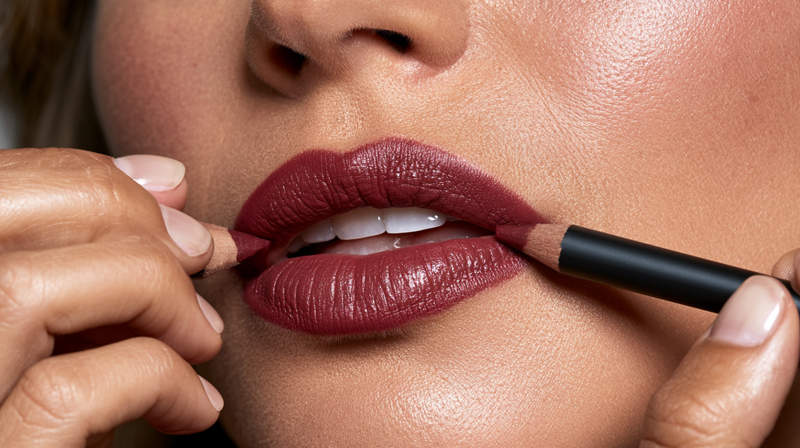
Lip liner works as a wax barrier at the border and as a grip layer underneath the color. Filled across the whole lip, liner gives matte pigment something to hold onto as the film wears down through the day.
Between 55% and 60% of American women aged 18 to 45 now use lip liner at least twice a week, up from 45% five years earlier (IndexBox).
The global lip liner category was valued at $468.9 million in 2024 and is projected to reach $761.5 million by 2032, a 6.5% CAGR across the 2026 to 2032 forecast window, according to Verified Market Research.
Matching Liner to Matte Lipstick
Bold shades need a same-tone liner, since any mismatch shows the second the film sets. A neutral pencil covers most nudes and browns as a universal base. Going one shade deeper adds a little dimension at the border, and going two shades deeper starts to look like 1996.
Shade options keep expanding. 72% of new lip liner launches in 2024 introduced extended color options (Intel Market Research).
Charlotte Tilbury Pillow Talk, MAC Whirl, and the NYX Slim Lip Pencil cover most of that matching work between them. Understanding what a lip pencil actually does makes the shade choice simpler.
Lining Technique That Holds the Border
Short strokes, not one continuous line. Start at the cupid’s bow peaks, then connect down to the corners.
Overlining past 1 to 2 millimeters beyond the natural border reads as obvious once the matte pigment sets, because there is no gloss to soften the edge.
The barrier the pencil creates is the main defense against color creeping into the lines around the mouth. Technique details differ by pencil type, and the way you draw the border changes how long the shape survives.
How to Stop Matte Lipstick From Drying Out Lips
Volatile solvents evaporate off the lip and take moisture with them. The pigment load is heavy. Absorbent powders and hygroscopic ingredients then pull more water away from the surface while the film sits there. All of it stacks.
Lips have no oil glands to compensate, so nothing replaces what the formula takes (TRI Princeton).
The practical fix cosmetic chemists point to is rotation: alternate high-pigment matte with sheer or low-pigment products instead of wearing long-wear matte daily.
Base Layer, Not Top Layer
Balm belongs under matte lipstick, blotted. Balm on top breaks the finish and turns a matte lip into a patchy semi-gloss.
Formulas labeled soft matte, velvet matte, or matte cream carry added emollients. Huda Beauty built its Lip L.O.V.E. Complex, a blend of lycopene, olive oil, vitamins A and E, and essential fatty acids, into the Liquid Matte Ultra-Comfort line for exactly this reason.
Recovery After Long-Wear Days
A 16-hour transfer-proof formula is not an everyday product. Maybelline’s SuperStay Matte Ink carries that 16-hour claim and needs an oil-based remover or micellar water to come off.
Overnight repair is simple enough. Remove fully, apply an occlusive, then skip pigment the next morning.
Practical steps for holding onto lip moisture under a matte formula matter most in winter, when indoor heating pushes water loss higher.
How to Make Matte Lipstick Look Even on Dry or Textured Lips

Press, do not drag. Dragging an applicator across a textured lip skips over the dry spots and piles product into the smooth ones.
Desquamation, the flaking of surface skin, appeared in 90.8% of chronic cheilitis cases in the Scientific Reports study, making it the single most common presentation. Texture is the default state for a lot of people, not the exception.
The Tapping Method
Use a fingertip to tap pigment into gaps after the first layer sets. Fingertip warmth softens the film just enough to fill without disturbing what already dried.
It handles vertical lip lines, the inner rim, and that dry patch that always sits center-bottom no matter how much balm you used.
Sheering It Out
A blurred lip hides texture that a full-opacity lip advertises.
Apply one thin layer, then blend the edges inward with a fingertip until the color reads like a stain. This is the same principle behind softening lipstick edges by hand, applied to a formula that fights back.
When to Remove and Restart
Layering over a broken application never fixes it. Once a liquid matte film cracks, more product sits on top of the crack instead of filling it.
Wipe with micellar water, re-balm, blot, and start again. The full reset takes 3 minutes and beats 20 minutes of patching.
Anyone dealing with this weekly should look at application methods built for dry lips before blaming the formula.
How to Fix Matte Lipstick Mistakes
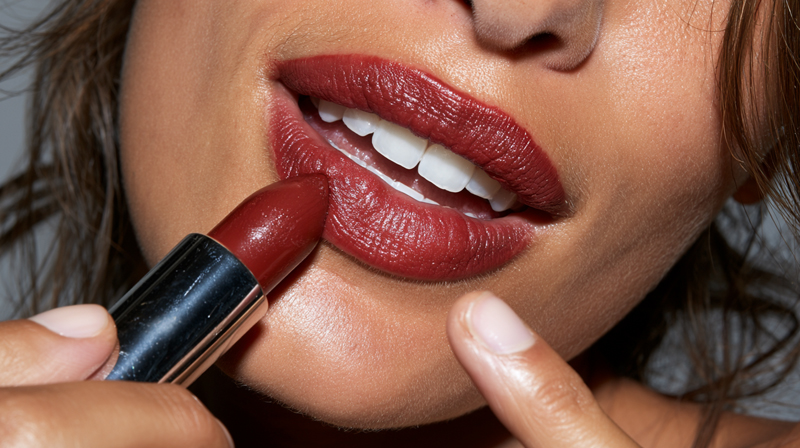
Most failed applications come down to an uneven border, bleeding at the corners, transfer off the inner rim, or a color that landed heavier than it looked in the tube. Each one has a correction that takes under a minute and does not require removing the whole thing.
Among the participants who reported reactions to lipstick in a 226-response survey across 21 countries published in CosmoDerma, 38.89% reported lip cracks and 30% reported dryness. Fixing a broken application starts with knowing which of those two you are looking at.
| Problem | Fix | Tool |
|---|---|---|
| Wobbly border | Carve back with concealer | Angled brush |
| Corner bleeding | Lift while wet, reline | Cotton swab |
| Teeth transfer | Clear the inner wet line | Clean fingertip |
| Shade too intense | Blot twice, blend edges | Single-ply tissue |
Cleaning Up the Border
Concealer on an angled brush, drawn outward from the lip line. Never inward, because pushing concealer toward the color drags pigment with it.
One pass. Repeated strokes lift the matte film and leave a chalky edge that looks worse than the wobble you started with.
A liner barrier prevents most of this work in the first place, which is the main reason people who fight color migrating past the lip line end up buying a pencil.
Removing Excess From the Inner Rim
Slide a clean index finger into your mouth, close your lips around it, and pull it straight out.
Whatever comes off on the finger is exactly what would have ended up on your teeth. The trick reads as unglamorous and works better than anything else, which is why it survives among people who fight pigment showing up on their smile.
Reworking a Dried Liquid Matte
Small patches only need fresh product tapped into the gap with a fingertip. A cracked film is different, since new product bonds to the crack instead of closing it, so that one gets removed and restarted. And when the center has faded, blot the ring of old product away first, then put down one thin layer.
How to Make Matte Lipstick Last Longer
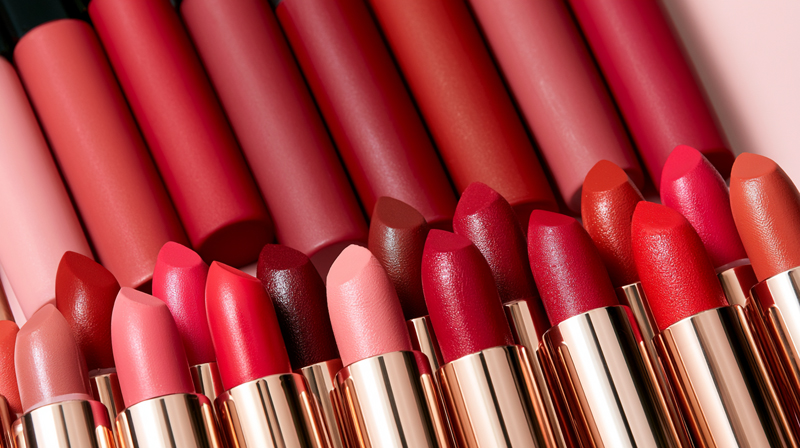
Matte formulas hold 6 to 8 hours on average, with transfer-proof versions reaching 10 to 12, according to Lipseek wear testing. Prep, blotting, and layer control decide where you land inside that range.
Liquid formulas keep curing for the first 30 to 60 minutes. Judging wear before hour two tells you nothing useful.
Maybelline SuperStay Matte Ink claims 16 hours and holds a 4.4 rating across 29,100 reviews at $9.49 (Insider Beauty), which sets the ceiling most drugstore formulas are measured against.
The Tissue and Powder Method
- Apply layer one
- Lay a single-ply tissue over the lips
- Dust translucent powder through the tissue
- Apply layer two
The tissue diffuses the powder so it locks the film without leaving a visible chalk cast. Setting lip color with powder buys the most extra wear on a bullet matte and much less on a liquid formula that already sets hard.
What Breaks the Film During the Day
Oily food is the fastest breakdown agent, because oil dissolves the resin holding pigment in place. Lipseek’s testing put wear at 2 to 3 hours once oily food and lip-licking entered the picture, even for transfer-proof formulas.
Hot liquids soften the film enough for the cup to lift it. Straws are worse than they look, concentrating friction on one spot of the lower lip.
Working around this is mostly about bite mechanics and cup contact. The habits behind eating without wrecking your lip color matter more than any setting product.
Touch-Up Strategy
Reapply to the center only. The border is usually intact, and adding product there thickens the edge into something that feathers.
A full reset takes 3 minutes and produces a cleaner result than layering over hours-old product (Lipseek). Anyone chasing a finish that survives contact should reset rather than patch.
Which Matte Lipstick Shade Suits Skin Tone and Undertone
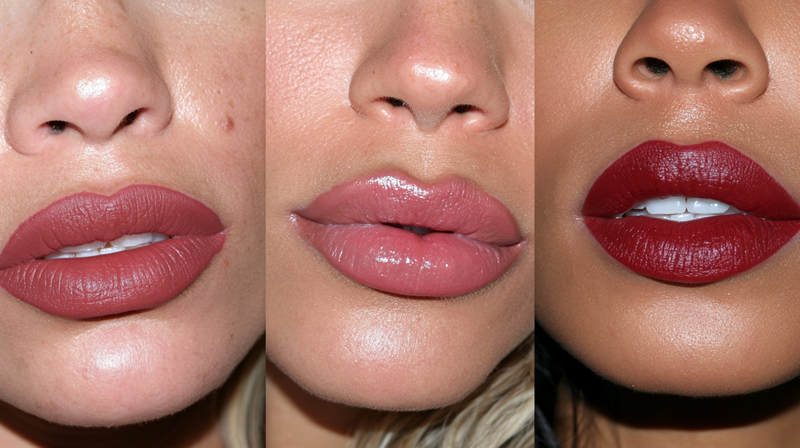
Matte pigment reads deeper and flatter on the lip than it looks in the tube, because no light bounces off the surface to soften it. Shade selection for matte starts one step lighter than you would pick in a cream formula.
Undertone drives the match more than depth does.
| Undertone | Nude direction | Bold direction |
|---|---|---|
| Cool | Rosy, dusty pink | Blue-based red, berry |
| Warm | Peach, caramel | Brick, terracotta |
| Neutral | Beige, mauve | True red, plum |
| Olive | Deep tan, warm brown | Deep peach, oxblood |
L’Oreal Paris guidance puts the nude target at one to two shades darker than your natural skin tone, and warns that shades leaning beige or taupe can easily wash out light complexions.
Testing a Shade Properly
Swatch on the fingertip, not the wrist. Fingertip skin sits closest to lip tone in both color and thickness.
With matte there is one extra step. Let the swatch dry down for 60 seconds before you judge it, because liquid formulas shift as the solvent evaporates and the tube color is not the final color.
Browsing nude options in a matte finish gets easier once you know whether your lips pull pink or brown on their own.
Depth and Border Precision
Deeper shades punish sloppy lining. A cool-toned plum shows every millimeter of asymmetry that a soft rose hides completely.
Maybelline lists its SuperStay Matte Ink range at 36 shades, wide enough that most people find a match without compromising on depth.
Shade families split by complexion, and the picks that work as matte colors on fair complexions rarely translate to the shades built for deeper skin.
How to Remove Matte Lipstick Without Damaging Lips
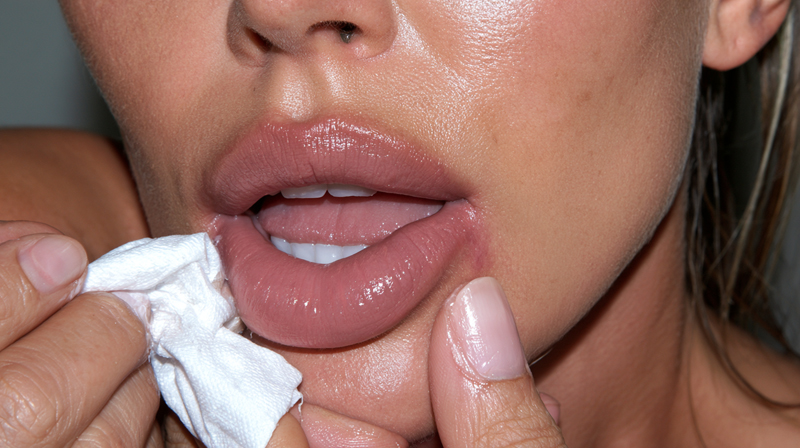
Long-wear matte comes off with oil, not water. Water alone slides across silicone film formers without dissolving anything.
Maybelline instructs users to remove SuperStay Matte Ink with micellar water or an oil-based remover labeled safe for lips.
Friction is the part that does the damage. Dermatologists consistently advise against rubbing, picking, and abrasive scrubbing on compromised lips, since repeated mechanical stress is what drives the redness and cracking rather than the pigment itself.
Dwell Time Over Scrubbing
Press a soaked cotton pad against the lips for 15 to 60 seconds before any wiping motion.
The oil needs contact time to break the resin. Rubbing early just moves pigment around and abrades the lip surface.
Loosening With Balm First
A thick balm applied 2 minutes before removal softens the film and cuts the number of passes needed.
Petrolatum works. So does any cleansing balm, and Maybelline sells the Super Stay Eraser as a dedicated version of the same idea.
Handling Stain Residue
Deep shades leave a tint at the lip line after the film is gone.
Take a soft toothbrush with a few drops of oil and work it in small circles for about 20 seconds. Skip this entirely if the lips are already cracked or peeling.
Follow with an occlusive every time. Removal is the point in the daily lip care sequence where barrier damage actually happens, and the fastest fixes for taking off a matte formula are the gentlest ones.
Which Matte Lipstick Application Mistakes Cause the Worst Results

Applying over balm that has not absorbed causes more failed applications than anything else. After that comes skipping exfoliation, going in with one thick layer, pressing the lips together while the film is still wet, and reapplying on top of an existing layer instead of clearing it first.
In the CosmoDerma survey, hyperpigmentation was the most reported reaction at 54.44% of the reaction group, with dryness at 30%, and 24.44% of affected participants said matte was the only formula they used.
Unabsorbed Balm and Skipped Prep
Balm still sitting wet on the lip turns matte pigment into a slick that migrates within 20 minutes.
Skipped exfoliation costs less immediately and more later, since pigment grabs flakes and lifts them as the film contracts.
Nearly half of Americans admit to licking their lips more often when they are chapped, per the survey reported by Practical Dermatology, which undoes prep before the lipstick ever goes on.
Layer Errors
One thick coat cracks along the vertical lines within 2 hours. Pressing wet liquid matte leaves a thick ring in the center with thin patches at the edges. Layering over old product adds texture and pulls more water out of the lip on top of that.
Wearing Long-Wear Formulas Daily
A 16-hour transfer-proof formula worn five days a week takes a toll. The standard advice is to alternate with sheer or low-pigment products to give the lip time to recover.
Matte is forecast to grow fastest of any lipstick finish at a 7.81% CAGR (Mordor Intelligence), and the comfort problem is exactly what hybrid formulas launched since 2024 are built to solve.
Rotation beats abstinence. Knowing how to wear a matte finish well includes knowing which days to skip it.
FAQ on How To Apply Matte Lipstick
Do you put lip balm on before matte lipstick?
Yes, with a blot in between. Apply balm, wait 5 to 10 minutes for absorption, then press once with single-ply tissue. Balm left sitting wet on the lip makes matte pigment slide and separate.
How many layers of matte lipstick should you apply?
Two thin layers for liquid matte, two to three for bullet formulas. One thick coat cracks along the vertical lip lines within about 2 hours. Blot between layers instead of building thickness.
Why does my matte lipstick look patchy?
Dry skin on the lip surface. Pigment grabs flakes harder than it grabs healthy tissue, so texture gets highlighted. Buff with a damp washcloth the night before, then tap product in with a fingertip.
Should you use lip liner with matte lipstick?
It blocks feathering at the border, and when you fill the whole lip it gives pigment something to grip as the film wears down. Between 55% and 60% of American women aged 18 to 45 use one at least twice a week (IndexBox).
How long does matte lipstick take to dry?
Liquid matte sets in 30 to 60 seconds. Full cure takes closer to 30 minutes, which is why the finish looks different at hour two. Bullet and powder formats need no drying time.
Can you press your lips together with liquid matte lipstick?
No. Pressing while the film is still wet pushes product into a thick ring at the center and leaves the edges thin. Maybelline’s own instructions say to let it dry untouched.
How do you stop matte lipstick from drying out your lips?
Balm underneath, never on top. Alternate high-pigment formulas with sheer or low-pigment products, since volatile solvents and heavy pigment loads both pull water from lips that have no oil glands.
What tools do you need for matte lipstick?
- A flat synthetic lip brush for bullet formulas and dark shades
- An angled concealer brush for border cleanup
- Cotton swabs for lifting wet mistakes
- Single-ply tissue for blotting between layers
How do you keep matte lipstick off your teeth?
Slide a clean finger into your mouth, close your lips around it, pull straight out. Whatever transfers to the finger was headed for your teeth. Leave a hair of space at the inner wet line.
How do you remove matte lipstick properly?
Oil, not water. Press a soaked cotton pad against the lips for 15 to 60 seconds before wiping, since film-forming silicones need contact time. Follow with an occlusive to rebuild the barrier.
Conclusion
Anyone who learns how to apply matte lipstick properly stops blaming the formula. Prep, liner, thin layers, blot, repeat. The sequence does the work.
Transfer resistance and comfort pull in opposite directions, and every velvet matte or matte cream on the shelf is a compromise between the two.
Pick the compromise that matches your day. A 16-hour transfer-proof formula for a wedding, a buildable bullet for a Tuesday.
Undertone matching and border precision matter more as shades get deeper, since a plum shows asymmetry that a rose forgives.
Rotate formulas. Remove with oil, not friction. Lips with no sebaceous glands need recovery time between long-wear days, and skipping that step is what turns a good technique into chronic flaking.

She started writing on the site after fielding the same questions from clients and friends often enough to just write the answers down: which red won't turn orange on a warm undertone, how to keep lipstick from feathering into fine lines, why a "12-hour" formula rarely survives dinner.
Every review on the site follows the same rule she uses with paying clients: wear it first, then decide if it's worth recommending.
- How to Make Eyeliner Last Longer Without Smudging - August 31, 2026
- How to Make Eyeshadow Last Longer All Day - August 29, 2026
- How to Find Your Undertone in 5 Easy Steps - August 27, 2026