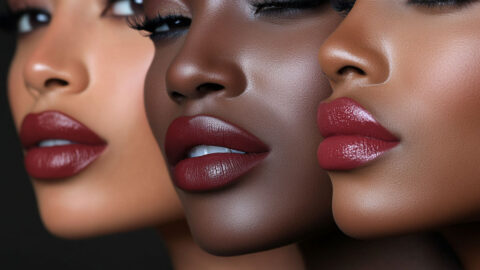
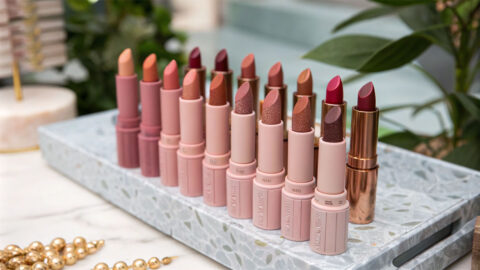
Two reds can sit an inch apart on the same shelf and look completely different once they hit actual lips. That’s exactly why picking a matte shade trips up so many people.
Depth and undertone decide almost everything here. A shade that reads rich on one skin tone can look flat, orange, or even a little gray on another person entirely.
Formula plays its part too. Some mattes crack by noon, others hold color for 12 hours without a single touch-up, and the difference usually comes down to what’s actually in the tube rather than the price on the label.
The category isn’t shrinking either. Matte lipstick is the fastest-growing finish on the market right now, expanding at a 7.81% CAGR through 2030 (Mordor Intelligence, 2025).
What is Matte Lipstick

Skip the oils and light-reflecting agents that give gloss its shine, and what’s left is matte: pigment sitting flat on the lips with almost nothing bouncing light back.
Matte held a 44.6% share of the global lipstick market by product type in 2025, more than any other finish (Market.us, 2025).
Pigment concentration runs higher here than in most other finishes, enough that one swipe usually gives full coverage without a second pass. The carrier is silicone or wax instead of the oil-heavy base a cream lipstick uses, and light barely bounces off the surface at all, unlike satin or gloss.
Matte sits alongside satin, cream, sheer, and gloss on the broader menu of lipstick finishes, each covered in our breakdown of the different types of lipstick available today.
Older matte formulas leaned on alcohol and heavy silica to set fast, and lips paid for it in dryness. Brands like L’Oreal now build their mattes around dimethicone and moisture-locking polymers instead, closing the gap between a true matte and one that actually feels comfortable to wear.
How Matte Differs From Velvet and Suede Finishes
Velvet and suede aren’t really separate finishes. They’re marketing names for a softened matte, built with added emollients so the flat finish doesn’t feel chalky going on.
True matte sits driest and most powder-like on the lips, while velvet and suede versions add slip without adding any shine.
Satin sits one step further off still, holding onto a faint sheen that classic matte and its softened cousins both avoid, a difference covered in our matte vs satin lipstick comparison.
All three still count as matte finishes for shopping purposes. None of them reflect light the way a cream or gloss formula does.
What Determines a Matte Lipstick’s Undertone

Undertone comes from a lipstick’s base pigment, not its finish. Matte, satin, or gloss versions of the same shade can all carry warm, cool, or neutral pigment underneath the surface.
| Undertone | Base Pigment | Vein Test |
|---|---|---|
| Warm | Yellow, peach, gold | Veins look greenish |
| Cool | Blue, pink, purple | Veins look blue or purple |
| Neutral | Balanced warm and cool | Veins look blue-green |
Warm undertones lean toward terracotta, brick, and orange-red pigment families. Cool ones run more blue-red, berry, and mauve, and honestly a fair number of shades sit right on the line between the two no matter what the label on the tube says.
A lipstick built from the palette suited to warm undertones can clash badly on cool-toned lips, turning muddy or orange instead of rich.
The mismatch runs the other way too. A shade from the range built for cool undertones can look flat, or slightly gray, on warm skin instead of vivid.
Testing goes beyond veins, though. The jewelry test (gold or silver, whichever flatters more) and the white paper test (does skin read yellow or pink against plain white) both back up what the vein check suggests.
Which Matte Lipstick Shade Works Best for Each Skin Tone

Shade matching by skin tone starts with depth, fair, medium, or deep, then layers undertone on top of that. The same red can read completely differently on two people with matching depth but opposite undertones, which is exactly why depth alone never tells the full story.
Fair Skin Tones
Fair skin tends to do best with soft rose, dusty pink, coral-nude, and blue-based red. Blue-based reds dodge the orange cast that warm reds can throw on very fair skin, and dusty pink or coral-nude read natural rather than washed out.
Fair skin with cool undertones tends to do well within the range built for matte lipstick suited to fair complexions, where the shade wall skews pink over peach.
Medium Skin Tones

Medium depth skin carries enough natural warmth to handle richer pigment without looking chalky, think terracotta, warm berry, cinnamon-rose, brick red. Shades built too pale for this depth tend to disappear rather than flatter.
Deep Skin Tones
Deep skin carries the pigment needed for saturated mattes that would look thin on lighter depths. Oxblood, deep plum, rich burgundy, and chocolate-brown read as intentional here rather than heavy.
Fenty Beauty built its Stunna Lip Paint line around exactly this gap, with deep shades like Underdawg and Unveil designed to hold their own against richer skin instead of fading into it (Fenty Beauty).
Shopping the range of matte lipstick made for deeper skin tones usually means looking past the standard drugstore rack, where deep options still run thin.
Olive Skin Tones
Olive skin runs a green-gray undertone that plenty of “cool” lipstick shades fight against instead of complementing. Muted rose, warm mauve, and brownish-pink work with that green cast rather than against it.
Stark cool pinks, the kind built for pink-white cool undertones, tend to clash here and can make olive skin look sallow by contrast.
Testing on the jaw rather than the back of the hand gives a truer read, since hand skin often runs a shade or two off from the face.
What Are the Main Matte Lipstick Shade Families

Named shades on a brand’s wall almost always fall into one of a handful of practical families, and once you know them, the giant wall of near-identical tubes gets a lot less overwhelming.
| Family | Includes | Undertone |
|---|---|---|
| Red | Blue-red, orange-red, brick red | Cool to warm |
| Nude | Warm nude, cool nude, mauve-nude | Warm to cool |
| Berry/Plum | Wine, magenta-plum, dusty berry | Cool |
| Brown/Rust | Chestnut, cinnamon, terracotta-brown | Warm |
| Pink | Bubblegum, dusty rose, hot fuchsia | Cool to neutral |
The nude family causes the most shopping mistakes, since “nude” describes a whole category rather than one fixed color. Our guide to matte lipstick nude shades breaks down where the warm, cool, and mauve versions each sit.
The brown and rust family gained ground fastest through 2025, as the your-lips-but-deeper trend pushed browns into everyday rotation. We cover that further in our roundup of matte lipstick brown shades.
Berry and plum sit as the middle ground between pink and red, useful for anyone who finds true red too bold for daytime.
Which Matte Lipstick Shades Are Considered Universally Flattering

Calling a shade “universally flattering” is industry shorthand, not a literal claim that it suits everyone. It just means the shade tests well across a wide span of undertones.
MLBB (my-lips-but-better) mauve-brown shades top that list, since they sit close to natural lip pigment across most depths and undertones.
Blue-based true red comes in right behind it, prized for cutting through warm and cool undertones alike without turning orange or brick. Picking between a blue-based and an orange-based red comes down to undertone more than personal taste, a distinction covered in our breakdown of cool versus warm red lipstick.
Berry-rose blends round out the shortlist, working as a bridge shade for anyone stuck between wanting pink and wanting red.
MAC built part of its reputation on two shades that keep reappearing on “universal” lists across the industry: Velvet Teddy, a mauve-brown nude, and Ruby Woo, a blue-based matte red (MAC Cosmetics).
How Do Matte Lipstick Formulas Affect Shade Payoff and Wear

The same shade name can look completely different depending on whether it ships as a liquid, a bullet, or a pressed powder-set finish. Formula decides how fast the pigment sets and how saturated it reads. It also decides something people rarely think about until it’s too late, how the lips actually feel by hour six.
Ingredient differences drive most of that gap. Silica and silicates absorb oil and grip the lip for staying power, while emollients like castor oil or hydrogenated polyisobutene counter the dryness that grip-heavy formulas tend to cause.
Older matte formulas skipped the emollients and leaned on alcohol to dry down fast, which is where matte’s whole reputation for cracked, flaky lips came from in the first place. Reformulated lines now pair the same mattifying agents with hydrators, a shift covered in our look at lipstick ingredients generally.
Skipping dedicated matte formulas entirely works too. Applying a cream lipstick, blotting it, then dusting with translucent powder builds a homemade matte finish, a technique detailed in our guide on how to set lipstick with translucent powder.
Liquid Matte vs Bullet Matte Formulas
Liquid formulas usually win on pigment payoff and set faster than bullets do, though that thin initial feel on the lips takes some getting used to. Fenty Beauty’s Stunna Lip Paint claims a 12-hour hold at $29 (Fenty Beauty), and Maybelline’s SuperStay Matte Ink claims up to 16 hours of wear across 36 shades (Maybelline), numbers that sound almost unbelievable until you actually put one through a long day.
Bullet formats go on easier and forgive mistakes better, which matters a lot if you’re still getting the hang of applying matte lipstick. MAC’s MACximal Silky Matte claims 12 hours of comfortable wear, and Charlotte Tilbury’s Matte Revolution claims up to 10 hours (MAC Cosmetics; Charlotte Tilbury).
Formats built around liquid lipstick generally dry down harder and resist transfer better, which is why liquid matte dominates the long-wear end of the shade wall.
How Do Top Matte Lipstick Brands Compare on Shade Range and Formula

Price and shade count vary more across matte lipstick brands than formula quality does at this point, since most of them are chasing the same hydrating-matte middle ground.
| Brand | Formula | Shade Range | Price |
|---|---|---|---|
| MAC | Bullet, 12HR wear | 40+ shades | $25 |
| Fenty Beauty | Liquid, 12HR hold | 9 shades | $29 |
| Charlotte Tilbury | Bullet, hydrating, 10HR wear | 19 shades | $37 |
| Maybelline | Liquid, 16HR wear | 36 shades | Under $10 |
MAC runs the widest shade library of the group, 40+ options in its MACximal Silky Matte line, all rated for 12 hours of full coverage and 8 hours of moisture (MAC Cosmetics).
Charlotte Tilbury sits at the opposite end on price. That’s justified partly by a hydrating formula built around Lipstick Tree Extract and Orchid Extract rather than the drying agents older mattes relied on (Charlotte Tilbury).
Maybelline undercuts every prestige option on this list by a wide margin, and still claims the longest wear time of the four at up to 16 hours (Maybelline).
None of these brands lean exclusively warm or cool anymore. Coverage across undertones has become table stakes, and shoppers asking what the best matte lipstick actually is usually get pointed toward whichever of these four fits their price ceiling rather than one universal winner.
How Should Lips Be Prepped Before Applying Matte Lipstick Shades

Lip skin has no oil glands, which is exactly why matte formulas show every flake and dry patch that facial skin would otherwise hide.
Prep work matters more for matte than for any other finish. There’s no gloss layer left to camouflage texture underneath.
- Exfoliate first. The American Academy of Dermatology recommends limiting lip exfoliation to about once or twice a week, since over-scrubbing breaks the thin lip barrier down further. A gentle sugar or jojoba-based scrub clears flaking skin without the redness that harsher physical exfoliants can cause.
- Hydrate next. A balm applied a few minutes before color gives matte pigment something to grip instead of raw, dehydrated skin. This step fits naturally into a broader lip care routine built for dry lips, not just a pre-lipstick afterthought.
- Line the lips. Revlon calls a matched lip liner the single most effective tool for stopping matte lipstick from feathering, ahead of powder or primer alone (Revlon). Filling the entire lip with liner, not just tracing the outer edge, anchors color across the full surface. Our guides on what lip liner actually does and how to apply lip liner cover the technique step by step.
Blot-and-reapply finishes the job. One thin coat, blotted with tissue, then a second thin coat, builds payoff without the cakey buildup that one heavy swipe leaves behind.
What Problems Occur With Matte Lipstick Shades and How Are They Fixed

Matte formulas fail in a handful of predictable ways, and each one traces back to a specific formulation trade-off.
Editorial makeup artist Mary Irwin notes that matte formulas are actually the least likely to bleed color compared to glossy finishes, since they carry less slip to begin with (Dermelect).
| Problem | Cause | Fix |
|---|---|---|
| Settling into lines | Thick product sits in creases | Prime lips, apply thin layers |
| Dryness and cracking | Alcohol, heavy silica | Balm before, hydrating matte formula |
| Feathering at the edge | Mouth oils, no barrier | Matched lip liner, full lip |
| Patchy, uneven color | Flaking skin, one heavy coat | Exfoliate first, layer thin coats |
Repeated lip pursing gradually forms the fine vertical lines that give feathering somewhere to travel, according to Irwin. Habits like smoking or sipping through straws speed that process up.
Fixing feathering after it’s already happened works differently than preventing it in the first place. A clean cotton swab traces the feathered edge, then a thin line of concealer resets the barrier from the outside, a targeted version of the approach in our guide to stopping lipstick from feathering.
Patchy color almost always traces back to skipped prep rather than a bad formula. Skin that wasn’t exfoliated grabs pigment unevenly, leaving darker spots wherever the flaking was worst.
How Do You Test a Matte Lipstick Shade Before Buying It

Perfect Corp’s YouCam suite of apps, which includes YouCam Makeup, has surpassed 1.1 billion downloads globally as of 2026, a scale that reflects how much shade testing has moved off the counter and onto the phone screen (Perfect Corp, 2026).
Swatching on the lips themselves, not the inner wrist, gives the truest read. Lip pigmentation changes how a shade reads, so a color that looks right on skin can shift once it actually hits the lip’s natural pink base.
Do it in daylight near a window rather than under store fluorescents, and swipe just a small patch at the center of the lower lip instead of committing to a full application right away. If there’s a current favorite on hand, cross-checking the new shade against it with a shade-match tool at the counter helps too.
Sephora’s Virtual Artist tool, built with ModiFace, remains one of the more established options for previewing a shade digitally before it ships or gets swatched in person.
None of these replace an in-person swatch entirely, though. Phone screen color calibration varies enough that a shade confirmed on-screen can still surprise once it’s actually on the lips, which is why picking a lipstick color still benefits from one final real-world check.
Which Matte Lipstick Shades Are Trending in 2026

Oxblood dominated fall and winter 2026 runway beauty, appearing on models at Elie Saab, Carven, and Saint Laurent as the season’s defining lip color (Who What Wear, 2026).
| Trend Shade | Family | Seen At |
|---|---|---|
| Oxblood | Deep red-brown | Elie Saab, Carven, Saint Laurent |
| Chocolate brown | Brown/rust | Fall 2026 runway shows |
| Black | Statement/editorial | Editorial and runway looks |
NYX Professional leaned into the same deep, warm direction for fall 2026, releasing its Fat Matte Lipstick in shades named Scarlet Snuggles and Mauve Cloud (Happi, 2026).
Black lipstick moved further into mainstream territory this cycle too. Makeup artist Kelly Zhang describes it as adding “depth, drama, and a fearless edge” once reserved mostly for runway and editorial work, a shift covered further in our guide on how to wear black lipstick.
Trend shades and staple shades serve different jobs, honestly. Oxblood and black sit in the trend category and are likely to fade as the season turns, while MLBB mauve-browns and blue-based red hold their place as year-round basics regardless of what’s on the runway.
Anyone shopping specifically for the season’s colors, rather than a permanent addition to their collection, should treat these as fall lipstick colors first and long-term staples second.
FAQ on Matte Lipstick Shades
Does matte lipstick dry out your lips?
Some formulas do, mostly older ones that lean hard on alcohol and silica. Reformulated lines built around dimethicone and moisture-locking polymers cause a lot less dryness these days.
What you do before applying still matters more than the finish itself, exfoliating and moisturizing beforehand keeps lips comfortable through the day.
How long does matte lipstick actually last on the lips?
Wear time comes down to formula more than anything else. Liquid mattes typically outlast bullet versions by a good margin, a gap we cover in our breakdown of how long liquid lipstick actually lasts.
Eating, drinking, and talking wear color down faster than the packaging suggests, so treat the printed number as a ceiling, not a guarantee.
Can you wear matte lipstick over chapped or peeling lips?
Not without prep first, no. Matte formulas grip texture instead of smoothing over it, so every flake shows up once color goes on.
Exfoliate, moisturize, then give it a few minutes before applying if you want a finish that actually looks intentional.
What’s the best way to remove matte lipstick at night?
Oil breaks matte pigment down better than soap and water ever will. An oil-based cleanser or balm, left on for about a minute, lifts the color off without dragging at the skin.
Our full method for removing matte lipstick walks through it step by step.
Is drugstore matte lipstick as good as high-end matte lipstick?
Formulation gaps between price tiers have narrowed a lot. Drugstore lines now use similar mattifying agents to prestige brands.
Luxury options usually add more hydrating extras and a wider shade range, so the extra price buys polish and range more than core performance.
Does matte lipstick stain the lips?
Some shades do, particularly deep reds and berries with high pigment concentration. The tint usually fades within a few hours once the product comes off.
Micellar water or a gentle oil cleanser clears the residual color faster than soap alone.
Can matte lipstick be worn over lip balm?
A heavy balm layer actually works against matte formulas, since silica and silicate agents need a drier surface to grip color properly.
Let the balm absorb fully and blot off any excess first. A light, fast-absorbing balm beats a thick, greasy one before matte lipstick every time.
What’s a good everyday matte lipstick shade for beginners?
A mauve-brown MLBB shade is the easiest place to start, since it reads close to natural lip color across most depths and undertones.
It pairs with pretty much any makeup look and rarely clashes, which makes it the safest first matte purchase.
Does matte lipstick expire faster than other formulas?
Not inherently, no. The FDA doesn’t require expiration dates on cosmetics, though manufacturers typically suggest replacing lipstick 18 to 24 months after opening (Lancome).
Watch for texture changes, odd smells, or color separation, we cover those signs further in our breakdown of expired lipstick side effects.
Is matte lipstick vegan or cruelty-free?
It depends entirely on the brand and the specific shade, not on the matte finish itself.
Plenty of reds and berries use carmine, a pigment pulled from insects, even in otherwise cruelty-free lines, so checking the ingredient list is really the only reliable way to know.
Conclusion
Skip the swatch wall and start with your undertone instead. Once that’s settled, entire shade families rule themselves out before you even touch a bullet, and every other decision gets easier from there.
Buy one shade before you build out a whole collection. A blue-based red or an MLBB mauve-brown tests undertone, comfort, and color payoff all in a single purchase.
Performance tends to vary more by formula than by price tag anyway. A liquid matte off a drugstore shelf can genuinely outlast a bullet lipstick from a luxury counter, so it’s worth checking the ingredient list before you even look at the shade name. Silica and hydrating polymers tell you more about how comfortable a lipstick will actually feel than any marketing claim does.
One well-chosen shade beats a drawer full of near-misses.

She started writing on the site after fielding the same questions from clients and friends often enough to just write the answers down: which red won't turn orange on a warm undertone, how to keep lipstick from feathering into fine lines, why a "12-hour" formula rarely survives dinner.
Every review on the site follows the same rule she uses with paying clients: wear it first, then decide if it's worth recommending.
- How to Make Eyeliner Last Longer Without Smudging - August 31, 2026
- How to Make Eyeshadow Last Longer All Day - August 29, 2026
- How to Find Your Undertone in 5 Easy Steps - August 27, 2026