Brown lipstick used to mean one safe, forgettable shade. That’s not true anymore. Matte lipstick brown shades now stretch from warm cinnamon to near-black espresso, real range where there used to be one option.
Nude, brown, and beige lip colors are posting double digit sales growth while classic red slips year over year (TheIndustry.beauty, 2025). For a market this size, that’s not a small shift.
Warm, cool, and neutral undertones split the category before shade even enters the conversation. Terracotta and cinnamon sit warm. Mauve and cocoa lean cool. Taupe and tawny land somewhere in the middle, neither one nor the other.
Undertone, not the shade name printed on the tube, decides whether a brown reads flattering or muddy. Get that wrong and even the right bottle looks off within seconds.
What Is Matte Brown Lipstick
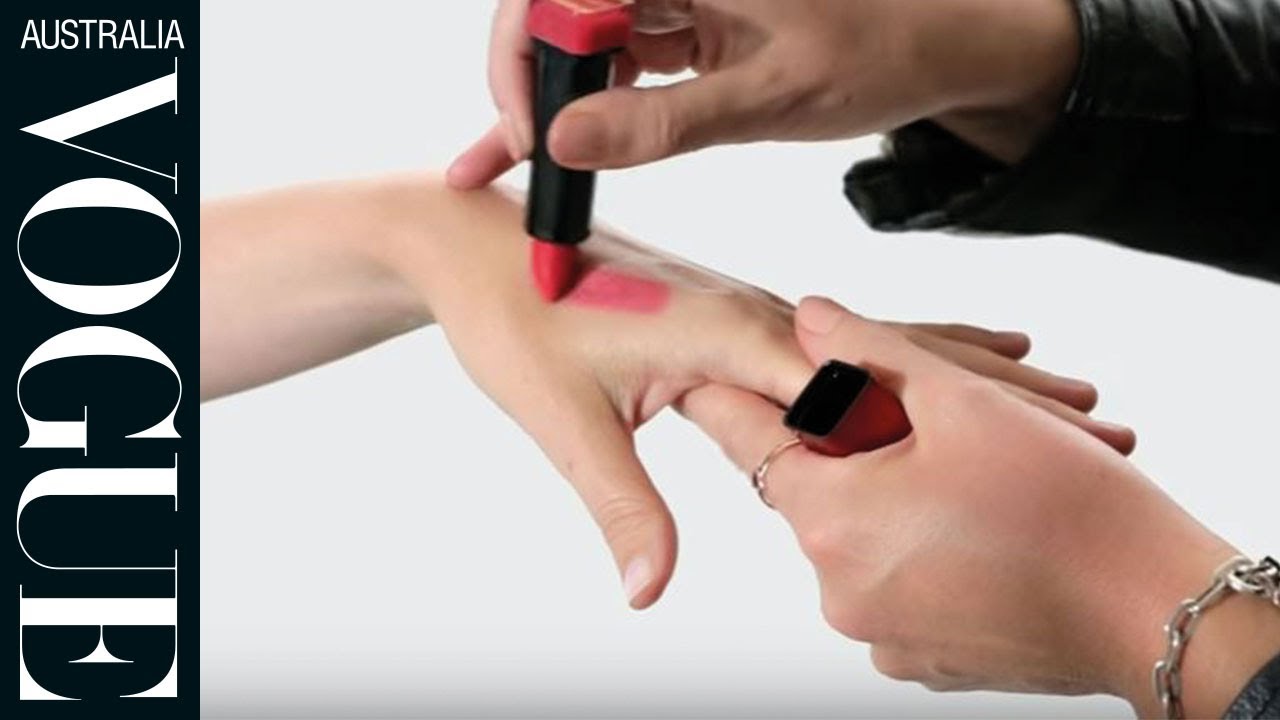
The finish and the color family both come into play here, together separating the category from other types of lipstick.
Start with the finish. A flat, powder-like surface, almost no light reflection, nothing wet or glossy about it. Brown-toned satin and cream formulas exist too, but they catch light differently and read softer on the lip. A closer matte vs satin lipstick comparison usually comes down to how much shine a formula holds back. For the finish on its own, what is matte lipstick covers that in more depth.
The formula behind it leans on wax and silica rather than oil. Pigment concentration runs high, so one or two swipes gets full color, and the low oil content is what keeps things flat instead of glossy. Check the lipstick ingredients list on a matte brown formula and waxes and film formers lead, not oils.
Matte intensifies brown pigment more than a glossy or satin base does. Less light bounces off the lip, so the eye reads the color as deeper and more saturated, even at the same pigment load.
What Undertones Exist in Brown Lipstick Shades

Every brown shade carries a base hue underneath the visible pigment. That’s the undertone, and it decides whether a shade reads flattering or slightly off once it’s actually on the lip, regardless of what the packaging calls it.
| Undertone | Base Hue | Common Shades |
|---|---|---|
| Warm | Orange, gold | Terracotta, cinnamon, caramel |
| Cool | Pink, plum | Cocoa, mauve-brown, plum-brown |
| Neutral | Balanced, gray-brown | Taupe, tawny |
Warm Brown Undertones
Warm brown pulls toward orange and gold, never pink. Skin with a warm undertone shows yellow, peach, or golden hints, and the veins on the inside of the wrist read more green than blue (US Dermatology Partners, 2024). Terracotta and cinnamon are the two shades that live here, and both tend to photograph richer under warm light than they look in an ordinary room. Worth a look at lipstick colors for warm undertones if this is the family that fits.
Cool Brown Undertones
Cocoa, mauve-brown, plum-brown. All three pull toward pink, red, or blue instead of gold, sitting more or less opposite the warm family. Veins read more blue than green under a cool undertone (US Dermatology Partners, 2024). People searching lipstick colors for cool undertones tend to end up here, mostly because these shades come across softer and a little muted next to a warm brown.
Neutral Brown Undertones
Split the difference between warm and cool and you land on neutral, which is where taupe and tawny sit, reading gray-brown rather than pushing toward orange or pink. That in-between quality is a big part of why neutral shades tend to suit the widest range of skin tones. They don’t fight against warm or cool skin the way a strongly one-directional shade can. Still unsure which family fits? Lipstick for neutral undertones is the safer place to start before testing anything warmer or cooler.
How to Match a Brown Matte Lipstick to Your Skin Tone

Skin tone and undertone work together here. Get them aligned and a brown reads as flattering. Get them wrong and the same shade looks muddy or harsh for no obvious reason.
Before buying anything, check your veins and check your jewelry. Blue or purple veins point toward a cool undertone, green points warm. Gold flatters warm undertones, silver flatters cool ones. Neither test takes more than a few seconds, and together they rule out most bad guesses before money changes hands.
A mismatch between shade and skin tone is, honestly, the most common reason a well made brown lipstick still looks wrong on the lip. The formula usually isn’t the problem.
Fair Skin
Rosy browns, soft taupes, milk chocolate. That’s the safe range for fair skin, chosen because they add warmth without overwhelming lighter coloring (Girlactik, 2026). Milk chocolate specifically stays wearable for daytime. Espresso and near-black browns, on the other hand, tend to read too harsh here. Not wrong exactly, just a lot for fair skin to carry.
Medium and Olive Skin

Caramel, terracotta, and warm cocoa work because they enhance the skin’s existing warmth instead of sitting flat against it. Olive undertones especially pull well toward warm, earthy browns over anything cooler or pink-leaning. A lipstick colors for tan skin guide leans into this same caramel-terracotta range for anyone wanting more options within it.
Deep Skin
Shades that lean too light or too neutral go flat and ashy on deep skin instead of rich, which is the opposite of what you’re after. Rich espresso, chocolate cherry, and deep brown with red or plum undertones hold pigment best here (Girlactik, 2026). Lipstick colors for dark skin generally favor this deeper, more pigmented range over the softer tones that suit fair skin. Fenty Beauty’s wider shade-range push in recent years is a big reason deeper brown mattes are now standard stock at most counters instead of a niche add-on.
Once shade and skin tone line up, technique is the last variable. A full how to wear brown lipstick walkthrough covers the finishing details that make any of these tones look intentional instead of muddy.
What Are the Different Types of Brown Lipstick Shades
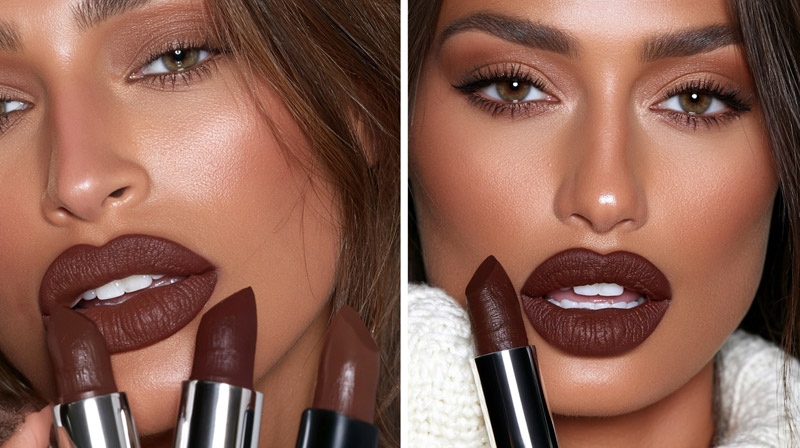
Five shade families cover most of what’s on the market, and the table below maps out where each one sits.
| Shade Family | Character | Undertone |
|---|---|---|
| Nude-brown | Closest to natural lip color | Neutral to warm |
| Chocolate-brown | Deep, rich, opaque | Cool |
| Terracotta-brown | Orange-leaning, earthy | Warm |
| Mauve-brown | Soft, slightly pink | Cool |
| Burgundy-brown | Darkest, red-brown crossover | Cool |
Nude-brown gets searched the most by a wide margin. It’s basically the real-world answer to what is nude lipstick, since most MLBB (my lips but better) shades fall into this group.
Chocolate-brown reads darkest and most opaque, built for a fuller color statement rather than anything natural-looking.
Terracotta-brown leans hardest into orange. That makes it the warmest option on the list, and also the one most likely to clash on very cool, pink-based skin.
Mauve-brown is the odd one out here, honestly. It sits closer to a dusty rose than a true brown, which is exactly why matte lipstick nude shades and mauve-brown shades keep getting mixed up in shopping searches.
Burgundy-brown goes darkest of all five, blending red and brown until the line between the two basically disappears.
Best Matte Brown Lipstick Shades to Try
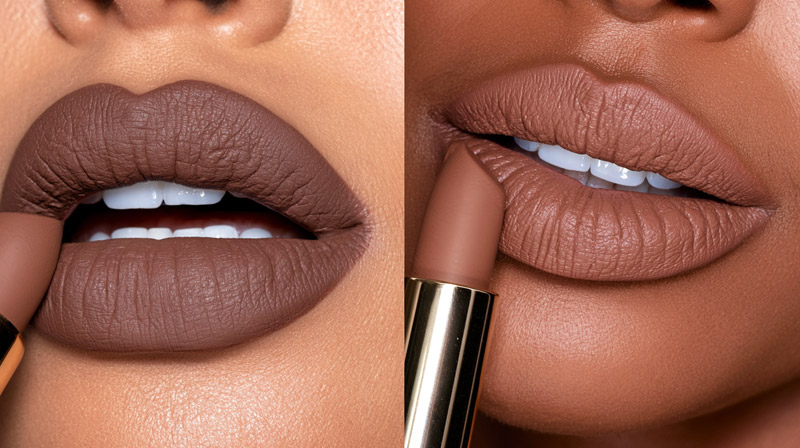
Brown lip liner sales surged 45 percent year on year, with overall lip liner sales up 38 percent, as the nude and brown lip trend accelerated through 2025 (TheIndustry.beauty, 2025). That demand shows up everywhere, drugstore included, not just at the prestige counter.
| Product | Shade | Tone Family |
|---|---|---|
| MAC Powder Kiss | Mull It Over | Brown, coral undertone |
| Maybelline SuperStay Matte Ink | Seductress | Beige-brown, soft pink hint |
| Maybelline SuperStay Matte Ink | Fighter | Cinnamon |
| NYX Soft Matte Lip Cream | Cairo | Matte pure nude |
| Rare Beauty Kind Words | Strong | Rich chocolate-brown |
Maybelline covers a lot of ground on its own. Seductress and Fighter handle the beige-brown and cinnamon ends of the spectrum, neither one requiring a trip past the drugstore aisle. NYX’s Cairo shade, in the Soft Matte Lip Cream line, is officially described as a matte pure nude, probably the closest drugstore option to a universal nude-brown right now.
On the prestige side, MAC’s Mull It Over sits in the Powder Kiss line, a matte formula built on a coral-leaning brown base. Rare Beauty’s Strong shade goes deepest, described by the brand itself as a rich chocolate-brown within its Kind Words Matte Lipstick range.
The UK prestige lip market alone reached GBP 80.4 million in the first half of 2025, growing 16 percent, nearly double the pace of the broader makeup category (TheIndustry.beauty, 2025). Brown and nude shades are a real part of that growth, not a side trend riding along.
Before buying, it’s worth checking a broader what is the best matte lipstick breakdown, browsing makeup looks with brown lipstick for pairing ideas, or scanning the lipstick statistics page to see how finish and shade trends have moved year over year.
How Matte Formula Affects Brown Lipstick Wear
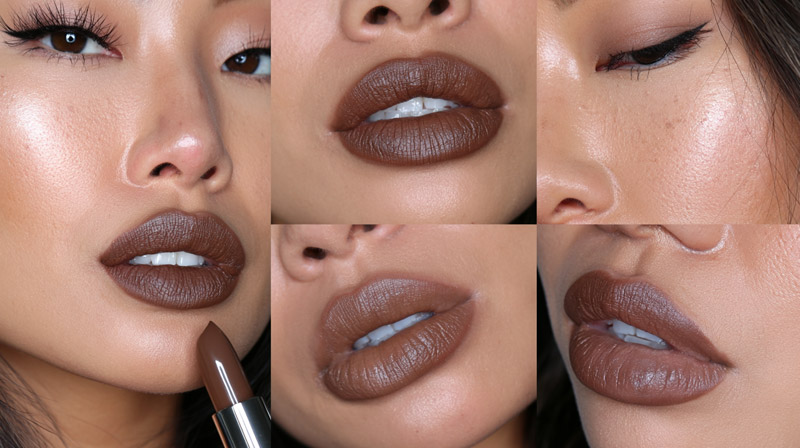
Matte formulas lean on wax and silica instead of oil, more so than cream lipstick or satin bases, and that’s exactly what pushes brown pigment to look truer and less sheer on the lip.
Dr. Shereene Idriss, a board-certified dermatologist at Idriss Dermatology in New York, has explained that matte and stain formulas carry more wax and fewer oils, which allows for richer color payoff but less ongoing moisture (Huda Beauty, 2026). Higher pigment concentration gets you truer color on the first swipe. Reduced slip is the tradeoff, and it raises a real risk of the formula settling into fine lines by midday.
Silica is doing most of the work behind the flat, mattifying look most brown mattes rely on. In high enough concentration though, it also absorbs the lip’s natural oils along with any shine, part of why some mattes feel drier than others even at similar price points. Alcohol content plays a role too. Formulas with a lot of it evaporate fast enough to pull surface moisture out along with it (Revlon, 2026).
Cream and satin brown lipsticks end up shifting lighter and more sheer on the lip than a matte version of the exact same shade name. Liquid matte formats, a subset of liquid lipstick, tend to dry down harder than bullet mattes do.
Same shade name, different finish, different result on the lip. That’s really the whole reason a brown that looks perfect swatched matte can look washed out in a satin version of the identical color.
How to Apply Matte Brown Lipstick Without Looking Dry or Cakey

Matte formulas expose lip texture more than any other finish, so prep actually matters here, more than it would with gloss or satin.
Give lips a gentle exfoliation a day or two before wearing a matte brown, not right before applying. Let a hydrating balm fully absorb before adding any color on top. And if lips already feel tight or flaky on a given day, that’s probably not the day for a bold matte. A full how to exfoliate lips naturally walkthrough covers this prep step in more depth for anyone new to matte formulas.
Thin layers beat one heavy swipe, always, since deeper pigments like chocolate and espresso build up fast. Blot between layers with a single tissue press, which keeps product from pooling at the center of the lip (the most common cause of a cakey finish, by far). A how to apply matte lipstick guide covers this layer-and-blot method in full, and it works the same for brown as it does for red or pink.
Dehydrated lips show every flaw in a matte brown formula. There’s no gloss underneath to hide anything. Formulas built with hyaluronic acid, vitamin E, or plant oils help counteract that without sacrificing the flat finish, though they won’t fix lips that needed prep in the first place.
Keeping color intact without losing moisture usually comes down to routine, not the lipstick itself. A dedicated how to keep lips moisturized with matte lipstick guide walks through the balm-and-blot method for longer wear.
What Lip Liner Works Best With Brown Matte Lipstick

Lip liner exists to anchor color and sharpen the edge of the lip. Shade family matters more here than matching an exact shade name.
| Lipstick Family | Liner Match | Effect |
|---|---|---|
| Warm brown | Terracotta or cinnamon liner | Reinforces warmth, avoids a gray edge |
| Cool brown | Mauve or cocoa liner | Keeps the pink undertone consistent |
| Nude-brown | Nude or bare liner | Soft, everyday definition |
A liner one or two shades deeper than the lipstick itself creates definition without leaving a visible line (Lumera Cosmetica, 2025). Push past two shades darker and it stops working as a shaping tool, it starts reading as a separate feature on its own. Charlotte Tilbury’s Lip Cheat range carries more than 20 shades built specifically to sit under its lipstick line, which says something about where liner ranges have gone: tracking lipstick shade families now instead of offering one generic brown for everything. What is lip liner covers the formula differences between wax pencils and gel liners if the format itself is still an open question.
Overlining risk climbs fastest with dark brown shades. A liner drawn outside the natural lip line reads as unnatural sooner on chocolate or espresso brown than on a lighter nude-brown, mostly because the contrast against skin is already higher to begin with. A full how to choose lip liner guide helps anyone unsure where to start.
The category goes back further than most people expect. A look at who invented lip liner traces the format to 1930, when Max Factor launched the first commercial lip pencil in exactly three shades: red, deep red, and brown.
How to Make Matte Brown Lipstick Last Longer

Wear time depends on the liner underneath, the setting step, and how touch-ups get handled. None of it works alone.
Start with the liner. Filling the entire lip with it before adding color, not just outlining the edge, gives the lipstick a longer-wearing base to grip onto. Liners are formulated with harder waxes and lower oil content than lipstick itself, and that’s what makes them more resistant to movement throughout the day.
For setting, apply the lipstick, blot once with a tissue, then dust a small amount of translucent powder through that same tissue before adding one final thin coat. The tissue filters the powder so only a light amount actually reaches the lips, and that locks pigment in place without dulling the shade. A how to set lipstick with powder walkthrough covers the full technique step by step.
Formulas built for extreme conditions follow the same basic logic. Jouer’s Long Wear Lip Creme, for instance, is designed to hold up in high humidity, engineered around the exact conditions that break most brown mattes down early (Girlactik, 2026). Oil-based products underneath work against a matte finish rather than for it, by the way. A balm applied right before color creates a slip layer that shortens wear instead of extending it, a little counterintuitive if you’re used to prepping lips with balm for everything else.
Drinking clear liquids barely touches a set matte lip. Eating is a different story, and removes product fast, especially anything with oil or a heavy sauce. A full how to make lipstick last longer guide covers timing around meals in more detail, and a separate how to make lipstick transfer proof resource focuses specifically on cups, glasses, and fabric contact.
What Mistakes Make Brown Matte Lipstick Look Wrong

A technically well made brown matte can still look off, and almost every case traces back to something fixable.
| Mistake | Why It Happens | Fix |
|---|---|---|
| Undertone mismatch | Warm brown on cool skin reads orange, cool brown on warm skin reads gray | Match liner and lipstick to the same undertone family |
| Skipped prep | Matte pigment grips onto dry, flaking patches | Exfoliate and balm before color |
| Liner too far off | More than two shades from the lipstick creates a visible ring | Stay within one or two shades of the lipstick |
| Applied over damaged lips | Pigment settles into cracks instead of sitting evenly | Wait until lips heal before wearing a bold matte |
Undertone mismatch is, by far, the most common one. A warm brown pushed onto cool, pink-based skin tends to shift orange. A cool brown on warm, golden skin tends to shift gray instead of staying neutral. Neither is a shade quality issue. The exact same tube can look flattering on one person and off on another, purely because of undertone.
Bobbi Brown’s long-standing color-matching advice applies directly here: a product should enhance the skin’s existing tone, not fight against it or try to change it entirely. A closer how to match makeup to skin tone breakdown covers the undertone identification step for anyone still unsure which family they fall into.
Applying bold matte brown directly over chapped or peeling lips is its own separate mistake, nothing to do with shade selection. Matte pigment has nowhere to sit but the raised, dry skin, which makes flaking more visible instead of less. A dedicated how to apply lipstick on dry lips guide walks through the prep sequence that avoids this specific problem.
Reaching for a lighter shade to compensate for uneven skin rarely works either. A full how to pick lipstick color guide covers this shade-versus-caution tradeoff for anyone tempted to size down out of caution.
When Brown Matte Lipstick Does Not Suit Your Look

Matte held 44.6 percent of the lipstick market by product type in 2025, pulled up in part by demand for transfer-resistant, long-wear formulas (Market.us, 2026). None of that means matte fits every lip, every skin condition, or every occasion.
Very dry or cracked lips show texture under any matte formula, no matter the shade or the brand. Extremely fair, cool-pink skin paired with a warm terracotta-brown is one of the clearest undertone clashes in the whole category. And long speaking or eating occasions wear standard mattes down faster than formulas built specifically for transfer resistance.
Skin condition comes first, always. No amount of correct shade-matching fixes a matte finish applied over lips that are already flaking. A lip care for dry lips routine addresses the actual problem, where switching shades only masks it for a little while.
Fair, cool-pink complexions carry the highest risk of undertone clash with warm terracotta-brown specifically, more than with any other shade family in the brown range. A closer matte lipstick for fair skin guide narrows the safer options within that same skin type.
When texture, not shade, is actually the limiting factor, satin and cream brown formulas deliver the same color family minus the moisture drawback matte carries. Converting an existing matte into something more forgiving is possible too, without buying a new tube. A how to make matte lipstick glossy guide covers the topcoat method for exactly that situation.
FAQ on Matte Lipstick Brown Shades
Does Matte Brown Lipstick Work on Mature Lips
Matte formulas tend to settle into fine lines more than satin or cream does. A hydrating lip primer underneath, paired with a slightly softer, satin-adjacent brown, cuts down on that while keeping the same shade family for aging or drier lips.
What Makeup Pairs Well With Brown Lipstick
Neutral or bronze eyeshadow keeps the focus on the lip without competing for attention. Warm browns pair naturally with terracotta blush, cool browns sit better next to a soft mauve or rose flush on the cheeks.
Is Brown Lipstick Still Trending
Google Trends data shows search interest in nude brown lipstick consistently leading the category, with matte brown searches peaking near 87 points in November 2024 (Accio analysis, 2025). No sign of that fading anytime soon.
Can Two Brown Lipsticks Be Mixed Together
Yes. Blending a warm and a cool brown on the back of the hand first shows the resulting undertone before either goes anywhere near the lips. Two similar-finish mattes blend more evenly than mixing a matte with something glossy.
Does Matte Brown Lipstick Stain the Lips
Some do, chocolate-brown and burgundy-brown especially, since both run high pigment concentration. A light tint can linger for a few hours after the color wears off, so it’s worth testing a new shade on the inner wrist first to see how much it actually stains.
How Do You Remove Matte Brown Lipstick Without Residue
Micellar water or an oil-based cleanser breaks matte pigment down more effectively than face wash alone. Press a cotton pad against the lips for a few seconds before wiping rather than scrubbing, which avoids pulling at delicate skin.
Does Hair Color Change Which Brown Lipstick Looks Best
Hair color matters less than undertone, though warm-toned brunettes and redheads often lean into terracotta and cinnamon browns. Cool-toned blondes and brunettes tend to favor mauve-brown or cocoa instead.
Can Matte Brown Lipstick Be Worn Without Lip Liner
Yes, though color tends to fade unevenly from the center out without one. Liner acts as a wax barrier that slows fading at the edges, so skipping it usually just means more frequent touch-ups rather than a ruined look.
How Long Does Matte Lipstick Last Before It Expires
An unopened tube typically stays usable for around two years. Once opened, most matte formulas hold their texture and pigment for 12 to 18 months before the wax base dries out or the color shifts slightly.
Why Does Matte Brown Lipstick Look Different in Photos
A matte finish absorbs light instead of bouncing it back, so brown pigment reads darker and flatter on camera than it does in person under normal light. Flash photography exaggerates this further, especially with deeper chocolate and espresso shades.
Conclusion
Matte lipstick brown shades reward a different shopping order than most beauty categories. Undertone comes first, shade name second, formula dead last.
Buy the liner before the lipstick, not after. One in the same undertone family extends wear and stops the ring that shows up hours into the day, well before the lipstick itself needs touching up.
Upkeep costs something too, not just the tube. A wax-based matte in chocolate-brown or burgundy-brown wants a balm and a blotting tissue within reach, something red and pink shades almost never demand.
Treat the first purchase as a swatch test, not a commitment to the whole category. Honestly, one drugstore shade in the right undertone teaches more about what actually works on you than five prestige tubes bought because they were trending.

She started writing on the site after fielding the same questions from clients and friends often enough to just write the answers down: which red won't turn orange on a warm undertone, how to keep lipstick from feathering into fine lines, why a "12-hour" formula rarely survives dinner.
Every review on the site follows the same rule she uses with paying clients: wear it first, then decide if it's worth recommending.
- How to Make Eyeliner Last Longer Without Smudging - August 31, 2026
- How to Make Eyeshadow Last Longer All Day - August 29, 2026
- How to Find Your Undertone in 5 Easy Steps - August 27, 2026