Undertone does most of the work when you pick lipstick for tan skin. Warm undertones suit orange-leaning coral, terracotta and brick red, cool ones look better in wine and berry, and neutral skin can wear mauve or a true red.
Oriflame’s makeup experts point out that undertone stays fixed while a tan fades, which is why it’s the steadier guide. A summer tan changes how deep a shade should be and leaves its family unchanged.
Most pages treat tan as one category, and the sources don’t agree on what it covers. Charlotte Tilbury groups it with deep skin. Masala Thai splits it into light-to-medium, medium and medium-to-deep tan, and the advice shifts between those bands.
Lipstick Colors for Tan Skin by Undertone
Orange-leaning shades go with warm undertones and blue-leaning ones go with cool. Neutral tan skin gets away with either.
| Shade family | Warm undertone | Cool undertone | Neutral undertone |
|---|---|---|---|
| Nude | Peach or caramel nude | Rosy or mauve-leaning nude | Mauve nude |
| Pink | Coral-pink, warm rose | Cool rose, bluish pink | Most pinks |
| Coral | Orange or golden coral | Pink-leaning coral | Mid-tone coral |
| Red | Orange-toned, brick red | Wine or blue-based red | True red |
| Berry and brown | Raspberry, warm brown | Plum, wine berry | Berry, red-brown |
Charlotte Tilbury and Mented divide their advice along these same lines, and so does Oriflame.
On warm tan, a yellow, orange or gold cast works because cooler pigments compete with the skin instead of sitting on it (Mented). A longer list of shades that flatter warm undertones picks up where the grid stops.
Wine and berry reds carry well on cool tan, since cool tones in tan skin often read olive (Charlotte Tilbury). The guide to colors that suit cool undertones has more of that range.
Neutral tan has the widest range, so depth and finish matter more than undertone there.
Whatever the undertone, a shade that sits too close to your own skin color disappears, according to Bobbi Brown artist Jaime Perez in Marie Claire.
How to Find Your Undertone When Your Skin Is Tan

A tan makes undertone harder to read, so check the skin the sun reaches least and don’t rely on a single test.
- Look at your inner arm in daylight, where a tan is faintest.
- Check your wrist veins. Green or yellow-green points warm, blue or purple points cool, and a mix points neutral.
- Hold gold and silver jewelry against your skin. The metal that flatters you points to warm or cool, and a tie points to neutral.
- Drape a plain white shirt near your face. Golden reads warm, rosier reads cool, and plain skin reads neutral.
- Think back to how your skin reacts to sun. Tanning easily leans warm, and going red before you tan leans cool.
A tan changes surface color and leaves undertone alone, which is why none of these tests depend on how dark you are right now (Oriflame, Maybelline India).
Makeup.com presents the sun-reaction clue with a caveat, so treat it as a tiebreaker.
Do the vein and jewelry tests hold up?
Celebrity makeup artist Neil Scibelli ranks the vein test first, and his guide lists jewelry and sun-reaction checks next to it (Makeup.com). Sterling Style Academy pushes back, arguing that skin thickness and transparency change how veins look, so the test works only as a first pass.
Run two or three tests and go with the majority. Honestly, the vein test is the one I’d trust least. If you have a deeper tan and cannot see your veins, the white shirt test is the better fallback (Powder Room Beauty).
Why olive tan skin is hard to label
Makeup.com says olive skin likely has a warm undertone. Her Campus says neutral, usually. Charlotte Tilbury goes the other way and says cool tones in tan skin often look olive.
The disagreement is real, so skip the label. Swatch two reds on your inner arm, one orange-leaning and one blue-leaning, and see which looks cleaner against the skin (MasterClass recommends swatching one color family this way).
If both look equally good, treat yourself as neutral and start with lipsticks built for neutral undertones.
Does the Depth of Your Tan Change the Shade?
Depth changes how saturated a shade should be. Undertone still picks the family.
The clinical bands that overlap with tan skin are Fitzpatrick type III (light brown, burns moderately, tans gradually) and type IV (moderate brown, burns minimally, tans well).
The scale grades sun response, not color. A Cutis review (2026) notes it does not capture undertone, with the gap widest in types IV to VI.
Google’s Monk Skin Tone Scale offers 10 tones instead of six. In a survey of around 3,000 people in the United States, a significant number said those 10 tones matched their skin as well as a 40-shade palette did (Google, 2022, as reported by Reuters).
Neither scale was built for lipstick, so it’s easier to judge depth by eye in rough bands, and the advice shifts as you move through them.
- Soft terracotta and warm rose-brown suit golden undertones in the light-to-medium range (Masala Thai).
- Medium tan blends with warm tomato red and terracotta brick red (Masala Thai).
- Brick rose and muted coral with brown depth work for medium-to-deep tan. Pale concealer-style nudes, cool lavender, bluish pink and grey-based mauve do not (Masala Thai).
- At the deep end of tan, too light a shade is one of the most common mistakes, so reach for rich pigment and caramel or brown-toned nudes (Charlotte Tilbury).
This is also why advice for tan skin contradicts itself from page to page. Charlotte Tilbury files tan under deep skin, and Masala Thai splits it into separate bands.
Nude and Pink Lipsticks That Work on Tan Skin
Nudes work on tan skin when they carry more color than the skin around them, which is why caramel and peach shades beat pale beige. A rosy brown does too.
Pinks follow the same logic, with undertone deciding how warm or cool the pink runs.
Which nudes work

Skip anything that matches your skin exactly. The lip line disappears with it.
Warm tan suits peachy and caramel nudes, and Mented says to avoid ones heavy in pink or purple. For cool tan, NYX FACE finalist Ioana Goodwin points to rosy and mauve-leaning nudes. Neutral tan can take a mauve nude (MasterClass).
Bobbi Brown Crushed Lipstick in Brownie is a mid-toned beige pink that brings out a medium skin tone’s natural lip color. Charlotte Tilbury Pillow Talk Intense is a caramel or brown-toned nude made with tan and deep skin in mind.
If two nudes look close in the store, the steps for picking a nude lipstick help you narrow them down.
Which pinks work
On warm tan, coral-pink, peachy pink and warm rose are the safe picks. Cool tan goes the other way, with rosy pinks and bluish ones.
Bluish pinks flatter cool tan but fall flat on warm, golden medium-to-deep tan, where Masala Thai lists them among the shades to skip.
For a bolder pink, Charlotte Tilbury’s own tan-skin pick is 90s Pink, a moody mulberry pink with the depth and pigment to show up true on tan skin. Her softer option is Pillow Talk Medium, a blend of pink, berry and rose tones.
Once you’ve picked one, the guide to wearing pink lipstick covers how to style it.
Coral, Terracotta and Red Lipsticks for Tan Skin
For warm tan, the safest choices are orange-leaning coral, terracotta and brick red. Cool-undertone tan skin does better with wine-leaning reds.
Coral
SheerLuxe’s panel of makeup artists keeps returning to tanned skin when they talk about coral. Camilla Hewitt and Rebecca Hull both single out a coral as flattering against a tan.
Her Campus gives the same steer in one line: on tan skin, look for colors with an orange undertone.
NARS Orgasm is a satin peachy pink with golden shimmer, according to NARS, and SheerLuxe’s Lisa Potter-Dixon files it under coral and says it warms up any complexion. Charlotte Tilbury Sexy Sienna is a natural, modern coral (Hannah Martin, SheerLuxe).
For ideas on styling a coral lip, the guide to wearing coral lipstick is worth a read.
Terracotta and brick red
Terracotta is the earthiest option, and it sits closest to tan skin’s own warmth.
MasterClass lists orangey-red, brick red and terracotta for warm tones. Masala Thai calls terracotta brick red a rich, earthy red-brown that blends with medium tan skin. Warm tomato red does the same job with more brightness.
Red
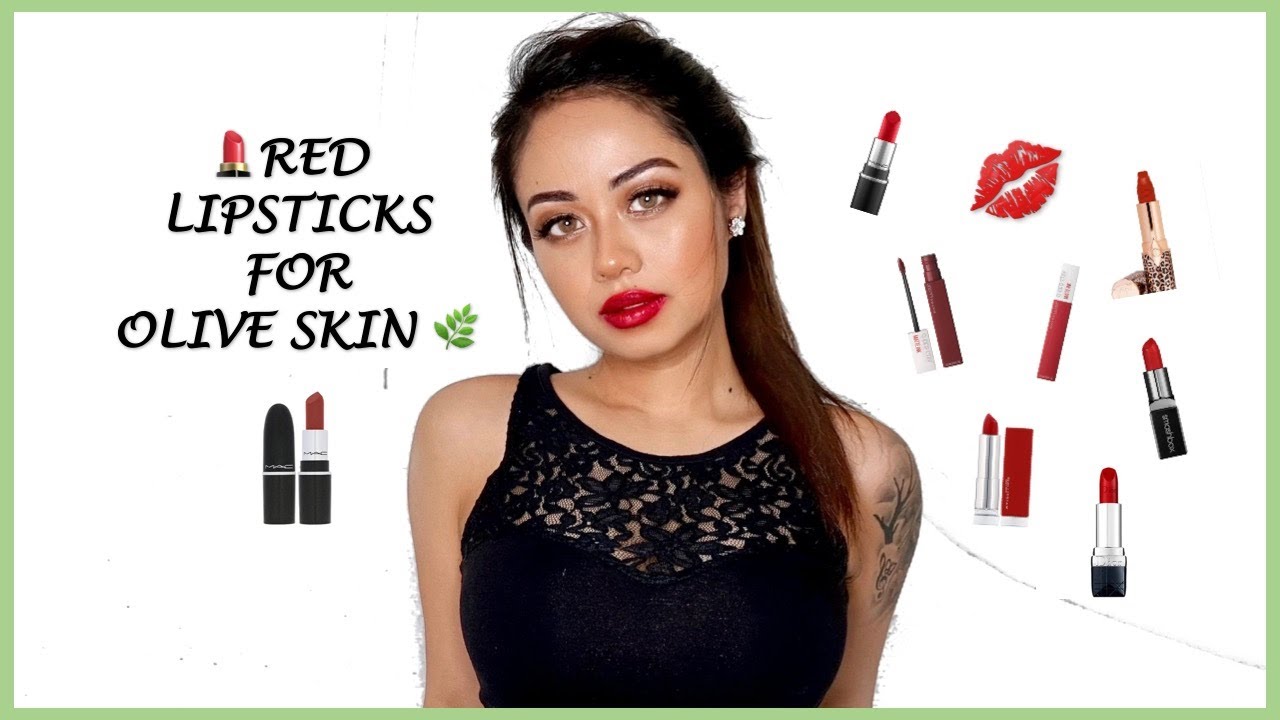
On warm tan, an orange-toned red is the flattering choice, which Charlotte Tilbury recommends for skin with a golden cast. Cool tan suits a wine or berry-toned red, per the same guide. Neutral tan wants a true red that swings neither orange nor blue, and Jaime Perez points to Bobbi Brown Metro Red, a bright neutral red, for medium and tan skin (Marie Claire).
Makeup artist Quinn tells Makeup.com that orangey red looks best on warmer medium-to-tan skin, while deeper and neutral complexions lean toward berries and red-browns. His pick for a red that works across undertones is Giorgio Armani Rouge d’Armani 400, an almost pinky red.
The difference between warm and cool reds is easier to judge side by side, as the breakdown of cool versus warm red lipstick shows.
Can Berry, Plum and Brown Lipsticks Work on Tan Skin?
They can, as long as the shade keeps some warmth. Raspberry and sangria berries work, and so do orange-tinted browns, while blue-leaning plums are better saved for cool-undertone tan skin.
Where the advice splits
Her Campus tells tan skin to avoid browns and purples and reach for orange-leaning colors instead. Mented goes the other way and recommends yellow- and orange-rich browns, such as butterscotch and warm nut, on tan skin of any depth.
The two positions stop conflicting once undertone enters. Mented’s guide for warm skin prefers raspberry over purple blackberry, and L’Oreal Paris pairs plum with cool undertones.
So keep some red, orange or yellow in the shade on warm tan, and save blue-leaning purples for cool tan.
Berry and plum shades
Berry runs from purply plum to orange-leaning burgundy (L’Oreal Paris), so the undertone of the berry matters more than its name.
On warm tan, L’Oreal Paris points to raspberry. Cool tan takes plum with a blue lean. If your warm tan leans olive, Red Apple Lipstick suggests brighter warm berries and warm purples.
Makeup artist Anton Patdu matches bluish deep purples to fair and light skin and yellowish warm purples to morena (brown) skin, per PEP.ph.
Lancome L’Absolu Rouge Intimatte in Kind of Sexy is a sangria berry in a creamy matte, which Makeup.com picks for warmer medium skin tones. Red Apple Plum Sexy Crazy wears as a sheer berry or builds to a rich, warm golden plum with golden shimmer (Red Apple lists it for neutral undertones).
Deep berries and plums read as statement colors, and the guide to wearing dark lipstick covers how to style them.
Brown shades

Mented’s pick for tan skin is Brown Bare, which has deep orange tones. It also says Foxy Brown, with its orange-red notes, suits light, medium and dark tan tones.
Both carry orange, which squares Mented’s endorsement with Her Campus’s advice to favor orange undertones. Styling ideas for the shade sit in the guide to wearing brown lipstick.
Lipstick Shades That Wash Out Tan Skin
Shades wash out tan skin when the contrast between lip and skin drops or the undertone clashes. Lakme names grey-toned nudes as the usual offender.
| Shade | What goes wrong | Fix |
|---|---|---|
| Grey-toned nude | Reads ashy on warm tan | Caramel-rose or golden peach |
| Tawny nude | Turns muddy on olive-leaning tan | Slightly pink coral nude |
| Nude judged indoors | Looks pale in daylight or under flash | Check it by a window first |
The first two fixes point in different directions, and the sources say so openly. Lakme steers warm tan toward caramel-rose and golden peach, while a makeup artist quoted by Birchbox (2015) warns that tawny nudes go muddy on olive tones and recommends a slightly pink one.
The split follows undertone. Golden tan handles peach and caramel, and olive-leaning tan needs pink in the nude to stay clear.
Lighting matters too. Lakme notes that a nude that looks right in warm indoor light can read washed out in natural light or a camera flash.
Matte, Satin or Cream: Which Finish Looks Best on Tan Skin?

No source ranks finishes by skin depth, so pick by lip comfort and wear time. Matte lasts longest, satin and cream sit in the middle, and gloss gives the most shine.
| Finish | Look | Wear | Pick it when |
|---|---|---|---|
| Matte | No shine, velvety, rich color | Longest | You want fewer touch-ups |
| Satin | Soft sheen, buildable | Medium | You want an everyday default |
| Cream | Full pigment, soft sheen | Fairly long | Your lips run dry |
| Gloss | Shine over sheer color | Shortest | You are layering over lipstick |
Wear times in the table follow QC Makeup Academy, Beautylish and Vue NJ, though sources disagree on how far satin trails matte. Beautylish rates satin’s staying power as medium, while QC Makeup Academy ranks it second only to matte.
L’Oreal Paris warns that matte can dull a face that craves luminosity. Makeup artist Quinn tells Makeup.com that a matte lip cream reads starker and more contrasted than a satin.
The trade-off gets a closer look in the breakdown of matte versus satin lipstick.
My-Best treats gloss as a topper over matte for shine. If you have fine lines around the mouth, makeup artist Taylor Babaian suggests a gloss shade close to your skin tone, with an SPF lip product underneath.
If you’re deciding between gloss and lipstick as the main product, lip gloss versus lipstick lays out the difference.
Using Lip Liner to Adjust a Lipstick Shade
Choose a liner in the same color family as the lipstick, and go one shade deeper when you want definition or when a lighter lipstick needs contrast on tan skin.
For a natural nude lip, a liner close to your own lip color works (Huda Beauty, e.l.f. Cosmetics). Charlotte Tilbury recommends a darker liner under a lighter lipstick on tan and deep skin, and Huda Beauty allows one or two shades deeper within the same family.
| Lipstick | Liner to pick | Failure to avoid |
|---|---|---|
| Nude | Natural lip color, or up to two shades deeper | A harsh, too-dark outline |
| Light shade on tan skin | One shade deeper, same family | Lipstick that looks washed out |
| Red | Red with matching undertone | Pink liner that clashes |
| Berry or plum | Same purple undertone | Mismatched undertone |
The nude row follows e.l.f. Cosmetics, which caps a nude liner at two shades darker than the natural lip and asks for the same undertone and depth. Huda Beauty is the source for the red and purple rows.
The “match your lip” and “go darker” advice conflict only on the surface. Match when the lipstick already carries enough color for your skin depth, and go deeper when it does not.
A neutral or clear liner suits any shade and still helps stop feathering, according to e.l.f. Cosmetics. Nykaa adds that a soft brown liner can change how a nude lipstick looks.
For a wider walk-through of formulas and shade matching, see the guide to choosing a lip liner.
Red lips have their own pairing rules, covered in the guide to which lip liner goes with red lipstick.
Common Questions About Lipstick Colors for Tan Skin
Do summer and winter call for different lipstick shades on tan skin?
Not really. The shade family stays the same, because a tan fades while undertone does not change (Oriflame).
Only intensity moves. Charlotte Tilbury names too-light shades as one of the most common mistakes on tan and deep skin, so richer pigment is the safer pick when a tan is at its deepest.
How can you tell if a lipstick is warm or cool?
Look at the cast. Cool lipsticks carry hints of blue, pink or purple (Maybelline India), and warm ones lean orange or golden.
Swatching the shade on your inner arm makes the difference easiest to see, as MasterClass suggests.
Does natural lip color change how a lipstick looks?
Yes, mostly with sheer or light coverage. Lighter formulas let your own lip tone show through, while opaque ones give a more uniform color (Bluemercury).
For a result close to the shade in the tube, pick fuller coverage.
Which shades suit daytime and which suit evening?
Warm, bright shades suit daytime, and deeper, richer tones suit evening (Thin Lizzy).
On tan skin, that points to coral or terracotta by day and berry, plum or wine red at night, following your undertone.
Choosing Your First Lipstick for Tan Skin

Buy one shade from your undertone’s family, in a satin or cream finish, before building out a wider range of lipstick colors for tan skin. Test it against two or three rivals first.
Run a couple of undertone tests, pick a mid-depth shade from the matching family, then swatch the candidates side by side in daylight.
Makeup artist Jaime Perez advises testing in a store where shades sit together for comparison (Marie Claire), and Lakme suggests swatching up to 5 candidates along the inner wrist or jawline.
The winner is the one that neither fades into the skin nor jumps off it.
Staying inside one family is the safest route, and it gives up deliberate contrast, such as the cooler brown Mented says can balance warm skin. Sources were checked in October 2026.
Once the shade is chosen, the guide to applying lipstick properly covers the next step.

She started writing on the site after fielding the same questions from clients and friends often enough to just write the answers down: which red won't turn orange on a warm undertone, how to keep lipstick from feathering into fine lines, why a "12-hour" formula rarely survives dinner.
Every review on the site follows the same rule she uses with paying clients: wear it first, then decide if it's worth recommending.
- How to Make Eyeliner Last Longer Without Smudging - August 31, 2026
- How to Make Eyeshadow Last Longer All Day - August 29, 2026
- How to Find Your Undertone in 5 Easy Steps - August 27, 2026