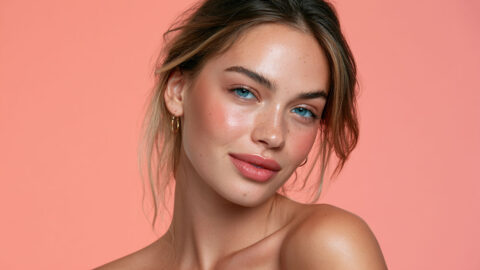
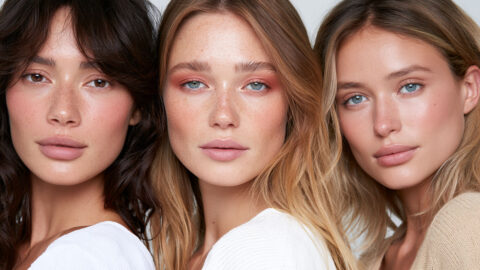
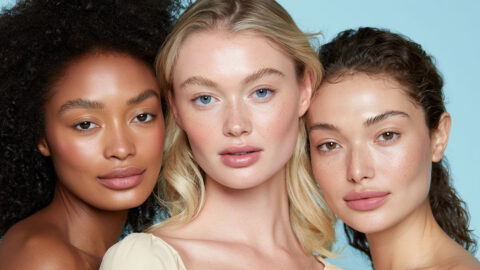
Orange lipstick mostly comes down to whether the shade fits your undertone. Warm undertones suit yellow-leaning tangerine and burnt orange. Cool undertones do better with coral and red-orange. Whichever way you go, the eyes and cheeks should stay quieter than the lips.
Skin depth sets how saturated the color can get. Fair skin usually lands on peach-orange, and deep skin can carry terracotta and brick orange.
The guides don’t agree on which rule comes first. Makeup.com sorts shades by skin depth, while Glamour South Africa sorts them by undertone. The two clash on fair, warm-toned skin, and there I’d let undertone set the hue and depth set the intensity.
Which Orange Lipstick Shade Families Exist?
Coral, peach-orange, tangerine, true orange, red-orange, burnt orange and terracotta cover the whole range, and undertone is how you choose between them. Blot after the first coat, whatever you pick.
- Coral leans pink and runs light to medium in saturation.
- Peach-orange is creamy and low in saturation, which makes it the easiest one to start with.
- Tangerine is bright, yellow-leaning and high in saturation.
- True orange balances red and yellow. It’s the full statement.
- Red-orange has a red base, so it’s the closest to a red lip.
- Burnt orange is brown-tinged, muted and warm.
- Terracotta is clay brown, the deepest and most muted of the lot.
Neon orange isn’t a family at all. It’s a saturation level, a highly saturated true orange or tangerine.
Pantone’s color-of-the-year picks work as fixed reference points for where the families sit. Tangerine Tango (17-1463, 2012) is a reddish orange. Living Coral (16-1546, 2019) is an orange with a golden undertone, and Peach Fuzz (13-1023, 2024) lands somewhere between pink and orange, per Pantone’s announcements.
Sephora turned Tangerine Tango into a limited beauty collection in March 2012, lipstick and lip gloss included. Pantone and Sephora billed it as the first Color of the Year beauty collection.
Coral sits closest to pink, which changes how it reads on cool skin. A separate rundown on how to wear coral lipstick covers that shift.
How to Match Orange Lipstick to Your Undertone and Skin Depth
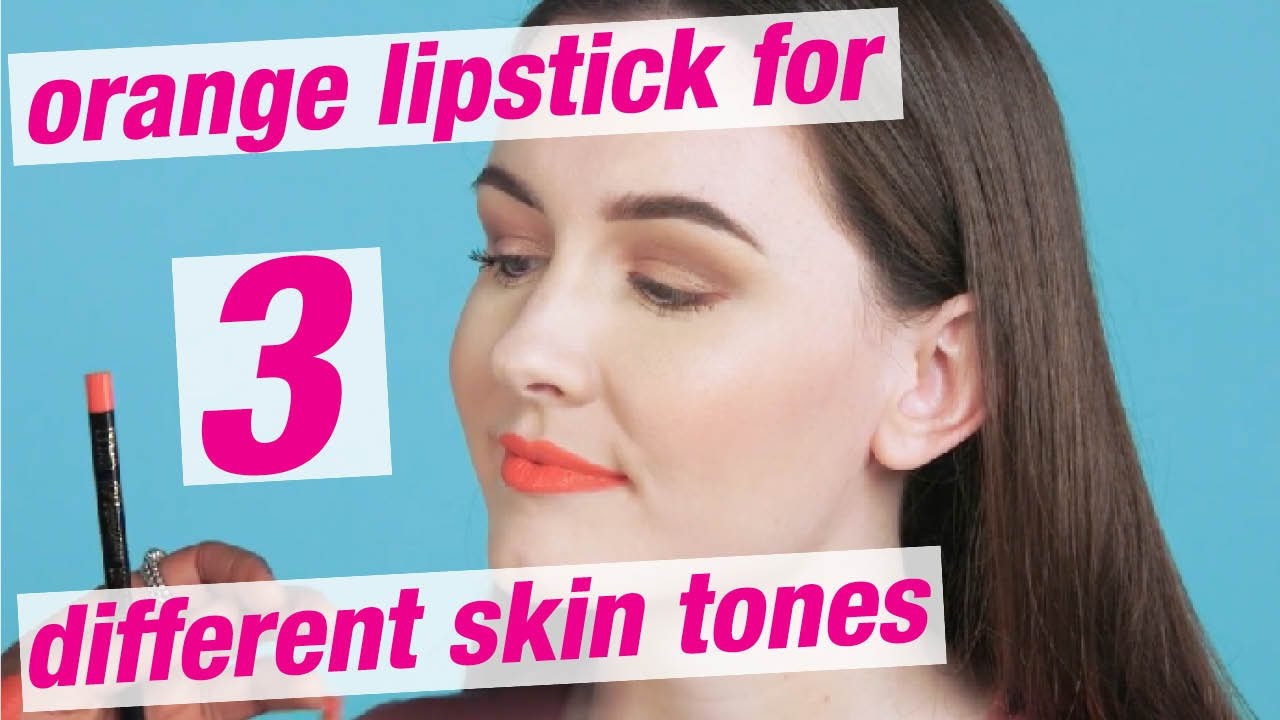
Undertone decides the hue. Depth mostly changes how intense the shade can be, since deeper skin carries more saturation than lighter skin. Warm undertones take yellow-leaning oranges, and cool ones lean toward coral and red-leaning oranges.
Clarins UK points out that orange lipstick exists in both warm and cool undertones, so “orange is a warm color” is not a usable rule.
How Do You Find Your Undertone?
Do all of this in daylight. Start with the veins on your wrist. Greenish ones point warm, blue or purple ones point cool, and a mix points neutral.
Gold jewelry flatters warm skin and silver flatters cool skin, so if both look fine on you, you’re probably neutral. The white paper test is the last one. Skin that looks yellowish beside bright white is warm, and pink or rosy skin is cool.
None of these is decisive. Lighting shifts vein color and olive skin can confuse the read, so treat the result as a first guess.
Swatch the shortlisted orange on the lip or jawline and check it in daylight. The shade that makes skin look clear instead of sallow is the match.
Warm results make tangerine and burnt orange the safe picks, and the wider set of lipstick colors that suit warm undertones is worth a look if you want a back-up shade. Neutral results can wear either end of the range.
Which Orange for Each Skin Depth?
| Skin depth | Starting families | Intensity | Source |
|---|---|---|---|
| Fair and light | Peach-orange, coral, soft true orange | Sheer to medium | Clarins UK, Fashion Magazine |
| Medium and tan | True orange, burnt orange, red-orange | Medium to bold | The Beauty Gypsy, Makeup.com |
| Olive | Tangerine, burnt orange | Medium to bold | L’Oreal Paris USA |
| Deep | Terracotta, brick orange, the boldest oranges | Bold | The Beauty Gypsy, Clarins UK |
The sources split on what drives the choice.
Makeup.com goes by depth. It pairs fair skin with blue-leaning orange, medium skin with true orange and darker skin with red-orange.
Glamour South Africa goes by undertone instead, sending warm skin to yellow-orange with gold shimmer and cool skin to coral with a lighter, silvery shimmer. Fashion Magazine gives the same warm and cool split.
On a fair, warm-toned face the two lines collide. Depth says blue-leaning orange and undertone says yellow-orange. Follow undertone for the hue, then use depth to decide how saturated to go.
Cool results steer you toward coral and red-orange. The same logic carries over to lipstick shades built for cool undertones if you want options outside orange.
Which Finish Works Best for Orange Lipstick?
Most people will be fine in satin or cream, since both forgive uneven lips. Matte gives the strongest orange and stains give the softest, with gloss somewhere in the middle, adding shine that lifts bright shades.
Matte
Matte gives the richest saturation and a sharp edge. MAC Lady Danger is the obvious example, a matte orange-red that Cup of Jo featured as its bold option in 2014. It also tends to wear longest of the finishes.
The catch is that matte shows dry patches fast. Lip skin has 3 to 5 cell layers against 15 to 20 on typical skin, and water loss through the lip has been measured at three times the cheek’s rate (Skin Inc.).
Satin and Cream
Comfortable, and a softer orange. They need a blot and a second coat to hold.
Gloss
Gloss is the gentlest way in. Wear it alone, or over lipstick to cool the intensity. The shine lifts bright shades, though there’s little color payoff and it slides off quickly.
Stain
A stain leaves a soft wash of color that blurs instead of outlining. It’s hard to correct once set, so test the shade first.
The matte versus satin call comes down to punch against comfort. A closer comparison of matte and satin lipsticks covers the formula differences.
For a first try, stay sheer. Fashion Magazine and Beautylish both steer timid wearers to orange-tinted glosses and stains, or anything sheer, and a lip stain is the lowest-commitment version.
To build intensity instead, lay down a nude coat first and layer the orange over it (L’Oreal Paris Canada).
How to Apply Orange Lipstick, Step by Step
- Exfoliate gently, apply a thin layer of balm and blot off the excess.
- Trace the lip edge with a nude liner, or hold the liner for the cleanup step (see below).
- Start at the center of the upper lip and fill outward. A brush gives a precise edge, a fingertip gives a softer one.
- Press one tissue over the lips to take off the surface layer.
- Add a second coat. If the color already reads too bright, stop after the first.
- Wipe stray color away with a cotton swab dipped in micellar water, then run concealer around the outline with a small brush for a crisp line (L’Oreal Paris USA).
Skipped prep is the most common reason orange looks patchy. Flaky edges catch pigment, so a gentle way to exfoliate your lips matters more here than it does with a nude.
Should Lip Liner Go On Before or After Lipstick?

Both orders have working makeup artists behind them.
L’Oreal Paris USA advises a nude liner first, then the orange filled in, because the nude edge keeps a bright shade from looking harsh. Makeup artist Almodovar, quoted by Makeup.com, does it the other way around. She lines with a matching color once the lipstick is on, and the liner leaves a matte border that stops the color from jumping onto the skin.
I’d go nude liner first for softer, built-up color, and save the matching liner for afterward when feathering is the problem.
If lining is new to you, a guide to applying lip liner cleanly covers pencil pressure and corners.
How to Make Orange Lipstick Last

Wear time depends more on technique than on the tube. Thin layers, a powder set and a clean edge do most of the work, and a bright shade shows every blur at the lip line.
Formula still counts for something. Liquid matte formulas pair a volatile solvent with film-forming polymers, and the solvent evaporates to leave a flexible film (MySkinRecipes formulation notes). Two thin coats outlast one thick coat, and product kept just inside the lip line stays crisper.
For the set, lay a single-ply tissue over the lips and press translucent powder through it. A walkthrough on how to set lipstick with powder shows the pressing motion in full.
Feathering happens when creamy product creeps into the fine lines around the mouth. Thin coats and a powder set cut the supply, and a separate guide to stopping lipstick from feathering covers the causes.
Underneath the color, a thin layer of balm or lip primer, blotted until the lips feel smooth, gives pigment something to hold. A thick layer of balm loosens the edge.
Touch up the center first, where color thins from eating and drinking. Re-trace the edge only if it has blurred.
What to Wear With Orange Lipstick: Eyes, Cheeks, Brows and Skin
Orange wants to be the one loud thing on the face. Neutral eyes, peach or no blush, defined brows and even skin all keep out of its way.
Eyes
Quiet eyes are the default. Beige, tawny brown and pale gold on the lids, plus mascara (Makeup For Life, 2009). Makeup artist Heidi Scarlett King, quoted in Beauty Crew, also points to subtle gold or beige shadow.
Fashion Magazine’s beauty panel went louder, pairing orange lips with a smoked-out blue lash line, a wash of purple shadow or a winged liner. Its stated ceiling was nothing more dramatic than a smoked lash line.
The blue lash line works because blue sits opposite orange on the color wheel (L’Oreal Paris USA). The contrast makes the lip read brighter without adding more warmth.
The exception to quiet eyes is a full monochrome look. Huda Beauty’s orange guide carries a burnt orange lip into warm orange shadow and copper bronzer.
Blush and Bronzer
Blush is where the sources split.
Ashlee Glazer, the makeup artist in Cup of Jo’s 2014 orange lipstick feature, advised skipping blush or using peach or nude, never pink or red. Beautylish suggested blending an orange-toned blush higher on the cheekbones, not across the apples, to avoid clown cheeks.
Let the lip’s intensity decide. A bold matte lip takes peach blush or none, while a sheer orange leaves room for cheek color, which is how Fashion Magazine’s panel wore it.
Bronzer does the warming work on pale or cool skin. Glazer applied it in a number-three shape along the hairline, cheekbones and jawline, and a guide to applying bronzer covers placement.
Brows and Base
The Beauty Gypsy calls defined brows non-negotiable with orange. A bright lip pulls the eye to the lower face, and soft brows make the face look unbalanced against it. Skin should be clean, dewy and even.
How to Style Orange Lipstick for Work, Evenings and Each Season
Intensity should follow the setting.
For work and daytime, coral and peach-orange in a sheer or soft matte finish are the usual picks. Clarins UK describes the gentler shades as warm without overpowering, which suits everyday wear.
Evenings can handle red-orange or burnt orange in matte. For a date, Cup of Jo’s 2014 trio offered MAC Costa Chic, a coral with a light golden shimmer.
Summer shades run glossier and lighter, like the apricot lip balm in that same Cup of Jo trio. Fall goes to terracotta and burnt orange. Pantone’s New York Fashion Week report for Fall/Winter 2026/2027 (February 2026) includes Muted Clay (16-1330), a grounded terracotta tone (FashionUnited).
For more seasonal options beyond orange, a roundup of fall lipstick colors fills in the rest of the palette.
Earth tones such as brown, tan and olive bring out the warmth of the lip (The Beauty Gypsy). Cobalt and sky blue clothing works as a contrast, while pastel outfits with a pastel lip read matchy, according to Jon Jordan in the Star Tribune.
When the wardrobe is mixed, a broader method for choosing lipstick color for an outfit covers the logic behind these pairings.
When Orange Lipstick Does Not Work and How to Fix It
Orange can go wrong against warm tooth shades, on pale or cool skin that hasn’t been warmed up, next to a competing blush or eye color, and over rough lips. Each has a fix, and sometimes the fix is a different color.
Sources agree that yellow, gold and brown-leaning shades are the riskiest against warm tooth shades (Colgate; Who What Wear, where makeup artist Lujan also flags certain corals). After that they part ways. Beautylish calls orange-red more flattering than yellow-based orange for teeth. L’Oreal Paris USA lists orange-reds among warm undertones that may bring out yellow in stained teeth, and a Makeup For Life post reported that MAC Morange made teeth look whiter.
The research does not settle it. Medpharma Reports had 100 observers grade photographs of four women in different lipsticks, and red and purple scored whiter than nude, with no orange in the set.
Krajangta and colleagues (International Journal of Dentistry, 2022) had 212 raters score 27 smile photographs, and red beat both pink and orange. That measures smile attractiveness, not tooth whiteness.
Test the shade in daylight with a full smile. If teeth read yellow, move toward red-orange or a cooler coral, or add shine, since Colgate notes that silvery shimmer and sparkle brighten the smile while gold can dull it.
Colgate also suggests dramatic eyes to pull attention off the teeth, which cuts against the quiet-eyes rule above. Choose the feature you want seen. And if orange keeps failing the test, a piece on what color lipstick makes teeth look whiter has alternatives.
| Problem | Cause | Fix |
|---|---|---|
| Teeth look yellow | Yellow-leaning orange against warm tooth shade | Red-orange or cooler coral, tested in daylight |
| Skin looks washed out | Pale or cool skin under a warm lip | Bronzer, or coral and red-orange |
| Face looks crowded | Pink or red blush, loud eye color | Peach blush, neutral lids |
| Lips look patchy | Flaky lip skin under a matte formula | Satin or sheer formula, prepped lips |
If patchiness is the issue, a satin formula over prepped lips solves it faster than a new shade. A guide to applying lipstick on dry lips covers the prep.
Skip orange when you want the lip to stay in the background, because it does not recede. If a shade fails the daylight smile test and you will not change it, a nude or rose lip is the better call.
Common Questions About Orange Lipstick
Can you wear orange lipstick with red hair and pale skin?
Yes, with a softer shade. Fashion Magazine’s panel steers lighter skin toward peach-leaning orange, and bronzer warms a pale base so the lip does not look pasted on.
Undertone matters more than hair color, so run the vein and jewelry checks first.
Can you mix orange lipstick with red?
You can, and it makes a bright orange easier to wear. Makeup artist Tom Pecheux, quoted by Makeup For Life in 2009, called orange with a drop of red surprisingly wearable.
Add red a little at a time, since a small amount shifts the shade toward red-orange quickly.
How do you make orange lips look fuller?
Add a lighter highlight. Makeup.com suggests dabbing a paler orange lipstick on the center of the bottom lip, or dusting white shadow or shimmery powder along the cupid’s bow.
What if an orange lipstick looks too bright?
Blot it. Pressing a tissue over the lips lifts pigment and tones the color down, as Makeup For Life noted in 2009.
Dabbing the color on with a fingertip instead of the bullet gives a softer, stained-looking finish.
How to Test an Orange Lipstick Shade Before Buying
Test an orange lipstick on the lips, in daylight, with a full smile. Lip color and teeth change how the shade reads, and a wrist swatch shows neither.
Teeth and skin show up first, at a window, in seconds. Finish takes until the first coat dries. The edge needs an hour of talking and sipping before you know how it holds.
As of October 2026, no controlled study found measures orange against tooth whiteness, and the advice sources disagree. Your own smile in daylight therefore outranks any published rule about teeth.
A shade that passes all three checks can still sit a step softer than the one you reached for. If every orange fails, the neighboring family is coral, and a guide to wearing coral lipstick covers it.

She started writing on the site after fielding the same questions from clients and friends often enough to just write the answers down: which red won't turn orange on a warm undertone, how to keep lipstick from feathering into fine lines, why a "12-hour" formula rarely survives dinner.
Every review on the site follows the same rule she uses with paying clients: wear it first, then decide if it's worth recommending.
- How to Make Eyeliner Last Longer Without Smudging - August 31, 2026
- How to Make Eyeshadow Last Longer All Day - August 29, 2026
- How to Find Your Undertone in 5 Easy Steps - August 27, 2026