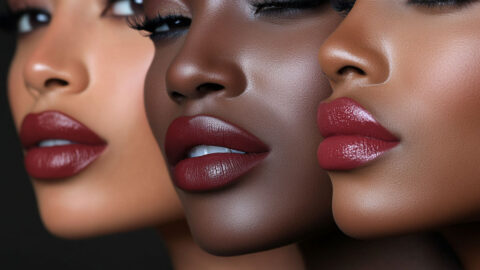
Your lips have no oil glands. Matte lipstick is built to absorb what little moisture is left.
So how to keep lips moisturized with matte lipstick ends up being a timing problem more than a shopping problem. Most people respond by buying a fifth balm. That is not where the fix lives.
Lip skin runs 3 to 5 stratum corneum layers against roughly 16 on your face. Water leaves fast, and it shows on the surface faster than that.
Order of operations is the part almost every tutorial skips.
What Causes Matte Lipstick to Dry Out Lips
The finish itself is the cause. Matte sets by evaporating volatile solvents and leaving a pigment-heavy polymer film behind, and that film lands on tissue with 3 to 5 stratum corneum layers and no oil glands to replace what just flashed off.
Structural, not a manufacturing flaw. A flat finish needs low oil content, and low oil content is exactly what lip skin cannot spare.
Hard data on what wearers actually experience is thin, but there is one survey worth reading. The 2023 CosmoDerma cross-sectional study on lipstick side effects collected 226 responses from 21 countries. Among the female participants who used lipstick, 43.48% reported skin reactions. Hyperpigmentation led that group at 54.44%, with lip cracking at 38.89% and dryness at 30%.
Of the affected participants, 24.44% used matte formulas only, the largest single-texture group in the study. But the biggest group overall was the 51.11% who used a mix of textures, so matte never got isolated as the culprit.
Small sample, self-reported, collected online. Read it as a signal about what wearers notice rather than proof that matte damages more than other finishes.
How Lip Skin Differs From Facial Skin
The vermilion holds 3 to 5 cellular layers where typical facial skin holds around 16 (StatPearls). No sweat glands, no hair follicles, and free sebaceous glands scarce enough to ignore. Ceramide totals also come in lower on lips than on other areas of the body, per Skin Inc.
The 2024 Journal of Cosmetic Dermatology review by Shang and colleagues puts lip stratum corneum at approximately one third the thickness of skin stratum corneum.
Kobayashi and Tagami found the same thing back in 2004 in the British Journal of Dermatology, where the lip vermilion surface measured lower in water content and higher in transepidermal water loss than facial skin.
Reference figures for facial TEWL are shakier than they look, by the way. Kottner’s 2013 meta-analysis pooled 167 studies across 50 skin areas and found wide site-to-site variation, and the pooled sample for the cheek was as small as five subjects. Any single cheek number is an estimate, not a benchmark.
What nobody argues about is that the lip barrier starts the day already behind. Anything that pulls water out of it works quickly.
Which Matte Ingredients Pull Moisture From Lips
Most long-wear mattes run some combination of solvents, film formers, and absorbent powders, and the drying comes from all of them working at once.
- Isododecane, plus cyclopentasiloxane in older formulas, flashes off after application and triggers the dry-down
- Trimethylsiloxysilicate and polypropylsilsesquioxane build the transfer-proof layer that stays put
- Silica, kaolin, and nylon polymers keep mopping up surface oil so the flat finish holds
Look at the L’Oréal Paris Infallible Matte Resistance ingredient list on a liquid lipstick and the first three entries are dimethicone, isododecane, and trimethylsiloxysilicate, followed by nylon-611/dimethicone copolymer, dimethicone crosspolymer, and C30-45 alkyldimethylsilyl polypropylsilsesquioxane. That order tells you what the formula prioritizes. The sodium hyaluronate the marketing leads with sits near the bottom of the list.
Why the Effect Compounds Over an 8-Hour Wear
A polymer film does not behave the way a wax bullet does. It sits over an already thin barrier while the absorbent powders keep working the entire time.
By hour six most people feel it at the inner lip first. That is the wet-dry line, the thinnest part of the whole vermilion.
Which Matte Lipstick Types Dry Lips the Most
Roughly ranked, liquid mattes are the harshest. Then powder-finish blurring products, then matte stains, with wax-based bullets the most comfortable of the lot. Solvent load and absorbent powder percentage drive that order. Not brand. Definitely not price.
Grand View Research values the global lipstick market at USD 17.49 billion in 2024, heading for USD 23.77 billion by 2030 at a 4.7% CAGR, with matte expected to grow at the fastest CAGR over that forecast period. So the problem is scaling, not shrinking.
| Formula Family | Sets By | Comfort Level |
|---|---|---|
| Liquid matte | Solvent evaporation + polymer film | Lowest |
| Powder / blurring | Oil absorption | Low |
| Matte stain | Water evaporation, dye binding | Moderate |
| Matte bullet | Wax structure (carnauba, candelilla, ozokerite) | Highest |
Maybelline SuperStay Matte Ink and Fenty Stunna Lip Paint sit at the transfer-proof end. Charlotte Tilbury Matte Revolution and the Revlon Super Lustrous matte shades are wax bullets, and they behave completely differently on dry lips.
The distinction between a true matte finish and other lip color textures matters more than most product pages admit. Two products labeled matte can differ enormously in oil and wax content. The finish label on its own tells you very little about comfort.
A lip stain sits in its own category. Dye-based color penetrates instead of filming over, which is why stains fade more evenly rather than flaking off in patches.
How to Prep Lips Before Applying Matte Lipstick
Exfoliate gently, put down a humectant, seal it with something occlusive, then wait 10 to 15 minutes and blot before color goes anywhere near your mouth. That wait is what people skip, and skipping it ruins the hydration and the finish at the same time.
Milani and Sparavigna tested a fluid containing 1% hyaluronic acid, 5% glycerin, and Centella asiatica stem cell extract on 20 healthy women. Hydration climbed 59% at 1 hour, still held at 48% by the 8-hour mark, and sat at 29% a full day later.
The 8-hour figure is the one that maps to a workday of matte wear. Two caveats worth carrying: measurements came off forearm skin rather than lips, and the product’s manufacturer funded the study.
How Often to Exfoliate Lips Without Damaging the Barrier
Once or twice a week, tops. Zero times if your lips are cracked or split right now.
Dermatologist Nina Desai recommends exfoliating 1 to 2 times per week as part of a nighttime routine, to clear the dry flaking skin that builds up.
Dermatologist Suzanne Friedler frames it differently. Healthy lips, in her view, do not need exfoliation at all.
Method matters more than frequency anyway. Dermatologist Kristina Collins strongly prefers non-abrasive exfoliants for lips, noting that mechanical scrubs can worsen tiny breaks in the skin and rough up an already delicate barrier. AHAs or papaya enzymes are her gentler route.
Which is more or less the opposite of the sugar-scrub-and-toothbrush advice everyone repeats. If you want the gentler at-home methods for smoothing flaky lip skin, the rule is minimal friction, whatever the ingredient happens to be.
Which Primer and Balm Textures Work Under Matte Color
Thin beats thick. Every time.
Glycerin, sodium hyaluronate, sodium PCA, and low-percentage urea hold water at the surface. Petrolatum, dimethicone, shea butter, and mineral oil slow how fast it leaves.
Petrolatum is the standout. At a minimum concentration of 5% it can reduce transepidermal water loss by more than 98%, where other oil-based moisturizers manage reductions of only 20% to 30%. Plain petroleum jelly outperforms most branded balms on pure numbers, which stings a bit if you just paid $30 for one.
One swap is worth making regardless of what else you use. The AAD lists lanolin on its avoid list for chapped lips, alongside camphor, menthol, and fragrance, because it triggers allergic reactions in a meaningful share of people. Petrolatum, dimethicone, shea butter, ceramides, castor seed oil, and mineral oil all sit on its recommended list.
Heavy ointments under matte color slip and migrate, though. Save the thick stuff for overnight and use a thin gel-textured hydrator before color instead.
How to Apply Matte Lipstick Without Removing Lip Moisture
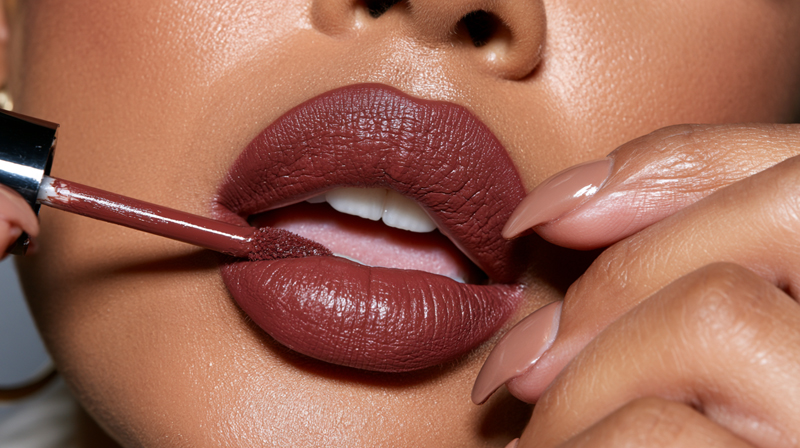
Technique changes wear comfort about as much as the formula does. Thin layers, blotting between coats, no rubbing.
One thin coat, then stop. A stacked second coat doubles the polymer film thickness and roughly doubles the tightness, without buying much opacity.
If you do need a second pass, blot with a single tissue ply first so the excess comes off before it sets.
Do not press your lips together right after a liquid matte goes on. The film is still setting, and pressing it cracks the surface. That crack is where flaking starts.
Give it a few minutes before any lip-to-lip contact. Most brands, L’Oréal included, note that these formulas are flammable until dry, which tells you plainly that the solvent is still evaporating in those first minutes.
A flat lip brush gives more control over film thickness than a doe-foot applicator ever will. Detailed technique for getting matte color on cleanly saves you from the touch-up cycle that causes most of the damage.
Work from the inner lip outward. Cupid’s bow gets done last, since it needs the least product.
What Ingredients to Look for in a Comfortable Matte Lipstick
Read the first 5 INCI entries and ignore the front of the box. Those positions determine how a formula behaves. A comfort ingredient listed fifteenth out of twenty is marketing, not formulation.
| Green Flags | Caution for Dry Lips |
|---|---|
| Castor seed oil, squalane, jojoba esters | Alcohol denat. in the top 5 |
| Shea butter, ceramides, dimethicone | Menthol, camphor, eucalyptus, salicylic acid |
| Sodium hyaluronate, mineral oil, petrolatum | Heavy silica and kaolin load, lanolin if you react to it |
Menthol and camphor deserve a paragraph of their own. The American Academy of Dermatology flags camphor, menthol, and eucalyptus as ingredients that can irritate lips and stop chapped lips from healing, even though the cooling sensation reads as relief. Its full avoid list also covers flavoring, fragrance, lanolin, octinoxate, oxybenzone, phenol, propyl gallate, and salicylic acid.
Marketing terms do carry a little signal. “Velvet matte” and “soft matte” usually mean higher emollient content than plain “matte,” while “transfer-proof” reliably means high polymer. None of that is regulated, so the INCI list still overrides the label.
Fragrance and flavoring add an irritation vector on tissue this thin. If a product burns, stings, or tingles, the AAD’s guidance is to stop using it rather than read the sensation as the active ingredients working.
Some brands split the difference. The hydrating lipstick category trades a bit of wear time for oils and butters sitting high in the ingredient list.
Why Alcohol Denat. Position on the Label Matters
A 2025 Scientific Reports study found ethanol concentrations above 15% negatively affected epidermal barrier integrity in ex vivo porcine skin models, raising both stratum corneum permeability and transepidermal water loss.
The same paper’s clinical arm, a small double-blind pilot in 9 patients with atopic dermatitis, found that a cream with 12% ethanol produced no significant adverse effect on stratum corneum hydration, erythema, pH, or TEWL over 30 days. Concentration is the variable, not presence.
A 2020 RSC Advances molecular dynamics study showed ethanol selectively targets and extracts free fatty acids from the stratum corneum lipid matrix, which are harder to hold onto than ceramides. Free fatty acids are one of the three lipid classes holding that barrier together.
Brands are not required to disclose percentages, so position on the label is your only proxy. Alcohol denat. sitting second or third is the signal to put it back on the shelf.
How to Layer Balm Under Matte Lipstick Without Ruining the Finish
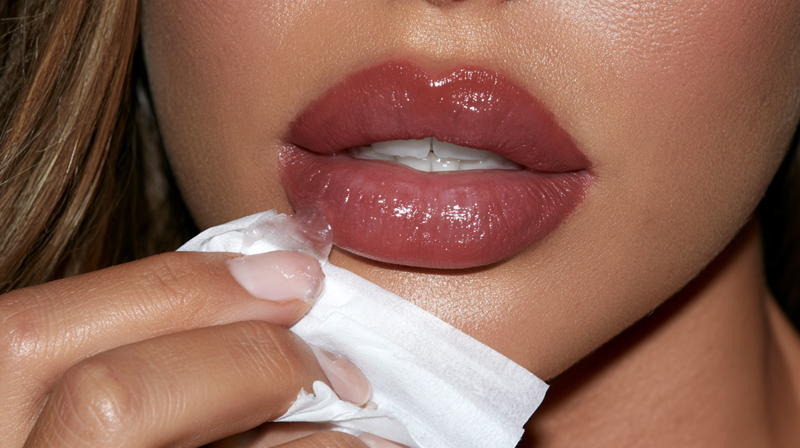
Balm, then 10 to 15 minutes, then a tissue blot, then liner and color. The balm hydrates during the wait, and the blot removes the surface residue that would otherwise break the color film.
Most people go balm-to-lipstick back to back, which is exactly why their matte goes patchy within an hour. Color cannot bond to a greasy surface.
The Timing Sequence That Works
| Step | Timing | Purpose |
|---|---|---|
| Humectant serum or gel | T-15 min | Pulls water into the surface |
| Thin balm layer | T-12 min | Seals the humectant |
| Tissue blot | T-2 min | Removes slip |
| Liner, then color | T-0 | Anchors and fills |
Lip liner does double duty here. It creates a barrier at the vermilion border and gives the matte something to grip, and the right lining technique reduces migration on hydrated lips.
If you are a heavy balm user, one pass of translucent powder through a single tissue ply locks the underlayer down. The full method for setting lip color with powder keeps the matte from sliding without adding texture.
Skip waxy stick balms right before color. They leave a film liquid matte cannot set over, and you will watch the color bead within minutes.
How to Fix Flaking and Patchy Matte Lipstick During the Day

Take the top layer off with a damp cotton swab before you reapply. Touching up over a dried matte film stacks texture on texture, and that is what turns patchy into visibly flaky.
Nothing about a midday touch-up is intuitive, and most tutorials get it backwards.
Swab the affected area with water or micellar water on a cotton bud, concentrating on the inner lip where fade always starts.
Press a pinhead of balm into the bare patch with a fingertip, wait 60 seconds, blot.
Then reapply thinly to that area only. Full reapplication is almost never necessary.
Pressing a thin balm over the whole lip shifts a matte toward satin. Plenty of people want that by 4pm, which is fair, and there are deliberate ways to soften a matte finish if you plan for it instead of fighting it.
The inner lip fade line after eating is not a product failure. It is the wet-dry junction rehydrating from the inside, and it wants the swab-and-fill treatment rather than another full coat.
A light facial mist over matte color rehydrates the surface without dissolving the film. Lip oils will dissolve it, so save those for after removal.
If you are starting from already compromised lips, the approach for wearing color on dry lips differs enough that the standard prep sequence will not hold.
And honestly? Some days the answer is a wax bullet instead of a liquid matte. Your lips get a break, the color still reads matte in photos, and you skip the touch-up cycle entirely.
How to Remove Matte Lipstick Without Stripping the Lip Barrier
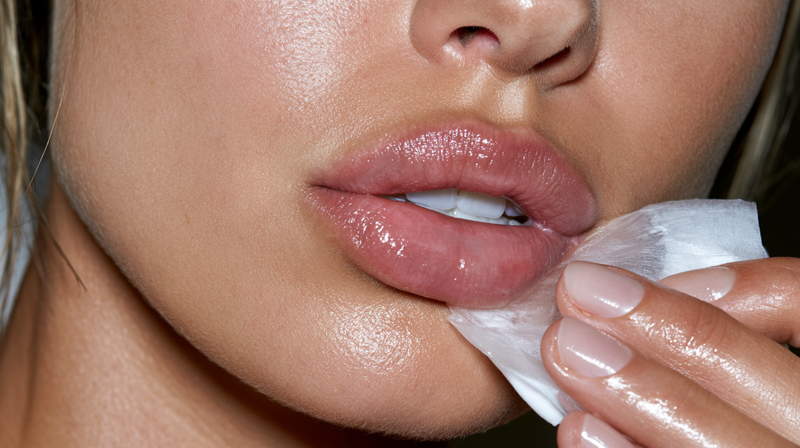
Removal needs an oil phase and 20 to 30 seconds of dwell time. Press a saturated pad against the lips, wait, then wipe in one direction. Dry tissue and friction cause more barrier damage than a full day of wear does.
Rubbing a set polymer film off dry is the worst thing you can do to lip skin, and most people do it every single night.
Press and hold for 10 to 20 seconds so the remover can break the film before any wiping starts.
Wipe downward, once. Sideways scrubbing grinds pigment into the surface instead of lifting it.
Reapply the pad for a second pass rather than pressing harder.
Transfer-proof formulas need a bi-phase remover, not plain micellar water. Bi-phase bottles separate into water and oil layers and get shaken before use, and it is the oil phase that dissolves trimethylsiloxysilicate.
Garnier’s waterproof bi-phase and L’Oréal Paris Micellar Water Complete Cleanser Waterproof both market themselves for long-wear eye and lip makeup. Plain jojoba oil or a cleansing balm works just as well if you already have one on the counter.
The full method for taking matte color off without scrubbing matters more for barrier health than any product you apply afterward.
Apply balm within 60 seconds of patting dry. Damp lip skin holds onto humectants better than fully dry lip skin, and that window closes fast.
Pigment staining on chronically dry lips is not necessarily a removal failure. Dye sits in the roughened surface and generally fades as the barrier smooths out. Staining that hangs around for weeks, or comes with irritation, is worth a dermatologist visit rather than more scrubbing.
What Overnight Lip Care Repairs Matte Lipstick Damage
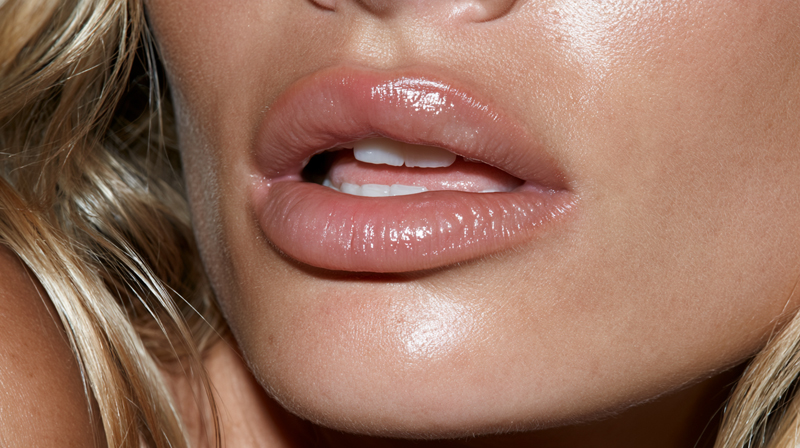
Overnight occlusion works because barrier function follows a circadian rhythm. Yosipovitch’s 1998 cosinor study in the Journal of Investigative Dermatology found significant circadian rhythmicity in transepidermal water loss on the forearm, forehead, and shin, with results suggesting skin permeability runs higher in the evening and night than in the morning. Denda’s follow-up work found barrier recovery rate was slowest between 20:00 and 23:00.
Topical penetration peaks around 04:00, per the Journal of Clinical and Aesthetic Dermatology review of circadian skin research, then slows through daylight hours.
Night treatment is not a nice extra. It is when the repair actually happens.
- Laneige Lip Sleeping Mask, a thick gel that stays put through a night of side sleeping
- Aquaphor Healing Ointment, petrolatum based, the cheapest thing here that performs
- Summer Fridays Lip Butter Balm, shea and murumuru, lighter than an ointment
- Plain petroleum jelly, still unbeaten on pure water-loss numbers
Ceramides and cholesterol matter at this stage because lip tissue carries less ceramide than other body sites (Skin Inc). Barrier repair means putting back what the tissue does not make enough of.
A 4-week open-use study of a Topicrem lipid-replenishing cleansing oil and emollient balm in 21 adults with moderate to severe atopic dermatitis recorded TEWL down 27% and hydration up 89% with once- or twice-daily application. Full-body use in a compromised-barrier population, not a lip study, but it shows what lipid replacement does to a leaky barrier.
The 3-Night Recovery Protocol
Skip matte entirely for three nights, apply an occlusive mask before bed, and run a bedroom humidifier. Mouth breathing undoes most of the mask’s work, so the humidifier is doing double duty.
The AAD gives 2 to 3 weeks for chapped lips to improve with consistent self-care. Three nights buys you enough to wear color again. It is not a full repair.
Building the habit into a proper daily lip care sequence is what stops the cycle restarting every Monday.
How Weather, Hydration, and Habits Change Matte Lipstick Comfort
Ambient humidity, lip licking, sun exposure, nutrient status, and retinoid use all shift how a matte formula behaves on you. The same lipstick that feels fine in June feels like sandpaper in January, and nothing about the product changed.
| Factor | Threshold | Effect on Matte Wear |
|---|---|---|
| Indoor humidity | Below 30% RH | Cracked lips, faster fade |
| Winter heating | Often below 30% RH indoors | Flaking within hours |
| Oral isotretinoin | Any dose | Matte becomes unwearable for most |
The EPA puts the healthy indoor range at 30% to 50% relative humidity. Cold-climate homes on forced-air heat routinely fall below that floor, and the EPA notes that low humidity produces dry skin and chapped lips.
Isotretinoin gets its own warning. StatPearls puts cheilitis at approximately 90% of patients on the drug, calling it the most common dose-dependent adverse effect. Kapała’s 2022 single-arm meta-analysis across 15 studies produced a much lower pooled figure of 41%, so real-world rates swing widely with dose.
Drink water, sure. Hydration status affects lip comfort at the margins, and the “drink more water” advice oversells itself when the actual problem is a 20% RH bedroom.
Nutrient deficiencies show up at the mouth corners first. Up to 25% of angular cheilitis cases involve iron or B-vitamin deficiency, particularly riboflavin, folate, and B12, with zinc also implicated. Persistent cracking there, without a product change, is worth a blood panel rather than another balm.
UV exposure on unprotected lip tissue compounds all of it, and lips get left out of sun protection constantly despite having little melanin. Smoking compounds it too, and lip care under those conditions runs on a different schedule entirely.
Why Licking Lips Makes Matte Lipstick Worse
Saliva evaporates quickly and takes surface moisture with it. Digestive enzymes in saliva irritate the lip barrier on top of that.
Dermatologist Nina Desai notes that licking can cause yeast to build up on the lips, which is a direct route to angular cheilitis, the painful inflammation at the corners of the mouth.
Under a matte film there is an extra cost. Licking softens the polymer edge at the inner lip and starts the fade line early.
Eating does the same thing, just slower. Knowing how to get through a meal without wrecking your lip color saves the touch-up cycle that damages the barrier.
How to Tell the Difference Between Dry Lips and Cheilitis
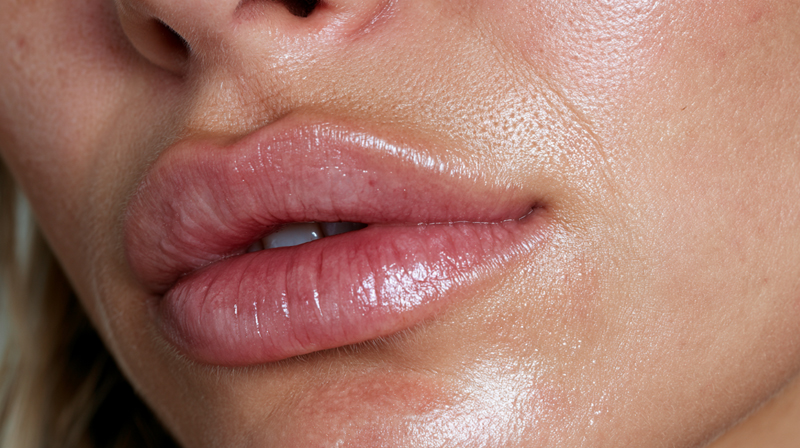
Ordinary dryness improves within 2 to 3 weeks of consistent balm use and stays inside the vermilion border. Cheilitis hangs around, can spread past the border, and brings burning, swelling, scaling, or corner cracking that balm does not touch.
North American Contact Dermatitis Group data across 43,772 patch-tested patients shows cheilitis at any site climbing from 2.7% in 2001-2002 to 7.8% in 2017-2018. Roughly 60% of patients with cheilitis had at least one positive allergic patch-test reaction.
| Sign | Ordinary Dryness | Cheilitis |
|---|---|---|
| Location | Inside vermilion | Crosses the border, or corners |
| Response to balm | Improves in days to weeks | No change or worsens |
| Sensation | Tightness | Burning, stinging, swelling |
| Duration | Under 3 weeks | Recurring or constant |
Allergic contact cheilitis accounted for 38.3% of patients presenting with lips as the sole site of dermatitis in NACDG 2001-2004 data, and 84.2% of that group were women. Angular cheilitis affects roughly 0.7% of the general American population, rising to about 11% in older adults and up to 28% in denture wearers (StatPearls).
Gallate esters are the lipstick allergen worth knowing by name. Loidi-Pascual’s Spanish tertiary-hospital lip eczema series found gallates positive in 36% of cases, though a more recent Brazilian series put the figure at 8.2%, so prevalence varies a lot by population. Fragrance mix, Myroxylon pereirae, and nickel also rank high across studies.
Standard patch testing runs about a week. Patches go on day 1, come off and get read at 48 hours, then get read again at 72 to 96 hours, with a day-7 reading often added to catch delayed reactions. More than one in four cheilitis patients react to allergens outside the standard screening series, so ask for an expanded cosmetic series.
Stop wearing matte entirely if burning shows up shortly after application. That timing points to irritation rather than dryness, and pushing through risks sensitizing the tissue further.
See a board-certified dermatologist for anything lasting past 3 weeks. Actinic cheilitis is precancerous and looks a lot like stubborn chapping.
What a Full Matte Lipstick Routine Looks Like Start to Finish
The whole routine spans roughly 18 hours and covers prep, application, midday maintenance, removal, and overnight repair. Weekly exfoliation sits on a rest night, never before a wear day.
| Stage | Timing | Action |
|---|---|---|
| Prep | T-15 min | Humectant, thin balm, blot |
| Application | T-0 | Liner, one thin coat, let it set |
| Maintenance | Hour 5 to 7 | Swab, press balm, spot reapply |
| Removal | Evening | Bi-phase, press 20 sec, wipe once |
| Repair | Bedtime | Occlusive mask, humidifier on |
Six product slots cover all of it. A gentle weekly exfoliant, a humectant serum, a thin day balm, a liner, the matte color itself, and a night mask. Nothing else earns counter space.
Dermatologist Nina Desai recommends using a hydrating lip product 2 to 4 times daily, more if your lips are very dry or eczema-prone, which this routine hits without any extra effort.
In winter, drop exfoliation to every other week, switch the day balm to a heavier texture, and add a midday balm press.
In summer, add SPF 30 lip protection, ideally titanium dioxide or zinc oxide based, since chemical filters are more likely to irritate lip tissue. Keep the balm thin and expect better wear across the board.
On compromised lips, pause matte for 3 to 5 days, run repair only, then come back with a wax bullet before you touch a liquid formula.
A satin finish covers most of what people actually want from matte with less of the barrier cost, and the difference between the two finishes is smaller in photos than it feels on the lips.
Worth saying plainly: the routine only works if you run all five stages. Skipping removal and going straight to a night mask traps the polymer film against the barrier, which is worse than doing nothing at all.
If you are building this from scratch, the broader approach to wearing matte color well covers the styling side that this routine deliberately leaves alone.
FAQ on How To Keep Lips Moisturized With Matte Lipstick
Can you wear lip balm under matte lipstick?
Yes, with a 10 to 15 minute gap and a tissue blot before color. Applying balm and matte back to back leaves a greasy surface the polymer film cannot bond to, which causes patchy wear.
Why does matte lipstick make my lips peel?
Volatile solvents like isododecane evaporate on application, then absorbent powders such as silica and kaolin keep pulling surface oil for hours. Lip tissue has very few sebaceous glands to replace it, so the surface cracks and lifts.
Which matte lipstick is least drying?
Wax-based matte bullets. Carnauba, candelilla, and ozokerite structure the color instead of a solvent-and-polymer system, so comfort tends to run highest in this family. Liquid matte and powder-finish formulas sit at the opposite end.
How often should you exfoliate lips before wearing matte lipstick?
Once or twice a week at most, and never the same day you plan to wear color. Dermatologist Nina Desai suggests 1 to 2 times weekly, while dermatologist Suzanne Friedler notes healthy lips need no exfoliation at all. Dermatologist Kristina Collins prefers non-abrasive options like AHAs or papaya enzymes over scrubs, since mechanical exfoliation can worsen small breaks in the skin. Skip it entirely if your lips are currently cracked or split.
Does drinking water fix dry lips under matte lipstick?
Only at the margins. Hydration status matters less than ambient humidity, and the EPA-recommended indoor range is 30% to 50%. Winter heating routinely drops homes below that floor, which no amount of water offsets.
How do you fix flaky matte lipstick during the day?
Swab the patchy area with a damp cotton bud, press a pinhead of balm in with a fingertip, wait 60 seconds, then reapply thinly to that spot. Never touch up over the dried film.
What ingredients should you avoid in matte lipstick?
Alcohol denat. in the top 5 INCI positions, plus menthol, camphor, eucalyptus, salicylic acid, propyl gallate, and heavy silica loads. Ethanol above 15% impaired barrier integrity in ex vivo testing published in Scientific Reports in 2025, while 12% showed no significant adverse effect in a small clinical arm.
Should you use lip liner with matte lipstick on dry lips?
Yes. Liner creates a barrier at the vermilion border and gives the matte something to grip, which reduces migration on freshly hydrated lips. It also cuts how much color you need overall.
What is the best overnight treatment after wearing matte lipstick?
An occlusive mask like Laneige Lip Sleeping Mask, Aquaphor, or plain petroleum jelly. Skin permeability and transepidermal water loss run higher in the evening and overnight than in the morning, so nighttime occlusion targets the leakiest window.
When do dry lips need a dermatologist instead of a balm?
Past 3 weeks without improvement, or if burning, swelling, corner cracking, or scaling beyond the vermilion border appears. Those signs point to cheilitis, and gallate esters are a common lipstick allergen.
Conclusion
Nobody solves how to keep lips moisturized with matte lipstick by finding the perfect product. The fix lives in sequence. Humectant, occlusive, blot, thin coat, set.
Removal matters as much as application. A bi-phase remover and 20 seconds of dwell time protect the barrier that nightly scrubbing quietly destroys.
Overnight is where the repair happens, since skin permeability and water loss run highest in the evening and through the night. A ceramide-rich mask does more than any daytime touch-up.
Read the first 5 INCI entries before you buy. Watch the mouth corners for cracking that balm cannot reach.
And give your lips a wax bullet week now and then. Barrier recovery is not optional. It just gets scheduled.

She started writing on the site after fielding the same questions from clients and friends often enough to just write the answers down: which red won't turn orange on a warm undertone, how to keep lipstick from feathering into fine lines, why a "12-hour" formula rarely survives dinner.
Every review on the site follows the same rule she uses with paying clients: wear it first, then decide if it's worth recommending.
- How to Make Eyeliner Last Longer Without Smudging - August 31, 2026
- How to Make Eyeshadow Last Longer All Day - August 29, 2026
- How to Find Your Undertone in 5 Easy Steps - August 27, 2026