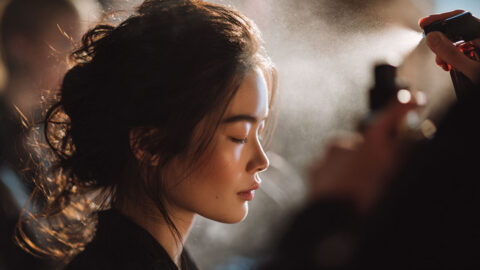
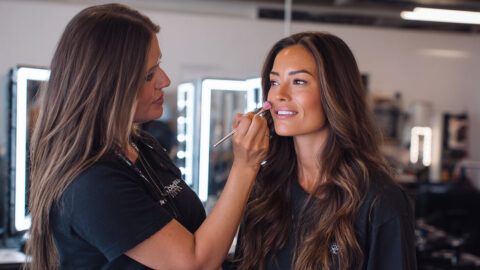
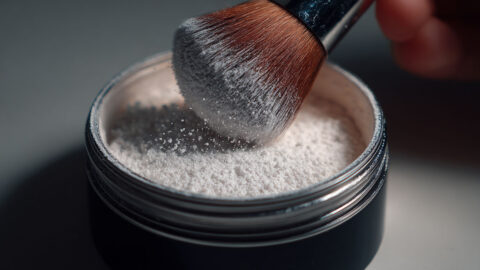
To set lipstick with powder, blot the color, lay one ply of tissue over your lips, and brush translucent loose powder across the tissue.
The powder pulls oil off the surface, so there’s less transfer and less shine. Cream and satin formulas end up closer to matte.
It works on every finish, liquids included, and the only thing you need is a face powder you probably already own.
Lips have no hair follicles or sweat glands, and oil glands show up only as occasional Fordyce spots on the upper lip (Skin Inc., 2023). That’s why one thin pass is about the limit before the powder starts to dry them out.
How to Set Lipstick with Powder, Step by Step

The tissue holds back most of the powder, so the color locks in without a chalky layer. Work in this order:
- Exfoliate if your lips are flaky and blot off any balm. Then draw your liner.
- Apply the first coat of lipstick, edge to edge.
- Press a tissue between your lips to lift surface oil.
- Split a tissue down to a single ply and lay it flat over your mouth.
- Dust powder through the tissue in light passes with a fluffy brush, then peel the tissue away.
- Add a second coat, repeat the tissue-and-powder pass, and press your lips together to blend.
Prep matters more than the powder itself. Flakes grab powder and show up as texture, so a gentle at-home lip exfoliation before you start saves a lot of cleanup.
Liner does the rest of the prep work. If you learn to apply lip liner cleanly along your natural lip line, the color has a boundary to stay inside.
Brands don’t agree on the order. L’Oreal Paris (2021) powders after each coat, with one tissue pass per layer. Max Factor blots and reapplies first, then does a single tissue-and-powder pass. Charlotte Tilbury lays the tissue over the lips and dusts finishing powder through it after the first coat, and only then goes in with a second coat of lipstick.
One pass keeps more of the lipstick’s original finish. A second pass flattens it into more of a matte.
Why Powder Keeps Lipstick in Place
The film of oil and moisture on top of a lipstick is what ends up on cups, masks and collars. Powder soaks it up.
According to the FDA’s talc page (updated January 2026), talc absorbs moisture and prevents caking, and silica is another common oil absorber in setting powders. The tissue acts as a sieve, and L’Oreal Paris notes that just enough particles pass through it to set the color. Shine drops. The color reads flatter and slightly softer.
It’s the same job setting powder does on foundation, only on a smaller and oilier surface.
Modern transfer-resistant lipsticks work differently. Cosmetics and Toiletries traces them to film-forming polymers and silicones paired with volatile oils, which dry into a film.
Powder adds no film. It only removes surface oil.
So a powdered cream lipstick behaves like a drier cream lipstick, not like a polymer-based liquid formula. If you want full resistance, pair powder with a long-wear formula, and this guide to making lipstick transfer proof goes through that.
Which Powder Works Best for Setting Lipstick?
Translucent loose powder works best for most people. It’s fine, colorless on the lips, and easy to apply in thin layers through a tissue.
| Powder type | Texture | Effect on lipstick | Best for |
|---|---|---|---|
| Translucent loose | Fine, light | Sets and mattifies, color barely changes | The default, applied through tissue |
| Pressed | Denser, held by binders | Stronger matte, heavier deposit | Travel touch-ups |
| Tinted or eyeshadow | Pigmented | Shifts the shade | Deliberate color changes only |
| Baby powder | Very fine, airborne | Mattifies | Skip it |
Loose versus pressed powder
Loose powder goes on lighter and is easy to control through tissue, though it’s messier to carry around. Pressed is quick and fits in a pocket, but it deposits more powder per touch. Maybelline India’s guide presses compact powder straight onto the lips to mattify, which works with very little margin for error.
L’Oreal Paris names its Infallible Pro Sweep + Lock Powder for the tissue method, and Max Factor uses Miracle Veil Loose Powder.
Shade matters on deeper skin tones, where a pale powder can leave a gray film along the lip line. Picking a setting powder to match your skin tone and swatching it on the back of your hand first avoids that.
Powders to avoid
Skip baby powder.
The American Academy of Pediatrics has long advised against talc-based baby powder because of inhalation risk, and health experts say cornstarch versions can irritate the lungs too. Your lips sit directly under your nose.
Talc itself is still a common cosmetic ingredient. The FDA withdrew its December 2024 proposal for standardized asbestos testing of talc-containing cosmetics on November 28, 2025, citing comments that needed further review.
If you’d rather avoid talc, read the ingredient list. Silica and cornstarch bases are the usual talc-free alternatives.
Tissue, Brush, Cotton Swab or Finger: Which Application Method Works Best?

A fluffy brush over a single ply of tissue works best for most people because it deposits the thinnest, most even layer. A small eyeshadow brush and a cotton swab handle precision work. Direct pressing is the strongest option and the least forgiving.
Fluffy brush over tissue
This leaves the lightest layer of any method, and because the tissue sits between brush and lips, no lipstick ends up on the brush. Building in passes is easy. The downside is needing a fresh tissue each time.
Loading works the way it does on the face. Tap off the excess before the brush touches the tissue, the same as when applying translucent powder to skin.
Small eyeshadow brush
This one is for the lip line, where a big brush pushes powder onto the skin around the mouth. It places powder precisely along the edge and works without tissue on small areas, but it’s slow across the full lip.
Keep one small brush just for lips. Regular washing of makeup brushes stops old pigment from tinting the powder.
Cotton swab
Swabs dab powder into the corners and the cupid’s bow without disturbing the lipstick. They’re disposable, so nothing builds up on a brush. The catch is that powder goes on in dabs, so edges look patchy unless you blend.
Direct press with a puff or finger
Maybelline India’s guide shows compact powder going straight onto the lips to mattify lipstick. You get the strongest matte this way, and it’s the fastest. It’s also easy to overdo, and overdoing it is the main route to caking.
I’d start with brush and tissue. Move to direct pressing only if the lipstick still slides after two passes.
How Powder Changes Each Lipstick Finish
Cream and satin lipsticks change the most under powder and move toward a flat matte. Mattes barely change at all.
| Finish | Result after powder | Light passes | Watch for |
|---|---|---|---|
| Cream | Less shine, softer edge | 1 to 2 | Color mutes with heavy passes |
| Satin | Biggest shift, close to matte | 1 to 2 | Glow disappears |
| Matte | Little change, tack removed | 0 to 1 | A tight, dry feel |
| Liquid | Sets only once dry | 1 | Smearing on a wet film |
| Glossy or sheer | Pushed toward matte, color thins | 2 or more | Patchy coverage |
Cream and satin respond fastest because they carry the most surface oil. If you’re not sure which of the two you own, this comparison of matte versus satin lipstick explains the baseline finish.
Matte formulas are already low in surface oil, so one very light pass removes leftover tack and does nothing else. A matte that already feels tight needs no powder at all.
With liquids, wait until the film dries before you touch it with powder. A wet liquid lipstick drags the particles around and leaves streaks.
Glossy and sheer formulas can be set, just slowly. Thrive Market’s guide to mattifying lipstick (published 2016, updated 2022) taps powder through a one-ply tissue and repeats until the finish looks right, because the tissue lets the powder go on little by little.
Judge the shade after the first pass. Saturated colors lose depth quickly under heavy powder.
Lip Liner, Primer and Setting Spray: What to Add Alongside Powder
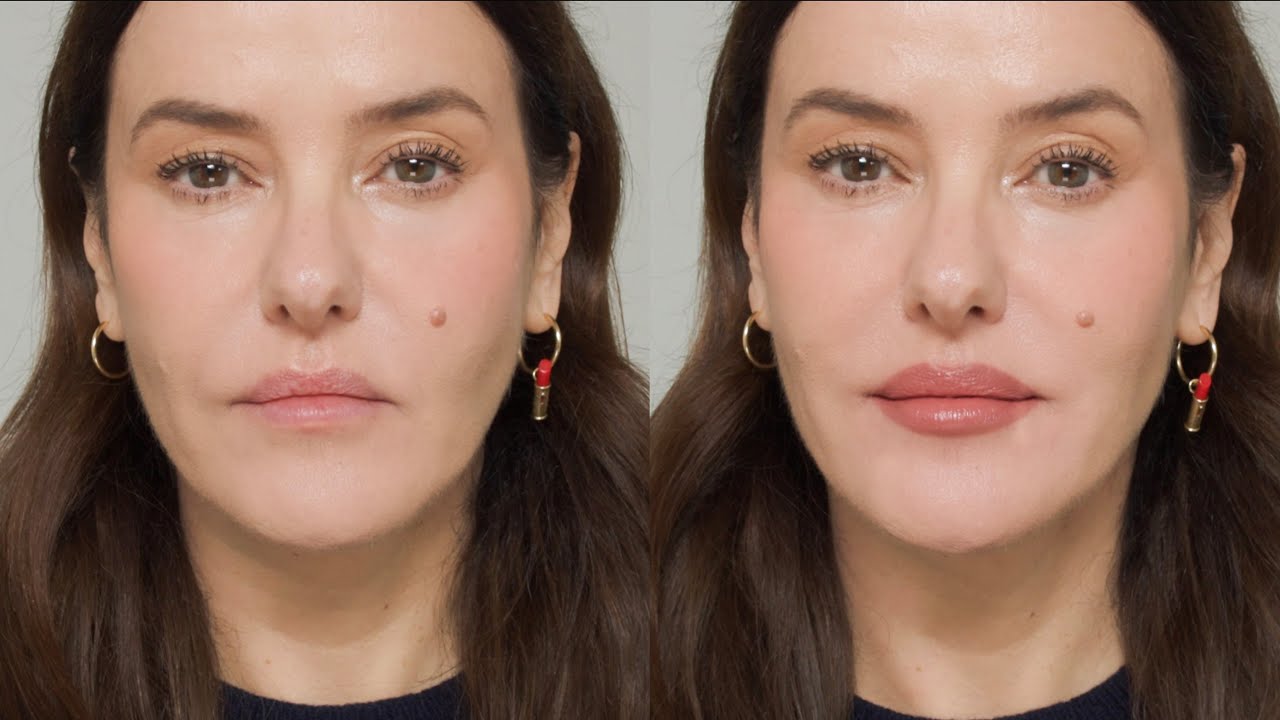
Liner and primer hold the edge while powder handles the surface. Setting spray is an optional extra, and brands formulate it for the face, not the lips.
Stopping feathering at the lip edge
Feathering is lipstick creeping into the fine lines around the mouth. Thrive Causemetics notes that the shinier the lip product, the more likely it is to bleed.
A long-wearing liner with a drier texture forms a barrier at the lip line. Formulas differ a lot in staying power, so check which lip liners last the longest before you buy.
Lip primer goes on the lip edges and has to dry to seal the border. Look Fabulous Forever stresses that this is a primer, not a balm. For the corners, clean the edge with concealer and a small flat brush, then tap translucent loose powder onto each one.
When liner alone fails, Thrive Causemetics suggests eye primer around the outside of the lips as a second barrier.
Liner and primer go on first, lipstick second, and the tissue-and-powder pass comes last.
Powder versus setting spray
MAC claims up to 12 hours for Prep + Prime Fix+, and Urban Decay claims up to 16 hours for All Nighter. Both claims cover face makeup.
The directions on both product listings cover the face and never mention lips. Urban Decay lists alcohol denat. as its second ingredient, plus PVP and a methyl methacrylate crosspolymer, while MAC lists Fix+ as alcohol-free.
Powder absorbs surface oil, goes on in thin, controlled layers, and costs almost nothing if you already own a face powder.
A spray dries into a film instead of absorbing oil. It gets misted near the mouth and eyes with less control over where it lands, and it was written for the face, with no lip directions on the listings checked.
A setting spray can sit on top of the finished look if you like the feel. For lips, powder stays the better-documented method.
When Setting Lipstick with Powder Goes Wrong
Two things cause most of the trouble, dry lips and too much powder. Deep lines catch powder too, which is a separate problem with its own fix.
Dry and flaky lips
Lips don’t have much of a buffer. The outer layer is only 3 to 5 cell layers thick, against 15 to 20 on typical skin, and water loss through it runs three times higher than on the cheek (Skin Inc., 2023).
Powder is built to absorb moisture, so on lips with that little protection it shows up as tightness and flakes. The same Skin Inc. piece warns that many long-wearing lip colors already worsen dryness, which makes powder on top a second hit.
Use one powder pass instead of two, and skip powder altogether on cracked or peeling lips. A thin layer of balm, blotted off, before the liner also helps.
If dryness is your regular problem, this guide to applying lipstick on dry lips covers the prep in more detail.
Caking and white cast
Caking comes from too much powder, or from powder pressed onto lipstick that was never blotted. To fix it, press your lips together, blot with a clean single ply of tissue, then pat a thin layer of lipstick over the top to blend.
A powder that’s too pale for your skin tone shows first at the lip line as a white cast. Wipe the edge clean with a cotton swab and switch to a powder that disappears on your skin.
Emphasized lip lines
Powder settles wherever the surface dips.
On lips with deep vertical lines, a matte surface makes them look deeper, and the lipstick underneath can still creep into them. Seal the edge first and use a lighter hand. This guide to stopping lipstick from feathering has the full edge routine.
Skip the method if your lips are cracked, peeling or bleeding. Skip it too when the lipstick already feels tight, or a liquid formula hasn’t fully dried.
Setting Lipstick with Powder FAQ
How long does lipstick stay set after powdering?
No published test gives a fixed number. Wear depends on the formula and on how oily your lips are.
Oil from food breaks the set first, so plan to blot and refresh after meals. This guide to eating without wrecking your lipstick covers what to do at the table.
Is face powder safe to use on lips?
Yes, in thin layers. Brands and makeup artists use translucent face powder on lips routinely, and the tissue method keeps the amount that reaches your mouth small.
Face powders are made for skin, not for eating, so stick to one light pass and skip the method on cracked lips.
Which lip products besides lipstick can you set with powder?
Lip gloss responds, but powder over wet gloss clumps, so blot first and expect a mattifying effect rather than a locked-in color.
Lip stain rarely needs it. A stain tints the lips instead of sitting on top, which leaves little surface oil for powder to absorb.
How do you remove lipstick that has been set with powder?
Press an oil-based remover or balm into the lips for a few seconds, then wipe. Dry rubbing smears pigment and irritates thin lip skin.
Cosmetics and Toiletries notes that Procter & Gamble promoted petrolatum or dimethicone-based removers for transfer-resistant lipsticks. For the full routine, see this guide to removing a matte lipstick finish.
How to Refresh Set Lipstick Without Breaking the Finish
Blot the lips first, then press a thin layer of lipstick only where color has worn. Add powder again only when shine returns.
Order matters because fresh color over an unblotted surface sits on leftover oil and slides. So blot with a single ply of tissue, reapply to the worn patches, and powder through the tissue only if shine comes back.
Dryness is the cost. Every extra powder pass adds hold but takes moisture, so one light refresh beats repeated passes.
This advice holds as of October 2026 and changes if a setting spray ships with lip directions. For formula choices that extend wear before any touch-up, see this guide to making lipstick last longer.

She started writing on the site after fielding the same questions from clients and friends often enough to just write the answers down: which red won't turn orange on a warm undertone, how to keep lipstick from feathering into fine lines, why a "12-hour" formula rarely survives dinner.
Every review on the site follows the same rule she uses with paying clients: wear it first, then decide if it's worth recommending.
- How to Make Eyeliner Last Longer Without Smudging - August 31, 2026
- How to Make Eyeshadow Last Longer All Day - August 29, 2026
- How to Find Your Undertone in 5 Easy Steps - August 27, 2026