The usual mistake with translucent powder is using too much of it. Press a thin layer onto the zones that shine or crease, then sweep off whatever doesn’t sink in. A puff or damp sponge presses the powder in, and a fluffy brush dusts it.
It goes on after cream and liquid products, sets foundation and concealer, soaks up oil and adds no color.
The amount matters more than the label. In Lab Muffin Beauty Science’s 2016 flash test, only 1 of 9 powders caused severe flashback, and it was an HD powder made of more than 90% silica.
Chemistry PhD Michelle Wong traced the gap to how much silica reached the skin.
How to Apply Translucent Powder Step by Step
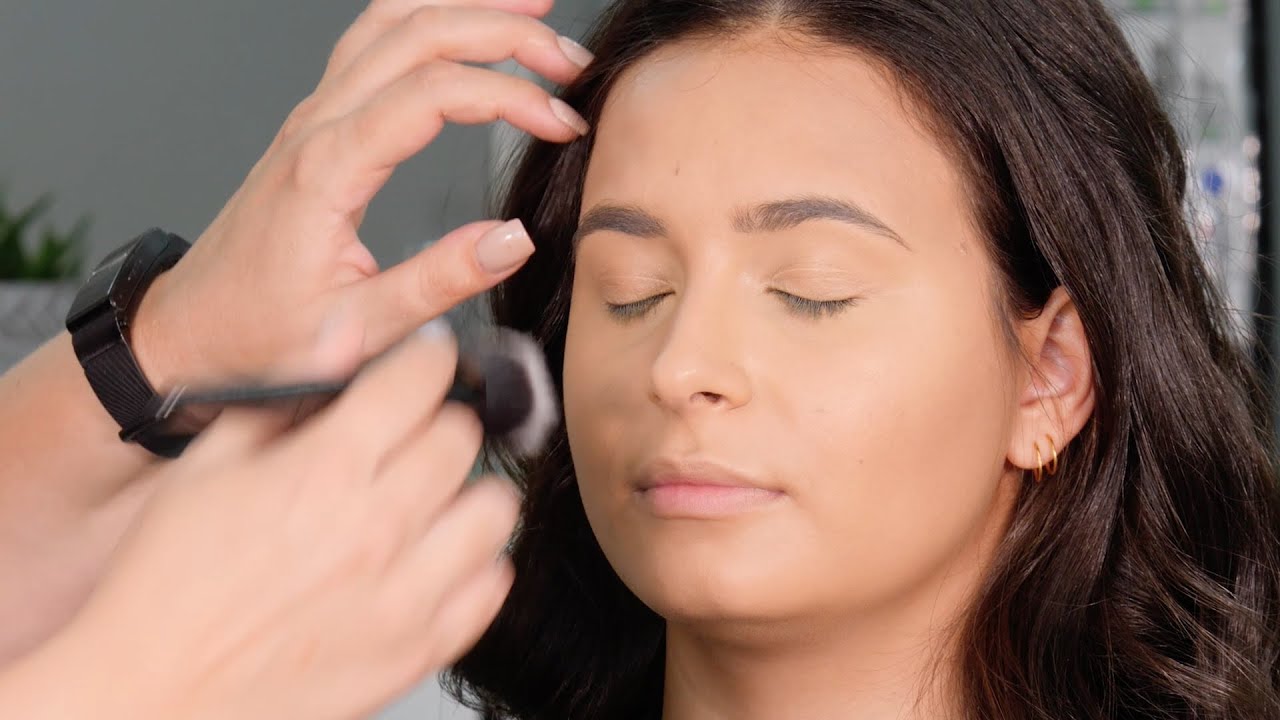
Powder goes on after every cream and liquid product and before any powder color. Load the tool lightly, tap off the excess, press the powder onto the zones that shine or crease, then sweep away what didn’t sink in.
- Finish foundation, concealer and any cream blush or cream contour.
- Press a puff into the loose powder, or dip a fluffy brush into the lid.
- Fold and rub the puff halves together to work the powder in (or tap the brush against the lid).
- Tap off the excess on the back of your hand.
- Press and roll the puff over the T-zone, under the eyes, around the nose and on the chin.
- Sweep a clean fluffy brush across the whole face to lift loose powder.
- Add powder blush, bronzer and highlighter, then finish with setting spray.
Laura Mercier’s directions put setting powder after any creamy formula, cream blush included. Maybelline adds that makeup artists powder first and dust on powder blush or bronzer afterward, which gives the color a smooth base to cling to.
Powder only sets what sits under it, so how you blend your concealer decides how much powder the under-eye area needs.
A puff or damp sponge presses powder into the skin for a matte, soft-focus finish, and it gives you tighter control over how much goes on. That makes it the better pick for spots where makeup moves first. Everywhere else a fluffy brush is enough, since it leaves a sheer veil.
Makeup artist Robert Sesnek, quoted by Makeup.com, recommends following powder with a couple of light mists of setting spray to take away the powdery finish. If the face still looks floury, mist a setting spray over the top and let it dry.
Puff, Kabuki Brush, Fluffy Brush or Damp Sponge: Which Tool Fits Which Area?

Each tool deposits a different amount, so the tool matters about as much as the formula. Puffs press and fluffy brushes dust. Kabuki brushes buff larger areas. A damp sponge is what you reach for in tight spots.
| Tool | Best for | Finish | Main risk |
|---|---|---|---|
| Puff | Under eyes, T-zone, baking | Matte, soft-focus | Leaves visible powder if not tapped off |
| Kabuki brush | Pressing and buffing larger areas | Even, medium veil | Drags the base if swept hard |
| Fluffy brush | All-over dusting, sweeping off excess | Sheer, natural | Weak hold on oily zones |
| Damp sponge | Nose, inner corners, small zones | Dense, smooth | Streaks if too wet |
Laura Mercier designed its Velour Puff for loose translucent powder. The usage notes say you should never see the powder go on, and the result is soft-focus skin with a matte finish.
Puffs hold oil and old powder, so wash them. Laura Mercier says the Velour Puff takes mild soap by hand or a machine wash in a lingerie bag, and the basics of cleaning powder puffs apply to any cotton one.
Under the eyes I’d pick a puff every time. For a quick all-over veil, a brush is faster.
Beautyblender’s directions say to wet the sponge until it expands, squeeze out the excess water and bounce it on, and the brand states it works with powders. That bouncing motion is the same one used when applying makeup with a sponge, so the habit carries over.
Maybelline’s baking directions follow the same logic for crease-prone spots. Press a thick layer on after concealer, let it sit for a few minutes, then remove the excess with a brush.
How Much Translucent Powder Goes on Each Part of the Face?
Use a thin layer you can’t see, heaviest where skin shines or makeup creases and lightest on the cheeks. Laura Mercier’s own usage notes put the test simply. If you can see powder going on, you’re using too much.
Under the eyes
Less than you think.
RMS Beauty’s directions favor a puff for controlled application, since puffs tend to deposit less powder than a brush, and tell you to apply lightly.
Moisturize the area before concealer. Then tap the puff nearly clean and press, never drag.
Dry under-eye skin shows powder first, so good prepping of skin before makeup does more here than extra product.
T-zone, nose and chin
The forehead holds 400 to 900 sebaceous glands per square centimeter, according to a stratum corneum lipidome study in PubMed Central. A separate clinical study of acne patients and controls found sebum levels higher in the T-zone than on the cheeks.
On the forehead, press across the center first and then work outward. The nose needs powder worked into the sides and around the nostrils. The chin gets a single pass, because powder builds up fast on such a small area.
Those match the zones Lunar Beauty’s baking directions name, which are under the eyes, the T-zone, the sides of the nose and the chin.
Cheeks and smile lines
Cheeks need the least powder, and on dry skin they can skip it.
The same clinical data that put more sebum in the T-zone put less on the cheeks, so one light sweep of a fluffy brush covers them.
Smile lines collect powder, so go lighter there than anywhere else. Press with a nearly clean puff and stop.
Should You Bake With Translucent Powder?

If you have oily skin, a long day ahead or a full-coverage base, bake. On a normal day a light pressed layer sets makeup without the extra weight.
Max Factor describes baking as letting translucent powder sit on foundation and concealer for a few minutes while the heat of your skin sets the formulas.
How long to bake translucent powder
Sources disagree on timing.
Vogue Singapore, citing makeup artist Marc Teng, says to let the powder sit 5 to 10 minutes before dusting off with a fluffy brush. L’Oreal Paris says to lay the powder on very thick across the forehead, under the eyes and on the chin, then sweep off the excess. Huda Beauty’s Easy Bake directions call for a generous layer under the eyes, on the T-zone, laugh lines, outer corners of the mouth and chin, left to bake 3 to 5 minutes before dusting away.
Start at the short end with less powder, then extend only if the base still creases. That order is safer because you can add minutes but cannot take powder back.
Pros and cons of baking
Baking holds concealer in place under the eyes and controls shine on oily skin longer than a light dusting does. It also leaves a blurred, smooth surface.
The downsides are real, though.
- It looks heavy on dry or textured skin
- Powder settles into lines and pores
- It adds minutes to the routine
- Huda Beauty’s flashback guide says silica-based powders flash back, especially when baked
A thin press gives a natural finish with less product, though it protects less against creasing under heavy concealer.
Loose or Pressed Translucent Powder: What Changes in Application?

Loose powder gives you finer control, which is why it suits baking and dusting. Pressed carries more binder. It travels well, so it’s the one for touch-ups.
Loose versus pressed
Loose powder has fine particles and a small binder load, and it’s easy to meter by tapping the puff. It’s also dusty, so it stays home.
Pressed powder holds its particles together with binder and fits in a bag for midday touch-ups. You need a puff, sponge or brush to lift it, and the surface hardens with repeated puff contact.
Cosmetics & Toiletries, a trade journal for formulators, reports that pressed powders contain significantly more liquid binder than loose ones. A US patent on pressed powder describes the surface matting down and hardening under constant puff contact.
Choosing between them is the same call as picking a setting powder in general. Loose stays on the vanity and does the baking, and pressed goes in the bag.
Base ingredients and finish
Silica soaks up oil and scatters light for a blurred matte finish, and Cosmetics & Toiletries lists it as an anti-caking addition to loose powders. Talc is the most important single component of pressed powders, valued for slip, spreadability and some coverage (Journal of the Society of Cosmetic Chemists, 1971).
Talc-free loose powders usually start from mica, alongside sericite, according to SpecialChem’s formulation guide. Rice starch and cornstarch turn up in loose powders that showed no noticeable flashback in Lab Muffin Beauty Science’s tests.
Talc has a dated regulatory footnote. The FDA proposed mandatory asbestos testing for talc-containing cosmetics on December 27, 2024, then withdrew the proposal in a Federal Register notice on November 28, 2025.
The agency said it will issue a new proposed rule under the Modernization of Cosmetics Regulation Act of 2022, so as of the withdrawal no federal standardized test method rule was in place. Shoppers who prefer to avoid talc can check the label, and Hourglass lists its Veil Translucent Setting Powder as formulated without talc.
Adjusting Translucent Powder for Oily, Dry and Mature Skin
Oily skin takes the most powder and dry or mature skin takes the least. Deeper skin tones need a check for white cast.
Oily and combination skin
Silica earns its place here. Michelle Wong, the chemistry PhD behind Lab Muffin Beauty Science, says silica powder can go under liquid makeup when oil control is the goal, because that placement removes the white reflection.
Then set on top with a light press of regular translucent powder. Two thin presses beat one heavy layer, and you only need to re-press the zones that shine.
Dry and mature skin
Too much powder is one of the most common makeup mistakes on mature skin, according to makeup artist Laura Geller, as reported by Prevention. It clings to dry patches and settles into fine lines.
Geller’s prep is moisturizer followed by a hydrating primer, which she says creates a smooth barrier so makeup sits on top of the skin instead of sinking into lines. Hydrating, creamier complexion products move with the skin instead of settling into lines too.
Powder gets used sparingly and only where you need it. On dry skin that means very specific areas such as the eyelids or the center of the face (Clarins).
Makeup artist Natalie Dresher recommends By Terry Hyaluronic Hydra-Powder for mature, dry skin because you need very little of it and it does not dry out the skin.
If your skin runs dry, applying makeup on dry skin starts with the layers under the powder, so get those right before adding more.
Deeper skin tones
RMS Beauty says its translucent powder suits every skin tone and leaves no white residue. Makeup.com is less sure. It notes that an all-over layer can leave a subtle white cast or flashback, and that a tinted shade suits some complexions better.
The disagreement mostly comes down to wording. Pigment-free isn’t the same as invisible, because the particles that blur skin still reflect light.
Makeup artist Sesnek, quoted by Makeup.com, blends the lightest translucent shade with a yellow and a neutral powder to match each client’s tone for baking and highlighting.
If the powder leaves a gray film in daylight, switch to a shade close to your skin. If it only shows in flash photos, use less and test again.
Why Translucent Powder Looks Cakey, Creases or Flashes Back
All three problems start with too much product in the wrong place, and flashback adds an ingredient cause on top. Fix the amount and the zone first, then check the formula.
| Problem | Usual cause | Fix |
|---|---|---|
| Cakey finish | Too much powder, excess left on the puff | Tap off, sweep with a clean brush, mist setting spray |
| Creasing | Heavy concealer, slippery eye cream, powder over existing creases | Thin concealer layers, press powder only where it creases |
| Dry patches | Powder clinging to dry skin | Moisturize first, use less |
| Flashback | Silica-heavy powder or mineral SPF under direct flash | Use less, put silica under liquid makeup, test with flash |
Creasing usually traces back to the concealer, not the powder. Charlotte McHale, Clarins Training Manager, says concealer creases when you use too much of it.
Ulta’s beauty education team adds that powder makes an existing crease more noticeable, so press it only where the concealer creases, usually the inner corner and lower under-eye. MAKE Beauty says eye cream needs to absorb fully first, because a wet layer leaves a slippery base.
For the full routine, see this guide to preventing creasing under the eyes.
Flashback and SPF
Only 1 of the 9 powders Michelle Wong tested under flash for Lab Muffin Beauty Science showed severe flashback (2016, updated 2023).
That one was the It Cosmetics Bye Bye Pores Silk HD Anti-Aging Micro-Powder, which Wong says is more than 90% silica, like most HD powders.
Huda Beauty’s flashback guide says any powder listing silica carries a very strong chance of flashback, especially when baked. Wong’s results point to quantity instead. Innisfree No Sebum Powder lists silica first and did not flash back, probably because cornstarch sits second on the list.
So Huda Beauty blames the ingredient, while Wong’s data blames the amount.
SPF is the second disputed cause. Huda Beauty names zinc oxide and titanium dioxide as the SPF ingredients that make a white face much more likely, while Wong’s flash test of a CC cream with SPF 50 (9% titanium dioxide and 6.3% zinc oxide) showed little flashback after she dusted it with a flashback-free translucent powder.
Using less helps, since the flash returned scales with how much reflective powder sits on the skin. Silica under liquid makeup loses its white reflection. The most foolproof check, according to Wong, is a direct flash photo before the event.
Setting spray won’t rescue a flashing powder. It softens a powdery look but does not change silica flashback, and water hides it for a couple of minutes before it returns.
When translucent powder does not fit
Translucent powder sets makeup. Coverage and tone correction come from other products, and it won’t hydrate.
It won’t help if you need coverage or tone correction, which Makeup.com says translucent powder does not provide and assigns to tinted powder. A mostly silica powder is a bad bet when direct flash photography is coming. Dry, flaky skin is another case, where Geller points to hydrating, creamier products over more powder.
Most failures trace back to amount, so reduce that before changing products.
Translucent Powder FAQ
How is translucent powder different from setting powder and finishing powder?
Every translucent powder sets makeup, but not every setting powder is translucent, since translucent is the colorless type of setting powder. Finishing powders, especially silica-heavy HD ones, are meant to add blur after makeup is already set (Lab Muffin Beauty Science).
Is tinted powder the same as translucent powder?
No. Tinted powder carries pigment, so it adds coverage and corrects tone or redness, while translucent powder deposits no color. Makeup.com advises matching a tinted shade to your skin, because going too light cancels the brightening effect.
Does translucent powder work on bare skin without foundation?
Yes. By Terry describes its translucent Hyaluronic Hydra-Powder as usable on makeup-free skin, and RMS Beauty’s directions say to apply its translucent powder lightly, concentrating on the T-zone, to minimize shine.
It adds no coverage, so redness and dark spots stay visible.
Can translucent powder replace setting spray?
No. Powder sets cream products and absorbs oil, while a couple of light mists of setting spray take away the powdery finish (Sesnek, Makeup.com).
Apply them in that order, powder first, then the mist.
How do you touch up translucent powder during the day?

Press a small amount onto only the zones that shine, using a clean puff, instead of re-powdering the whole face. A pressed formula suits this best, since loose powder is dusty to carry.
Can you use translucent powder on eyelids or over lipstick?
Yes. L’Oreal Paris suggests a light layer on the upper lid before eyeshadow, which helps the shadow last without creasing.
For lipstick, hold a tissue over the lips and press the powder through it.
What to Change First When Translucent Powder Looks Wrong
Change the amount first. If that doesn’t fix it, move on to the zone, and only after that the tool or formula.
The order follows cost. Tapping off excess is free and repositioning takes one pass, while a new puff or formula costs money.
Test each change under the light it will face. Huda Beauty’s ingredient rule and Lab Muffin’s quantity result both predict flashback, and only a direct flash photo shows which one applies to your powder.
Using less powder shortens shine control on oily skin, so accept a midday re-press of the T-zone as the price of a lighter base.
Once the powder sits right, making your makeup last all day is the natural next step.

She started writing on the site after fielding the same questions from clients and friends often enough to just write the answers down: which red won't turn orange on a warm undertone, how to keep lipstick from feathering into fine lines, why a "12-hour" formula rarely survives dinner.
Every review on the site follows the same rule she uses with paying clients: wear it first, then decide if it's worth recommending.
- How to Make Eyeliner Last Longer Without Smudging - August 31, 2026
- How to Make Eyeshadow Last Longer All Day - August 29, 2026
- How to Find Your Undertone in 5 Easy Steps - August 27, 2026