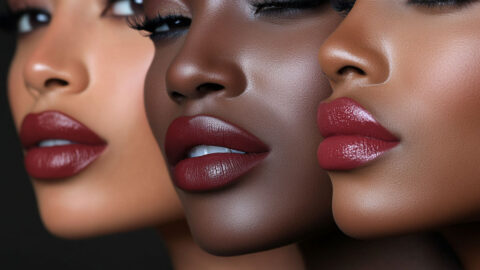
Matte lipstick doesn’t shine. That’s the entire point of the formula.
Where a glossy lipstick or lip gloss leans on oils and emollients for that wet-look finish, matte lipstick strips most of that out. Silica or wax takes over instead, locking pigment onto the lips without reflecting light.
That one change in formula explains a lot. Matte finish reads bolder in photos, holds its color through a meal, and skips the constant touch-ups a glossy lip color demands.
Shade range used to be the tradeoff. Not anymore.
Brands like MAC Cosmetics, Maybelline, and Charlotte Tilbury now build entire lines around this one finish, covering everything from a soft nude lipstick to a full-on matte red.
There’s a catch, though.
Dry lips notice a heavy matte formula almost immediately, and without the right lip primer or lip liner underneath, even a well-pigmented lipstick can crack by afternoon.
What Is Matte Lipstick
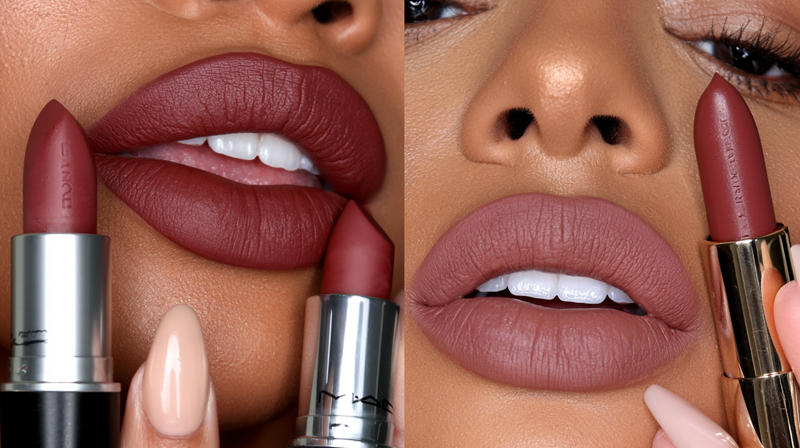
Flat. No sheen at any angle, no wet look, nothing bouncing back at the camera. You get there with a heavy pigment load plus fillers that scatter light instead of reflecting it, and the trade you make is a finish that outlasts nearly every other lip texture.
Half of the work is subtraction, though.
Pull the shine esters and reflective oils out of a standard bullet, pack in pigment and absorbent powder, and the color reads flat under any light you put it in.
Several market research firms, including Credence Research and Coherent Market Insights, identify matte as the leading finish within the lipstick category, driven by demand for bold, long-lasting wear. Methodology changes the answer, though. Grand View Research put shimmer ahead of matte on revenue share in 2024, so “matte dominates” is a directional claim, not a settled number.
What Makes a Lipstick Matte Instead of Glossy
Pigment does most of the heavy lifting. Enough of it to cover your natural lip tone in one pass, which is why a matte shade almost always reads stronger than the same color in a cream. From there the oils and esters that would produce shine get cut back to near zero, and silica and clay fillers flatten whatever reflectance survives that.
Glossy formulas run the same process backwards. Stack emollients, add reflective particles, throw the light back at whoever is looking.
Matte Finish Versus Matte Format
Finish describes what the color looks like once it is on your face.
Format is a completely different axis: bullets, liquids, pencils, mousses. Two products in the identical shade with the identical finish can feel nothing alike, and that catches people out constantly. Shopping by finish alone tends to get you the wrong product, because format is what decides comfort, wear, and how much your application technique matters.
The broader categories of lipstick available today split along both axes.
What Ingredients Are in Matte Lipstick

Turn a tube over and you’ll find pigments, light-diffusing fillers, structural waxes, and in the liquid versions, film-forming polymers suspended in a volatile solvent. Silica and kaolin absorb oil to kill shine. Isododecane evaporates on contact and leaves the pigment locked under a dry polymer film.
Formulation is where matte earns its reputation, good and bad.
The same chemistry that delivers the long wear also strips surface moisture while it sets. That tradeoff does not go away entirely in any version of the product, no matter what the box says.
Anyone comparing what goes into a lip color formula across finishes will spot the pattern quickly. Matte runs high on powder and low on oil.
Pigments and Fillers
Color comes from iron oxides, titanium dioxide, D&C Red 7 lake and carmine, which between them give full opacity in a single layer. The mattifying side of the formula runs on silica, kaolin clay, sericite, alumina and nylon-type polymers, all of which pull oil and scatter light.
Mica gets removed or minimized in true matte formulas because it adds sheen. It still turns up low on the ingredient list of plenty of products sold as matte, Kylie’s Matte Liquid Lipstick and Maybelline’s Super Stay Matte Ink included.
Film Formers in Liquid Matte Formulas
Trimethylsiloxysilicate is the workhorse film former in long-wear liquid lipstick, dissolved in isododecane as the volatile carrier.
You can read the priority straight off the ingredient lists. Fenty’s Stunna Lip Paint opens with isododecane, dimethicone, and trimethylsiloxysilicate. Kylie’s Matte Liquid Lipstick leads with isododecane. Maybelline’s Super Stay Matte Ink leads with dimethicone, trimethylsiloxysilicate, and isododecane, plus a second silicone resin, C30-45 alkyldimethylsilyl polypropylsilsesquioxane. In every case the solvent and the resin sit at the top, ahead of the pigment.
Once the isododecane flashes off, the polymer network stays behind. That thin, flexible layer is the reason the color does not transfer.
Ingredients Matte Formulas Leave Out
Castor oil, lanolin and high-shine esters get cut or heavily reduced. They are exactly what cream and satin formulas depend on.
Comfort-matte formulas started putting a limited emollient load back in around 2019, when MAC launched Powder Kiss. Vitamin E, squalane, jojoba and hyaluronic acid now show up across most velvet and powder-matte launches.
How Matte Lipstick Differs From Satin, Cream, Gloss, and Sheer Finishes

Line the finishes up by shine level and the order runs matte, satin, cream, sheer, gloss. Wear time runs the other way. Matte gives you the most opacity and the longest hold, and asks for the most tolerance in return.
The relationship is inverse and pretty consistent. More shine means more oil, more oil means the color breaks down faster.
| Finish | Shine | Opacity | Typical Wear | Comfort |
|---|---|---|---|---|
| Matte | None | Full | 4 to 6 hours (bullet), 8+ (liquid) | Lowest |
| Satin | Low sheen | Medium to full | 4 to 5 hours | Moderate |
| Cream | Medium | Full | 3 to 4 hours | High |
| Gloss | High | Low | 1 to 2 hours | Highest |
| Sheer | Medium | Low | About 2 hours | High |
Those wear figures are practical estimates. Brand claims run considerably higher than what most people actually log in real conditions.
Matte Versus Satin
Satin formulas carry a soft, low-level sheen from a modest emollient load, which keeps them wearable without tipping into shine.
Satin also glides over texture. Matte grips it, and that is why every lip line you have reads more visibly under a flat finish.
For an attribute-by-attribute breakdown, the comparison between these two finishes covers wear, payoff and application.
Matte Versus Cream and Gloss
Cream gets you the same full opacity, but it is built on emollients, so it fades patchy somewhere around the 3 to 4 hour mark. Cream lipstick trades wear time for comfort in a straight swap.
Gloss is barely the same product. Gloss delivers shine and slip with minimal pigment and about 90 minutes of wear before you are reaching for it again.
Sheer formulas sit closer to gloss than to matte. They tint rather than cover.
Where Velvet and Soft Matte Sit
Velvet matte, soft matte and powder matte are real hybrids, not just marketing labels stuck on the same base.
Each one keeps the flat optical finish and adds back enough emollient to avoid the tight, papery set of a hard liquid matte.
MAC’s Powder Kiss line is the clearest example of the shift. Powder Kiss Liquid Lipcolour is sold as a moisture-matte with a whipped, mousse-like texture, blended with vitamin E and emollients, claiming 10 hours of wear and moisture at roughly $26 to $27. MAC’s Retro Matte Liquid Lipcolour, around $24, sits at the harder end of the same category and makes no comfort promises.
What Are the Types of Matte Lipstick
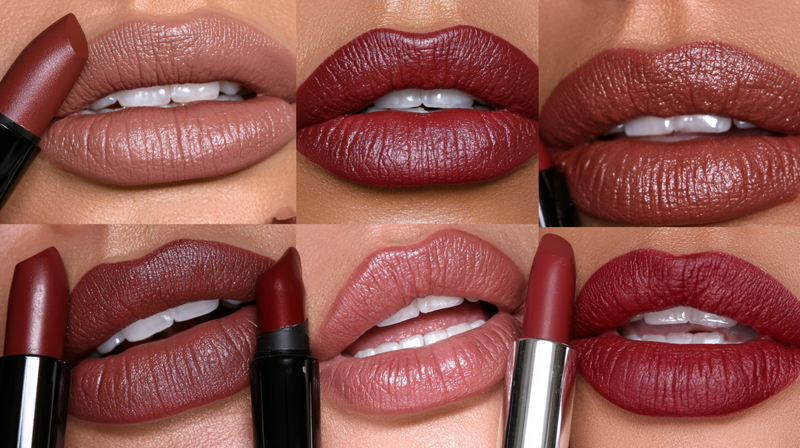
Bullets, liquids, crayons, mousses and stains all come in matte. Bullets are wax-based and forgiving, liquids set into a hard polymer film and wear longest, and the rest land somewhere between those two poles.
Format matters more than shade for how the thing performs on your lips. Obviously the color is the part you shop for, but the format is the part that decides whether you’re happy at hour six.
| Format | Base | Best For | Weak Point |
|---|---|---|---|
| Bullet | Wax and pigment | Touch-ups, forgiving application | Moderate transfer |
| Liquid | Volatile solvent and film former | All-day wear, events | Emphasizes flaking |
| Crayon | Soft wax stick | Precision plus color in one step | Needs sharpening |
| Mousse | Whipped emulsion | Blurred edge, soft focus | Lower opacity |
| Stain | Water or gel base | Even fade, textured lips | Hard to build |
Bullet Matte
The original format, and still what most people picture when they hear matte lipstick.
MAC Ruby Woo launched in 1999 as part of the Retro Matte line. Fashionista reports seven tubes sell worldwide every minute, though MAC’s own marketing has quoted a lower figure of four per minute. NPD Group data named Ruby Woo the top-selling US lipstick shade of 2013, in a year when Americans spent $377 million on lipstick.
Because the structure is wax, a bullet stays workable once it is on. Layer it, blot it, rebuild it.
Liquid Matte
Kylie Cosmetics launched on November 30, 2015 with just 5,000 units per shade at $29 across three shades (Dolce K, Candy K and True Brown K) and sold out within seconds, per WWD.
That launch dragged liquid matte into the mainstream in about a week. Liquid lipstick applies wet from a doe-foot applicator and dries down to a set film in roughly one to three minutes, depending on the formula.
Current formulas claim 8 hours (Kylie Matte Lip Kit) up to 16 hours (Maybelline Super Stay Matte Ink, across 36 shades).
Crayons and Mousses
Crayons give you liner precision with lipstick payoff. Mousses whip air into the base for a lighter, blurred edge.
Matte Stains
Lip stain binds pigment to the outer keratin layer instead of sitting on top of it, which is why it fades evenly rather than patching.
How Long Matte Lipstick Lasts
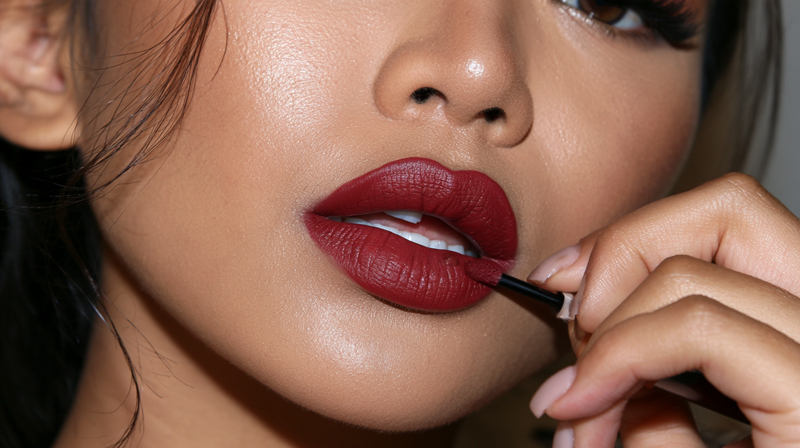
In practice, anywhere from 4 to 12 hours, and format is what moves the number. Bullet matte holds 4 to 6 hours. Liquid matte gets to 8 or beyond once the film has set, against brand claims of up to 16. Stains fade evenly past the 8-hour mark. One oily meal cuts all of those figures substantially.
| Format | Realistic Wear | Transfer Level |
|---|---|---|
| Bullet matte | 4 to 6 hours | Moderate |
| Liquid matte | 8 to 12 hours | Minimal after set |
| Matte stain | 8 hours plus | Near zero |
Independent testing backs the durability claims, with caveats. A reviewer at Project Vanity testing Maybelline Super Stay Matte Ink found it so stubborn that micellar water and cleansing wipes would not move it at all, and it took three passes with baby oil to remove. Same reviewer called it an occasion product rather than an everyday one, purely because of how it felt after hours of wear.
Anyone chasing the outer limits of longevity will find the same variables covered under how long a liquid formula actually holds.
What Transfer Proof Actually Means
Transfer proof describes the state after the film sets. Not before.
Press your lips together during the set window and you break the film. That one mistake accounts for most of the complaints about products that transferred anyway.
The full set of variables behind a genuinely budge-proof lip starts with leaving the formula alone while it dries.
How Matte Wears Down
Matte fades from the center outward as friction wears through the film. Cream fails in a completely different way, breaking into patches.
The annoying part is that matte does not touch up cleanly over a worn layer. Reapply on top and you get thickness and cracking, so blotting first is really the only fix that works.
Why Matte Lipstick Dries Out Lips
Volatile solvents take moisture with them as they evaporate during the set. There are no occlusive emollients in the formula to block water loss afterwards. And the absorbent fillers keep pulling natural oils the entire time you are wearing it. Lip skin happens to be badly equipped for all of that.
The anatomy explains most of it.
The lip’s stratum corneum averages three to five cell layers against roughly 15 to 20 on typical facial skin, and transepidermal water loss has been measured at roughly three times higher on the lip than on the cheek, per research summarized by Skin Inc. Lower ceramide content on the lip is the underlying reason.
Lips also have no sweat glands and few to no functional sebaceous glands. There is almost no built-in moisture supply to replace what a matte formula takes.
The Set Phase
Isododecane and any alcohol in the formula flash off inside one to three minutes, pulling surface moisture along with them.
That tight feeling you notice right after a liquid matte goes on is this step finishing.
The Wear Phase
Silica and kaolin do not stop working after application. They keep absorbing oil for the full duration.
Matte does not cause flaking. It reveals flaking you already had by stripping away the emollient layer that used to hide it.
Building a routine around chronically dry lips will change matte performance more than switching brands ever does.
What Fixes It
On the formula side, velvet, powder and comfort-matte versions with added squalane, vitamin E or hyaluronic acid.
On the routine side it comes down to timing rather than volume. Practical tactics for keeping lips comfortable underneath a flat finish are mostly about when the balm goes on, not how much of it you use.
How to Apply Matte Lipstick

Balm left on the lip breaks the film and causes patching, and that is the single most common way this goes wrong. Which makes step three below the one worth caring about.
- Exfoliate
- Hydrate
- Blot the balm off completely
- Line the lips
- Apply pigment in one thin pass
Maybelline’s own instructions for Super Stay Matte Ink specify starting with clean, dry lips for the best adhesion and color payoff, then letting the formula dry completely.
The complete sequence, including timing between steps, sits under the full matte application method.
Prepping the Lips
Exfoliate the night before, not five minutes beforehand. Fresh exfoliation leaves the surface raw and the matte will grip unevenly across it.
Hydrate, wait ten minutes, then blot the balm off with a tissue until nothing slides.
Gentle physical or enzymatic options for removing flakes without a commercial scrub work fine here.
Lining Before Color
Lip liner is a wax-based pencil that anchors the edge and stops pigment migrating into fine lines.
Matte bleeds less than cream. It still bleeds on lined or mature lips.
Standard techniques for stopping color from traveling past the lip border apply to matte without modification.
Applying Liquid Versus Bullet Formulas
With a liquid, one thin pass per lip, and never go back over a section that has started to set. Liquid formula technique is different enough from bullets that treating them the same way produces streaks.
Bullets want the opposite approach: apply, blot with tissue, apply a second layer. The blot takes off surface oil so the second layer sets deeper.
The Set Window
Hold your lips apart for two to three minutes after a liquid application. No pressing, no rubbing, no talking with your mouth closed. Maybelline’s guidance is simply to let the product dry, and the testers who rush this are the ones who report transfer.
Blotting Between Layers
Blotting works on bullets. It does nothing useful on liquids, which need to set undisturbed rather than get compressed.
How to Fix Common Matte Lipstick Problems

Patchy application, feathering, cracking, exaggerated flaking, uneven fade after eating. Every one of those traces back to prep, layer thickness or touch-up method rather than to the product.
Most people blame the formula. The formula is rarely the problem.
| Problem | Actual Cause | Fix |
|---|---|---|
| Patchy color | Balm residue on the lip | Blot fully before pigment |
| Feathering | No edge barrier | Liner or anti-feather pencil |
| Cracking | Layers applied too thick | One thin pass only |
| Visible flaking | Same-day exfoliation | Exfoliate the night before |
Patchy Application
What is happening is the product sliding on an oily surface instead of sticking to it.
Maybelline’s application instructions for Super Stay Matte Ink specify clean, dry lips for adhesion and color payoff, which is more or less an admission that balm underneath kills the film.
The second cause is double-passing a liquid that has already begun to set.
Feathering and Bleeding
Matte bleeds less than cream, but a flat finish makes whatever migration does happen extremely obvious.
Fenty markets Stunna Lip Paint on precisely this point, claiming no immediate feathering from its precision wand format.
The fix is a clear anti-feather pencil first, then liner in the shade you plan to wear. Standard techniques for keeping color inside the lip border work here without adjustment.
Cracking and Tightness
Cracking comes from thickness, not dryness.
Three thin passes crack. One thin pass does not.
If a hard-set liquid still feels tight once the film has cured, switch format instead of fighting the formula. Velvet and comfort-matte options exist for exactly this complaint.
Uneven Fade After Meals
Oil is the enemy here. A greasy meal strips the center of the lip while the perimeter holds, which is the same lipophilic chemistry that makes oil cleansers the only reliable way to take these formulas off.
Blot the worn film first, then reapply a thin layer. Going straight over the old layer builds thickness and cracks inside an hour.
Practical tactics for getting through a meal without wrecking the lip matter more with matte than with any other finish.
Adding Shine Back
Some people want matte’s wear without matte’s flatness. Layering shine over a set matte base gets you both, as long as the film has fully cured first.
Extending Wear Further
Powder setting, liner underneath, blot-and-rebuild layering. They stack. The broader methods for stretching lip color across a full day apply to matte with better results than they get on cream.
How to Remove Matte Lipstick
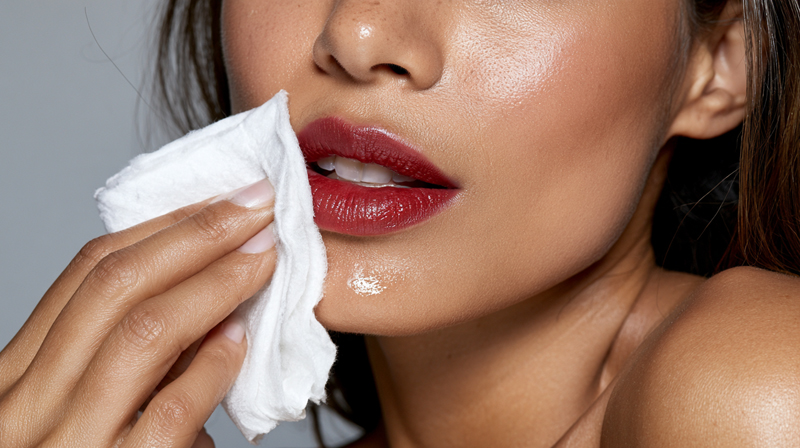
You need an oil-based cleanser, a cleansing balm, or micellar water with an oil phase in it. Water-based cleansers fail because silicone film formers do not dissolve in water. Saturate a cotton pad, hold it there for 30 seconds, wipe once.
Rubbing is the mistake almost everyone makes.
Friction pushes pigment into the lip line and irritates skin that is already dried out from a day of wear.
A reviewer at Project Vanity documented needing three passes with baby oil to fully lift Maybelline Super Stay Matte Ink, and reported that micellar water and cleansing wipes did not budge it at all.
Why Water-Based Cleansers Fail
Trimethylsiloxysilicate and dimethicone are the same ingredients making the film waterproof during wear.
A foaming face wash cannot break a silicone network. It just slides across it.
Cleansing oil, cleansing balm, or a biphase micellar formula you shake before use. Those work.
The Soak Method
Saturate a cotton pad. Press it flat against the lips and count to 30.
Wipe in one direction, outward from the center. Then take a fresh pad rather than reusing the same one.
The complete sequence for taking off a set matte film follows this order every time, whatever the brand.
Stains That Stay Behind
D&C Red 7 lake and carmine leave tint on the outer keratin layer once the film lifts.
That residual stain fades on its own within a few hours. Scrubbing at it does more damage than waiting does.
Liquid formulas leave more stain than bullets, which is why liquid removal takes a different approach. For the most stubborn drugstore formula on the market, the specific method for stripping Super Stay Matte Ink covers what actually breaks it down.
Which Skin Tones and Lip Shapes Suit Matte Lipstick
Every skin tone, yes. Every lip shape, no. A flat finish reads more pigmented than the same shade in cream, so shade selection shifts lighter than you would expect. Matte also reduces perceived volume, which favors full lips and works against thin ones.
Undertone matters more than depth.
| Undertone | Reds | Nudes |
|---|---|---|
| Cool | Blue-red, berry | Pink-nude, rose-taupe |
| Warm | Orange-red, brick | Peach-nude, caramel |
| Neutral | True red | Beige-nude, soft mauve |
Charlotte Tilbury built a whole product line on this principle. Matte Revolution in Pillow Talk launched in 2017 as a pinky-nude designed to shift with the wearer’s natural lip tone, and the brand cites NPD Group data ranking it the number one lipstick in the UK luxury makeup market for the January to December 2020 period, measured on prestige lip colour value sales by item.
Matching Shade to Undertone
Cool undertones take blue-based reds and pink-nudes without going ashy.
Warm undertones handle orange-red and brick far better than anything blue-based.
The shade families under cool undertone lip colors and warm undertone lip colors transfer directly to matte, with one adjustment. Go one step lighter than you would in cream.
Matte on Full Versus Thin Lips
Full lips are a strong pairing, since flat pigment defines the shape without softening the edge.
On thin lips matte visually shrinks what is already there. A soft matte with a gloss dot in the center puts back the dimension that a hard matte takes away.
Shape-specific approaches for building fullness with color placement get you most of the way there.
Mature and Lined Lips
Hard-set liquid matte settles into vertical lines and stays there for the rest of the day.
Velvet and satin-matte formulas beat it by a wide margin on textured lips. Charlotte Tilbury’s Matte Revolution formula, which lists vitamin E and emollient esters among its conditioning ingredients, targets this group specifically.
Shade Selection by Depth
Fair complexions read better with soft reds and pink-nudes. Matte shade picks for fair skin avoid the washed-out effect that deep shades create.
Deep Skin Tones
Rich berries, brick reds and true browns hold their pigment without going muddy. Matte options for deep complexions favor saturation over softness.
Nude and Brown Families
Nude matte shades and brown matte shades both need undertone matching or they drain the face. The full matte shade range covers where each family lands.
Which Brands Made Matte Lipstick Popular
MAC Retro Matte in 1999, then the Kylie Lip Kit in 2015, then Charlotte Tilbury’s Pillow Talk Matte Revolution and Fenty’s Stunna Lip Paint, both in 2017. Each one pushed the category somewhere different.
| Launch | Year | What It Changed |
|---|---|---|
| MAC Retro Matte | 1999 | Made bullet matte a category |
| Kylie Lip Kit | 2015 | Mainstreamed liquid matte |
| Pillow Talk Matte Revolution | 2017 | Pivoted toward comfort-matte |
| Stunna Lip Paint | 2017 | Pushed universal shade design |
MAC and the Retro Matte Era
Ruby Woo was an accident. MAC’s developers were reformulating Russian Red for global compliance and the matte version came out of that process.
NPD Group data named it the best-selling US lipstick shade of 2013, in a year Americans spent $377 million on lipstick, and Fashionista reports seven tubes still sell globally every minute.
MAC’s Ruby’s Crew expansion arrived in September 2021 and added Powder Kiss Lipstick, Powder Kiss Liquid Lipcolour and Retro Matte Liquid Lipcolour alongside the original bullet, priced roughly $19 to $27. Only the Powder Kiss formulas are moisture-matte. The Retro Matte liquid is not, and people buying the set sometimes miss that. Ruby Woo has since been folded into the Macximal Silky Matte line as well.
Kylie Cosmetics and the Liquid Matte Boom
November 30, 2015. Five thousand units per shade at $29, across three shades, per WWD. Sold out within seconds, and then roughly six months went by before the next production run.
Production scaled to 500,000 units across six shades by the following Valentine’s Day. The current Matte Lip Kit sits at $35 with an 8-hour wear claim on the liquid lipstick and 24-hour wear on the liner.
Charlotte Tilbury and the Comfort-Matte Pivot
Matte Revolution proved flat finish and comfort were not mutually exclusive, which is more or less what the whole category had assumed until then.
Charlotte Tilbury reports one Pillow Talk Matte Revolution lipstick sold every two minutes based on global sales figures, and one Matte Revolution lipstick in any shade sold every 30 seconds.
The formula runs vitamin E, emollient esters and orchid extract through a matte base, with a 10-hour wear claim. That combination became the template for velvet-matte launches across the category.
Fenty and Shade Range Expansion
Stunna Lip Paint launched in late 2017 in one shade, Uncensored, positioned as a universal red with a 12-hour hold and a soft matte finish rather than a hard one.
The line now runs 7 shades at $24 in a 4 ml fluid format with a precision wand.
Fenty Beauty as a brand launched on September 8, 2017 and hit $100 million in sales within 40 days, then roughly $570 million in its first full year. Forbes valued the brand at $2.8 billion in 2021.
Mass-Market Benchmarks
Maybelline Super Stay Matte Ink set the drugstore standard with 36 shades and a 16-hour wear claim at roughly $9 to $12.
Where the Category Sits Now
Hard matte peaked. Velvet, powder and moisture-matte formulas dominate current launches at every price band.
What Matte Lipstick Costs

Roughly $6 to $70, and the tier tells you most of it. Drugstore formulas run $6 to $12, mid-market prestige lands at $20 to $30, luxury starts around $35. Pigment grade, film former quality and comfort additives account for most of the gap.
Price and performance correlate loosely at best.
| Tier | Approximate Range | Examples |
|---|---|---|
| Drugstore | $6 to $12 | Maybelline, NYX, Revlon, e.l.f. |
| Mid prestige | $20 to $30 | MAC, NARS, Fenty, Urban Decay |
| Luxury | $35 and up | Charlotte Tilbury, Tom Ford, Dior, Chanel |
Prices move with promotions, size and market, so treat these as bands rather than fixed figures.
What the Price Difference Buys
Finer pigment milling produces smoother payoff in a single pass, and that is a real difference you can feel. Comfort additives like squalane, vitamin E and hyaluronic acid raise formulation cost too.
Then there is packaging. Weighted metal components add several dollars per unit and do absolutely nothing for how the lipstick performs.
Where Drugstore Matches Prestige
Wear time is the one metric where mass-market formulas compete head-on.
Maybelline’s 16-hour claim beats most prestige liquid formulas, including Fenty’s 12-hour and Charlotte Tilbury’s 10-hour claims, and independent testers regularly report it surviving meals.
What drugstore does not match: shade range depth on some lines, comfort on textured lips, and batch-to-batch consistency.
Cost Per Wear
A 3 g bullet gives you roughly 100 applications. A 4 to 5 ml liquid tube gives you 40 to 60.
So a $24 MAC bullet works out around 24 cents per wear, while a $24 Fenty Stunna Lip Paint at 4 ml lands closer to 50 cents.
Liquid formulas cost more per use and last longer per application, which for most people cancels out.
Market Context
Circana reported US prestige beauty at $36 billion in 2025, up 4 percent, against $72.7 billion in mass retail, up 5 percent. Makeup remained the largest prestige category, and lip liner and other lip products were among the top gaining segments.
Both channels grew. The mass side moved more units while prestige moved more dollars, which is why the $8 tube and the $50 tube keep coexisting without either one killing the other.
Anyone weighing tiers against actual results will find the tradeoffs laid out under which matte formulas perform best. On the technique side, wearing matte well matters more than what you paid for the tube.
FAQ on What Is Matte Lipstick
Is matte lipstick bad for your lips?
Not inherently. A matte lipstick without hyaluronic acid or vitamin E dries out lips faster than a cream lipstick, but formulas from Charlotte Tilbury and Anastasia Beverly Hills now blend in jojoba oil to offset that. Skin type decides the real impact.
Does matte lipstick expire?
Yes. Most matte lipstick lasts 12 to 18 months once opened, shorter than sealed cosmetics due to repeated air exposure. A change in smell, texture, or color signals it’s time to toss the bullet lipstick.
Can you make a glossy lipstick matte?
Pressing translucent powder over a cream lipstick or lip gloss cuts the shine and mimics a matte finish. It won’t match the pigment load of an actual matte formula, but it works in a pinch.
Why does matte lipstick feel drying compared to other formulas?
Silica and wax replace the oils found in glossy lipstick, which is what kills the shine. That same swap removes moisture, so lips feel tighter unless a lip primer or lip balm goes on first.
What ingredients actually make a lipstick matte?
Silica, kaolin clay, and high ratios of wax to oil are the core drivers. Carnauba wax adds structure, while pigment concentration stays high so color pays off without needing a glossy topcoat.
Is matte lipstick better suited to oily skin?
Generally, yes. Oily skin breaks down glossy lipstick and lip gloss faster, while a matte finish resists that shift. Dry or flaky lips need a lip liner and lip primer first, regardless of skin type.
Do dermatologists consider matte lipstick safe for daily use?
Most matte lipstick sold through Sephora and Ulta Beauty meets FDA cosmetic standards, so it’s safe for regular wear. A dermatologist would still flag frequent reapplication on already chapped or cracked lips.
What’s the actual difference between matte lipstick and liquid lipstick?
Matte lipstick usually comes as bullet lipstick in a twist tube. Liquid lipstick applies with a wand and often dries into a matte finish anyway, but the two use different delivery formats and wear times.
Can vegan or cruelty-free brands make a true matte finish?
Yes. NYX Professional Makeup and Fenty Beauty both build cruelty-free matte lipstick lines without beeswax, using plant-based waxes instead. The finish and lasting power match traditional formulas closely.
How do you remove matte lipstick without stripping the lips?
Oil-based makeup remover or straight castor oil breaks down matte lipstick better than soap and water. Rubbing dry cracks skin already stressed by a drying formula, so a gentle wipe works best.
Conclusion
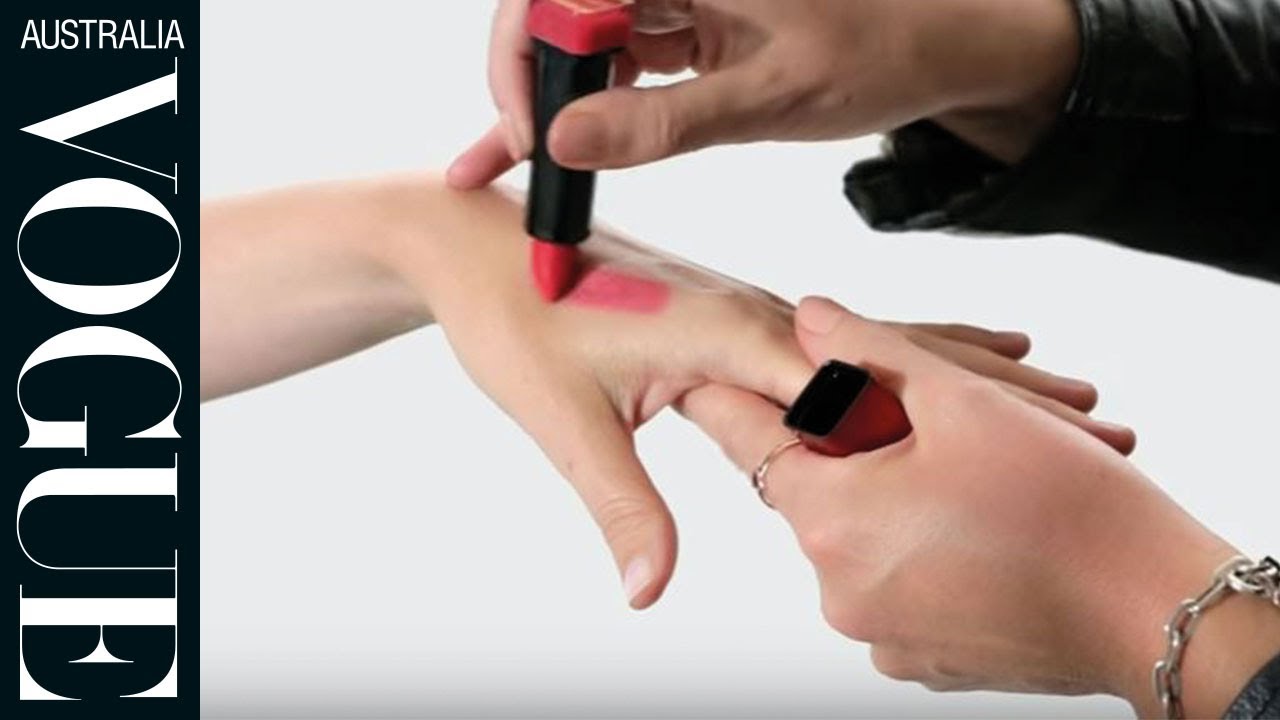
Anyone still asking what is matte lipstick and how to actually buy one should skip the shade wall first. Test the formula on the back of your hand before matching a color.
Pigmented lipstick and drying lipstick look identical sitting in a bullet lipstick tube. Only one behaves once it’s on.
If lips already flake, skip a heavy liquid lipstick with a high alcohol base. Reach for a hydrating matte formula from Fenty Beauty, Huda Beauty, or NYX Professional Makeup instead, and pat on a vitamin E balm underneath.
Shade range means nothing if the cream lipstick underneath it cracks by noon.
Build the routine before chasing the shade. That single order, formula first, color second, saves more return trips than any swatch chart ever will.

She started writing on the site after fielding the same questions from clients and friends often enough to just write the answers down: which red won't turn orange on a warm undertone, how to keep lipstick from feathering into fine lines, why a "12-hour" formula rarely survives dinner.
Every review on the site follows the same rule she uses with paying clients: wear it first, then decide if it's worth recommending.
- How to Make Eyeliner Last Longer Without Smudging - August 31, 2026
- How to Make Eyeshadow Last Longer All Day - August 29, 2026
- How to Find Your Undertone in 5 Easy Steps - August 27, 2026