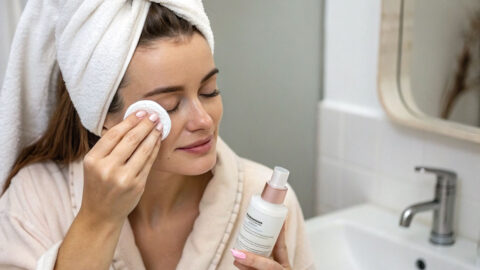
Plain water and a bar of soap are what most people grab when the remover runs out, and neither one gets through waterproof mascara. Removing makeup without makeup remover works fine as long as oil is part of it. Rub it into dry skin, wipe it off, then wash with a mild cleanser and lukewarm water.
Coconut, olive, jojoba, sweet almond and baby oil all dissolve makeup, and so do petroleum jelly and cold cream. Light, water-based makeup comes off with a cleanser alone. Waterproof and long-wear formulas won’t, so those get the oil.
Waterproof mascara contains no water, so only oil can solubilize it, dermatologist Zoe Diana Draelos wrote in Dermatology Times in 2018. Soap and water just leaves it sitting on the lashes.
How to remove makeup without makeup remover, step by step
Massage oil or balm onto a dry face, lift it off with a damp cloth or cotton pad, then wash with a mild cleanser and lukewarm water. It’s a double cleanse, just built from whatever is in the kitchen or bathroom.
- Wash your hands and take out contact lenses. Lenses come out before the makeup does, per Discovery Eye Foundation guidance from the Emory Contact Lens Service.
- Warm a small amount of oil, balm or cold cream between your palms and spread it over dry skin.
- Massage in slow circles for about a minute, skipping the eye area for now.
- Press a warm, damp cloth or cotton pad onto the skin, then wipe in one direction. Use a fresh section of the pad for each pass.
- Wet your face with lukewarm water, work a mild cleanser in with your fingertips and rinse.
- Pat dry with a soft towel and moisturize while the skin is still slightly damp.
The American Academy of Dermatology (AAD, 2019) limits face washing to twice a day plus after heavy sweating. A double cleanse counts as one session, so once a night is enough.
Why oil dissolves makeup
Oil breaks down oil-based formulas. Water can’t, which is why it gets nowhere with waterproof mascara.
Once the pigment is sitting in the oil, a water rinse carries it away. The oil cleansing method and double cleansing are both built on that idea, oil first, water-based cleanser second.
Waterproof makeup is usually oil soluble, according to an esthetician quoted by Makeup.com, so the same technique covers the whole face.
Tools that replace wipes
- Cotton pads for flat areas and the lids, one pad per pass
- A damp microfiber cloth, pressed onto the oil and lifted, never scrubbed
- Muslin cloth, a reusable cotton option that gets used the same way
- Lukewarm water, which is the temperature AAD recommends for washing the face
- Fingertips
Cloths are a point of disagreement. AAD says to apply cleanser with fingertips only, because washcloths and sponges can irritate skin, while another esthetician quoted by Makeup.com removes the massaged oil with a damp microfiber cloth.
For pressing and lifting oil, a cloth is fine. Skip it on sensitive or acne-prone skin, and wash whichever one you use every night.
Which household items dissolve makeup?

Oils and balms dissolve the makeup, and cleansers rinse it away. The oils are coconut, olive, jojoba, sweet almond and baby oil. Thicker options include petroleum jelly, Pond’s cold cream and a cleansing balm. For the rinse, Cetaphil Gentle Skin Cleanser, CeraVe Hydrating Cleanser or plain soap and water will do.
Oils

- Coconut oil melts waterproof mascara quickly but sits heavy on pores (skin type matters, more below).
- Olive oil is a pantry staple that handles eye makeup, though it feels greasy.
- Jojoba oil is one of the oils Draelos lists as commonly used in commercial cleansing oils.
- Sweet almond oil is mild, and an esthetician quoted by Makeup.com names almond oil as an option.
- Baby oil is mineral oil with fragrance added. It dissolves mascara but stings if the scent reaches the eye.
Any of them handles waterproof and long-wear formulas without scrubbing. The catch is the film every oil leaves behind, so a cleanser has to follow.
Balms and creams

Thick products do the same job as oil, only slower.
| Item | Pro | Con |
|---|---|---|
| Petroleum jelly | Melts waterproof mascara | Needs minutes of contact time, leaves a thick film |
| Pond’s cold cream | Cream emulsion that lifts makeup | Heavy residue unless rinsed well |
| Cleansing balm | Melts into oil on warm skin, rinses off | Technically a dedicated remover, so it only counts if you already own one |
Cleansers

AAD recommends a gentle, non-abrasive cleanser with no alcohol, applied with fingertips and rinsed with lukewarm water.
Cetaphil Gentle Skin Cleanser and CeraVe Hydrating Cleanser are common mild picks for this step. Check the label for drying alcohols.
Most skin can take a cleanser every day, and it handles light, water-based makeup without any help. It also does the second cleanse after an oil. Waterproof and long-wear formulas are where it falls short, since they leave residue behind.
CooperVision’s eye-health guidance notes that ordinary soap and water may not do the trick, especially on mascara.
Matching the substitute to the makeup you are wearing
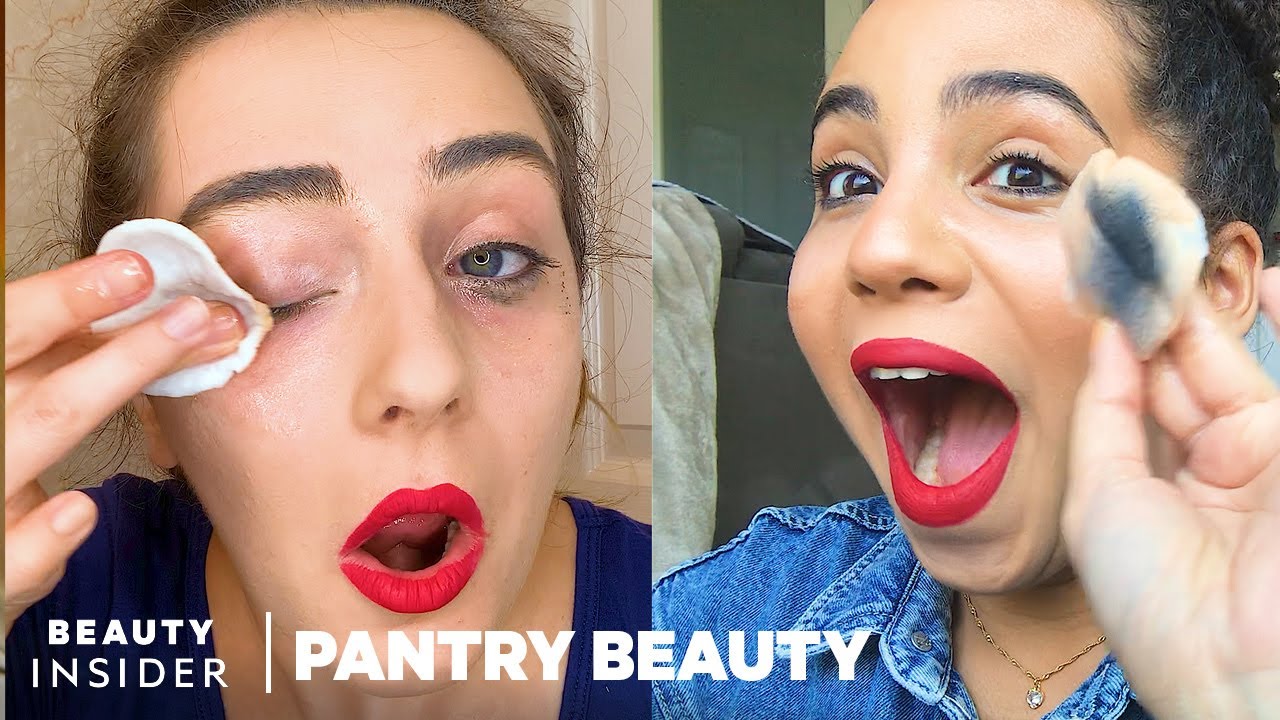
Light, water-based products need nothing more than a mild cleanser. Anything long-wear, waterproof or heavily pigmented needs an oil or balm step before it.
| Makeup | First choice | Backup | Follow-up |
|---|---|---|---|
| Everyday foundation, concealer, blush | Mild cleanser | Cold cream | Lukewarm rinse |
| Long-wear foundation | Oil, one-minute massage | Cleansing balm | Second cleanse at hairline and jaw |
| Matte or liquid lipstick | Petroleum jelly on a pad | Olive oil | Cleanser for leftover stain |
| Waterproof mascara, eyeliner | Coconut oil or petroleum jelly | Baby oil | Rinse lids, swab the lash line |
Foundation residue hides along the hairline, the jaw and around the nose. A damp cloth rarely reaches those spots, so look at them after the cleanser.
Matte formulas cling to dry lips. A dab of petroleum jelly softens the film, and this guide to getting matte lipstick off the lips covers more variations.
Liquid lipstick and stains settle into the lip lines, so go oil first, cleanser second, then repeat once. There is more on taking liquid lipstick off if the color survives two passes.
Say a cleanser is all you have. Do two passes in one session and leave waterproof eye makeup alone. With a single oil, treat it as step one, then rinse and wash. Petroleum jelly and cold cream follow the same order, except you wipe them off with a damp cloth first and strip what’s left with soap and water.
Removing waterproof mascara and eye makeup safely

Coat closed lashes with oil or petroleum jelly, give it time to loosen the formula, then press and sweep it off with a cotton pad and rinse the lids completely. Never rub or tug.
Method for waterproof mascara and eyeliner
Maybelline’s Expert Eyes Moisturizing Eye Makeup Remover lists mineral oil first, followed by isopropyl palmitate, lanolin oil and butylparaben. Its directions are to lightly press a slightly moistened cotton ball or tissue on the closed lid for several seconds, wipe, then rinse.
Plain oil follows that routine, and how long it sits depends on how thick the product is.
- Coconut, olive or castor oil needs 30 seconds to a minute (Stylist).
- Petroleum jelly takes about 5 minutes (Stylist).
- An oil-soaked pad over the closed eye needs a few minutes (Draelos, 2018).
Swipe downward from the base of the lashes, one pass per pad. Finish with a clean cotton swab along the lash line, which the American Academy of Ophthalmology (AAO) recommends for the last resistant debris.
For other waterproof formulas on the face and eyes, this guide to removing waterproof makeup goes through more options.
What is safe near the eyes
Petroleum jelly and plain coconut, olive or castor oil are all fine here. So is diluted baby shampoo, which NVision Centers says the AAO recommends for removing eye cosmetics. Scented baby oil is worth skipping if fragrance bothers your eyes, and so is any product with a label telling you to avoid eye contact.
The sources split on oils near the eyes. Stylist and Draelos favor oil for waterproof mascara, while Discovery Eye Foundation, citing the Emory Contact Lens Service, tells contact lens wearers to use mild soap and water and avoid oil or petroleum-based removers.
If you wear contacts, go with the stricter advice. Lenses come out first either way.
The AAO has one rule for any remover, which is to keep it out of the eye. Shadow and liner on the lids get the same press-and-lift, and a broader guide to removing eye makeup shows more tools for the job.
The AAO also says to take off all eye makeup before sleeping. Skip that and lid irritation is usually where it starts.
What works best for oily, dry, sensitive and acne-prone skin?
Dry skin handles oils and cold cream best. Oily and acne-prone skin does better with a mild cleanser, and sensitive skin does best with as few products as possible.
| Skin type | Lean toward | Skip | Why |
|---|---|---|---|
| Dry | Sweet almond oil, cold cream, cleansing balm | Foaming washes | Oil cushions skin that is already tight |
| Oily | Mild cleanser, two passes | Coconut oil, heavy balms | AAD advises against oil-based cleansers |
| Acne-prone | Cleanser route, oil only on the lashes | Coconut oil, scrubbing | AAD advises an oil-free remover |
| Sensitive | Plain cleanser, jojoba oil if needed | Scented baby oil, several new products at once | Patch test each item first |
How far the comedogenic scale goes
The comedogenic scale grades ingredients from 0 to 5 by how likely they are to block follicles. The grades trace back to the rabbit ear assay, in use since the mid-1950s, and the best-known ingredient list is the one James Fulton published in the Journal of the Society of Cosmetic Chemists in 1989.
Fulton’s own paper says it remains uncertain whether ingredients that score high in rabbit ears are always comedogenic in humans.
Consumer ingredient lists put coconut oil near the top of the range and jojoba, olive and sweet almond lower. They disagree on the exact numbers for those three, so this article quotes no scores for them.
Typology, a skincare brand’s ingredient library, cites a study of virgin coconut oil on 33 volunteers with combination to oily, acne-prone skin that found no increase in sebum, comedones, papules or pustules. One small trial doesn’t cancel the rating, but it explains why the debate never settles.
My own habit is to treat the scale as a tiebreaker between two oils, not a verdict on one. If breakouts follow, coconut oil is the first thing to drop.
Where AAD advice and household removal part ways
AAD’s 2018 oily skin tips steer away from oil-based and alcohol-based cleansers and favor oil-free, noncomedogenic products. Scrubbing is out too, even to remove makeup.
Most household-method guides go the other direction and start with coconut or olive oil massaged onto dry skin.
Both hold, for different skin. AAD’s advice targets pores that clog easily, while oil suits dry skin.
For acne-prone skin, AAD’s answer is an oil-free makeup remover followed by a gentle cleanser, which is the product this article is built to avoid. The closest household equivalent is the cleanser route, with oil kept to the lash line and rinsed completely.
Patch test before the first full use
More than 15,000 allergens can cause allergic contact dermatitis, and products labeled hypoallergenic, natural or clean can still trigger it, according to AAD.
AAD’s protocol is a quarter-sized test spot, twice daily for 7 to 10 days, with the product left on as long as you would normally leave it. Test one new item at a time, and if redness, itching or swelling appears, wash it off and stop.
Tonight’s emergency is a different case from a new nightly habit. The full protocol matters for the habit.
Aftercare once the makeup is off

Confirm the skin is clean, moisturize while it’s still damp, and look at it again the next morning. Oil-based removal leaves skin soft, but it needs that second look.
Check that everything came off
Wipe a fresh, damp cotton pad over the jawline and hairline, then along the lash line. If it comes away colored or slick, repeat the cleanser step.
Jones Road makes a similar point about washcloths. A completely fresh one shows whether you cleansed and rinsed enough.
Moisturize while skin is damp
AAD tells people to leave a little water on the skin after washing and apply moisturizer on top, which traps water in the skin.
For acne-prone skin, AAD recommends an oil-free moisturizer. Leftover cleansing oil is not a substitute, so rinse again if the skin still feels slick.
What the skin should look like the next morning
- Tight or itchy skin means the cleanser was too harsh, and AAD says a harsh face wash can irritate skin and increase oil production.
- New small bumps on the jaw or forehead point to oil residue or a pore-clogging oil, so skip the oil step for a few nights.
- Red or crusty lids suggest a reaction to the remover or leftover mascara. Rinse the lids longer next time.
- Soft, even skin means the routine is working, so keep it.
What not to use, and when household removal falls short
Dish soap, harsh bar soap and scrubbing are all out, and so is anything not made for the eye area when you’re near the eyes. Household removal also runs out on heavy makeup, on irritated skin and whenever something stings the eyes.
Items to avoid
- Dish soap is a detergent built to strip grease, and it strips skin lipids too.
- Harsh bar soap and strong face washes irritate skin, AAD warns, and scrubbing only adds to it.
- Baby shampoo near the eyes needs to stay diluted, with the lids rinsed completely.
- The FDA says not to use cosmetics near your eyes unless they are meant for your eyes.
Dish detergent is a documented irritant. In a 1992 British Journal of Dermatology trial, 13 of 18 volunteers who soaked their hands in a dilute dish-washing solution three times a day saw barrier water loss rise more than 25% within two weeks.
That was hands and 15-minute soaks, a harsher exposure than a face rinse. It still shows what detergent does to the skin barrier.
How household removal fails
| Failure | Usual cause | Fix |
|---|---|---|
| Clogged pores, breakouts | Heavy oil, residue left behind | Second cleanse, drop coconut oil |
| Barrier irritation | Harsh soap, scrubbing | Mild cleanser, fingertips |
| Eye irritation | Oil or soap in the eye, unrinsed lids | Rinse lids fully, stop the product |
| Allergic reaction | An ingredient in the oil, balm or cream | Wash off, stop, patch test the next item |
| Eye infection | Contaminated eye makeup or applicators | Discard the makeup, see an eye doctor |
A 2025 analysis in Ophthalmic Plastic and Reconstructive Surgery (Zhu et al.) of the FDA’s CAERS database lists ocular surface disease, trauma and hypersensitivity among cosmetic-related eye adverse events.
When to stop and get help
Face makeup gets two rounds of oil and cleanser. If pigment survives both, stop rubbing, because irritated skin costs more than a trace of color.
Eye makeup is the exception. Leaving it on carries more risk than a longer, gentle soak.
- If eye irritation persists, see an eye doctor, per FDA precautions summarized by Optometry Times.
- If an eye infection starts, throw away the eye makeup you were using when it began (FDA).
- After a rash from a new oil or cream, wash it off and stop. A dermatologist can run a patch test (AAD).
Commercial products carry the same warnings. Biore’s Perfect Oil cleansing oil says on its label not to use it on irritated skin and to avoid direct contact with the eyes.
The law does not require FDA approval of cosmetics before they are sold (color additives aside), so the agency monitors consumer reports instead. Problems can be reported through MedWatch at 1-800-FDA-1088 (FDA, 2015).
FAQ About Removing Makeup Without Makeup Remover
Is micellar water a makeup remover?

Yes. Micellar water, cleansing milk and makeup wipes are all sold as removers, so using them is the store-bought route, not this one. A cleansing balm you already own is the borderline case, since it works like an oil.
Dermatologist Geetika Mittal Gupta says wipes can irritate sensitive skin but beat sleeping in a full face.
Do yogurt, milk, aloe vera or witch hazel remove makeup?

Plenty of guides recommend them, but the claims come without testing data. The oil-and-cleanser method rests on oil dissolving oil-soluble makeup, and these four have no comparable backing.
If milk is all you have, follow it with a cleanser.
Can plain water remove makeup?
Plain water lifts light, water-based makeup, but waterproof and long-wear formulas need oil first.
AAD recommends lukewarm water for washing the face, not cold or hot, so skip the cold splash.
What happens if you sleep in makeup because you have no remover?
Occasionally sleeping in makeup does not cause long-term damage, dermatologist Philippa Lowe told Stylist, which adds that doing it every night will.
Eye makeup carries the bigger risk. The American Academy of Ophthalmology says to remove all of it before sleeping, so at least clean the lids and lashes.
Do I need to cleanse if I wore little or no makeup?
Yes. AAD advises washing once in the morning and once at night, plus after heavy sweating, whether or not you wore makeup.
With nothing to dissolve, a mild cleanser and lukewarm water are enough.
Can Household Items Replace a Makeup Remover Long Term?
Removing makeup without makeup remover holds up long term for everyday makeup. It breaks down for waterproof eye makeup in two groups, people with acne-prone skin and contact lens wearers.
AAD points acne-prone skin to an oil-free remover, and Discovery Eye Foundation tells lens wearers to avoid oil-based ones. With ordinary soap and water unreliable on mascara, per CooperVision, both groups should keep a remover for the eyes.
Everyone else can stick with a mild cleanser most nights. Long-wear formulas need an oil or balm, and petroleum jelly covers waterproof mascara.
The trade-off is an extra wash after every oil step, plus a few more minutes at the sink each night.

She started writing on the site after fielding the same questions from clients and friends often enough to just write the answers down: which red won't turn orange on a warm undertone, how to keep lipstick from feathering into fine lines, why a "12-hour" formula rarely survives dinner.
Every review on the site follows the same rule she uses with paying clients: wear it first, then decide if it's worth recommending.
- How to Make Eyeliner Last Longer Without Smudging - August 31, 2026
- How to Make Eyeshadow Last Longer All Day - August 29, 2026
- How to Find Your Undertone in 5 Easy Steps - August 27, 2026