

Thin lips look fullest in a shade close to your skin tone. Nudes, rosy pinks, coral and soft reds do the most, in satin or gloss, with a liner blended just past the natural lip line.
Dark shades are where the advice splits. Max Factor (2011) told thin lips to avoid dark matte colors. Lancome beauty advisor Olivia Thompson (makeup.com, 2021) takes the other side and says dark and bold lipstick suit every lip size, as long as a darker liner outlines a lighter fill.
Which lipstick shades make thin lips look fuller?
Nudes, pinks, soft reds and coral that sit close to your skin tone make thin lips look fuller. Go much lighter or much darker than the skin and the lips shrink.
L’Oreal Paris advises a nude or rosy shade two to three shades deeper than your skin tone. Its own examples of shades that backfire are a very pale shade on fair skin and a matte baby pink on dark skin.
A nude should sit a few shades deeper than the skin, not match it exactly. Rose and pink work at mid-depth as long as they’re soft-edged and nothing neon. Berry splits in two. Sheer or rosy versions behave like pinks, while deep plum belongs to the dark-shade question further down. Red works when it suits your undertone, since Max Factor warns that the wrong red leaves thin lips looking washed out.
Nude is the obvious first move, and the easiest to get wrong. A beige that matches the skin erases the lip edge, which is why choosing a nude lipstick that suits your skin matters more than the brand on the bullet.
Coral is the warm alternative when nude looks flat. The depth rule still applies, and wearing coral lipstick in a muted tone keeps it closer to your skin than a neon version would.
Faces Canada says deep purple and brown draw attention to thin lips, and so do rainbow shades. The dark-lipstick section below picks that advice apart.
Matte, satin or gloss: which finish suits thin lips?
Satin and gloss suit thin lips best because shine reflects light and makes the lip look plumper. Matte flattens the surface and only works with preparation.
| Finish | Effect on thin lips | Best use |
|---|---|---|
| Matte | Flattens, shows dryness | Prepped lips, shade close to skin tone |
| Satin | Soft sheen, reflects some light | Everyday color |
| Gloss | Highest shine, adds dimension | Center of the lower lip, over lipstick |
L’Oreal Paris points to its Colour Riche Satin Lipstick for a touch of shine and to its Glow Paradise Balm-in-Lipstick as a hydrating base. It also warns that heavy matte formulas reduce light reflection and can make thin lips look smaller.
The catch with matte is dryness. Dermatologist Shereene Idriss says matte lipsticks can dry the lips because of their formulation, and unprepped lips let the color sink into cracks (Huda Beauty blog). RMS Beauty goes further and says matte formulas make thin, aging lips look thinner.
If you can’t decide, matte versus satin lipstick is as much a comfort decision as a visual one.
Gloss over lipstick

Gloss on top of lipstick adds the reflective center that thin lips lack.
Max Factor’s advice (Hello!, 2011) is a gloss with a slight pearl finish and not heavy shimmer. Applying lip gloss over lipstick works best in small amounts, dabbed on the center of the lower lip and the peak of the cupid’s bow. Keep it away from the outer edge, where it blurs the outline.
How to match a lipstick shade to your undertone and skin tone
Pick a lipstick that leans the same way your skin does. Undertone (warm, cool or neutral) is the color showing through beneath the surface, and it’s a separate question from depth, meaning fair, medium or deep.
You can get a rough read at home. Blue or purple wrist veins in daylight point cool, and green points warm. Silver jewelry that flatters you suggests cool, gold suggests warm, and if both look fine you’re probably neutral. Tanning easily also points to warm. None of it is exact, so swatch the shade on your lips before buying.
Warm undertones suit orangey reds, brick, terracotta and peachy nudes, according to Oriflame’s makeup guidance. Coral pinks and warm roses join them (Thin Lizzy), which is the range to start from when choosing lipstick colors for warm undertones.
Cool undertones get bluish reds and soft rosy pinks, plus nudes that lean pink. Oriflame’s example for this group is its Giordani Gold Iconic Lipstick SPF 15 in Blooming Pink.
Thin Lizzy also places deep plum and cool mauve here, so lipstick colors for cool undertones is where the berry family fits best.
Neutral is where brands disagree. Faces Canada and Thin Lizzy say almost any shade works, while makeup.com says to avoid shades that lean too warm or too cool.
The overlap both camps accept is nude pink and soft plum.
A mismatch shows. Maybelline’s India site says a cool shade on warm skin looks pale and washed out, and a warm shade on cool skin looks too bright.
Depth doesn’t predict undertone. Makeup.com notes that light skin can have a warm undertone and deep skin a cool one.
The contrast rule from the shade section still sits on top of undertone: a few shades deeper than your skin, whichever side of the color wheel you pick from.
Can you wear dark or bold lipstick with thin lips?
Yes, if the dark color works as an edge and a lighter lipstick fills the center. A solid, flat matte fill in a dark shade is where thin lips lose.
The sources disagree, and the dates explain part of it.
Max Factor (Hello!, 2011) tells thin lips to skip dark matte colors because they pull focus and reduce apparent volume. Faces Canada lists deep purple and brown among the shades that highlight thin lips.
Lancome beauty advisor Olivia Thompson told makeup.com in December 2021 that dark and bold lipstick suit every lip size, with some extra tweaking.
The tweak settles most of the conflict. Thompson’s method puts a dark liner just outside the lip, fills with a slightly lighter lipstick, and blends the two by pressing the lips together, which avoids the solid dark block Max Factor warned about.
So the rule that falls out of both camps is that dark works as an edge, not as a fill. Wearing dark lipstick this way keeps the lip visible without shrinking it.
Dark and bold go wrong on dry or flaking lips, because matte formulas sink into the cracks without prep (Idriss). They also go wrong around fine lines, where color feathers into creases and RMS Beauty’s Rose-Marie Swift sets the lip edge with a talc-free powder.
Heavy overlining is the other trap, and Thompson names it as the biggest mistake people with thin lips make.
RMS Beauty also notes that muted or pale colors aren’t automatically more flattering on mature lips, so skipping dark entirely isn’t the safe answer either.
Revlon’s guidance for matte formulas is to apply balm first, then blot the excess before the color goes on. For the full routine, see keeping lips moisturized under matte lipstick.
Where to place lip liner on thin lips
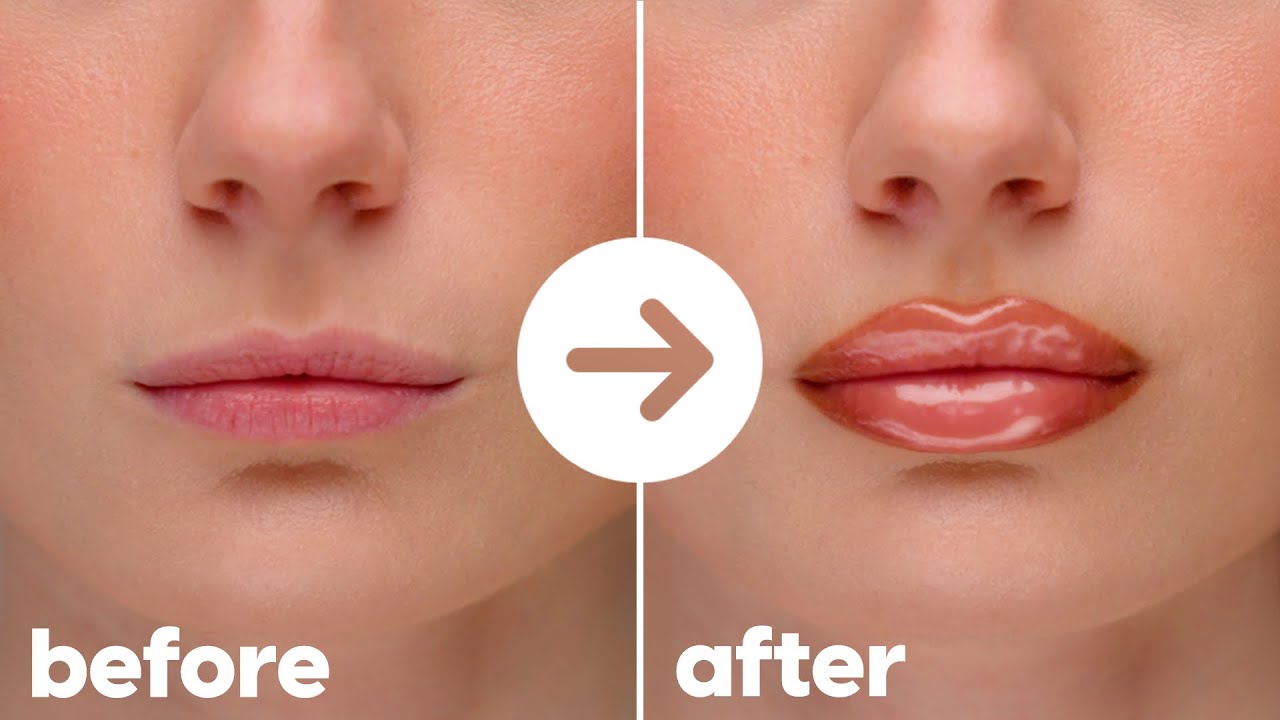
Place the liner just outside your natural lip line, starting at the center of the top lip and shading outward until no hard edge remains.
Charlotte Tilbury defines the lip line as the point where lip pigment stops and skin begins. Overlining means drawing slightly past it.
L’Oreal Paris adds that overlining looks most natural when it follows the actual shape of your lips. If you want more than that, applying lip liner a little beyond the line is the lever.
No source retrieved for this article gives a millimeter figure. They all say “slightly” or “just outside”, so the test is visual. L’Oreal Paris and makeup.com both tell you to shade the edge so no stark line shows, and the liner should melt into the lipstick instead of framing it.
For a barely-there lift, L’Oreal Paris and makeup.com suggest overlining just the cupid’s bow and the center of the lower lip, keeping the sides true to your natural shape.
Going all the way around means drawing just outside the natural line on the top and bottom lip, shading it, then smudging with a fingertip or lip brush (L’Oreal Paris). NYX describes drawing slightly over the outer edge of the lip line with its Duck Plump Plumping Lip Liner.
At the outer corners, L’Oreal Paris and makeup.com keep the liner on the natural line to avoid an exaggerated look. Nykaa takes a different route and overlines only the thinner lip when the top and bottom differ in fullness.
Choosing the liner shade
Sources disagree on what the liner should be measured against, and each reference point serves a different goal.
| Reference point | Who recommends it | Best for |
|---|---|---|
| A shade darker than your skin tone | Nykaa | Discreet overlining |
| One to two shades darker than your natural lip | Maybelline Australia | Natural-looking definition |
| A little darker than the lipstick | Lancome, via makeup.com | Bold lipstick |
| Same as your natural lip color | RMS Beauty | Soft fade, no stenciled outline |
Charlotte Tilbury notes that darker liner shades make lips look bigger and more voluptuous. So go darker than the lipstick when the color is bold or you want a visible lift, and match your natural lip when you want the color to fade evenly.
More on pencils sits in a guide to choosing a lip liner by shade and formula.
Defining the cupid’s bow

The V of the cupid’s bow is where the liner starts. Sharpen the pencil first for a precise edge (Maybelline Australia), draw the V, then work toward the corners. If the bow blurs once the lipstick is on, sharpen it again (Nykaa).
L’Oreal Paris adds a fingertip of highlighter dabbed onto the bow.
Faces Canada goes below the mouth instead. Bronzer under the lower lip makes that area recede, so the bottom lip looks wider.
How to prep your lips and apply lipstick, step by step

Exfoliate, hydrate, line, fill, then apply lipstick with a brush from the center outward.
- Exfoliate lightly, and stop if the lips are cracked. Dermatologist Brendan Camp warns that over-exfoliating can tear the skin and cause inflammation (Bustle).
- Hydrate with a rich balm and let it sink in. Armani Beauty makeup artist Beck Morgan names dehydrated lips as a main reason lipstick settles into lines, and his pick is Kiehl’s Butterstick Lip Treatment.
- Line the lips with the placement from the section above, top lip first.
- Fill the whole lip with liner. Charlotte Tilbury and NYX both recommend it for longer wear.
- Apply the lipstick with a brush, from the center toward the liner (L’Oreal Paris), in light layers (RMS Beauty).
How often to exfoliate is where sources split. Dermatologist Azadeh Shirazi advises no more than once a week (Bustle), while Henne Organics suggests 3 to 4 times weekly and tells you to cut back if the lips feel irritated.
For a gentler routine, there are options for exfoliating lips naturally at home.
Stopping feathering on fine lines
Feathering comes from fine lines around the mouth and dehydrated lips, and Revlon adds excess oil along the lip line to that list.
Revlon calls it mostly a technique problem, which is why stopping lipstick from feathering starts with liner as a barrier. Thrive Causemetics suggests eyeshadow primer around the lip perimeter, above base makeup, to block oils.
Beck Morgan at Armani Beauty prefers a long-wearing satin lipstick. Makeup artist Sonia Kashuk (via Oprah.com) puts foundation over the whole lip, then draws around the mouth with a colorless pencil.
Do plumping glosses and lip oils make thin lips look fuller?
Yes, temporarily. Plumping glosses either irritate the lips into swelling or draw water in with hyaluronic acid, and neither effect lasts.
Dermatologist Anna Chacon says plumpers usually work by slightly irritating the lips or raising blood flow, using ingredients like capsaicin, cinnamon and menthol (Vitacost blog). Paula’s Choice puts it more bluntly: the fullness is irritation, not added volume.
That tingle is the core of how a lip plumper works, and it explains why the effect fades.
The irritant kind shows visible swelling within minutes, as with Too Faced Lip Injection, which contains capsaicin (Elle India). The price is tingling, redness or burning on sensitive skin, so patch test first (Chacon). Dermatologists quoted by Elle India call the effect short-lived.
Hyaluronic acid glosses and lip oils are gentler. Hyaluronic acid attracts and retains water, and Dior’s Addict Lip Maximizer works as a lipstick primer or a top coat. Charlotte Tilbury’s Pillow Talk Big Lip Plumpgasm uses heat and ice technology and states it does not burn or sting. e.l.f. suggests its Glow Reviver Plumping Lip Oil as a finishing step after liner. The visible change is smaller, though, and nearly every figure comes from the brand.
Lip oils sit alongside glosses in this group, and what separates a lip oil from a lip gloss comes down mostly to texture.
Dior’s listing for the refreshed Addict Lip Maximizer claims a +36% immediate volume effect, from a clinical test on 28 subjects.
Charlotte Tilbury claims Plumpgasm plumps natural lips by 25% in 2 weeks with twice-daily use.
Both are brand-run tests on small groups, and one is an immediate figure while the other is a two-week figure, so the numbers don’t compare.
Dior’s own caution is external use on non-irritated lips only. Some listings add caffeine or niacin, which Health.com notes are not well researched as plumpers and need more studies to confirm they work at all.
A plumper works as a top layer over the shade, finish and liner choices, not as a substitute for them.
Lipstick Ideas for Thin Lips FAQ
What counts as thin lips?
No single measurement defines them. Faces Canada describes thin lips as having less space to work with, and aesthetic studies rate lips by surface area and upper to lower lip ratio, not by a cutoff.
Should lip liner go on before or after lipstick?
Before, for the main outline. Charlotte Tilbury layers lipstick over liner for a more dimensional look, and Nykaa says liner can also go on after lipstick to sharpen the contours.
Can you wear lip liner on its own?
Yes. Filling the whole lip with liner gives color and longer wear (Charlotte Tilbury, NYX).
A pencil close to your natural lip color keeps the result soft as it fades, according to RMS Beauty.
Is there a way to make thin lips look plumper naturally?
Hydration and gentle exfoliation make lips look plumper, but neither adds real volume. Paula’s Choice points to squalane balms that smooth lines, and says lasting volume comes only from injectables given by a cosmetic dermatologist.
How do you fix overlining that looks drawn on?
Soften the edge. Smudge the liner with a fingertip or lip brush (L’Oreal Paris), so the line diffuses into the color.
Maybelline adds that soft strokes reduce the contrast between liner and natural lip.
Which Lipstick Change to Make First
Start with the lipstick shade. Among lipstick ideas for thin lips, a color within a few tones of your skin is the cheapest change and needs no technique.
Shade and finish come down to one purchase. The blended liner past the lip line takes practice. Gloss or a plumper goes last, since its effect is temporary.
Change one variable per day and compare in the same light, so it’s clear which step actually added lip fullness. The trade-off is subtlety, since a close shade and a blended edge read as natural, not dramatic.
Verified October 2026. Independent testing of plumping products would change the last step, because the volume figures found for this article come from brand-run tests.
Once the look works, making lipstick last longer keeps the edge from drifting through the day.

She started writing on the site after fielding the same questions from clients and friends often enough to just write the answers down: which red won't turn orange on a warm undertone, how to keep lipstick from feathering into fine lines, why a "12-hour" formula rarely survives dinner.
Every review on the site follows the same rule she uses with paying clients: wear it first, then decide if it's worth recommending.
- How to Make Eyeliner Last Longer Without Smudging - August 31, 2026
- How to Make Eyeshadow Last Longer All Day - August 29, 2026
- How to Find Your Undertone in 5 Easy Steps - August 27, 2026
