A tinted lip balm moisturizes and protects the lips while leaving a sheer, buildable wash of color. It lands somewhere between a plain balm and a lipstick, and it gives up opacity to stay comfortable.
The base is mostly wax and oil with butters mixed in, and pigments such as iron oxides add the color. FDA (2016) reports that waxes and oils typically make up more than half the weight of cosmetic lip products, so pigment is the smaller share of the formula.
Sun protection only comes into it if the label states an SPF.
What Is Tinted Lip Balm?

Brands also sell it as tinted balm or lip tint balm. Take an ordinary balm built from waxes, oils and butters, add pigment, and that’s the product.
It softens and protects dry or chapped lips and leaves a natural flush of color. You put it on with a finger or one quick swipe, no mirror required.
What you shouldn’t expect is lipstick-level opacity. It won’t hide uneven lip color, and it won’t outlast a lipstick or a lip stain.
Less pigment buys more comfort. That’s the whole deal.
How Does Tinted Lip Balm Differ From Lipstick, Lip Gloss and Lip Stain?
A tinted balm gives up some coverage to stay comfortable. Lipstick has more color, and a stain outlasts everything else here. Gloss is mostly about shine.
| Product | Coverage | Finish | Wear |
|---|---|---|---|
| Tinted lip balm | Sheer, buildable | Natural, balm-like | Shortest, reapply freely |
| Lipstick | Medium to full | Varies by formula | Longer than a tint, shorter than a stain |
| Lip stain | Fairly opaque | Matte or slightly glossy | Longest |
| Lip gloss | Formula-dependent | High shine | Formula-dependent |
A lip stain formula absorbs into the lips, which explains the staying power. It’s also why Luxehouze Beauty recommends pairing stains with a balm.
Gloss plays a different game. With lip gloss, shine is the point and color is an afterthought.
Where the sources split is on how much a tint actually moisturizes.
Henné Organics warns that tints vary a lot and points people with dry or cracked lips to a balm instead of a tint. Tatcha, on the other hand, describes a tint as a hydrating balm with a flush of color.
Retailers use “tint” loosely, for balm-based and water-based products alike, so read the ingredient list. A base of waxes and oils, plus butters, is what you want to see before assuming a product cares for the lips.
Go with the balm when comfort and quick, low-precision application matter more than wear time. Lipstick is the pick for full coverage and a defined edge. A stain suits all-day hold, ideally with a balm on top. And gloss, obviously, if shine is the goal.
Layering also works. Tatcha suggests a stain first, then a tint over it for moisture.
What Is Tinted Lip Balm Made Of?

Most of what’s in the tube is base, which matches the FDA (2016) finding that waxes and oils typically make up more than half the weight of cosmetic lip products. Pigment goes in on top of that, and some formulas add fragrance or flavor.
Beeswax is the usual wax for structure and glide, and vegan formulas swap in plant-based candelilla wax. Shea butter and castor oil soften the lips and add slip, while petrolatum and lanolin seal moisture in. A few formulas also carry hyaluronic acid and ceramides (Typology).
Kjaer Weis’s tinted balm, for example, uses a blend of 10 certified-organic oils as its base.
Lipsticks rest on the same wax, oil and pigment framework, so a breakdown of lipstick ingredients carries over, minus the heavier color load.
Lanolin is the one allergen worth watching. In North American Contact Dermatitis Group patch-test data covering 43,691 patients tested between 2001 and 2018, 3.3% reacted to it overall, and the rate was 4.63% between 2011 and 2018. Personal care products were a common source (Dermatitis, 2022).
Those patients were being tested for suspected dermatitis, so the rate does not describe the general population.
Typology advises avoiding essential oils in tinted balms because of their allergenic potential and drying effect. On cracked lips, an unscented formula removes one variable, and I’d skip the essential oils either way.
On the label, ingredients appear under INCI names (Cera alba is beeswax, for instance) and generally run from the largest amount to the smallest. Pigments often show up as CI numbers, such as CI 77491 for iron oxide red.
How Tinted Lip Balm Gets Its Color
Several kinds of pigment get dispersed through the wax and oil base.
Iron oxides handle most browns, nudes and rosy tones. They’re synthetic mineral pigments, and FDA lists them as exempt from certification and permitted in cosmetics generally (21 CFR 73.2250).
Certified lakes and dyes are the D&C and FD&C colors that FDA batch certifies. Cosmetic chemist Kelly Dobos names Red 6 Lake and Red 7 Lake as the two most widely used lip pigments (Global Cosmetic Industry, 2022).
Mica adds shimmer. Carmine is a red from cochineal insects used in some red shades, and FDA has required cosmetic labels to name it since January 5, 2011 (74 Fed. Reg. 207).
Why the Color Stays Sheer
The base takes most of the formula’s weight, and some lip reds also carry a legal cap.
FDA regulations limit D&C Red No. 33 and D&C Red No. 36 to 3% total color by weight in cosmetic lip products (21 CFR 74.2333 and 74.2336, current as of April 2026).
The cap covers those two reds only. Iron oxides carry no numeric cap and are allowed in amounts consistent with good manufacturing practice, so a sheer shade is mostly a formulation choice, not a legal ceiling.
One swipe leaves a wash, and more layers build intensity (Kjaer Weis calls its balm buildable). Coverage still tops out well below lipstick, and uneven lip color shows through.
Do Color-Changing Tinted Lip Balms Adapt to Your Lips?

Manufacturers say they do, through dyes that react to the pH of the lips. The claim rests on brand sources.
Charlotte Tilbury says its Pillow Talk Blush Balm Lip Tint uses pH-sensitive dyes, so the wearer’s natural lip chemistry sets the shade (2026). Dior Addict Lip Glow and MAC Glow Play Tendertalk are sold as pH-reactive, and TIRTIR’s Waterism Mellow Lip Balm adds temperature response (fzine).
The pages describing the mechanism come from the brands selling the products, and they do not cite independent testing of how far a shade shifts between wearers.
Brands apply the same pH-reactive idea to lipsticks, so how color-changing lipstick works is a useful reference for the balm versions.
Judge the shade on bare lips, not in the tube. Dior’s balm looks sheer in the tube and shifts once it hits the lips.
Does Tinted Lip Balm Protect Against the Sun?
Only when the label says it does. A tint alone does not turn a balm into a sunscreen.
FDA’s drug label database lists SPF lip balms as over-the-counter monograph drugs, so the pack carries a Drug Facts panel naming the active ingredients.
Zinc oxide and titanium dioxide are the mineral filters, and they’re the two the American Academy of Dermatology names for lips. Plenty of lip balm labels print a chemical combination instead, built from avobenzone, homosalate, octisalate and octocrylene.
The sources also split on the SPF number. FDA’s sunscreen monograph (M020) ties the skin cancer risk statement to broad spectrum SPF 15 or higher, while the AAD advises SPF 30 or higher and a reapplication every 2 hours outdoors.
Burt’s Bees Tinted Lip Balm SPF 30 in Sienna Rose pairs a sheer rosy tint with nano-free zinc oxide, and its label follows the same reapplication schedule. The brand also sells tinted balms without SPF, so the front of the pack tells you little.
No SPF statement on the Drug Facts panel means no rated protection. Luxehouze Beauty notes that tints need more frequent reapplication than stains, and an SPF version is no exception.
Is Tinted Lip Balm Safe? Color Additive Rules and Common Allergens
Generally yes, when the color additives are FDA-approved and lead stays low. The catch is that the finished tinted lip balm needs no FDA approval before it goes on sale.
Color additives need FDA pre-market approval, while finished cosmetics do not (FDA). Lead in cosmetic color additives is typically limited to 10 to 20 ppm (FDA, Lead in Cosmetics).
FDA recommends a maximum of 10 ppm lead in cosmetic lip products (draft guidance, December 2016). Of 685 lip products and externally applied cosmetics FDA analyzed, over 99% were at or below that level (FDA, 2016).
The 10 ppm figure is guidance. FDA states in the document that its guidance does not create legally enforceable responsibilities.
MoCRA, signed on December 29, 2022, gave FDA mandatory recall authority and added serious adverse event reporting, facility registration and product listing (SOCMA summary).
The act also calls for fragrance allergen labeling. The statutory deadline for FDA’s proposed rule was June 29, 2024. As of September 2026 no proposed rule had been published, and FDA’s 2026 Unified Agenda lists it for November 2026, so check the current status.
The Cosmetic Ingredient Review and EWG’s Skin Deep both get cited for ingredient safety, and they answer different questions.
CIR was founded in 1976 and has an independent expert panel review ingredient data in public meetings, then publish its conclusions in the International Journal of Toxicology. That panel judged polyether lanolins safe in the practices of use and concentration (2018), a finding about typical use, not about people already sensitized.
EWG’s Skin Deep rates ingredient hazard rather than risk and does not test products itself, according to the Daily Dot, which also quotes cosmetic chemists who say the scores lack nuance. Treat CIR as the conclusion and Skin Deep as a lookup for an ingredient you already know you react to.
For irritation, the AAD advises avoiding camphor, menthol and eucalyptus and choosing products labeled fragrance free.
On lips that are already cracked, a dry-lip care plan comes before color.
Stick, Pot or Crayon: Choosing a Format and Shade
Sticks and crayons suit precision and travel. A pot makes more sense if you want to apply with a finger and get the sheerest wash.
Stick
Burt’s Bees sells its tinted lip balm as a swipe-on tube.
A stick is quick and needs no mirror, and because no fingers touch the product it’s easier to keep clean. It’s also easy to carry.
The downside is that it’s harder to lay down a very thin layer than with a fingertip, and one swipe can deposit more color than you want.
Pot
A pot puts product on a fingertip first. Typology’s directions call for a dab on a fingertip, massaged gently into the lips.
You get control, since you decide how sheer the layer is and you can pat it in. The cost is hygiene, because a finger goes into the product every time.
Wash your hands first. Or pick a stick if your bag is full of other stuff.
Crayon
Clinique’s Chubby Stick comes as a twist-up crayon-style balm that never needs sharpening, with buildable color and mango and shea butters in the base.
Per Clinique’s directions, the tip outlines the lips before you fill in, and the crayon stays tidy in a pocket. Retailer reviewers split on the color, though, with some seeing “a hint of color” and others “no color at all.”
Choosing a shade

A sheer formula lets your natural lip color show through, so the same shade looks different from person to person.
For a barely-there flush, pick a shade close to your natural lip color. If you want visible color, go for a deeper berry or plum, or a brown, and layer it.
One reviewer of Clinique’s Richer Raisin said the shade vanished on her lips. If a sheer shade disappears on you, move one step deeper before blaming the formula.
How to Apply Tinted Lip Balm and How Long It Lasts

Apply a thin layer to clean, dry lips, press it in, and add a second layer only if you want more color. Reapply as the color fades, because a tinted balm is built for that.
- Start with smooth, product-free lips.
- Apply a thin layer: swipe a stick, or take a small dab from a pot on a fingertip and massage it into the lips (Typology).
- Blend by pressing the lips together or patting with a finger.
- Build color in thin layers until it reaches the depth you want.
- Reapply when the color fades, and remove it in the evening with a cleansing oil or micellar water (Typology).
If the color sits unevenly, Pili Ani suggests exfoliating at least weekly, and gentle, natural ways to exfoliate lips keep it simple.
Wear time has no fixed number. It depends on the formula, the thickness of the layer and what the lips do all day.
Tinted balm usually wears shorter than lipstick, but one Business Insider reviewer reports that Glossier’s Balm Dotcom lasted through several cups of coffee and food. The line includes tinted and untinted versions, and her favorite, Birthday, is sheer with a tiny bit of shimmer. Treat that as one account, not a rule.
The AAD advises applying balm several times a day and before bed, which fits into a wider lip care routine.
Tinted Lip Balm FAQ
Which tinted lip balm is best?
No single product wins, because sun protection and visible color pull in different directions, and cracked lips add comfort to the list.
Rank which job matters most, then check the Drug Facts panel for SPF or the ingredient list for fragrance.
Is tinted lip balm vegan?
Not always. Burt’s Bees’ tinted lip balm lists beeswax and lanolin, and may contain carmine.
FDA requires carmine to be named on cosmetic labels but did not require them to say it comes from insects. Candelilla wax and iron oxides are the usual plant-based and mineral swaps.
Is tinted lip balm good for dry lips?
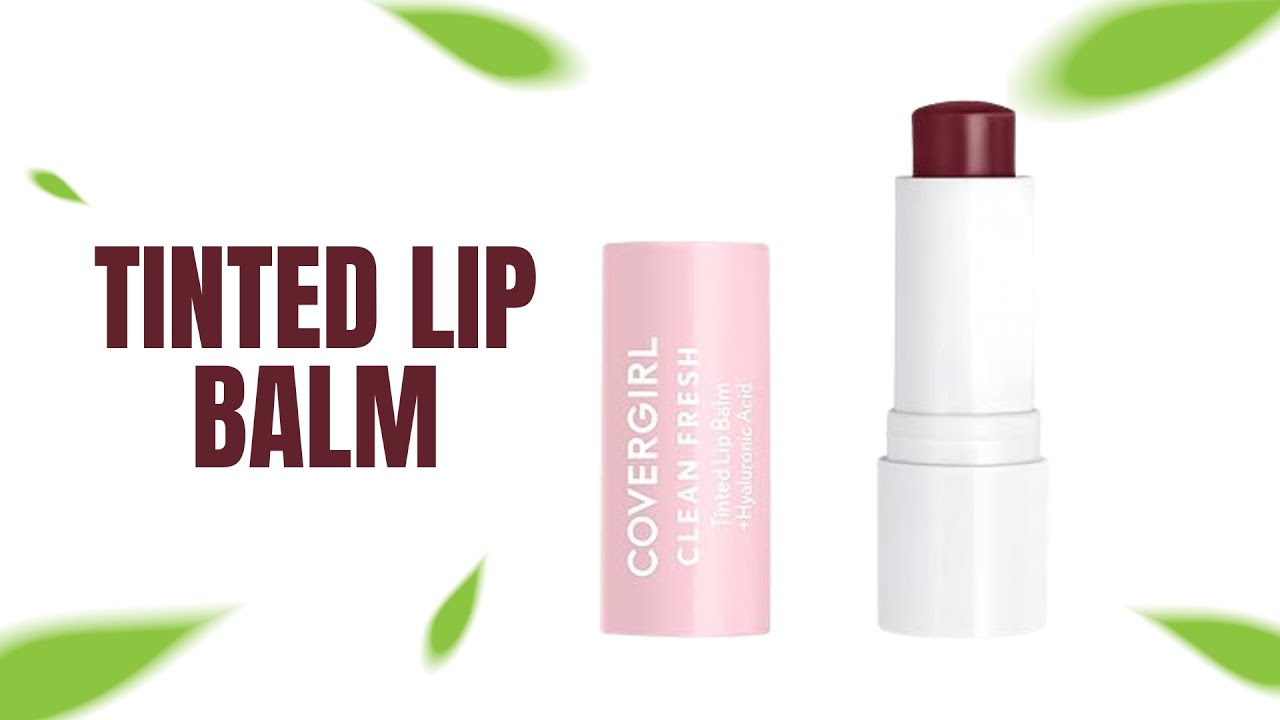
Yes, when the base is a balm built on waxes, oils and butters, and the formula is fragrance free.
The AAD says dry, chapped lips should improve within 2 to 3 weeks of consistent care, and advises seeing a board-certified dermatologist if they do not.
Can tinted lip balm be used as blush?
Often yes. Typology says it depends on the ingredients, and that its own tinted balms can go on the cheeks.
Check the label before using one near the eyes, since FDA permits some color additives only for specific areas.
Can you layer tinted lip balm over lipstick?
Yes, and brands recommend it. RMS Beauty suggests layering its pH-adjusting lip color over lipstick for a new shade, or over lip liner for definition.
That advice comes from the brand itself, so test the combination before an event.
How do you remove tinted lip balm at night?
Wipe it off with a cleansing oil or micellar water on a cotton pad. Typology gives that advice for its tinted balms.
Follow with a plain balm, since the AAD advises applying balm before bed.
What to Do When Tinted Lip Balm Falls Short
Stop using a tinted lip balm that stings or burns, and switch to a fragrance-free formula before changing anything else. Color problems are cosmetic, while irritation worsens with every extra layer.
FDA does not review finished tinted lip balms before sale, and the AAD names camphor, menthol and eucalyptus as irritants. The ingredient list is therefore the only checkpoint before purchase.
Stinging or flaking means stop and change formula. No visible color usually just calls for a shade one step deeper, and a fast fade is handled by reapplying in thin layers.
The trade-off is real. Fragrance-free formulas lose scent and flavor, and deeper shades give up some of the natural flush.
If the payoff is still too sheer, a comparison of lipstick versus lip tint shows what extra pigment costs in comfort.

She started writing on the site after fielding the same questions from clients and friends often enough to just write the answers down: which red won't turn orange on a warm undertone, how to keep lipstick from feathering into fine lines, why a "12-hour" formula rarely survives dinner.
Every review on the site follows the same rule she uses with paying clients: wear it first, then decide if it's worth recommending.
- How to Make Eyeliner Last Longer Without Smudging - August 31, 2026
- How to Make Eyeshadow Last Longer All Day - August 29, 2026
- How to Find Your Undertone in 5 Easy Steps - August 27, 2026