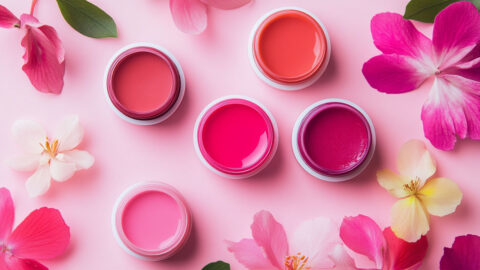
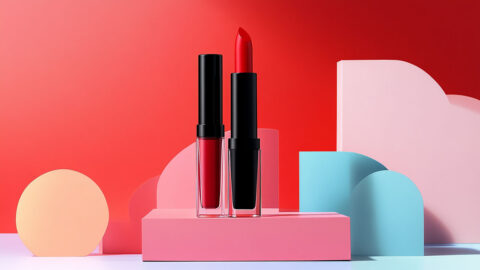
Lipstick leaves a wax-and-oil film with pigment in it on the lips, and what that film does depends mostly on the formula. The best-documented benefit is sun protection. A 2021 systematic review in the Open Dentistry Journal found approximately 21.7% lower prevalence of actinic cheilitis lesions, a precancerous lip change, where some form of lip protection was used.
That review covered sunscreen-containing lip products. So the result applies to lipsticks labeled with an SPF, and not to every shade on the shelf. Definition and conditioning are real but smaller, and confidence is the hardest one to pin down.
How Does Lipstick Change the Look of the Lips and Face?

Pigment over the lips raises the contrast between the mouth and the skin around it, which sharpens the lip edge. The change is optical. The lips look different without being different.
The effect reaches past the mouth. In a 2011 PLOS ONE study led by Nancy Etcoff and funded by P&G Beauty & Grooming, the makeup look with the highest contrast between skin and facial features was rated significantly more attractive and competent than a bare face, though less trustworthy when viewers had unlimited time to look.
Size matters, though. A 2015 paper in Perception (Jones and Kramer) found that cosmetics raise attractiveness, but the effect is small next to the differences between individual faces.
Taken together, the two studies say applied color moves first impressions in a measurable way. It doesn’t outweigh the face underneath, which is about what you’d guess.
Perceived Fullness and Lip Definition
Lipstick makes lips look fuller through contrast and shape. It adds no volume.
A shade that separates clearly from the surrounding skin makes the lip shape easier to see, and a clean outline reads as a fuller shape. Finish plays a part too. Creamy and satin formulas reflect more light than flat matte ones, and that reads as volume.
Most of the edge work comes from a waxy lip liner pencil that draws the boundary before the lipstick goes on. Without that line, color tends to drift past the lip edge.
Matching a Shade to Undertone
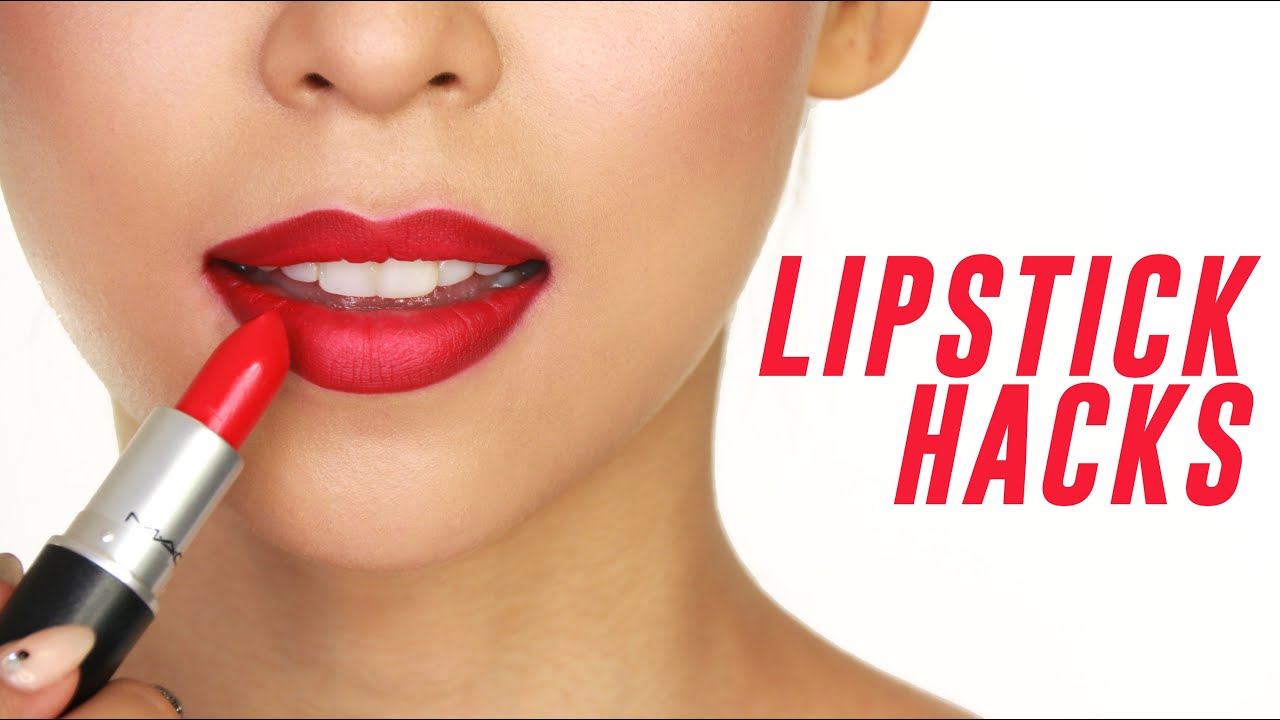
Undertone decides whether a shade flatters or washes out.
Cool undertones tend to suit blue-based pinks and berries, along with cool reds. Warm ones go better with coral and peach, and with reds that lean orange. Neutral skin is the easy case, since most shades work and finish and depth end up driving the choice.
Shade range is the practical limit, because a narrow range leaves some undertones unmatched. A step-by-step approach to picking a lipstick color starts with undertone and works outward.
Can Lipstick Protect Your Lips From the Sun?
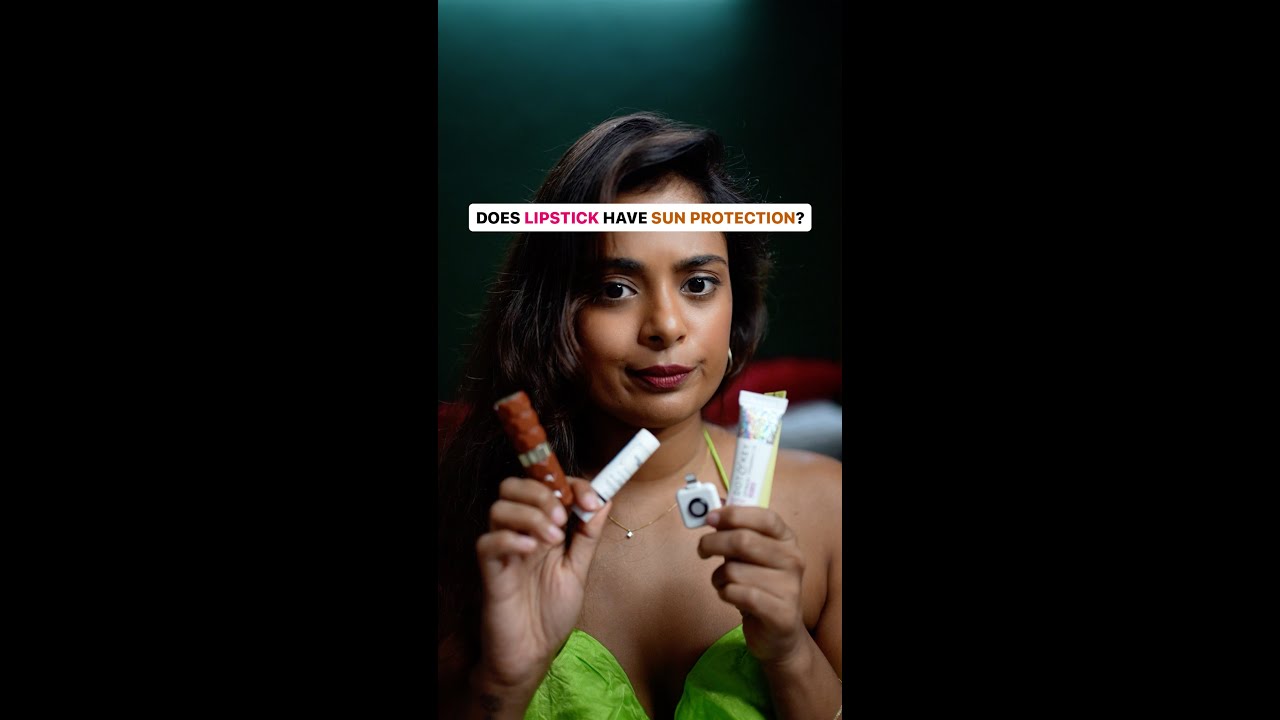
Yes, when the lipstick carries an SPF claim on its label. Without one, protection is partial at best.
Lips have a thin outer layer and little melanin, and the lower lip faces the sun directly. Chronic exposure produces actinic cheilitis, a precancerous change that mostly affects the lower lip and can progress to squamous cell carcinoma.
A few figures put the risk in proportion.
- The Skin Cancer Foundation advises SPF 30 or higher for a daytime lip product.
- Reapply every 2 hours, and again after eating or drinking (Skin Cancer Foundation).
- Where some form of lip protection was used, actinic cheilitis lesions showed 21.7% lower prevalence, across three studies (Open Dentistry Journal systematic review, 2021).
- Reported malignant transformation of actinic cheilitis into squamous cell carcinoma runs from 3.07% to 12.05% (a 2018 systematic review by Dancyger and colleagues, and a Brazilian cancer hospital study of biopsy records from 2008 to 2018).
Those two transformation rates sit far apart for a reason. The 3.07% rests on the single eligible study the review found, while the 12.05% comes from a specialist cancer hospital that followed patients for a median of 120 months.
Either number is high enough to justify daily SPF on the lower lip.
Formula matters too. Titanium dioxide is both a white pigment and a mineral UV filter, but in a 2023 in vitro study reported in Cosmetics, a lipstick with titanium dioxide alone did not reach broad-spectrum protection, while the same filter combined with mesoporous silica did.
Sheer products and gloss are the weak spot. A Seattle-based dermatologist told The Zoe Report that opaque lipsticks give some UV protection, while most glosses and transparent products give none unless protective ingredients are added. Baylor University Medical Center dermatologist Christine Brown told HealthDay in 2008 that shiny balms and glosses do not protect, and advised wearing them in the sun only over a layer of sun protection.
The film also wears off. Eating and drinking take it off, and licking does too, which is why the Skin Cancer Foundation stresses reapplying straight afterward.
A lipstick counts as a sun product only if the tube says so.
Does Lipstick Moisturize the Lips or Dry Them Out?
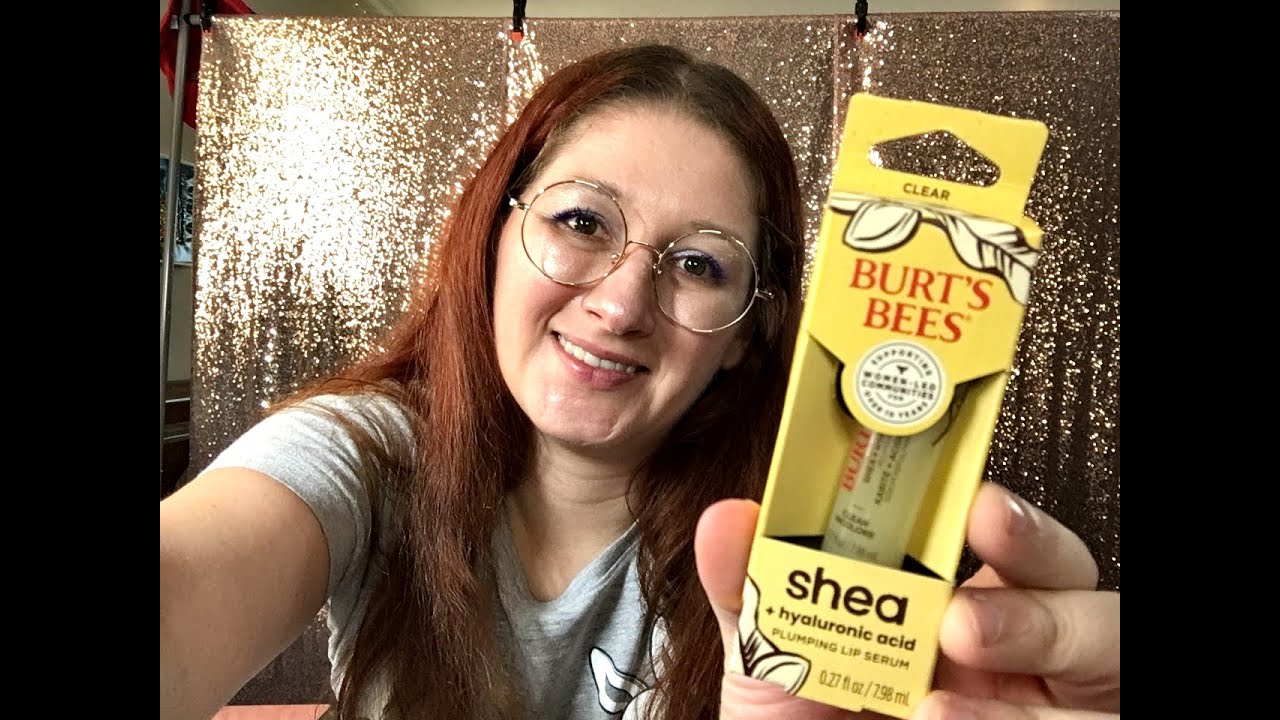
It depends on the formula. Cream and hydrating sticks condition the lips while worn, and matte or long-wear formulas usually leave them drier.
Lip skin has almost no oil glands and a thin outer layer, so it loses water faster than cheek skin. Measurements show higher transepidermal water loss and lower water content on the lips than on the cheek (Skin Inc.).
The conditioning work comes from a handful of ingredient types, and a longer breakdown of what goes into a lipstick formula covers the rest.
| Ingredient type | Examples | Job on the lips |
|---|---|---|
| Emollients | Shea butter, plant oils | Soften and smooth the surface |
| Occlusive waxes | Beeswax, carnauba wax | Seal in moisture, shape the bullet |
| Humectants | Hyaluronic acid | Draw water into the surface layer |
| Antioxidants | Vitamin E (tocopherol) | Protect the oils from oxidation |
The wax-to-oil balance sets the result. More oil gives slip and comfort, while more wax and pigment give structure and wear.
One trial is worth knowing. In 2010, Lopez Jornet and colleagues ran a study in Medicina Oral, Patologia Oral y Cirugia Bucal where 70 volunteers applied a photoprotective lipstick three times a day for three months, while 70 controls used nothing. Corneometer hydration readings rose from 53.49 to 59.34, a significant difference from the controls (p=0.002).
That result belongs to one photoprotective product. It says nothing about matte or long-wear formulas.
Matte formulas are where the moisture story falls apart. L’Oreal Paris explains that matte lipsticks reach a flat finish by tipping the formula toward far less oil, which means fewer moisturizing ingredients.
Brands answer with added humectants. L’Oreal Paris’s Color Riche Intense Volume Matte adds hyaluronic acid and argan oil, and Charlotte Tilbury’s Hyaluronic Happikiss lipsticks pair hyaluronic acid with C-Peptide, according to each brand’s own pages.
Thin layers and a balm underneath help with most formulas, as covered in this guide to keeping lips moisturized under matte lipstick.
For chapped lips, lip balm is still the better treatment, since it carries no pigment load. Lipstick only conditions for as long as it stays on.
Does Wearing Lipstick Improve Confidence and Mood?

Research links wearing makeup to feeling better about your appearance, but most controlled studies test makeup as a whole rather than lipstick alone. Claims that lipstick specifically lifts mood rest on thinner evidence.
What the Research Measures
Palumbo and colleagues (Cogent Psychology, 2017) assigned 186 female undergraduates at random to put on makeup, listen to positive music, or color a drawing of a face before a simulated exam. The makeup group earned higher grades than both other groups.
The limits are specific.
- Participants were all female undergraduates, and the condition was makeup in general rather than lipstick on its own.
- The outcome was a multiple-choice exam score, not a mood scale.
So the study supports a link between makeup, self-esteem and performance in a test setting. It does not show that one swipe of lipstick rescues a bad day.
The Lipstick Effect Is About Spending
The lipstick effect started as an economics observation, not a mood finding.
Hill and colleagues (Journal of Personality and Social Psychology, 2012) ran a series of experiments showing that recession cues raised women’s desire for high-end cosmetics and designer clothing, but not for budget beauty products. The authors tied the pattern to mating psychology.
Palumbo’s team later borrowed the same label for a self-esteem effect on exam scores. Same name, two different phenomena.
A claim that cites the lipstick effect as proof of a mood boost is mixing the two up. Neither paper isolates lipstick.
Which Lipstick Formula Delivers Which Benefit?
Pick the formula for the benefit you care about most. No type is best at sun protection and comfort while also lasting all day.
Finish names (cream, satin, matte, sheer) matter less than those trade-offs, and the full range of lipstick types maps onto them the same way.
| Formula | Best for | Wear | Trade-off |
|---|---|---|---|
| Cream or satin bullet | Comfort, conditioning | Moderate | Transfers easily |
| Matte bullet | Color payoff, definition | Moderate to long | Feels drier |
| Liquid matte | Wear time, transfer resistance | Longest | Tight after several hours |
| SPF-labeled or tinted lip balm | Sun protection, hydration | Short, reapply | Sheer color |
Maybelline’s own guide frames the split plainly. Liquid lipstick gives long wear with little maintenance, and bullet lipstick gives moderate wear with easy touch-ups.
Liquid lipsticks hold color longest because the formula is built to resist transfer. The cost is a tighter feel as the hours pass, which is why bullets stay the safer daily pick for dry lips.
On price, a higher tag does not buy a cleaner formula. UK Office for Product Safety and Standards research (2023) found that price and place of purchase did not influence metal levels in cosmetics. So choose by formula and finish first, and treat price as a preference question.
For vegan options, carmine (a red pigment from insects) and beeswax are the usual animal-derived ingredients in a stick, along with lanolin. Plant waxes such as candelilla stand in for beeswax.
Vegan describes ingredients, while cruelty-free describes testing. SpecialChem notes that the Leaping Bunny program covers animal testing only, whereas PETA’s “Animal Test-Free and Vegan” tier, which PETA calls truly cruelty-free, requires both no testing and no animal-derived ingredients.
Match the formula to the benefit, then read the ingredient list for what you want left out.
Is Lipstick Safe to Wear Every Day?
Yes, within the limits regulators have examined. FDA found trace lead in lipsticks and judged it no safety concern, and it recommends a ceiling of 10 ppm for lead in lip products.
- FDA’s expanded survey of 400 lipsticks found average lead of 1.11 ppm, with individual results from 0.026 ppm (the detection limit) up to 7.19 ppm.
- FDA’s recommended maximum for lead as an impurity in lip products is 10 ppm (draft guidance, December 2016).
Over 99% of the 685 lip products and externally applied cosmetics FDA analyzed were at or below that level.
The 10 ppm figure is a benchmark and not a statute, because FDA guidance does not create legally enforceable responsibilities. The binding limit sits earlier in the chain, on the color additives, which FDA lets carry 10 to 20 ppm of lead as an impurity.
Authorities do not read the survey the same way. FDA said in 2012 that the levels were no safety concern because lipstick is swallowed only in very small quantities, while the Campaign for Safe Cosmetics argued the agency had measured lead but run no health assessment.
Swallowing is the exposure route that matters for lip products, which is why a color additive approved for externally applied cosmetics cannot automatically go into a lipstick. FDA’s position rests on the quantities being very small, a point examined in this piece on how much lipstick a person swallows over a lifetime.
Lime Crime shows the approval rule in practice. FDA’s warning letter flagged ferric ferrocyanide and ultramarines in its Velvetines Liquid Matte Lipstick in Red Velvet as approved for externally applied cosmetics but not for lips, and the brand called it a labeling error.
Carmine, the insect-derived red, is approved, but cosmetics that contain it must say so on the label (FDA final rule, 2009).
The Modernization of Cosmetics Regulation Act of 2022 (MoCRA), signed on December 29, 2022, requires a responsible person to hold safety substantiation for each product by December 29, 2023, and FDA treats products without it as adulterated. FDA’s November 2023 compliance policy moved facility registration and product listing to July 1, 2024.
In the EU, Regulation (EC) No 1223/2009 bans lead in cosmetics except for unavoidable traces under good manufacturing practice that stay safe for health, and the law sets no numeric maximum for those traces. The UK’s 2023 OPSS research, aimed at setting guidance values, found most products near or below the limit of quantification for each heavy metal.
Put side by side, the systems work alike. Neither binds the finished lipstick to a numeric lead cap, so a general safety duty plus a recommended benchmark carries the load.
FDA’s 10 ppm also matches what other countries in the International Cooperation on Cosmetics Regulation, including EU member countries, recommend for similar products.
When Does Lipstick Not Deliver These Benefits?
Mostly when the lips react to an ingredient. A formula that fights dry lips is another cause, and some advertised benefits simply have no evidence behind them. Reactions and dryness can be fixed. The unsupported claims just need some skepticism.
Fragrance and flavor are the usual culprits. In a North American Contact Dermatitis Group review of lip-only cases (Zug et al., Dermatitis, 2008), fragrance mix tested positive in 30% of the 75 patients diagnosed with allergic contact cheilitis, and makeup and lipsticks were the most common sources. A 2025 study in Anais Brasileiros de Dermatologia put fragrance mix 1 at 14.6%, so the rate shifts a lot with the clinic and the sample.
Castor oil and gum ester come up too. A 2024 systematic review in Medicina Oral found the most common sensitizers behind pigmented contact cheilitis (lip discoloration from repeated contact with a small amount of a sensitizer) sit in lipstick ingredients, with ricinoleic acid and gum ester most frequent, though each appeared in only two cases.
Carmine is a smaller case. FDA’s labeling rule followed reports of severe reactions, including anaphylaxis, though the agency treats it as an allergen for a small subset of people.
Patch testing identifies the cause, and the culprit is often the patient’s own lipstick rather than an allergen on the standard series.
Dry lips are the second failure point. Flaking skin makes any lipstick sit unevenly, so the fix is prep and not more product, as laid out in this guide to applying lipstick on dry lips.
A tube kept past its shelf life is a separate problem, with its own list of expired lipstick side effects.
A lip change that does not clear is a medical question, not a product question. Baylor University Medical Center dermatologist Christine Brown told HealthDay in 2008 to see a dermatologist for any color change on the lip surface, such as an area turning opaque or white, or for persistent peeling or flaking in one spot.
Some popular benefits have no measurement behind them at all.
| Claim | What the sources show | Where it fails |
|---|---|---|
| Lipstick improves posture | Repeated in a Marie Claire list, attributed to a L’Oreal study | No primary study found, so it stays unverified |
| Aloe vera and vitamin E hydrate the lips | Quoted from makeup experts in a syndicated IANS list | No trial isolating either ingredient surfaced |
| Lipstick brightens your smile | Same IANS list, conditional on picking the right shade | No measurement, and the source itself makes it shade-dependent |
Stop any lipstick that makes the lips burn, itch or scale, whatever the label promises.
Lipstick FAQ
Does lipstick expire?
Yes, even when the label carries no date. FDA does not require expiration dates on cosmetics and leaves shelf life to the manufacturer.
The EU requires an open-jar period-after-opening symbol on products with a minimum durability of more than 30 months, and a 12M mark is common on lip products.
Is it better to use lip balm or lipstick on dry lips?

Both, in order. Apply the balm first to treat the dryness, then blot it so the lipstick does not slide.
A cream or satin stick on top adds color while the balm keeps working underneath.
How do you remove lipstick without irritating the lips?
Dissolve it first, then wipe. Press a pad soaked in micellar water against the lips for about one minute, massage an oil-based cleanser over the lips in circles, or leave petroleum jelly on for two to three minutes (MasterClass). Wipe gently rather than scrubbing.
Long-wear formulas take more patience, as in this guide to removing matte lipstick.
Does lipstick suit mature lips with fine lines?
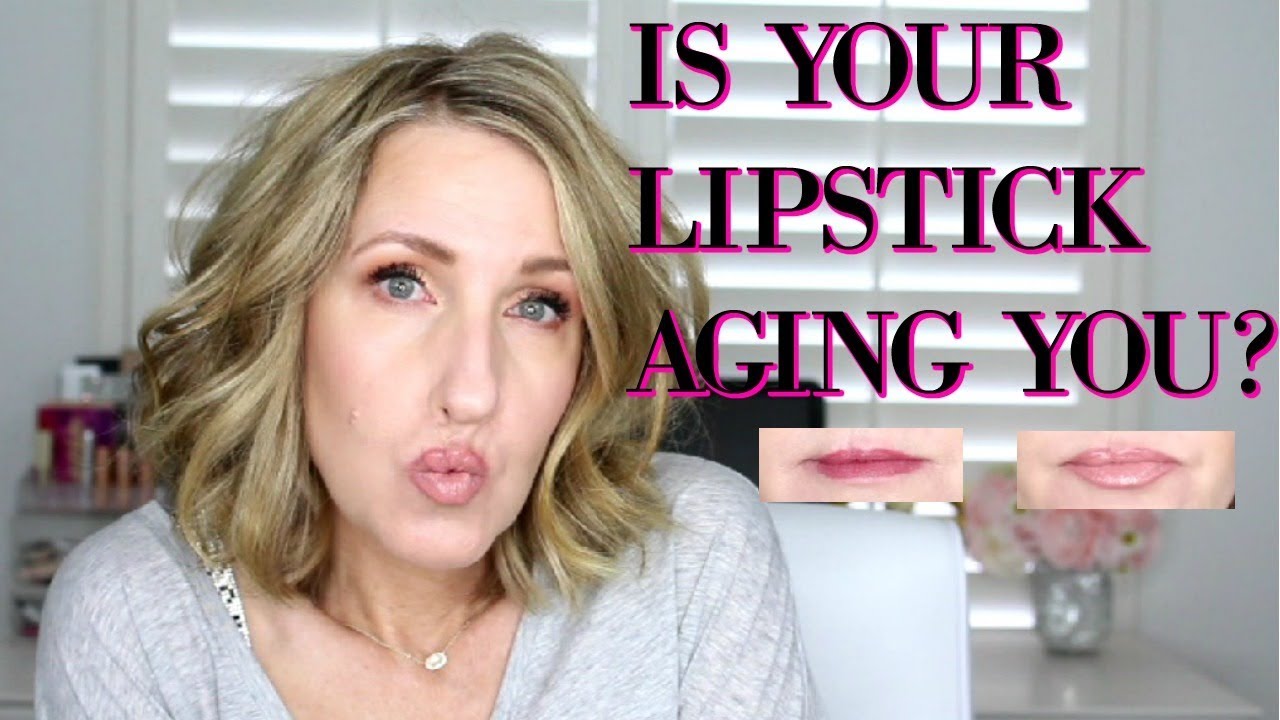
Yes, with two adjustments. Fine vertical lines carry color outward, so outline the lips with a liner and apply thin, blotted layers.
Matte formulas bleed less but can look harsh on dry, lined lips. Creamy ones feel kinder and travel into lines faster, which is where this guide to stopping lipstick from feathering helps.
A Daily Lipstick Routine That Protects Your Lips

A sound daily routine puts sun protection first, conditioning second and color last. Sun damage can lead to cancer, so it goes first. Dryness is uncomfortable, and the shade is just taste.
In practice that means an SPF 30 base before leaving the house, then a conditioning balm, blotted before the color goes on. A cream or satin stick suits most days, and matte or liquid is for long events.
The trade-off is time. Layering takes longer than one swipe, and a second product has to live in the bag.
Color is the only layer a routine can skip without a health cost. A broader lip care routine extends the same logic to the hours when no lipstick is worn.

She started writing on the site after fielding the same questions from clients and friends often enough to just write the answers down: which red won't turn orange on a warm undertone, how to keep lipstick from feathering into fine lines, why a "12-hour" formula rarely survives dinner.
Every review on the site follows the same rule she uses with paying clients: wear it first, then decide if it's worth recommending.
- How to Make Eyeliner Last Longer Without Smudging - August 31, 2026
- How to Make Eyeshadow Last Longer All Day - August 29, 2026
- How to Find Your Undertone in 5 Easy Steps - August 27, 2026