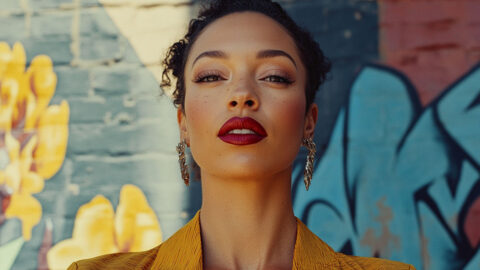
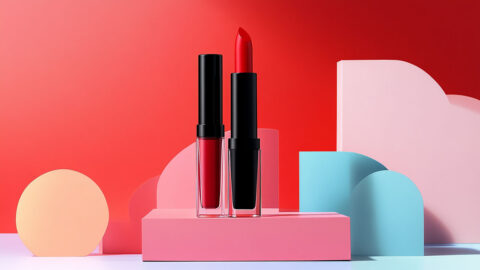
The usual red lipstick meaning is some mix of confidence, power, femininity, allure and defiance, and the mix changes with the wearer, the era and the setting.
Suffrage marchers wore a red lip as a public statement, as did uniformed women in World War II and, more recently, protesters in Nicaragua and Chile.
The lab evidence for its allure is thinner than most guides let on. Take the replication of a 2012 red-clothing study: it used 433 men where the original used 25, and it found no red effect (Evolutionary Psychology, 2016).
What does red lipstick mean?

Nobody has a single code for it. National Geographic calls the meaning fluid and diverse, which is why no one reading covers every red lip.
Modern guides lead with confidence and power. Rachel Felder, author of Red Lipstick: An Ode to a Beauty Icon, ties red to strength, boldness and femininity. Red also reads as seductive, and psychology research tests that link directly. Then there’s defiance, since suffrage marchers, wartime service women and recent protesters all used it.
The contradiction goes back a long way. New Humanist notes that red lipstick draws on ideals of youth and innocence while also signaling danger and sexual transgression.
The Zoe Report calls red the strongest lipstick shade for self-expression, so picking red is already part of the message.
Red isn’t one color, either. Bustle splits it into blue-based, orange-based and clean red, and the base changes how a lip reads against skin.
Where did red lipstick come from?

Red lip paint goes back at least to the Bronze Age. The early versions used mineral reds like hematite, and insect-derived carmine came later. In Europe, the color stayed morally suspect until Elizabeth I made it acceptable at court.
Ancient pigments
The oldest lip-paint specimen on record is a stone vial from Jiroft in Iran, radiocarbon dated to between 1936 and 1687 BC (Scientific Reports, 2024).
It held a dark red, hematite-rich powder bound with waxy substances, which the research team called compatible with modern lipstick recipes. Massimo Vidale, one of the authors, describes it as a lip paint rather than a solid stick.
Popular histories credit Queen Puabi (Shub-ad) of Ur with the first lip color, a mix of white lead and crushed red rock, and often date it to around 3500 BC. Her tomb actually dates to the Early Dynastic IIIA period, about 2600 to 2500 BC (Penn Museum).
The lab work says less than that. Hauptmann and colleagues tested 50 cosmetic pigments from Ur’s Royal Cemetery and found hematite in the red ones, lead minerals in the white ones, and fats or oils in most samples (Metalla, 2016).
That study covers cosmetic pigments in general, so it does not confirm which ones went on lips.
Egyptian aristocrats used red ochre mixed with resin (National Geographic), and some accounts add crushed insects (The Zoe Report). In Greece, red lips were tied to prostitutes (CNN, citing Felder).
Insect-derived red is still in use. Carmine, made from dried female cochineal insects, sits among the ingredients that go into many lipsticks, and an FDA rule published on January 5, 2009 required cosmetic makers to name it on labels from January 5, 2011.
Suspicion and rehabilitation in Europe
The medieval church treated red lips as a moral problem.
New Humanist reports that lipstick was banned in medieval England. Sinners confessed to wearing it, and images showed devils applying it to women.
Elizabeth I reversed the stigma at court. Her public wearing of red lipstick during her reign (1558 to 1603) spread it through the English aristocracy, according to National Geographic.
It did not last. Until lipstick spread in the early 20th century, red lips still tended to mark morally dubious women, Felder told CNN, and the first metal lipstick tube arrived in 1915, per art historian Sterling Jones (The Zoe Report).
How did red lipstick become a political and wartime symbol?

Women took a color tied to scandal and wore it in public on purpose, first at suffrage marches and later in uniform during World War II. Protesters in Nicaragua and Chile picked it up decades later. Several of the best-known origin stories are told with more confidence than the evidence supports.
Suffrage marches and Elizabeth Arden
The suffrage link works as a symbol more than as a documented event.
Felder says suffrage leaders such as Elizabeth Cady Stanton and Charlotte Perkins Gilman liked red lipstick for its power to shock men (CNN). Sterling Jones adds that the color still belonged to actresses and prostitutes then, which is what made wearing it at a march a statement (The Zoe Report).
Elizabeth Arden’s own 2018 press release says she handed red lipsticks to women marching on Fifth Avenue in 1912.
National Geographic repeats it. Other writers dispute it, noting that her 1912 business centered on skin care and that her color cosmetics came later.
Flappers of the Roaring Twenties followed the suffragists into red lipstick, per Felder, and dark red lips became a defining part of the makeup looks of the 1920s.
World War II and Montezuma Red
Montezuma Red was made for the US Marine Corps Women’s Reserve, and its date depends on who tells it. Besame Cosmetics’ account says 1941 and PBS NewsHour’s says 1942.
Arden matched the shade to the red piping and chevrons on the uniform (PBS NewsHour). The issue kit held the lipstick, a matching cream rouge and nail polish.
Civilian shades followed, including Victory Red and Fighting Red. PBS NewsHour reported that the Marine Corps is the only branch to say explicitly that women may wear red lipstick with every uniform.
Women across Allied countries wore red to lift morale and stand against fascism, with shades such as Regimental Red marking the moment (Boston Globe, 2025).
Besame Cosmetics reissued Victory Red in 2016, the shade Arden launched for women on the home front after Montezuma Red (Boston Globe, 2025).
Protest use since 2018
In Nicaragua in 2018, men and women posted photos in red lipstick under #SoyPicoRojo after activist Marlen Chow defied police interrogators in October (Havana Times). The posts came from men as well as women.
A year later in Chile, thousands of women wore red lipstick to denounce sexual violence (National Geographic).
Which stories are repeated without proof?
Most red lipstick history pages repeat the same handful of claims, and the sourcing behind them varies a lot.
| Claim | Reported by | Status |
|---|---|---|
| Arden handed out lipstick at a 1912 suffrage march | Arden press release (2018), National Geographic; disputed by other writers | Contested |
| Montezuma Red was issued to Army women | CNN says Army; PBS NewsHour and Liberty University say Marine Corps | Marine Corps |
| A 1770 act made makeup a witchcraft offense | Lifestyle sites; PolitiFact (2019) and Alpha History call it a myth | Myth |
| Hitler hated red lipstick | CNN, quoting Felder | Secondhand |
The service branch and the 1770 correction are settled enough to state plainly. The Arden and Hitler stories need an attribution every time they appear, and I’d keep them out of any list of facts.
An attempted lipstick ban did exist, but it dates to 1650 and did not pass (Africa Check, cited by PolitiFact).
What does psychology research say about red lipstick?

Field experiments by Nicolas Gueguen found red lipstick drew more male approaches and tips than brown or no lipstick. They measured what male observers did, not what the wearer felt.
In the bar study, female confederates in red, pink, brown or no lipstick sat in bars on Wednesday and Saturday nights on France’s Atlantic coast. Red drew more male solicitations and a shorter wait for the first one (Gueguen, International Journal of Psychological Studies, 2012).
The tipping study found that waitresses in red lipstick were tipped more often than with brown or none, and only by male customers (Gueguen and Jacob, International Journal of Hospitality Management, 2012). Separately, redder lips raised the apparent femininity and attractiveness of faces (Stephen and McKeegan, Perception, 2010).
Neither field study found a significant gap between red and pink on the main measure, as the Evolutionary Psychology review of the results points out (Peperkoorn, Roberts and Pollet, 2016).
The wider red effect points the same way. In five experiments, Elliot and Niesta found men rated women in red as more attractive and more sexually desirable, with no change in ratings of likability, kindness or intelligence (Journal of Personality and Social Psychology, 2008).
Replications of the wider red effect have been mixed, so treat these results as a signal to weigh rather than a settled finding.
Read together, the studies back a narrow claim, that red lips signal sexual attractiveness to male viewers. They don’t measure power, authority or the wearer’s confidence.
Wearer effects have been tested for red clothing, where women in red may feel more desirable and behave differently (Roberts, Owen and Havlicek, Evolutionary Psychology, 2010), but none of the lipstick experiments above measured the wearer.
The empowerment reading of red lipstick rests on history and self-report, not experiments.
Does red lipstick mean the same thing in every culture?

No. Japan, China and medieval Europe all had their own rules for a red lip, covering who could wear it and which part of the lips got color, plus what it said about rank or morals.
Japan’s beni, a safflower pigment, rose to popularity in the Edo period (1603 to 1867) and served as both lipstick and blush until Western makeup arrived (Time Out Tokyo). In China, a typical Tang dynasty lip color combined beeswax with cinnabar, and the small, rounded cherry lip was the most popular pattern (The World of Chinese).
Schaffer, author of Reading Our Lips, ties lipstick’s wicked edge in the Middle Ages to the Crusades, which exposed Western Europeans to widespread Middle Eastern cosmetic use (National Geographic).
Chinese lip red also relied on vermilion, a pigment derived from mercuric sulfide ores that has since fallen out of favor because it is toxic (Asian Scientist, 2015).
Beni is the clearest case of a lip color tied to craft and rank. First-year maiko typically painted only the lower lip, and Isehan-Honten, a Tokyo beni maker, puts about 1,000 safflowers into a single container (Tokyo Metropolitan Government), though other sources give about 2,000.
Applied thickly, beni dries to an iridescent green. That produced the green-lipped sasa-iro beni style popular in the late Edo period (Metropolitan Museum of Art).
American lipsticks nearly ended beni in the 1950s (CosmeticsDesign, 2008).
The color stayed the same across these cases and the gatekeeping didn’t. In Japan, rank decided which lip got painted. Tang China cared more about the shape, and medieval Europe argued over whether to wear it at all.
Red carries different meanings away from the lips, too. The 2016 Evolutionary Psychology review by Peperkoorn and colleagues notes that brides in China, Vietnam and India often wear red for love, happiness and good fortune, while Western experiments read the same hue as a sexual signal.
Evidence that the red-attraction effect crosses cultures is thin. A 2013 study in a relatively isolated community in Burkina Faso found that a woman shown in red raised men’s attraction and their willingness to court her, but not their willingness to have sex with her (Elliot and colleagues, Journal of Experimental Social Psychology).
How do different shades of red change the message?

Shade changes how a red lip looks on a given face, and makeup guides document that far better than any fixed symbolism. One lab study did find that shade shifts how attractive a lip reads, and the bluest red scored lowest.
Blue-based, orange-based and clean reds
Guides sort reds into blue-based, orange-based and clean (neutral) bases.
| Shade family | Typical pairing | Cited example | Reported effect |
|---|---|---|---|
| Blue-based red | Cool undertones, fair skin | MAC Ruby Woo (matte) | Cooler, moodier; teeth look whiter |
| Orange-based red | Warm undertones, medium and olive skin | MAC Lady Danger | Warmer, brighter |
| Clean red | Neutral undertones | Stila Beso | The default red-red look |
Pairings come from L’Oreal Paris and a MAC senior artist. The effects come from Bustle and the same MAC artist.
The guidance conflicts in places. MAC’s own advice treats Russian Red as a neutral red for dark skin, while Who What Wear calls it a true blue-red.
The match-your-undertone rule is contested too. A makeup artist quoted by Your Life Choices says both blue-based and orange-based reds suit warm and cool undertones, and RMS Beauty says deep skin tones can wear either.
A dedicated guide covers how cool and warm red lipsticks compare in more detail.
Shade also changes the signal, at least in one controlled study. Sixty observers rated matte lipsticks worn by three models under five light sources (Frontiers in Neuroscience, 2023).
True red got the highest sexual-attractiveness ratings from male observers, and orange red was the top pick for preference among women. Cameo red, the bluest of the three, scored significantly lower than both others on sexual attractiveness.
The authors suggest the bluish lip color resembles low blood oxygen, a hypothesis they did not test. Cameo red is not the same thing as the blue-based reds in makeup guides, so this is no direct clash, but it shows that flattering a skin tone and signaling to a viewer are separate questions.
How to choose a red by undertone
The full walkthrough on choosing a red lipstick goes deeper, but the basics fit in a short list.
- Check your undertone. Silver jewelry and blue veins point to cool, gold jewelry to warm (Bustle).
- Pick a base. Cool undertones usually take blue-based reds and warm undertones orange-based ones (L’Oreal Paris, Revlon).
- Pick a finish. Matte and cream wear differently, and the finish changes how the shade reads (Revlon).
- Test on the lips, in neutral light.
Forearm swatching is common advice, and Bustle recommends it. The Wuhan study found no significant correlation between how a shade rated on the forearm and on the lips.
Light matters as well. The warmest, yellowest light tested lowered preference and purchase-intention ratings significantly, which is why the authors advise against low-temperature lighting at lipstick counters.
When does red lipstick not signal confidence or attraction?
The attraction signal gets unreliable in several documented cases. Older wearers, warm light, large replications and a face’s own attractiveness all weaken it. The cultural meaning survives, but the measured effect is smaller than most guides claim.
Red raised sexual-attractiveness ratings of a young woman but not of a menopausal woman, with red used as a background (Schwarz and Singer, Journal of Experimental Social Psychology, 2013). The viewer matters too, since women in red clothing were picked up more by male drivers but not by female drivers (Gueguen, Color Research and Application, 2012).
Warm light lowered women’s preference and purchase-intention ratings in the Wuhan study, while men’s ratings did not change significantly. And color-in-context theory expects red to raise attractiveness in dating settings but to hurt performance in achievement settings such as exams (Elliot and Maier, 2012, as summarized in Evolutionary Psychology, 2016).
Replication is the sharper problem. Peperkoorn, Roberts and Pollet reran a 2012 study that had found a red effect on perceived sexual receptivity, using 433 men against the original’s 25, and found no effect (Evolutionary Psychology, 2016).
A 2018 adversarial-collaboration meta-analysis in Evolutionary Psychology ended in open disagreement. Calin-Jageman and Lehmann read the effect as very small and possibly absent, while Andrew Elliot argued the contributing studies were weak and that red may still work for men viewing women (reported by Discover).
Lipstick itself has conflicting evidence. Gueguen found a red lipstick effect on approaches in a French bar, while Mulhern and colleagues found that eye makeup lifted attractiveness most, then foundation, then lip makeup alone (International Journal of Cosmetic Science, 2003).
Even where cosmetics help, the gain is modest. Jones and Kramer found cosmetics explained 2% of the variance in attractiveness ratings, against 69% for the difference between individual faces (Perception, 2015).
Their models wore a full face of makeup for a night out, not lipstick alone.
Red Lipstick Meaning FAQ
Is red lipstick appropriate for the workplace?
Usually yes, though no study isolates red. Etcoff and colleagues (PLoS ONE, 2011) found that natural and professional makeup looks raised ratings of competence, likability and trust compared with bare faces.
The dramatic glamorous look behaved differently, since its effect on likability and trust varied with longer viewing.
What is carmine, and does red lipstick contain it?
Cochineal insects supply the red dye called carmine, so a lipstick that contains it is not vegan. Ingredient lists name it as carmine, cochineal extract, Natural Red 4 or CI 75470.
Cochineal also colored the lip stain of Elizabeth I, according to Rachel Felder’s book Red Lipstick.
Which red lipstick shade is the most famous?
No shade holds an official title, but Revlon’s Fire and Ice is the best-documented candidate. Its 1952 lipstick and nail campaign, built around a Vogue partnership and an ad shot by Richard Avedon, is a landmark in the company’s history (Revlon company history).
The campaign also challenged the old assumption that a woman in red was disreputable (Courtauld Institute, Documenting Fashion).
Does the lipstick effect mean red lipstick sells more in a recession?
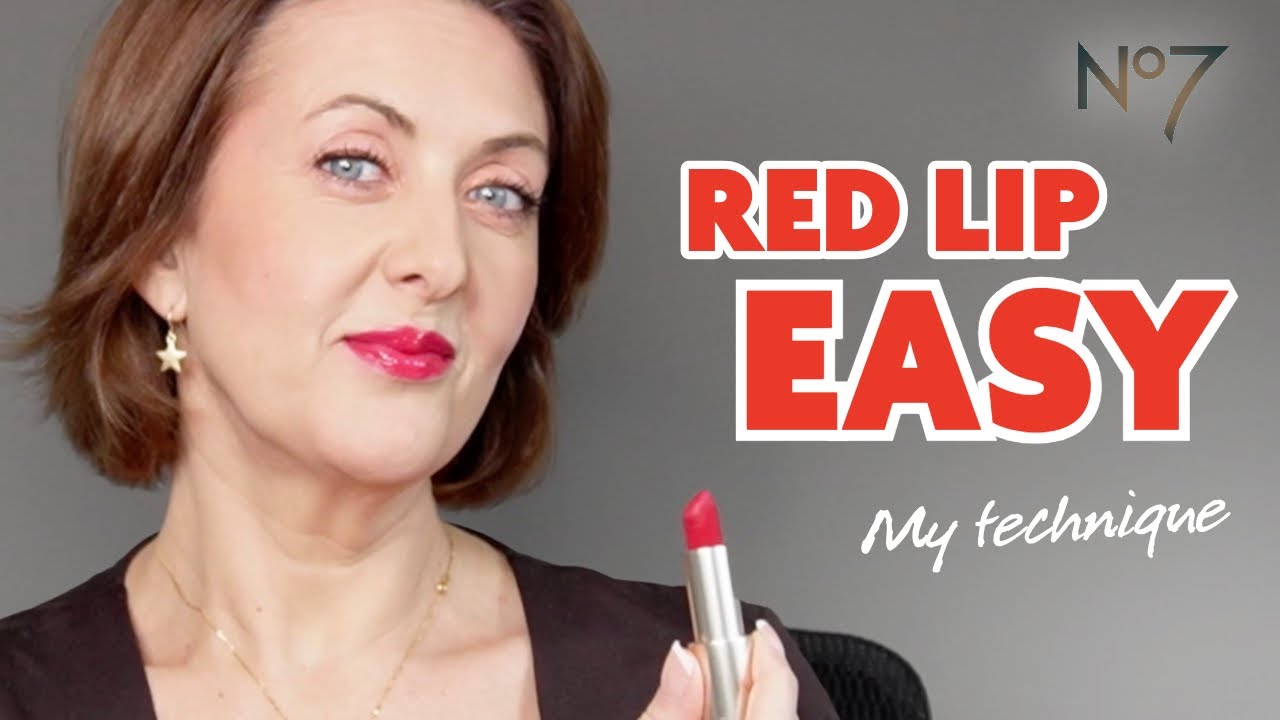
No. The research behind the lipstick effect (Hill and colleagues, Journal of Personality and Social Psychology, 2012) covers appearance-enhancing products in general, such as designer jeans, perfume and boots, not red lipstick specifically. Recession cues raised women’s desire for premium versions of those products but not discount-brand ones.
It measures spending and buying intent, so it says nothing about what a red lip signals to viewers.
Does red lipstick mean the same thing on men and non-binary wearers?
Not necessarily, and the research hasn’t measured it. The red-lip experiments discussed here used female wearers, so their results do not transfer to men or non-binary wearers.
The Nieuwe Instituut, a Dutch design institute, files Boy George’s 1980s lipstick-wearing androgyny under gender trouble and ties it to Hollywood glamour.
Did red lipstick ever have a spiritual meaning?
Historically yes, in specific places. In England, red lipstick was thought to repel malevolent spirits (National Geographic).
Experts cited by China Temper say Han dynasty lip products were first applied to please the gods during religious activities.
Who Decides What a Red Lip Says?

Setting and audience shape red lipstick meaning more than the shade does, and the lab evidence for a fixed signal is small and contested.
Setting comes first because it determines who reads the lip. Undertone and finish come next, since they govern how the shade flatters and the wearer controls both. Lighting at purchase comes last, and it moves preference ratings more than attractiveness ratings.
What the wearer can’t control is how a given viewer reads it. A shade chosen for undertone and light flatters the wearer, but no choice guarantees the reading.
This position reflects sources checked in October 2026. A large preregistered replication that finds a red lipstick effect, or a study that measures wearer outcomes, would shift the weighting.

She started writing on the site after fielding the same questions from clients and friends often enough to just write the answers down: which red won't turn orange on a warm undertone, how to keep lipstick from feathering into fine lines, why a "12-hour" formula rarely survives dinner.
Every review on the site follows the same rule she uses with paying clients: wear it first, then decide if it's worth recommending.
- How to Make Eyeliner Last Longer Without Smudging - August 31, 2026
- How to Make Eyeshadow Last Longer All Day - August 29, 2026
- How to Find Your Undertone in 5 Easy Steps - August 27, 2026