The forearm swatch is the usual way to test a red, and it doesn’t tell you much. In a 2023 study in Frontiers in Neuroscience, preference for a shade swatched on the forearm did not correlate with preference on the lips (r = 0.15, p = 0.59).
The same study had 60 observers rate 15 matte red lipsticks under 5 light sources. Preference and purchase-intention ratings under 2,500 K warm light came out significantly lower than under the other four, so the lighting you choose a red under changes how much you like it.
What works better is pairing the shade’s color bias (orange-red, true red or blue-red) with your skin undertone, then looking at it on your lips in neutral daylight.
What Are the Main Red Lipstick Shade Families?

Orange-red, true red, blue-red, brick, and wine or berry cover most of what’s on the shelf. Each leans toward a different undertone, which is why one red can look sharp on one person and muddy on another.
| Family | Color bias | Pairs with | Reference shade |
|---|---|---|---|
| Orange-red | Yellow-orange lean | Warm | Pat McGrath Labs MatteTrance Obsessed! |
| True red | Balanced, no clear lean | Neutral, widest fit | Rouge Dior 999, Revlon Certainly Red |
| Blue-red | Blue or pink lean | Cool | MAC Ruby Woo |
| Brick | Brown-orange lean | Warm, deeper skin | MAC Chili |
| Wine or berry | Purple-blue lean | Cool, deeper skin | MAC Diva |
Cherry sits between true red and blue-red, with a slight pink lean that stops short of raspberry.
For a first red, a true red or a cherry is the safest bet. Balanced reds sit near the center of the color wheel, so they forgive an imperfect undertone match.
NARS Jungle Red trips people up, because it sounds like a classic red. It’s a satin lipstick that NARS lists as a vivid blue red, so it belongs with the blue-reds, not the balanced ones.
Wine and berry sit at the dark end of the range and read bold on most skin tones. Styling ideas for that end are covered in this guide to dark red makeup looks.
How Do You Find Your Skin Undertone?

Look at the veins on your inner wrist in daylight, then confirm with a white paper test or a jewelry test. Blue or purple veins point to a cool undertone, green to warm, and a mix of both to neutral.
People swap these terms constantly, so here’s the split. Skin tone is the surface color you see, and it moves with sun and season. Undertone sits underneath and stays put, whether it’s warm, cool or neutral. Depth is a separate thing again and only describes how light or deep the skin is, from fair to deep.
Vein, paper and jewelry tests
The vein check is the quick one. The rest are backups.
- Hold plain white paper beside your bare face. Skin that looks yellow next to it reads warm, and pink or rosy reads cool.
- Silver and platinum tend to flatter cool skin, yellow gold flatters warm, and neutral skin wears either.
- Sun reaction helps a little. Easy tanning leans warm and burning first leans cool, though this is less reliable on deeper skin, where a cool undertone can still tan easily.
How accurate are these tests?
No single test settles it.
Vein color shifts with lighting and with how thin the skin is over the vessel, so stylists treat the vein test as a first pass rather than a verdict.
Run at least two tests. If they disagree, call the result neutral and let the lipstick swatch decide.
Two tests that agree on warm point to orange-red and brick, and the wider set of shades that flatter warm undertones is worth a look before buying.
Two that agree on cool point to blue-red and berry. The same logic extends to the lipstick colors that suit cool undertones in other families.
Should a Red Lipstick Match Your Undertone or Contrast With It?
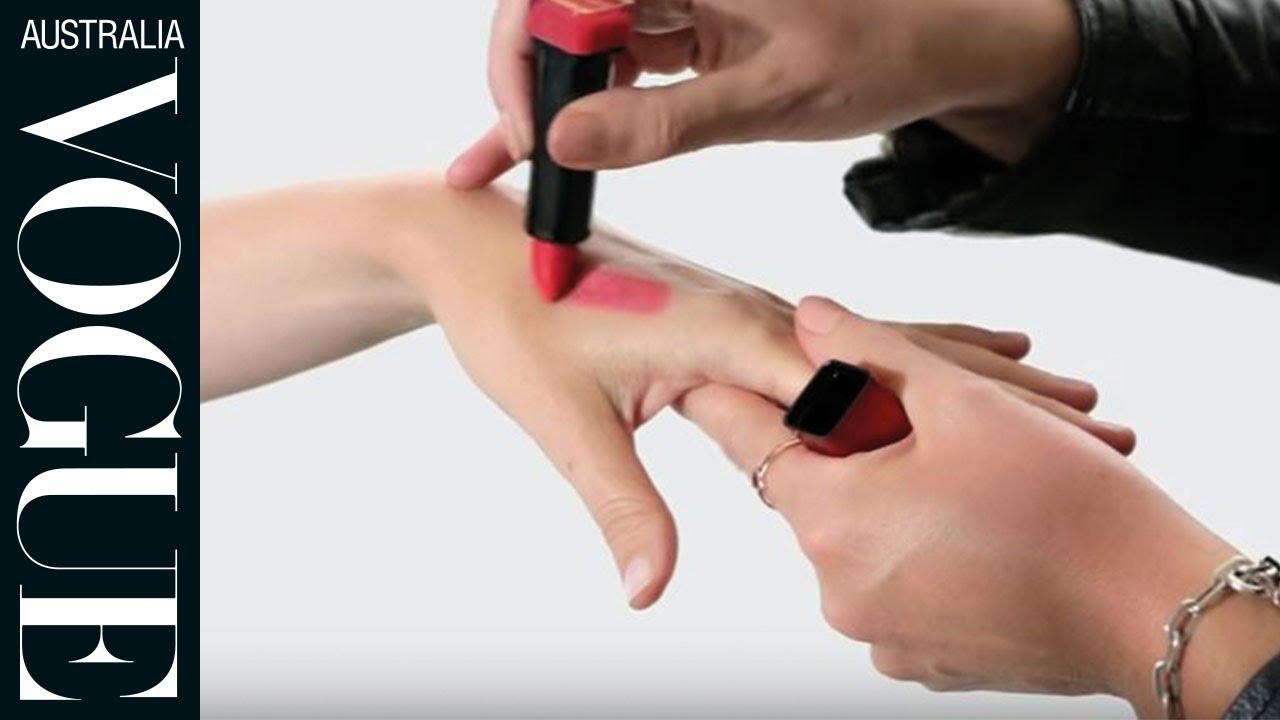
Match the undertone when you want the red to look like part of your face. When the red is supposed to be the first thing anyone notices, go the other way.
Matching means warm skin with orange-red or brick, and cool skin with blue-red, cherry or raspberry. It reads polished and low-risk.
Contrasting flips that: a blue-red on warm skin, an orange-red on cool skin. The look is sharper and louder, and it leaves less room for sloppy application.
Retail guides split on which factor leads. A 2020 GLOSSYBOX guide recommends raspberry and cranberry for fair complexions and shifts to orange-reds when fair skin has a neutral or warm undertone, which is matching by undertone. The same guide adds that reds with tones opposite to your skin make a look pop.
Other guides key off depth alone and send every fair complexion to a cool-toned red. That rule breaks down for fair skin with a warm undertone.
Russell (Perception, 2009) found that cosmetics consistently increase the luminance contrast between the lips, eyes and surrounding skin.
Any red already raises contrast. Match or contrast mostly changes how loud it reads.
For daytime, the office or a first red, match. For evenings, photos and statement looks, move one step toward contrast. Neutral undertones can go either direction, so finish and wear end up deciding it.
A side-by-side look at cool versus warm red lipstick shows how a single shade changes between the two directions.
Neutral skin has the most freedom here. The range is mapped in this breakdown of lipstick for neutral undertones.
Which Red Suits Fair, Medium, Olive and Deep Skin?

Lighter skin carries lighter or cooler reds with less effort, while deeper skin holds richer, more saturated ones. Undertone then adjusts the exact shade inside each depth.
Skin depth and red family
| Skin depth | Undertone | Reds that tend to work |
|---|---|---|
| Fair | Cool | Raspberry, cranberry, cherry |
| Fair | Warm or neutral | Orange-red |
| Light to medium | Neutral or warm | True red, cherry, tomato red, brick |
| Olive and tan | Warm or neutral (tests often read mixed) | Brick, orange-red, deep true red |
| Deep | Cool or warm | Blue-red, wine, berry, brick, true red |
Fitzpatrick skin type, the six-level scale most people reach for, was built in the 1970s to dose UVA treatment for psoriasis, according to a June 2026 Cutis review. It does not capture undertone.
Type IV tells you how skin reacts to sun. It says nothing about which red to buy.
Google released the 10-shade Monk Skin Tone Scale in 2022, developed with Harvard sociologist Ellis Monk. It gives a finer yardstick for naming your depth.
Deeper skin holds saturated reds well, and a wider set of lipstick colors for dark skin sits in its own guide.
Teeth shade and lip base color
Teeth shade changes how a red reads at the smile line.
A 2023 study in Medicine and Pharmacy Reports had 100 observers grade tooth whiteness from 1 to 6 across photos of 4 smiles wearing 5 lipsticks. Red and purple lips earned higher grades than nude ones.
Four smiles is a small sample, so read it as a direction, not a rule. Yellow-leaning teeth tend to look better against blue-based reds, and very white teeth work with any family.
Lip base color matters too. Natural lip pigment shows through sheer and stain formulas, so the result lands darker than the swatch, while opaque matte and cream formulas cover it.
A separate piece explains which lipstick shades make teeth look whiter across all colors.
Which Finish and Formula Should You Choose?

A satin or cream bullet is the easiest first red. Matte and liquid formulas last longer but ask for a steadier hand and better lip prep.
Finish
Matte gives the strongest color payoff and the longest wear. It also shows dry patches and lip lines, and budget versions flake.
Satin is comfortable with a soft shine, but it wears down faster than matte. Cream is hydrating and full-color, and it feathers easily and fades first.
Glossy or sheer reds are forgiving and need no liner. The catch is low color intensity and frequent reapplication.
Most people deciding between matte and satin are trading comfort for staying power, and a direct comparison of matte versus satin lipstick lays out that trade.
Formula
| Formula | Wear | Comfort | Precision needed |
|---|---|---|---|
| Bullet | Moderate | High | Moderate |
| Liquid | Long | Lower, can dry | High |
| Lip stain | Long on the lips | Medium | High, hard to correct |
| Tinted balm | Short | Highest | Low |
Fenty Beauty Stunna Lip Paint is a typical liquid example. Knowing exactly what liquid lipstick is helps before committing to one.
Skip stains and thin liquids for a first red. Mistakes on those do not wipe off cleanly.
How Long Does a Red Lipstick Last, and What Causes Feathering and Transfer?
Wear time depends on the formula’s waxes, oils and pigments, not on how bold the shade is. Feathering depends on the skin around the lip line, and transfer depends on how fast the oils flash off.
The wax and oil balance sets wear, so a liquid or stain outlasts a cream bullet in any shade. Feathering happens when color creeps along fine lines and excess oil at the lip edge. Transfer drops when volatile oils evaporate after application and leave a film that rubs off less.
Transfer resistant does not mean transfer proof.
Revlon chose “transfer resistant” over “transfer proof” in its marketing, according to Cosmetics & Toiletries, because the second phrase implies the lipstick could never come off.
The same publication notes that the first transfer-resistant lipsticks felt dry and finished matte. That comfort trade-off still applies to any long-wear red.
When lip liner helps, and when to skip it
Brand guides from Thrive Causemetics and Napoleon Perdis agree on one point: outlining is not enough, and filling the whole lip with liner before the lipstick gives the color something to grip.
Liner earns its place when fine lines frame the mouth, when the formula is creamy or glossy, or when the lipstick has to last through a meal.
Leave it out with a stain or a thin liquid that comes with its own precise applicator. Same goes for a crisp lip edge under a short-wear sheer red.
Matching the liner to the red, or to your natural lip color, keeps the edge invisible. A separate guide covers the lip liner shades that go with red lipstick.
Lip primer and the edge of the lip
Primer smooths the lip surface before color goes on.
Thrive Causemetics takes a different route and applies eyeshadow primer to concentrated areas like the smile lines around the mouth, not to the lips themselves, so oils don’t break down the color and creamy formulas stay put.
Feathering is also more common with age because those lines deepen, which is why a full walkthrough on how to stop lipstick from feathering starts with prep, not product.
What Pigments Make a Lipstick Red?
Carmine, an insect-derived dye, is the pigment people ask about most. Synthetic lake pigments such as D&C Red No. 7 Lake and iron oxides do most of the rest, and a single shade often mixes more than one.
Carmine (Colour Index CI 75470) comes from cochineal insects, and FDA permits it in cosmetics under 21 CFR 73.2087.
FDA’s final rule, published in the Federal Register on January 5, 2009, requires cosmetics to name carmine or cochineal extract in the ingredient list. The agency cited reports of severe allergic reactions, including anaphylaxis. Labels had to carry the name by January 5, 2011.
FDA declined to require an insect-origin statement. Vegan buyers have to read the ingredient list for the name themselves.
Lake pigments carry most of the true red and blue-red range. D&C Red No. 7 Lake (CI 15850:1) is a synthetic pigment bound to a calcium salt, and it is insoluble in water, which suits wax-and-oil sticks. FDA certifies these color additives before they go into marketed cosmetics, and D&C Red lakes used in lipstick are batch certified. Red 6 and Red 7 lakes are the most commonly used color additives in lipstick, according to Cosmetics & Toiletries (2022).
Iron oxides come in red (CI 77491), yellow (CI 77492) and black (CI 77499) grades, and they supply the brown-leaning depth in brick shades. FDA exempts them from certification and permits them in lipsticks and eye-area cosmetics, with maximum levels of 10 ppm lead, 3 ppm arsenic and 3 ppm mercury (21 CFR 73.2250).
For most buyers, pigment type does not change which red to pick. It matters for carmine allergy and for vegan preference, and the rest of what sits in a stick is laid out in this rundown of lipstick ingredients.
How to Test a Red Lipstick Before Buying

Swatch the shade on bare lips in daylight, then judge it after it settles.
- Remove old lip product and test on your lips. A fingertip or inner arm shows a different color than lip tissue.
- Stand near a window. Store lighting skews warm or cool and changes how the red reads.
- Apply one thin layer and hold the mirror next to your bare cheek, with no foundation, to judge the shade against your skin.
- Smile and check the red against your teeth.
- Wait 5 minutes, then press your lips to the back of your hand. That is the kiss test Revlon used for Ultima II, and it became the industry standard for transfer, per Cosmetics & Toiletries.
- Look again in 30 minutes for fading at the center and color creeping at the edge.
If the shade passes all six, buy it.
Technique decides how it wears from there, and applying red lipstick cleanly has its own walkthrough.
When Do Undertone Rules Stop Working?
They stop working when something other than undertone controls how the red looks. That could be a misread result, uneven lip pigment, dry lips, redness-prone skin or a poor formula.
Surface redness, a tan and warm bulbs all push the vein and paper tests off, and cheek flush is not a cool undertone. Dark or patchy lips can make a correct-undertone red look muddy.
Matte formulas amplify texture on dry or flaking lips, and budget matte reds tend to flake.
Acne and rosacea do not rule red out. Strongly pink or blue-leaning reds can echo flushed skin, while warmer or deeper reds often sit quieter.
Then there’s the plain mismatch of a right shade in the wrong formula, which looks wrong. Swap the formula before swapping the shade.
Dry lips are the most common reason a well-matched red looks off. Prep matters more than shade there, and the steps for applying lipstick on dry lips are specific.
Uneven pigment is a separate problem with a separate fix, covered in the guide to applying lipstick on dark lips.
A red that tests right but feels wrong gets left in the drawer. Comfort decides whether a shade gets worn.
Red Lipstick FAQ
Which red lipstick looks best on thin lips?
A satin or cream finish in a bright true red or orange-red gives the most visual fullness. Matte finishes can make lips look thinner.
Placement matters as much as shade, and a guide to applying lipstick on thin lips covers it.
What red works for mature lips?
A satin or hydrating cream in a mid-tone red sits more comfortably than a dry matte. Pair it with a liner.
Feathering becomes more common with age because fine lines around the mouth deepen, according to brand guides from Revlon and Thrive Causemetics.
Can you wear red lipstick during the day?
Yes. A sheer or satin red in one thin layer, or a stain dabbed on with a fingertip, reads polished rather than formal.
Keep the eye makeup light, and see this guide to wearing red lipstick for daytime looks.
Does hair color change which red to pick?
Only a little. Undertone and skin depth lead the decision.
Hair color mostly shifts overall contrast, so lighter hair tends to suit brighter reds and darker hair carries deeper ones.
Is a drugstore red as good as a luxury red?
Often, for color. Red 6 and Red 7 lakes are the most commonly used lipstick color additives (Cosmetics & Toiletries, 2022), so the gap usually sits in comfort, wear and shade range rather than in the red itself.
How do you apply red lipstick so it stays neat?
Exfoliate and moisturize first, then fill the whole lip with a matching liner. Apply thin layers and blot once.
Building color gradually keeps the edge crisp and slows fading.
Which Red Lipstick to Buy First
The first red lipstick should forgive mistakes, which means a true red or cherry in a satin or cream bullet. A second red earns its place only after the first has proven the undertone match.
Settle the hue family, confirm it in daylight, and leave finish and formula for last. Hue goes first because a formula can be swapped while a wrong hue cannot be corrected. Finish and formula change wear, not color.
The trade-off is impact. A balanced first red is the quietest option in the range, so the louder, contrasting reds wait for the second purchase.
Once the first red is chosen, makeup looks that build around a red lip show how to style it.

She started writing on the site after fielding the same questions from clients and friends often enough to just write the answers down: which red won't turn orange on a warm undertone, how to keep lipstick from feathering into fine lines, why a "12-hour" formula rarely survives dinner.
Every review on the site follows the same rule she uses with paying clients: wear it first, then decide if it's worth recommending.
- How to Make Eyeliner Last Longer Without Smudging - August 31, 2026
- How to Make Eyeshadow Last Longer All Day - August 29, 2026
- How to Find Your Undertone in 5 Easy Steps - August 27, 2026