Most red lipstick problems start before the lipstick comes out of the bag. Flaky lips and a wobbly edge are the usual culprits, and a saturated red shows both.
Undertone, not skin depth, decides which red works. The Fitzpatrick scale won’t tell you yours, since it classifies skin by sun reaction, according to EyeWiki from the American Academy of Ophthalmology.
How to Choose a Red Shade for Your Undertone
Cool skin tends to suit blue-based reds. Warm skin does better with orange-based ones, and neutral skin can pull off a balanced true red. Skin depth matters far less than undertone.
| Red family | Usually pairs with | Reference shade |
|---|---|---|
| Blue-red | Cool undertones | MAC Ruby Woo, a very matte, vivid blue-red |
| True red | Neutral undertones | Revlon Super Lustrous Certainly Red, a cream formula sold as a bright true red |
| Warm red with a blue edge | Neutral to warm undertones | Dior Rouge Dior 999, which Dior describes as a warm red heightened with a hint of blue |
| Orange-red | Warm undertones | Dior Rouge Dior 777 Fahrenheit, a velvet orangey-red |
L’Oreal Paris tells fair-skinned wearers to look for reds with blue undertones.
If you want to see both families side by side, this comparison of cool and warm red lipsticks is a good place to start.
How to Find Your Undertone
Look at your wrist veins first. Blue or purple ones point to cool, green points to warm, and a mix of the two usually means neutral.
Jewelry gives a quick second opinion. If silver flatters you more, you lean cool, and gold suggests warm.
The most useful test is on the lips themselves, in daylight, not on the back of your hand. Natural lip color shows through the pigment and shifts the result.
Swatch two or three reds before you buy. A longer walkthrough on picking a red you will actually wear covers the rest.
Why the Fitzpatrick Scale Does Not Settle It
The Fitzpatrick scale sorts skin into six phototypes by how it reacts to sun, so it predicts burning and tanning, not undertone, according to EyeWiki from the American Academy of Ophthalmology. The same entry calls it a poor proxy for skin color across global populations.
Two people in the same phototype can sit on opposite sides of cool and warm.
Use it for sunscreen decisions, not lipstick.
How to Prep Lips Before Red Lipstick

Red pigment shows every dry patch, which is why prep matters more here than with a sheer pink. Exfoliate only if lips are flaky, hydrate with a balm or oil, then blot the surface so the color has something to grip.
Lip skin has no oil glands of its own, so dryness shows up there first.
A dermatologist quoted by Healthline recommends scrubbing 1 to 2 times a week, ideally at night. A damp washcloth works, and so does a natural exfoliating method like a sugar scrub.
Skip it when lips are peeling or raw. The New York Times quotes a dermatologist warning against picking or using abrasive scrubs on peeling lips, since both strip healthy skin and make chapping worse.
For hydration, the American Academy of Dermatology points to petrolatum as a dependable balm ingredient. It also says stinging or burning after application means the product is irritating your lips, so stop using it.
Brands build this step into their own routines. Charlotte Tilbury starts her red lip guide with a hydrating lip oil and says it makes color go on smoother with less feathering, while Dior opens its Rouge Dior instructions with a balm as a hydrating base.
L’Oreal Paris lists a balm or primer as step one. Whichever you use, press a tissue to the lips afterward until the surface feels smooth rather than slick, because liner and lipstick slide over a greasy base. Honestly, this is the part people skip most often, and it’s the one that makes the biggest difference.
If lips stay cracked for weeks, a routine built around lip care for dry lips comes before any red. Crusting at the corners, pain or itching calls for a dermatologist, per the same New York Times piece.
Which Tools Do You Need to Apply Red Lipstick?
A lip liner, a lip brush, concealer and a tissue cover nearly every step.
Lip Liner
Liner sets the shape and holds the edge so the color stays put. Charlotte Tilbury pairs red lipstick with a ruby-red liner and draws slightly beyond the natural lip line for a fuller look.
If you want to match the pencil properly, there’s a separate breakdown of which lip liner shade goes with red lipstick.
Lip Brush or Bullet
The bullet is the fastest option and fine for creamy formulas, though you get less control at the corners and the cupid’s bow. A brush is slower, but it reaches the corners and keeps the edge crisp.
Charlotte Tilbury’s method is to swipe the brush back and forth across the bullet to pick up pigment, then use the fine tip on the lips. I’d say a brush earns its place with matte and liquid reds, where a mistake dries before you can fix it.
Concealer and Clean-Up Tools
Concealer evens the skin around the mouth before color goes on, then sharpens the outer edge afterward when applied with a small flat brush.
Charlotte Tilbury’s guide calls for concealer at the mouth corners first, and her longer guide repeats it at the end to define the edges. For shade and placement, this primer on using concealer correctly helps.
Keep a tissue and a cotton swab within reach too. The tissue blots between coats, and the swab lifts smudges before they dry.
Applying Red Lipstick Step by Step
Skipping a step shows faster in red than in a nude, so it’s worth going through the sequence in order, from a clean base to a teeth check.
- Prep the lips with balm or oil, then blot the surface.
- Dab a little foundation or concealer over the lips and just past the edge.
- Trace the vermilion border, draw the two peaks of the cupid’s bow, then connect to the corners.
- Start at the center and work outward in a thin coat, using the bullet or a brush.
- Press a tissue to the lips once. Do not rub.
- Add a second thin coat. This builds opacity without heaviness.
- Run concealer on a small flat brush along the outside of the lip line to clean the edges.
- Smile in the mirror to check your teeth, then close your lips around a clean finger and pull it out to remove excess.
Lining the Lips

Lining is the step most people rush.
Charlotte Tilbury draws the liner in a heart shape across the top lip, which locks in the cupid’s bow before any color goes on. A dedicated guide to applying lip liner goes deeper than space allows here.
Filling and Layering Color
Dior’s Rouge Dior instructions say to line first, then apply the lipstick from the center of the lips outward for intense, even color.
Thin coats beat one heavy pass. Apply a layer, blot to lift the pigment that did not bond, then add a second layer, which also keeps red off the teeth later.
One coat gives a softer, stained look. Two blotted coats get you full opacity that wears more evenly.
How Formula and Finish Change the Application
The formula sets the technique, not just the look. Matte bullets need one thin layer on smooth lips, and creams blend easily but travel more. Liquids set within minutes, so precision comes first, while stains build in sheer layers on bare lips.
| Formula | How to apply | Main failure mode |
|---|---|---|
| Matte bullet | One even layer after exfoliating and balming | Clings to dry patches |
| Cream or satin bullet | Blend from the bullet or a brush, center outward | Bleeds more readily than matte |
| Liquid matte | Thin, steady sweeps, then wait for it to dry | Streaks when overloaded |
| Lip stain | One thin layer on bare lips, built up gradually | Absorbs unevenly on rough lips |
Maybelline rates SuperStay Matte Ink at up to 16 hours of wear and tells you to let it dry completely.
Once a liquid matte dries, an oil-based remover is the cleanest way back, according to makeup artist Andrew Sotomayor, so correct mistakes while it is still wet. The routine is laid out in this guide to working with a liquid formula.
L’Oreal Paris advises a thin layer of lip stain on bare lips because stain sets within seconds, and smooth lips help it absorb evenly.
Color builds in passes rather than one heavy coat. Anyone new to the format can start with applying a lip stain before trying a red.
Artists don’t fully agree on bleeding. Mary Irwin says matte formulas are the least likely to bleed. Beck Morgan, a Giorgio Armani Beauty artist, calls a long-wearing satin your best friend against feathering.
The split comes from where each one locates the problem. Morgan blames dehydrated lips that pull moisture and pigment along as you talk, drink and eat, so he wants moisture in the formula.
How to Make Red Lipstick Last

Set the color through a tissue with translucent powder and build on a filled-in liner base. When it starts to fade, touch up the center instead of re-tracing the outline.
Setting Red With Translucent Powder
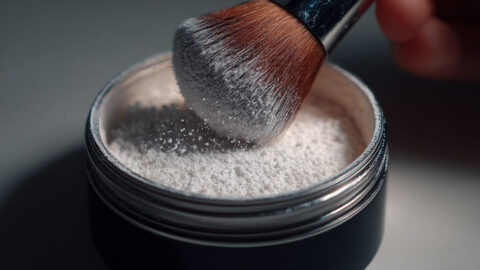
Pull a tissue apart so you have a single ply, lay it over the lips, and press translucent powder through it with a brush. That is the method one makeup artist recommends in Rustan’s The Beauty Source for staying power.
L’Oreal Paris says pressing powder through a tissue sets lipstick without changing its finish, while dusting powder directly on the lips mattifies the color. On a satin or glossy red, the tissue route keeps the shine.
A fuller walkthrough on setting lipstick with powder covers brush choice and pressure.
A Filled-In Liner Base
Fill the whole lip with liner, not only the outline, and pick a waterproof or budge-proof one. Pressing foundation over the lips and setting it with translucent powder before lining helps as well.
Makeup artist Mary Irwin calls a waterproof liner filled all the way in a base for long-wearing color. Trinny London’s artists make the same case for budge-proof liner.
Liner shade is where artists differ, with one exception for red. RMS Beauty founder Rose-Marie Swift generally prefers a liner that matches the natural lip color, because a liner matched to the lipstick can leave a stenciled outline behind as the color fades. For red lipstick she makes an exception and recommends a red liner for a consistent look.
That agrees with the ruby-red liner pairing Charlotte Tilbury uses for red lipstick. The natural-tone approach applies to other shades, where it trades a sharper edge for a cleaner fade.
Touching Up Without Building Edges
Matte color tends to hold around the perimeter of the mouth and thin out in the center, PureWow notes. So blot, then press fresh color into the center and blend outward.
Re-tracing the outline builds a hard, stenciled edge as the lipstick fades, so leave that alone.
More habits that stretch a day of wear are collected in this guide to making lipstick last longer.
How to Fix Feathering, Bleeding, Smudges and Teeth Stains
Feathering and bleeding come from fine lines and dry or oily lips. Smudges come from product left loose at the lip edge, and teeth stains from color sitting on the inner rim of the lips. Each has its own fix.
Feathering and Bleeding
Mary Irwin ties bleeding to vertical lines that form from repeated pursing, which give color a place to wander. Beck Morgan adds dehydrated lips to the cause list.
Press a line filler or primer around the lip line, not on the lips themselves. Jane Iredale artist Nechelle Turner suggests dusting translucent powder over the primed area before lipstick, and RMS Beauty sets the lip line with powder so it works as a barrier.
If color has already crept out, lift it with a cotton swab and a little remover.
Prevention gets its own routine in this piece on keeping lipstick from bleeding.
Smudges
A grip layer under the color does more than cleanup after the fact.
Sotomayor says a lip primer helps the formula hold on and prevents mid-day smudging and smearing, while a swab lifts a fresh smudge before it sets.
Lipstick on Teeth
Irish beauty site Beaut.ie suggests a tiny layer of Vaseline across the top front teeth as a barrier. A light tap of translucent powder after the final coat locks the color down too, and it helps to keep red off the innermost edge of the lip, where it rubs onto teeth first.
Red shows more than any other shade, so the habits in keeping lipstick off your teeth are worth building into the routine.
When the Standard Steps Do Not Work
The standard sequence doesn’t fit everyone. Dry lips and thin lips need adjustments, and a reaction to the product needs a different response altogether.
Dry or Flaky Lips
Dermatologist Morayo Adisa warns that matte lipsticks, especially long-wear formulas, can dry out lips when used consistently without moisturizing first.
Makeup artist Gabriel Almodovar recommends a creamy finish for chapped lips because it carries the most oil, though he adds that newer mattes can be quite hydrating. He also says not to exfoliate lips that are already cracked.
So switch to a cream or satin red while lips recover, and leave the scrub alone. The full approach is in this guide to applying lipstick on dry lips.
Thin Lips
Sources disagree on whether a bold red suits thin lips.
Makeup artist Jemma Kidd says dark shades and matte textures make lips look smaller, and Max Factor’s experts also steer thin lips away from dark matte colors. Lancome Beauty Advisor Olivia Thompson sees it the other way, saying dark lipstick suits every lip size, and makeup artists quoted by mindbodygreen suggest overlining red for a fuller look.
One point holds across both camps. Thompson calls overlining too much the biggest mistake people with thin lips make, since it can look unnatural.
A separate piece on applying lipstick on thin lips goes into the technique.
Lips That React to the Product
DermNet NZ reports that lipsticks and lip care products are the commonest cause of allergic contact cheilitis in women.
Dyes such as carmine, preservatives and fragrance are among the ingredients implicated, per Patient Care. Persistent swelling, as opposed to an episode after one product, points toward an inflammatory cheilitis.
Stop the product and see a dermatologist. A published case from Airlangga University’s dental faculty identified the culprit only through patch tests of cosmetic components and the patient’s own lipstick.
Common Questions About Applying Red Lipstick
Can you wear red lipstick without lip liner?
Yes, but the edge gets harder to control. Work in thin coats with a lip brush, then sharpen the outline with concealer on a small flat brush. For a softer look, skip lining entirely and let the color diffuse.
Is it possible to apply red lipstick without a brush?
It is. Swipe straight from the bullet in thin passes, starting at the center and moving toward the corners. Creamy formulas suit this best, since they blend without a brush.
Should you put lip gloss over red lipstick?
Yes, once the color has set. A thin slick turns a matte or cream red into a glossy evening finish, and this guide to layering gloss over lipstick covers placement.
How do you get a soft, just-bitten red for daytime?
Press the color on, blot it, then blend the edges outward with your ring finger. The result reads as a natural tint rather than a defined red.
Use one thin layer, and skip the liner.
What removes a red lipstick stain from the lips?
Start with an oil-based makeup remover, then rinse with warm water and finish with wet cotton pads, per makeup artist Andrew Sotomayor. Stubborn liquid formulas follow the same route, as in this guide to removing liquid lipstick.
Dry, rough lips stain faster, so moisturize them regularly.
What to Fix First When Applying Red Lipstick
Lip condition comes first when applying red lipstick, because dry or flaky lips distort both the color and the edge. Shade and formula only refine a base that already holds.
Matte formulas cling to dry patches and dehydrated lips drive feathering, so one base problem causes two separate errors.
That sets the order of repair. Deal with dryness first, then fill the whole lip with liner, and choose a formula that suits your lips once the base is sorted.
Each step corrects a fault the next one cannot hide. The cost is time, since the liner base and powder set add minutes and flatten the shine.
Lips that stay cracked for weeks despite balm belong with a dermatologist, not a makeup bag. Once the application holds, eye makeup that balances a red lip finishes the look.

She started writing on the site after fielding the same questions from clients and friends often enough to just write the answers down: which red won't turn orange on a warm undertone, how to keep lipstick from feathering into fine lines, why a "12-hour" formula rarely survives dinner.
Every review on the site follows the same rule she uses with paying clients: wear it first, then decide if it's worth recommending.
- How to Make Eyeliner Last Longer Without Smudging - August 31, 2026
- How to Make Eyeshadow Last Longer All Day - August 29, 2026
- How to Find Your Undertone in 5 Easy Steps - August 27, 2026