Dab a thin coat of stain on the center of blotted lips and blend outward before it dries. A heavy first coat is the usual mistake, since the dye soaks into the outer layer of skin instead of sitting on top, and it doesn’t wipe away easily once it sets.
The same chemistry limits the shade range. According to Makeup.com, only a small number of dyes stain the lips safely, so expect fewer colors than a lipstick line offers.
How to Use Lip Stain, Step by Step
Order matters here, since the dye is hard to take back once it sets.
- Exfoliate only if your lips are flaking. A damp washcloth or a gentle lip scrub is enough.
- Apply a thin layer of lip balm and give it a few minutes to absorb.
- Blot with a tissue until your lips feel dry to the touch.
- Line the edges with a matching liner if you want a sharp shape.
- Dab a small amount of stain on the center of your lips.
- Blend outward to the corners with the applicator, a brush or a fingertip.
- Let the coat dry, then add a second thin coat only where you want more color.
Most mistakes happen at step 5. People load the applicator and sweep it across both lips in one pass, and the streaks show up within minutes.
How quickly that happens depends on the formula.
Which Lip Stain Formula Are You Working With?
The liquid or gel in the tube carries a dye that colors the outer layer of lip skin, which is why the shade stays after the carrier dries. What changes your technique is the formula: water-based, alcohol-based, oil-based or a tint balm. Each one sets at its own speed and forgives mistakes differently.
There’s a separate explainer on what lip stain is and who it suits, so this section sticks to how formulation changes the way you apply it.
How Lip Stain Colors the Lips
Lip skin is thin. The lip vermilion is only 3 to 5 cell layers thick, against roughly 16 on facial skin (peer-reviewed review of lip skin physiology, PubMed Central).
A surface layer that thin helps explain why stain looks so permanent on lips. Henne Organics describes stain as absorbed into the skin, where lipstick and tint sit on top of it.
Cosmetic colorant suppliers sell fluorescein dyes such as D&C Red No. 21 and No. 27 specifically for their staining properties (GCI Magazine, 2025). Keep these away from your eyes, though. FDA’s cosmetics color additive table lists both dyes as permitted for lipsticks and general use but not for the eye area (21 CFR 74.2321 and 74.2327).
Water-Based, Alcohol-Based, Oil-Based and Tint-Balm Formulas
| Formula | How it sets | Feel on lips | Technique note |
|---|---|---|---|
| Water-based | Water evaporates, leaving a thin film | Light, often sheer | Build in thin coats, let each dry |
| Alcohol-based | Volatile solvent flashes off fast | Can feel tight on dry lips | Work in small sections, blend at once |
| Oil-based | Sets slowly, stays slick | Comfortable, glossy-leaning | Blot the excess, expect shorter wear |
| Tint balm | Stays soft, never fully dries | Moisturizing, sheer | Reapply as needed, color is lighter |
The first two rows dry fast because of how long-wear lip color is built. The patent literature pairs evaporating solvents with film formers (USPTO patents US 4,795,631 for water-based color and US 6,190,681 for alcohol-containing liquid color).
Formulas vary by brand, so read the ingredient list instead of trusting the name on the box.
When Lip Stain Is the Wrong Choice
Skip it on cracked, bleeding or sore lips.
A USPTO filing on transfer-resistant cosmetics (US 7,261,877) notes that long-wear products can leave lips very dry and flaky after several hours. The American Academy of Dermatology says to stop any lip product that burns, stings or tingles, and to see a board-certified dermatologist if chapped lips haven’t healed within two to three weeks.
Lips that stay dry for weeks need a routine before they need color. This guide to caring for dry lips covers it.
How Should You Prep Lips Before Applying Lip Stain?

Exfoliate only if lips still flake after moisturizing. Then apply a thin layer of non-irritating balm, wait a few minutes and blot until the surface feels dry. Stain highlights every flake, and leftover oil keeps it from setting evenly.
Lips lose roughly five times more water than body skin, according to preliminary studies cited by Cosmetics & Toiletries, so the balm step isn’t optional.
For the scrub, a damp washcloth or gentle scrub in small circles with light pressure does the job. For the balm, pick something fragrance-free with ceramides, dimethicone, castor seed oil or mineral oil, all of which are on the AAD’s helpful list. Press a tissue over the lips once the wait is up. Tatcha’s guidance is to layer stain on clean, dry lips, and that’s the whole reason for the blot.
How often to scrub depends on who you ask. Medical News Today gives twice a week for lips. Dermatologists quoted by Bustle set the limit at once a week at most, warning that over-exfoliation tears skin and can lead to inflammation or darkening.
I’d treat once a week as the ceiling and skip the scrub entirely on cracked lips. Home methods are covered in this guide to exfoliating lips naturally.
If you want a crisp shape, line the edges first. This walkthrough on applying lip liner shows the technique.
Applicator, Brush or Fingertip: Which Works Best?
Whichever tool you pick, the best results usually come from using two of them. The applicator deposits the color, and a brush or fingertip diffuses it.
The doe-foot applicator is the fastest option and it loads too much product on the first pass. Wipe one side on the neck of the tube before it touches your lips.
A lip brush gives the most control at the corners and along the upper lip line. Stain stays in the bristles, so keep a dedicated brush and wash it after each use. A fingertip gives the gentlest blur for a soft finish, and it colors your finger too, so wash your hands right after.
Start at the center of the lips and blend toward the corners. Judge the shade after the coat dries, not while it’s wet.
How Do You Build Color and Control the Finish?

Build color in thin coats and let each one dry before adding the next. The stain itself dries matte, so any shine comes from what goes on top.
Maybelline Australia notes that stains tend to dry down matte, and its fix is a lip gloss overlay once the color has set.
One thin blotted coat gives a sheer wash. A second coat after the first dries gets you to medium, and bolder shades take more thin coats, center first and edges last.
Stain also works as a base. A makeup artist in SheerLuxe’s pro roundup puts a light layer of hard-wearing stain under a bold lipstick.
Gradient lips started showing up on Korean variety and music shows in the late 2000s, according to Gulf News. The look hinges on keeping the pigment in the center and thinning it toward the edge.
- Dab stain on the inner lips only.
- Press the lips together once to spread it.
- Tap the outer edge with a fingertip or cotton swab.
- Add a second coat to the center.
Cult Beauty describes the Korean version a little differently. A small amount of concealer goes over the natural lip color, then a velvety tint or stain, then clear gloss on the center only.
The full two-tone fade has its own walkthrough in this guide to doing ombre lips.
How Long Does Lip Stain Last, and What Shortens It?

Manufacturers claim 8 to 12 hours for a true stain and about 4 for a stain-oil hybrid. Those are brand claims, not independent wear tests.
L’Oreal Paris says stains last about 8 to 12 hours, longer than lipstick or gloss. MAC Cosmetics gives up to 12 hours for Versicolour Varnish Cream Lip Stain, 8 for Versicolour Stain and 4 for Shot of Colour Lip Oil.
Read together, the two sources show formula type moving wear from 4 hours to 12. The 8 to 12 range fits full stains, and the lip oil sits well below it.
Makeup.com reports that stain testing covers eating, drinking and time outdoors, so a stain that vanishes after lunch is underperforming its category.
Does Balm or Gloss Over a Stain Shorten Wear?
Makeup.com’s view is that a stain lives in the skin, so a glossy overlay wears off while the color stays.
A Bustle writer saw something else. Swiping lip balm over a stain and waiting a minute lifted the color with a little friction.
Both can be true. Friction and contact time matter, and so does the difference between a dye that has set and a film-forming product sold as a stain. Let the coat dry fully, then press balm on instead of dragging it.
How Do You Fix Patchy or Uneven Lip Stain?
Patchy lip stain usually traces back to texture underneath or too much product in one pass. Blot, blend and rebuild in thin coats instead of piling on another full layer.
| Symptom | Likely cause | Fix |
|---|---|---|
| Streaks | One heavy pass of product | Blot, then blend with a fingertip |
| Darker center | Product pools where skin is smoothest | Blot the center, blend outward |
| Color sits in lines | Matte drydown spotlights texture | Balm first and blot, tiny dab of concealer |
| Uneven fade | Friction wears some spots first | Reapply a thin coat to bare spots only |
| Hard edges | Overloaded applicator | Cotton swab with remover, or concealer |
Nykaa’s beauty blog flags the natural instinct to add another full layer over patchy color. It makes the unevenness more visible.
Does Lip Stain Settle Into Fine Lines?
Sources split on this. Makeup artists quoted by Makeup.com blame dehydrated lips and fine lines for lip color settling and feathering, and Nykaa says rigid matte formulas spotlight texture.
Makeup.com also says a stain avoids the thick film those problems come from, because it sits in the skin. Maybelline Australia still notes it dries matte.
So a stain won’t pile into lines the way a film does, but a flat matte finish still lets the lines show.
How Do You Remove Lip Stain Without Irritating Your Lips?
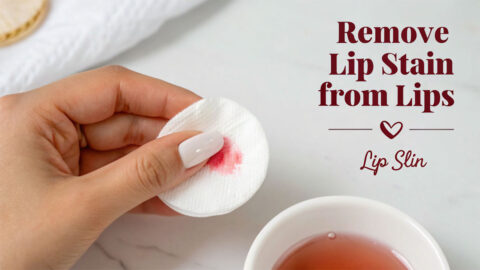
Massage an oil-based cleanser or balm over dry lips, wait 20 to 30 seconds, wipe, then follow with micellar water. The wait is a guideline from iba Cosmetics, and heavier formulas may need a second pass.
Plain liquid removers take only the outermost layer of a stain and need rubbing, according to Makeup.com. Oil does the dissolving, so keep the massage light.
- Press oil-based cleanser or balm onto dry lips.
- Massage in small circles with your fingertips.
- Wait 20 to 30 seconds, then wipe with a cotton pad.
- Finish with micellar water on a clean pad.
| Remover | Best for | Limit |
|---|---|---|
| Oil-based cleanser | Stubborn, long-wear stain | Needs a second cleanse |
| Micellar water | Light stain, travel | Alone, can miss heavy formulas |
| Petroleum jelly | Quick bedside removal | Greasy, leaves residue |
For the skin around the mouth, a cosmetic chemist quoted by Milk Makeup recommends doubling up on cleansers for lip and cheek stains, oil balm first and a water-based cleanser or micellar water second.
MasterClass advises an untinted lip balm afterward, since long-lasting stains and matte colors can leave lips dry and cracked.
Lip Stain FAQ
What is the difference between a lip stain and a lip tint?
Stain leaves intense, stay-put color. A tint gives a sheerer wash that feels lighter and fades sooner.
Tints usually carry more moisturizing ingredients, so go with stain if you want staying power and tint if comfort matters more.
How does lip stain differ from lipstick?
Lipstick carries more pigment and coverage. A stain gives a more natural-looking wash of color.
The tradeoff shows up at cleanup, because a stain takes more effort to remove. If you don’t want a long removal routine, lipstick is the easier choice.
Can lip stain double as blush?
Yes, when the label says lip and cheek, which many stains do.
Tap a small amount onto the apples of the cheeks and blend with a fingertip before it dries. Keep it off the eye area.
How often should you reapply lip stain?
When the color visibly thins, not on a timer.
Full stains hold longer than stain-oil hybrids and tint balms, so the hybrids need touching up first.
Which Lip Stain Should You Try First?
A stain-oil hybrid or a water-based stain, then a full-strength formula once application feels easy. A forgiving formula makes a first failure cheap.
Swatch a corner of the lips to check shade and sting. Wear it for a full day at home before the first public outing. The swatch costs nothing, and the day at home shows where your stain lands inside the 4 to 12 hour range brands claim. Skip either one and the first test happens in front of other people.
Hybrids trade shorter wear for easier blending, so expect more touch-ups until you move up. Wear claims shift with reformulation, so this advice holds as of October 2026.
A shortlist of the best lip stain picks is the natural next stop.

She started writing on the site after fielding the same questions from clients and friends often enough to just write the answers down: which red won't turn orange on a warm undertone, how to keep lipstick from feathering into fine lines, why a "12-hour" formula rarely survives dinner.
Every review on the site follows the same rule she uses with paying clients: wear it first, then decide if it's worth recommending.
- How to Make Eyeliner Last Longer Without Smudging - August 31, 2026
- How to Make Eyeshadow Last Longer All Day - August 29, 2026
- How to Find Your Undertone in 5 Easy Steps - August 27, 2026