Most problems with lipstick on dark lips come from the lip color underneath, not from the lipstick. A peach or orange corrector cancels that tone, a thin layer of concealer smooths the surface, and the lipstick goes on in a couple of coats with a brush.
Skip the base and the natural pigment mixes into the shade, so pinks and reds end up ashy or patchy. Kelly Dobos reported in Skin Inc. (2023) that vermilion color runs from pinkish-red to brown depending on skin color, and that the red of blood shows through the lip in lighter skin tones. On deeper lips, the base leans brown.
Why does lipstick look ashy or patchy on dark lips?

Most lipsticks are semi-translucent, so the brown base of a dark lip mixes with the pigment instead of disappearing under it. The shade drifts toward gray or brown and comes out uneven.
On lighter lips the thin outer layer lets red blood show through, and that red base blends easily into pinks and reds. Deeper lips lean brown, so the same pink lands somewhere else entirely.
Texture adds to the problem. Dark lipstick magnifies texture and crooked lines, according to MAKE Beauty, so dry patches show up faster under saturated color.
| What you see | Cause on pigmented lips | What fixes it |
|---|---|---|
| Ashy or gray cast | Pale, cool or sheer shade over a brown base | Corrector, then a deeper shade |
| Patchy color | Dry flakes and uneven pigment under a thin layer | Prep, concealer base, thin coats |
| Muddy brown shift | Natural pigment blends into the lipstick | Neutralize first, then use an opaque formula |
| Fades from the center | Base lip color shows as the lipstick thins | Blot and set with powder |
Nearly all of these trace back to a base that was never neutral.
How to prep dark lips before lipstick
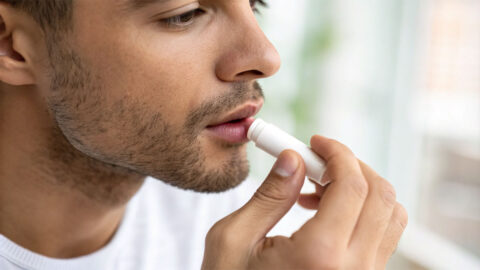
Prep means hydrating and blotting, with a light exfoliation first if the lips are flaking. Cracked lips skip the exfoliation entirely.
The outer layer of lip skin is only 3 to 5 cells thick, against 15 to 20 on typical skin (Skin Inc., 2023). A hard scrub can strip that layer quickly.
Brooklyn Dermatology founder Reshmi Kapoor told CNN, in an article carried by WRAL, that scrubbing can wear away healthy lip skin and leave it more exposed to irritants.
So exfoliate once or twice a week at most, and only when the lips actually flake. Put balm on after that and give it time to settle. Then press a tissue over the lips so leftover slip does not lift the concealer later.
Healthline quotes dermatologist Suzanne Friedler saying healthy lips do not need exfoliation, while dry, flaky ones benefit because cosmetics then apply more uniformly. A sugar scrub or a damp washcloth covers it, and there are plenty of gentle ways to exfoliate your lips at home without buying anything.
Hydration is the part I would never skip. Water loss through lip skin has been measured at 3 times the rate on the cheek, per the same Skin Inc. report, so balm belongs in a steady lip care routine, not only in the five minutes before makeup.
Long-wear formulas make dryness worse, and the report advises cutting back on them while lips are chapped.
How to color correct dark lips with corrector and concealer

Dab a peach or orange corrector on the darkest areas, then press a concealer over it. The corrector cancels the bluish and brownish tones, and the concealer leaves a neutral surface for the lipstick.
Choosing the corrector tone
Peach and orange sit opposite blue on the color wheel, which is why they cancel bluish pigment. Maybelline India’s guide lists pigmentation around the mouth among the areas an orange corrector treats.
Corrector goes down before the base, and how a color corrector works comes down to complementary shades canceling each other.
Published guides don’t agree on where the tone-to-depth line falls.
| Guide | Lighter end | Deeper end |
|---|---|---|
| Maybelline India | Peachy orange: light | Orange: medium to tan; deep orange or red-orange: deeper |
| Makeup.com | Peach: fair to light complexions | Orange or red: warm, dark skin tones |
Maybelline India starts orange at medium to tan, while Makeup.com reserves orange and red for warm, dark skin tones. Neither is a lip-specific shade chart, so swatch the corrector on the lip itself.
Judge by the pigment, not the label. Faces Canada warns that peach does too little on very deep pigmentation, and Makeup.com recommends orange or red correctors to neutralize blue tones.
In a pinch, a warm orange or peach lipstick works as a substitute, per Maybelline India.
Applying a thin concealer layer
Thin beats full coverage. Faces Canada’s guide says a peach or orange tone showing through the base means the layer was too thick.
If the corrector shows through, thin the layer and re-blend. A cakey texture usually means too much product, so press it in rather than layering more. Order matters too, and corrector goes before concealer or foundation, which Makeup.com calls standard practice.
Makeup.com’s lip tutorial credits the neutral concealer step with better color payoff, especially on naturally two-toned lips, and a longer-lasting finish.
Past that, standard concealer technique applies, meaning a small flat brush and light pressure, with the edges blended into the skin around the mouth.
Best lipstick shades for dark lips

Deep berry, plum, chocolate brown, brick red and mocha nude show true color on dark lips. Pale pinks and light beiges turn ashy, and frosted finishes do the same.
L’Oreal Paris’s dark lipstick guide sends deep skin tones toward purple and dark chocolate brown, with deeper browns for warm undertones.
- Berry and plum are the easiest entry point for cool undertones
- Chocolate and cinnamon brown suit warm undertones
- Brick and warm red
- Mocha and taupe nudes, but only in highly pigmented formulas
Guides to lipstick shades built for deeper skin tones overlap heavily with what works on dark lips.
Charlotte Tilbury’s own shade guide says pale pinks and light beige nudes can look ashy on deeper complexions. Its workaround is to pair a lighter lipstick with a darker liner.
Mented Cosmetics launched in March 2017 around nude lipsticks formulated for women of color, according to BeautyMatter (2018). Nudes work on dark lips when the shade is deep and the formula is opaque.
Brown is the easiest family to start with, and there is more detail on wearing brown lipstick well in a separate guide.
A corrected base widens the range. Skip the corrector and the choice narrows to the deeper families.
Matte, cream, liquid or stain: which formula works on dark lips?

Matte liquid and cream formulas give the most opacity on dark lips, while stains and sheer finishes let the natural pigment through. Pick the formula by how much of the base you corrected.
| Formula | Opacity on pigmented lips | Best for | Main drawback |
|---|---|---|---|
| Matte liquid | High | Longest wear | Dries fast, so edges must be right on the first pass |
| Cream | High to medium | Comfort and easy blending | Needs blotting and powder to hold |
| Satin | Medium | Everyday wear on a corrected base | Sheen exposes texture |
| Stain or sheer | Low | Soft color over a fully neutral base | Shows the natural lip shade |
Wear claims vary by market. Maybelline’s Australian site lists SuperStay Matte Ink at up to 16 hours, while retailer listings for the same range in South Africa and Ireland state 12.
Treat any hour count as a ceiling.
Deeper skin tones get their own breakdown of matte formulas made for deeper skin, which pairs well with a corrected base.
Stains sit at the low end of opacity, and there is a separate explainer on what a lip stain actually is.
Cream or matte liquid for a first try. Save stains for lips that are fully neutralized.
How to apply lipstick on dark lips, step by step

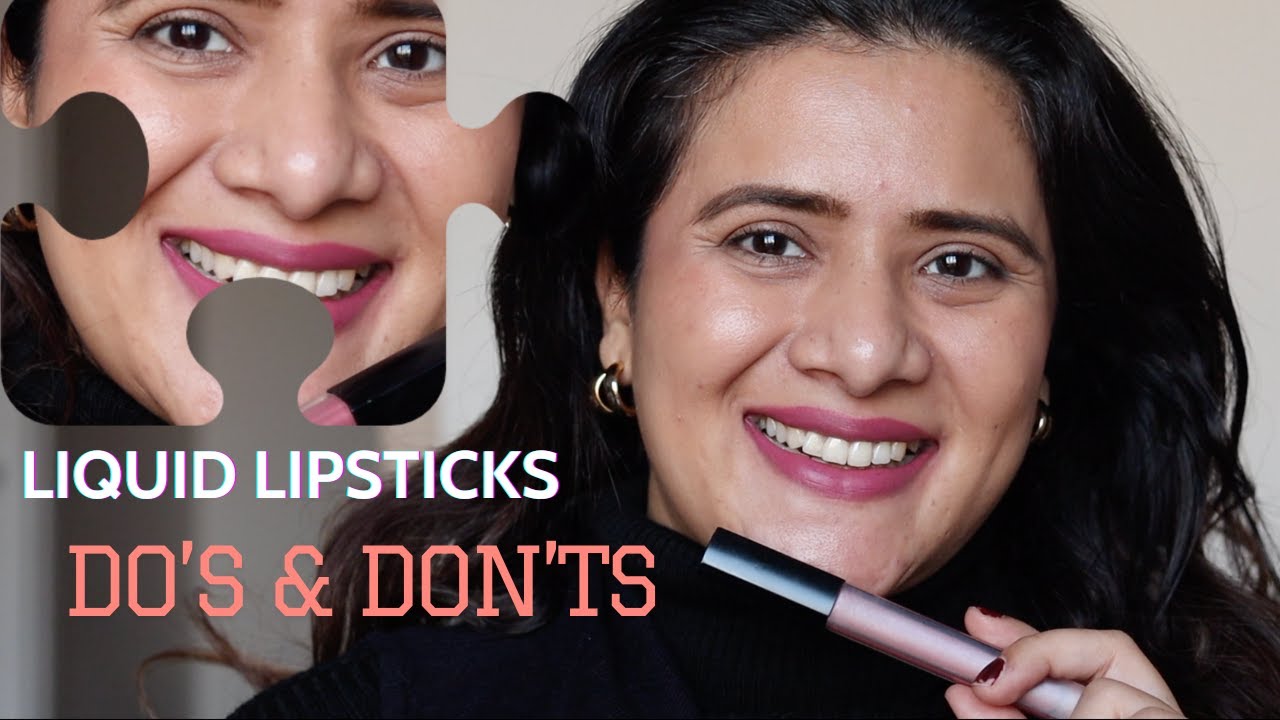
Liner goes on first, then the color with a brush from the center outward, in thin coats with a blot in between. Edges get cleaned up last.
- Start from a corrected, concealed and blotted base.
- Outline the lips with liner, working from the outer corners toward the center.
- Fill the lip surface with liner too, so the lipstick has something to grip.
- Paint the first coat with a lip brush, center first, then out to the corners.
- Blot, then add a second coat for full opacity.
- Tidy the edges with concealer on a small brush.
Lining the lips
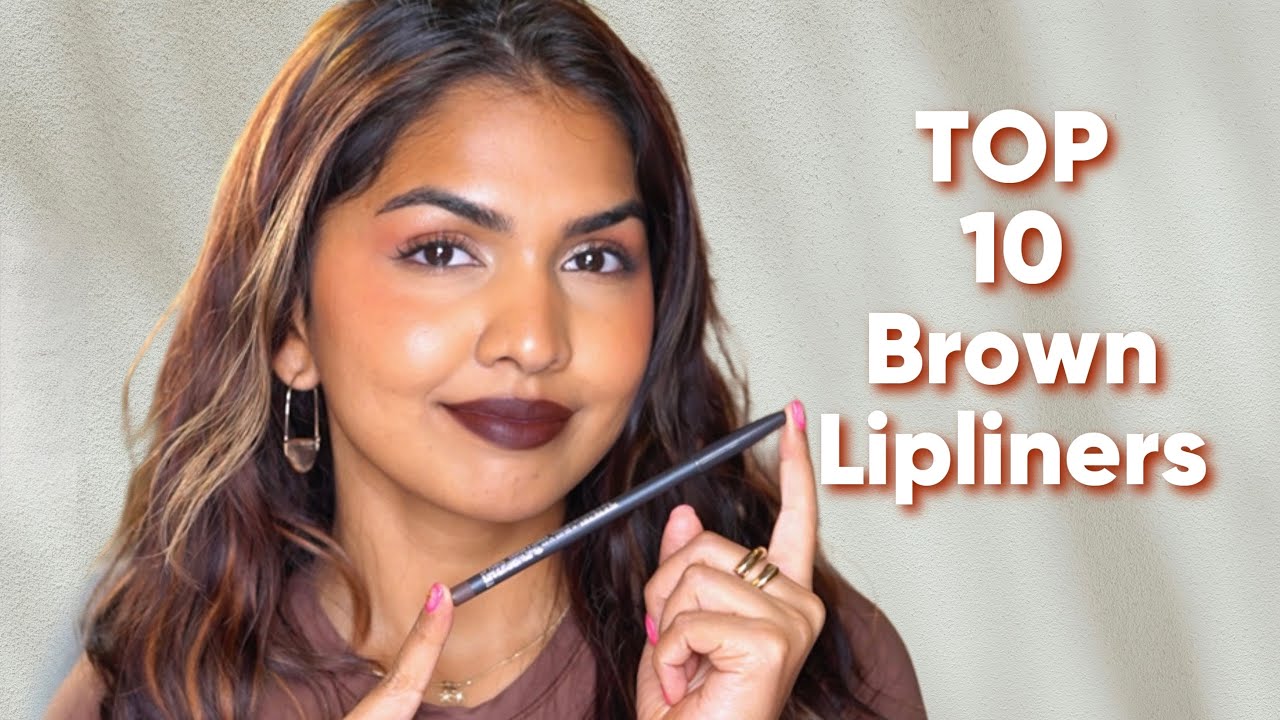
Published guides disagree on liner color.
Makeup.com suggests a transparent liner or one that matches the lipstick. MAKE Beauty goes one or two shades softer than the lipstick, and Jean Coutu says to use the same shade.
The base decides it. Over a fully neutralized lip a softer liner disappears, and over a partly corrected one a matching liner hides the gaps.
Frankie magazine’s dark lip tutorial starts the top lip at the outer corners and leaves the dip in the middle until last.
For picking the pencil itself, there is a short guide to choosing a lip liner shade.
Technique has its own walkthrough on applying lip liner step by step.
Filling in and layering
Expect the first coat to look patchy.
Frankie’s tutorial says solid color can take a few applications on dark lips. Makeup.com recommends a brush over the bullet, since applying lipstick directly can leave small bare areas that show under a dark color.
QC Makeup Academy’s tutorial starts on the bottom lip, with color at the center first and then out toward the corners, using a small lip brush for precision.
How to make lipstick last on dark lips

Blot the first coat, press translucent powder through a one-ply tissue, then add a second coat. The powder sets the layer so the base lip color does not show as the lipstick thins.
L’Oreal Paris lays out the tissue method as one coat, a single-ply tissue over the lips, loose translucent powder dusted on top, then a second coat and a repeat. Makeup artist Carl Ray recommends the same tissue-and-powder trick. Laura Mercier’s Michel Coulombe skips the tissue and applies powder straight onto the first layer of lipstick, according to I’m a Beauty Geek.
The tissue version is the safer start, because the tissue acts as a filter and lets the powder land little by little, per Thrive Market’s tutorial.
There is more on setting lipstick with powder in a separate guide.
Powder extends wear. It cannot hide a base that was never neutralized.
For masks and cups (and kisses, if that’s a concern), the guide to making lipstick transfer-proof covers the rest.
When makeup is not enough: causes of dark lips and when to see a dermatologist
Makeup hides lip pigmentation but does not change it. A new dark spot, or one that spreads or changes, needs a dermatologist before it needs a corrector.
Natural melanin is the baseline for many deeper skin tones, and doctors call it physiologic pigmentation. A dermatologist interviewed by NBC News says chronic sun exposure can leave lips looking aged and discolored. Pigment also builds with tobacco use.
Medical causes exist too. Endocrine disorders and inflammatory conditions both appear in Vachiramon and McMichael’s 2012 review in the International Journal of Dermatology, along with drugs and chemicals.
In a PubMed-indexed case-control study of 213 men, 73% of those with lip pigmentation were current smokers, against 33% of those without it.
Smokers who wear lipstick can read about lip care for smokers separately.
Sun protection is the one cause makeup routines can help with. Delta Dental of Minnesota (2024) advises an SPF 30 lip balm daily, reapplied every 2 hours or more often, and a Baylor University Medical Center dermatologist quoted by HealthDay in 2008 said to wear it under lipstick and gloss.
Beyond a new dark spot, patches that change (light or dark) are worth a visit, and so are tingling and pain or a sore that does not heal (Delta Dental, 2024). Geisinger dermatologist Eric Yang linked a persistent scaly spot on the lower lip to actinic cheilitis.
A 2008 letter in Acta Dermato-Venereologica notes that malignant melanoma sometimes occurs on the labial mucosa, which is why a pigmented lip lesion is a clinical concern even when it turns out to be a benign labial melanotic macule.
Check it before covering it.
Common Questions About Applying Lipstick on Dark Lips
Can you skip the corrector and concealer if the lipstick is dark enough?
Yes, with limits. A deep berry or plum, or a brown, in an opaque matte liquid covers the natural pigment without a corrected base.
Anything lighter or sheerer needs the base back.
Can you wear gloss over lipstick on dark lips?
Yes, once the lipstick is opaque. Gloss over sheer or worn color lets the base show, and there is a separate guide to layering gloss over lipstick.
Apply it last, after the lipstick has set.
Does a lip scrub lighten dark lips permanently?
No. A scrub removes flaky surface skin and smooths the lip, but it does not change the melanin behind the color.
Smoother lips take lipstick more evenly. Darkening that spreads or changes needs a dermatologist, not a harder scrub.
Is it safe to wear concealer on lips every day?
Concealer is made for facial skin, so daily lip use calls for care. Choose a fragrance-free formula, patch test it first, and stop if the lips sting or crack, or if they swell.
The American Academy of Dermatology lists fragrance among ingredients to avoid in lip balms, as reported by Genesis HealthCare System in 2024.
Removing Lipstick and Base Without Drying Out Lips
Applying lipstick on dark lips ends with an oil-based remover each night, then petroleum jelly for 3 minutes if color remains, according to Makeup.com (2022). A warm, damp washcloth lifts the jelly and a moisturizing balm finishes the job.
The order matters because each step loosens color before anything gets wiped. Remover goes first. Petroleum jelly is only for leftover pigment, and a thick balm or lip mask goes on last.
Skin Inc. (2023) reports that thicker balms and lip masks might be better tolerated before bed than during the day, and can allow faster recovery.
It does mean an extra pass each morning, since the corrected base has to be rebuilt before the first coat.
For matte formulas specifically, there is a full guide to removing matte lipstick.

She started writing on the site after fielding the same questions from clients and friends often enough to just write the answers down: which red won't turn orange on a warm undertone, how to keep lipstick from feathering into fine lines, why a "12-hour" formula rarely survives dinner.
Every review on the site follows the same rule she uses with paying clients: wear it first, then decide if it's worth recommending.
- How to Make Eyeliner Last Longer Without Smudging - August 31, 2026
- How to Make Eyeshadow Last Longer All Day - August 29, 2026
- How to Find Your Undertone in 5 Easy Steps - August 27, 2026