Lip liner is supposed to be the part that survives. Lipstick fades, gloss disappears, the border holds. That’s the deal in theory.
In practice most people find the line gone by early afternoon, usually from the middle outward.
Peel-off stain formats claim up to 24 hours. Conventional pencils cluster between 6 and 12, and the center goes first almost every time.
What separates them is the wax base and the silicone film sitting on top of it. Pigment load counts too. Price barely factors in, which is irritating if you’ve been buying on the assumption that it does.
What Is Long-Wearing Lip Liner
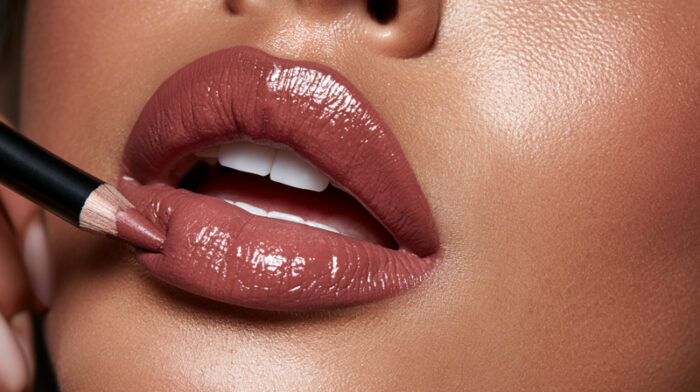
The label gets applied to any pigment pencil that keeps a defined edge for 8 or more hours of eating, drinking and talking without feathering or losing its color. High wax content does part of that work. Silicone film formers do the rest, and the pigment has to be loaded heavily enough that partial loss still reads as intentional. Standard liner quits somewhere around 2 to 3 hours.
None of this would matter if a lip pencil’s whole job wasn’t holding a border. A border that migrates by lunch is worse than no border at all.
Shoppers have been asking for this for a long time. Mintel’s US research on lip cosmetics found that 61% of lip cosmetics users look for long-lasting lip wear claims, second only to moisturizing and hydrating claims at 67%. Those figures come from Mintel’s 2014 US color cosmetics work, so treat them as a long-standing pattern rather than a current-year snapshot.
Wood-cased pencils carry the highest wax density and hold the finest edge, and you pay for that at the sharpener. Retractable twist-ups run a softer gel core with no waste and a slightly wider line. Liquid and felt-tip liners sit apart from both, built on a volatile solvent base that sets to something stain-like in 30 to 60 seconds.
Failure looks different depending on what caused it. Pigment feathers into perioral lines. Color drops out at the center. It transfers onto cups and cutlery. Or it goes patchy in spots where sebum has broken the film.
Circana’s 2025 US retail data put lip liner among the top gaining prestige makeup segments, and lip was the fastest growing makeup segment in mass retail too. Circana analysts tracked lip liner growth of roughly 28% in prestige and 36% in mass through much of 2025, which is why the shelf keeps expanding.
One thing worth understanding before you read another box. Brands count their hours from the moment of application, not from the moment you finish your first coffee. That gap explains most of the disappointment.
The format is also much older than people assume, and its origins trace back further than you’d guess.
Which Lip Liners Last the Longest
Peel-off stain liners hold the longest stated wear, and Maybelline Super Stay Peel-Off Lip Liner leads that format at up to 24 hours. Sacheu’s Stay-N Peel Off, the product that made the format famous, claims up to 12 hours or longer. Among conventional pencils, REFY Lip Sculpt claims 10 hours and Charlotte Tilbury Lip Cheat claims 6.
Which is the honest headline here: format beats brand. A $13 peel-off stain outlasts a $26 prestige pencil on stated hours.
| Liner | Format | Stated wear |
|---|---|---|
| Maybelline Super Stay Peel-Off | Peel-off stain | Up to 24 hours |
| Sacheu Lip Liner Stay-N | Peel-off stain | Up to 12 hours or longer |
| REFY Lip Sculpt | Twist-up, self-setting | Up to 10 hours |
| Charlotte Tilbury Lip Cheat | Wood pencil | Up to 6 hours |
| Urban Decay 24/7 Glide-On | Wood pencil | Long-wear, waterproof claim |
Worth noting that a single brand can be chasing two different outcomes. REFY positions Lip Sculpt as its transfer-proof precision liner. Blur Liner, sold alongside it, uses a domed applicator for a diffused soft-matte effect and never pretends to be the sharper of the two.
Longest-Wearing Pencil Liners
Wood pencils win on precision and lose on hours.
Charlotte Tilbury Lip Cheat runs on cyclopentasiloxane, synthetic wax, isododecane, polybutene, hydrogenated cottonseed oil, ceresin, ozokerite, and microcrystalline wax. That’s a textbook long-wear stack. It still only carries a 6-hour claim, which tells you something about how much the physical format caps the result.
Pillow Talk holds the number one spot in the UK prestige lip liner market by value sales, per Circana UK retail tracking for the 12 months ending March 2026. Pillow Talk Medium sits at number two.
MAC Lip Pencil and NYX Slim Lip Pencil belong to the same structural family. Firm wax core, high pigment, matte dry-down. Both need a careful hand at the sharpener or the tip crumbles on you mid-line.
Longest-Wearing Retractable and Gel Liners
REFY Lip Sculpt is a 0.32 g liner with a 3mm precision tip that self-sets in up to 60 seconds, carries a transfer-proof claim, and states up to 10 hours. The brand highlights vitamin E for antioxidant protection and coconut oil for conditioning, though those ride on top of the silicone film-former chemistry that does the actual holding.
Format is where twist-ups earn their keep. Nothing gets shaved away, the tip width stays consistent, and there’s no wood casing eating into what you paid for.
Rare Beauty Kind Words Matte Lip Liner now covers 16 shades, ten of which map directly onto the original Kind Words Matte Lipstick range, which itself sits at 11 shades. Matched pairs matter more for how fade looks than most people expect.
Gel cores skew softer than wood pencils. Softer means better glide and shorter wear, and no formula on the market escapes that trade.
Longest-Wearing Liquid and Tattoo-Style Liners
Maybelline’s Super Stay Peel-Off sets in 5 minutes, peels away as a film, and leaves a stain the brand describes as pillow-proof, shower-proof, food-proof, and drink-proof for up to 24 hours. It launched in five shades at roughly $13.
Sacheu built an entire business on that mechanic. Gloss Ventures, the parent company, reported more than $40 million in 2024 revenue and raised a $15 million Series A from Peterson Partners in January 2025.
Sacheu’s own instructions ask for 5 to 7 minutes of set time before peeling, with some retailer listings suggesting up to 20 minutes for a deeper stain.
Other liquid and long-wear liner formats from brands like Stila and Fenty sit lower on stated hours than the peel-off stains, closer to the all-day range typical of conventional long-wear color.
The catch with stains is that there are no touch-ups. Once the film peels, whatever tone you’ve got is what you’re wearing until bed.
What Makes a Lip Liner Formula Last
Long wear runs on high-melting-point waxes for structure, with silicone film formers coating the pigment so it resists transfer. Volatile carriers do the third job, spreading everything out and then evaporating so the film locks down. Take any one of those out and the wear time collapses.
Cosmetics & Toiletries lists the standard transfer-resistant resins as trimethylsiloxysilicate, polymethylsilsesquioxane, dilauroyl trimethylolpropane siloxy silicate, and bis-hydroxypropyl dimethicone/SMDI copolymer.
Those resins sit on the surface instead of sinking in. That’s the reason the color doesn’t fade into the skin the way an oil-based formula does.
The wax side overlaps heavily with what goes into a lipstick bullet, though liner runs a far higher wax-to-oil ratio.
Wax-Based Versus Silicone-Based Liners
| System | Mechanism | Weak point |
|---|---|---|
| Wax base (candelilla, carnauba, ozokerite) | Physical structure, high melting point | Softens above body temperature |
| Silicone film (TMS, polymethylsilsesquioxane) | Coats pigment, resists rubbing | Can feel tight or stiff |
| Hybrid (both) | Structure plus transfer resistance | Harder to remove |
Film-former chemistry hasn’t stopped moving either. In comparative lab testing announced by Siltech in June 2026, its Silmer Q7-G10 resin gum recorded 89.19% lipstick retention after 3 minutes and 98.03% after 21 hours on Leneta cards at a 13.90% active dose, outperforming standard trimethylsiloxysilicate formats at the same dose.
Formulators typically start film formers around 3% to 6% and step up by 1% to 2% when transfer resistance tests come back weak.
Volatile Carriers and Set Time
Isododecane, cyclopentasiloxane, and trisiloxane spread the formula, then evaporate.
Typical isododecane use sits at 6% to 12%. That evaporation window is the whole reason REFY tells you to wait up to 60 seconds and Maybelline tells you to wait 5 minutes. Rushing it is rushing the chemistry.
Pigment Concentration and Fade Resistance
Higher pigment load means longer visible wear.
Sheer and universal-tone liners contain fewer pigments overall, cutting staying power by roughly 20% to 30% compared with fully opaque shades. Iron oxides carry more weight per particle than organic lakes, so brown and nude liners built on iron oxide hold their read longer than bright reds built on Red 7 Lake and Red 27.
Emollients pull the other way. More jojoba oil and more castor oil means more comfort and less grip, and that’s the exact compromise separating a transfer-proof lip product from a comfortable one.
How Lip Liner Wear Time Is Measured
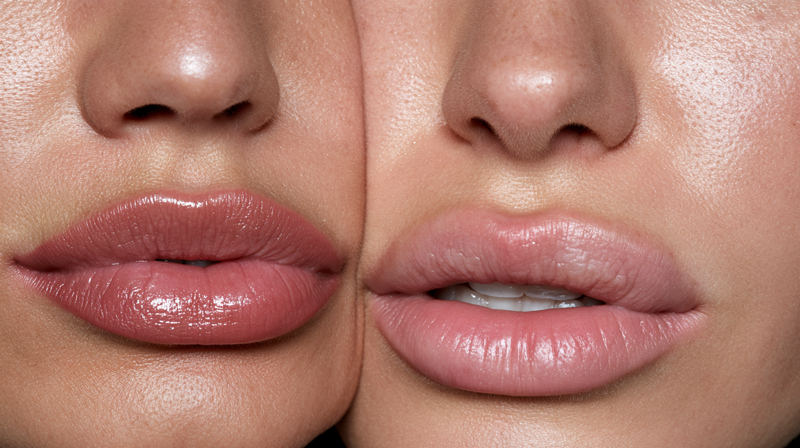
Wear claims come out of instrumental color measurement paired with controlled consumer panels. Labs photograph lips under diffuse lighting and track L\ color value before and after a standardized meal. In-home use tests collect user perception at fixed intervals instead.
The lab protocol is more specific than most shoppers imagine.
Published cosmetic patent protocols describe panelists working through a fixed sequence of insults: blotting kisses on a paper towel, a hot drink, a cold drink, and a small standardized meal. Others measure wear as a percentage by photographing lips before application, immediately after, and again after a sandwich, salad, and hot beverage, then comparing L\ values.
Panel sizes are often small, which is the part nobody advertises. Published lipstick wear studies have run on single-digit panels, and brand claim tests frequently use 50 to 60 people. Rare Beauty, for example, cites an independent consumer study of 51 people for its Kind Words liner claims.
Transfer testing runs separately on Leneta cards or collagen sausage casing, using dry blot, oil blot, and rub cycles measured spectroscopically.
Claim-testing specialists group lip longevity evidence into 4 techniques: before-and-after photography, biophysical instrumentation, expert objective grading, and subjective consumer perception.
None of that involves an 8-hour shift with three coffees and a burrito, which is a fair part of why real-world liner wear rarely matches the box.
Which Lip Liner Finish Lasts the Longest
Matte finishes last longest. Lower emollient load means less oil to break the pigment film, and matte liners routinely outlast satin and creamy formulas by 2 to 4 hours in identical conditions.
| Finish | Emollient load | Best use |
|---|---|---|
| Matte / velvet | Low | Full workday, events, humid weather |
| Satin | Medium | 4 to 6 hour wear, textured lips |
| Creamy | High | Short wear, dry or lined lips |
REFY Lip Sculpt gives a matte velvet finish and pairs it with a transfer-proof claim. Blur Liner from the same brand is built for a diffused soft matte and a blurred edge, which is a different goal entirely.
Finish alone doesn’t decide the outcome though. Film former content does.
And going matte on dry lips has a real cost. Flaking reads as wear failure even when the pigment hasn’t moved an inch, which is one of the main things to weigh when picking a liner for your lip texture.
The matte versus satin split behaves the same way across formats. Anyone who has compared the two finishes in a lipstick bullet already knows how the trade runs.
Waterproof Lip Liner Versus Long-Wearing Lip Liner
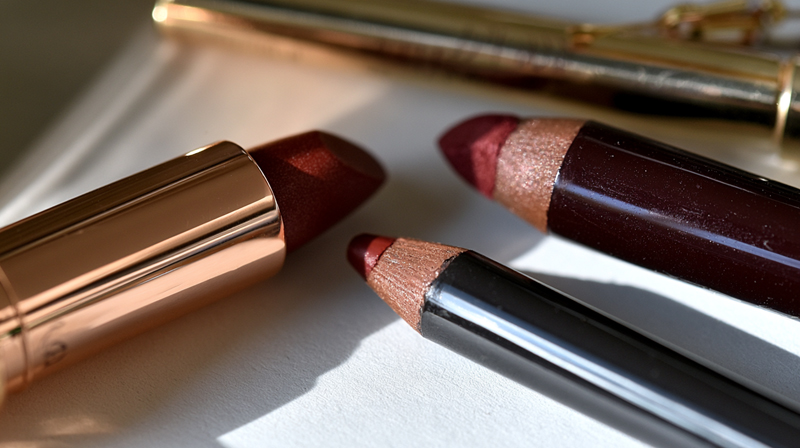
Waterproof means resistance to water contact. Long-wearing means resistance to mechanical transfer and fade over time. A liner marketed as waterproof breaks down under oil, not water, which is why a greasy meal defeats it faster than a swim does.
On the label, waterproof shows up as ceresin, ozokerite, microcrystalline wax, and high synthetic wax content. Long-wear shows up as trimethylsiloxysilicate, polymethylsilsesquioxane, isododecane, and acrylates copolymer. Two different lists doing two different jobs.
Charlotte Tilbury credits ceresin specifically as the waterproof barrier that prevents feathering and transfer in Lip Cheat.
Products carrying both claims stack a wax barrier and a silicone resin. Lip Cheat opens with cyclopentasiloxane, synthetic wax, and isododecane, then brings in ceresin, ozokerite, and microcrystalline wax in the seventh through ninth positions.
Removal difficulty is the direct cost. Waterproof plus film-forming means micellar water won’t touch it, and the same reasoning applies to taking off any waterproof formula.
How Application Method Changes Lip Liner Longevity
Technique adds or subtracts 3 to 4 hours from the same pencil. Filling the whole lip rather than tracing the border, blotting between layers, and leaving balm out of the equation account for most of the difference between a liner that survives lunch and one that doesn’t.
Outline-only application fails at the center first, where friction is highest.
Filling the entire surface gives the film a continuous base and turns the liner into a stain layer under whatever goes on next. The full technique breakdown lives in the guide on lining lips properly.
The blot-and-rebuild sequence goes like this:
- Apply liner across the full lip
- Blot once with tissue
- Dust translucent powder through the tissue
- Reapply a second thin layer
Powder absorbs surface oil and gives the second layer a matte base to grip. Editorial wear tests have repeatedly found the same principle in lipstick trials, where blotting between layers measurably added longevity.
Skip the balm. Oil breaks the waterproof seal fast, and the peel-off stain brands are blunt about it. Sacheu and Maybelline both instruct users to apply to clean, dry lips with no balm or gloss underneath, or the stain won’t develop properly.
A crumbling tip feathers on contact, so keeping a clean point on the pencil isn’t a cosmetic detail. It’s a wear factor.
Prepping Lips Before Lining
Dead skin cells take pigment with them when they shed.
Exfoliate the night before, not right before you apply. Freshly buffed lips run warmer and produce more surface moisture, and both of those soften wax.
A silicone-based lip primer fills vertical lines and gives the film somewhere flat to sit. Too Faced Lip Insurance and NYX Lip Primer both work in this slot.
If you’re dealing with chronic flaking, gentle at-home exfoliation beats attacking it with a physical scrub the morning of.
Layering Liner With Lipstick and Gloss
Order matters more than product choice here.
Liner goes first, always, because the pigment film needs direct skin contact to bond. Lipstick follows, matched or a shade deeper, blotted before the second coat. Gloss comes last and sparingly, center of the lip only, since oil-based gloss dissolves whatever liner edge it touches.
Setting powder between layers is the single highest-return step in the whole sequence, and the method carries over directly from powder-setting a lipstick.
Gloss over a defined lip is a genuine trade. You gain shine and lose a real share of the wear time, so if you insist on both, layering shine over color is worth learning properly.
What Causes Lip Liner to Feather or Fade Early
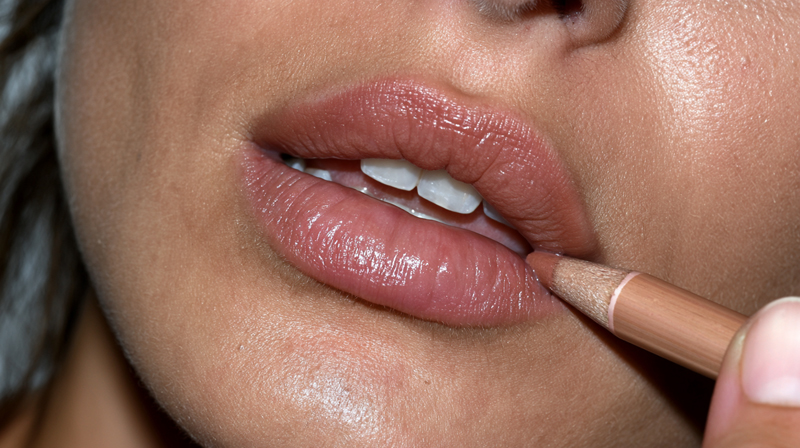
Perioral lines act as channels and guide pigment outward. Sebum loosens the film’s grip on the skin. Heat softens the wax base, and dead skin cells shed with the color still attached. Formula quality is rarely the primary culprit. Skin condition and prep account for most early failures.
Dermatologists generally frame lipstick migration as an interaction between product chemistry and skin condition rather than a single fault in either one.
The lines deepen with age and repetitive muscle movement, pulling pigment out past the vermilion border. Sebum does its damage differently, encouraging migration rather than channeling it, and humid climates plus oily skin types get the worst of it. Heat is the fastest of the four to act, since a hot drink can push the lip surface past the melting point of softer waxes, and beeswax gives out at 62 to 64 degrees Celsius. Dead skin is the quiet one, taking color off in flakes.
The perioral area has fewer oil glands than other facial zones. That’s exactly why it dries, cracks, and then channels color into the cracks.
Carnauba wax melts at 82 to 86 degrees Celsius and gives excellent film strength, though it turns brittle at high loads and accentuates flaking on very dry lips. Candelilla sits lower at 68 to 73 degrees and stays more flexible.
Product age matters more than people think. A crumbly tip or a white cast along the lead signals a binder shift, and a liner in that state will not hold a border. It’s one of several consequences of using lip products past their date.
Transfer is a separate failure from feathering. A liner that stays put on the lip but marks a glass or a collar is losing film integrity, and that pigment lands somewhere, which is why knowing how to lift liner pigment out of fabric is a practical skill.
Same underlying principle behind both problems. The fixes overlap almost entirely with stopping color from feathering in the first place.
Which Lip Liner Colors Fade the Least
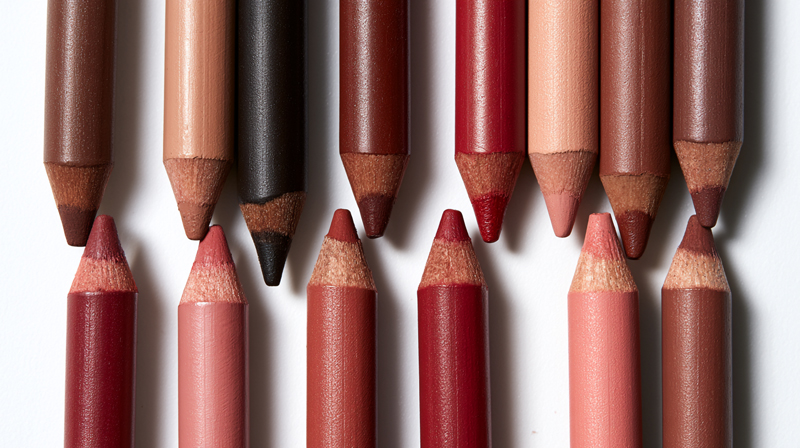
Iron oxide shades fade least. Browns, nudes, and earth tones built on CI 77491, CI 77492, and CI 77499 carry high light and heat stability, while bright reds and corals built on D&C lake pigments show center loss earliest and go patchy sooner.
| Pigment family | Shades produced | Fade behavior |
|---|---|---|
| Iron oxides | Nudes, browns, russets | High light and heat stability |
| D&C Red 7 (Lithol Rubine BCA) | Warm carmine reds | Most widely used, moderate hold |
| D&C Red 21 and 27 | Bright fluorescent-adjacent pinks | Fluoresces, shows loss early |
| Plant-based (beet, black carrot) | Soft pinks, muted reds | Many degrade above 60 C |
Lipstick pigment load typically runs 0.1% to 15% by weight of the total formula, and liner sits at the top of that band.
A lake bonds a soluble dye to an insoluble alumina substrate. That bonding is what stops the color bleeding past the line you drew, which matters more in a liner than in any other lip product.
Deep shades also mask partial fade. A plum or a chocolate brown at 70% remaining still looks deliberate. A coral at 70% looks like a mistake.
Match the liner to your natural lip tone and fade disappears instead of announcing itself. Same logic drives pairing a liner shade with a red lipstick rather than reaching for the darkest pencil in the drawer.
Buyers appear to have worked this out on their own. Circana UK data showed brown lip liner sales rising 45% year on year in 2025, outpacing the wider liner category at 38%, while classic reds declined.
Red 27 is FDA-listed for use in cosmetics including lip products but is not permitted in the eye area, and every batch made for cosmetic use is subject to FDA certification.
How Lip Type and Environment Affect Liner Wear
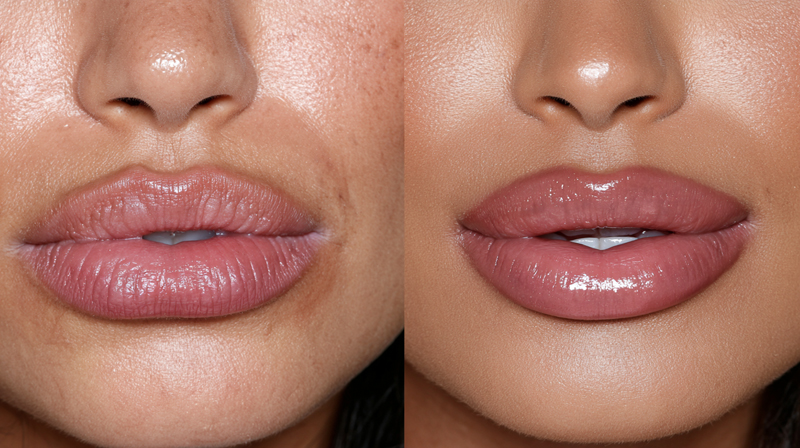
The same pencil performs differently on two people. Sebum output, lip texture, ambient humidity, how often you eat, none of it appears anywhere on the packaging that promised you 12 hours.
Lip Surface and Skin Condition
Oily skin around the mouth shortens wear noticeably, because the excess sebum loosens pigment from underneath. Chronic dryness causes a different problem, since cracked lips create an uneven surface where color pools and then escapes. On mature lips, collagen and elastin loss deepens perioral lines and blurs the natural border, which makes the liner’s job harder before you’ve even drawn anything.
Sometimes it isn’t the makeup at all. Perioral dermatitis, often aggravated by mentholated balms and SLS toothpaste, produces irritation and flaking around the mouth that makes any liner bleed, and treating the skin issue solves the makeup issue.
Consistent care for chronically dry lips does more for wear time than switching pencils ever will.
Weather, Friction, and Daily Habits
Humidity softens wax formulas and pushes sebum production up at the same time. Bad combination.
Sun exposure speeds up photoaging around the mouth, and repetitive puckering deepens the exact lines pigment travels along. Smoking compounds both, which is why lip care for smokers runs on different rules.
Oily food is the top performance killer. A dry sandwich beats a greasy burger every single time, per real-world lipstick wear testing.
Cold weather sets up a conflict between balm dependency and long-wear grip. You get one or the other.
Cost Per Wear of Long-Lasting Lip Liners
Price per unit tells you almost nothing. Product weight varies by a factor of 3 across the category, and a $25 pencil holding 1.2 grams can beat a $30 liner holding 0.32 grams on cost per gram even when the sticker says otherwise.
| Product | Net weight | Listed price |
|---|---|---|
| NYX Slim Lip Pencil | About 1 g (0.035 oz) | Around $5, drugstore tier |
| REFY Lip Sculpt liner | 0.32 g (0.01 oz) | Prestige tier |
| Charlotte Tilbury Lip Cheat | 1.2 g (0.04 oz) | About $26 at Sephora |
| Urban Decay 24/7 Glide-On | 1.2 g (0.04 oz) | About $25 at Sephora |
| Sacheu Lip Liner Stay-N | Peel-off stain | About $14 at Ulta |
| Maybelline Super Stay Peel-Off | Peel-off stain, 0.16 fl oz | About $13 |
A NYX Slim Lip Pencil carries roughly 3 times the product weight of a REFY Lip Sculpt liner tip. Sharpening waste closes some of that gap, not all of it.
Wood pencils lose material every time you sharpen. Twist-ups lose none, which makes their smaller net weights less punishing than the number on the box suggests.
IndexBox estimates prestige and professional lip liners now generate 35% to 40% of total US market revenue while contributing only 12% to 16% of unit volume, at retail prices 3 to 5 times mass-market lines.
Wood pencils still hold roughly 50% to 55% of US unit volume in 2025, mostly on price and familiarity, with mechanical and retractable pencils at 22% to 26% and liquid or gel liners at 12% to 15%.
Shelf Life and Usable Lifespan
Pencil liners run close to 24 months after opening, since every sharpening takes off the contaminated surface layer. Twist-up versions sit at 12 to 18 months and liquid formats at 6 to 12. Check the period-after-opening symbol on the packaging, because some twist-ups are labeled as low as 6 months.
Regular sharpening extends usable life, so keeping a slim pencil properly pointed is a hygiene step and not only a precision one.
A hard, crumbly tip means the binder has shifted. Replace it. Storing liners somewhere cool and dry rather than the bathroom buys back months.
How to Remove Long-Wearing Lip Liner
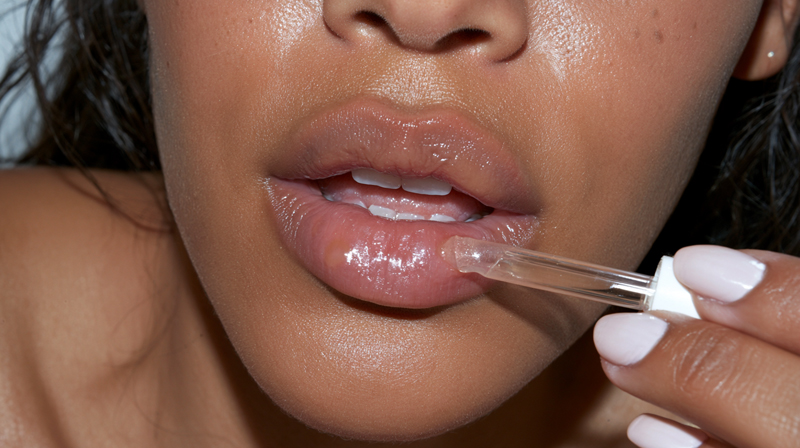
Oil dissolves what water can’t. An oil-based cleanser or cleansing balm applied to dry lips breaks down the wax binders and silicone polymers holding the film together, then a water-based cleanser clears the residue. Micellar water alone falls short on waterproof formulas.
The chemistry isn’t complicated. Film formers and silicone resins repel water by design, so a water-based cleanser just slides off them.
| Remover | Works on | Limitation |
|---|---|---|
| Cleansing balm / oil cleanser | Wax binders, silicone polymers | Needs a second cleanse |
| Bi-phase remover | Isododecane-based liquid liners | Must be shaken before use |
| Micellar water | Light residual color | Ineffective on waterproof film |
The Press-and-Hold Method
Saturate a cotton pad generously. Being stingy at this stage is why people end up scrubbing.
Press the pad against relaxed lips for 10 to 20 seconds before any wiping. The remover needs contact time to break the film apart.
Then wipe from the outer corners toward the center, once, using a clean section of the pad for a second pass if pigment remains.
Professional makeup artists generally favor a soft wipe or pad soaked in a gentle cleanser over any dry friction, since the goal is lifting long-wear color without stripping lip moisture.
What Not to Do
Don’t scrub. Friction damage on the vermilion border costs more in barrier repair than the extra 20 seconds of soaking would have cost you.
Don’t expect one hard swipe to work on a stain. Deep shades and two-layer applications usually need a second gentle pass.
Peel-off stains are their own case. The film peels, the dye stays, and nothing you do that night will fully lift it.
Finish with a non-irritating balm or a thin layer of petrolatum, then fold the step into a consistent nightly lip routine. The same removal principles apply to taking off a liquid lipstick, which uses nearly identical film chemistry.
FAQ on What Lip Liner Lasts The Longest
What lip liner lasts the longest overall?
Peel-off stain liners win. Maybelline Super Stay Peel-Off claims up to 24 hours, setting in 5 minutes and leaving a tinted stain the brand describes as pillow-proof, shower-proof, food-proof, and drink-proof. Sacheu Stay-N, the original viral version, claims up to 12 hours or longer.
Do expensive lip liners last longer than drugstore ones?
No. Format beats price. A $13 to $14 peel-off stain outlasts most $25 prestige pencils on stated hours, and Charlotte Tilbury Lip Cheat carries only a 6-hour claim at roughly $26.
Which lip liner finish stays on longest?
Matte. Lower emollient load means less oil breaking the pigment film, and matte formulas typically outlast satin and creamy liners by 2 to 4 hours under identical conditions.
What ingredients make a lip liner long-wearing?
Look for trimethylsiloxysilicate, polymethylsilsesquioxane, and isododecane. High-melting waxes like carnauba, candelilla, and ozokerite give structure. Volatile carriers evaporate and lock the silicone film onto the lip surface.
Is waterproof lip liner the same as long-wearing lip liner?
No. Waterproof resists water contact. Long-wearing resists mechanical transfer and fade. Oily food breaks down a waterproof liner faster than water does, which catches most people out the first time.
How can I make my lip liner last longer?
Fill the entire lip, blot, dust translucent powder through the tissue, then reapply. That sequence adds 3 to 4 hours, and the full method covers prep too.
Why does my lip liner fade in the middle first?
Friction. The center of the lip takes the most mechanical contact from talking, eating, and drinking, so outline-only application always fails there before the border goes.
Which lip liner shades fade the least?
Iron oxide browns and nudes. They carry high light and heat stability, while bright reds and corals built on D&C lake pigments show center loss earliest.
Do lip liners expire?
Yes. Wood pencils last close to 24 months after opening, twist-ups 12 to 18 months, liquid formats 6 to 12. A crumbly tip means the binder has shifted.
Does long-wear lip liner damage lips?
Not inherently, though matte formulas emphasize dryness and removal requires oil. Scrubbing causes the real damage, so working around dry lips properly matters more than the formula itself.
Conclusion
Format and prep decide this, not brand loyalty. Peel-off stains and self-setting twist-ups hold the top spots on stated hours, and nothing in the prestige pencil range currently touches them.
Everything past that is technique. Fill the whole lip, blot, powder, leave the balm off.
Choose by pigment concentration and finish rather than the shade name on the cap. Iron oxide nudes forgive partial fade. Bright corals broadcast it.
Scan the ingredient list for silicone film formers before you trust any wear-hour claim on a box. Those hours came from a lab panel, not from your commute.
Buy one liner matched to your natural lip tone and one deeper shade for evenings. Two pencils applied properly beat a drawer holding six. Same discipline carries over to keeping lipstick in place.

She started writing on the site after fielding the same questions from clients and friends often enough to just write the answers down: which red won't turn orange on a warm undertone, how to keep lipstick from feathering into fine lines, why a "12-hour" formula rarely survives dinner.
Every review on the site follows the same rule she uses with paying clients: wear it first, then decide if it's worth recommending.
- How to Make Eyeliner Last Longer Without Smudging - August 31, 2026
- How to Make Eyeshadow Last Longer All Day - August 29, 2026
- How to Find Your Undertone in 5 Easy Steps - August 27, 2026