Your lips have no oil glands. Zero. So every time you swipe on a drying formula, you’re making things worse. That’s exactly what makes understanding what moisturizing lipstick is so useful if you want lip color that actually feels good.
Moisturizing lipstick combines hydrating ingredients like hyaluronic acid, shea butter, and squalane with real pigment. It fills the gap between a bare lip balm and a full-coverage matte formula.
This guide covers how these formulas work on lip skin, which ingredients matter (and which ones to avoid), how to pick the right product for your lip type, and how to get the longest wear out of a creamy, conditioning formula.
What Is Moisturizing Lipstick

Moisturizing lipstick is a lip color product formulated with hydrating agents that deposit moisture into the lip skin while delivering pigment. It combines the color payoff of traditional lipstick with the conditioning properties of a lip balm.
The key difference sits in the wax-to-emollient ratio. Standard lipstick formulas lean heavy on waxes and pigments, which can leave lips feeling tight after a few hours. Moisturizing versions flip that balance, loading up on oils, butters, and humectants that actively feed the lip skin.
Think of it as the middle ground between a tinted lip balm and a full-coverage matte lipstick. You get real color. You also get real hydration.
Market Research Intellect valued the moisturizing lipstick market at $7.2 billion in 2024, projecting growth to $10.5 billion by 2033 at a 4.9% CAGR. That growth tracks with a larger shift. People don’t want to choose between lip care and lip color anymore.
The broader lipstick market tells the same story. Grand View Research reported it hit $17.49 billion in 2024, with brands increasingly focused on richer formulas and improved moisturizing properties across all product lines.
Euromonitor’s 2024 Voice of the Consumer survey found that consumers are more interested in clean, multifunctional beauty products than ever. That’s exactly what a moisturizing lipstick delivers. Color and care, same tube.
How Moisturizing Lipstick Works on the Lips
Lip skin is structurally different from the rest of your face. And not in a good way, honestly.
The stratum corneum on your lips is only 3 to 5 cell layers thick, compared to roughly 16 layers on the rest of your face. That alone makes lips far more vulnerable to drying out. But it gets worse.
Lips don’t have sebaceous glands. Those are the glands that produce sebum, the oily substance that keeps the rest of your skin naturally moisturized. Without them, your lips have zero ability to hydrate themselves. Their only natural moisture source is saliva, which actually makes things drier when it evaporates.
No hair follicles either. No sweat glands. And very few melanocytes, which means minimal UV protection built in.
So how does a moisturizing lipstick actually help? It works through three mechanisms layered into one formula.
Humectants vs. Occlusives vs. Emollients in Lip Formulas
Humectants like hyaluronic acid and glycerin pull water molecules toward the lip tissue. A Typology study referencing FISHER research found that a lip care product containing hyaluronic acid increased stratum corneum hydration by an average of 24% in just seven days.
Occlusives like shea butter, lanolin, and beeswax form a physical barrier on the lip surface. They seal in whatever moisture the humectants attract, slowing down transepidermal water loss.
Emollients such as jojoba oil and squalane fill in the tiny gaps between lip skin cells. They smooth the texture, reduce flaking, and make the lipstick glide on without dragging.
Most moisturizing lipsticks combine all three. The humectant draws moisture in. The occlusive locks it down. The emollient softens everything in between. That layered approach is why these formulas feel so different from a standard bullet lipstick the moment you put them on.
The delivery format matters too. A creamy bullet stick deposits a thicker layer of product than a liquid version. Liquid lipsticks often sacrifice some occlusive power for a lighter feel. And the newer lip oil hybrids lean almost entirely on emollients, which is why they feel slippery but don’t always lock in hydration long-term.
Key Ingredients in Moisturizing Lipsticks

Flip over any moisturizing lipstick and you’ll see a mix of hydrators, protectants, and conditioning agents. Some of them do the heavy lifting. Others are mostly there for marketing.
Knowing the difference saves money and disappointment. Here’s what actually works.
Hyaluronic acid: Holds up to 1,000 times its weight in water. In topical lip formulas, it boosts hydration of the outer lip skin layers within days. Look for it in the top half of the ingredient list.
Shea butter: A rich occlusive loaded with fatty acids. It creates a protective film over the lips without feeling waxy or heavy. Clinique and Burt’s Bees use it as a base in several of their hydrating lip lines.
Vitamin E (tocopherol): Works as both an antioxidant and a skin conditioner. Protects lip tissue from environmental stress while softening the surface.
Squalane: Lightweight emollient that absorbs fast. It mimics the natural oils your skin produces (but your lips can’t, since they lack sebaceous glands). Rare Beauty uses squalane-based formulas in their lip products.
Ceramides: These lipid molecules help rebuild the lip’s moisture barrier. They’re especially useful if your lips are already damaged or chronically dry from cold weather or frequent matte lipstick wear.
Jojoba oil and castor oil: Classic emollients in lip formulas. Jojoba closely mimics skin’s natural sebum. Castor oil adds gloss and slip while conditioning.
Red Flags on the Label
Not every lipstick that says “moisturizing” on the front is actually moisturizing on your lips.
Watch for these:
- Denatured alcohol high on the ingredient list (dries lips out fast)
- Heavy synthetic fragrance (common irritant, especially on damaged lip skin)
- Phenol or menthol (they feel tingly and “active” but create a cycle of dryness)
If the formula feels moisturizing on the first swipe but your lips are cracked again two hours later, the ingredients probably lean too heavy on short-term slip agents and not enough on real humectants or occlusives.
Moisturizing Lipstick vs. Matte Lipstick vs. Lip Balm

These three get confused constantly. They overlap in some ways, but the formulation goals are completely different.
| Feature | Moisturizing Lipstick | Matte Lipstick | Lip Balm |
|---|---|---|---|
| Primary Goal | Color + hydration | Bold, long-lasting color | Maximum hydration |
| Finish | Satin, cream, or sheer | Flat, velvety | Glossy or invisible |
| Wear Time | 2-4 hours | 5-8 hours | 1-2 hours |
| Hydration Level | Moderate to high | Low (often drying) | High |
| Transfer | Moderate | Low | High |
Matte lipstick is built for staying power. High wax, high pigment, minimal emollient. That’s why it lasts through coffee and lunch, but also why it can leave your lips feeling like sandpaper by the end of the day. If you love the look but struggle with dryness, check out tips for wearing matte lipstick comfortably.
Lip balm is pure care. Maximum hydration, almost no pigment. It does one job extremely well, but you’re not showing up to a dinner party in just lip balm. (Well, maybe you are. No judgment.)
Moisturizing lipstick sits right in between. You get visible color that actually looks intentional, plus active hydration that keeps lips comfortable for hours. The trade-off? Shorter wear time and more transfer than matte formulas.
Grand View Research notes that while the matte segment is growing fastest in the overall lipstick market, brands are racing to develop matte formulas with better moisturizing properties. That tells you something. Even in the matte category, consumers are pushing back against dryness.
Who Benefits Most from Moisturizing Lipstick
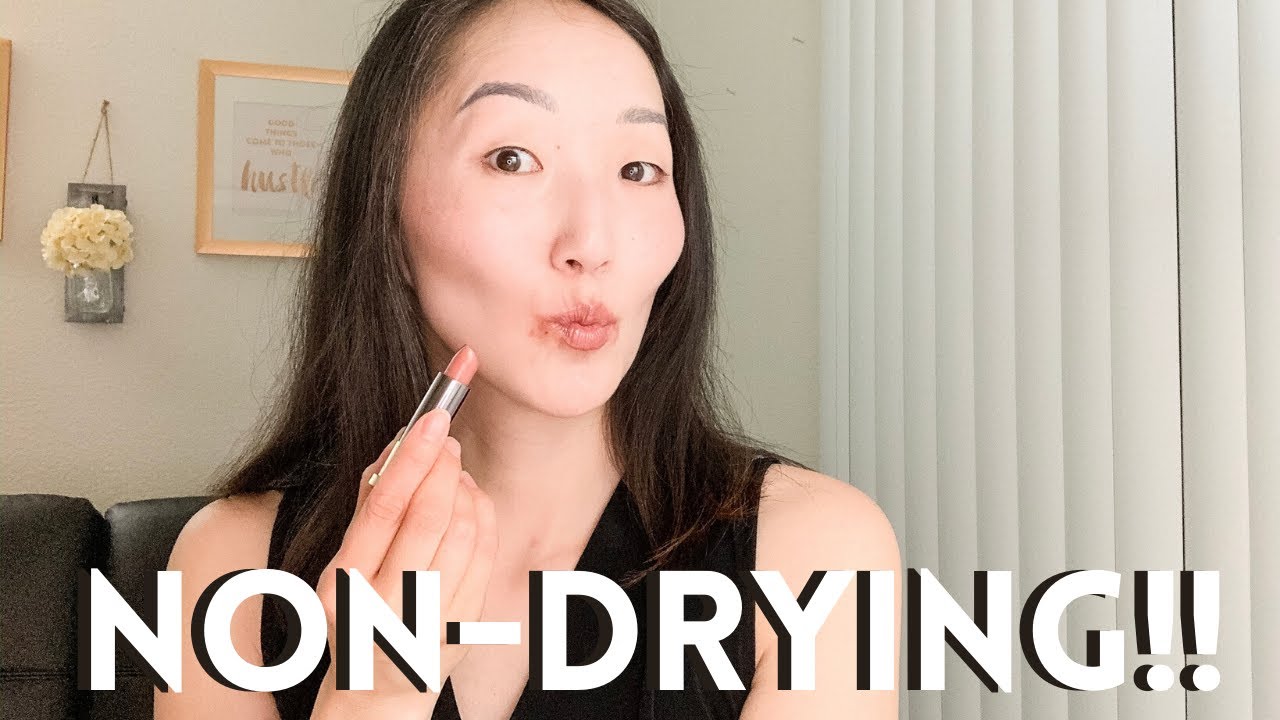
Quick answer: almost everyone. But some people will notice a bigger difference than others.
Chronically dry or chapped lips. If your lips crack and peel regardless of the season, standard lipstick formulas make it worse. A moisturizing formula with ceramides and hyaluronic acid can actually improve your lip condition while you wear it. A solid lip care routine for dry lips paired with a hydrating lipstick can change everything.
People in cold or dry climates. Low humidity strips moisture from exposed skin fast, and lips lose it first because of that thin stratum corneum. Occlusives in moisturizing lipstick act as a physical shield against wind and dry air.
Anyone on drying medications. Isotretinoin (Accutane), certain antihistamines, and some blood pressure medications cause significant lip dryness as a side effect. Standard lipstick on medication-dried lips is borderline painful. Moisturizing formulas are often the only comfortable option.
Aging lips. Collagen and elastin production drops over time. Lips get thinner, drier, and lose their ability to retain moisture. A cream lipstick with nourishing ingredients can soften the appearance of fine lines around the lip area while providing gentle color.
People who react to long-wear or matte formulas. If every liquid lipstick application ends with peeling and flaking, your lips are telling you they need a different formula. Moisturizing lipstick eliminates most of those problems because the base is built around conditioning, not adhesion.
How to Pick a Moisturizing Lipstick That Actually Works

The label will almost always say “hydrating” or “moisturizing.” That part is easy. Figuring out whether the formula backs up that claim takes a little more work.
Check ingredient position. Hydrating agents should show up in the top third of the ingredient list. If hyaluronic acid, shea butter, or squalane are buried at the bottom, they’re present in trace amounts and won’t do much. It’s the same principle as picking the right lipstick color. You need to look past the packaging.
Do the texture test. A truly moisturizing lipstick glides on without pulling or tugging. If it drags across your lips during application, the wax content is probably too high relative to the emollients.
Know your finishes. Satin finish gives a soft sheen with good moisture. Sheer formulas tend to be the most hydrating but deliver less pigment. Cream finishes balance color and moisture well for most people.
Price doesn’t always track with performance. Some $8 drugstore options outperform $40 prestige picks when it comes to actual hydration delivery.
Drugstore vs. Prestige Moisturizing Lipsticks
| Factor | Drugstore | Prestige |
|---|---|---|
| Price Range | $5-$15 | $25-$45 |
| Key Players | Maybelline, Revlon, Neutrogena | Clinique, Charlotte Tilbury, NARS |
| Ingredient Quality | Solid basics (shea butter, vitamin E) | Advanced actives (peptides, ceramides) |
| Shade Range | Broad but less nuanced | Wider with more unique tones |
| Packaging | Functional | Weighted, refillable options |
Maybelline’s Color Sensational line delivers solid moisture at a low price point. On the prestige side, Charlotte Tilbury’s Matte Revolution bullets (which are actually a satin-matte hybrid) consistently rank among the most comfortable higher-end options.
The clean beauty movement is pushing both tiers forward. Grand View Research estimated the clean beauty market at $8.25 billion in 2023, growing at 14.8% CAGR through 2030. That pressure has forced drugstore brands to drop parabens and synthetic fragrances from lip formulas faster than anyone expected.
Fragrance and flavor additives deserve extra scrutiny. Vanilla and mint flavoring are common in moisturizing lipsticks but can irritate already-dry lips. If you have sensitive skin on your lips, go for unflavored versions. Tower 28 built their entire lip line around this idea, keeping ingredient lists short and irritant-free.
How to Apply Moisturizing Lipstick for Longer Wear
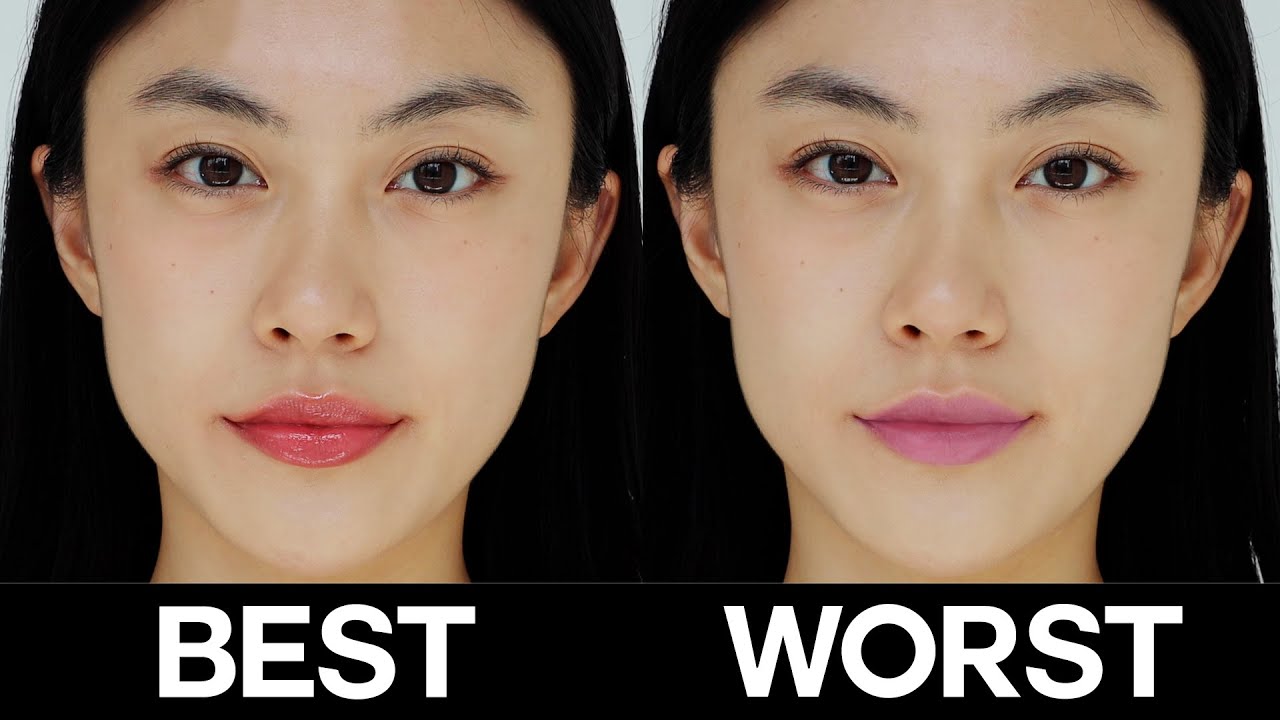
The biggest complaint about moisturizing lipstick? It doesn’t last. And honestly, that’s fair. Creamy, hydrating formulas trade staying power for comfort.
But technique closes a lot of that gap. Not all of it, but enough to stop you from reapplying every 45 minutes.
Prep Your Lips First
Dermatologist Kristina Collins, MD, notes that the lip epidermis is extremely thin, making lip skin sensitive to products, humidity, and UV exposure. That fragile surface needs prep work before any color goes on.
Step one: Exfoliate gently, once or twice a week. A sugar-based scrub removes the dead cell buildup that makes lipstick settle into cracks and flake off. The American Academy of Dermatology recommends using small, circular motions for about 30 seconds.
Step two: Apply a thin layer of lip balm about 10 minutes before your lipstick. Let it absorb fully. If you put lipstick directly over wet balm, the color slides right off.
Use Liner as a Base
This is the step most people skip, and it makes the biggest difference for wear time.
Fill your entire lip area with lip liner, not just the edges. The wax base in liner gives your moisturizing lipstick something to grip onto. It also prevents the creamy formula from bleeding into the fine lines around your mouth.
If you need help choosing the right liner shade, match it to your lipstick or go one shade darker for more definition. A long-lasting lip liner formula will anchor the color for hours.
The Blot and Layer Method
How it works:
- Apply your first coat of moisturizing lipstick
- Blot gently with a single-ply tissue
- Apply a second, thinner coat on top
This builds pigment density without piling on product. The blotting removes excess oils that cause transfer while leaving a stain of color behind.
Don’t add a third coat. With creamy formulas, more product creates more slip, which actually reduces wear time. Two coats, max.
Circana’s 2025 beauty report confirms that the lip segment is increasingly driven by hybrid products offering both tint and skincare benefits. Making your lipstick last has become a priority as consumers move toward these dual-purpose formulas.
Common Problems with Moisturizing Lipsticks
No formula is perfect. Moisturizing lipstick solves the dryness problem but introduces a different set of trade-offs.
Knowing what to expect keeps you from blaming the product when the issue is really about the formula type itself.
| Problem | Why It Happens | How to Manage It |
|---|---|---|
| Short Wear Time | High emollient content | Blot and layer technique |
| Transfer onto Cups/Masks | Creamy texture lacks adhesion | Transfer-proofing methods |
| Feathering into Lip Lines | Oils migrate beyond lip border | Liner as barrier + anti-feathering tips |
| Melting in Heat | Butter/oil base softens at warm temps | Store below 77°F / 25°C |
Transfer and Longevity
Adobe Analytics reported that sales of high-end lipsticks increased by 49% between April and May 2024. But higher price doesn’t fix transfer issues in creamy formulas. It’s a formulation reality, not a quality issue.
The emollients and oils that make moisturizing lipstick comfortable are the same ingredients that prevent it from fully “setting.” That trade-off is built into the product category. You can reduce it with setting powder techniques, but you’ll never eliminate it completely.
Feathering on Mature Skin
This one hits harder than the others because the people who benefit most from moisturizing lipstick (aging lips with reduced moisture) are also the most likely to experience feathering.
The oils in the formula can travel along fine perioral lines, pulling pigment with them. A waxy lip liner applied just outside the lip border acts as a physical dam.
Charlotte Tilbury’s Lip Cheat liners were specifically designed for this purpose, using a firm wax base that blocks migration even under cream and satin finish lipsticks.
Color Intensity
Some moisturizing formulas feel like they sacrifice pigment for slip. You get a nice feel on the lips but the color barely shows.
That’s more common in the sheer and balm-style subcategories. If you want visible color payoff, look for formulas labeled “cream” or “satin” rather than “sheer” or “balm.” Or layer a pigmented lip gloss on top for more depth.
Ingredients to Avoid in Lipsticks Labeled “Moisturizing”

The word “moisturizing” on a lipstick tube has no legal definition. Any brand can slap it on the packaging. Some do, even when the formula contains ingredients that actively dry your lips out.
Phenol and Menthol
The cycle: You apply the product. It feels tingly and fresh. That sensation fades. Your lips feel drier than before. You apply more.
Phenol and menthol are mild irritants that create a temporary plumping or cooling effect. But they strip natural moisture from the lip tissue with repeated use. A formula containing these alongside shea butter and glycerin is working against itself.
Denatured Alcohol
Listed as “alcohol denat.” or “SD alcohol” on ingredient labels. It helps the formula dry down quickly, which is useful in matte products but has no place in a moisturizing one.
If it’s in the top five ingredients of a lip product marketed as hydrating, that’s a red flag. Small amounts further down the list are less of a concern.
Synthetic Fragrances
Often listed simply as “fragrance” or “parfum.” This single word can represent dozens of undisclosed chemical compounds.
On lip skin that already lacks a protective barrier, synthetic fragrance is a common trigger for contact irritation. The smartest lip care routines avoid it entirely.
Grand View Research found that 63% of consumers now look for products with natural ingredients they believe are good for their skin, according to a Clean Beauty Survey. That pressure is pushing brands to reformulate, but plenty of “moisturizing” lipsticks still rely on fragrance to create a premium feel.
Quick Label Check
Keep: Formulas where humectants and emollients (hyaluronic acid, shea butter, squalane, jojoba oil) appear in the top half of the ingredient list.
Skip: Formulas where alcohol denat., menthol, phenol, or “fragrance” appear before the hydrating ingredients. Also be cautious about lipsticks that the FDA or dermatologists flag as potentially harmful to lip health.
How Moisturizing Lipstick Formulas Have Changed
Ten years ago, “moisturizing lipstick” basically meant a bullet loaded with petroleum jelly and heavy wax. It felt greasy, had weak color, and slid off your lips in about an hour.
That version barely exists anymore.
From Petroleum to Bioactives
Older formulas relied on petroleum-based occlusives as their primary hydrating mechanism. They sealed moisture in, sure, but they didn’t add any.
Current formulations use bioactive ingredients like ceramides, peptide complexes, and plant-derived squalane that actually interact with lip tissue. These ingredients don’t just sit on the surface. They support the lip’s own moisture barrier at a cellular level.
Grand View Research estimated the hybrid makeup market at $19.61 billion in 2023, growing at 6.1% CAGR through 2030. The lipstick and lip tint segment within that is projected to grow at 7.3% CAGR, the fastest of any hybrid cosmetics category.
The Clean Beauty Push
Parabens, mineral oil, and synthetic dyes that dominated lipstick formulas for decades are getting phased out. Not by regulation (mostly), but by consumer demand.
The clean beauty market was valued at roughly $8.25 billion in 2023 and is growing at nearly 15% per year, according to Grand View Research. That growth rate is triple the overall cosmetics market.
Tower 28 builds every lip product around the National Eczema Association’s approved ingredient list. Rare Beauty uses squalane and plant oils as the foundation of their lip formulas rather than relying on petroleum derivatives. These aren’t niche approaches anymore.
Hybrid Products Blurring the Lines
The biggest shift? Products that don’t fit neatly into old categories.
- Lip oils with pigment: Full hydration with buildable color (Dior Lip Glow Oil started this wave)
- Tinted balms with coverage: Summer Fridays Lip Butter Balm is basically a lipstick disguised as skincare
- Serum-lipstick hybrids: Formulas with peptides and vitamin C that treat while they color
Circana’s 2025 U.S. beauty data confirms this direction. Lip products were the top contributor to prestige makeup sales, with the segment “increasingly driven by hybrid products that offer both tint and skincare benefits.”
Hailey Bieber’s Rhode Peptide Lip Tint, launched in 2023, became one of the fastest-selling lip products in the prestige category. It’s not a lipstick, not a balm, not a gloss. It’s all three. And that’s where the entire category is heading.
The question used to be: do you want color or hydration? The formulas being made right now don’t force that choice. That’s the real change. And for anyone who’s spent years dealing with dry, chapped lips every time they put on lipstick, it’s a welcome one.
FAQ on What Is Moisturizing Lipstick
Is moisturizing lipstick the same as lip balm?
No. Lip balm focuses on hydration with little to no pigment. Moisturizing lipstick delivers visible lip color while using humectants and emollients like shea butter and glycerin to condition the lips during wear.
What ingredients make a lipstick moisturizing?
Look for hyaluronic acid, squalane, vitamin E, jojoba oil, ceramides, and shea butter. These humectants and occlusives pull in moisture and seal it against the thin lip skin that lacks sebaceous glands.
Does moisturizing lipstick last as long as matte lipstick?
Not typically. Creamy, hydrating formulas wear for about 2 to 4 hours. Matte formulas can last 5 to 8 hours because they contain less oil and more wax, which helps the pigment grip lip tissue longer.
Can moisturizing lipstick help chapped lips?
Yes. Formulas with ceramides and hyaluronic acid actively repair the lip moisture barrier while adding color. They’re a better choice for dry, chapped lips than matte or long-wear options that can make flaking worse.
Is moisturizing lipstick good for older skin?
Very much so. Aging lips lose collagen and natural moisture. A hydrating formula with squalane or peptides softens the look of fine lines and feels more comfortable than drying formulas that settle into lip wrinkles.
What finish does moisturizing lipstick have?
Most have a satin or cream finish. Some lean sheer with a glossy look. The higher the emollient content, the more sheen you’ll see. Matte-finish moisturizing lipsticks exist but are less common.
Does moisturizing lipstick transfer easily?
Yes, more than matte formulas. The oils and butters that keep lips hydrated also create slip, which leads to transfer onto cups and masks. Using a lip liner base and blotting between coats helps reduce this.
Can I wear moisturizing lipstick with lip liner?
Absolutely. Liner extends wear time and prevents feathering. Fill the entire lip area with liner before applying your hydrating lip color on top. It gives the creamy formula something to anchor to.
Are drugstore moisturizing lipsticks as good as prestige ones?
Often, yes. Brands like Maybelline and Revlon use solid hydrators like vitamin E and shea butter. Prestige brands like Clinique or Charlotte Tilbury may add peptides or ceramides, but the core hydration difference is small.
How do I know if a lipstick labeled “moisturizing” is actually hydrating?
Check the ingredient list. Hydrating agents should appear in the top half. If alcohol denat., menthol, or synthetic fragrance shows up before any emollients, the formula likely dries lips out despite its marketing.
Conclusion
Understanding what moisturizing lipstick is changes how you shop for lip color. It’s not just another product category. It’s a formula built around the fact that your lips can’t hydrate themselves.
The right blend of ceramides, vitamin E, and plant-based emollients can condition lip tissue while delivering real pigment. That combination didn’t exist at this level even five years ago.
Check ingredient lists before trusting label claims. Look for humectants positioned high in the formula. Skip anything loaded with alcohol denat. or synthetic fragrance near the top.
Pair your hydrating formula with a good liner, prep with gentle exfoliation, and accept that shorter wear time is the trade-off for comfortable, nourished lips.
Your lips are thinner, more exposed, and more vulnerable than any other skin on your face. A conditioning lip color that respects that reality is worth finding.

She started writing on the site after fielding the same questions from clients and friends often enough to just write the answers down: which red won't turn orange on a warm undertone, how to keep lipstick from feathering into fine lines, why a "12-hour" formula rarely survives dinner.
Every review on the site follows the same rule she uses with paying clients: wear it first, then decide if it's worth recommending.
- How to Make Eyeliner Last Longer Without Smudging - August 31, 2026
- How to Make Eyeshadow Last Longer All Day - August 29, 2026
- How to Find Your Undertone in 5 Easy Steps - August 27, 2026