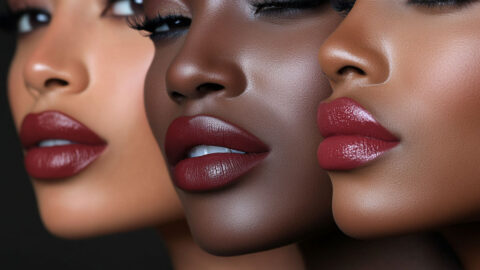
The lipstick usually takes the blame. Cracked by noon, patchy across the middle, crept into the fine lines above the top lip by mid-afternoon.
Most of the time the damage was already done before the tube came out.
Pigment is the easy part. Learning how to wear matte lipstick is really about what happens to your lips beforehand, how thickly you build the color, and whether the shade was ever going to work on you in the first place.
What Is Matte Lipstick?
Almost no light-reflecting particles. A heavy pigment load. A surface that swallows light instead of bouncing it back.
That flat finish comes from a simple trade. Less oil, more filler. You get stronger color payoff and longer wear than a cream or satin, and you give up most of the slip and comfort those formulas have.
Grand View Research put the global lipstick market at $17.5 billion in 2024, with a projection of $23.8 billion by 2030 at a 4.7% CAGR. Matte is the fastest-growing product segment inside that forecast, which tells you something about how many people are willing to put up with the dryness.
What Goes Into a Matte Formula
The base is pigment, usually iron oxides and titanium dioxide, suspended in wax or a silicone carrier. Silica, kaolin clay and dimethicone do the mattifying work on top of that.
What gets dialed back is the pearl and the heavy emollient oils that make cream and satin formulas shine. Small amounts of mica still turn up in plenty of matte ingredient lists, Maybelline SuperStay Matte Ink included, just not at levels you can see.
The full breakdown of what actually goes into a tube of lipstick explains why two mattes from the same brand can feel completely different on the lips.
Matte Against Other Lip Finishes
| Finish | Light Behavior | Wear Time | Comfort Level |
|---|---|---|---|
| Matte | Fully absorbs | 4 to 8 hours | Low to moderate |
| Satin | Soft sheen | 3 to 5 hours | High |
| Cream | Low shine | 2 to 4 hours | High |
| Gloss | Reflects sharply | 1 to 3 hours | Very high |
Matte still is not the biggest slice of the market. Mordor Intelligence has satin and cream finishes together holding 44.34% of the lipstick market in 2025, with matte trailing behind but climbing faster than anything else at a 7.59% CAGR through 2031.
If you are weighing the two side by side, the matte and satin comparison covers where each one wins. Anyone new to the category should also read the full definition of a matte finish before buying.
Why Matte Reads Dry on the Lips
Lip skin has a thin stratum corneum and no sebaceous or sweat glands at all. It loses water faster than the skin on your cheeks before you put anything on it.
A 2022 study in Scientific Reports measured significantly higher transepidermal water loss across 109 patients with chronic cheilitis. 74.3% of that group had visible chapping, and 90.8% had desquamation.
Matte formulas strip away the oil layer that would normally slow that loss down. The pigment itself is not doing anything to your lips. The absence of emollients is.
How Liquid Mattes Set
Liquid matte lipstick relies on volatile solvents, most often isododecane, which evaporate after application and leave a pigment-and-polymer film sitting on the lip.
That film is the reason the formula does not transfer. It also means you get about thirty seconds to fix anything before the color is locked where you put it.
What Types of Matte Lipstick Exist?
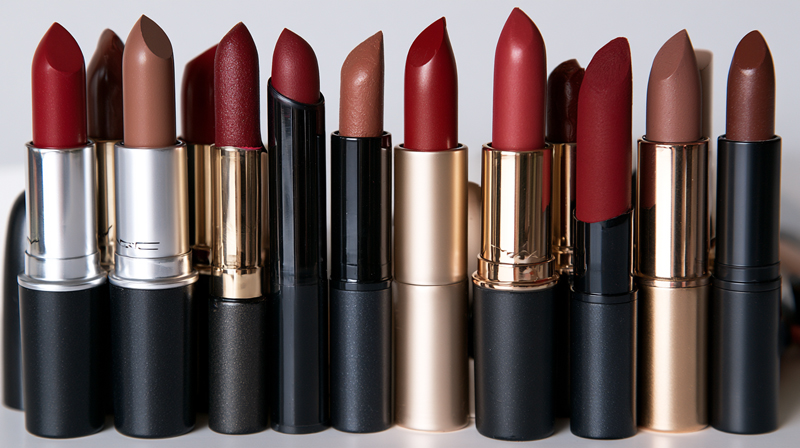
Bullet, liquid, crayon, powder and soft velvet all get sold under the same word, and they behave nothing alike on the lip. Dry-down time, transfer resistance and how brutally the formula shows texture all shift with the format. Pick the format before the shade. I would say that is the more consequential decision by a wide margin, and almost nobody makes it first.
| Format | Dry-Down | Transfer Resistance | Best For |
|---|---|---|---|
| Bullet matte | Instant | Moderate | Beginners, quick touch-ups |
| Liquid matte | 30 to 60 seconds | Very high | Long days, events |
| Lip crayon | Instant | Moderate | Precision without a brush |
| Powder matte | 15 to 30 seconds | High | Smooth, even lips |
| Velvet matte | 15 to 30 seconds | Moderate to high | Dry or textured lips |
Bullet Matte Lipstick
The classic twist-up. Wax-based, buildable, much more forgiving than anything liquid.
MAC Retro Matte in Ruby Woo is still the reference point here, though it sits at the drier end of the wax spectrum and people tend to forget that when they recommend it to a friend with chapped lips.
Stick formats hold 59.18% of the overall lipstick market as of 2025 according to Mordor Intelligence, mostly because you can apply one in a car park without a mirror.
Liquid Matte Lipstick
Liquid mattes run the matte category. Marketintelo puts them at 38.5% of product-type share and roughly $1.08 billion in 2025 revenue. Mordor Intelligence has liquid formats growing at a 7.81% CAGR through 2031 across the wider lipstick market, faster than any other form.
- Doe-foot applicator, single-pass application
- Sets to a film that survives coffee, meals, and masks
- Punishes flaky lips harder than any other format
Maybelline SuperStay Matte Ink and Fenty Beauty Stunna Lip Paint sit at very different price points and behave more similarly than the price gap suggests. More detail on the format lives in the guide to liquid lipstick as a category.
Matte Lip Crayons
A chubby pencil, either twist-up or sharpenable, with a wider tip than a lip liner and softer pigment than a bullet.
You get excellent edge control and you give up wear time compared to a liquid. That is a fair swap if you talk for a living.
NARS Powermatte Lipstick Pencil is the one most makeup artists reach for when they want a matte edge without pulling out a brush.
Powder and Velvet Matte
Powder mattes dry down to something almost chalky and weightless. Velvet mattes hold onto a bit of emollient, so the finish stays flexible instead of setting rigid.
Velvet is the safer place to start, and despite the name, Charlotte Tilbury Matte Revolution belongs in this group rather than with the flat mattes.
Buyers seem to agree. Velvet is the largest finish sub-segment at 41.3% of the matte category against powder matte’s 28.7%, per Marketintelo. Gen Z and millennial buyers aged 18 to 40 account for 58% of all matte lipstick purchases, and that group has been drifting toward comfort over extreme flatness for a few years now. Comparison shopping gets easier with a ranked look at which matte formulas actually perform.
How to Prep Lips for Matte Lipstick?
Exfoliate, balm, blot. That is the whole sequence, and skipping any part of it shows up as patchy pigment within the hour. Color over wet balm slips and blurs at the edges, which is the other half of the problem.
Prep predicts how a matte lipstick looks at hour four better than price does. A well-prepped $9 lipstick beats a badly prepped $38 one every time.
Exfoliation Comes First
- A sugar scrub, brown sugar with honey or oil, about 30 seconds of circular motion
- A damp washcloth, which is the gentlest option and enough for mildly flaky lips
- An enzyme lip polish if your lips are too sensitive to buff at all
Twice a week is the ceiling. 2 times per week and no more, because over-scrubbing thins a barrier that was already thin and you end up chapped rather than smooth.
A few gentle methods for buffing lips without commercial scrubs use ingredients already in most kitchens.
Balm Timing Decides Everything
Apply balm, then wait 10 to 15 minutes before blotting it with a tissue. The lips stay conditioned underneath. The surface goes dry enough to grip pigment.
Balm applied thirty seconds before lipstick gives you a slipping, uneven layer that migrates into the corners of your mouth. Everyone does this at least once.
Lanolin, shea butter and squalane behave well under matte. Petrolatum-heavy balms, coconut oil and anything that still looks wet on the lip will break the formula down.
The Night Before Matters More Than the Morning
An overnight lip mask does work that no five-minute prep can replicate. Laneige built an entire category on that fact.
Hyaluronic acid earns its spot in this step. A 7-day study of 20 volunteers cited by Typology recorded a 24% increase in lip stratum corneum hydration and a 25.6% gain in elasticity. Worth noting that the tested product also contained hydrolyzed collagen, aloe vera and sweet almond oil, so none of that gain can be pinned on hyaluronic acid by itself.
Building this into a broader daily routine for lip health takes the pressure off the day-of prep entirely.
How to Apply Matte Lipstick Step by Step?
Prep and blot, line the outer edge, fill the whole lip with that same liner, put down a thin first layer, blot again, then a second thin layer. Two thin coats give you even color. One thick coat cracks inside an hour, reliably.
Start at the cupid’s bow, move to the center of the bottom lip, then work outward. The corners need the least product and cause the most bleeding, so they go last.
The complete walkthrough for getting a matte finish on evenly covers the variations for each format.
Lining the Lips First
Liner does two jobs under matte. It draws the boundary, and it gives the pigment something to hold onto.
Match it to your lipstick or go one shade deeper. Two shades deeper is an ombre effect, which is fine if you meant it.
Trace the outer edge in short strokes instead of one continuous line. Short strokes follow the shape your lip actually has. A single long stroke flattens it.
Technique details sit in the guide to drawing a clean lip line.
Building Color in Two Thin Layers
The first pass is light. It stains the lip and, more usefully, shows you every dry patch you missed during prep.
Blot.
The second pass goes to full opacity, but only where the first one looked thin. There is no reason to reload the whole lip.
Liquid mattes want 30 to 60 seconds before you press your lips together. Press early and the whole thing streaks.
The Blot Step Between Coats
Single-ply tissue. Press once. Do not rub.
Blotting lifts the oil and solvent sitting on top of the pigment, and that surface layer is what ends up on your glass and your teeth.
Some people dust translucent powder through the tissue at this stage. It buys wear time and flattens the finish further, though it also brings out texture, so test it on a normal Tuesday rather than an hour before a wedding. The method for locking color in with powder explains when it helps and when it backfires.
When to Skip the Blot
Powder mattes and dry bullet formulas need no blotting at all. Nothing is sitting on the surface to remove.
Cleaning Up the Outline
A cotton swab dipped in micellar water erases mistakes without touching the color inside the line.
Concealer on a small angled brush carves the outer edge and sharpens up the cupid’s bow.
Then the finger-pull. Insert a clean finger, close your lips around it, pull straight out. Whatever would have transferred to your teeth comes off on your finger instead.
Which Tools Give Clean Matte Lipstick Edges?
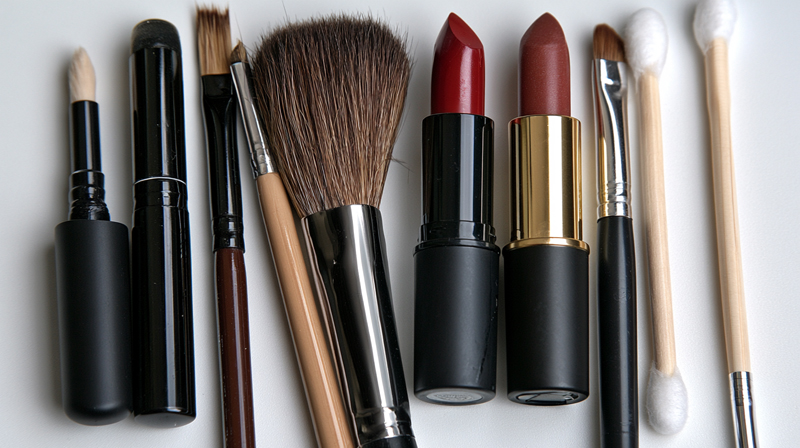
A liner, a flat synthetic lip brush, concealer with a small angled brush, and cotton swabs with micellar water will handle everything. Liquid mattes come with a doe-foot that does most of the job on its own. Bullet mattes are the ones that gain the most from a brush.
- The lip liner, which acts as your boundary and your base layer at the same time
- A flat synthetic lip brush with a tapered tip for corner work on bullet formulas
- An angled concealer brush to carve the outer edge and hide any liner overshoot
- Cotton swabs plus micellar water, for correcting without starting over
- Blotting papers, which are cleaner than tissue mid-day since they leave no fibers behind
A dull liner tip causes more wobbly lines than shaky hands do, and the fix takes ten seconds once you know how to sharpen a lip pencil properly.
One more thing about the doe-foot. It deposits far more product than most people need. Wipe it once against the neck of the tube before you apply and you solve about half the bleeding that gets blamed on the formula.
Background on what lip liner does as a product is worth reading if you have only ever used it to outline.
How to Choose a Matte Lipstick Shade?
Undertone, natural lip pigmentation and depth are what decide whether a shade works. Matte also reads 1 to 2 shades deeper on the lip than it looks in the bullet, since no light comes off the surface to lighten it. That gap catches people out constantly.
The ranges have improved. L’Oreal and Estee Lauder both launched inclusive matte collections of 50 to 80 shades, contributing 15.2% of category revenue growth since 2024 according to Marketintelo.
Reading Your Undertone
| Undertone | Matte Shades That Work | Shades to Avoid |
|---|---|---|
| Cool | Blue-red, berry, mauve, plum | Orange-based coral |
| Warm | Brick, terracotta, coral-red, warm nude | Blue-toned fuchsia |
| Neutral | Rosewood, true red, soft brown | Very few restrictions |
Undertone does not change. Tan does. Match the undertone.
Detailed shade lists exist for cool-toned skin, warm-toned skin, and neutral undertones.
Depth and Natural Lip Color
Fair skin tends to take soft rose, muted coral and a true red with a blue lean. Medium and olive skin sits well with terracotta, brick and warm berry. On deep and rich tones, plum, wine, deep brown and bright fuchsia all hold up.
Naturally pigmented lips will push a pale nude gray. A liner in a deeper neutral tone underneath corrects that cast without moving you into a different shade family.
Curated picks are broken out by tone for fair complexions and deeper complexions.
Testing Before You Commit
Swatch on your fingertip, not the back of your hand. Fingertip skin sits closer to lip tone on most people.
Then take it to a window. Store lighting flatters everything and tells you nothing about how a brick red is going to behave at noon.
The wider matte shade range breaks down by color family, with separate deep dives into nude tones and brown tones.
How to Keep Lips From Drying Out Under Matte Lipstick?
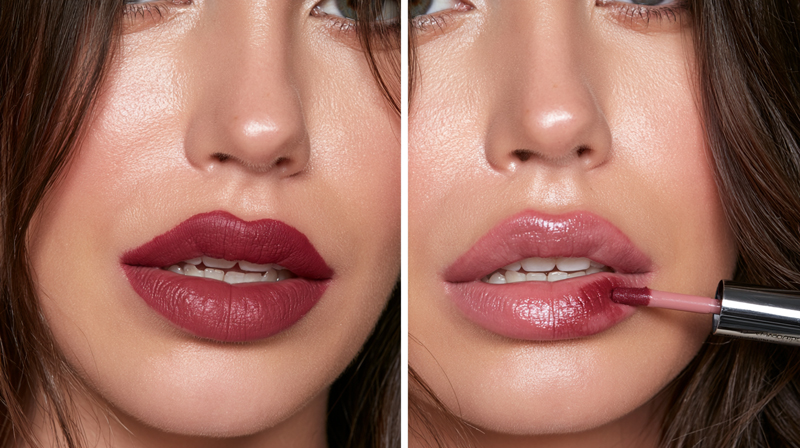
Matte does not pull moisture out of your lips. It removes the emollient layer that would have slowed the loss down, which produces the same result by a different route. Hydrating first, keeping your tongue off your lips during wear, and rebuilding the barrier overnight is what keeps things comfortable through a full day.
Remember that lip skin loses water faster than facial skin from the moment you wake up. Matte wear widens the gap by the hour.
Before the Color Goes On
A hyaluronic acid lip serum applied 20 minutes ahead pulls water into the surface layers before the matte film seals everything in.
Ignore the marketing line about hyaluronic acid holding 1,000 times its weight in water. No primary evidence supports that number, and lab measurements of cosmetic-grade hyaluronic acid come out closer to tens of times its own weight. It is still a strong humectant and still beats a wax-only balm as a pre-matte step. One caveat worth knowing: in very dry air, free hyaluronic acid can draw moisture out of the skin surface instead of into it, which is exactly why it belongs under a balm rather than sitting alone on the lip.
Follow with a thin balm, let it sink in, blot. Four minutes, start to finish, and it changes how the color wears.
During Wear
Lip licking is the fastest route to cracked matte. Saliva evaporates and takes surface moisture with it, and the enzymes in it degrade the pigment film while they are at it.
Hot drinks and greasy food attack from the other side, dissolving the polymer layer at the center of the lip.
Then there is the air. Heating and air conditioning drag moisture out all day, and room humidity below 30% tends to show up as flaking around mid-afternoon.
Comfort Matte and Moisture Matte Formulas
Those labels are not empty. Comfort mattes swap part of the silica filler for esters and softening agents, trading a bit of flatness for flexibility.
Expect slightly more transfer and 1 to 2 fewer hours of wear. Most people take that deal happily.
Overnight Recovery
Take the color off with an oil-based cleanser, then put an occlusive mask on before bed.
Skip that and it compounds. Two days of matte wear on lips that never recovered is how flaking starts in the first place.
Specific protocols for staying hydrated under a matte finish and for managing chronically dry lips go further into the ingredient side. If your lips are already flaking today, the workaround for applying color over dry lips gets you through until they recover.
How to Make Matte Lipstick Last All Day?
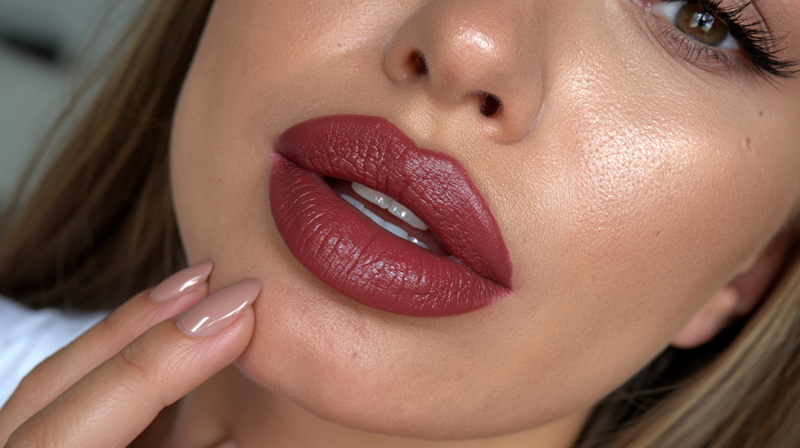
Fill the whole lip with liner as a base, blot and set the first coat, and touch up at the center rather than the edges. Do that and a liquid matte will hold 6 to 8 hours realistically. A bullet gives you 4 to 6.
Lipseek’s 12-hour wear test landed at 6 to 8 hours with minimal touch-ups and called full-coverage 12-hour claims aspirational. Anything still visible past hour ten is a stain, not coverage.
Woman & Home has tested dozens of long-wear formulas. One product carrying a 16-hour claim delivered five hours of true color before dropping to a stain that only came off with a cleansing balm.
The Full-Lip Liner Base
Liner across the entire lip surface, not just the outline. Pencil pigment grips lip skin better than any lipstick formula does, so the color sitting on top has an anchor.
When the lipstick eventually wears down at the center, the liner underneath fades with it and you avoid that ring of color around a bare middle.
The mechanics of keeping liner in place through the day apply directly here.
Blot, Set, Reapply
- Apply the first coat
- Press once with single-ply tissue
- Dust translucent powder through the tissue
- Apply the second coat
Four steps, roughly 90 seconds. Wear tests keep showing single-swipe applications fading inside 1 to 2 hours while properly layered ones hold 4 to 6 hours minimum, and the powder layer between coats is what pushes the top end higher still.
What Actually Breaks the Seal
| Trigger | Damage | Workaround |
|---|---|---|
| Greasy food | Dissolves the center | Fork over fingers, blot after |
| Hot drinks | Softens the film | Sip from the lower lip |
| Straws | Friction at the inner edge | Wide-mouth glass instead |
| Lip pressing | Redistributes pigment | Keep lips relaxed |
Maybelline SuperStay Matte Ink survives most of that at roughly a $10 to $13 price point depending on the retailer, which is why it keeps turning up in wear tests next to formulas costing three times as much.
Practical strategies for eating without destroying your lip color save more wear time than any product swap.
Touch-Ups Without Buildup
Reapply at the center only. The outer edges still have color on them, and adding more there is what builds the thick cracked ring you see on people by seven in the evening.
Blot before you reapply. Fresh pigment over old pigment slides.
Broader tactics for extending wear across any formula and for cutting transfer to zero stack on top of the matte-specific steps.
Setting Spray on Lips
Mostly unnecessary, in my opinion. A liquid matte has already dried to a polymer film that a spray cannot improve on.
On a bullet matte, one light mist buys you a little time. Powder does the same job better.
How to Fix Common Matte Lipstick Problems?
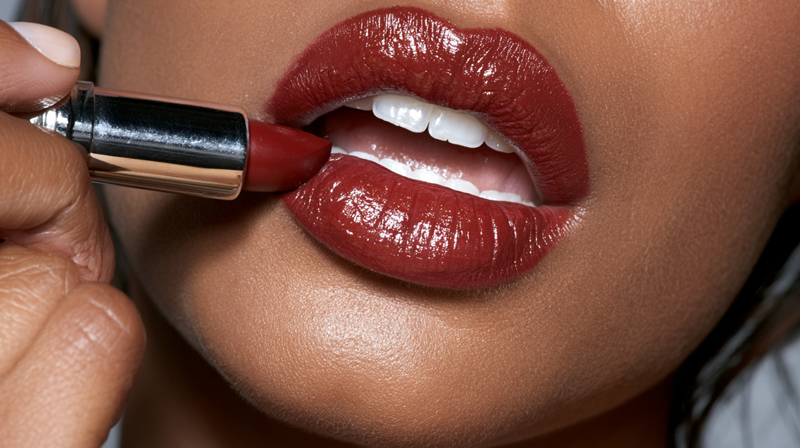
Dehydrated lips, oily skin around the mouth, over-layering and flaky texture cause nearly every matte failure, and each one shows up as something different. Feathering, patchiness, cracking and emphasized fine lines all have their own correction, so a general fix is not much use.
Makeup.com quotes artist Morgan naming dehydrated lips and perioral fine lines as the two primary causes of feathering, and pointing out that dry lips drag pigment outward as you talk, eat and drink.
Feathering and Bleeding
Feathering is color creeping into the lines just outside your lip edge. Bleeding is when it has already crossed the border and kept going.
Two causes, two fixes:
- If the issue is fine lines, use a waterproof liner as a barrier and press concealer along the outer edge
- If the issue is oily skin around your mouth, blot that area and dust it with powder before any color goes on
A Thrive Causmetics makeup artist notes that bleeding without any visible fine lines usually traces back to excess oils around the lips. Full method in the guide to stopping lipstick from bleeding.
Patchy or Uneven Color
Patchiness is nearly always texture, not formula. Dry flakes lifting the pigment, or one thick coat drying at different rates across the lip.
The fix is unglamorous. Take the whole layer off, exfoliate, rebalm, then rebuild in two thin passes.
Liquid mattes punish this hardest, because the film sets around the flake rather than over it.
Cracking Through the Day
Cracking shows up around hour three or four, usually right in the middle of the lower lip.
Do not reapply over a cracked layer. Blot the area, press the existing color flat with a fingertip, and only add pigment if the color has genuinely gone.
Piling on a third and fourth coat over the course of a day is the single most common reason matte lipstick looks worse at 6pm than it did at noon.
Color Transferring to Teeth
The finger-pull handles it. Clean index finger in, lips closed, pull straight out.
Blue-based reds also read cleaner against teeth than orange-based reds do. More on keeping color off your teeth and on shades that brighten a smile.
Fine Lines Looking Deeper
A flat surface makes existing texture more obvious. That is just how light works. A velvet or comfort matte softens the effect without giving up the finish entirely.
Techniques for preventing color from creeping into lines work on both fronts.
Uneven or Wobbly Edges
Micellar water on a cotton swab, drawn along the outside of the line in one direction.
Rebuilding the edge with concealer afterward gives a sharper result than trying to correct the lipstick itself. The approach to blending color cleanly covers softer alternatives when a hard edge is not the goal.
How to Wear Matte Lipstick With the Rest of Your Makeup?
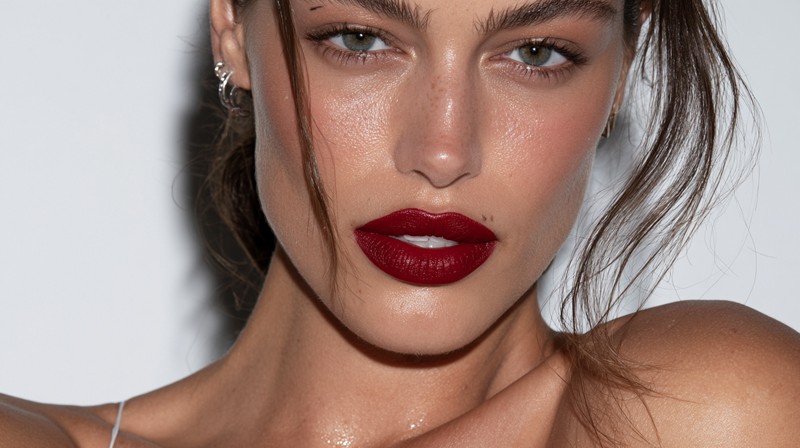
Matte sits best against a dewy skin base and a quiet eye. A matte face under a matte lip reads flat and one-dimensional in person and worse in photos. Put some shine back at the cheekbones or on the lids and the depth returns.
Circana data shows prestige eye makeup back in growth in 2025 after a decline the year before, while lip products outperformed every other makeup segment across both prestige and mass channels. So both halves of the face are getting attention again, which makes the balance harder to get right.
Balancing a Bold Lip
A bold matte lip wants very little on the eye. Mascara, brows done, maybe a wash of neutral shadow if you feel bare without it.
Go the other way with a full eye look and the lip should retreat into a nude, a rosewood or a soft brown.
Chanel’s Spring-Summer 2025 Haute Couture show paired bold matte red lips with rosy cheeks, glowing skin and near-bare eyes, which was already circulating on TikTok at the time.
Shade-specific pairings live in the guides to eyeshadow that works with red and blush that complements a red lip.
Adding Dimension Back
- Cream blush over powder, which gives a flush that looks like skin rather than product
- Highlighter on the cheekbone and down the bridge of the nose
- A glossy or satin lid when the lip is fully flat
Technique for working cream blush into the skin and for placing highlighter without overdoing it matters more than which products you own.
Daytime Against Evening
| Setting | Matte Shade Direction | Rest of the Face |
|---|---|---|
| Office | Muted nude, rosewood | Neutral eye, light base |
| Daytime casual | Terracotta, soft brown | Cream blush, no liner |
| Evening | True red, deep berry | Defined lash line, highlighter |
Brown, nude and beige shades posted double-digit year-over-year growth in 2025 while overall red sales slipped 15% in Q1, according to Accio market data. Deep reds went the opposite direction, with Pinterest searches up 325% for cherry and berry tones and 235% for dark cherry red.
Matching color to what you are wearing is a separate decision, covered in picking a lipstick shade for an outfit.
Matte on Camera
Matte photographs cleanly. No flashback, no blown highlight, none of that wet-looking reflection gloss throws under a flash.
That is why matte runs editorial and bridal work. Something that looks a touch flat across a table reads correct in the image.
Full camera-ready prep sits in the guide to makeup for a photoshoot.
Softening a Matte Lip
One dot of gloss at the center of the lower lip adds dimension without wrecking the finish. The method for taking a matte lip glossy covers how far you can push it before it stops being matte at all.
How to Remove Matte Lipstick Without Damaging Lips?
Removal needs oil and it needs about 30 seconds of contact time before you wipe anything. Dragging a dry tissue across a set matte film causes microtears in lip skin and pushes pigment further in. Oil dissolves the polymer and wax. Water sits on top of it and does nothing.
Cleveland Clinic dermatologist Dr. Jane Wu points to an oil-based cleanser as the effective first step for waterproof makeup, with a warning that over-washing breaks down the skin barrier.
What Actually Works
| Remover | Effectiveness on Matte | Best Use |
|---|---|---|
| Cleansing balm | High | Liquid matte, long-wear stains |
| Cleansing oil | High | Nightly full-face removal |
| Micellar water | Moderate | Bullet matte, edge cleanup |
| Plain cotton pad | Low | Nothing |
Dermatologist Dr. Brendan Camp advises soaking a cotton pad and sweeping it across the lips rather than scrubbing. For heavy or waterproof formulas, dermatologists recommend either an oil-infused micellar formula or holding the saturated pad in place for a few seconds first to break the product down.
The 30-Second Rule
Press the soaked pad against your lips and hold it there for a full 30 seconds before you move it anywhere.
The oil needs that contact time to break the bond between the pigment film and your skin. Not waiting is why people end up scrubbing.
Then wipe outward from the center, one direction, no back and forth.
Liner Residue at the Edge
Waterproof liner outlives the lipstick above it, and the leftover ring is easy to miss under bathroom lighting.
A cotton swab with balm or oil, run along the vermilion border, clears it in two passes.
Removal specifics for liquid formulas and for SuperStay Matte Ink specifically go further into the stubborn cases.
Lingering Stain on Pigmented Lips
Deep reds and berries leave a stain on naturally pigmented lips that no single cleanse will lift.
Woman & Home testers found one long-wear formula’s stain only came off with a cleansing balm.
Leave it. A second aggressive round of scrubbing does more damage to the barrier than the stain ever would, and it fades overnight anyway. Context on how pigmentation changes color behavior sits in the guide to applying lipstick on darker lips.
What Comes After
Cleanse gently with a water-based cleanser, pat dry, then apply an occlusive balm or overnight mask while the lips are still slightly damp.
That last part is the bit that gets skipped. Balm on damp lips traps water. Balm on dry lips traps nothing.
The complete process for taking matte color off safely covers formula-specific variations, and there are workable options using what is already in your kitchen when you run out.
FAQ on How To Wear Matte Lipstick
Do you need lip liner with matte lipstick?
Not required, but it changes the outcome. Filling the whole lip with liner before color adds real hours of wear and stops feathering at the edges.
Skip it only on sheer or velvet mattes.
Should you apply balm before matte lipstick?
Yes, as long as you time it. Apply balm, wait 10 to 15 minutes, then blot the excess with tissue.
Color over wet balm slips, bleeds and dries unevenly. Blotting is the step people skip.
How long does matte lipstick last?
Liquid matte holds 6 to 8 hours in real conditions. Bullet matte holds 4 to 6.
Brand claims of 12 or 16 hours are describing stain persistence, not full color coverage.
Why does matte lipstick look patchy on my lips?
Dry flakes lift the pigment. One thick coat also dries unevenly.
Remove the layer, exfoliate, rebalm, then rebuild in two thin passes. Liquid formats punish flakiness hardest.
Can you wear matte lipstick with dry lips?
Yes, but use a velvet or comfort matte rather than a flat powder matte.
Hyaluronic acid serum 20 minutes ahead, then a thin balm, blotted. A flat matte will crack on compromised lips.
How do you keep matte lipstick from bleeding?
Waterproof lip liner as a barrier, plus concealer pressed along the outer edge with a small angled brush.
No fine lines? Then the culprit is oil around the mouth. Powder it first.
What matte lipstick shade suits my skin tone?
Match your undertone, not your tan. Cool undertones take blue-reds, berry and mauve. Warm undertones take brick, terracotta and coral-red.
Matte reads 1 to 2 shades deeper than the bullet looks.
How long should liquid matte lipstick dry before pressing your lips?
Thirty to sixty seconds. Isododecane needs that window to evaporate and leave the pigment film behind.
Press early and the color streaks. Once it has dried, corrections are no longer possible.
Can you make matte lipstick less drying?
Layer the prep, not the product. Hyaluronic acid serum, thin balm, blot, then color.
And keep your tongue off your lips during wear. Saliva evaporates and takes surface moisture with it, which is what causes mid-day cracking.
How do you remove matte lipstick properly?
An oil-based cleanser or a cleansing balm, held against the lips for 30 seconds before you wipe.
Rubbing dry tissue across a set matte film causes microtears. Follow with balm on slightly damp lips.
Conclusion
Working out how to wear matte lipstick is a question of sequence more than skill. Exfoliate, hydrate, blot, line, layer thin, blot again.
People who insist matte formulas never work on them are usually skipping two of those six steps.
Choose the format before the shade. A liquid matte on textured lips will fail no matter how perfectly the color suits your undertone.
Keep a cleansing balm and an overnight mask in rotation. Wear time is only half of this, and lip recovery is the half nobody bothers with.
Test one shade in daylight this week. Wear it a full day, notice where it broke down, then change the prep instead of buying another lipstick.

She started writing on the site after fielding the same questions from clients and friends often enough to just write the answers down: which red won't turn orange on a warm undertone, how to keep lipstick from feathering into fine lines, why a "12-hour" formula rarely survives dinner.
Every review on the site follows the same rule she uses with paying clients: wear it first, then decide if it's worth recommending.
- How to Make Eyeliner Last Longer Without Smudging - August 31, 2026
- How to Make Eyeshadow Last Longer All Day - August 29, 2026
- How to Find Your Undertone in 5 Easy Steps - August 27, 2026